Hoi An’s street food scene is one of the highlights of the city, known for its fresh flavors, local character, and wide variety of dishes. For first-time visitors, though, the choices can feel overwhelming. Small stalls are scattered through local markets, riverside streets, and narrow lanes in the Ancient Town, so it is easy to miss the best local specialties if you do not know what to look for.
In this guide from Your Vietnam Travel, you will discover 10 must-try street foods in Hoi An, along with helpful tips on where to eat, what prices to expect, and how to enjoy local food safely and confidently.
Mi Quang is one of Central Vietnam’s best-known noodle dishes and a favorite choice in Hoi An. It is made with wide turmeric noodles, a small amount of aromatic broth, shrimp or pork, fresh herbs, roasted peanuts, and crispy rice crackers. Compared with pho, Mi Quang is lighter in broth but still full of flavor, with a balance of savory, herbal, and slightly rich notes.
In Hoi An, you can enjoy Mi Quang at simple market stalls or at more polished local restaurants. A squeeze of lime and a little fresh chili often make the bowl even more balanced and flavorful.
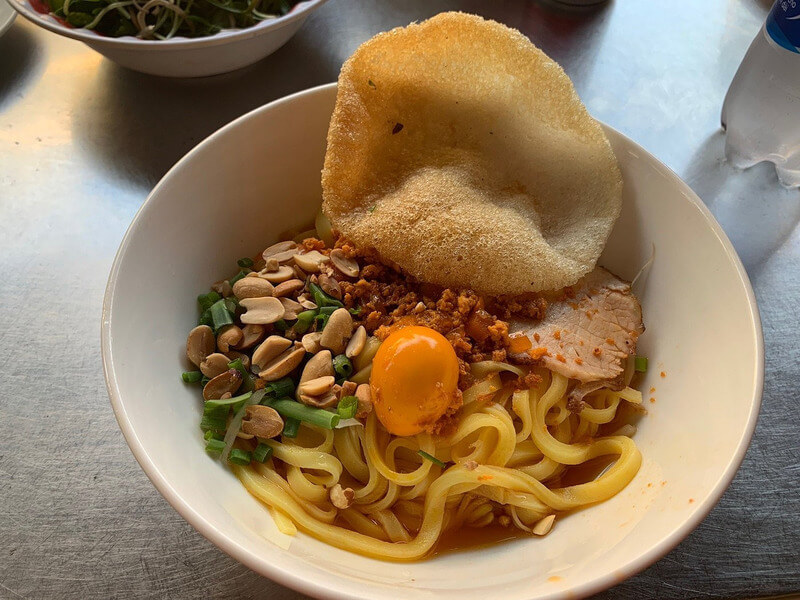
A bowl of My Quang at Mi Quang Ong Hai, Hoi An (Source: Tripadvisor)
Mi Quang - Top 3 in Hoi An (quick picks):
Cao Lau is one of Hoi An’s most iconic local dishes. It features thick, chewy noodles topped with slices of barbecued pork, fresh herbs, crispy croutons, and a small amount of savory sauce rather than a full broth. One of the reasons Cao Lau stands out is its unique noodle texture, which local stories often connect to traditional preparation methods in Hoi An.
Cao Lau is best enjoyed by mixing everything together so the noodles, herbs, sauce, and crunchy toppings combine evenly. Fresh herbs and properly prepared noodles make a big difference, so it is worth choosing places known for making the dish well.
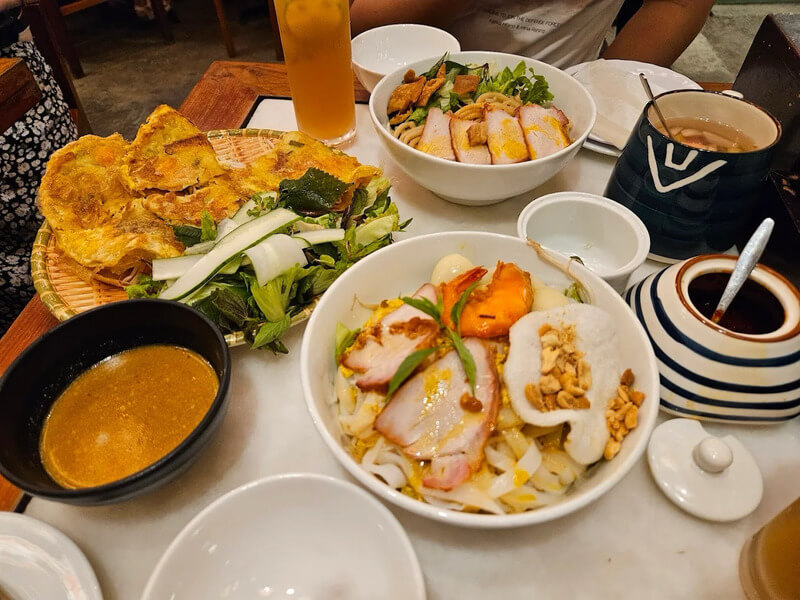
A bowl of Cao Lau at Cao Lau Ba Le, Hoi An (Source: Collected)
Cao Lau - Top 3 in Hoi An (quick picks):
Hoi An is one of the best places in Vietnam to try banh mi. The local version is usually made with a crisp yet light baguette filled with pate, cold cuts or grilled meats, pickles, fresh herbs, and a flavorful house sauce. The result is a sandwich that feels rich, tangy, fresh, and satisfying without being too heavy.
You can easily customize your banh mi depending on your taste. Some people prefer extra chili, others add a fried egg, while grilled pork is a good option if you want a smokier flavor. Freshly made and served warm, banh mi is one of the easiest and most rewarding street foods to enjoy while exploring Hoi An.
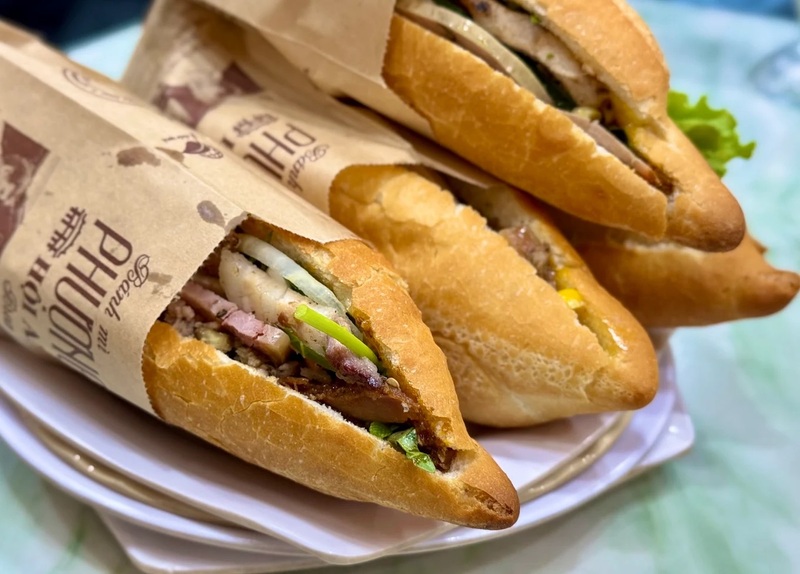
Pork bread rolls at Banh My Phuong, Hoi An (Source: Collected)
Banh Mi - Top 3 in Hoi An (quick picks):
Grilled pork vermicelli is a popular and easy-to-enjoy dish in Hoi An, especially on warm days. It features char-grilled pork served over rice vermicelli, along with fresh herbs, pickles, crushed peanuts, and a light fish sauce dressing. The combination is fresh, balanced, and not too heavy, making it a reliable choice for a casual meal.
The dish works best when everything is mixed together, allowing the noodles to absorb the sauce while the herbs and peanuts add freshness and texture. You can also add extra herbs or a squeeze of lime to adjust the flavor to your preference.
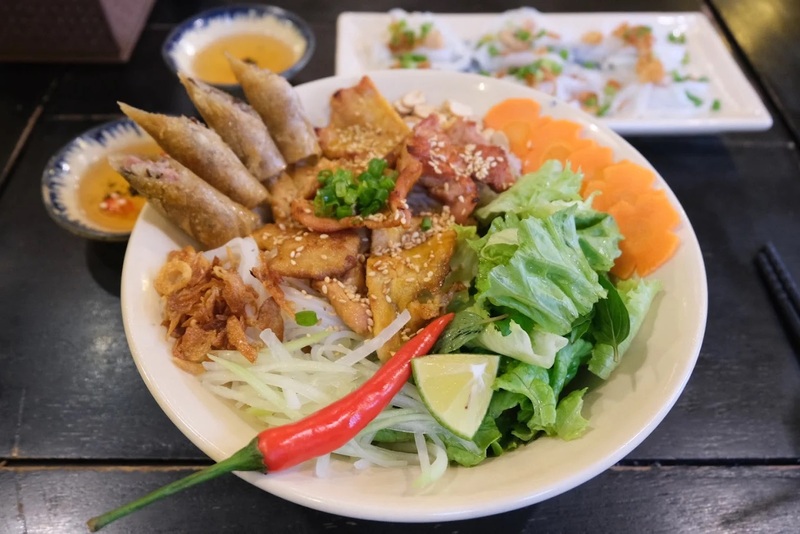
A bowl of Grilled Pork Vermicelli in Hoi An (Source: Collected)
Grilled Pork Vermicelli - Top 3 in Hoi An (quick picks):
Banh xeo in Hoi An is known for its thin, crispy texture and light portions compared to southern versions. These small rice pancakes are filled with shrimp, pork, and bean sprouts, then cooked until golden and crisp on the outside while remaining slightly soft inside.
To eat, break a piece, wrap it with fresh herbs in rice paper, and dip it into a sweet and slightly tangy fish sauce. For the best texture, it is best to eat banh xeo right after it is cooked. If you prefer a lighter version, you can ask for less oil during preparation.
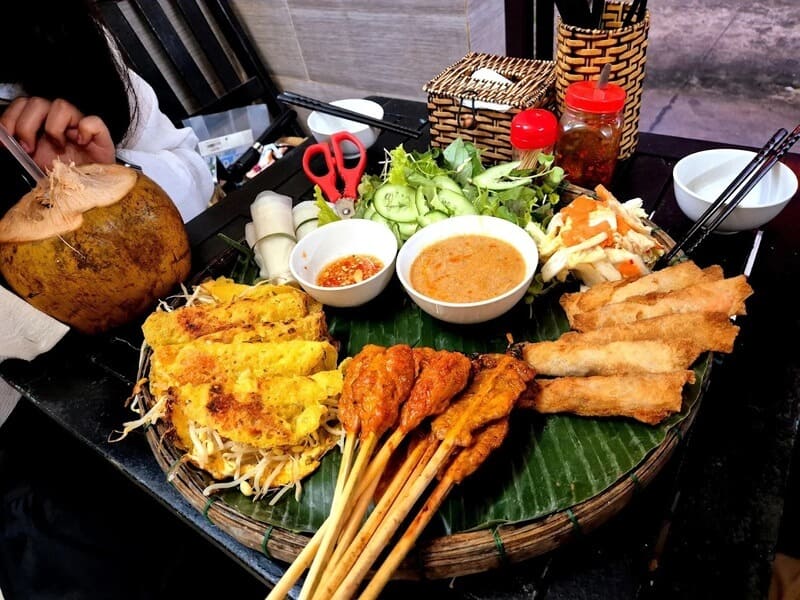
Banh Xeo and with signature Hoi An rolls (Source: Collected)
Banh Xeo - Top 3 in Hoi An (quick picks):
Fried wonton is a well-known Hoi An specialty often served as a light starter or shared dish. Crispy wonton wrappers are topped with a slightly sweet and tangy tomato-based sauce with shrimp, herbs, and a touch of chili. The contrast between the crunchy base and the soft topping makes it easy to enjoy.
For the best texture, you can ask for the sauce to be served on the side and add it just before eating. This helps keep the wontons crisp.
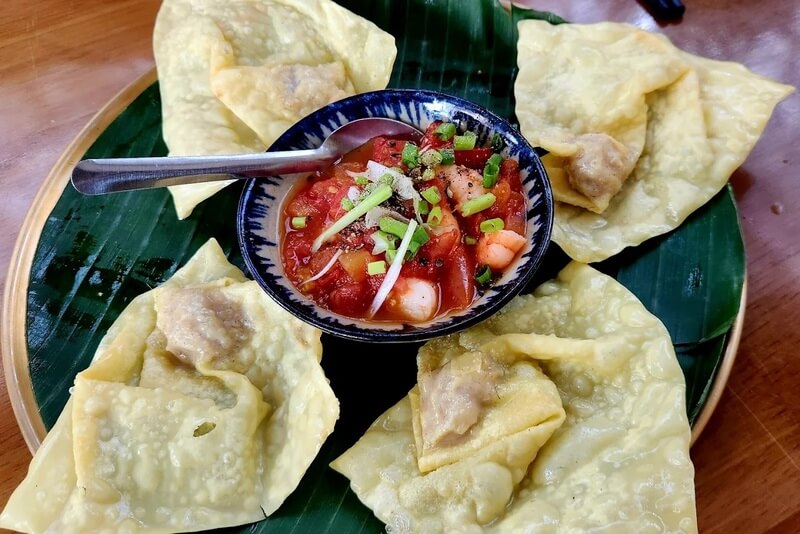
Fried wontons served with shrimp in tomato sauce in Hoi An (Source: Collected)
Fried Wonton - Top 3 in Hoi An (quick picks):
For more sit-down dining options, see 20+ Best Restaurants in Hoi An.
A specialty from Cam Nam Island, clam salad (hen tron) is made with small river clams sautéed with herbs, peanuts, and spices, then served with crispy rice crackers. The dish is light, slightly briny, and full of texture, making it a good option for a quick local bite.
It is often paired with banh dap, a combination of soft steamed rice paper and crispy grilled cracker that you break and dip into sauce. This pairing adds both crunch and depth to the overall experience.
For the best quality, it is recommended to visit earlier in the day when the clams are freshest. If you have shellfish allergies, it is best to avoid this dish.
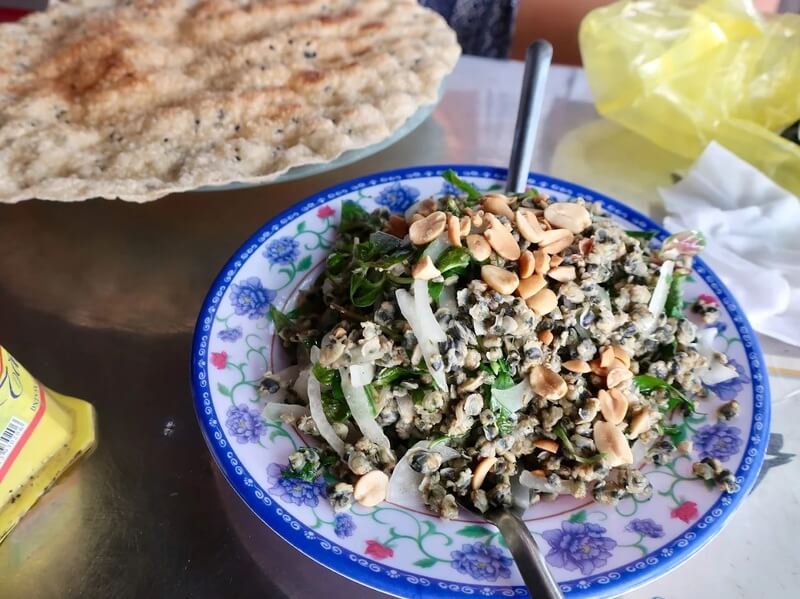
Stir-fried clams with rice crackers in Hoi An (Source: Collected)
Clam Salad - Top 3 in Hoi An (quick picks):
Hoi An’s mango cake is a simple yet popular street snack you will often see around the Old Town. Despite the name, it usually does not contain mango. Instead, the cake is shaped like a mango and made from glutinous rice dough filled with a sweet peanut and sesame mixture.
The texture is soft and slightly chewy, similar to mochi, making it easy to eat while walking around the lantern-lit streets. It is light, affordable, and ideal as a quick snack between meals.
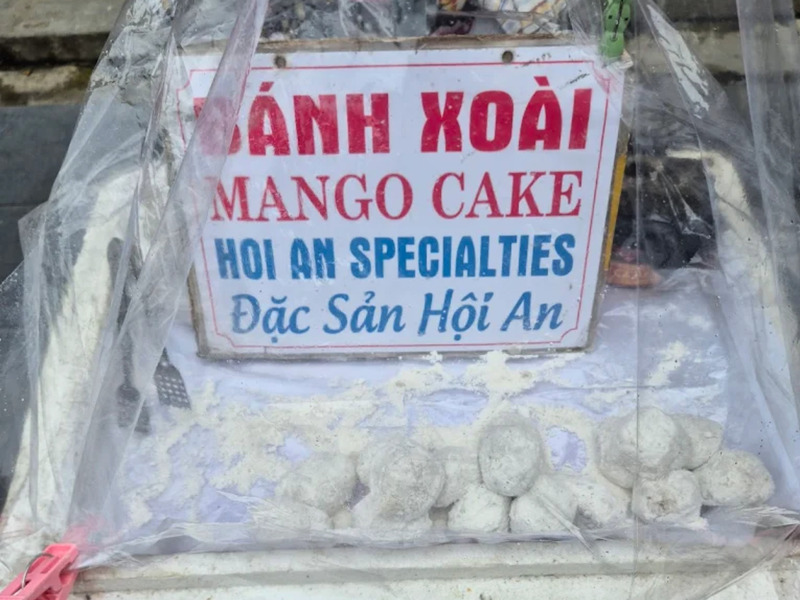
Mango cake on Hoi An’s street (Source: Collected)
Mango Cake - Top 3 in Hoi An (quick picks):
Banh beo is a classic Central Vietnam snack made from small steamed rice cakes served in individual cups. Each piece is topped with minced shrimp, scallion oil, crispy crumbs, and a light fish sauce dressing.
The texture is soft and delicate, while the toppings add savory flavor and a slight crunch. Banh beo is best eaten fresh when the topping is still warm, making it a popular choice for a light snack rather than a full meal.
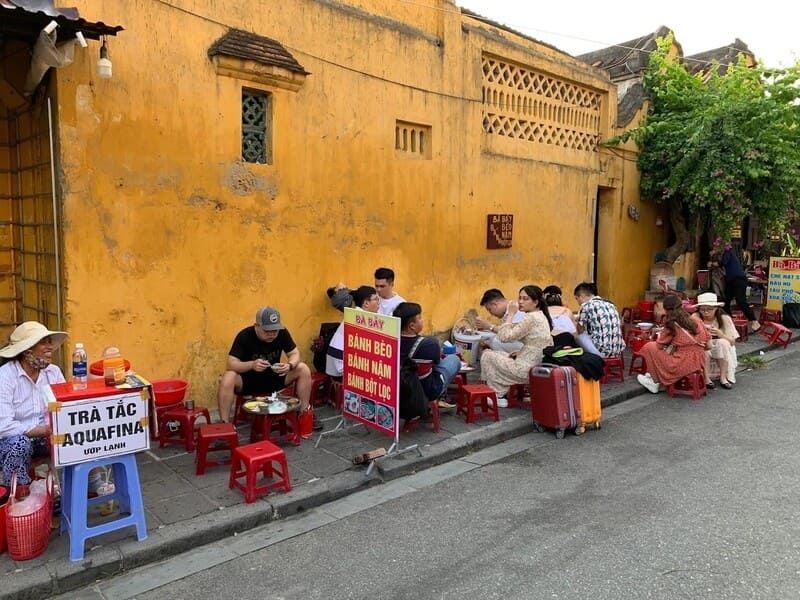
Guests eating Banh Beo at Ba Bay shop in Hoi An (Source: Collected)
Banh Beo - Top 3 in Hoi An (quick picks):
White rose dumplings are one of Hoi An’s most recognizable dishes. These delicate dumplings are made from thin rice dough, filled with shrimp or pork, and shaped like small white petals before being steamed until slightly translucent.
They are light in texture, mildly savory in flavor, and usually topped with crispy fried garlic for extra aroma. This is a dish often shared and is considered a must-try when visiting Hoi An.
White Rose - Top 3 in Hoi An (quick picks):
Finding the right place to eat in Hoi An can take some time, especially for first-time visitors. Street food stalls are everywhere, reviews can be inconsistent, and it is not always easy to tell which spots are truly local.
The locations below can help you plan a simple and enjoyable food route. You can explore them in one evening or spread them across a few days, depending on your pace and schedule.
Hoi An Central Market is one of the best places to start if you want an introduction to local food. Inside the yellow market hall, you will find rows of small stalls serving classic dishes such as cao lau, mi quang, banh mi, white rose dumplings, fried wonton, sweet soups, and simple rice plates.
The market is busiest in the morning, but late breakfast or lunchtime is often the most comfortable time to visit, with plenty of fresh food and a lively atmosphere without heavy crowds.
Mango cake is one snack to look out for here. Despite the name, it does not usually contain mango. Instead, it is made from glutinous rice flour with a soft, chewy texture and a sweet peanut-sesame filling. It is light, easy to eat, and widely available throughout the market.
Hoi An Ancient Town is where many visitors first experience local street food. The pedestrian streets are lined with small stalls, pushcarts, and family-run kitchens set among historic buildings and lantern-lit alleys.
This area is ideal for trying signature dishes such as mi quang, cao lau, chicken rice, banh mi, and corn sweet soup while exploring the Old Town. Eating here is less about sitting down for a full meal and more about tasting different dishes as you walk.
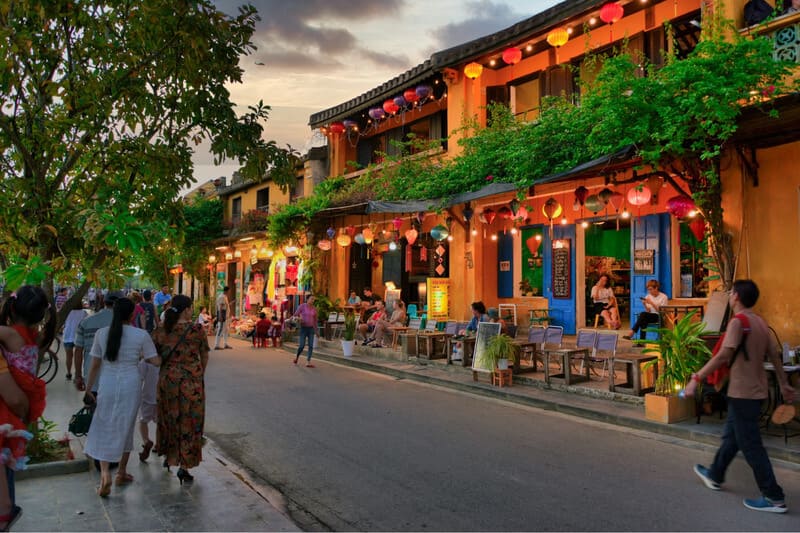
Restaurants and cafes at Hoi An Ancient Street (Source: Internet)
Many vendors focus on just one or two specialties, which is often a good sign of freshness and quality. Around the Japanese Covered Bridge, you will also find dessert carts selling mango cake and other small sweets.
In the evening, the riverside along Bach Dang and the area around the Hoi An Night Market become one of the most vibrant places to eat. Lanterns light up the streets, and food carts line the walkway with a wide range of snacks and desserts.
You will find barbecue skewers, grilled seafood, crepes, rolled ice cream, tofu pudding, sweet soups, smoothies, and herbal drinks. The atmosphere here is lively, making it a good place to combine food with sightseeing or a lantern boat ride.
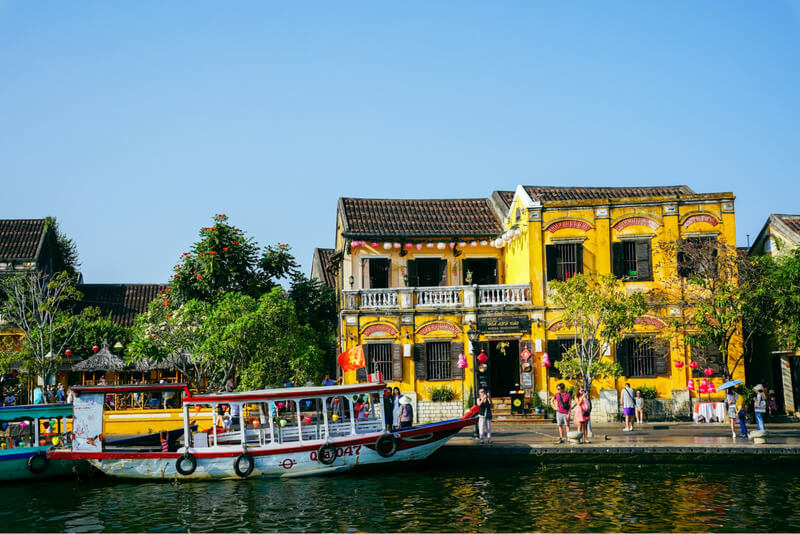
Restaurants by Hoi An’s riverside (Source: Internet)
Prices are slightly higher than inside the Central Market but still affordable. This area works well if you prefer to try several small dishes rather than one full meal.
Located about 3 km from the Old Town, Tra Que Vegetable Village offers a different kind of food experience. This farming community is known for its fresh herbs, which are widely used in Hoi An’s local dishes.
Restaurants and homestays here often serve set meals or host cooking classes using ingredients grown in the village. The food tends to be lighter, with a focus on vegetables and fresh herbs.
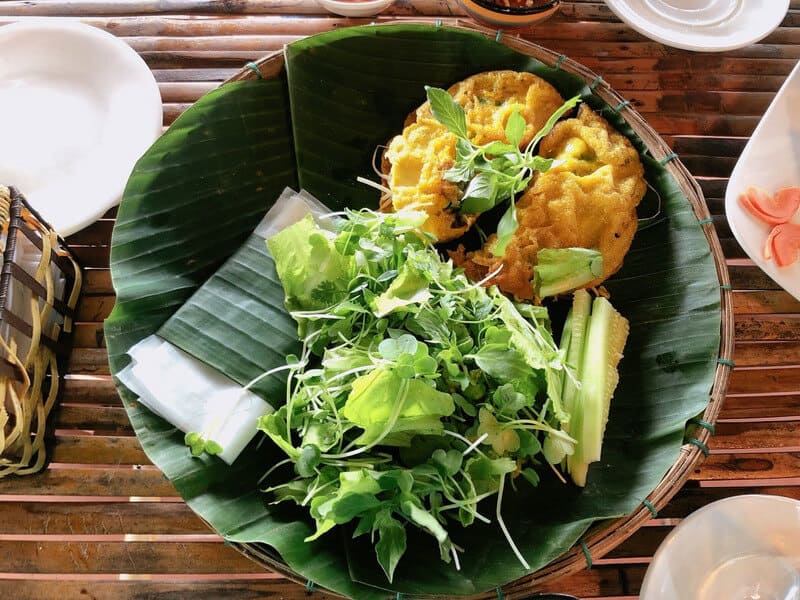
Banh Xeo at Tra Que vegetable village, Hoi An (Source: Tripadvisor)
A typical experience may include a short village walk, a cooking session, and a full meal. This is a good option if you want a quieter setting and a more hands-on introduction to local cuisine.
For visitors who prefer a more organized experience, a [Hoi An village and cooking tour] can be a practical way to combine local food, farming culture, and hands-on activities in a half-day or full-day plan.
Ly Thuong Kiet Street is less visited by tourists and offers a more local, everyday street food experience. Small stalls here focus on simple snacks such as banh beo, sweet soups, and traditional rice-based desserts.
The setting is casual, with low stools and quick service, giving a closer look at local daily life. Portions are small, which makes it easy to try several dishes without spending much.
Hoi An street food is generally safe when you choose busy stalls where food is cooked fresh and served hot. Places with a steady flow of local customers are usually a good sign of quality and hygiene.
For most everyday dishes, prices are fixed, especially at market stalls and places with printed menus. Bargaining is not common in these settings.
At night markets or with snack vendors in tourist areas, prices can be slightly higher, and polite negotiation may be possible. It is always a good idea to ask the price before ordering and keep any negotiation friendly and respectful.
Most street food vendors in Hoi An accept cash only, typically in Vietnamese dong. Small stalls and local markets rarely take cards.
Some cafés and larger restaurants may accept credit cards, but for street food, it is best to carry small bills to make payment easier.
Avoid stalls that appear unhygienic, where food is left uncovered for long periods or where food handling practices seem questionable.
If you have a sensitive stomach, be cautious with ice, raw vegetables, or undercooked meat and seafood. When in doubt, choose dishes that are freshly grilled, boiled, or stir-fried in front of you, and follow places where locals tend to eat.
Vietnamese iced coffee, fresh coconut, and sugarcane juice are popular choices that pair well with savory dishes like cao lau, banh mi, and grilled meats.
For something lighter, iced tea or fresh fruit juice works well between dishes. In the evening, herbal drinks, MOT tea, or a local beer can complement fried and spicy street food.
This guide gives you a practical overview of what to eat, where to go, and what to expect when exploring street food in Hoi An. From signature dishes like cao lau and mi quang to quick snacks and desserts, you can easily build a flexible food route based on your time and preferences.
If you are still deciding whether to include Hoi An in your trip, see Is Hoi An Worth Visiting? What Is Hoi An Famous For?.
You can also plan the best travel period with When is the Best Time to Visit Hoi An in Vietnam?.
If you prefer a more structured experience, the Your Vietnam Travel team can help you plan a personalized street food route, including suggested timing, local insights, and optional reservations, so you can explore Hoi An’s food scene with confidence.





 Vietnam Tours
 Cambodia Tours
 Laos Tours
 Thailand Tours
 Multi-Country Tours