Ho Chi Minh City Museum of Fine Arts is one of the city’s most important art museums, preserving and showcasing the evolution of Vietnamese fine arts across different historical periods. Beyond its rich collection ranging from ancient to contemporary works, the museum also captivates visitors with its elegant French colonial architecture, reflecting the distinctive charm of early 20th-century Saigon.
In this guide from Your Vietnam Travel, you’ll find everything you need to plan your visit, from the museum’s history and architecture to its highlight galleries, transportation tips, and practical travel advice. Let’s explore together and discover one of Ho Chi Minh City’s most rewarding cultural experiences.
Located in District 1, the Ho Chi Minh City Museum of Fine Arts is one of Saigon’s most rewarding cultural stops for travelers who want more than shopping malls and busy streets.
The museum sits inside a well-preserved French-era mansion at 97A Pho Duc Chinh Street. Even before entering the galleries, many visitors pause to admire the building itself. Yellow colonial walls, stained-glass windows, tiled floors, and open balconies reflect the elegance of early 20th-century Saigon.
From our experience working with international travelers, this museum is often appreciated as a calm break from the city’s fast pace. Guests enjoy walking through quiet corridors, taking photos on the balconies, and discovering Vietnamese art in a relaxed setting.
Inside, you’ll find a diverse collection of Vietnamese fine arts. Highlights include lacquer paintings, silk artworks, sculptures, and modern pieces. The layout is easy to follow and gives first-time visitors a clear overview of how Vietnamese art has evolved over time.
Visitor information:
Thanks to its central location, affordable tickets, and peaceful atmosphere, the Fine Arts Museum fits easily into most Ho Chi Minh City itineraries. We usually recommend it for travelers who enjoy architecture, photography, and authentic local culture, especially those looking for a quieter experience in the heart of Saigon.
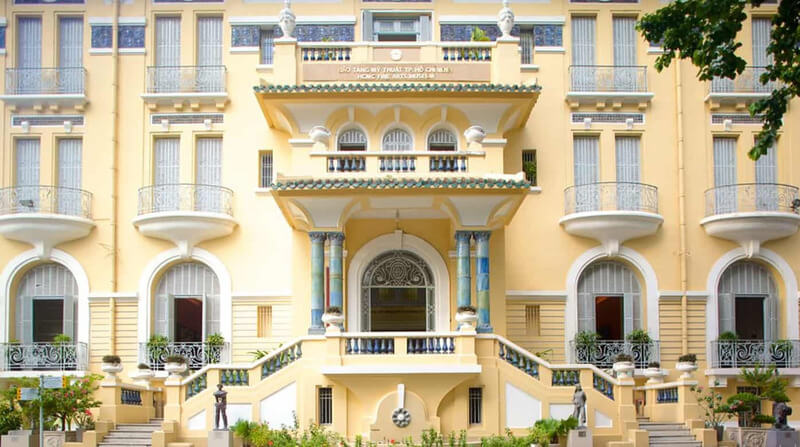
The Ho Chi Minh City Museum of Fine Arts (Source: Collected)
The Ho Chi Minh City Museum of Fine Arts is one of Saigon’s most important cultural landmarks. Its history closely mirrors the city’s transformation from colonial Saigon to modern Vietnam.
The building was constructed between 1929 and 1934. It originally served as the private mansion of Hua Bon Hoa, a wealthy Chinese-Vietnamese businessman who owned several prominent properties across Saigon. A French architect named Rivera designed the residence, combining refined French colonial details with traditional Chinese elements. This blend gives the museum its distinctive architectural character today.
In its early years, the mansion represented prosperity and cultural exchange in the Saigon-Cho Lon area. Over time, it witnessed key moments in Vietnam’s modern history, including the August Revolution in 1945, the country’s division in 1954, and reunification in 1975. After reunification, the property came under state management.
In 1987, city authorities decided to convert the former mansion into a public museum. The Ho Chi Minh City Museum of Fine Arts officially opened in 1992. Since then, it has played an important role in preserving and showcasing Vietnamese art.
Today, the museum displays paintings, sculptures, and historical artifacts from different periods. From our experience working with international travelers, many visitors appreciate how the building itself tells a story even before they enter the galleries. For most guests, this mix of architecture and art creates a deeper connection to Saigon’s past and makes the museum a rewarding cultural stop during their Ho Chi Minh City visit.
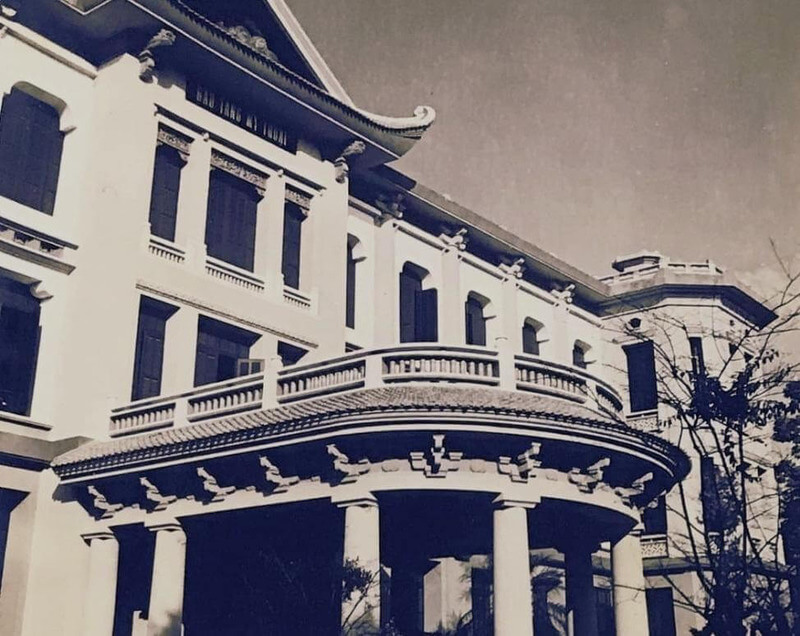
The Ho Chi Minh City Museum of Fine Arts was constructed between 1929 and 1934 (Source: Collected)
The architecture of Ho Chi Minh City Museum of Fine Arts showcases a refined Art Deco style. It blends French colonial design with traditional Asian elements, creating a space that feels both elegant and cultural.
The museum is a three-story, U-shaped complex built around a bright central courtyard. Thick walls help regulate temperature naturally. Wide corridors and arched doorways improve airflow. Large windows and a skylight allow sunlight to reach deep into the galleries.
From the outside, the yellow façade immediately stands out. Arched windows frame the building, while twin staircases lead to the main entrance. A small fountain sits in front, adding a calm touch to the green surroundings. The red yin-yang roof tiles reflect Eastern philosophy, while stained-glass windows bring in European artistry.
Inside, the layout is clear and visitor-friendly:
One architectural highlight is the antique wooden elevator, among the first installed in Saigon. Its design resembles a traditional Chinese palanquin. The grand entrance lobby features tall pillars and twin staircases. Above the arched doorway, the initials “H.B.H” honor Hua Bon Hoa, the original owner.
Long corridors connect each gallery room. Every space opens to small balconies or large windows. Natural light fills the interior throughout the day. Yellow walls, gray accents, and warm red details create a balanced color palette.
Today, the museum stands as both a cultural venue and an architectural treasure. For travelers visiting Ho Chi Minh City, it offers a quiet escape, rich history, and a deeper look into Vietnam’s artistic heritage, all within a beautifully preserved historic setting.
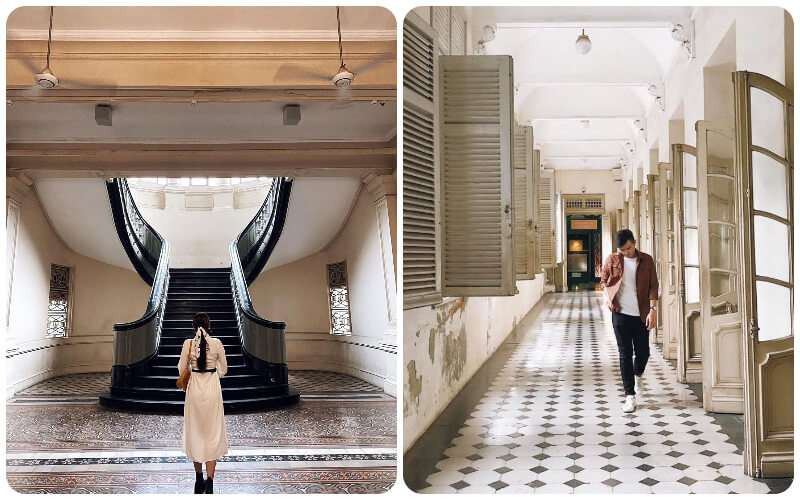
Art Deco elegance meets Asian heritage at HCMC Fine Arts (Source: Collected)
If you’re looking for a slower, more cultural side of Saigon, this museum is a great choice.
Based on our experience working with international travelers, most guests enjoy this museum for three main reasons:
The museum is compact and simple to navigate. You won’t feel overwhelmed by size or crowds. Most travelers spend around 1.5-2 hours, making it an easy addition to a half-day city tour or a relaxed afternoon in District 1.
You don’t need to be an art lover to enjoy the visit. The galleries offer a clear introduction to Vietnamese culture through sculptures, ceramics, paintings, and architectural details, all inside a beautifully preserved historic mansion.
For photography lovers, the balconies, staircases, stained-glass windows, and courtyard are often just as memorable as the exhibitions.
In short: This museum is ideal if you value culture, architecture, quiet spaces, or simply want a more authentic local experience in central Ho Chi Minh City.
The Ho Chi Minh City Museum of Fine Arts is especially suitable for:
It’s also a great fit for travelers combining museums with nearby highlights like Notre-Dame Cathedral Basilica of Saigon or Independence Palace.
However, if you’re traveling with very young children or have extremely limited time in Saigon, you may prefer faster-paced attractions. In those cases, we usually recommend pairing the museum with only one or two nearby stops to keep the experience relaxed.
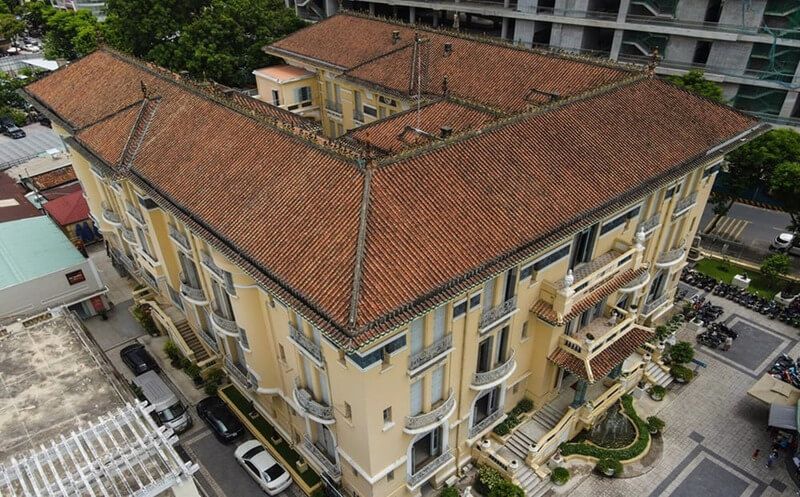
The Ho Chi Minh City Museum of Fine Arts suits culture, architecture, photo lovers (Source: Collected)
This gallery introduces visitors to the early spiritual and artistic life of southern Vietnam. The sculptures date from the 4th to the 11th centuries, when Hinduism and Buddhism played a major role in shaping local beliefs and art.
One of the main highlights is the collection of Hindu deity statues. You will see figures such as Vishnu, Surya, Lakshmi, Uma, and Ganesa. Most were carved from fine sandstone between the 5th and 11th centuries. Visitors often notice the calm faces, balanced proportions, and fine details that define early Southeast Asian sacred art.
The gallery also features Buddhist sculptures from the 4th to the 10th centuries. These Buddha figures were made from sandstone and giant crape-myrtle wood, materials commonly used for religious objects at the time. Despite their age, many pieces remain well preserved and visually striking.
You don’t need any background in art history to enjoy this section. Many travelers appreciate its quiet atmosphere and the way it reveals early cultural exchange and belief systems in southern Vietnam.
This gallery focuses on the artistic heritage of the Champa civilization, one of the most distinctive cultures in Vietnam’s history. Strongly influenced by Indian religions, Cham artists adopted Hindu themes and gradually developed a style that is bold, expressive, and uniquely Champa.
On display are statues, reliefs, and semi-reliefs depicting Hindu deities and mythological figures. Highlights include Kinnara statues, Dvarapala guardian reliefs, fairy dancer carvings, and Kala - the mythical face believed to protect temple entrances. Stone altars and architectural elements help visitors understand how sculpture and temple design were closely connected.
Most pieces were carved from sandstone or terracotta and date from the 7th to the 14th centuries. Their strong forms and dramatic details stand out, even to first-time museum visitors.
For many travelers, this gallery is one of the most memorable parts of the museum. It offers a clear and powerful glimpse into a once-flourishing civilization that shaped the cultural landscape of Central and Southern Vietnam.
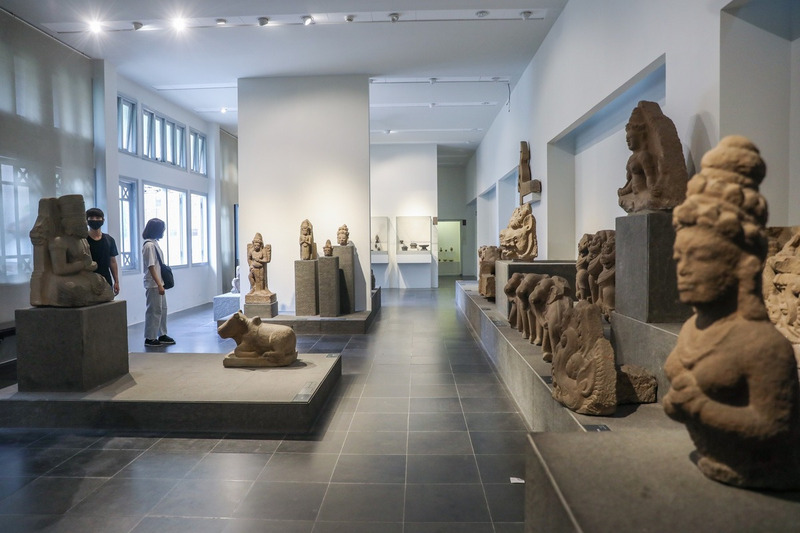
Champa ancient sculptures at the Ho Chi Minh City Museum of Fine Arts (Source: Collected)
This gallery introduces the funerary statues of Vietnam’s Central Highlands (Tay Nguyen), one of the country’s most emotional and distinctive sculptural traditions.
These wooden figures come from ancient spiritual beliefs. They reflect a deep connection between local communities and their ancestors.
Unlike polished stone sculptures found in temples, Tay Nguyen tomb statues feel raw and personal. They were carved with simple tools such as axes and knives. Yet they express powerful human emotions. According to local tradition, these statues serve as spiritual companions for the deceased, helping them continue life in the afterworld.
Common figures include crying mourners, mothers holding children, and naked men or women. Instead of ideal beauty, the statues show everyday life and real feelings. This reflects a belief that death is not an ending, but a transition to another stage of existence.
For many travelers, this is one of the most moving parts of the museum. The sculptures offer rare insight into indigenous creativity, funeral rituals, and how Central Highlands communities understand life, death, and memory.
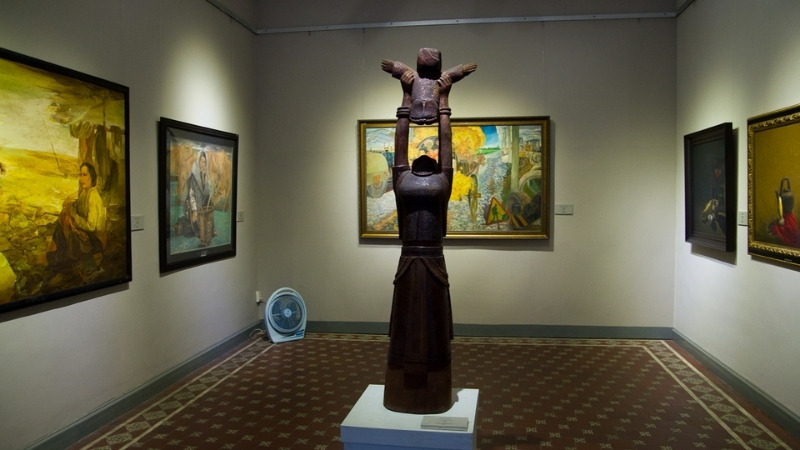
Statues from Tay Nguyen Tombs at the Ho Chi Minh City Museum of Fine Arts (Source: Collected)
This gallery tells the story of Vietnam’s ceramic tradition over nearly 1,000 years.
Vietnamese pottery reached its artistic peak during the Ly, Tran, and Le dynasties. During this period, craftsmen produced refined ceramics for daily use, religious purposes, and regional trade across Asia.
From the late 19th to early 20th centuries, famous pottery villages such as Bat Trang, Phu Lang, Huong Canh, Thanh Hoa, Binh Dinh, and Bien Hoa continued this legacy. Each region developed its own materials, colors, and decorative styles.
As you walk through this section, you’ll notice how function and beauty go hand in hand. Simple household items received the same care as ceremonial pieces. Together, the collection gives visitors a clear picture of Vietnamese craftsmanship and the country’s long tradition of applied arts.
Many guests enjoy this gallery for its variety and practical charm, especially those interested in local culture and everyday Vietnamese life.
This gallery shows how southern Vietnam’s artistic identity grew through migration and cultural exchange.
From the late 17th century onward, the region welcomed Chinese immigrants alongside Vietnamese and Khmer communities. Farmers, craftsmen, and people displaced by conflict also arrived, all looking for new beginnings.
Many newcomers were skilled artisans. They developed local handicrafts using the area’s rich clay resources. Ceramics and everyday art objects were made for practical use, yet still reflected careful design and craftsmanship. Over time, these creations formed a distinctive southern style rooted in daily life.
As you move through the gallery, you’ll see clear signs of cultural blending. Different traditions came together and shaped regional craftsmanship between the 18th and 20th centuries.
For travelers, this section offers a simple but meaningful look at how creativity grew from migration, adaptation, and shared living in southern Vietnam.
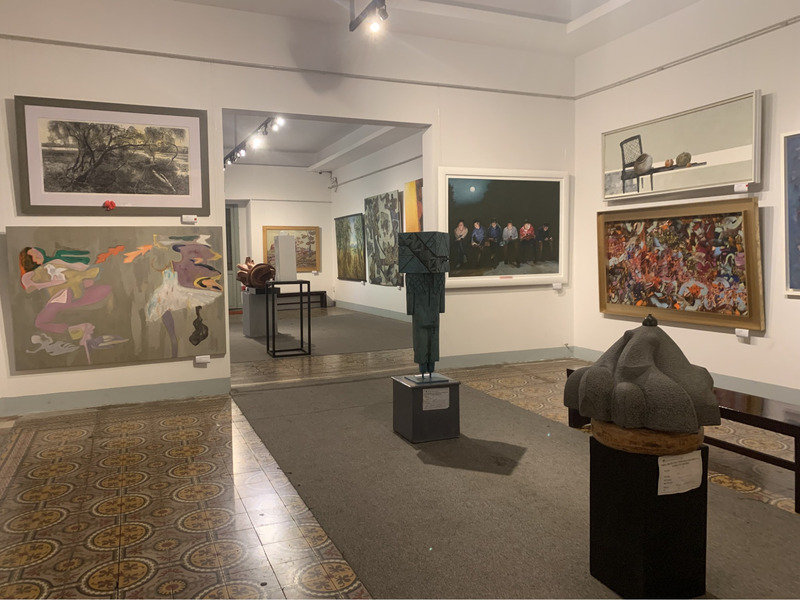
Southern fine arts at Ho Chi Minh City Fine Arts Museum show fusion (Source: Collected)
This gallery follows Vietnam’s artistic journey from the early 20th century to today. The collection is divided into two periods: before 1975 and from 1975 onward. Together, they show how art evolved alongside the country’s social changes.
Visitors can explore works by well-known Vietnamese artists such as Nguyễn Gia Trí, Diệp Minh Châu, Đỗ Quang Em, and Trịnh Cung. Many pieces draw inspiration from everyday life, personal emotions, and natural landscapes.
Styles range from early modern experimentation to contemporary expression. You’ll see how artists balance tradition with new ideas through different materials and techniques.
From our experience guiding international travelers, this is often one of the most engaging parts of the museum. It helps visitors understand Vietnam beyond history books and offers a personal view of how local perspectives are expressed through modern art.
Located right in District 1, Ho Chi Minh City Museum of Fine Arts is easy to reach from most parts of the city. The museum sits on Pho Duc Chinh Street, about 9 km from Tan Son Nhat International Airport, making it a convenient stop for travelers exploring downtown Saigon.
Here are the most practical ways to get there:
Taxis and ride-hailing services such as Grab, Be or Xanh SM are the fastest and most comfortable options. From central landmarks like Notre-Dame Cathedral Basilica of Saigon or Ben Thanh Market, the ride usually takes around 10-15 minutes, depending on traffic. Simply enter “Ho Chi Minh City Museum of Fine Arts” as your destination.
Traveling by bus is budget-friendly and surprisingly convenient. Several routes stop within a short walking distance of the museum, including:
Most of these routes pass near Ben Thanh Market, from where it’s about a 5-minute walk to the museum. Bus routes and schedules can change, so it’s best to check updated information on the day of travel.
If you’re comfortable riding in Vietnam, a motorbike offers flexibility and makes it easy to combine the museum visit with nearby attractions in District 1. Parking is available close to the museum or in small surrounding alleys, typically costing around 5,000-10,000 VND.
Staying near Ben Thanh Market or Nguyen Hue Walking Street? The museum is only a 5-10 minute walk, making it a pleasant addition to a self-guided city stroll.
Local travel tips:
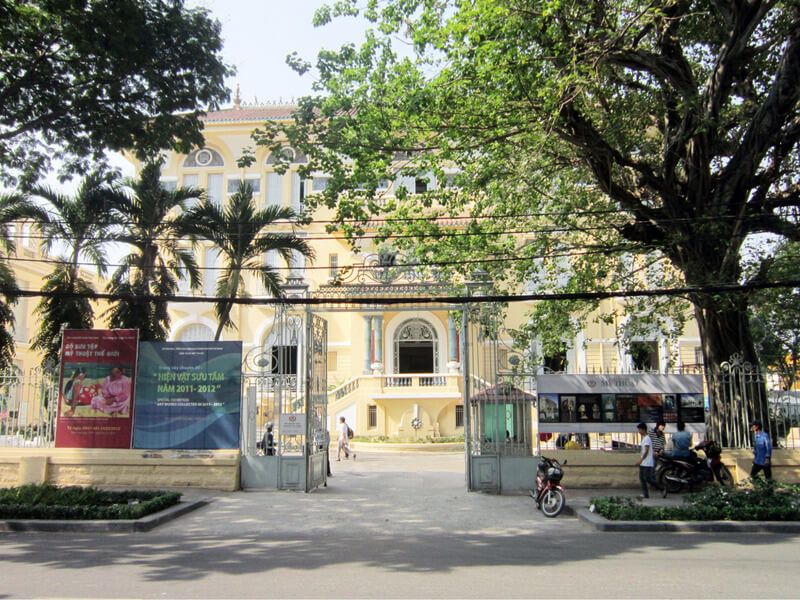
Ho Chi Minh City Museum of Fine Arts is easy to reach (Source: Collected)
To make the most of your visit while helping preserve the museum’s valuable collections, keep these practical tips in mind:
Our local guides usually recommend visiting in the late morning or early afternoon, when galleries are quieter and natural light is best for photography.
Thanks to its prime location, the Ho Chi Minh City Museum of Fine Arts is surrounded by many of Saigon’s most iconic attractions. After your museum visit, it’s easy to continue exploring the city on foot or with a short ride. Below are some must-see highlights nearby that you shouldn't miss:
One of Saigon’s most famous landmarks, Ben Thanh Market is a lively hub of local life. Here you’ll find everything from handicrafts, textiles, and souvenirs to fresh produce and spices. It’s also an excellent spot to sample classic street food such as bun thit nuong (grilled pork noodles) and banh xeo (crispy Vietnamese pancakes).
This wide pedestrian boulevard is one of the most vibrant areas in the city. Nguyen Hue Walking Street is known for its open public spaces, street performances, and modern cafés and rooftop bars. It’s especially lively in the evening and offers great views toward the Bitexco Financial Tower.
A classic example of French colonial architecture, the cathedral features a striking red-brick façade and twin bell towers. It’s a favorite stop for architecture lovers and photographers and remains an important religious and historical symbol of the city.
Located next to Notre-Dame Cathedral, the Central Post Office is one of Saigon’s most beautiful historic buildings. Its high vaulted ceilings, vintage maps, and old-style telephone booths create a nostalgic atmosphere. It’s also a convenient place to send postcards or pick up small souvenirs.
Also known as Reunification Palace, this landmark is closely associated with the end of the Vietnam War in 1975. Visitors can explore its distinctive modernist architecture, preserved meeting rooms, underground bunkers, and historical exhibits that offer deep insight into Vietnam’s recent history.
How long does it take to visit the Ho Chi Minh City Museum of Fine Arts?
From our experience guiding international travelers, most guests spend around 1.5 - 2 hours here. If you enjoy photography, architecture, or modern Vietnamese art, you may want to allow closer to 2-3 hours, especially when combining your visit with nearby attractions such as Ben Thanh Market.
At Your Vietnam Travel, we often include this museum in half-day Saigon cultural tours, especially for travelers who enjoy architecture, photography, and quieter attractions.
Yes, mobile photography is allowed. However, professional cameras usually require a permit and an additional fee. Flash photography is strictly prohibited to protect the artworks.
There is no strict dress code, but visitors are encouraged to dress respectfully and comfortably. Lightweight clothing is ideal due to Saigon’s warm climate, and comfortable walking shoes are recommended for exploring multiple floors and galleries.
Yes. Most exhibition rooms feature bilingual Vietnamese-English panels, making it easy for international visitors to understand the artworks, historical background, and artistic techniques on display.
While audio guides are not always available on-site, you can arrange a local English-speaking guide through travel agencies or tour operators in advance. A guided visit is highly recommended if you’d like deeper insight into Vietnamese art history and cultural context.
The Ho Chi Minh City Museum of Fine Arts is a must-visit attraction for travelers looking to explore the cultural and artistic soul of Vietnam right in the heart of Saigon. With its striking French colonial architecture, convenient location, and diverse collections ranging from ancient artifacts to contemporary works, the museum offers a relaxing yet culturally enriching experience.
If you’re looking for a tailor-made Ho Chi Minh City journey that combines museums, architectural heritage, and authentic local experiences, get in touch with Your Vietnam Travel. Our local experts are ready to design a personalized itinerary that fits your schedule, budget, and interests.
Contact Your Vietnam Travel today and start your journey your way.



 Vietnam Tours
 Cambodia Tours
 Laos Tours
 Thailand Tours
 Multi-Country Tours