The Vietnam National Fine Arts Museum is Hanoi's leading museum for exploring Vietnamese artistic heritage. Home to thousands of artworks ranging from ancient artifacts to modern masterpieces, the museum offers valuable insights into Vietnam's history, culture, and creative traditions.
The Vietnam National Fine Arts Museum, also known as the National Fine Arts Museum Hanoi or Bảo tàng Mỹ thuật Việt Nam, is the country's leading institution dedicated to preserving and showcasing Vietnamese fine arts.
Located at 66 Nguyen Thai Hoc Street in Ba Dinh District, the museum sits in one of Hanoi's most important cultural areas, close to the Temple of Literature, Ho Chi Minh Mausoleum, and other historical landmarks.
The museum officially opened in 1966 and now preserves more than 20,000 artworks and artifacts. Around 2,000 pieces are displayed in permanent galleries, presenting the development of Vietnamese art from ancient civilizations to contemporary creative movements.
The museum's collections cover:
Today, the museum serves not only as an exhibition space but also as an important center for art education, cultural exchange, and temporary exhibitions by Vietnamese and international artists.
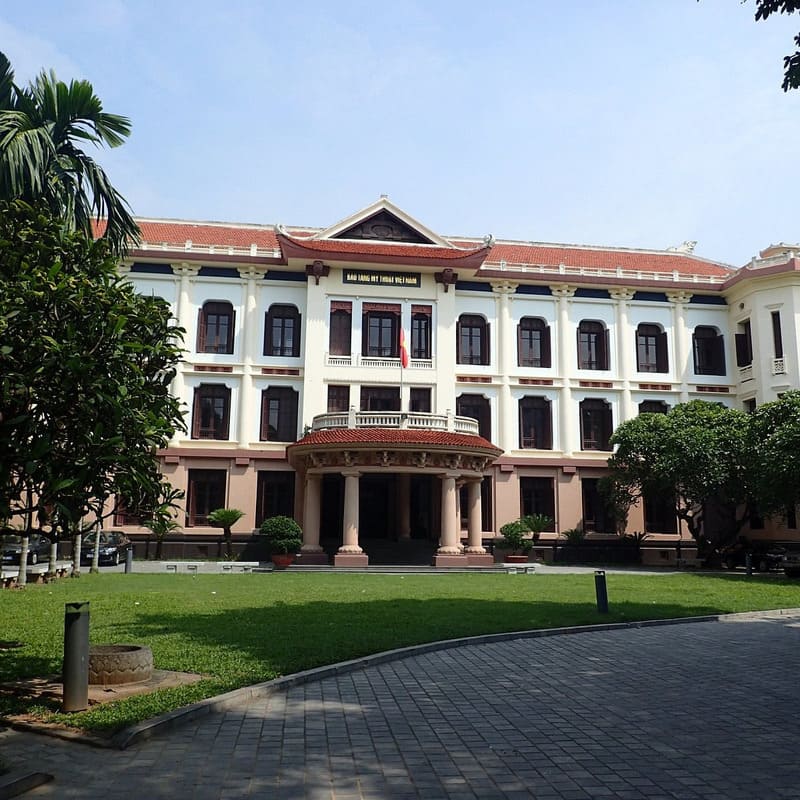
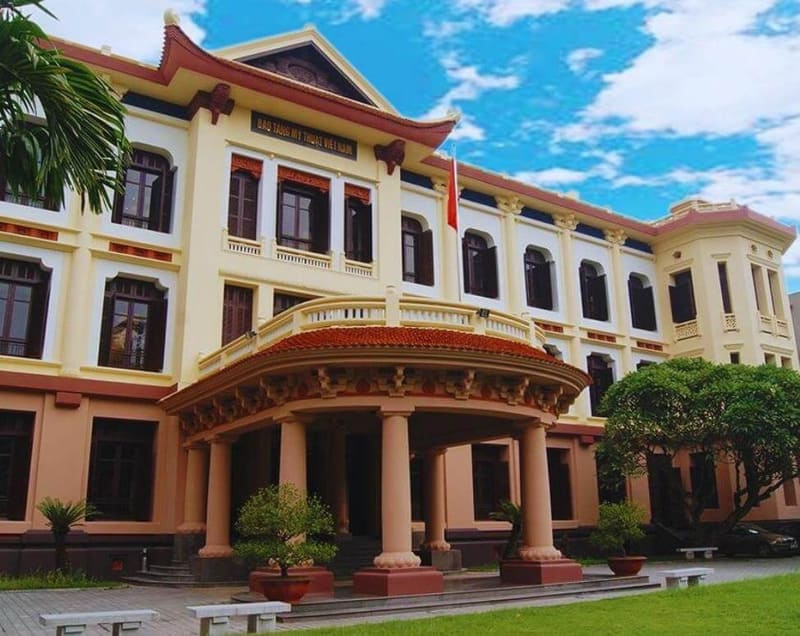
The Vietnam National Fine Arts Museum in Ba Dinh District (Source: Collected)
The museum building dates back to the French colonial period. Constructed in the 1930s, it originally served as a boarding school for girls, known as the Dormitory for the Daughters of French Officials in Indochina.
Following Vietnam's independence, the building was selected as the future national fine arts museum. Extensive renovations began in 1962, and the museum officially welcomed visitors in 1966.
The complex underwent further expansion between 1997 and 1999, increasing the total area to approximately 4,737 square meters, with exhibition spaces covering more than 3,000 square meters.
Architecturally, the museum is notable for combining French colonial design with traditional Vietnamese elements. The building incorporates:
The fusion of European and Vietnamese architectural styles makes the museum itself an attractive cultural landmark even before visitors enter the galleries.
The museum is located in Ba Dinh District and is easily accessible from central Hanoi.
The museum generally opens:
Opening hours may change during Tet and certain public holidays.
Additional services:
Most visitors spend around 1.5 to 2 hours exploring the museum.
Because the museum is air-conditioned and usually less crowded around midday, late morning and early afternoon are often considered the most comfortable times to visit.
The Vietnam National Fine Arts Museum offers a broad view of Vietnamese art, from ancient objects and religious sculptures to folk paintings, ceramics, lacquer works, silk paintings, revolutionary art, and modern masterpieces. Visitors do not need deep art knowledge to enjoy the museum, as many collections are closely connected to
Vietnamese culture, history, daily life, and national identity.
If your time is limited, focus on the permanent galleries, especially folk art, lacquer paintings, silk paintings, ceramics, and major works by well-known Vietnamese artists.
This gallery traces the origins of Vietnamese art through artifacts from the Stone Age, Bronze Age, and early historical periods. The collection includes tools, ornaments, ritual objects, and decorative items that reveal the daily life, spiritual beliefs, and craftsmanship of Vietnam's early communities.
These early works provide valuable insight into the foundations of later artistic traditions, including ceramics, bronze casting, wood carving, and religious sculpture.
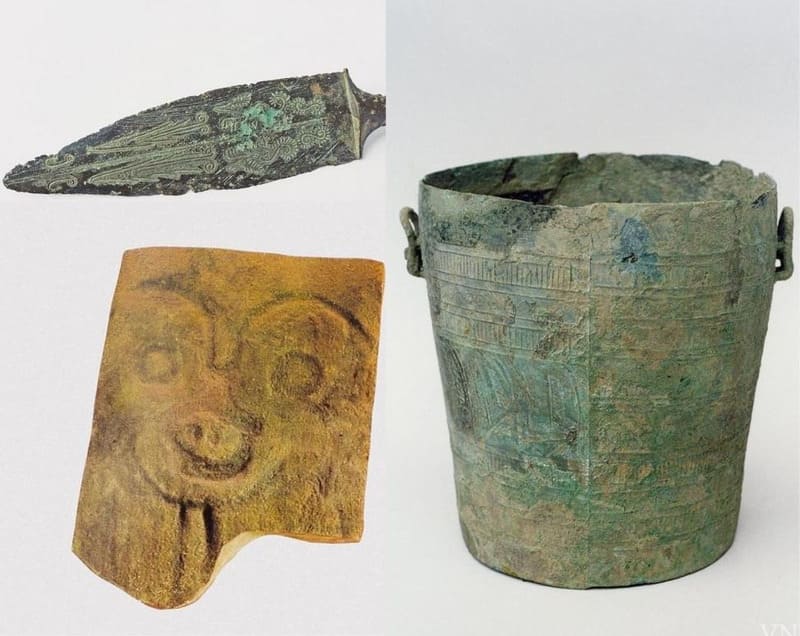
Early artifacts reveal Vietnam’s artistic roots (Source: Collected)
Buddhist sculptures are among the museum's most significant collections, reflecting the important role of Buddhism in Vietnamese society, particularly during the Ly and Tran dynasties. The galleries feature statues, reliefs, and ritual objects that once belonged to pagodas, temples, and sacred spaces across Vietnam.
The museum also preserves historical artifacts from various dynasties and regions. Some pieces display influences from Champa, Khmer, and other Southeast Asian cultures, highlighting centuries of cultural exchange and Vietnam's connections within the region.
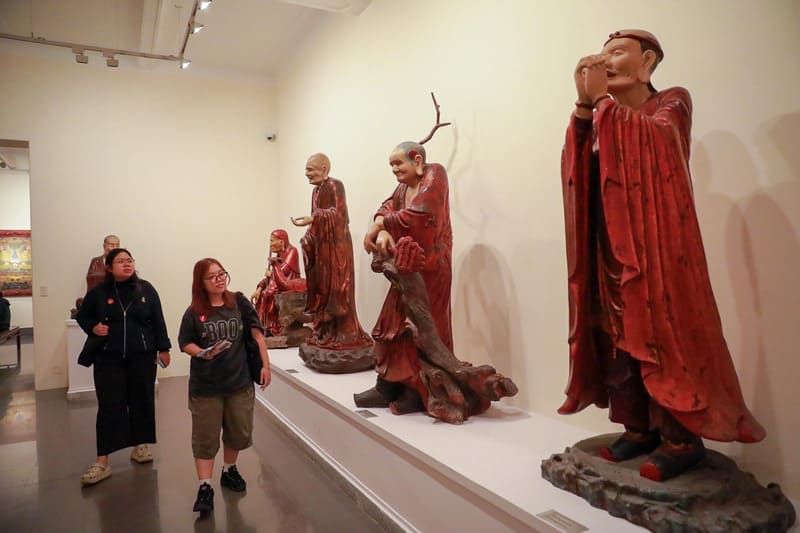
Buddhist sculptures reflect Vietnam’s spiritual heritage (Source: Collected)
Vietnamese folk art is one of the most accessible and colorful parts of the museum. These works reflect village life, festivals, family values, religious beliefs, moral stories, and wishes for happiness, prosperity, and good fortune.
Important traditions include Dong Ho, Hang Trong, Kim Hoang, and Sinh Village paintings. Dong Ho paintings are known for woodblock printing and themes such as Tet Holiday, rural life, animals, folk tales, and social satire. Hang Trong paintings, closely linked to Hanoi, often feature refined lines and decorative colors.
The museum also displays folk statues and carved objects made from wood, terracotta, and metal, showing how art was part of everyday Vietnamese culture.
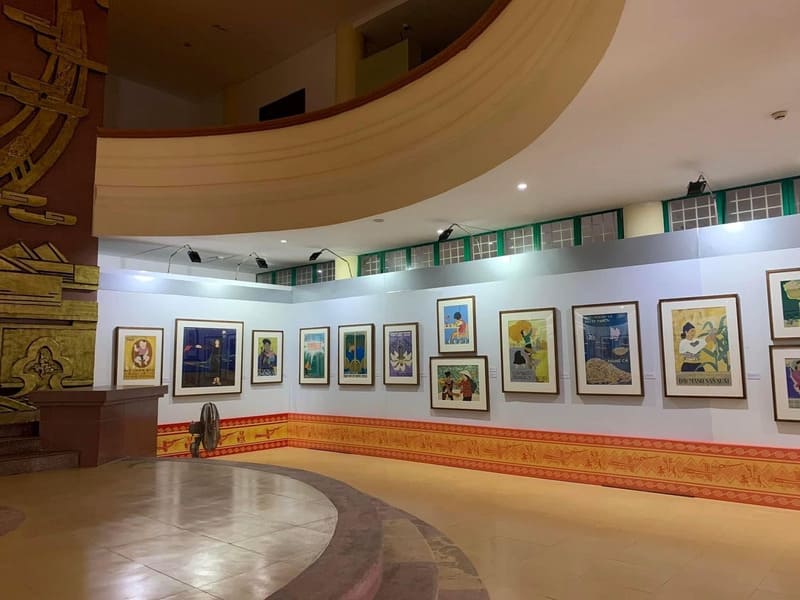
Folk paintings bring village life into color (Source: Collected)
Lacquer painting is one of Vietnam’s most distinctive modern art forms. Vietnamese artists transformed traditional lacquer techniques into fine art through layered surfaces, polishing, deep colors, and gold or silver details. The museum’s lacquer collection is an essential stop for understanding modern Vietnamese painting.
Silk painting is another highlight. Vietnamese silk works are known for soft colors, delicate lines, and a quiet, poetic feeling. Common subjects include women, children, rural landscapes, and daily life. Nguyen Phan Chanh is one of the important artists associated with this art form.
Lacquer paintings often feel rich and dramatic, while silk paintings feel gentle and subtle. Seeing both helps visitors understand two major directions in Vietnamese modern art.
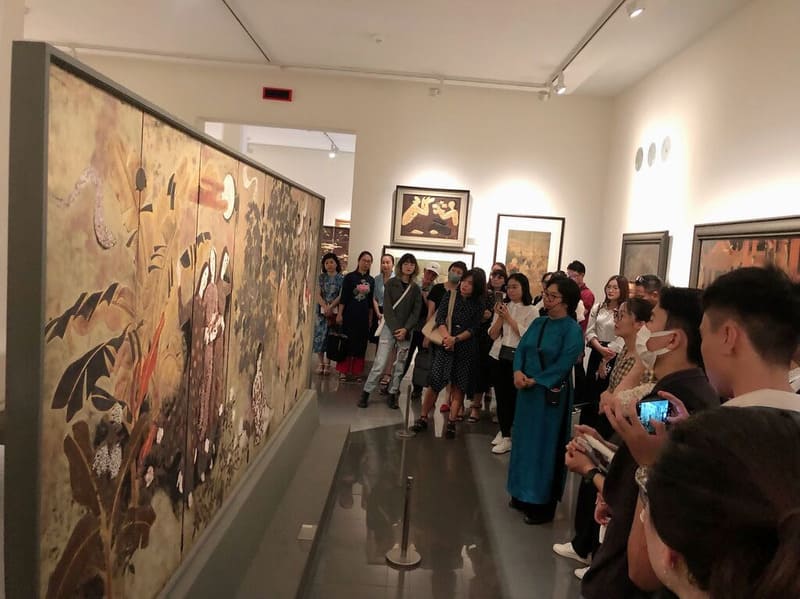
Lacquer and silk works show Vietnamese elegance (Source: Collected)
The ceramics collection shows Vietnam’s long craft tradition through bowls, jars, plates, ritual objects, and decorative pieces. The collection includes celadon, brown-patterned ware, crackle-glazed ceramics, blue-and-white pottery, and modern ceramic pieces.
This section also highlights applied arts, including objects used in religious rituals, household life, decoration, and traditional crafts. It shows that Vietnamese art is not limited to paintings but also appears in ceramics, textiles, woodwork, metalwork, and everyday objects.
For travelers planning to visit Bat Trang Ceramic Village near Hanoi, this gallery provides useful cultural context.
This section presents artworks related to Vietnam’s major historical struggles, including resistance against French colonial rule and the war against American forces. Paintings, posters, sketches, and sculptures often depict soldiers, workers, farmers, women, children, wartime production, and national unity.
These works show how art was used to record history, inspire people, preserve memory, and express resilience. Visitors who have been to Hoa Lo Prison, the Vietnam Military History Museum, or Ho Chi Minh Mausoleum may find this gallery especially meaningful.
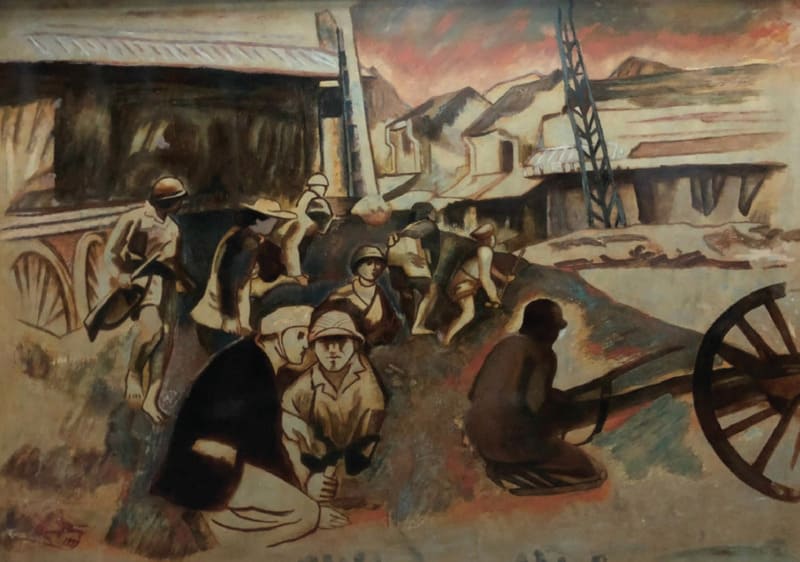
War-themed artworks capture Vietnam’s resilience (Source: Collected)
The modern and contemporary galleries feature oil paintings, lacquer works, silk paintings, sculptures, graphic art, and experimental forms from the 20th and 21st centuries.
The galleries feature works by renowned Vietnamese artists such as Tran Van Can, To Ngoc Van, Nguyen Gia Tri, Bui Xuan Phai, and Nguyen Phan Chanh. These artists helped shape modern Vietnamese art by combining local subjects with new techniques and artistic training.
One of the museum’s most famous works is “Em Thuy” by Tran Van Can, a celebrated portrait from 1943. This section is especially interesting for visitors who want to see how Vietnamese artists portrayed city life, rural landscapes, portraits, family scenes, social change, and historical events.
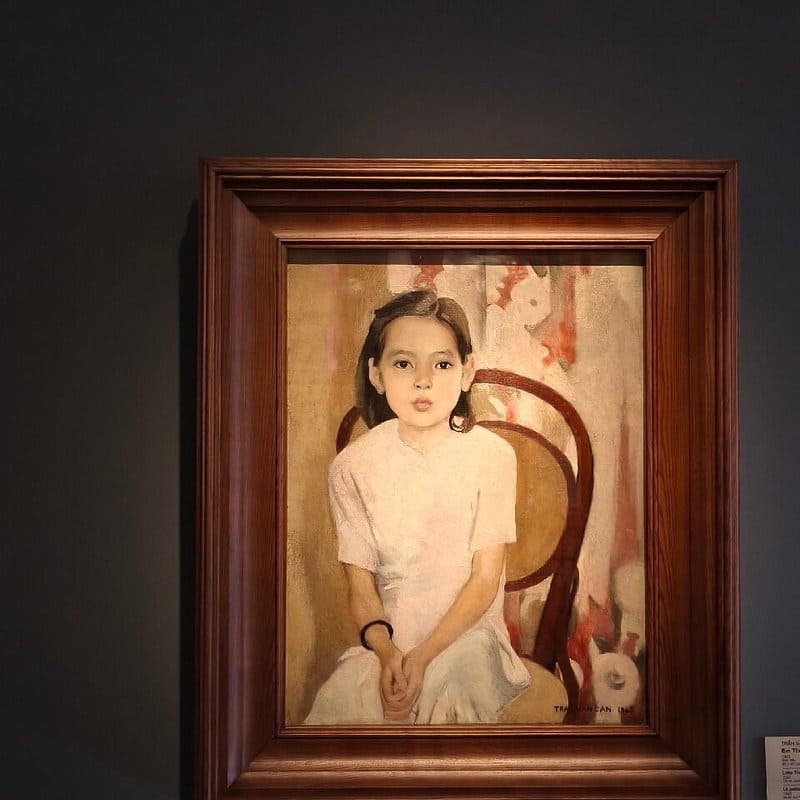
The famous “Em Thuy” portrait by Tran Van Can (Source: Collected)
Besides its permanent collections, the Vietnam National Fine Arts Museum also hosts temporary exhibitions, cultural events, educational programs, and art activities. These may focus on individual artists, contemporary art, national treasures, traditional crafts, or special cultural themes.
The museum also offers digital support through iMuseum VFA, which provides images, audio, text, QR code scanning, location support, and gallery information. This is useful for international visitors exploring the museum without a guide.
Families with children can look for the Creative Space for Children, an educational area designed to introduce young visitors to painting, sculpture, folk art, ceramics, and hands-on creative activities. Some programs may require advance booking or separate tickets.
To ensure a pleasant visit, visitors should follow several guidelines:
Practical tips:
The Vietnam National Fine Arts Museum is located near many of Hanoi’s top cultural landmarks, making it easy to combine several attractions in one itinerary.
Most visitors spend around 1.5 to 2 hours exploring the permanent galleries and temporary exhibitions.
Photography may be permitted in certain areas. Restrictions can apply depending on the exhibition, and flash photography may not be allowed.
Yes. The museum's Creative Space for Children offers interactive art activities designed to encourage creativity and introduce young visitors to Vietnamese art.
Yes. Audio guides and guided tour services are generally available for an additional fee and provide detailed explanations of the collections.
Tickets are usually purchased at the museum entrance. Visitors should check the museum's official channels for any updates regarding online ticketing services.
The Vietnam National Fine Arts Museum offers one of the best introductions to Vietnamese artistic heritage, combining ancient artifacts, traditional crafts, and modern masterpieces in one place. Conveniently located near several of Hanoi's major landmarks, it is an excellent addition to any culture-focused itinerary in the capital.
If you plan to explore Hanoi and other cultural destinations across Vietnam, Your Vietnam Travel can help create personalized itineraries based on your interests.

 Vietnam Tours
 Cambodia Tours
 Laos Tours
 Thailand Tours
 Multi-Country Tours