Vietnamese rice paddies are among the most iconic landscapes in Vietnam, stretching from the terraced mountains of the north to the flat, fertile plains of the Mekong Delta. These rice fields are not only beautiful travel destinations but also an essential part of Vietnam’s agriculture, culture, cuisine, and rural life.
Vietnamese rice paddies are flooded fields used to grow rice, the country’s most important staple crop. They can be found across Vietnam, from flat river deltas and lowland plains to mountain valleys and terraced hillsides. Depending on the season and region, rice paddies may appear as bright green fields, golden harvest landscapes, mirror-like flooded plots, or dramatic terraces carved into steep slopes.
Rice paddies are closely tied to Vietnamese daily life and culture. Rice is eaten in almost every meal and used in many traditional foods, including steamed rice, sticky rice, pho, rice noodles, banh chung, banh tet, rice paper, rice wine, and local snacks. For generations, rice farming has shaped village life, seasonal traditions, festivals, and rural communities.
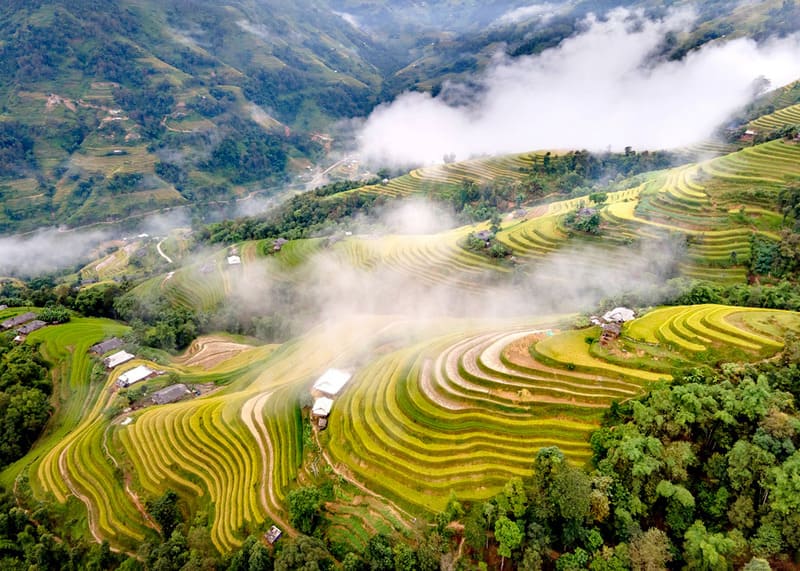
Rice paddies are part of everyday life in Vietnam (Source: Collected)
Vietnam has diverse rice landscapes because its geography changes from mountains and valleys to deltas, coastal plains, and highland regions.
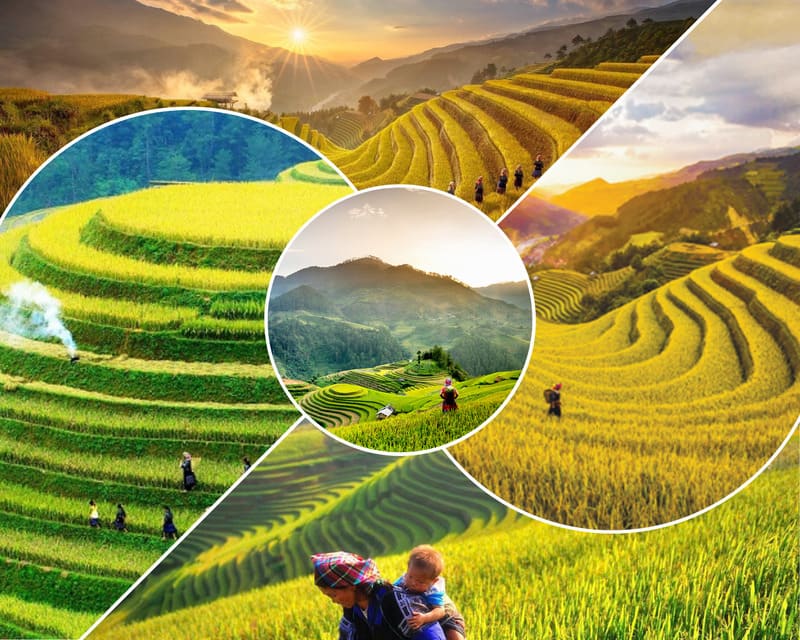
Mu Cang Chai is one of Vietnam’s most iconic rice terrace destinations. Located in Yen Bai Province, it is famous for sweeping terraced fields across La Pan Tan, Che Cu Nha, De Xu Phinh, Tu Le Valley, and Khau Pha Pass.
Created by local H’Mong communities over generations, the terraces reflect how highland farmers adapted rice cultivation to steep mountain terrain. The area is ideal for photography, mountain scenery, and travelers seeking a less commercial route than Sapa.
The best time to visit is mid-September to mid-October, when the fields turn golden before harvest. May and June are also beautiful during the water pouring season, when flooded terraces reflect the sky.
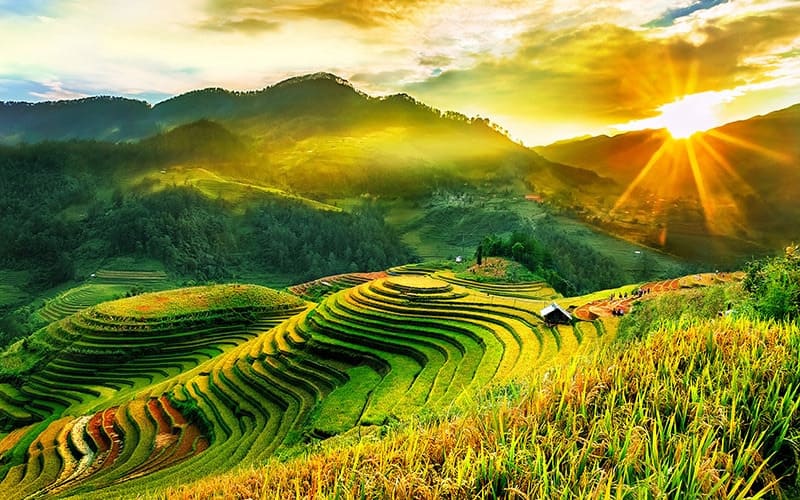
Golden rice terraces in Mu Cang Chai (Source: Collected)
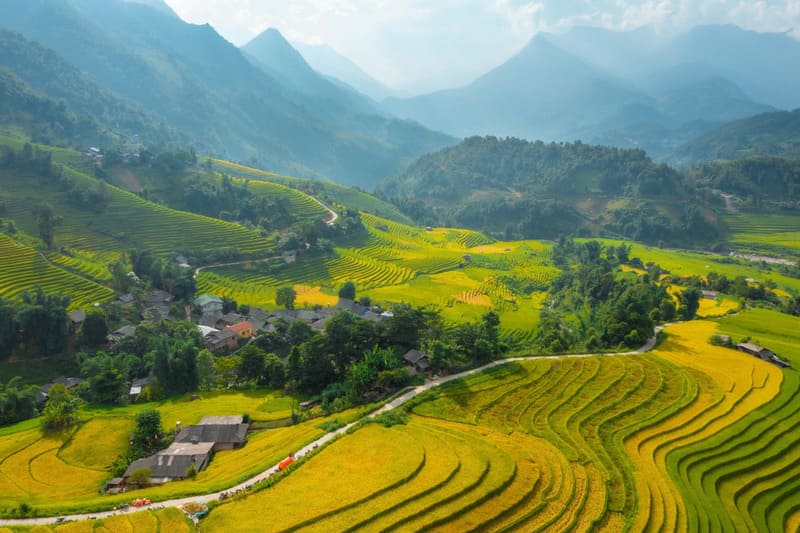
Sapa is one of the easiest places to see rice terraces in northern Vietnam. Around Muong Hoa Valley, Lao Chai, Ta Van, Y Linh Ho, Ta Phin, Giang Ta Chai, and Cat Cat, travelers can combine terrace views with trekking, ethnic villages, streams, and mountain scenery.
The area is home to H’Mong, Red Dao, Giay, and Tay communities. Trekking routes often pass traditional houses, farming areas, textile workshops, and local markets. Sapa also has a wide range of hotels, homestays, restaurants, and guided tours, making it suitable for first-time visitors.
The best time to visit is late August to early October, when the fields change from green to golden. May and June are good for the water pouring season, though summer can bring rain, mist, and slippery trails.
For a complete guide to the best viewpoints, trekking routes, and local villages, explore our guide to Sapa Rice Fields.
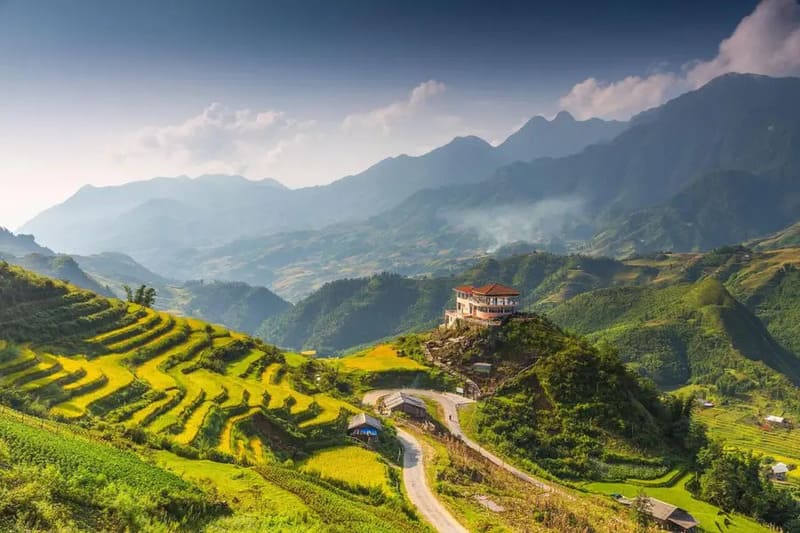
Rice terraces across Sapa’s mountain valleys (Source: Collected)
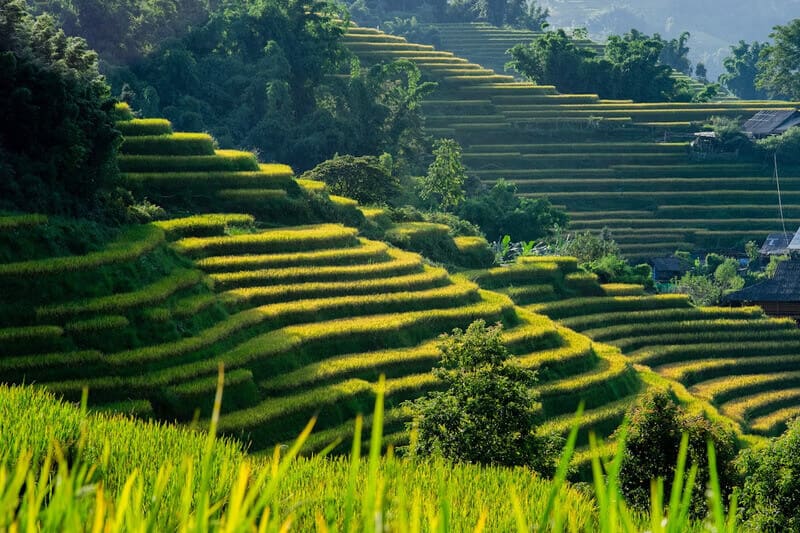
Hoang Su Phi offers some of the most dramatic rice terraces in Vietnam, with fewer crowds than Sapa. Located in Ha Giang Province, it features steep slopes, deep valleys, remote villages, and layered terraces across Ban Phung, Ban Luoc, Thong Nguyen, Nam Ty, Ho Thau, and San Sa Ho.
This area is best for photographers and experienced travelers looking for a remote highland atmosphere. Homestays, village treks, and markets also offer insight into Dao, Nung, La Chi, H’Mong, Tay, and other ethnic communities.
Visit from September to October for golden rice terraces. April to May is also scenic, when flooded fields create mirror-like reflections.
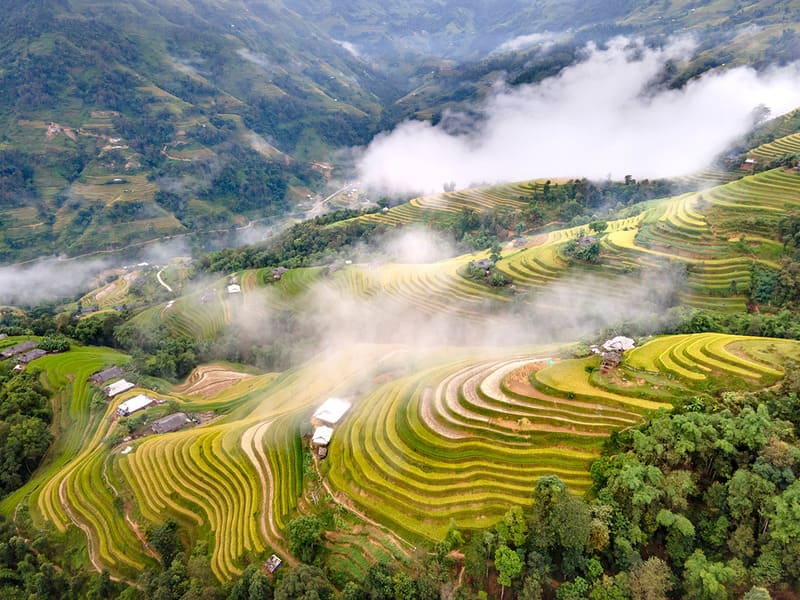
Layered rice terraces in remote Hoang Su Phi (Source: Collected)
Y Ty is a remote highland commune in Bat Xat District, close to the Vietnam-China border. It is known for cloud hunting, quiet mountain scenery, and rice fields surrounded by forests, valleys, and ethnic villages.
The area is home to Ha Nhi, H’Mong, Dao, and Giay communities. The Ha Nhi people are especially known for their thick earthen-wall houses, giving Y Ty a distinct cultural character.
Y Ty is ideal for travelers who prefer quiet landscapes and photography away from busy routes. The best time to visit is May for the water pouring season and late September to early October for harvest. Roads can be difficult after rain, so a local driver or guide is recommended.
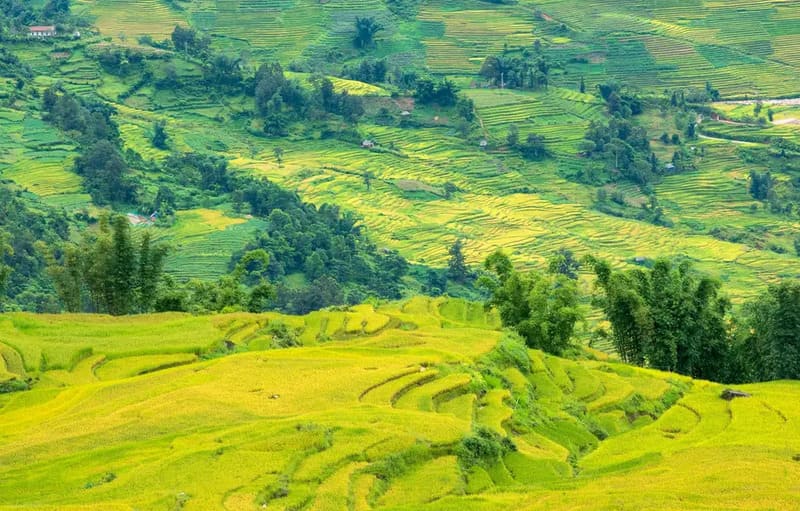
Green rice terraces across Y Ty Highlands (Source: Collected)
Pu Luong Nature Reserve offers a softer, greener rice landscape than the high mountains of Yen Bai or Ha Giang. Rice fields sit between limestone mountains, forests, streams, bamboo water wheels, and Thai and Muong villages.
The most scenic areas include Ban Don, Kho Muong, Hieu Village, Uoi Village, Lan Village, and valleys near local homestays. Many accommodations overlook the fields, making Pu Luong a good place for sunrise, sunset, and slow countryside views.
Popular activities include walking, cycling, visiting bamboo water wheels, swimming near waterfalls, and staying in stilt-house homestays. The best times to visit are May to June and September to October, when the fields are green or turning golden.
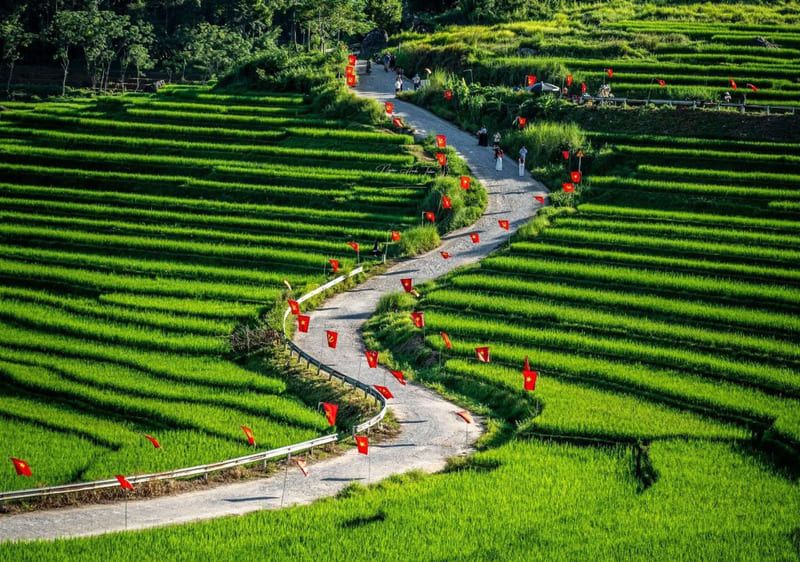
Peaceful rice terraces in Pu Luong Nature Reserve (Source: Collected)
Ha Giang is famous for karst mountains, high passes, and the Ha Giang Loop, but rice fields also add to its rural scenery. Travelers can see paddies and terraces in Xin Man, Quan Ba, Yen Minh, Hoang Su Phi, and valleys along mountain roads.
Unlike destinations focused mainly on terraces, Ha Giang combines rice fields with limestone peaks, deep valleys, ethnic villages, markets, and dramatic motorbike routes. The rice landscapes may be less concentrated than Mu Cang Chai, but they add color and depth to the journey.
September and October are the best months for golden rice views. From May to July, some areas are also beautiful with green fields and active farming scenes, depending on district and elevation.
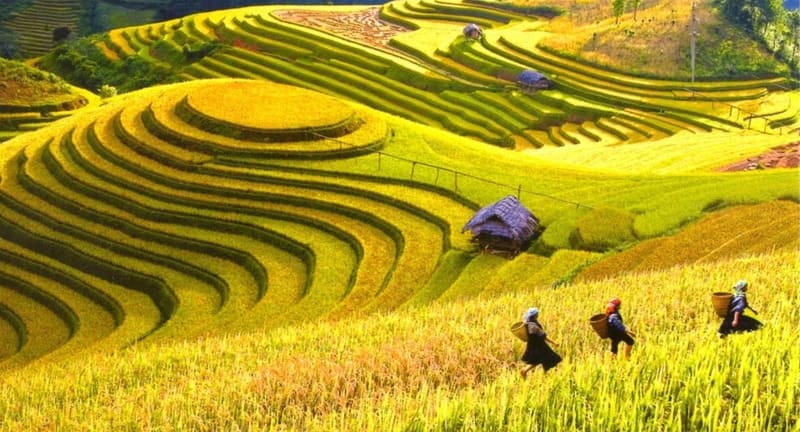
Golden terraces during harvest in Ha Giang (Source: Collected)
Mai Chau is a peaceful valley in Hoa Binh Province, known for flat rice fields, limestone mountains, Thai villages, and traditional stilt houses. It is easier to reach from Hanoi than many northern mountain destinations, making it ideal for short countryside trips.
The main rice field areas are around Lac Village, Pom Coong Village, Van Village, Chieng Chau, and nearby rural roads. The open valley landscape is suitable for cycling, walking, and relaxed photography.
Mai Chau is not as dramatic as Sapa or Mu Cang Chai, but it offers a calm and accessible view of rural Vietnam. The best time to visit is usually May to June and September to October, when the valley is fresh green or golden before harvest.
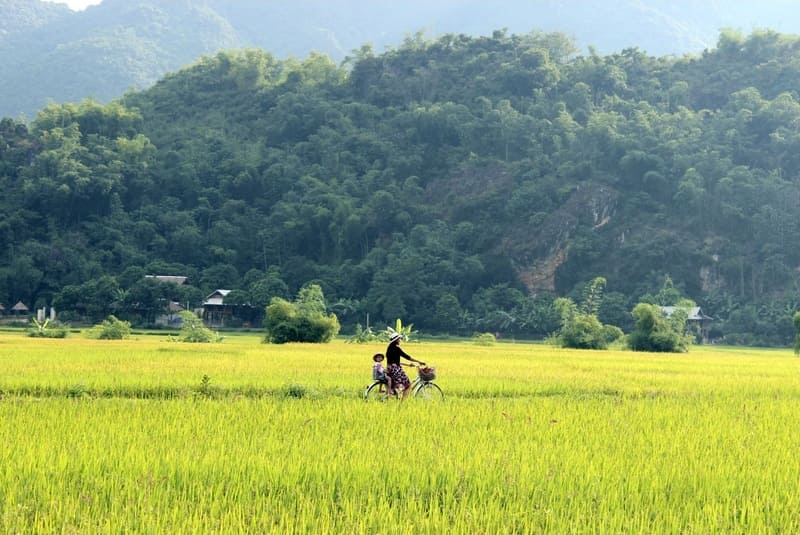
Calm rice fields in Mai Chau Valley (Source: Collected)
Bac Son Valley is known for wide rice fields surrounded by limestone mountains. From above, the valley forms a patchwork of fields, rivers, villages, and rural paths that change color with the crop cycle.
The best experience is climbing to a viewpoint for a panoramic view of the valley. This makes Bac Son especially appealing for photographers who prefer wide landscape shots.
The area is also home to Tay, Nung, Dao, and other ethnic communities. Visitors can explore stilt houses, local markets, caves, waterfalls, and quiet village roads. The best time to visit is often July to August or October to November, depending on the local rice season.
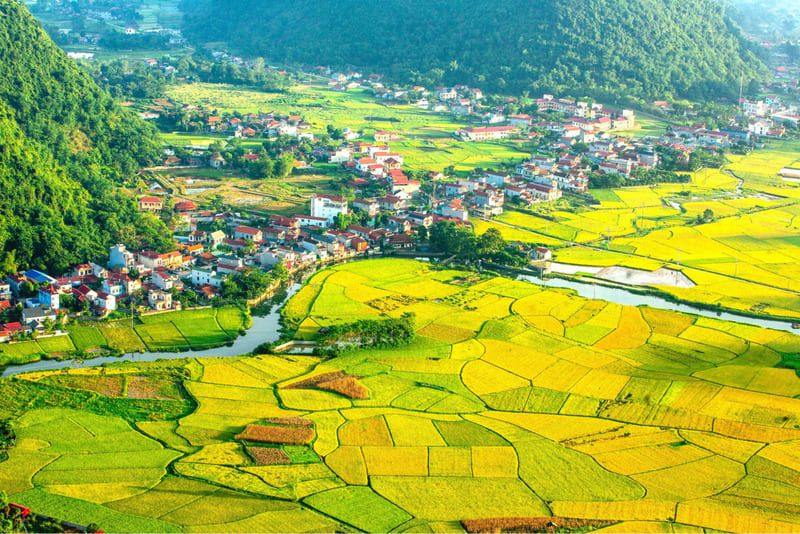
A wide view over Bac Son Valley’s rice fields (Source: Collected)
Ninh Binh offers one of Vietnam’s most distinctive rice field settings. In Tam Coc, rice grows along the Ngo Dong River, surrounded by limestone cliffs, caves, and karst mountains.
The most popular way to see the fields is by sampan boat, passing through caves and riverbanks below the cliffs. Travelers can also cycle through villages, visit Bich Dong Pagoda, climb Hang Mua viewpoint, or explore Trang An nearby.
Ninh Binh is suitable for visitors who want beautiful rice fields without long mountain travel. The best time to see golden rice in Tam Coc is usually late May to early June, a short but highly photogenic harvest period.
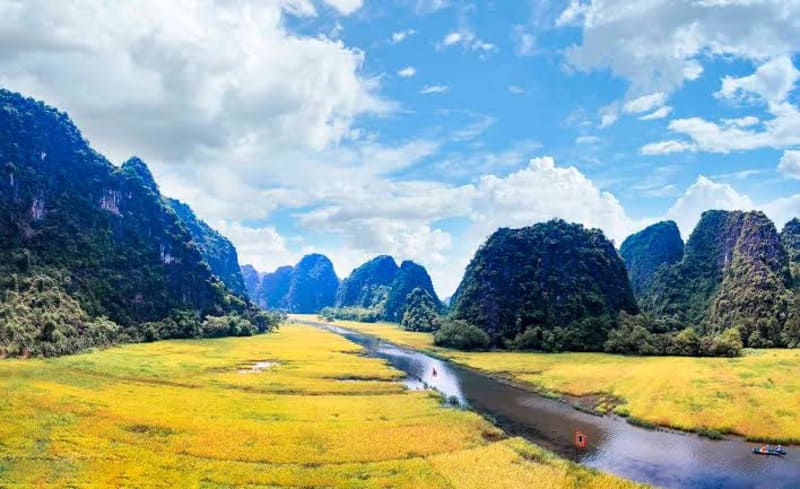
Rice fields beside limestone cliffs in Tam Coc (Source: Collected)
The Mekong Delta shows a different side of Vietnam’s rice landscapes. Instead of mountain terraces, the region features flat paddies, rivers, canals, wetlands, orchards, and seasonal floods.
Rice fields can be seen across An Giang, Dong Thap, Can Tho, Kien Giang, Long An, Soc Trang, and Tra Vinh. An Giang is especially scenic, with fields near palm trees, Khmer temples, small mountains, and flood-season wetlands around Chau Doc, Tra Su, and the Seven Mountains area.
Travelers can combine rice field views with boat trips, floating markets, fruit orchards, rice processing sites, and canal-side villages. The dry season from December to April is easiest for travel, while August to November offers distinctive flood-season scenery in some provinces.
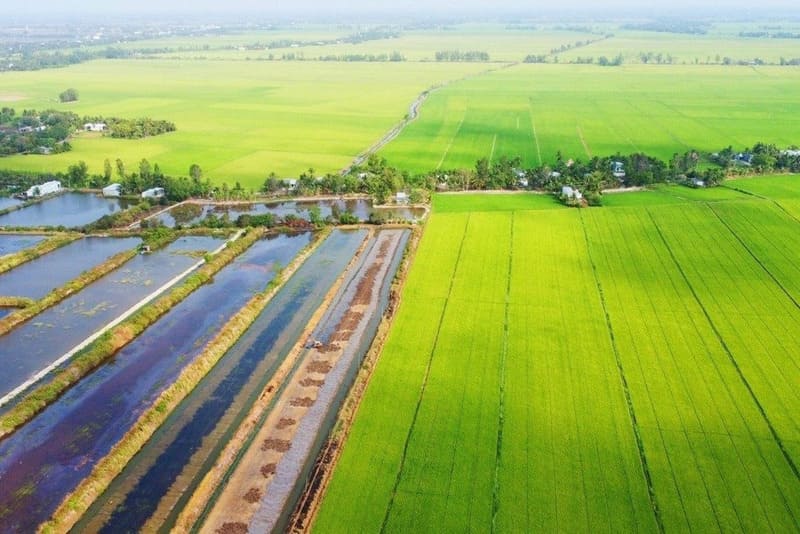
Flat rice paddies across the Mekong Delta (Source: Collected)
Hoi An’s rice fields offer a peaceful countryside contrast to the Ancient Town. Just a short bike ride from the center, travelers can pass open paddies, vegetable gardens, small villages, and roads leading toward An Bang Beach or Cam Thanh.
The fields around Cam Chau, Cam Thanh, Tra Que, and rural lanes outside town are easy to explore by bicycle. Visitors may see farmers working, water buffaloes grazing, and traditional farming activities close to one of Vietnam’s busiest heritage areas.
Hoi An rice fields are not grand like northern terraces, but they are convenient, quiet, and easy to combine with the old town, beach, or countryside tours. The best time to visit is generally from February to August, when the weather is drier and cycling is more comfortable.
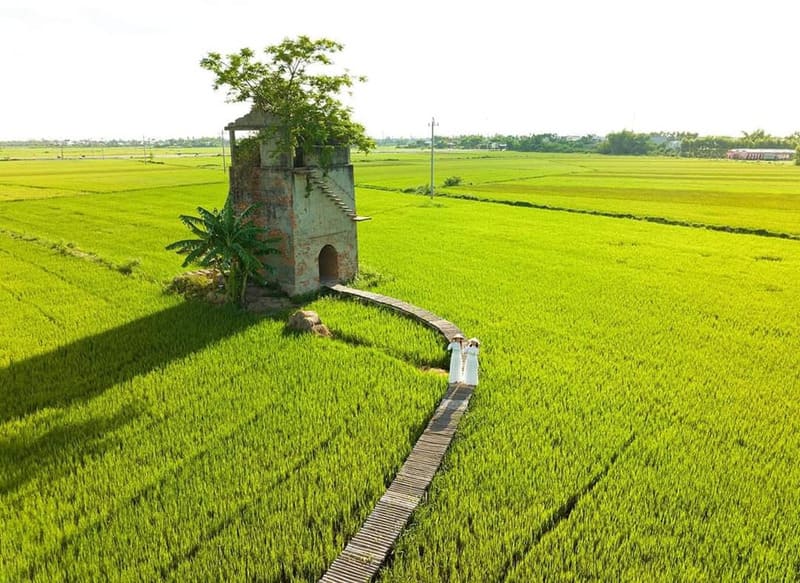
Peaceful rice fields near Hoi An Ancient Town (Source: Collected)
Thai Binh represents the flat rice landscapes of the Red River Delta. This coastal agricultural province is known for wide paddies, villages, dikes, rivers, ponds, temples, and traditional farming scenes.
Its beauty lies in openness and simplicity rather than dramatic terrain. The fields show the everyday rice-growing culture that has shaped many villages in northern Vietnam.
Thai Binh is suitable for travelers interested in rural life, agriculture, local markets, cycling, and countryside photography. The best time to visit is usually May to June or September to October, when visitors can see green fields, golden harvests, and farmers drying rice along village roads.
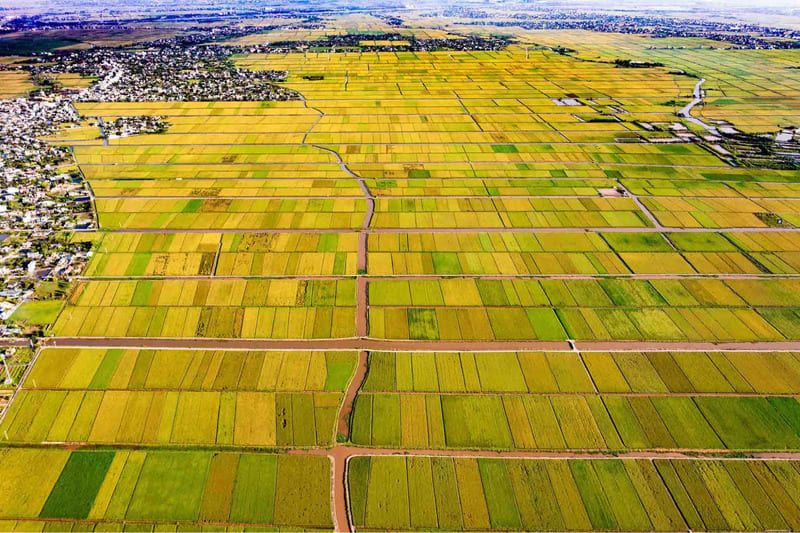
Wide rice fields in rural Thai Binh (Source: Collected)
The best time to visit Vietnamese rice paddies depends on the region, rice season, and scenery you want to see. Northern mountain areas such as Mu Cang Chai, Sapa, Y Ty, Hoang Su Phi, and Ha Giang usually have one main rice crop each year, while lower regions like Ninh Binh, Hoi An, Pu Luong, Mai Chau, Thai Binh, and the Mekong Delta may have different or multiple harvest periods.
For travelers, these are the most useful seasons to know:
Rice calendars can change slightly each year due to weather, rainfall, altitude, and local farming schedules. If photography is your main purpose, check the local harvest timing before your trip.
If Sapa is on your itinerary, our guide to best time to see Sapa rice paddies explains when to visit for the planting season, lush green fields, and the golden harvest.
Visiting rice paddies in Vietnam is usually easy, but a few practical tips will help you enjoy the experience more responsibly and comfortably.
Before exploring Vietnam's countryside, read our Vietnam travel tips to help you plan a smoother and more enjoyable trip.
Yes. The rainy season turns rice terraces lush and green, especially in Sapa, Mu Cang Chai, Hoang Su Phi, and Ha Giang. However, heavy rain can bring fog, slippery trails, and occasional landslides. For clearer views and easier trekking, visit during the harvest season in September - October.
In short, all rice terraces are rice fields, but not all rice fields are terraces.
September and October are the best months for golden rice terraces in northern Vietnam, including Sapa, Mu Cang Chai, Hoang Su Phi, Y Ty, and Ha Giang. In Ninh Binh, the golden season usually arrives earlier, around late May to early June.
Yes. Popular trekking destinations include Sapa, Mu Cang Chai, Hoang Su Phi, Ha Giang, Pu Luong, and Mai Chau. Follow local trails, avoid stepping on rice crops, and consider hiring a local guide for safer routes and cultural insights.
The nearest options are Ninh Binh, Mai Chau, Pu Luong, Thai Binh, and Bac Son Valley. Ninh Binh is ideal for a short getaway, Pu Luong offers scenic terraces, while Bac Son is known for panoramic photography.
Choose Sapa for easier access, diverse accommodation, and established trekking routes. Choose Mu Cang Chai for more dramatic landscapes, fewer crowds, and exceptional photography, especially during harvest season.
Wear lightweight clothing and comfortable walking shoes. In mountain areas, trekking shoes are recommended because trails can be muddy and steep. Bring a light rain jacket during the wet season and sun protection for lowland areas. Modest clothing is appreciated when visiting local villages.
Top photography destinations include:
Vietnamese rice paddies are one of the best ways to experience the country’s natural beauty, farming heritage, and rural culture. From the golden terraces of Mu Cang Chai and Sapa to the peaceful fields of Hoi An and the vast rice lands of the Mekong Delta, each region offers a different view of Vietnam’s rice-growing tradition.

 Vietnam Tours
 Cambodia Tours
 Laos Tours
 Thailand Tours
 Multi-Country Tours