Located on the Son Tra Peninsula, the Lady Buddha in Da Nang is a must-visit landmark that brings together spirituality, architecture, and coastal scenery in one remarkable setting. The 67-meter statue at Linh Ung Pagoda is admired for its serene presence and sweeping views across Da Nang Bay, My Khe Beach, and the surrounding coastline.
In this guide, Your Vietnam Travel shares essential information on the statue’s location, cultural significance, ideal visiting times, transport options, and nearby experiences to help you plan a well-rounded and meaningful visit.
Lady Buddha Da Nang stands at the Linh Ung Pagoda on the Son Tra Peninsula, approximately 10 kilometers northeast of Da Nang’s city center. This sacred site is easily accessible via Hoang Sa Street, a coastal road that winds along the peninsula with stunning sea views.
The statue is positioned on a hillside overlooking the East Sea, with her gaze cast over Da Nang Bay. From this vantage point, visitors can enjoy panoramic views of the city, coastline, and lush mountains. The area is not only spiritually significant but also ideal for sightseeing, photography, and peaceful reflection.
As one of the tallest Buddha statues in Vietnam, Lady Buddha has become a must-see cultural and spiritual icon for both tourists and locals exploring the central coast of Vietnam.
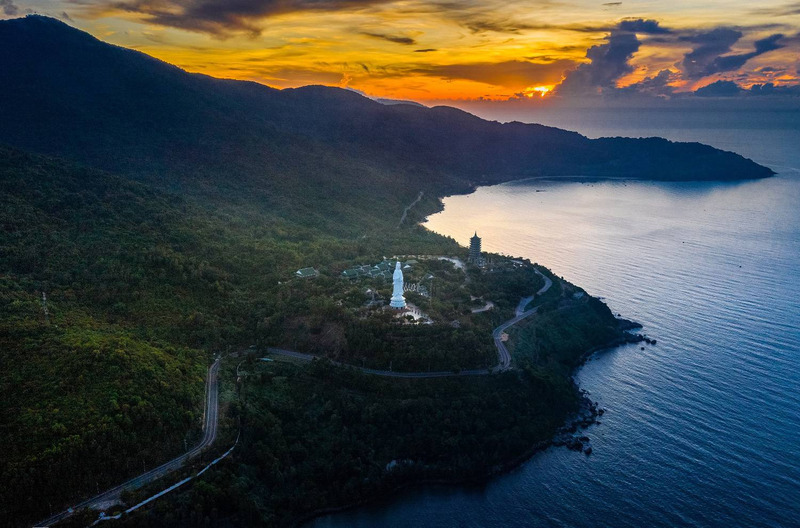
Lady Buddha Da Nang overlooks bay with panoramic views (Source: Collected)
The Lady Buddha statue in Da Nang has rapidly become a standout attraction in Vietnam, drawing visitors not just for its spiritual value but also for its striking beauty and unique location. Here's what makes this landmark truly remarkable:
Towering at 67 meters, the Lady Buddha is the tallest statue of its kind in Vietnam. Its sheer height makes it visible from nearly every corner of Da Nang, from My Khe Beach to the city’s airport. Built within the Linh Ung Pagoda complex, this colossal structure features 17 levels inside, each housing a different Buddha shrine. Pilgrims and curious visitors often ascend these floors to experience its tranquil atmosphere and spiritual symbolism.
The elegant design of the statue, representing the Goddess of Mercy (Quan The Am), blends traditional Vietnamese architecture with a modern sense of scale. With graceful curves, intricate detailing, and a lotus pedestal, the monument serves as both a religious and visual centerpiece of Da Nang.
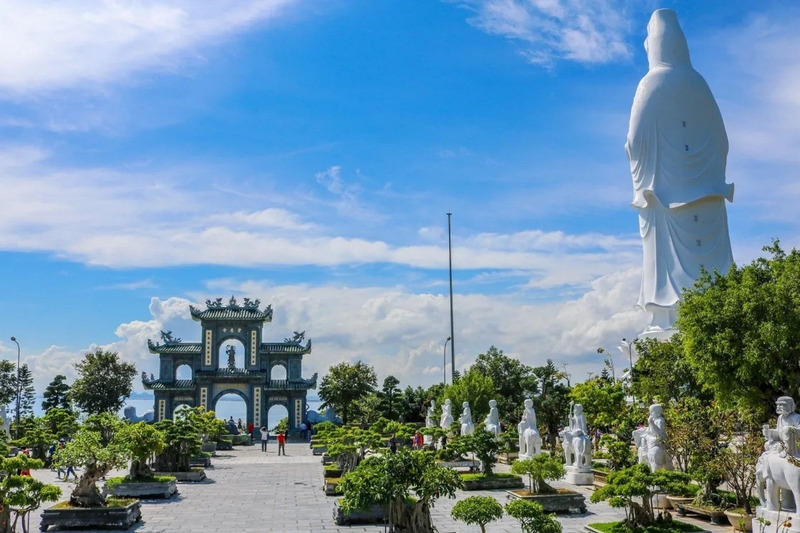
Vietnam’s tallest Lady Buddha, an iconic Da Nang landmark (Source: Collected)
The Lady Buddha statue is deeply rooted in local beliefs and Buddhist traditions. For generations, she has been honored as a divine protector of Da Nang’s fishermen and a spiritual guardian of the sea. Positioned to face the East Sea, she is thought to calm storms and safeguard the coastline.
Visitors from across Vietnam come here to pray for well-being, inner peace, and blessings for their families. The spiritual atmosphere is unmistakable. The air is filled with the scent of incense, temple bells ring gently in the distance, and monks chant in quiet reverence. The Linh Ung Pagoda, where the statue stands, is considered one of the most sacred Buddhist sites in the region and often hosts important religious ceremonies and cultural festivals.
Located on the verdant slopes of the Son Tra Peninsula, the Lady Buddha enjoys an exceptional setting that enhances its appeal. From the statue’s base, visitors are treated to sweeping views of Da Nang’s coastline, the Marble Mountains, and the distant Cham Islands, making it a popular spot for both sightseeing and photography.
The area is part of the Son Tra Nature Reserve, known for its rich ecosystem and rare wildlife, including the endangered red-shanked douc langur. Many travelers choose to explore nearby trails, enjoy scenic motorbike routes, or simply relax in the peaceful surroundings. The combination of sea breeze, natural beauty, and cultural heritage offers a refreshing escape from the city’s energy.
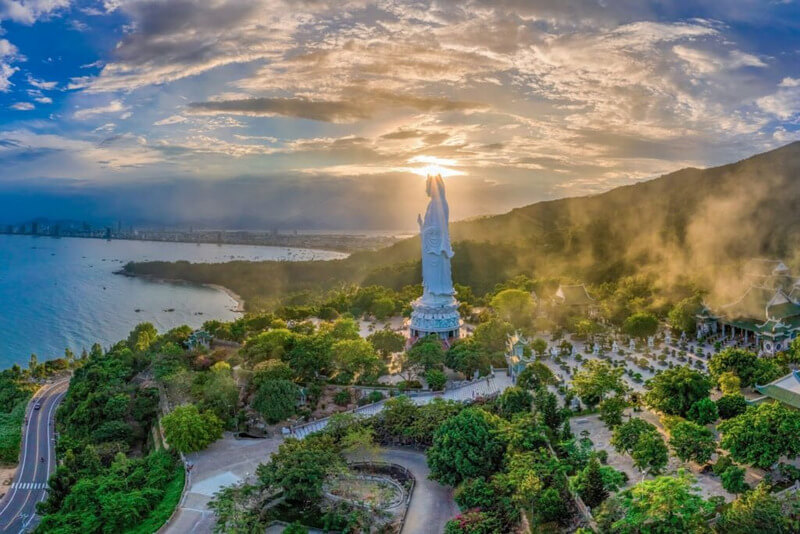
Prime Son Tra site with panoramic sea and mountain views (Source: Collected)
What adds to the Lady Buddha’s allure is a rare natural spectacle that occasionally appears around her head: a glowing halo effect. This atmospheric optical phenomenon, created by light diffraction through moisture in the air, has been witnessed by both locals and tourists. It often occurs during early morning hours or after rainfall, sparking awe and a sense of mysticism.
The appearance of the halo is seen by many as a sign of divine presence, deepening the emotional and spiritual connection visitors feel when standing before the statue. Photos of this radiant moment have gone viral, further boosting the Lady Buddha’s fame across social media and travel blogs.
The Lady Buddha statue in Da Nang is one of Vietnam’s most significant spiritual landmarks, reflecting both deep-rooted local beliefs and remarkable modern craftsmanship. Construction began on August 4, 2004, alongside Linh Ung Bai But Pagoda, on a hill nearly 100 meters above sea level on the Son Tra Peninsula. From this elevated position, the statue faces the sea and overlooks Da Nang city, symbolizing peace, protection, and blessings for local residents and fishermen.
The project experienced a major turning point in its early years. The first version of the statue, completed after more than three years of work, was dismantled due to design differences that did not align with traditional Vietnamese representations of Guan Yin (the Goddess of Mercy). A new statue was then constructed on the same foundation, involving 12,000 scaffolding frames and a workforce of around 50 skilled laborers. Transporting vast quantities of steel and concrete to a height of 65 meters required complex pulley systems and careful scheduling to avoid strong coastal winds.
The final design was crafted under the close supervision of renowned Vietnamese sculptors Thuy Lam and Chau Viet Thanh. The statue features a serene facial expression, flowing robes, prayer beads, a vase of holy water, and the symbolic Samadhi hand gesture. Every detail was refined to convey compassion, balance, and spiritual calm, resulting in a structure that feels both monumental and graceful.
The spiritual roots of the Lady Buddha statue trace back to the early 19th century, when local fishermen reportedly discovered a small statue of the Goddess of Mercy on a beach at Son Tra Peninsula. They built a modest shrine and prayed for safe journeys at sea, naming the area Bai But, meaning “Buddha Beach.” This long-standing tradition inspired the late monk Thich Thien Nguyen to propose the construction of a large-scale statue and pagoda to honor the Goddess and preserve local faith.
After six years of construction, the Lady Buddha statue was officially inaugurated on July 30, 2010. Standing 67 meters tall, it became the tallest Buddha statue in Vietnam at the time. Today, it is not only a sacred site for worship but also a defining symbol of Da Nang, representing harmony between spiritual heritage, nature, and modern engineering.
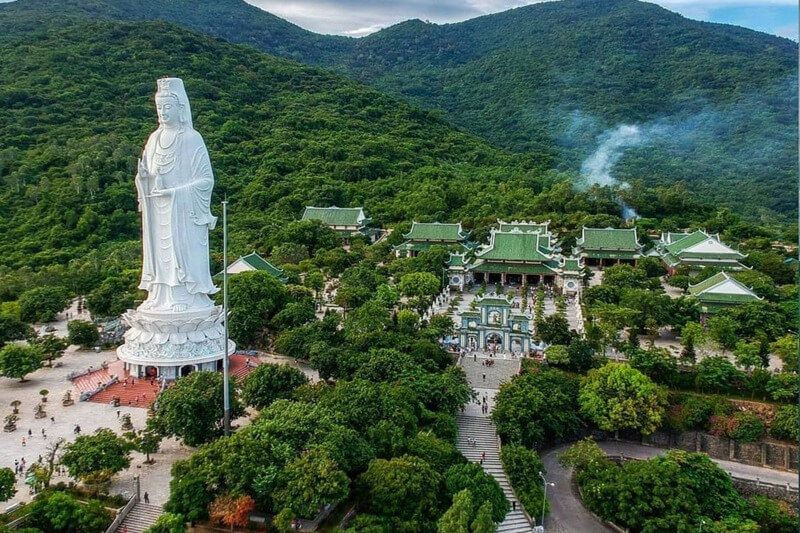
Da Nang's Lady Buddha is a symbol of faith, peace and craftsmanship (Source: Collected)
A visit to the Lady Buddha is more than a quick sightseeing stop. This spiritual landmark on Son Tra Peninsula offers a rich blend of culture, scenery, and quiet moments that reward travelers who take time to explore.
The Linh Ung Pagoda complex is the heart of the Lady Buddha site and sets the tone for the entire visit. Surrounded by mountains and facing the sea, it creates a rare sense of balance between nature and spirituality.
As you walk through the grounds, you’ll notice peaceful courtyards, carefully shaped bonsai trees, stone guardians, and ornate temple roofs. Inside the main hall, a grand Buddha altar and intricate carvings reflect traditional Vietnamese Buddhist design, while the gentle scent of incense enhances the calm atmosphere.
Many visitors admire the Lady Buddha from afar without realizing there is more to experience inside. Exploring the statue’s interior adds depth to your understanding of its spiritual significance.
The statue contains multiple levels, each featuring shrines dedicated to different Buddhas and teachings. As you move upward, the quiet space and devotional details offer insight into Buddhist beliefs and the craftsmanship behind this iconic symbol of Da Nang.
One of the most rewarding aspects of visiting the Lady Buddha is the view. The elevated location offers a sweeping perspective that few places in the city can match.
From the terraces and open viewpoints, you can see My Khe Beach, the city skyline, and the endless coastline stretching toward the horizon. On clear days, the contrast between the blue sea, green forests, and white statues creates a stunning natural panorama.
This site remains an active place of worship, making it an ideal location to observe local spiritual life. Respectful observation can turn your visit into a meaningful cultural experience.
Locals regularly bring offerings such as fruit, flowers, and incense, stopping to pray quietly at various altars. Watching these rituals helps visitors better see how Buddhism is woven into daily life in Da Nang, beyond temples and festivals.
After exploring the main areas, slow your pace and enjoy the quieter corners of the complex. These spaces are designed for reflection rather than crowds.
Stone pathways lead through landscaped gardens, small courtyards, and statues of Bodhisattvas representing compassion and wisdom. Sitting here for a few minutes allows you to fully absorb the calm energy that draws both locals and travelers to this sacred place.
The Lady Buddha is only one highlight of Son Tra Peninsula, an area known for its raw natural beauty. Extending your visit reveals a completely different side of Da Nang.
Scenic coastal roads lead to hidden beaches, forest viewpoints, and quiet bays rarely touched by mass tourism. The peninsula is also home to diverse wildlife and lush greenery, making it a perfect destination for nature lovers and photographers.
Timing your visit for late afternoon adds a special layer to the experience. As daylight fades, the atmosphere around the statue changes dramatically.
At sunset, the Lady Buddha glows softly against the sky, while the city below begins to light up. In the evening, gentle illumination turns the statue into a peaceful guardian overlooking Da Nang, creating a memorable and serene ending to your visit.
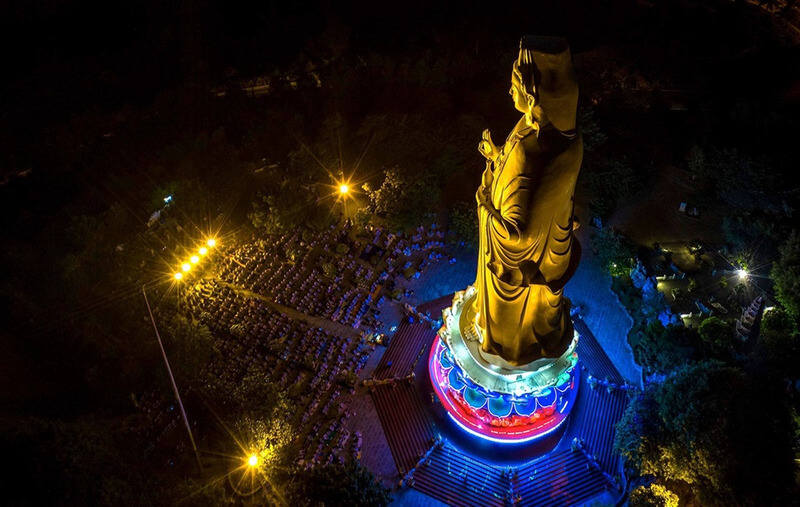
Magical evening views at Lady Buddha (Source: Collected)
The best time to visit Lady Buddha Da Nang is during the dry season, from March to September, when the weather is stable, skies are clear, and visibility across the coastline is at its best. This period offers the most comfortable conditions for sightseeing, photography, and spiritual visits at Linh Ung Pagoda.
March to May stands out as the ideal window. Temperatures are warm but not extreme, humidity is manageable, and rainfall is minimal. These months are perfect for travelers who want clear ocean views, pleasant weather, and fewer weather-related disruptions.
June to August remains a good choice, especially for those visiting Da Nang in summer. Expect hotter days and more domestic tourists, but also vibrant sunsets and consistently clear skies.
From September to January, Da Nang enters the rainy season. Heavy showers, occasional storms, fog, and slippery roads can affect safety and limit panoramic views. Travel is still possible, but weather conditions are less predictable.
Seasonal Considerations:
Festivals and Special Dates: During major Buddhist events such as Vesak and Lunar New Year, Linh Ung Pagoda becomes a focal point for local worship. The atmosphere is lively and culturally rich, with incense, lanterns, and prayers filling the space. Expect large crowds, but also an authentic insight into local Buddhist traditions.
Practical Local Tip: To avoid midday heat and peak tour bus traffic, plan your visit for early morning or late afternoon. These times balance comfort, atmosphere, and scenery. If heat is a concern, the site offers shaded paths, benches, ocean breezes, and refreshment stalls, making visits manageable even later in the day.
Learn more: When is the Best Time to Visit Da Nang
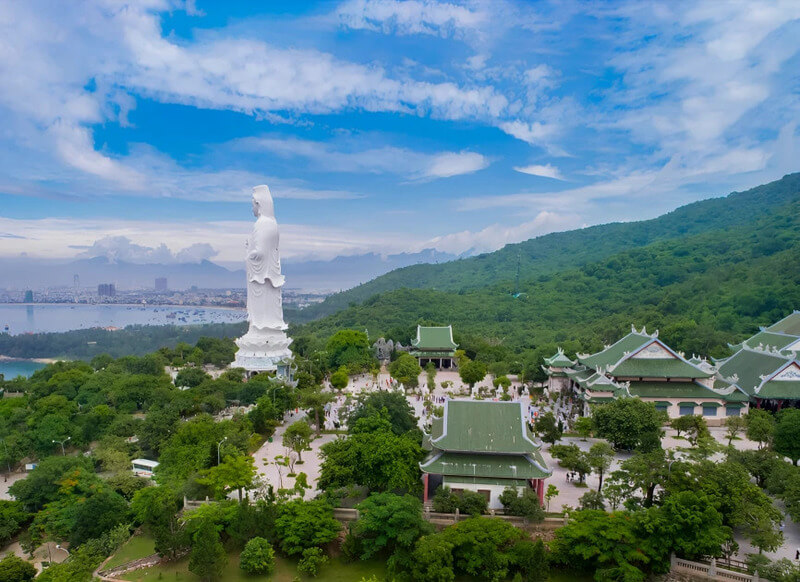
The best time to visit the Lady Buddha in Danang is from March to September (Source: Collected)
Getting to the Lady Buddha Statue at Linh Ung Son Tra Pagoda is straightforward and scenic, with several transport options depending on where you start and how you like to travel.
The drive from Da Nang International Airport to Lady Buddha takes about 25-30 minutes. The most direct route follows Duy Tan Street - Nguyen Tri Phuong Street - Nguyen Tat Thanh Street - Thuan Phuoc Bridge - Le Duc Tho Street - Hoang Sa Street.
Taxi or Grab costs around 150,000-180,000 VND, making this an easy first stop to begin your Da Nang journey with coastal views and a peaceful spiritual experience.
From the city center, Lady Buddha is about 10 km away:
Lady Buddha is very close to My Khe Beach:
This route is ideal if you plan to combine the visit with Marble Mountains or a seafood stop along Vo Nguyen Giap Street.
Walking is popular in the early morning or late afternoon when the weather is cooler. There is only one access road, Hoang Sa Street, making navigation simple. Along the way, you’ll enjoy panoramic views of the ocean, My Khe Beach, the city skyline, fishing harbors, and the Marble Mountains in the distance.
After passing Dong Dinh Museum, monkeys often appear near the road. The pagoda entrance is on the left side. For safety, avoid standing close to cliffs, as coastal areas around the pagoda are fenced to prevent accidents.
Riding a motorbike is one of the most enjoyable ways to reach Lady Buddha. Automatic scooters are allowed on Hoang Sa Street, which runs along the southern coast of Son Tra Peninsula.
From the Hoang Sa - Le Duc Tho intersection, ride about 2.5 km to find the pagoda entrance on the left, marked by two stone lions. Continue uphill to the scooter parking area. There is no parking fee; visitors usually leave a small donation when departing. The road is well-lit at night, so evening visits are also convenient.
From Hoi An, the distance is roughly 30 km, taking about one hour by motorbike. The coastal route offers white-sand beaches, sea breezes, and clear views of Lady Buddha as you approach Da Nang.
By car, Linh Ung Son Tra Pagoda is about 20 minutes from Da Nang city center and 15 minutes from My Khe Beach. Taxis, Grab, and private cars are widely available.
Travelers from Hoi An often choose a private transfer, combining stops such as the Marble Mountains or My Khe Beach on the way to Son Tra Peninsula.
Public buses run to Tho Quang station near the Hoang Sa - Nguyen Phan Vinh intersection. From there, visitors need to walk about 3.5 km or take a short taxi ride to the pagoda.
Hop-on hop-off tourist buses also stop directly at Linh Ung Son Tra Pagoda, offering a convenient way to explore Da Nang’s major attractions, including Dragon Bridge and the Marble Mountains, even straight from the airport.
With multiple transport options and stunning coastal scenery, reaching Lady Buddha in Da Nang is easy and rewarding for every type of traveler.
Before visiting the Lady Buddha Da Nang, take note of the following important points to ensure a respectful, comfortable, and well-prepared experience:
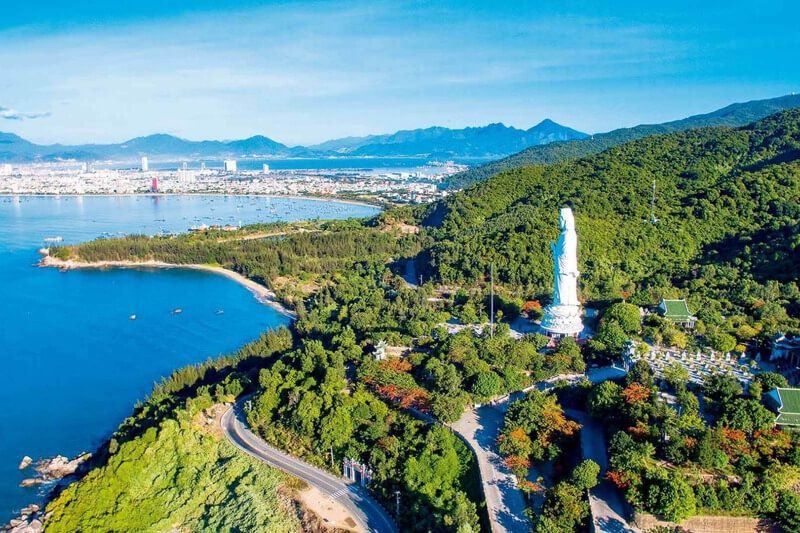
Essential tips for a respectful Da Nang Lady Buddha visit (Source: Collected)
Below is a clear, easy-to-scan list of attractions located near Lady Buddha Da Nang, ideal for travelers planning a half-day or full-day itinerary around the Son Tra Peninsula.
Yes. Lady Buddha Da Nang combines a major spiritual site, striking architecture, and one of the best panoramic viewpoints in the city. The Linh Ung Pagoda complex is peaceful, photogenic, and easy to pair with a Son Tra Peninsula scenic drive.
No. Entry is free. Donations are welcome and typically go toward temple maintenance and community activities.
Plan 60-90 minutes for the statue, main halls, and viewpoints. Add 2-4 hours if you want to explore nearby beaches, viewpoints, or nature stops around Son Tra Peninsula.
Yes, with a few notes. The main areas are accessible and family-friendly, but there are stairs, sloped paths, and occasional steep sections. Elderly visitors may prefer visiting in the early morning or late afternoon to avoid heat, and using rest stops along the grounds.
Photography is generally allowed outdoors, including the statue and courtyards. Inside prayer halls, follow posted signs, keep noise low, and avoid flash, especially during worship. Ask permission before photographing monks or local worshippers.
Yes. The site is typically open into the evening, and the statue is beautifully illuminated after dark. For the best experience, arrive before sunset, enjoy golden-hour views, then stay briefly for the night scenery. If you ride a motorbike, drive carefully on the peninsula roads at night.
Hopefully, this guide helps you plan a meaningful visit to the Lady Buddha in Da Nang with confidence. You now have a clear understanding of where the statue is located, why it holds such spiritual and cultural importance, the best times to visit, how to get there, and what to experience around Linh Ung Pagoda and Son Tra Peninsula. With practical tips, nearby attractions, and essential FAQs, you’re well prepared to enjoy one of Central Vietnam’s most iconic spiritual landmarks at your own pace.
If you’d like a seamless way to experience the Lady Buddha and explore Son Tra Peninsula, Your Vietnam Travel is happy to help you design a flexible, well-paced itinerary that fits your travel style and schedule. Feel free to contact our team for personalized recommendations, local insights, and private tour arrangements in Da Nang and Central Vietnam.
2026-06-12



 Vietnam Tours
 Cambodia Tours
 Laos Tours
 Thailand Tours
 Multi-Country Tours