Saigon Opera House is one of the most important sightseeing and performing arts landmarks in the heart of Ho Chi Minh City. The building stands out for its elegant French colonial architecture, prime location in District 1, and a curated selection of high-quality cultural performances.
In this guide, Your Vietnam Travel guides you through the location, history, architecture, top shows, and practical travel tips for visiting the Saigon Opera House.
Also known as the Municipal Theater, the Ho Chi Minh City Opera House is one of the city’s most recognizable cultural landmarks and a fine example of French colonial architecture in Vietnam. Completed in the early twentieth century, the building stands out for its elegant façade, decorative sculptures, and carefully restored interior.
Today, the Opera House functions as a leading venue for classical concerts, contemporary performances, and premium cultural shows. It is a popular stop on many Ho Chi Minh City itineraries, not only for its artistic value but also for its central location and visual appeal. In the evening, when the exterior lights come on, the building becomes one of downtown Saigon’s most photographed sights.
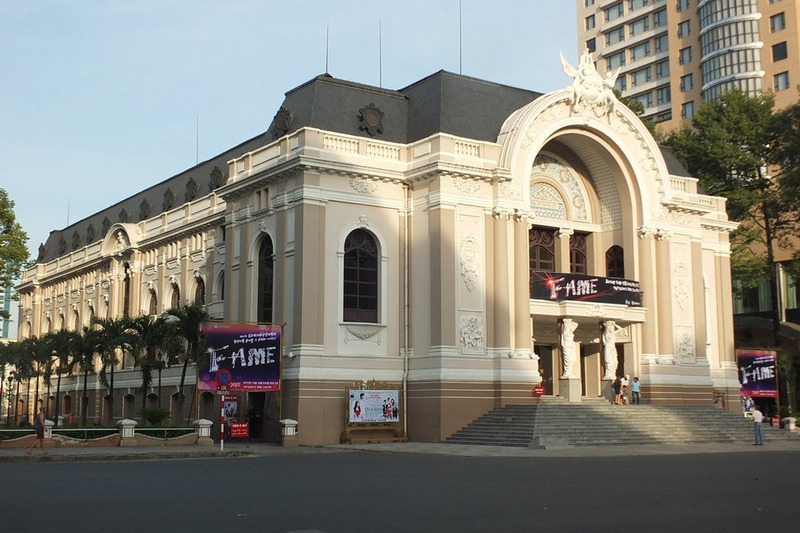
The Saigon Opera House iconic French architecture and culture (Source: Collected)
The Opera House is located at No. 7 Cong Truong Lam Son Street, right in the heart of District 1. From here, visitors can easily walk to major attractions such as Ben Thanh Market, Saigon Notre Dame Cathedral, and the Saigon Central Post Office.
Set along Dong Khoi Street’s upscale shopping area and surrounded by historic hotels like Caravelle Hotel Saigon and Hotel Continental Saigon, the Opera House sits in one of the city’s most lively and pedestrian friendly neighborhoods. Its prime position makes it a convenient cultural stop and a natural part of any downtown sightseeing route.
These hours apply to ticket services only and may change depending on performance schedules or special events.
The Opera House does not offer free daily interior visits. Entry is mainly reserved for ticketed performances or officially organized shows. In the evening, the venue opens separately for scheduled performances, usually between 6:00 PM and 7:30 PM depending on the program. Visitors without tickets can still enjoy the illuminated exterior, one of downtown Saigon’s most photographed landmarks.
Ticket prices vary by show and seating category, generally ranging from VND 200,000 to VND 2,000,000.
For updated schedules and availability, travelers should check official organizers such as Lune Production. Advance booking is recommended, especially during peak travel seasons.
The Saigon Opera House is easy to reach from most areas of Ho Chi Minh City thanks to its central position and excellent transport connections.
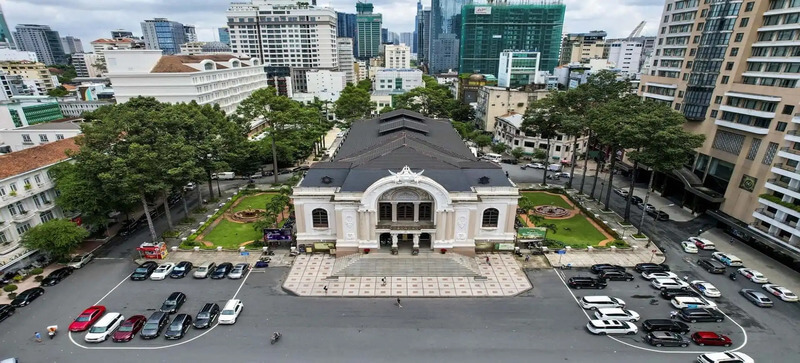
The Saigon Opera House is easy to reach in central Saigon (Source: Collected)
Built during the French colonial era, the Ho Chi Minh City Opera House reflects Saigon’s cultural and historical evolution over more than a century. Construction began in 1898, and the theater officially opened on January 1, 1900 under the name L’Opéra de Saïgon. In its early years, it mainly served the French community in Cochinchina, hosting classical performances that mirrored European artistic tastes of the late nineteenth century and represented colonial prestige.
By the 1920s, the Opera House gradually lost its position as Saigon’s primary performance venue as nightclubs and modern entertainment gained popularity. In 1943, parts of its decorative facade were removed to create a simpler exterior. One year later, Allied air raids damaged the building, forcing a temporary closure.
After 1954, the Opera House entered a new phase. It briefly sheltered displaced French civilians before being converted into the Congress House of the State of Vietnam, and later became part of the Republic of Vietnam administration. These political changes shifted the building away from cultural activities for several decades.
Following reunification in 1975, the Opera House returned to its original role as a performing arts venue. A major restoration in 1998, marking Saigon’s 300th anniversary, brought back many original architectural features. Additional upgrades in the early 2000s improved interior facilities while preserving its historic character.
In 2012, the Opera House was officially recognized as a national relic. Today, it stands as one of Ho Chi Minh City’s most significant cultural landmarks and remains a must-visit destination for travelers exploring downtown Saigon.
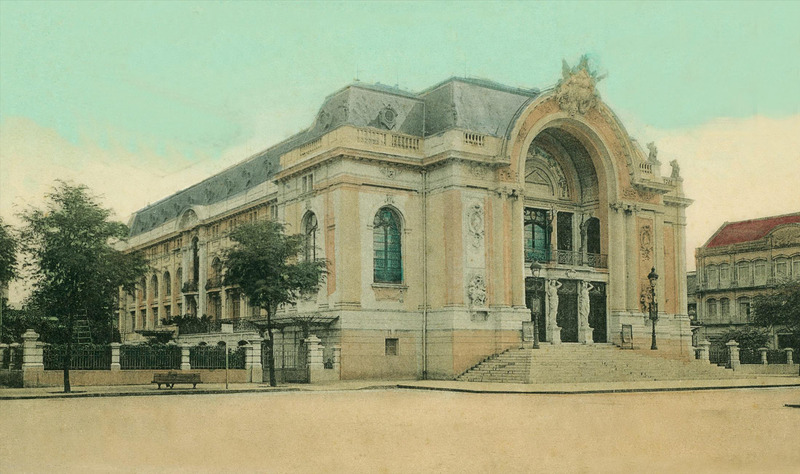
The Saigon Opera House, built 1898, reflects Saigon’s colonial past (Source: Collected)
The Ho Chi Minh City Opera House is one of Saigon’s finest surviving examples of French colonial architecture, blending elegant European design with practical adaptations to a tropical urban environment. The Opera House was designed by French architects Félix Olivier, Ernest Guichard, and Eugène Ferret. Its architecture draws inspiration from Paris landmarks such as the Palais Garnier and the Petit Palais. Together, these influences reflect the decorative style popular during France’s Third Republic.
Covering around 3,200 square meters, the Opera House was intentionally raised about two meters above street level. This elevation, together with double-layered entrance doors, helps reduce traffic noise from the busy streets nearby. Many construction materials, including granite and interior fittings, were imported from France, highlighting the original ambition to create a prestigious cultural venue in colonial Saigon.
The facade immediately stands out with three grand entrances framed by detailed sculptures. Two stone female figures inspired by Greek Caryatids support columns nearly 4.5 meters high. At the center, a large arch features two angels surrounding a lyre, a classical symbol of music and performance. Nearby reliefs depict Pan, associated with pastoral music and mythology.
Arched windows with decorative railings line both sides of the building, a hallmark of classical French design. Frescoes, ornamental moldings, and temple-style motifs complete the exterior. Even without entering, visitors can admire a refined display of European elegance, making the Opera House one of the most photographed landmarks in downtown Ho Chi Minh City.
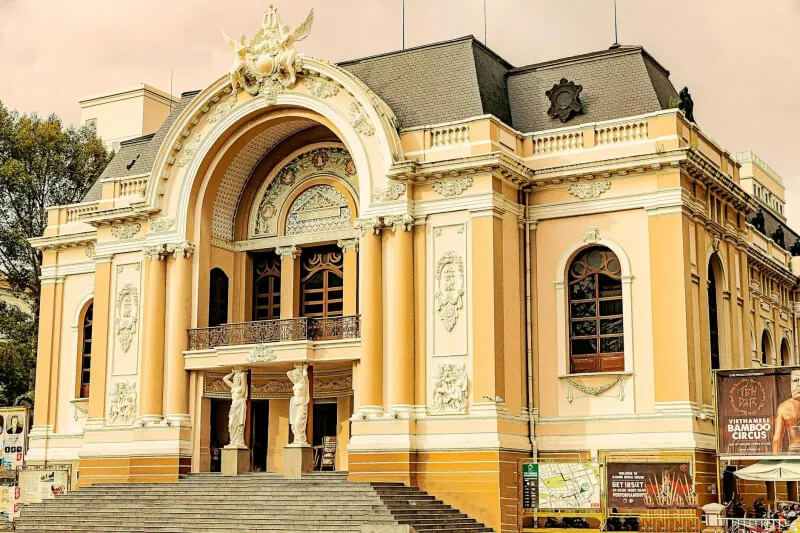
Exterior architecture of the Saigon Opera House (Source: Collected)
Inside, the auditorium accommodates nearly 500 guests, including 338 seats on the ground floor, with the rest distributed across two upper levels. A major renovation in 2007 introduced cushioned seating to improve comfort for ballet, classical concerts, and traditional Vietnamese performances.
From the stage, the domed ceiling becomes the main visual highlight. Flowing lines and intricate patterns reflect flamboyant influences, while ornate reliefs and classic lighting create a warm and elegant atmosphere. Decorative ventilation wreaths encircle the upper level, showing that even functional elements were designed with artistic care.
Together, these architectural details create an intimate and refined performance space that continues to support Saigon’s cultural life while preserving its colonial heritage.
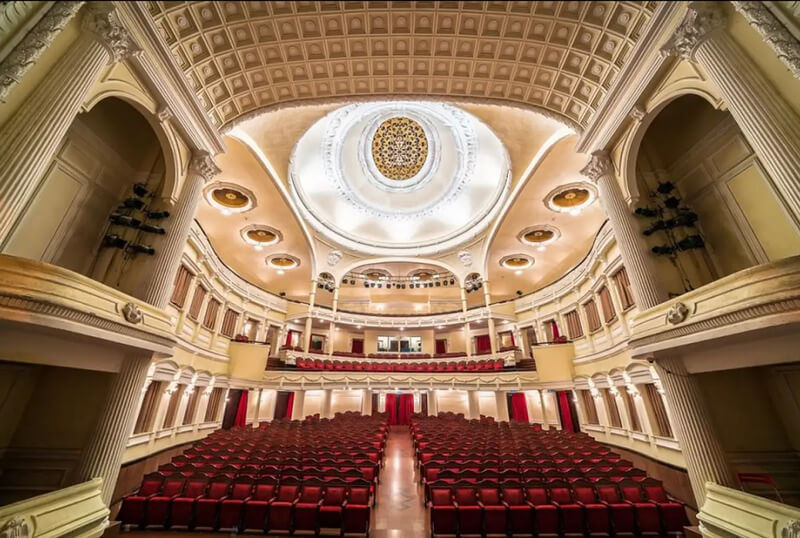
Interior architecture of the Saigon Opera House (Source: Collected)
The Saigon Opera House hosts a curated selection of high-quality cultural productions that blend traditional Vietnamese artistry with contemporary stagecraft. Below are the most popular shows for inbound travelers seeking an authentic yet refined evening experience in Ho Chi Minh City.
À Ố Show is the signature production at the Saigon Opera House, combining bamboo circus, acrobatics, contemporary dance, and live traditional Vietnamese music. The name reflects the contrast between peaceful village life and the fast-paced rhythm of modern cities, which forms the core narrative of the performance.
Through expressive movement and visual storytelling, the show illustrates Vietnam’s transition from quiet countryside scenes to energetic urban life. With no spoken dialogue, it connects naturally with audiences from all over the world while offering poetic insights into everyday Vietnamese culture.
Lasting about one hour, À Ố Show is widely regarded as one of Vietnam’s most polished live performances and is often the first choice for travelers visiting Saigon for the first time.
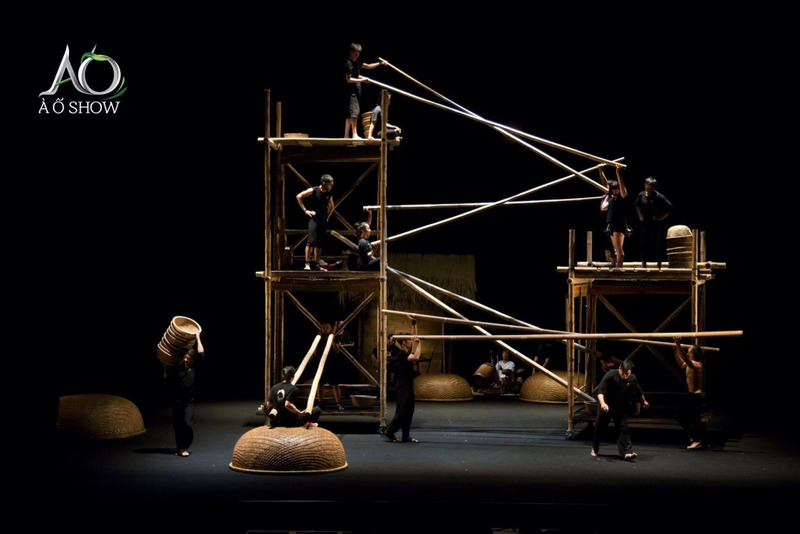
À Ố Show at Saigon Opera House (Source: Collected)
The Mist Show offers an emotional look into the daily lives of southern Vietnamese rice farmers through contemporary dance, live music, and immersive stage visuals. The performance follows a working day from dawn to dusk, honoring the perseverance and quiet strength behind Vietnam’s agricultural heritage.
Elegant choreography blends modern and neoclassical movements, while traditional elements such as wooden clogs and ao ba ba costumes bring authenticity to the story. Atmospheric lighting and sound design add depth, creating a poetic journey rooted in muddy fields and golden harvests.
This production is ideal for travelers seeking a meaningful cultural experience at the Saigon Opera House.
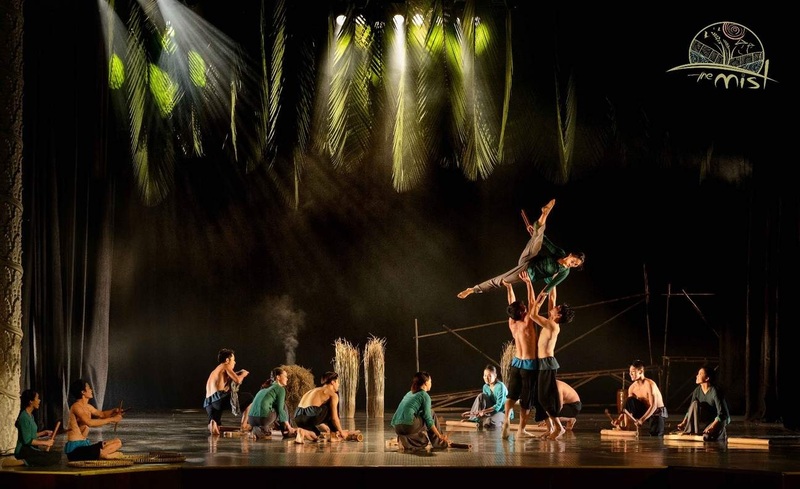
The Mist Show at Saigon Opera House (Source: Collected)
Teh Dar Show brings audiences into the spiritual world of Vietnam’s Central Highlands through energetic bamboo circus, daring acrobatics, and live tribal percussion. Inspired by the traditions of ethnic highland communities, the performance recreates daily life scenes such as hunting, village rituals, and moonlit love stories.
Artists appear in striking red and black costumes, with handcrafted bamboo instruments and bold choreography creating a raw, powerful atmosphere. Every movement reflects community spirit and a deep connection to nature, offering travelers an authentic cultural perspective rarely seen on stage.
This vibrant production is a strong choice for guests looking for an immersive ethnic experience at the Saigon Opera House.
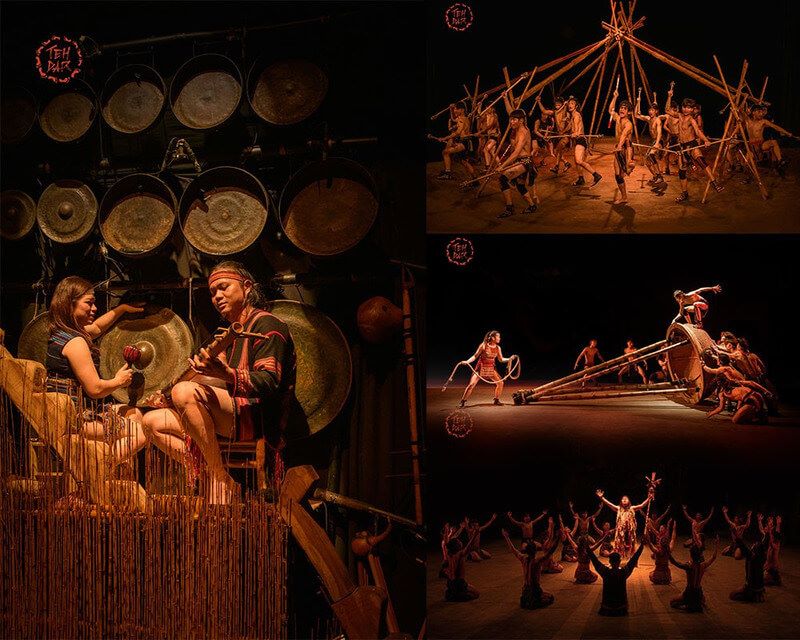
Teh Dar Show at Saigon Opera House (Source: Collected)
The Saigon Opera House is a premier destination in Ho Chi Minh City for Opera Galas, classical music concerts, and international cultural performances. Its grand auditorium regularly hosts symphonic evenings featuring masterpieces by world-famous composers such as Johann Sebastian Bach, Wolfgang Amadeus Mozart, Ludwig van Beethoven, Frédéric Chopin, and Edvard Grieg.
In addition to opera and orchestral programs, visitors can enjoy a rotating calendar of special events, including international friendship music nights, national celebration concerts, and iconic ballet productions like The Nutcracker. The venue also presents selected Vietnamese music showcases, creating a balanced mix of global classics and local artistry.
Start your visit by admiring the Opera House from the outside. Its French colonial façade, ornate sculptures, and symmetrical design make it one of the most photogenic landmarks in downtown Saigon.
Late afternoon is ideal for exterior photos, while evening brings a dramatic atmosphere as the building lights up against Dong Khoi Street. Even without entering, the Opera House offers a strong sense of the city’s colonial heritage.
Attending a live show is the highlight of any visit. The Opera House hosts world-class productions that blend Vietnamese culture with contemporary stage techniques, from bamboo circus and modern dance to classical concerts and opera galas.
Performances such as À Ố Show, The Mist, and Teh Dar are especially popular with international travelers thanks to their visual storytelling and live music. Shows typically last around one hour, making them easy to fit into an evening itinerary.
After sunset, the area around the Opera House becomes one of Saigon’s most elegant night scenes. The illuminated façade, nearby historic hotels, and lively streets create a refined yet vibrant atmosphere.
Many travelers enjoy combining an evening performance with a short walk to Nguyen Hue Walking Street for coffee, desserts, or people-watching. This nighttime experience captures the charm of Ho Chi Minh City at its best.
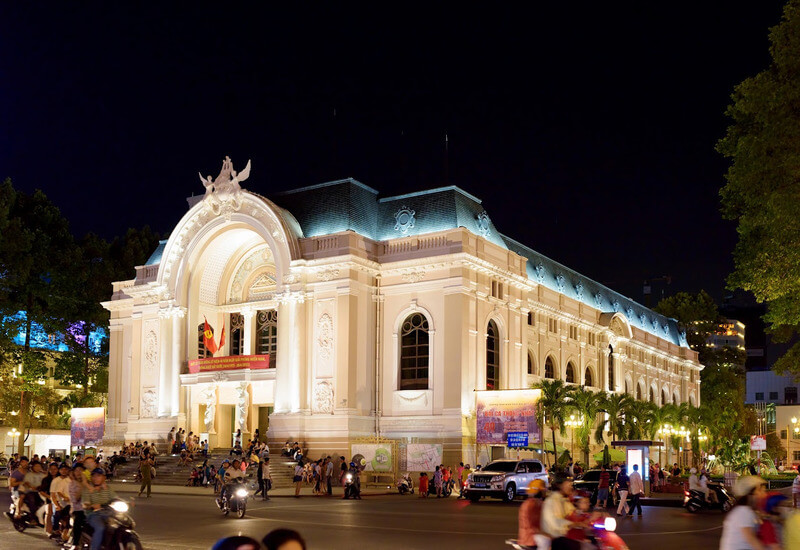
Experience the Saigon Opera House at night (Source: Collected)
Planning ahead helps you get the most out of your visit to this historic theater in the heart of Saigon. Here are practical tips to ensure a smooth and memorable experience, especially for travelers exploring Vietnam and Southeast Asia on an inbound itinerary:
Located in the very heart of downtown Saigon, the Opera House is surrounded by many of the city’s most iconic landmarks. Most are within easy walking distance, making this area perfect for a half-day cultural stroll or a compact city tour.
Here are the top nearby attractions to include in your itinerary:
Most shows run between 60 and 90 minutes, depending on the production. Popular cultural performances such as À Ố Show, The Mist, and Teh Dar typically last around one hour without intermission, making them easy to fit into an evening city itinerary.
There is no strict formal dress code, but visitors are encouraged to dress neatly and respectfully. Smart casual attire works well. Avoid overly revealing outfits, flip-flops, or beachwear, especially for evening performances, as the Opera House is a cultural venue with an elegant atmosphere.
Photography is usually allowed before the show and after it ends, including photos with performers when available. During performances, filming and flash photography are generally prohibited to avoid disturbing artists and other guests. Always follow on-site staff instructions.
Yes. Family-friendly productions such as À Ố Show are popular with children thanks to their visual storytelling, acrobatics, and live music. For younger kids, aisle or ground-floor seats are recommended for easier access. Parents should note that most shows last about one hour.
For the best overall view and sound, choose center seats on the ground floor or the front rows of the first balcony. These areas provide clear sightlines to the stage and full immersion in the performance. Balcony seats offer a wider perspective, while ground-floor seats feel closer to the action.
Saigon Opera House is a must-see stop for travelers looking to experience French colonial architecture and Saigon’s cultural life right in the heart of District 1. With its prime location, quality performances, and easy access to nearby landmarks, it fits seamlessly into both daytime sightseeing and evening city itineraries.
From our experience organizing tailor-made journeys for international guests, pairing a live show with a walk along Dong Khoi Street or Nguyen Hue Walking Street creates one of Saigon’s most enjoyable cultural evenings. If you’d like help planning your visit, reserving tickets, or building a personalized Ho Chi Minh City itinerary, our local team at Your Vietnam Travel is happy to assist.




 Vietnam Tours
 Cambodia Tours
 Laos Tours
 Thailand Tours
 Multi-Country Tours