Tan Ky Old House is one of the most famous heritage houses in Hoi An Ancient Town. Located on Nguyen Thai Hoc Street, this well-preserved merchant house offers a close look at the architecture, family life, and trading culture that shaped Hoi An during its golden age as an international port.
This guide covers everything you need to know before visiting Tan Ky Old House, including its history, architecture, highlights, tickets, opening hours, nearby attractions, and practical travel tips.
Hoi An Ancient Town tickets currently cost 120,000 VND for international visitors and include entry to five selected heritage attractions inside the Old Town.
Tan Ky Old House is located at 101 Nguyen Thai Hoc Street, in the heart of Hoi An Ancient Town. This central location makes it easy to visit while walking around the old quarter.
The house has a typical Hoi An merchant layout. Its front faces Nguyen Thai Hoc Street, while the back connects toward Bach Dang Street and the Hoai River area. In the past, this position was ideal for trading because goods could be displayed at the front and transported from the riverside at the back.
From the Japanese Covered Bridge, it takes only a few minutes to walk to Tan Ky Old House. Because motorized vehicles are restricted in many parts of Hoi An Ancient Town during certain hours, walking is usually the easiest and most enjoyable way to reach the house.
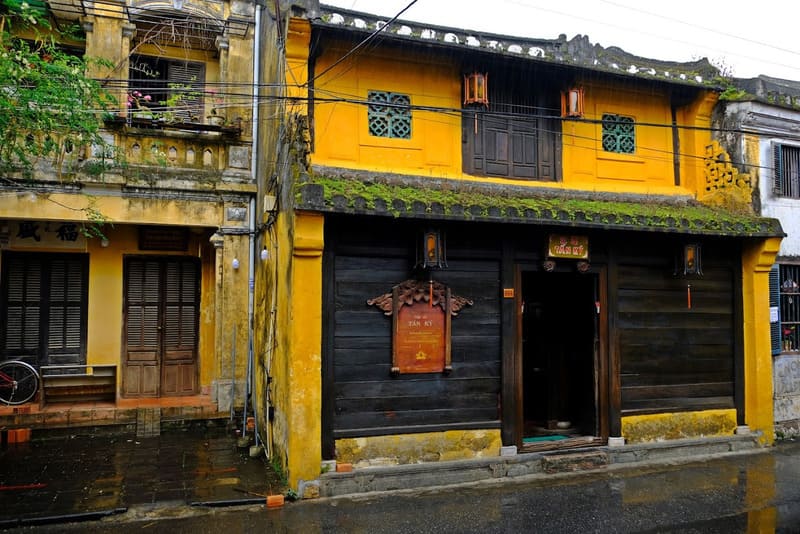
Tan Ky Old House on Nguyen Thai Hoc Street (Source: Collected)
Tan Ky Old House is worth visiting because it shows how Hoi An’s merchant families lived and traded when the town was a busy international port. Unlike a modern museum, this is a real family house that has been preserved for generations.
The house is especially interesting for travelers who want to see:
Tan Ky Old House is not a large attraction, but it gives visitors a concentrated view of Hoi An’s cultural identity. The wooden beams, narrow layout, inner courtyard, old objects, and family stories all help explain why Hoi An Ancient Town has remained one of Vietnam’s most atmospheric heritage destinations.
The Tan Ky ancient house was built more than 200 years ago and is associated with many generations of the Le family. The house is commonly dated to the 18th century, around 1741, when Hoi An was still an important trading port in central Vietnam.
The name “Tan Ky” is often understood as a wish for prosperity and successful business. Like many old houses in Hoi An, the building served more than one purpose. It was a family residence, a trading place, and a space for ancestor worship.
During Hoi An’s commercial peak, merchants from Vietnam, China, Japan, and other countries came to the town for trade. The position of Tan Ky Old House, with access to both the street and riverside area, reflected the practical needs of merchant families. Goods could be received, stored, displayed, and sold within the same property.
Over time, the house survived wars, economic changes, and many floods. One of the most memorable details inside the house is the flood marks on the wall. These marks show how high the water reached during major floods, especially in the 20th century. They are a reminder that Hoi An’s beauty has always been closely connected with both the benefits and challenges of river life.
Today, Tan Ky Old House is one of the best-known heritage houses in Hoi An and remains an important stop for visitors who want to understand the town beyond lantern streets and riverside cafés.
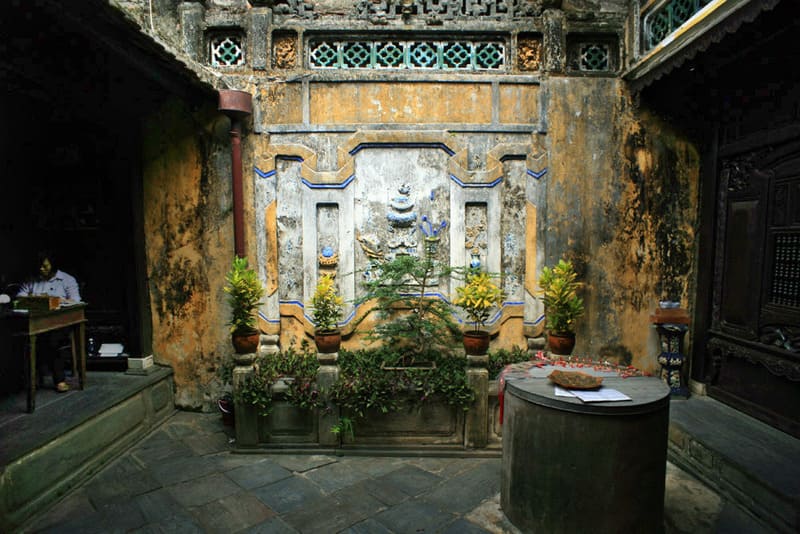
Inside one of Hoi An’s oldest merchant houses (Source: Collected)
Tan Ky Old House is one of the best examples of traditional merchant-house architecture in Hoi An. The house is narrow in width but deep in length, following the typical tube-house style often seen in old trading towns. This layout was practical for a merchant family: the front was used for business, the middle served as the living and reception area, and the back connected with storage space and the riverside trading route.
One of the most distinctive features of Tan Ky Old House is its blend of Vietnamese, Chinese, and Japanese architectural influences. This reflects Hoi An’s history as a busy international trading port, where different cultures met and shaped the town’s architecture.
The main architectural influences can be seen through several details:
The building materials also play an important role in the house’s durability. Tan Ky Old House was built mainly with wood, stone, and ceramic tiles. Strong timber was used for the main frame, while stone bases helped protect the wooden columns from moisture and flood damage. Ceramic floor tiles, often linked with traditional craft villages such as Bat Trang, helped keep the interior cool in summer and warmer in winter.
Another clever feature is the house’s natural ventilation. Although the building has few windows, it does not feel completely closed. The inner courtyard, or sky well, allows light and fresh air to enter the house. This design helped improve airflow, reduce heat, and protect goods stored inside the house during Hoi An’s humid climate.
Tan Ky Old House is also known for its detailed wood carvings. Many patterns carry symbolic meanings related to prosperity, longevity, family unity, virtue, and balance. These details are easy to miss if you walk through quickly, so visiting with a local guide can make the experience more meaningful. With the right explanation, the house becomes more than an old building; it tells the story of Hoi An’s merchant culture, family traditions, and architectural intelligence.
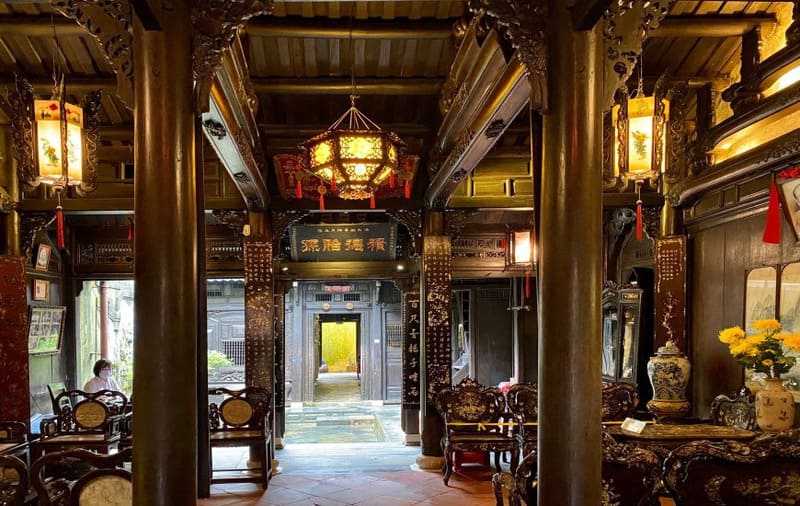
Wooden details inside Tan Ky Old House (Source: Collected)
Inside Tan Ky Old House, visitors can see a mix of architecture, antiques, family objects, and historical details. The house is not very large, so the visit is usually short, but there are several details worth noticing.
The first thing many visitors notice is the dark wooden interior. Tables, chairs, cabinets, beds, altars, and decorative panels create the feeling of stepping into an old merchant home rather than a modern exhibition space.
Many objects inside the house reflect the lifestyle of a wealthy Hoi An trading family. You may see carved wooden furniture, old ceramic pieces, sailing ship models, family photos, and household items connected to daily life in previous generations.
The furniture is not only decorative. It shows the status, taste, and values of the family. The use of wood, lacquer, mother-of-pearl inlay, and symbolic carvings reflects the craftsmanship that Hoi An and nearby villages were known for.
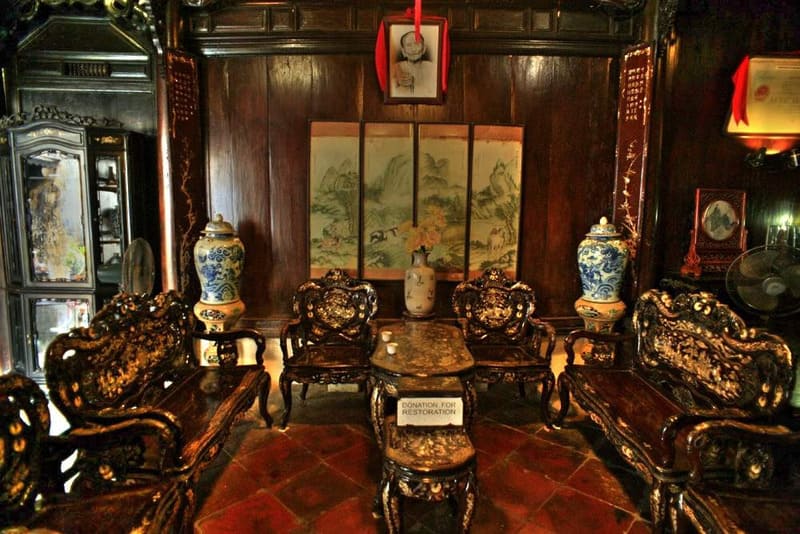
Antique furniture in Tan Ky Old House (Source: Collected)
The Confucius Cup is one of the most talked-about objects inside Tan Ky Old House. It is often described as a special cup with a moral lesson. When filled moderately, it holds water. When overfilled, the water drains away.
The meaning is simple but memorable: balance is important, and greed can lead to loss. For visitors, this small object is one of the clearest examples of how philosophy, education, and daily objects were connected in traditional Vietnamese and East Asian culture.
The cup also adds an interactive element to the visit. Local guides or house staff may explain how it works, helping visitors understand the message behind the object instead of seeing it only as an antique.
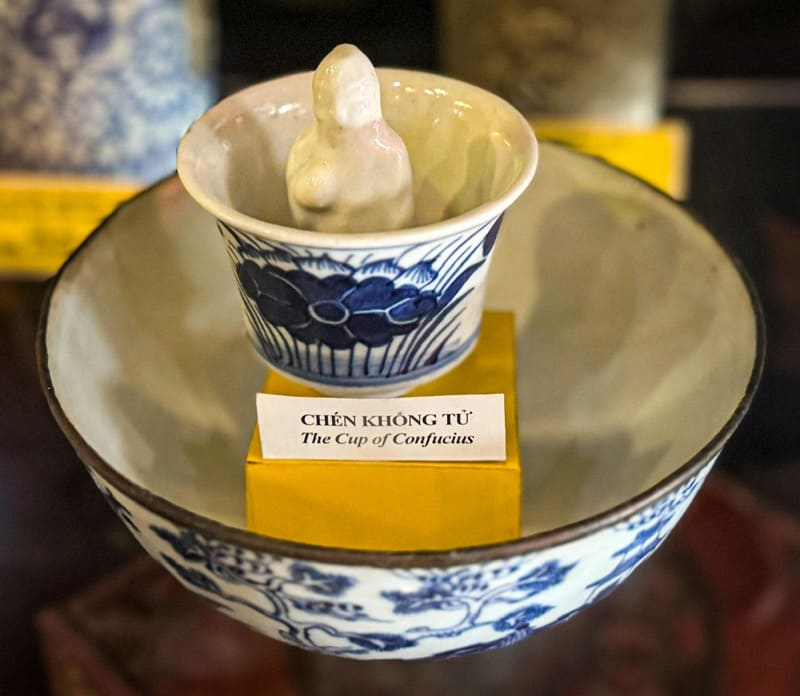
The Confucius Cup and its lesson of balance (Source: Collected)
Another highlight is the famous “One Hundred Birds” lacquer board, often referred to as “Bach Dieu.” This decorative board is known for its special calligraphy, where the characters are designed in a way that resembles birds in flight.
This object is valuable not only because of its age, but also because of its artistic and symbolic meaning. Birds are often associated with freedom, harmony, and good fortune. The board also shows the high level of calligraphy, carving, and decorative art in traditional Hoi An houses.
For travelers interested in cultural details, this is one of the most important items to look for inside Tan Ky Old House.
The flood marks are among the most powerful details inside the house. Hoi An has a long history of seasonal flooding, especially because of its low-lying riverside location. The marks show how high floodwater rose in different years.
These marks make the history of the house feel real. Instead of only reading that the building is more than 200 years old, visitors can see physical evidence of what the house has survived.
They also help explain why the building materials and structure mattered. Stone bases, strong timber, elevated storage areas, and careful maintenance all helped the house remain standing through difficult conditions.
In addition to flood marks, you may also see sailing ship models or trading-related objects. These details connect the house to Hoi An’s past as a commercial port where agricultural products, silk, spices, ceramics, and other goods were exchanged.
A visit to Tan Ky Old House is much better with explanation. Some details are easy to miss if you walk through quickly. A local guide or house representative can explain the family history, architectural symbols, flood marks, antiques, and old trading functions of each space.
For example, the front part of the house was used for receiving guests and trading. The middle section provided light and ventilation. The altar area reflected family worship and respect for ancestors. The rear area connected with storage and river access.
These stories help turn the house from a simple sightseeing stop into a more meaningful cultural experience.
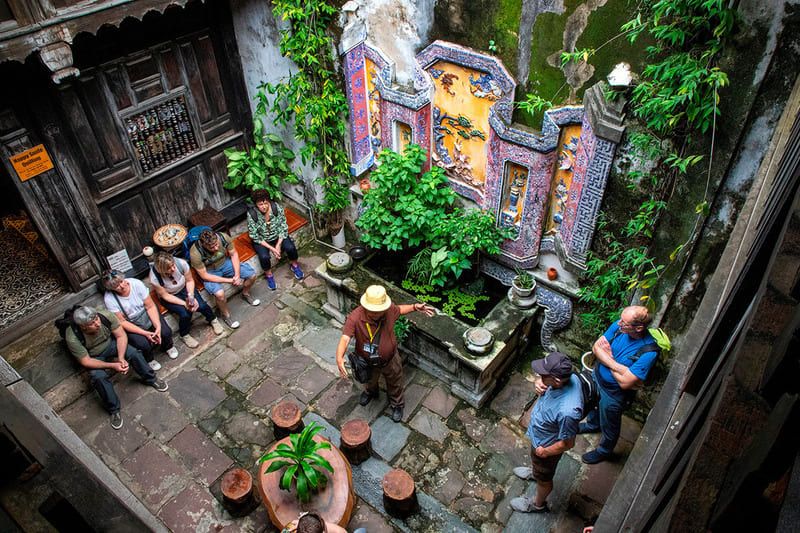
A local guide sharing stories inside the old house (Source: Collected)
Tan Ky Old House is usually open during the daytime, making it easy to include in a Hoi An Ancient Town walking itinerary.
Visitors should buy the ticket at an official ticket booth before entering ticketed heritage attractions. It is also a good idea to keep the ticket with you during the walk, as it may be checked at different sites.
The best time to visit Tan Ky Old House is in the morning, especially before large tour groups arrive. The house is narrow, so it can feel crowded when several groups enter at the same time.
For the best experience, consider visiting:
If your goal is photography, the exterior streets around Nguyen Thai Hoc and Bach Dang are often more atmospheric in the morning or late afternoon. Inside the house, lighting can be dim, so take photos respectfully and avoid flash if signs or staff request it.
Weather can significantly affect your experience, so checking the best time to visit Hoi An may help when planning heritage walks around the Ancient Town.
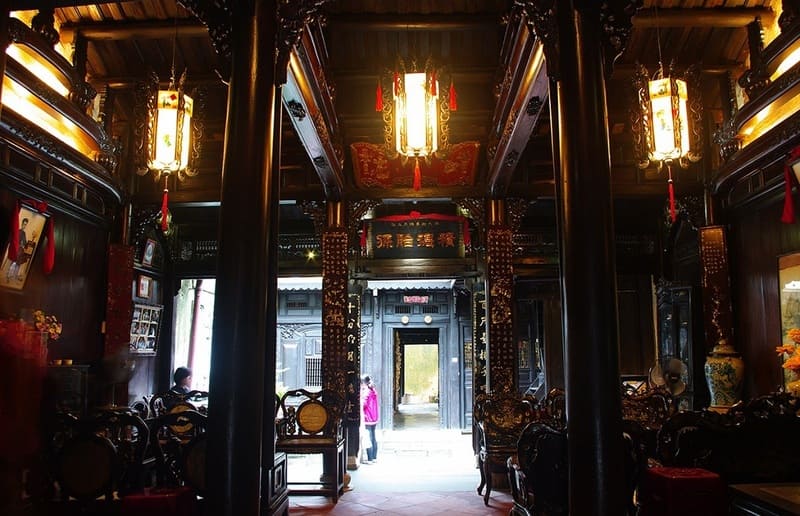
Quiet moments around Tan Ky Old House in Hoi An (Source: Collected)
Tan Ky Old House is located in the center of Hoi An Ancient Town, so the easiest way to visit is on foot.
Tan Ky Old House is located in one of the most convenient areas of Hoi An Ancient Town, so it is easy to combine with other attractions.
Good nearby stops include:
A simple walking route could be:
Japanese Covered Bridge → Tan Ky Old House → Museum of Folk Culture → Fujian Assembly Hall → Hoi An Market → Bach Dang riverside.
This route is compact, practical, and suitable for first-time visitors.
To make your visit smoother and more enjoyable, keep these practical tips in mind before entering Tan Ky Old House.
Tan Ky Old House is more than 200 years old. It is one of the best-preserved ancient merchant houses in Hoi An Ancient Town and has been connected with generations of the Le family.
Most visitors spend around 20-45 minutes at Tan Ky Old House. A quick visit may take about 20 minutes, while a guided visit with explanations about architecture, antiques, and family history can take longer.
Yes, visitors usually need a Hoi An Ancient Town sightseeing ticket to enter Tan Ky Old House. The Old Town ticket allows access to five selected heritage attractions inside Hoi An Ancient Town.
Yes. Visitors can enter the public areas of Tan Ky Old House, including the main reception spaces, antique display areas, and sections showing old family objects. Some private areas may not be open to tourists.
Photography is generally possible in many areas, but visitors should follow signs and staff instructions. Avoid using flash if it is not allowed, and do not disturb other visitors or touch displayed objects for photos.
Tan Ky Old House is special because it combines Vietnamese, Chinese, and Japanese architectural influences in a traditional Hoi An tube-house layout. Its wooden structure, inner courtyard, symbolic carvings, tiled roof, and flood-resistant details reflect both cultural exchange and practical adaptation to local conditions.
The best nearby attractions include the Japanese Covered Bridge, Fujian Assembly Hall, Museum of Folk Culture, Hoi An Market, Bach Dang Street, and the Hoai River area. These sites can be combined easily in a walking itinerary around Hoi An Ancient Town.
Yes, a guide is recommended if you want to understand the house properly. Many details, such as the Confucius Cup, One Hundred Birds lacquer board, flood marks, family altar, and architectural symbols, are much more interesting when explained by someone with local knowledge.
Tan Ky Old House is one of the best places to experience the history, architecture, and merchant heritage of Hoi An Ancient Town. Despite its modest size, the house offers valuable insight into the cultural identity and daily life of old Hoi An.
If you are planning a trip to Hoi An, Your Vietnam Travel can help you explore the Old Town with tailor-made tours, local guides, and personalized travel experiences across Vietnam and Southeast Asia.




 Vietnam Tours
 Cambodia Tours
 Laos Tours
 Thailand Tours
 Multi-Country Tours