Fansipan Mountain is a defining highlight of Sapa tourism and the highest peak in Vietnam. Rising to 3,143 meters, it has long been known as the “Roof of Indochina,” attracting travelers with its dramatic mountain landscapes, impressive sea of clouds, and the experience of reaching one of the highest points in the region.
In this guide, you will find everything you need to know about Fansipan Sapa, including its location, how to get there, the best time to visit, and practical travel tips for your trip.
Fansipan Mountain is located in the Hoang Lien Son Mountain Range, about 9 kilometers southwest of Sapa Town in Lao Cai Province, northwestern Vietnam. It lies within Hoang Lien National Park, one of the country’s most important conservation areas, known for its rich biodiversity and mountainous terrain.
The mountain is part of the eastern extension of the Himalayas, giving it a unique landscape compared to other regions in Vietnam. Dense forests, steep ridges, and layered mountain views define the area, making it a key destination for both nature lovers and trekkers.
Due to its high elevation, the weather on Fansipan changes quickly. Temperatures at the summit can drop to around 4-6°C in winter, with occasional frost or even rare snowfall. In summer, conditions are milder, typically ranging from 15-20°C, though mist and clouds are common throughout the year.
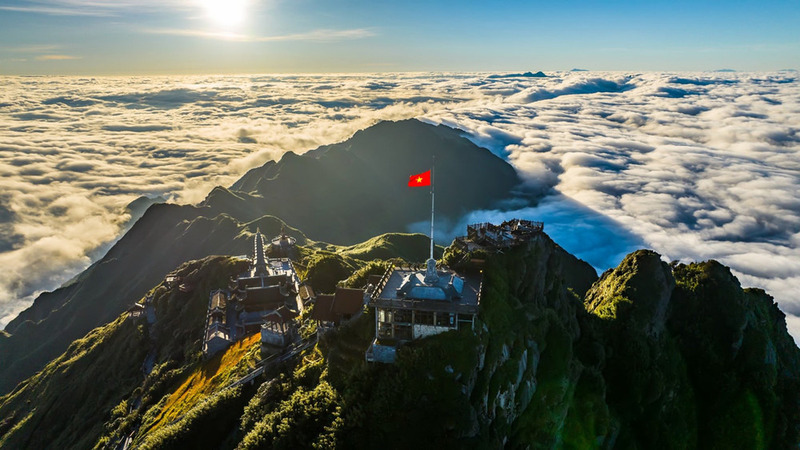
Fansipan Mountain Sapa (Source: Collected)
Fansipan reaches an elevation of 3,143 meters, making it the highest mountain in Vietnam as well as across the Indochina region, including Laos and Cambodia. This distinction has earned it the title “Roof of Indochina.”
For many years, Fansipan was considered a challenging destination reserved mainly for experienced climbers. Reaching the summit required multi-day trekking through dense forest and steep terrain. Today, the development of the cable car system has made the mountain far more accessible, allowing a wider range of travelers to reach near the top within a short time.
Beyond its height, Fansipan holds cultural and spiritual importance for local ethnic groups such as the H’mong and Tay communities. The mountain is often regarded as a sacred place, closely tied to local beliefs and traditions.
Its combination of altitude, dramatic scenery, and cultural significance continues to attract visitors seeking both natural beauty and meaningful travel experiences in northern Vietnam.
Reaching the summit of Fansipan Mountain depends on your travel style, fitness level, and the type of experience you are looking for. There are two main ways to get to the top: taking the cable car for convenience or hiking for a more immersive adventure.
The cable car is the most popular and accessible way to reach Fansipan. Opened in 2016, this three-rope system holds world records for its length and elevation gain, stretching over 6,200 meters.
The journey takes around 15 minutes and offers wide views of the Muong Hoa Valley and Hoang Lien Son range. During the ride, you ascend more than 1,400 meters, making it possible to reach near the summit without physical effort.
Key details:
After arriving at the upper station, you have two options:
This option is ideal if you want a comfortable journey with spectacular views and limited time.
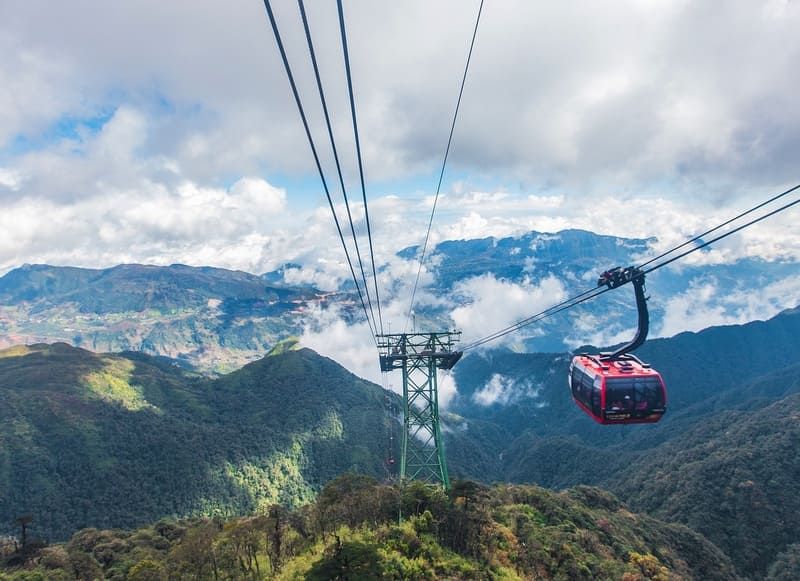
Fansipan cable car (Source: Collected)
Trekking to Fansipan offers a completely different experience, focusing on nature, endurance, and exploration. Depending on the route, the journey can take from 1 to 3 days.
Popular trekking routes:
What to expect:
Hiring a local guide is highly recommended for safety and navigation, especially on longer or more difficult routes.
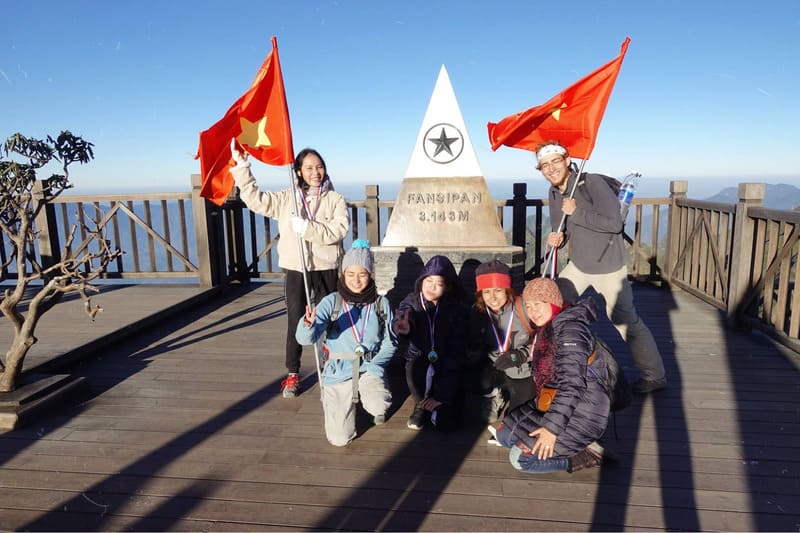
Fansipan summit at 3,143m with hikers (Source: Collected)
The best time to visit Fansipan Mountain depends on what you want to experience, but overall, the most favorable conditions occur from mid-March to mid-May and late September to mid-December. During these periods, the weather is generally cool, dry, and stable, offering clearer views and safer conditions for both sightseeing and trekking.
Important notes:
Each season offers a distinct perspective of Fansipan, but choosing the right time can significantly improve your overall experience, especially if clear views and comfortable conditions are your priority.
For a broader overview of seasonal conditions, check out best time to visit Sapa to plan your trip more effectively.
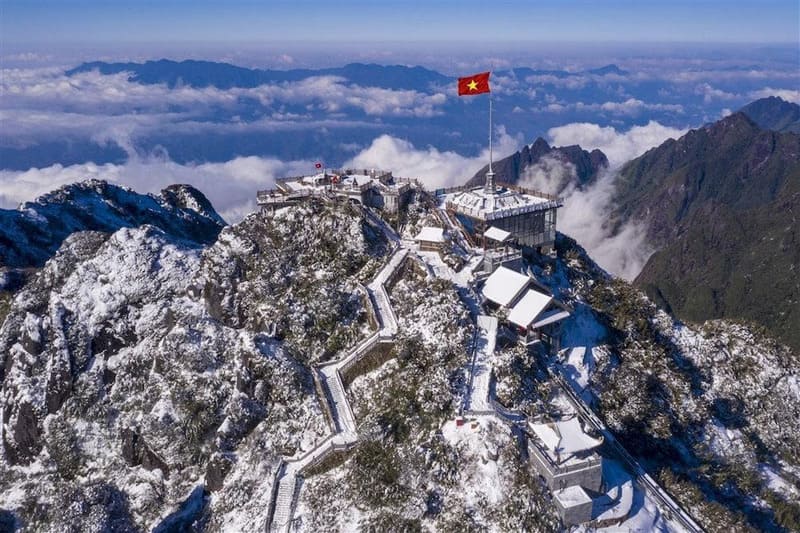
Best time to visit Fansipan: Mar-May or Sep-Dec for clear views (Source: Collected)
One of the first highlights of a Fansipan visit is the Muong Hoa Funicular. This short but scenic ride connects Sapa with the cable car station, passing through the stunning Muong Hoa Valley. Along the way, visitors can enjoy views of mountain slopes, local villages, and terraced fields that define the landscape of Sapa.
The funicular is not only convenient but also adds a scenic start to the journey. It allows travelers to enjoy the mountain setting before ascending higher into the clouds.
The views over Muong Hoa Valley are one of the highlights of the journey, and you can explore more about this area in our guide to Muong Hoa Valley.
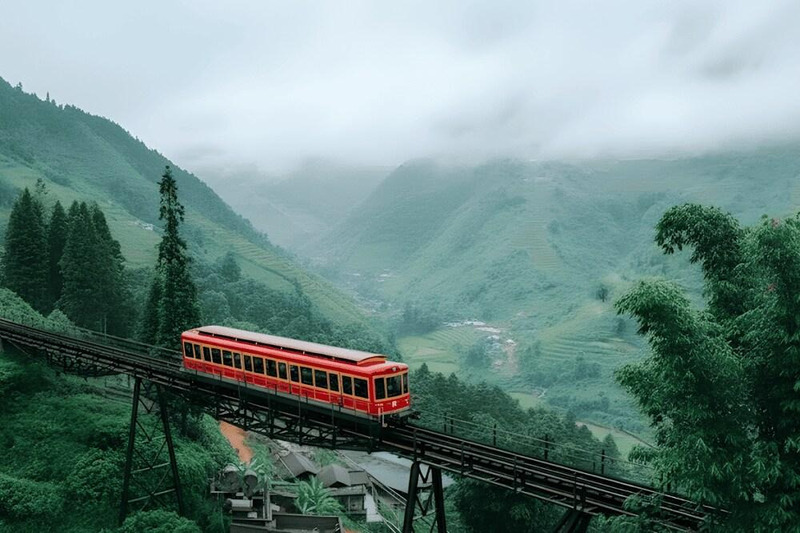
Ride Muong Hoa funicular for scenic Sapa valley views (Source: Collected)
The Fansipan cable car is one of the most popular experiences on the mountain. As the cabin rises above deep valleys and forested slopes, it reveals sweeping views of the Hoang Lien Son range that are difficult to see any other way.
For many travelers, this is the most unforgettable part of the visit. The ride is smooth, dramatic, and accessible, making Fansipan much easier to experience without the physical demands of a full trek.
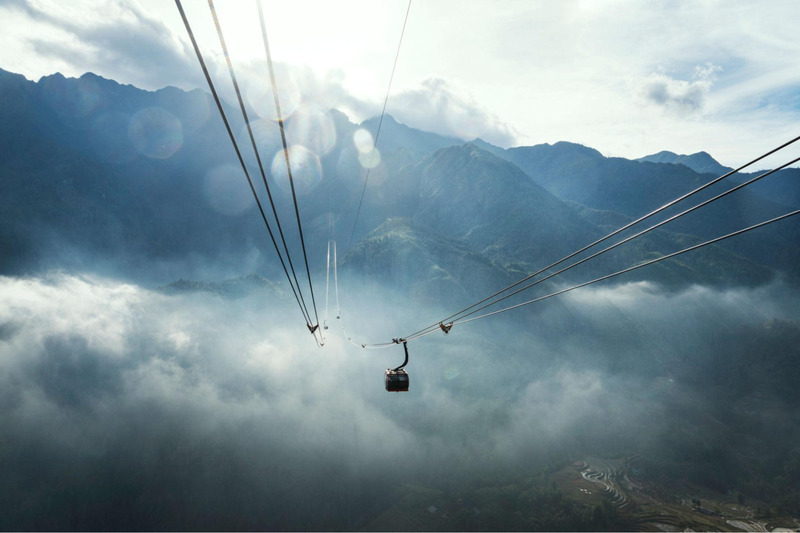
Fansipan cable car offers stunning mountain views without trekking (Source: Collected)
Standing beside the Fansipan summit marker is one of the most rewarding moments of the trip. As the highest point in Vietnam and Indochina, the peak represents a major travel milestone for many visitors.
This is also the most iconic photo stop on the mountain. On clear days, the summit area opens up to impressive views over the surrounding peaks and valleys, creating a memorable backdrop for photos.
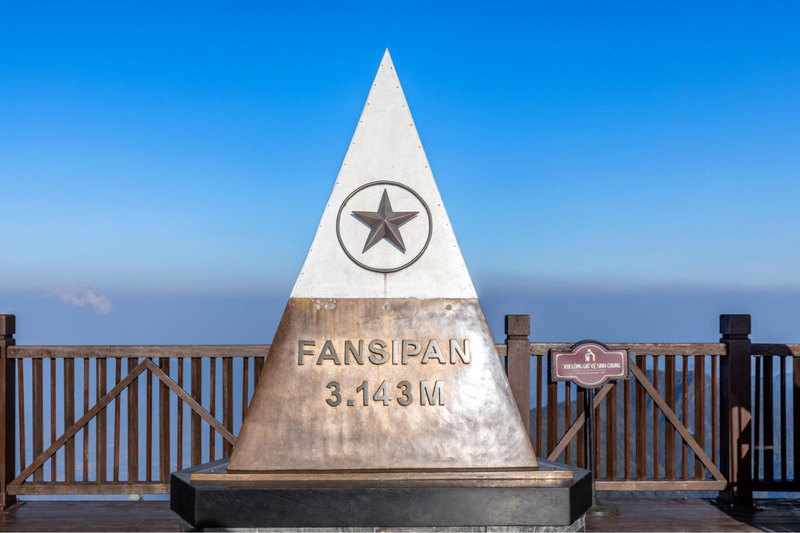
Reach Fansipan summit marker, Vietnam’s highest peak viewpoint (Source: Collected)
Fansipan is not only known for its natural scenery but also for its spiritual atmosphere. The mountain is home to an impressive collection of temples, pagodas, statues, and sacred architectural sites that add cultural depth to the journey.
Notable landmarks include the Great Buddha Statue, Bich Van Zen Monastery, the Grand Belfry, and other Buddhist structures set among the mountains. These places create a calm and reflective environment, giving visitors a different side of Fansipan beyond sightseeing and adventure.
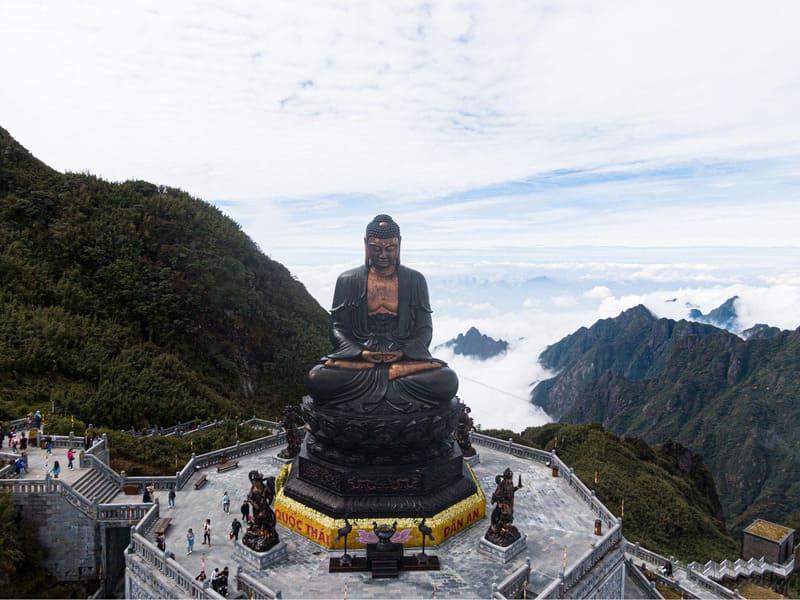
Explore Fansipan’s temples, statues, and peaceful spiritual sites (Source: Collected)
Fansipan offers some of the most dramatic mountain views in northern Vietnam. Observation areas near the summit provide wide panoramas of clouds, layered ridges, and valleys below. These viewpoints are especially impressive in the early morning, when visibility is often better and the mountain feels quieter.
In addition to the summit marker, many visitors also stop for photos at stairways, terraces, and scenic lookout points throughout the upper complex.
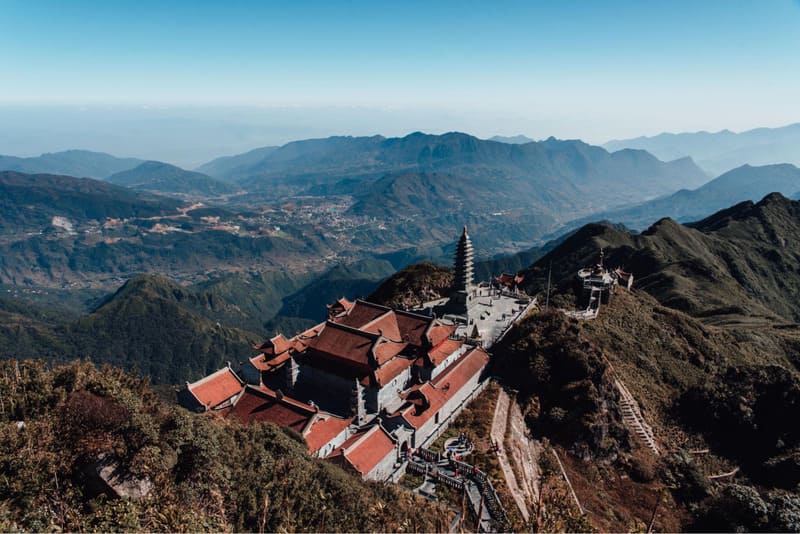
Enjoy panoramic Fansipan views and scenic photo spots (Source: Collected)
After exploring the summit area, many travelers choose to slow down and enjoy the mountain atmosphere at one of the cafés near the upper stations. A warm tea or coffee feels especially rewarding in the cool air of Fansipan.
These cafés offer a comfortable place to rest, take in the scenery, and enjoy a quieter moment before heading back down. On misty days, the setting feels even more atmospheric, adding to the overall experience.
Visiting Fansipan is a rewarding experience, but proper preparation can make a significant difference in comfort, safety, and overall enjoyment. These practical tips will help you plan effectively, whether you take the cable car or choose to trek.
Fansipan Mountain stands at 3,143 meters above sea level, making it the highest peak in Vietnam and across the Indochina region. This is why it is widely known as the “Roof of Indochina.”
The best option depends on your travel style.
If you have limited time or prefer comfort, the cable car is the better choice. Hiking is ideal for those seeking adventure and a deeper connection with nature.
Yes. At over 3,000 meters, the air is thinner and oxygen levels are lower than at sea level. Most visitors may feel slight shortness of breath or fatigue, but symptoms are usually mild and temporary.
Yes, hiring a local guide is strongly recommended, especially for multi-day treks. A guide helps with navigation, safety, and understanding local terrain and weather conditions.
Ticket prices typically range from:
Prices may vary by season or promotions, so it is best to check in advance.
Yes. Fansipan offers a unique combination of mountain scenery, cultural landmarks, and accessible adventure. It is one of the most iconic experiences in northern Vietnam, suitable for both nature lovers and first-time visitors.
Yes. Most travelers visit Fansipan as a day trip from Sapa using the cable car. The entire experience, including transportation and sightseeing, can be completed in half a day to a full day.
Wear layered clothing, comfortable walking shoes, and bring a light jacket. Temperatures at the summit are significantly lower than in Sapa, even during summer.
Fansipan is one of Sapa’s most iconic destinations, combining breathtaking scenery, the thrill of reaching the summit, and the rich cultural heritage of Northern Vietnam. Taking the cable car offers sweeping views of the Hoang Lien Son range, while trekking provides a deeper and more immersive connection with nature. Both options promise a memorable experience.
If you are looking for a Sapa itinerary tailored to your interests and schedule, contact Your Vietnam Travel for personalized support. With strong local expertise, the team can help you design a seamless journey that includes Fansipan along with other unique experiences in Sapa and Northern Vietnam.

 Vietnam Tours
 Cambodia Tours
 Laos Tours
 Thailand Tours
 Multi-Country Tours