Can Gio Mangrove Forest is a UNESCO-recognized biosphere reserve located on the southeastern edge of Ho Chi Minh City. Covering thousands of hectares of mangroves, rivers, and wetlands, it serves as an important wildlife habitat and a natural barrier protecting the coast. Visitors can explore its rich biodiversity, historical sites, and ecotourism attractions while enjoying one of the most distinctive natural landscapes in southern Vietnam.
Can Gio Mangrove Forest is a vast mangrove wetland ecosystem in the coastal area of Ho Chi Minh City. It forms the core of the Can Gio Mangrove Biosphere Reserve, which was recognized by UNESCO in 2000 and became Vietnam’s first biosphere reserve.
The forest is made up of mangrove trees, tidal flats, waterways, swamps, and brackish-water habitats. This environment supports rich biodiversity, including birds, bats, monkeys, reptiles, fish, crabs, shrimp, and many other wetland species.
Can Gio also plays an important environmental role for Ho Chi Minh City. Its mangroves help reduce coastal erosion, store carbon, filter water, protect against storms, and balance the local climate. Because of this, the area is often called the “green lung” of the city.
For travelers, Can Gio Mangrove Forest offers a nature-based escape from the urban center, with boat rides, wildlife watching, forest trails, conservation areas, and historical sites connected to the Sac Forest wartime period.
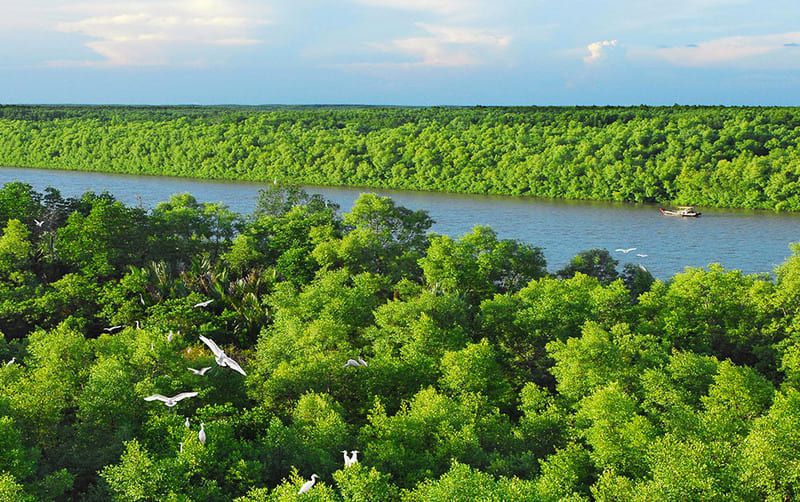
Mangrove waterways and wetland scenery in Can Gio (Source: Collected)
Can Gio Mangrove Forest is located in Can Gio District, the only coastal district of Ho Chi Minh City. It lies about 50 - 60 kilometers southeast of downtown Ho Chi Minh City, near the river-mouth area where the Saigon, Dong Nai, and Vam Co river systems flow toward the East Sea.
From central Ho Chi Minh City, the journey usually takes around 1.5 - 2.5 hours by car or motorbike, depending on traffic and the exact destination. Public buses are available, but travel time is often longer because visitors need to connect through Binh Khanh Ferry.
The main visitor areas are spread across Can Gio District rather than concentrated in one single spot. Popular stops include Monkey Island, Vam Sat Ecotourism Site, Sac Forest Guerrilla Base, Dan Xay Ecotourism Area, Can Gio Beach, Hang Duong Seafood Market, Can Thanh Town, Tomb of Ong Thuy Tuong, and Thieng Lieng Island.
Can Gio Mangrove Forest is important because it protects the coastline, supports biodiversity, and helps balance the environment of Ho Chi Minh City.
The mangroves act as a natural shield against erosion, tides, strong winds, and storms. Their root systems help stabilize the soil and reduce wave impact, which is especially valuable for a low-lying coastal area like Can Gio.
The forest is also a key habitat for many species, including fish, crabs, birds, reptiles, mammals, and other wetland wildlife. Its mix of rivers, canals, mudflats, and mangroves makes it one of southern Vietnam’s most valuable coastal ecosystems.
For Ho Chi Minh City, Can Gio is often called the “green lung” because it helps absorb carbon, improve air quality, and regulate the local climate. The area also has educational, scientific, and eco-tourism value, attracting visitors, students, and researchers interested in mangrove conservation.
Can Gio also supports local livelihoods through fishing, aquaculture, seafood trading, salt production, eco-tourism, and forest protection work. When managed responsibly, tourism can help create income while encouraging long-term conservation of the mangrove ecosystem.
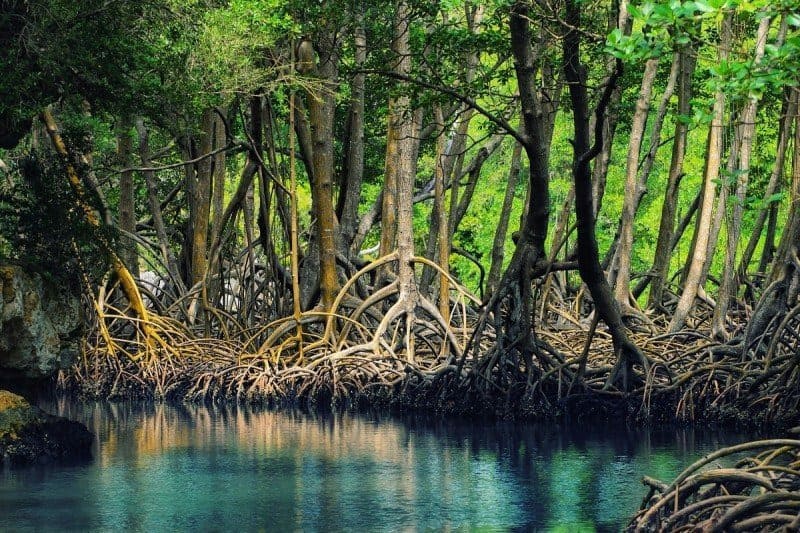
Can Gio’s mangroves help protect the coastal ecosystem (Source: Collected)
Can Gio Mangrove Forest has a remarkable history of destruction and recovery. Before the Vietnam War, the area was covered by dense mangroves, rich wildlife, and an extensive network of rivers and canals. Its location near Saigon and the Sac Forest area made it both ecologically valuable and strategically important.
During the war, Can Gio suffered severe damage from bombing, chemical defoliants, and military operations. Large parts of the mangrove ecosystem were destroyed, causing major loss of vegetation and wildlife habitats.
After the war, long-term restoration began with support from local communities, authorities, scientists, and forest workers. Many degraded areas were replanted with mangrove species suitable for brackish-water wetlands. Over time, wildlife gradually returned, including monkeys, birds, bats, reptiles, fish, and crustaceans.
In 2000, UNESCO recognized Can Gio as Vietnam’s first biosphere reserve. Today, Can Gio Mangrove Forest is a symbol of successful ecosystem restoration, biodiversity conservation, and sustainable eco-tourism.
Mangroves are the dominant plant group in Can Gio. They grow in brackish water where rivers meet the sea and can survive in salty, muddy, oxygen-poor soil thanks to their special root systems.
These roots create shelter for young fish, crabs, shrimp, snails, and other aquatic species, making the forest an important nursery for marine life. Common mangrove species associated with restoration in the area include Rhizophora apiculata and Rhizophora mucronata.
Mangroves also protect the coastline. Their dense roots help reduce erosion, slow waves, stabilize muddy soil, and form a natural barrier for inland communities.
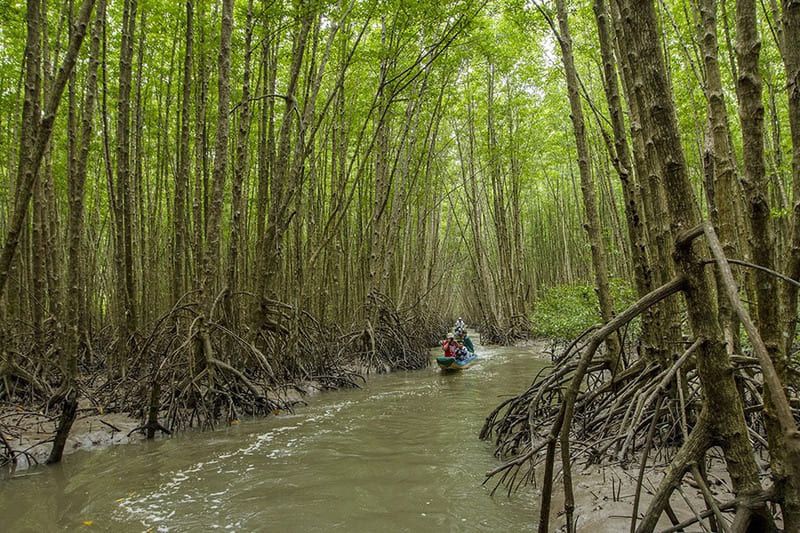
Mangrove roots create shelter for aquatic life (Source: Collected)
Can Gio supports a wide range of wildlife. Monkey Island is the easiest place to see animals up close, with a large population of active and curious monkeys living in a protected forest area.
Birdlife is another highlight. Wetlands, mudflats, and bird sanctuary areas attract storks, herons, kingfishers, sandpipers, and other wetland or migratory birds, especially around Vam Sat.
Bat Lagoon is known for groups of bats resting among the mangrove trees. The crocodile conservation area is also a popular stop where visitors can observe crocodiles safely from designated areas.
The rivers, canals, and mudflats are rich in aquatic life, including fish, crabs, shrimp, mollusks, shellfish, and mudskippers. These species play an important role in both the ecosystem and local seafood culture.
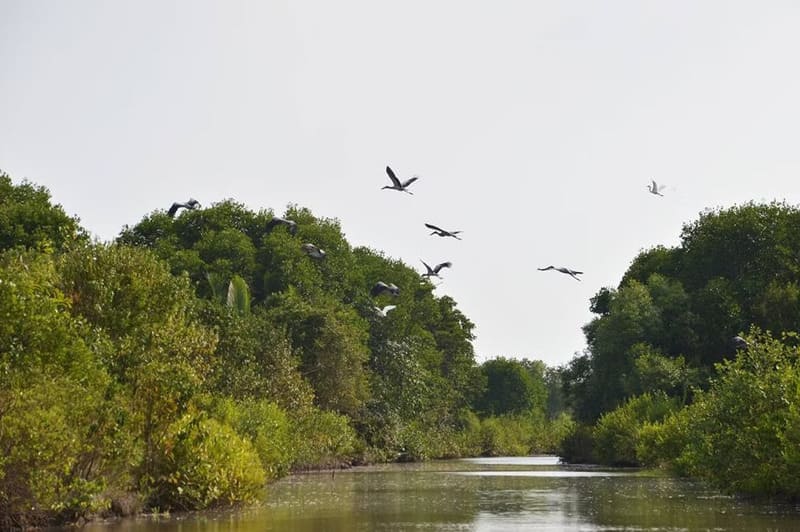
Wildlife is one of the main highlights of Can Gio (Source: Collected)
The best wildlife-watching spots in Can Gio include Monkey Island, Vam Sat Ecotourism Site, Bat Lagoon, the bird sanctuary, the crocodile conservation area, and mangrove canal routes.
Monkey Island is suitable for families and first-time visitors, but travelers should keep a safe distance, avoid feeding monkeys without permission, and protect personal belongings.
Vam Sat is better for a fuller nature experience, with boat rides, bird watching, crocodile viewing, Bat Lagoon, and panoramic mangrove views from Tang Bong Tower.
For bird watching, early morning and late afternoon are usually the best times. For photography, mangrove canal boat routes, Tang Bong Tower, bird sanctuary areas, and Can Gio Beach around sunset offer some of the most rewarding views.
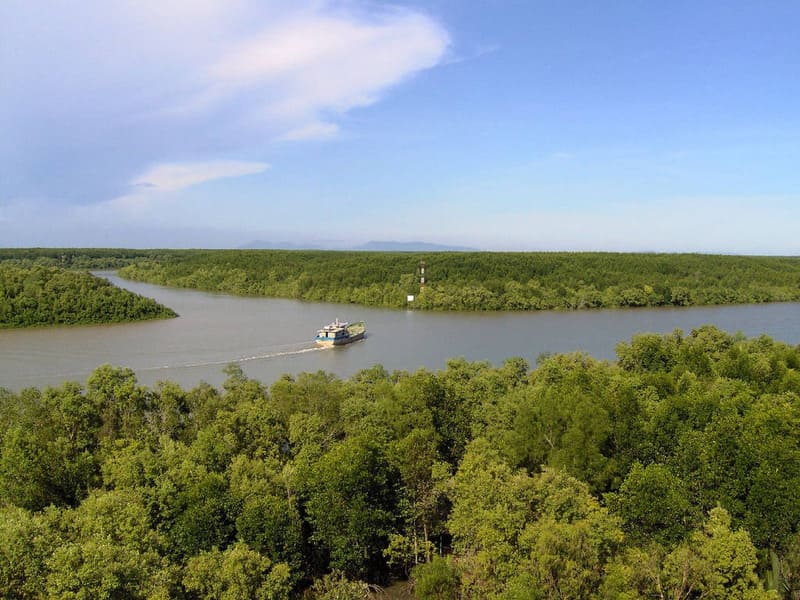
A boat tour is one of the best ways to experience Can Gio Mangrove Forest. You can travel through narrow waterways surrounded by mangrove trees, tangled roots, and quiet wetland scenery.
These canals are essential to the ecosystem because they connect habitats, support aquatic life, and create natural routes through the forest. Depending on the route, boat tours may include Sac Forest Guerrilla Base, Vam Sat, bird-watching areas, or other mangrove sites.
For a better experience, choose a clear day, bring sun protection, and keep your phone or camera secure. During the rainy season, check the weather in advance because heavy rain can affect boat activities.
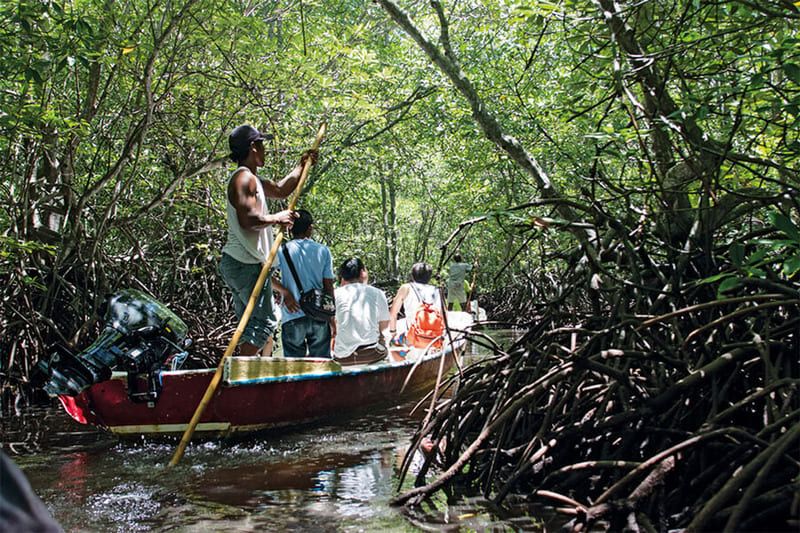
A boat ride through Can Gio’s quiet mangrove canals (Source: Collected)
Monkey Island is one of the most popular stops in Can Gio. It is home to many monkeys living in a semi-wild environment. Visitors can see them climbing trees, walking along paths, and moving freely around the area.
The visit is fun, especially for families, but caution is necessary. Monkeys may grab food, drinks, hats, sunglasses, phones, or small bags. Keep belongings inside a zipped bag, avoid holding food, do not tease the monkeys, and follow staff instructions.
Monkey Island is often combined with Sac Forest Guerrilla Base, making it a convenient stop on a one-day Can Gio itinerary.
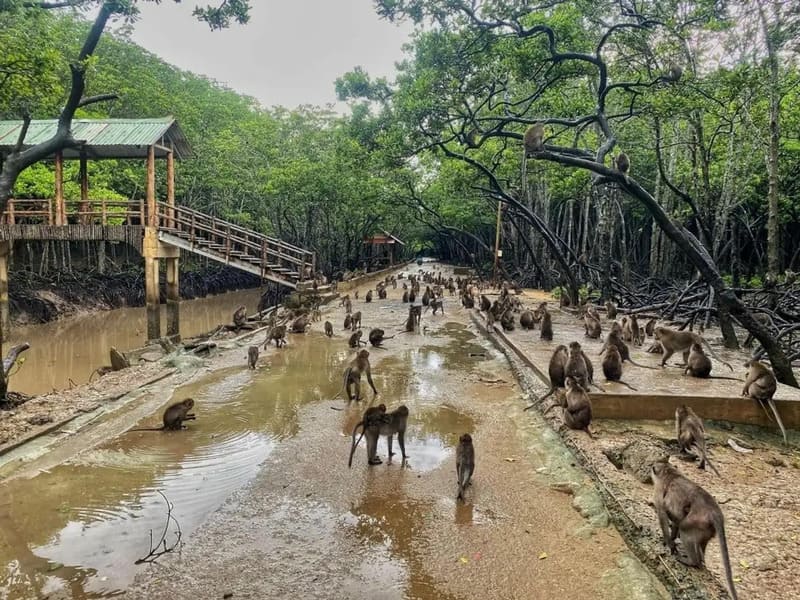
Visitors can see hundreds of monkeys in their natural habitat (Source: Collected)
Vam Sat Ecotourism Site is one of the main places to explore the natural side of Can Gio Mangrove Forest. It is known for mangrove waterways, wildlife areas, Bat Lagoon, a bird sanctuary, a crocodile conservation area, and Tang Bong Tower.
Visitors can take boat trips, walk through forest paths, observe wildlife, take photos, and learn more about the mangrove ecosystem. Vam Sat is suitable for nature lovers, photographers, families, and travelers who want a more immersive experience.
Activities and prices may vary depending on the route, group size, and services, so it is best to check updated information before visiting.
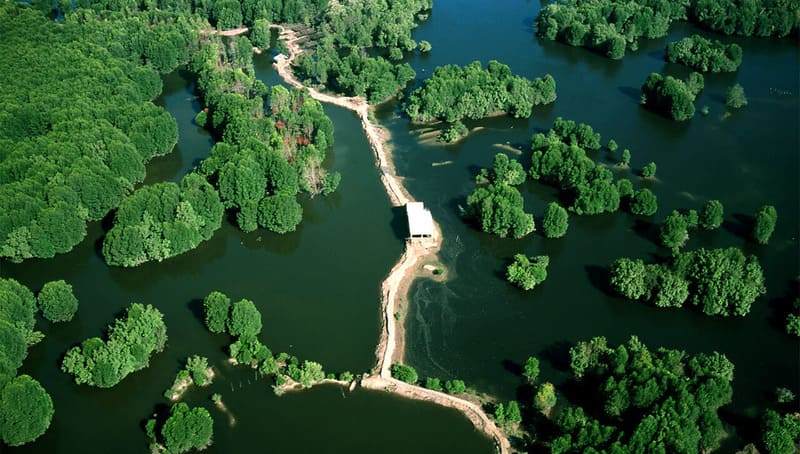
Vam Sat is a key stop for nature and wildlife lovers (Source: Collected)
The crocodile conservation area is one of the most memorable wildlife stops in Can Gio. Visitors can observe crocodiles in a controlled environment and learn about their role in the wetland ecosystem.
Some activities may allow visitors to watch crocodiles from a protected boat or feeding platform. These experiences are designed for safety, but visitors should always follow staff instructions, avoid leaning over barriers, and never try to touch the animals.
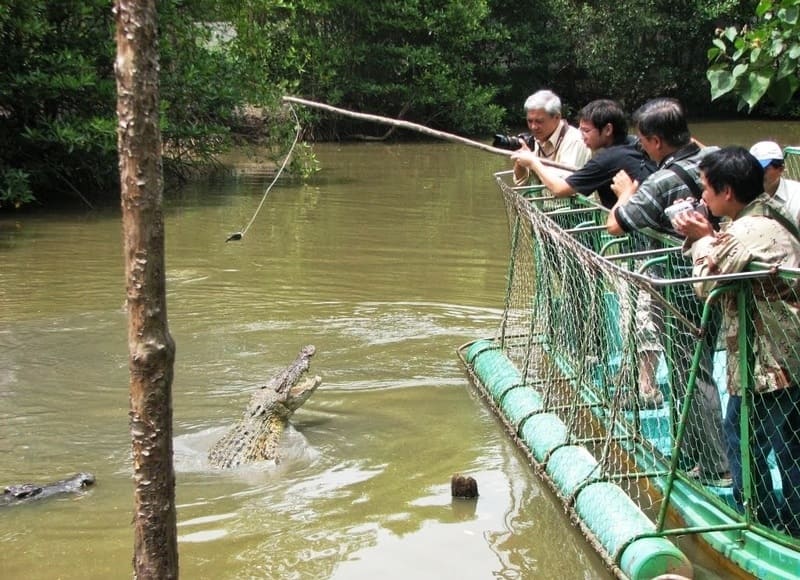
Crocodiles can be seen safely in protected areas (Source: Collected)
Tang Bong Tower is one of the best viewpoints in Vam Sat. From the top, visitors can see the mangrove canopy, waterways, and surrounding wetlands from above.
The tower helps you appreciate the scale of Can Gio’s ecosystem, where rivers and canals cut through a wide green forest. Clear days offer the best visibility, while early morning and late afternoon provide softer light for photography. Wear comfortable shoes, especially in hot and humid weather.
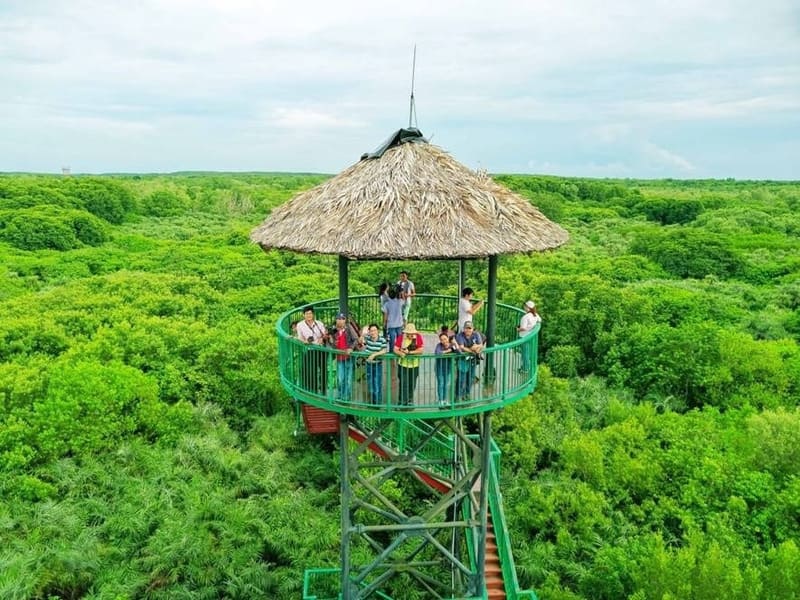
Tang Bong Tower offers wide views over the mangroves (Source: Collected)
Bat Lagoon and the bird sanctuary are important wildlife highlights in Can Gio Mangrove Forest. At Bat Lagoon, visitors can observe bats resting in a quiet forest environment. Move slowly, keep noise low, and avoid disturbing the animals.
The bird sanctuary is ideal for bird lovers and photographers. Depending on the season, visitors may see waterbirds, migratory birds, and wetland species. Late afternoon is often a good time to watch birds returning to their nesting areas.
These sites are usually included in a Vam Sat itinerary, and a guide can help explain the species, habitats, and conservation value of the area.
Sac Forest Guerrilla Base, also known as Rung Sac Guerrilla Base, is an important historical site in Can Gio. During the Vietnam War, the dense mangrove forest and canal system made this area a strategic revolutionary base.
Today, visitors can see reconstructed shelters, military facilities, supply areas, and displays showing how soldiers lived and operated in the harsh mangrove environment. The site adds historical depth to a Can Gio trip and shows how the forest served as protection, transportation, and survival space.
Sac Forest is often combined with Monkey Island and Vam Sat for a balanced itinerary of wildlife, nature, and history.
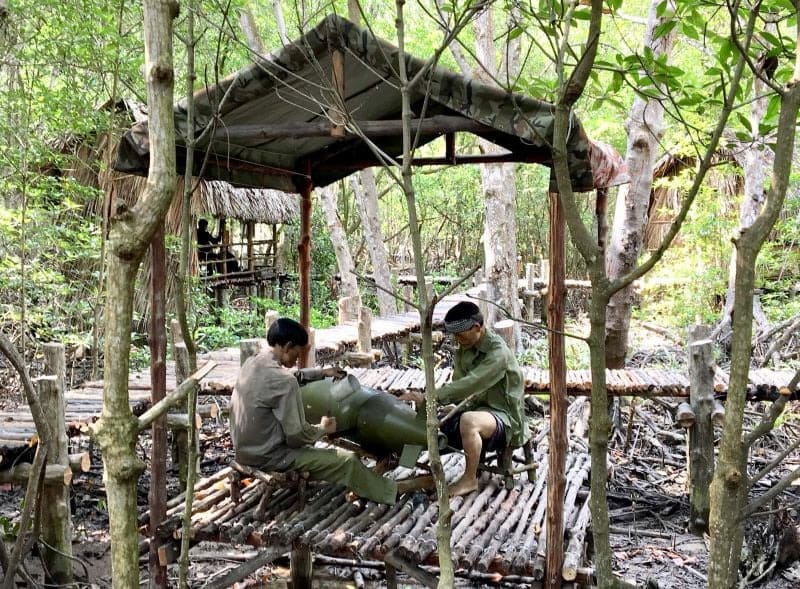
Sac Forest adds a historical layer to a Can Gio trip (Source: Collected)
Dan Xay Ecotourism Area offers a quieter and more educational way to experience Can Gio’s mangrove environment. It focuses on nature activities, conservation, and local life connected to the forest.
Activities may include kayaking, canoe tours, forest walks, camping, tree planting, fishing, and learning about mangrove protection. Dan Xay is suitable for groups, students, eco-tourism travelers, and visitors interested in sustainable tourism.
Because services may change, check availability before going, especially for kayaking, camping, or group programs.
Can Gio Mangrove Forest is a rewarding destination for nature photography. Good subjects include mangrove roots, narrow canals, monkeys, birds, boats, local fishermen, seafood markets, sunset at Can Gio Beach, and panoramic forest views from Tang Bong Tower.
Early morning is best for soft light, cooler weather, and wildlife activity. Late afternoon is better for bird watching, sunset views, and coastal scenes. Besides photography, visitors can enjoy the slower rhythm of Can Gio through boat rides, forest paths, seafood meals, and quiet waterways away from central Ho Chi Minh City.
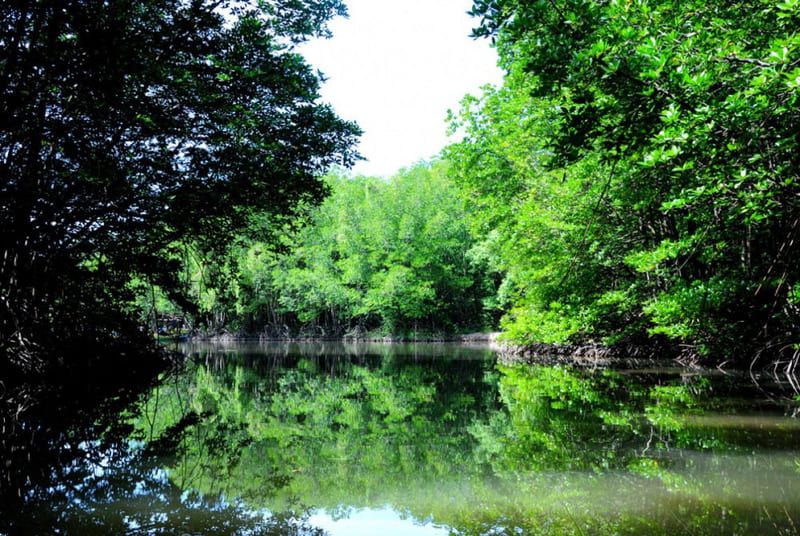
Can Gio is rewarding for nature and wildlife photography (Source: Collected)
Can Gio Mangrove Forest is about 50 - 60 km southeast of Ho Chi Minh City and can be reached by private car, motorbike, public bus, or organized tour.
For most international visitors, a private car or guided tour offers the best balance of convenience and comfort, while buses and motorbikes are better suited to budget-conscious and independent travelers.
The best time to visit Can Gio Mangrove Forest is during the dry season (November to April), when the weather is sunnier, boat tours are more comfortable, and outdoor activities are less likely to be disrupted by rain.
For the most comfortable experience, plan your visit during the dry season and check the weather forecast before departure.
If you're planning a trip to southern Vietnam, check out our guide on the best time to visit Ho Chi Minh City to learn more about seasonal weather, rainfall, and the ideal months for exploring attractions like Can Gio Mangrove Forest.
A little preparation will help you make the most of your visit to Can Gio Mangrove Forest and enjoy its wildlife, waterways, and coastal attractions comfortably.
Yes. Can Gio Mangrove Forest is part of the Can Gio Mangrove Biosphere Reserve, recognized by UNESCO in 2000. It was Vietnam’s first biosphere reserve, known for its mangrove ecosystem, biodiversity, wetland habitats, and successful forest restoration.
Can Gio Mangrove Forest is about 50 - 60 kilometers from central Ho Chi Minh City. Travel time is usually 1.5 - 2.5 hours by car or motorbike, and around 2.5 - 3 hours by public bus due to transfers.
Yes. Can Gio is one of the best day trips from Ho Chi Minh City. A typical itinerary can include Monkey Island, Vam Sat Ecotourism Site, Sac Forest Guerrilla Base, a mangrove boat ride, and a seafood lunch near Can Gio Beach or Hang Duong Seafood Market.
One full day is enough for the main highlights. If you want bird watching, photography, seafood markets, Can Gio Beach, Thieng Lieng Island, or local culture experiences, staying overnight is a better option.
Yes. Crocodiles can be seen in managed conservation areas, especially around Vam Sat Ecotourism Site. Visitors should observe them only from designated spots and always follow staff instructions.
Wildlife highlights include monkeys, bats, crocodiles, waterbirds, migratory birds, fish, crabs, shrimp, mudskippers, mollusks, reptiles, and amphibians. Monkey Island is best for monkeys, while Vam Sat is popular for bird watching, Bat Lagoon, crocodile viewing, and mangrove scenery.
Yes. Can Gio is suitable for families, especially by private car or organized tour. Children often enjoy Monkey Island, boat rides, crocodile viewing, and seafood meals. Parents should supervise children around monkeys, boats, waterways, towers, and wildlife areas.
Bring cash, water, sunscreen, insect repellent, a hat, sunglasses, comfortable shoes, light clothing, a camera, and a secure bag. In the rainy season, bring a raincoat or umbrella. At Monkey Island, avoid carrying loose food or valuable items.
Can Gio Mangrove Forest combines ecological value, war history, wildlife experiences, and local seafood culture within easy reach of Ho Chi Minh City. A well-planned day trip gives you enough time to explore the mangrove canals, visit Monkey Island and Vam Sat, learn about Sac Forest, and enjoy the peaceful coastal atmosphere before returning to the city.

 Vietnam Tours
 Cambodia Tours
 Laos Tours
 Thailand Tours
 Multi-Country Tours