Located just a few minutes from Hoi An Ancient Town, Thanh Ha Pottery Village offers a closer look at one of Vietnam’s oldest craft traditions. Known for its centuries-old pottery heritage, family-run workshops, and hands-on ceramic experiences, the village remains an important cultural landmark in Hoi An. In this guide, Your Vietnam Travel covers everything you need to know before visiting Thanh Ha Pottery Village, including its history, entrance fees, best activities, travel tips, and what to buy.
Thanh Ha Pottery Village is located in Thanh Ha Ward, about 3 kilometers west of Hoi An Ancient Town. The village lies near the Thu Bon River, which has played an important role in the development of local pottery through both clay resources and river-based trade.
The main visitor area is often associated with Pham Phan Street, Nam Dieu Hamlet, Thanh Ha Ward, Hoi An. From the Old Town, it usually takes around 10 to 15 minutes by motorbike or taxi, and around 15 to 25 minutes by bicycle depending on your starting point and pace.
Its location makes Thanh Ha an easy half-day trip from central Hoi An. Many travelers combine it with Hoi An Ancient Town, Thu Bon River, or other countryside attractions such as Tra Que Vegetable Village and Cam Thanh Coconut Village.
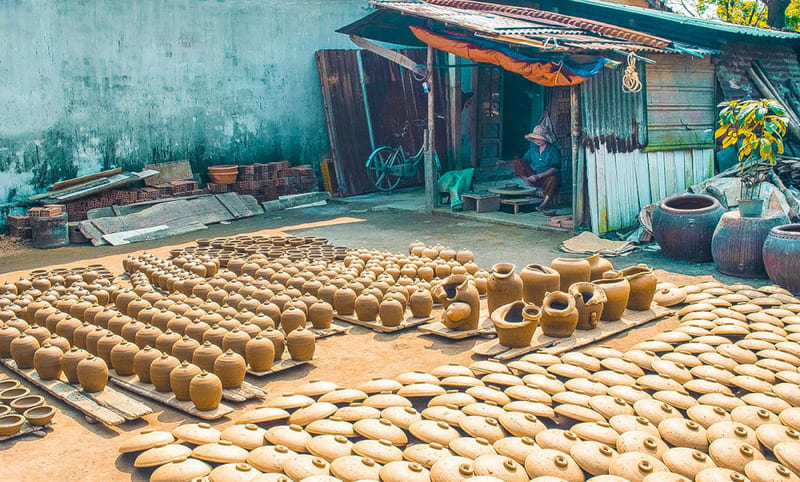
Thanh Ha Pottery Village sits close to Hoi An and the Thu Bon River (Source: Collected)
Thanh Ha Pottery Village has a history of more than 500 years, with its craft often traced back to the 16th and 17th centuries. During the time when Hoi An was a busy international trading port, the village became an important ceramic production area, supplying pottery for daily life, temples, trade, and traditional architecture.
Its development was closely linked to the Thu Bon River, which helped transport pottery products across the region. Local artisans once produced jars, pots, bowls, bricks, yin-yang tiles, incense burners, and worship objects. Thanh Ha bricks and tiles were also used in old houses and traditional buildings in Hoi An.
Thanh Ha pottery is known for its local clay, traditionally collected from riverine areas around the Thu Bon River. After being prepared, shaped, dried, and fired, the pottery often has warm earthy colors such as red, brown, orange, and soft pink.
The craft is also an important part of local cultural heritage. Pottery-making skills have been passed down through generations of artisan families, with each workshop preserving its own techniques and style. In 2019, Thanh Ha pottery craft was recognized as a National Intangible Cultural Heritage of Vietnam.
Today, Thanh Ha remains a living craft village where visitors can see artisans working in family courtyards, small workshops, and pottery shops, making it more authentic than a conventional museum.
Thanh Ha Pottery Village is about 3 km west of Hoi An Ancient Town, making it easy to reach in 10 - 15 minutes.
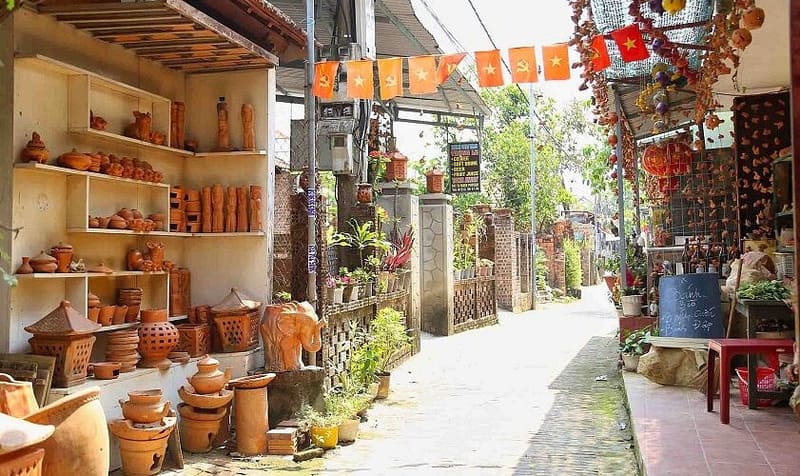
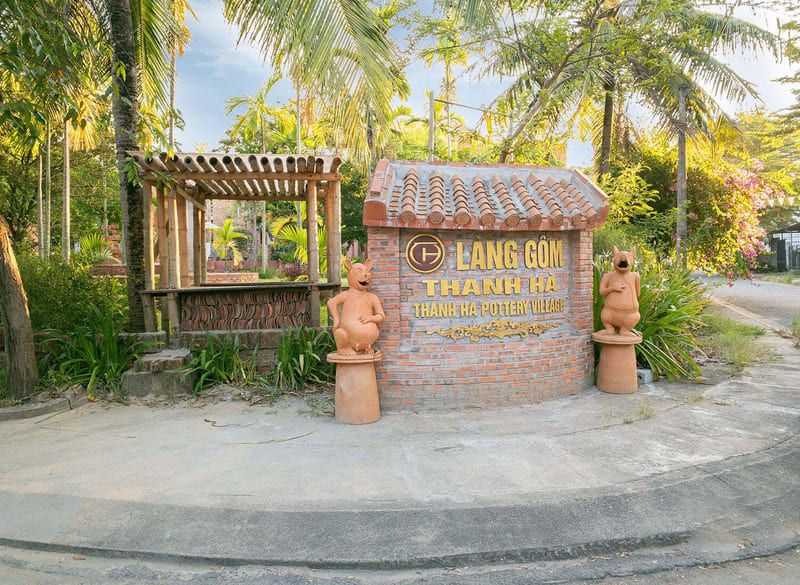
The welcoming entrance area of Thanh Ha Pottery Village (Source: Collected)
Thanh Ha Pottery Village usually has an affordable entrance fee, often around 35,000 VND for adults and 15,000 VND for children. The ticket generally includes access to the traditional pottery village area, selected workshops, artisan demonstrations, and sometimes a small pottery souvenir.
The village is commonly open from 8:30 AM to 4:30 PM or 5:00 PM daily. Since Thanh Ha is also a residential village, local life continues outside visitor hours, but workshops, demonstrations, and ticketed activities may close in the late afternoon.
Thanh Ha Terracotta Park is usually ticketed separately, with prices commonly around 50,000 VND for adults and 30,000 VND for children. The park features exhibition spaces, terracotta models, museum areas, and photo spots.
Typical expected costs include:
Entrance fees and opening hours may change depending on local management, holidays, or tourism updates. Visitors should check the latest information with their hotel, local guide, ticket counter, or official tourism channels before visiting.
If you plan to visit both the village and Thanh Ha Terracotta Park, bring extra cash because the two areas may require separate tickets.
The best time to visit Thanh Ha Pottery Village is during Hoi An's dry season, from February to August, when the weather is ideal for walking around the village, joining pottery workshops, and exploring outdoor ceramic displays.
For the best experience, visit in the morning or late afternoon. Morning offers cooler temperatures and a chance to watch local artisans at work, while late afternoon provides softer light for photography around pottery workshops, traditional houses, and riverside areas. Try to arrive before mid-afternoon, as some workshops and attractions may start closing after 4:30 PM.
For a more detailed look at seasonal weather, rainfall, and the ideal months for exploring the region, read our guide on the best time to visit Hoi An.
Hands-on pottery making is the highlight for many visitors. Local artisans guide you through the basic steps of shaping clay, often using a traditional pottery wheel or hand-shaping techniques. Depending on the workshop, you may create a small bowl, cup, animal figure, flower pot, or simple decorative item.
The experience is beginner-friendly, so you do not need any pottery skills. Artisans usually help control the wheel, prepare the clay, and adjust the shape when needed. The process can be fun, especially for families with children, couples, and travelers who enjoy creative activities.
A typical pottery-making session may include:
You may not always be able to take home the exact item you make immediately, as proper drying and firing take time. Many workshops instead offer visitors a small pre-made ceramic souvenir.
Wear casual clothes because your hands may get dirty. If you are traveling with children, this is one of the most enjoyable cultural activities in Hoi An.
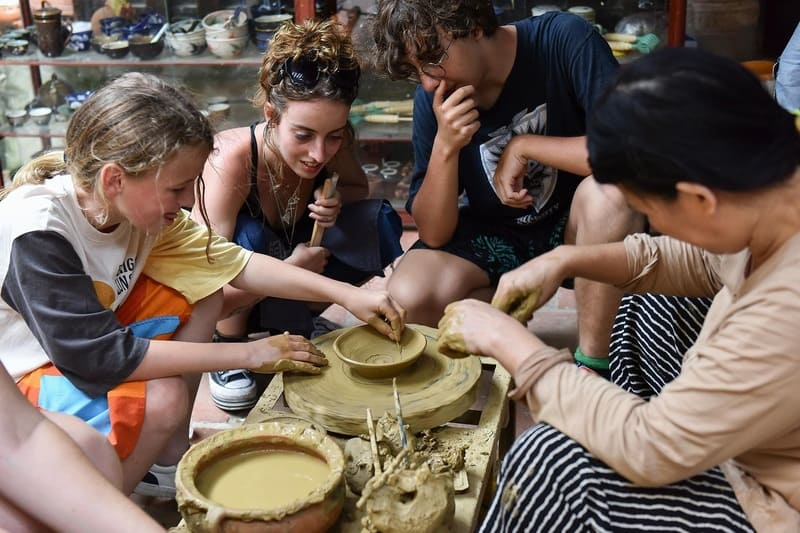
Trying pottery with local artisans in Thanh Ha (Source: Collected)
One of the best parts of visiting Thanh Ha is watching artisans work in real time. In family workshops, you may see potters shaping clay, smoothing surfaces, decorating small items, arranging products for drying, or preparing pieces for firing.
The pottery process usually involves several stages:
Watching the process gives visitors a better understanding of how much time and skill go into even a small ceramic object.
Thanh Ha is not designed like a polished tourist complex. Its charm comes from real family workshops, narrow village lanes, old kilns, courtyards filled with clay products, and homes where pottery remains part of daily life.
Traditional kilns are an important part of the village’s identity. In the past, wood-fired kilns were used to fire large batches of pottery. The firing process required experience because artisans had to understand heat, timing, smoke, and clay behavior. The final colors of Thanh Ha pottery often come from the clay itself and the firing technique rather than heavy decorative glazing.
When walking through the village, you may see:
These details make the village feel authentic and help visitors see the connection between craft, home life, and local identity.
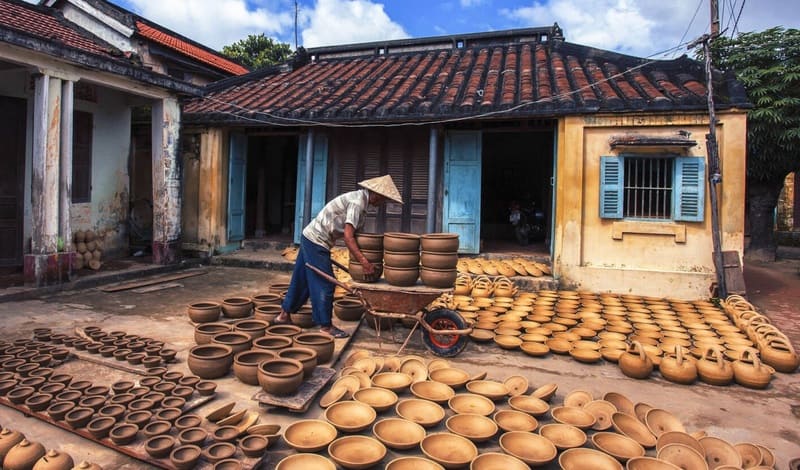
Pottery drying in the courtyard of a family workshop (Source: Collected)
Beyond pottery-making, Thanh Ha is a peaceful place to walk and observe local life. The village has small lanes, traditional houses, pottery shops, courtyards, and quiet corners that feel very different from the busy streets of Hoi An Ancient Town.
You may see artisans working at home, residents arranging pottery in front yards, small shops displaying ceramic animals and vases, and local families going about their daily routines. The atmosphere is slow and simple, making the village suitable for travelers who enjoy cultural places without heavy crowds.
Photography is also enjoyable here. Good photo subjects include pottery drying in the sun, clay walls, old wooden doors, artisan hands shaping clay, terracotta displays, and peaceful village lanes. Always ask before taking close-up photos of local people, especially artisans working inside their homes.
Shop for handmade pottery souvenirs
Thanh Ha Pottery Village is a good place to buy local handmade souvenirs. Products are usually more meaningful than mass-produced items because many are made directly by village artisans.
Popular pottery souvenirs include:
Small items are easy to carry and often affordable. Larger pieces such as tea sets, vases, and decorative sculptures may require careful packing, especially if you are traveling internationally.
Before buying, check the item carefully for cracks, uneven bases, or fragile details. Ask the seller to wrap it securely with paper or protective material. Bargaining may be possible at some stalls, but prices are generally reasonable, so negotiate politely.
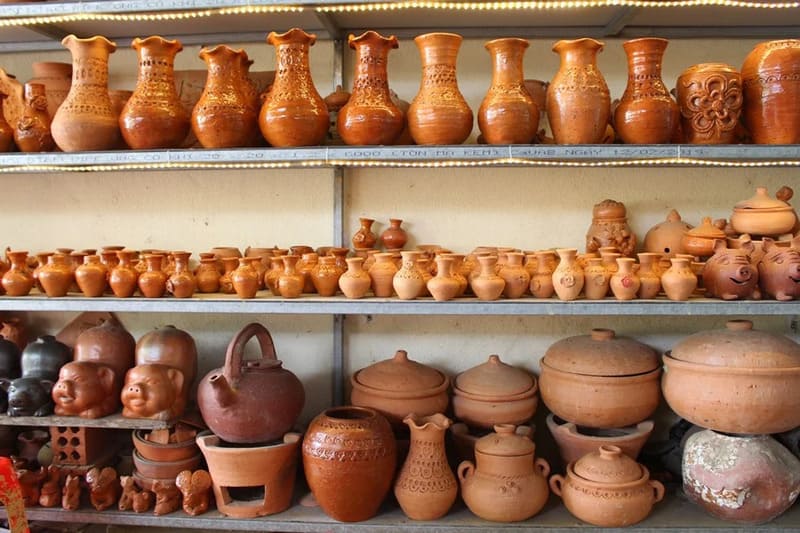
Handmade pottery makes a meaningful Hoi An souvenir (Source: Collected)
Thanh Ha Pottery Village is also connected with traditional ceremonies and local cultural activities. Craft villages in Vietnam often hold annual rituals to honor craft founders, ancestors, and protective deities. In Thanh Ha, ceremonies related to pottery heritage are commonly associated with Nam Dieu Temple and the local artisan community.
During festival periods, visitors may see rituals, offerings, cultural performances, folk activities, or community events. These occasions are meaningful because they show that pottery is not only a trade but also part of the village’s spiritual and social life.
If your visit matches a local ceremony or festival, it can add depth to the experience. However, festival dates may follow the lunar calendar and can vary by year, so check locally before planning your trip around a specific event.
Thanh Ha Terracotta Park is one of the most popular attractions near the pottery village. It is located within the Thanh Ha area but usually operates as a separate ticketed attraction from the traditional village.
The park is designed as a cultural and artistic space dedicated to pottery, terracotta art, and architectural models. It covers a large area and includes museum-style displays, craft exhibitions, creative workshops, outdoor installations, and miniature versions of famous landmarks from Vietnam and around the world.
Highlights of Thanh Ha Terracotta Park include:
The miniature world area is especially popular with visitors because it features clay versions of well-known monuments and architectural icons. The park is also a good place for travelers who want a more structured museum experience after walking through the traditional village.
A useful distinction:
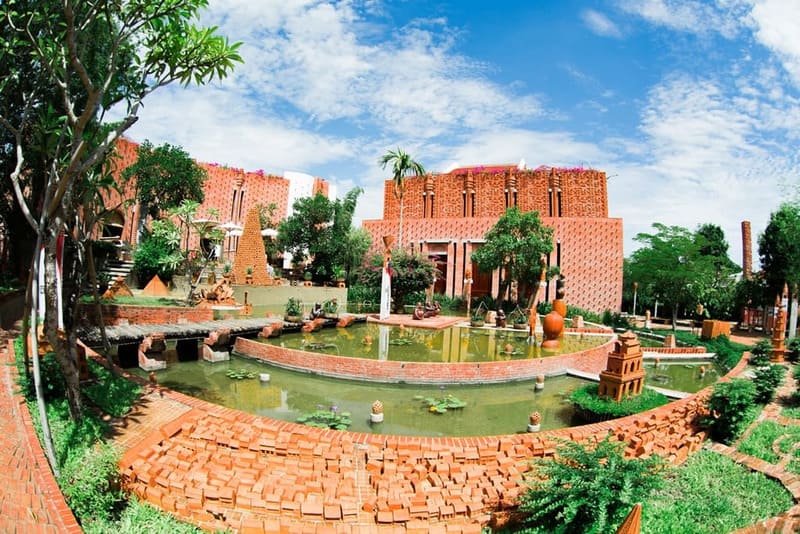
Thanh Ha Terracotta Park (Source: Collected)
Thanh Ha Pottery Village is one of the best places in Hoi An to shop for handmade ceramic souvenirs. Visitors can find everything from small decorative pieces to traditional household pottery made by local artisans.
Buying tips:
A few practical tips can help you make the most of your visit and enjoy a smoother experience in the village.
Yes. Visitors can join pottery-making workshops and learn basic shaping techniques from local artisans. Most beginners can create simple items such as cups, bowls, or small figures. Some activities are included in the entrance ticket, while longer workshops may require an additional fee.
Most visitors spend 1.5 - 3 hours here. Around 1 hour is enough for sightseeing and shopping, while 2 - 3 hours allows time for pottery making and visiting nearby attractions such as Thanh Ha Terracotta Park.
Usually no. Thanh Ha Pottery Village and Thanh Ha Terracotta Park have separate tickets. Check current ticket policies at the entrance, as they may change.
Yes. Children can enjoy hands-on pottery activities, watch artisans at work, and learn about local crafts. Parents should supervise young children around pottery wheels, kilns, and fragile ceramic products.
Yes. The village has many workshops and shops selling handmade pottery, including vases, cups, bowls, flower pots, decorative items, and terracotta figures. Sellers can usually provide protective packaging for fragile items.
It depends on your interests. Thanh Ha Pottery Village is best for traditional crafts, pottery workshops, and ceramic souvenirs. Tra Que Vegetable Village is better for farming activities, cooking classes, and countryside experiences. If time allows, visiting both offers a well-rounded Hoi An cultural experience.
Thanh Ha Pottery Village is a worthwhile cultural stop for travelers who want to see a quieter, more traditional side of Hoi An. For the best visit, go in the morning or late afternoon, bring cash, allow enough time for a pottery activity, and combine the village with nearby attractions along the Thu Bon River or Hoi An countryside.
To explore Thanh Ha Pottery Village and other cultural highlights in Hoi An more comfortably, consider planning your trip with Your Vietnam Travel. Our tailor-made Vietnam tours help you enjoy local experiences, flexible itineraries, and seamless travel arrangements from start to finish.



 Vietnam Tours
 Cambodia Tours
 Laos Tours
 Thailand Tours
 Multi-Country Tours