Kim Bong Carpentry Village is a traditional woodworking village on Cam Kim Island, approximately 3 km from Hoi An Ancient Town. With a history of more than 500 years, it is renowned for woodworking, wood carving, furniture making, and boatbuilding. Today, the village attracts visitors seeking traditional craft experiences, artisan workshops, and peaceful countryside scenery beyond Hoi An's main tourist areas.
Kim Bong Carpentry Village is one of the best-known traditional craft villages near Hoi An, famous for woodworking, wood carving, furniture making, architectural decoration and boatbuilding. It is a good place for visitors who want to see a quieter, more local side of Hoi An beyond the Ancient Town.
For centuries, Kim Bong artisans have made wooden houses, household items, religious objects, decorative carvings and boats for communities along the Thu Bon River. Today, the village remains a living craft space where visitors can watch artisans at work, learn about traditional Vietnamese woodworking techniques and see how local craftsmanship helped shape Hoi An’s cultural identity.
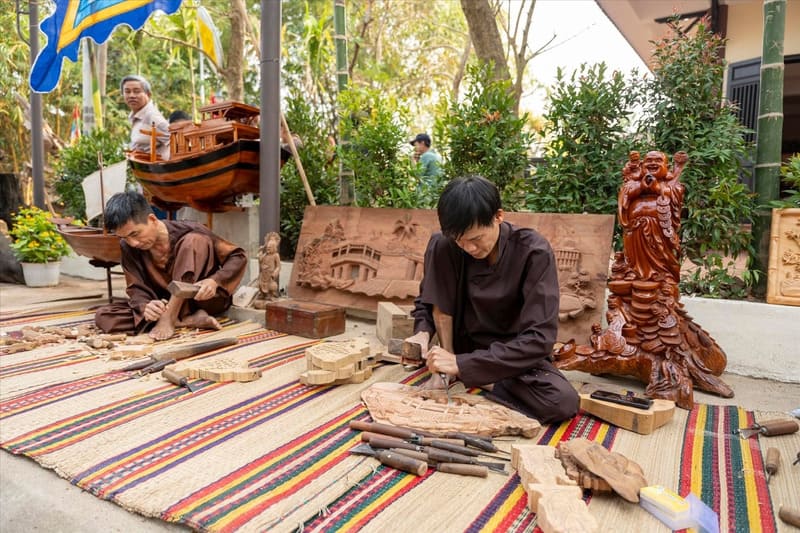
Kim Bong is Hoi An's famous traditional woodworking village (Source: Collected)
Kim Bong Carpentry Village is located in Cam Kim Commune, Hoi An, on the southern side of the Thu Bon River and opposite Hoi An Ancient Town. The area is often known as Cam Kim Island, a peaceful rural part of Hoi An.
The village is approximately 3 km from Hoi An Ancient Town and around 5 km from the western part of central Hoi An, depending on the starting point and route. It usually takes about 10 - 20 minutes to get there by boat, bicycle, motorbike, taxi, or private car.
Its riverside location was important in the past because the Thu Bon River helped local carpenters transport timber, trade products and connect with Hoi An’s former trading port. Today, the journey to Kim Bong is also part of the experience, especially if you travel by boat or cycle through Cam Kim’s countryside roads.
Kim Bong is often visited as part of a Cam Kim Island trip, combined with rice fields, local markets, boatyards and small craft workshops.
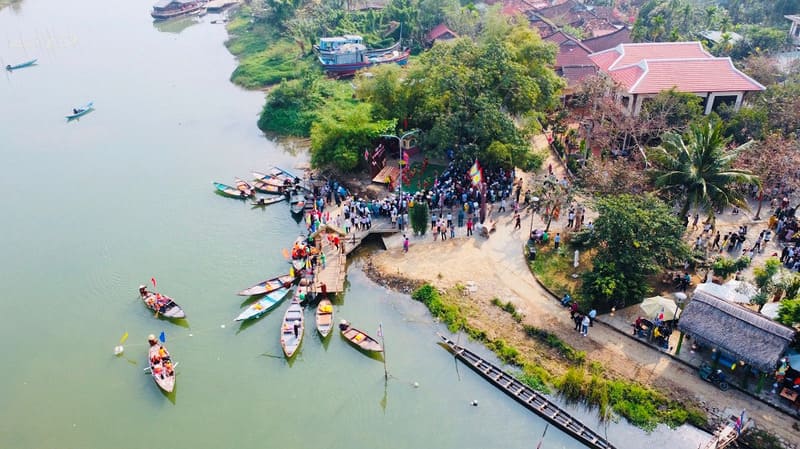
Kim Bong sits just across the Thu Bon River (Source: Collected)
Kim Bong Carpentry Village has a history of more than 500 years, dating back to around the 15th or 16th century. The craft developed when skilled carpenters from northern and north-central Vietnam settled in Cam Kim, with early family lines such as Nguyen, Phan, Huynh and Truong playing an important role in shaping the village’s woodworking tradition.
The village reached its peak from the 16th to 18th centuries, when Hoi An became a busy international trading port. As demand grew for houses, temples, assembly halls, boats, furniture and decorative wooden works, Kim Bong artisans gained a strong reputation for their precise techniques and refined craftsmanship.
Their skills extended beyond Hoi An. Kim Bong carpenters contributed to many traditional houses, communal houses, pagodas, temples and architectural works in Central Vietnam, including structures linked to the Nguyen Dynasty in Hue.
When Hoi An’s trading role declined, the village faced difficulties due to reduced demand and the rise of modern materials and industrial production. However, after Hoi An Ancient Town was recognized as a UNESCO World Heritage Site in 1999, Kim Bong artisans became increasingly involved in restoring old wooden houses and heritage buildings.
In 2016, Kim Bong carpentry was recognized as a national intangible cultural heritage of Vietnam, confirming its cultural value and its importance in preserving traditional woodworking knowledge for future generations.
Traditional woodworking is the heart of Kim Bong Carpentry Village. The craft covers architectural carpentry, furniture making, religious woodwork, decorative carving and everyday wooden items.
Kim Bong products are known for combining practical use with artistic detail. Artisans use carving, chiseling, polishing and finishing techniques to create durable pieces decorated with Vietnamese cultural motifs such as dragons, phoenixes, flowers, birds, boats, bamboo and farming scenes.
Visitors can find everything from small souvenirs and decorative items to furniture, altar cabinets, statues, doors, beams and traditional house structures. The most interesting experience is watching artisans at work inside local workshops, where the sound of chisels, saws and hammers reflects the village’s living craft tradition.
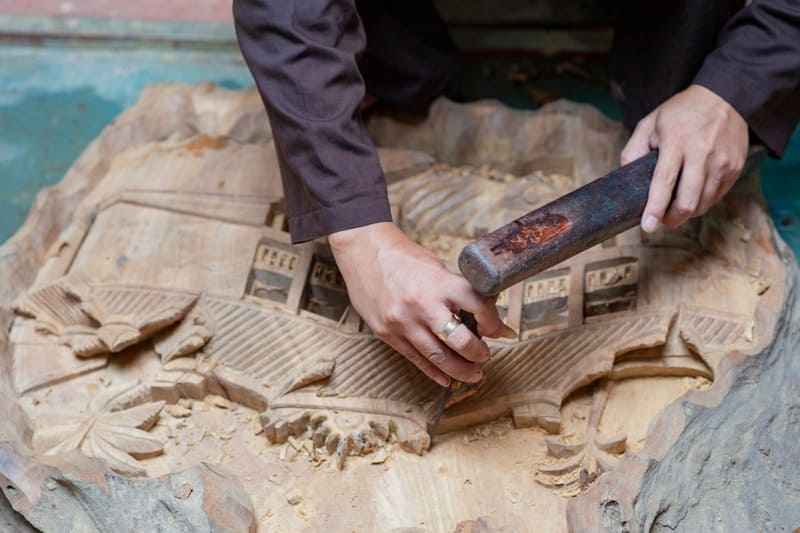
Traditional woodworking is the heart of Kim Bong (Source: Collected)
Boatbuilding is another important part of Kim Bong’s identity. Located along the Thu Bon River, the village once played a key role in building and repairing wooden boats for fishing, transport and trade.
During Hoi An’s trading port period, boats were essential to the local economy, and Kim Bong craftsmen developed strong skills in making vessels suited to rivers and coastal waters. Although boatbuilding is less active today, visitors may still see boatyards or riverside workshops where boats are repaired or built.
This heritage shows that Kim Bong carpentry was not only decorative, but also closely connected with river life, commerce and transportation in Central Vietnam. For photography and local culture, the boatbuilding area is one of the most atmospheric parts of the village.
Kim Bong’s craft has been preserved through generations of skilled artisans. Many families have passed down woodworking knowledge from parents to children and from masters to apprentices.
Traditional carpentry takes years to learn. Artisans need to understand wood types, tools, carving methods, proportions and the meaning behind decorative patterns. This family-based transmission gives the village a strong sense of continuity.
Even as tourism grows, many workshops still treat woodworking as a serious craft rather than just a tourist performance. Visitors may also see younger artisans learning from older craftsmen, making Kim Bong a meaningful place to observe cultural preservation in daily life.
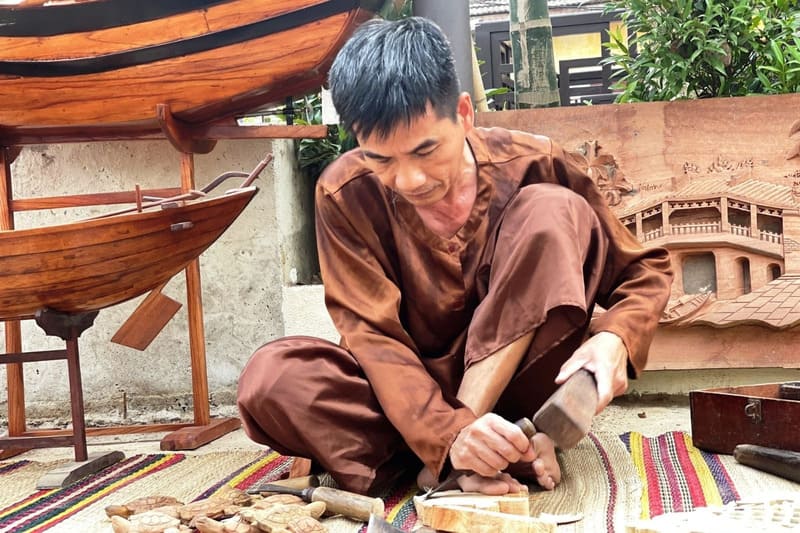
Kim Bong artisans keep the craft alive by hand (Source: Collected)
Kim Bong Carpentry Village is a peaceful escape from the busier parts of Hoi An. Instead of crowded streets, visitors will find rural lanes, riverside views, local houses, small workshops and a slower countryside atmosphere.
The village is also ideal for cycling, especially when combined with a Cam Kim Island route through rice fields, riverbanks, local markets and traditional homes. For travelers who want to see Hoi An beyond lantern streets and cafés, Kim Bong offers a more relaxed and authentic cultural experience.
Kim Bong Carpentry Village is about 3 - 5 km from Hoi An Ancient Town and can be reached in several ways:
Kim Bong Carpentry Village does not have fixed opening hours because it is a local craft village, not a gated tourist site. Most woodworking workshops are usually active from around 8:00 AM to 5:00 PM. Visiting in the morning is ideal for seeing artisans at work and avoiding the midday heat.
Entrance to the village is generally free. Guided tours, hands-on woodworking experiences, boat transfers, or other optional activities may require separate fees, so it is best to check prices in advance.
Recommended visiting time:
Facilities in the village are limited, so bring water, sunscreen, comfortable shoes, and some cash for drinks, souvenirs, transport, or optional activities.
The best time to visit Kim Bong Carpentry Village is during Hoi An’s dry season, from February to August, when sunny weather makes it easier to explore workshops, cycle around Cam Kim Island, and enjoy riverside scenery.
The rainy season (September to January) brings more frequent showers, which can affect cycling and outdoor sightseeing. If visiting during this period, bring rain gear and check weather conditions before your trip.
For the best experience, visit during:
For a cultural experience, consider visiting during the Craft Ancestor Commemoration Festival, held annually on the 6th day of the first lunar month. The festival honors the founders of the village’s woodworking tradition and often features traditional ceremonies, cultural performances, and community activities. As the date follows the lunar calendar, it varies each year.
The best way to experience Kim Bong Carpentry Village is to visit its traditional woodworking workshops. Here, local artisans turn raw wood into furniture, statues, decorative panels, souvenirs and architectural details.
Unlike a museum, Kim Bong is a living craft village, so what you see depends on the daily work of the craftsmen. You may find tools, wood blocks, unfinished products and artisans carefully shaping each piece by hand.
When visiting, walk slowly, avoid touching tools or products without permission, and ask before taking close-up photos. If artisans are available, you can ask about wood types, carving motifs or the time needed to finish a product.
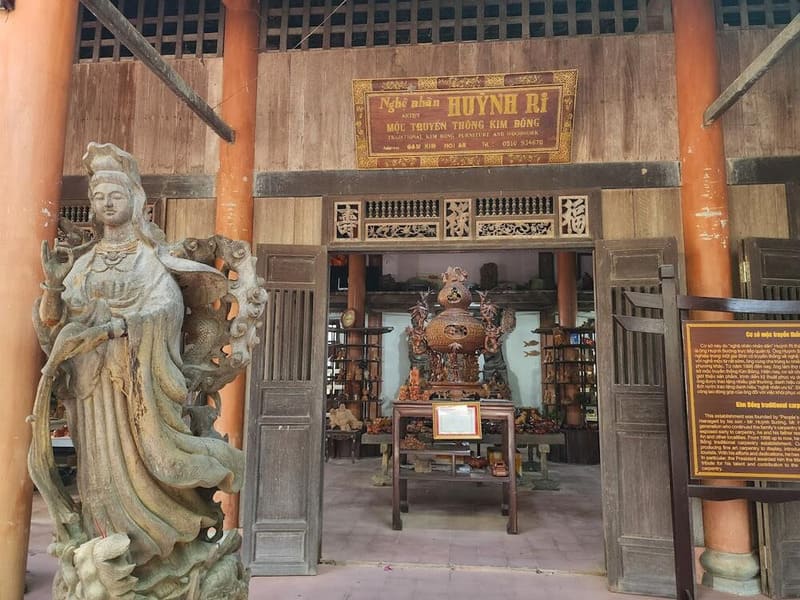
Woodworking traditions still thrive in Kim Bong today (Source: Collected)
Watching artisans carve wood by hand is one of the highlights of Kim Bong. A craftsman may start with a rough wood block, mark the design, shape the form and gradually create detailed patterns using traditional tools.
Common motifs include dragons, phoenixes, flowers, birds, boats, village scenes and symbols related to Vietnamese beliefs. These details show the patience, skill and cultural meaning behind handmade woodwork.
This activity is ideal for travelers interested in traditional crafts, photography, slow travel and local culture.
If you have time, visit the riverside boatbuilding or boat repair area. This part of Kim Bong reflects the village’s connection with the Thu Bon River and Hoi An’s former trading port.
In the past, wooden boats were essential for fishing, trade and transportation. Local craftsmen built and repaired boats suited to river and coastal conditions.
Today, the area may be quieter, but you can still see wooden frames, boats, tools and repair work along the river. It is also a good photography spot, especially in the morning or late afternoon.
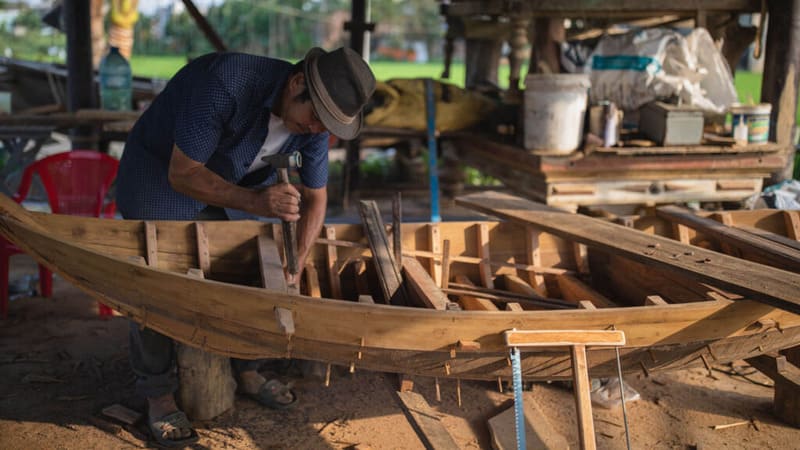
Wooden boatbuilding remains part of Kim Bong's heritage (Source: Collected)
A woodworking workshop is a good option for visitors who want a hands-on experience. Depending on availability, you may learn basic carving techniques, use simple tools under guidance and make a small wooden item such as a nameplate, box, frame or souvenir.
Workshops usually include a short introduction to Kim Bong carpentry, basic safety rules and simple woodworking steps. This activity is suitable for craft lovers and families with older children.
Because workshops are not always available for walk-in visitors, it is best to arrange in advance through a local guide, hotel or tour operator. Ask about duration, price, age suitability and whether you can take your finished item home.
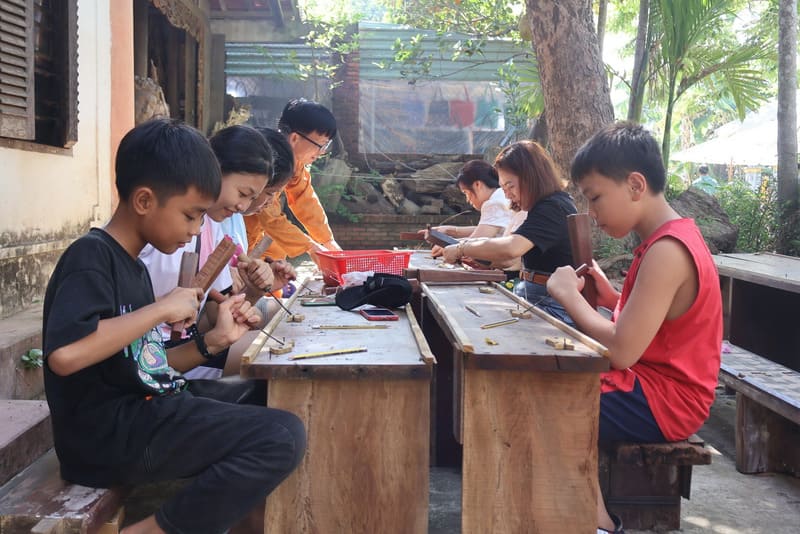
A hands-on woodworking experience in Kim Bong (Source: Collected)
Kim Bong is a good place to see handmade wooden artworks, from small souvenirs to larger furniture and religious items. You may find carved statues, model boats, tea trays, boxes, wall decorations, altar pieces, chairs, tables and architectural details.
Many designs carry meanings related to prosperity, protection, harmony, family worship and Vietnamese cultural values. The warm wood tones, carved lines and smooth finishing show the artistic side of the village.
Even if you do not buy anything, spending time looking at the products helps you better understand the value of Kim Bong craftsmanship.
Buying wooden souvenirs is a practical way to support local artisans. Popular items include small statues, carved nameplates, decorative boxes, model boats, wooden animals, key holders, wall art and household objects.
Prices depend on size, wood type, carving detail and craftsmanship. Small items are easier to pack, while larger furniture or custom-made products may require shipping arrangements.
Before buying, check the carving details, finishing, cracks, weight and polish. Bargaining may be possible, but keep it polite and reasonable because handmade work takes time and skill.
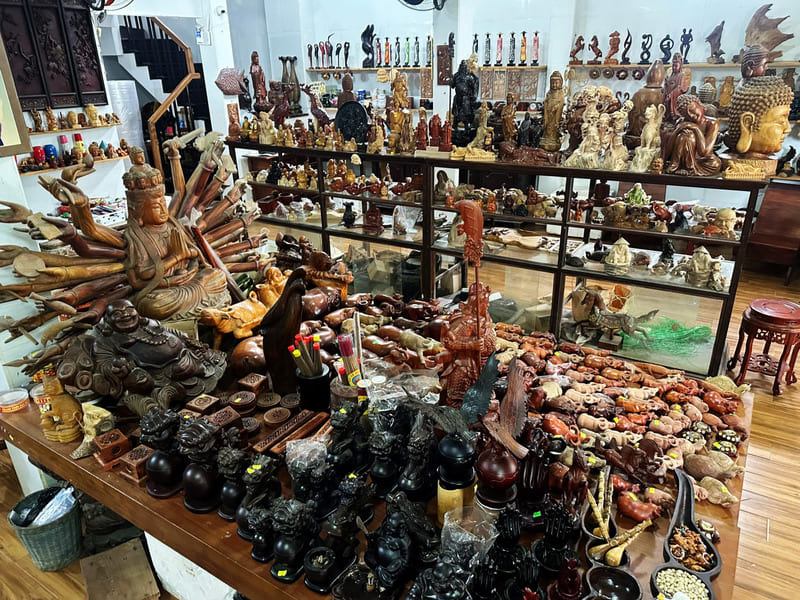
Handmade wooden souvenirs from local artisans (Source: Collected)
Kim Bong Carpentry Village is located on Cam Kim Island, so it is worth exploring the surrounding countryside if you have more time. The island is known for quiet roads, rice fields, riverside views, local houses and a slower pace of life.
Cycling is one of the best ways to explore Cam Kim. Along the way, you may see small bridges, family workshops, markets, rice paper making, mat weaving, local food stops and small cafés.
For a more structured experience, consider joining a Cam Kim cycling tour. A guide can help you find active workshops, understand local customs and avoid getting lost on smaller village roads.
Kim Bong Carpentry Village is easy to combine with several attractions in and around Hoi An, making it ideal for a half-day or full-day itinerary.
A little preparation can help you enjoy a more comfortable and rewarding visit to Kim Bong Carpentry Village.
The village is generally free to enter, though some guided activities or workshops may charge a small fee. Bring cash for boat rides, souvenirs, and optional experiences.
Kim Bong is located across the Thu Bon River, about 3 - 7 km from Hoi An Ancient Town. It takes around 10 - 15 minutes by boat or 10 - 20 minutes by road.
Yes. Some workshops allow visitors to learn basic woodworking and make a small handmade item. Advance booking is recommended.
Allow 1 - 2 hours to explore the village and workshops. If you plan to join an activity or cycle around Cam Kim Island, consider spending half a day.
Yes. Children can enjoy watching artisans at work and participating in hands-on activities. Adult supervision is recommended in workshop areas.
Yes. Many travelers combine Kim Bong and Thanh Ha Pottery Village for a half-day or full-day trip to experience Hoi An’s traditional crafts.
Kim Bong Carpentry Village offers a quieter side of Hoi An, where visitors can discover traditional woodworking, boatbuilding heritage, and local craftsmanship. For the best experience, visit in the morning and combine it with cycling around Cam Kim Island or a trip to Thanh Ha Pottery Village.






 Vietnam Tours
 Cambodia Tours
 Laos Tours
 Thailand Tours
 Multi-Country Tours