If you want to experience the countryside side of Hoi An, Tra Que Vegetable Village is one of the best places to visit. Known for its organic herb gardens and traditional farming culture, the village offers cycling routes, hands-on farming activities, cooking classes, and local food experiences just minutes from Hoi An Ancient Town.
In this guide, Your Vietnam Travel shares everything you need to know before visiting Tra Que Vegetable Village, from top activities and local dishes to transport tips and nearby attractions.
Tra Que Vegetable Village is located about 3 kilometers from Hoi An Ancient Town, making it one of the easiest countryside destinations to visit from the old town. The village sits between the Hoi An urban area and the coastal road toward An Bang Beach, so it can be combined with a cycling trip, a farming experience, a cooking class, or a beach visit.
The village is best known for its wide vegetable gardens, small local houses, narrow paths, and calm farming atmosphere. Unlike Hoi An Ancient Town, which can feel busy during peak travel hours, Tra Que feels quieter and more open. This contrast is one reason many travelers choose to visit the village in the morning or late afternoon.
Tra Que is especially important to Hoi An because many herbs and vegetables used in local dishes come from this area. Fresh basil, lettuce, coriander, spring onion, Vietnamese mint, and other greens from Tra Que are commonly used in dishes such as cao lau, mi quang, banh xeo, tam huu, and fresh spring rolls.
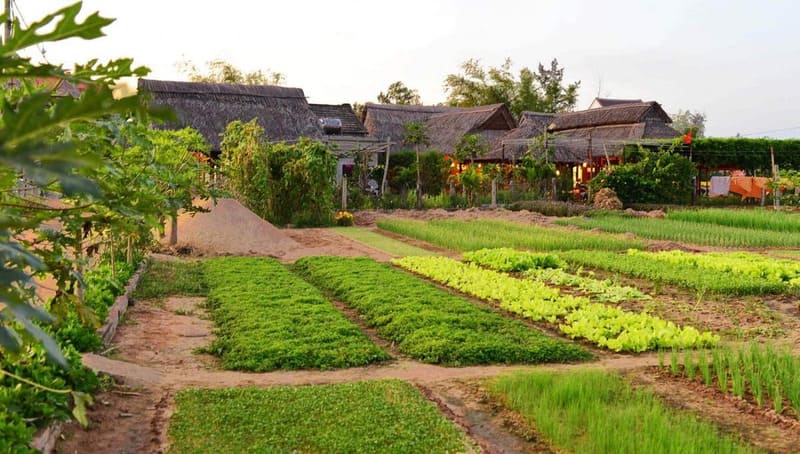
Green vegetable gardens in Tra Que Village (Source: Collected)
Tra Que Vegetable Village has a long farming tradition that is often said to date back around 400 years. Before becoming famous for vegetable cultivation, local residents were closely connected to fishing and river life. Over time, families settled on the land and developed vegetable farming as their main livelihood.
What makes Tra Que special is not only the green scenery, but also the traditional farming method. Farmers here have long used organic seaweed and riverweed from nearby waterways, including the Co Co River area, as natural fertilizer. This helps enrich the sandy soil and gives Tra Que herbs their fresh aroma and distinctive flavor.
Instead of relying heavily on chemical fertilizers, the village is known for more natural cultivation methods. Farmers prepare the soil carefully, rotate crops, water vegetables by hand, and maintain neat vegetable beds throughout the year. This traditional process is part of what makes Tra Que a meaningful destination for travelers interested in sustainable tourism, local food culture, and rural life in Vietnam.
Tra Que has also gained stronger recognition in recent years. Its traditional vegetable-growing craft has been recognized as part of Vietnam’s cultural heritage, and the village has been promoted as a model of community-based and agricultural tourism. For visitors, this means Tra Que is not just a photo stop. It is a working village where farming, food, culture, and tourism are closely connected.
Tra Que Vegetable Village is easy to reach from Hoi An. The best transport option depends on your travel style, fitness level, time, and whether you want a guided experience.
From Hoi An Ancient Town, the distance is around 3 kilometers, so the journey usually takes:
The most enjoyable option for many travelers is cycling. The route from Hoi An to Tra Que is short, flat, and scenic. Along the way, you can pass quiet streets, local houses, small gardens, and open countryside views. Many hotels and homestays in Hoi An provide bicycles for free or at a low rental cost.
If you are traveling with young children, elderly family members, or during hot weather, a taxi or private transfer may be more comfortable. A motorbike is also convenient if you plan to combine Tra Que with nearby places such as An Bang Beach, Cam Thanh Coconut Village, or Thanh Ha Pottery Village.
From Da Nang, Tra Que is usually reached by private car, taxi, or motorbike. The drive normally takes around 40-50 minutes, depending on traffic and your starting point. Most travelers visit Tra Que as part of a Hoi An day trip rather than as a standalone trip from Da Nang.
The farming experience is one of the main reasons travelers visit Tra Que Vegetable Village. Under the guidance of local farmers, you can try simple farming tasks such as preparing the soil, planting seedlings, watering vegetables, and learning how organic fertilizer is used.
The most memorable part for many visitors is carrying traditional watering cans and walking between vegetable beds. It looks simple, but it gives you a real sense of how much care and physical effort goes into maintaining the gardens.
This activity is suitable for couples, families, small groups, and travelers who enjoy hands-on cultural experiences. You do not need farming experience. Local hosts usually demonstrate each step clearly, and the activity is more about learning and participation than hard labor.
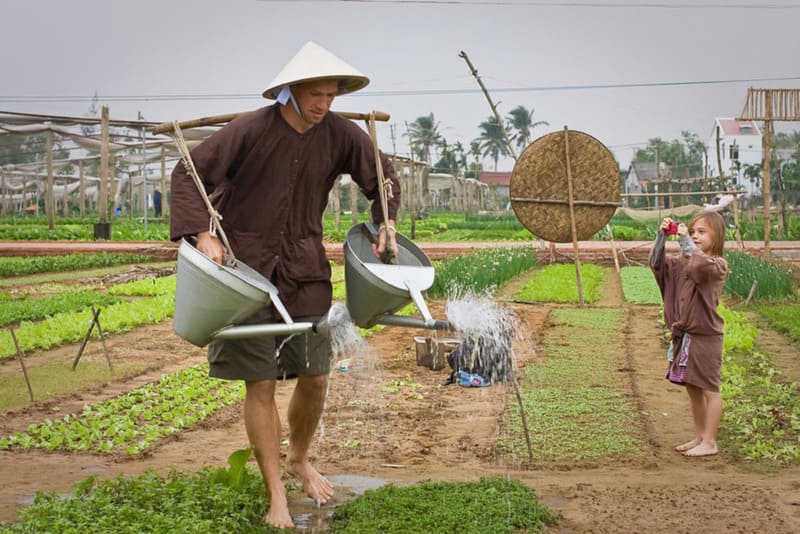
Trying traditional farming with local hosts (Source: Collected)
A cooking class in Tra Que is one of the best ways to understand the connection between the village and Hoi An cuisine. Many classes begin with a short garden walk, where you learn about local herbs and vegetables before picking fresh ingredients.
After that, a local chef or host guides you through several Hoi An-style dishes. Common dishes include:
The best part of a Tra Que cooking class is the farm-to-table feeling. You see where the ingredients come from, learn how they are prepared, and then enjoy the meal in a relaxed countryside setting.
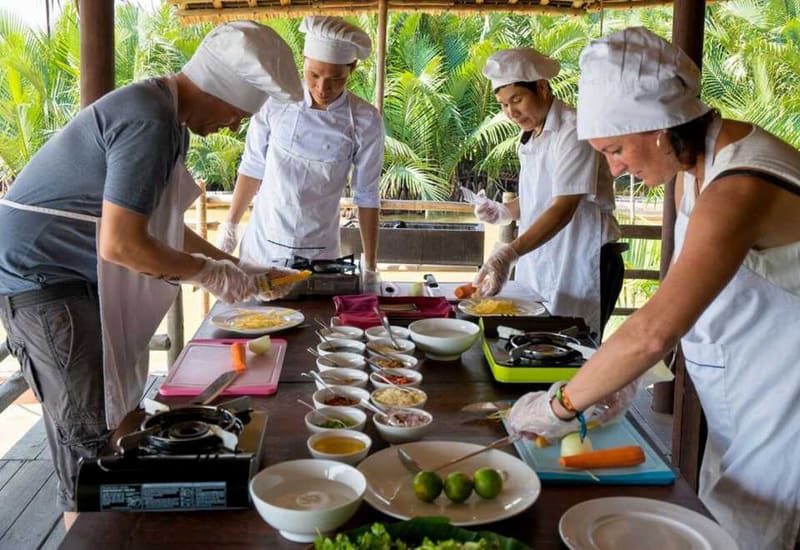
A hands-on cooking class in Tra Que (Source: Collected)
Cycling is one of the easiest and most enjoyable ways to explore Tra Que. The village has quiet lanes, garden paths, and open spaces that feel very different from the narrow streets of Hoi An Ancient Town.
A short cycling route can take you past vegetable beds, local homes, small ponds, and rice fields nearby. Early morning is especially beautiful because farmers are often working in the gardens, the air is cooler, and the light is softer for photography.
For travelers who want a slower travel experience, cycling around Tra Que can be more rewarding than rushing through several attractions in one day. It gives you time to observe daily life, stop for photos, and enjoy the calm countryside atmosphere.
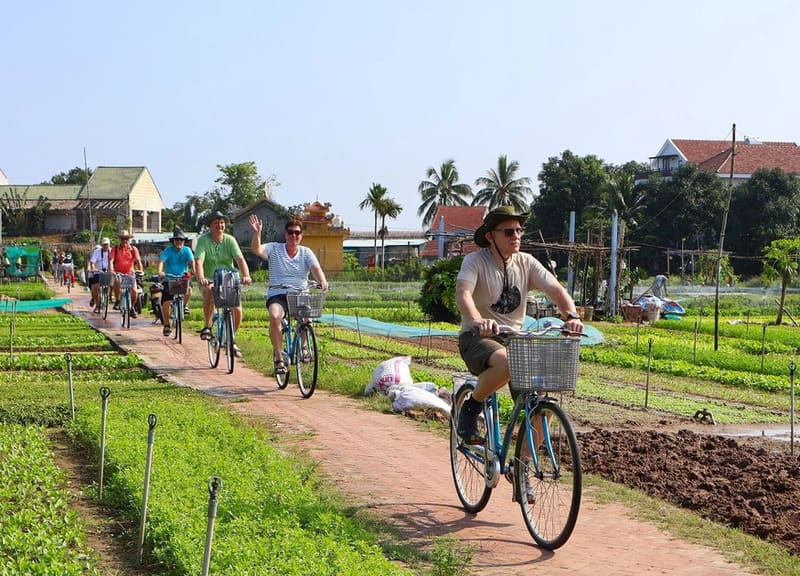
Cycling through quiet gardens near Hoi An (Source: Collected)
Many Tra Que farming and cooking tours include an herbal foot bath or short massage. This activity uses local herbs and warm water to help relax your feet after cycling, walking, or farming.
The experience is simple, but it fits well with the village’s identity. Tra Que is known for herbs, so an herbal foot bath feels like a natural extension of the farming and wellness experience. It is especially pleasant after a hot morning outdoors.
If you are booking a guided tour, check whether the herbal foot bath is included. If you are visiting independently, some local restaurants, homestays, or farm experience providers may offer it as an add-on service.
Tra Que is also a peaceful place to watch the sunset. In the late afternoon, the sunlight becomes softer, the vegetable beds turn golden-green, and farmers may return to the gardens for watering or harvesting.
This is one of the best times for photography. The fields are open, the light is warm, and the atmosphere is much calmer than in central Hoi An. If you prefer quiet travel moments, sunset in Tra Que can be one of the most memorable parts of your visit.
For the best experience, arrive around 3:30 PM to 4:00 PM, walk or cycle through the village, then stay until sunset. Bring water, mosquito repellent, and a camera or phone with enough battery.
Beyond the main farming activities, Tra Que also has small local features that reflect village life, including old wells, garden houses, and traditional paths between vegetable plots. These details may not be as famous as Hoi An’s Japanese Covered Bridge or old merchant houses, but they help show the everyday character of the village.
The stone well and local gardens are worth noticing if you enjoy slow exploration. They give the village a more authentic feeling and help you see Tra Que as a real community rather than only a tourism site.
When walking around, stay on marked paths and avoid stepping into vegetable beds. The gardens are working farms, and the neat rows of herbs and greens are part of local livelihoods.
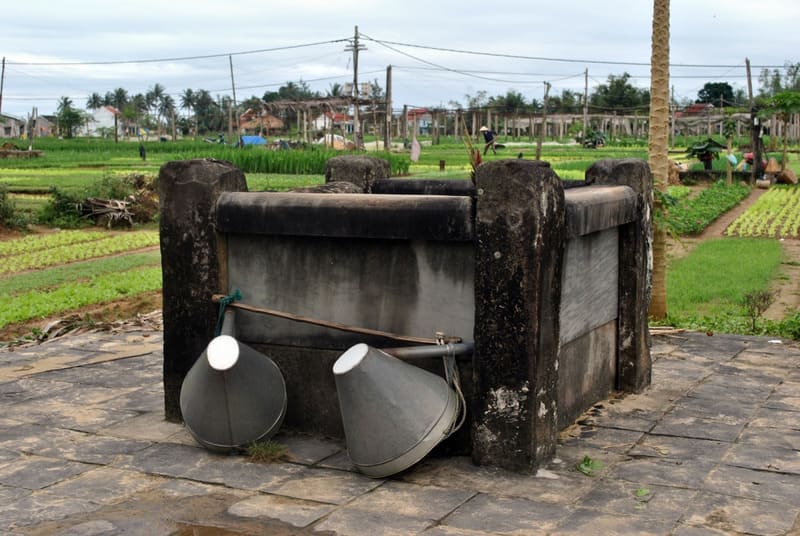
An old stone well in Tra Que Vegetable Village (Source: Collected)
If your visit falls around the 7th day of the first lunar month, you may have a chance to experience the Cau Bong Festival in Tra Que. This traditional festival is held to pray for favorable weather, healthy crops, and a successful farming year.
The festival reflects the agricultural spirit of the village. Local people honor ancestors, express gratitude for the land, and celebrate the start of a new growing season. Depending on the year’s program, visitors may see rituals, folk games, cooking activities, and community celebrations.
This is one of the most culturally meaningful times to visit Tra Que. However, the exact date changes each year according to the lunar calendar, so check in advance if you want to plan your trip around the festival.
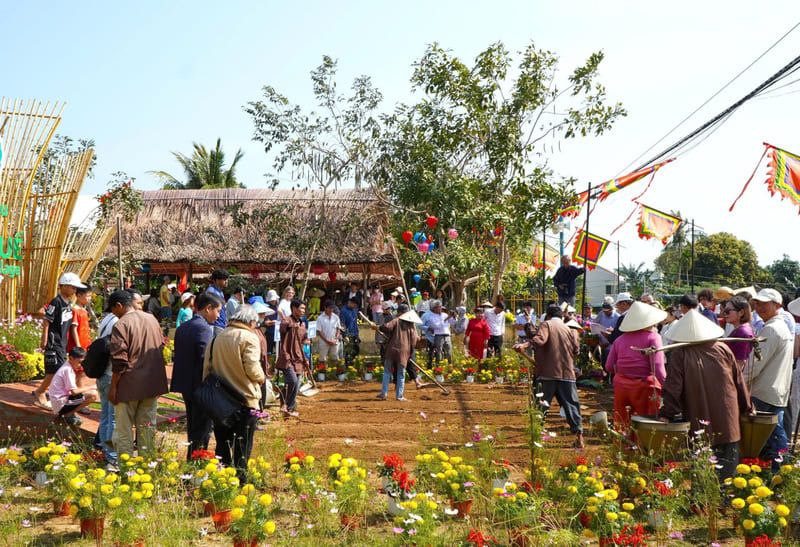
Cau Bong Festival in Tra Que Village (Source: Collected)
The real experience at Tra Que Vegetable Village is calm, simple, and hands-on. It is not a large attraction with dramatic scenery or entertainment shows. Instead, its appeal comes from small details: farmers watering herbs, the smell of fresh basil, bicycles moving along quiet lanes, and meals prepared with vegetables picked from nearby gardens.
If you visit independently, the experience can be very relaxed. You can cycle through the village, stop for photos, observe farming life, drink something at a local café, or join a short activity if available. This style is best for travelers who like flexibility and do not need a structured program.
If you join a guided farming or cooking tour, the experience becomes more interactive. You may be welcomed by a local host, change into farming clothes, try gardening tasks, enjoy an herbal foot bath, and cook lunch with fresh ingredients. This option is better if you want deeper explanation, easier communication, and a complete half-day itinerary.
Tra Que can feel slightly touristy in some organized activity areas, especially during busy travel periods. However, it still keeps a peaceful village atmosphere, especially if you visit early in the morning or late in the afternoon. The key is to come with the right expectation: Tra Que is not a hidden village untouched by tourism, but it remains one of the most accessible and meaningful rural experiences near Hoi An.
Food is one of the biggest highlights of Tra Que because the village plays an important role in Hoi An’s culinary identity. The vegetables and herbs grown here are used to add freshness, aroma, and texture to many local dishes.
One of the most famous dishes to try is tam huu, often associated with Tra Que. The name means “three friends,” referring to the combination of shrimp, pork, and fresh herbs tied together with spring onion. It looks simple, but the balance of sweetness, fragrance, and freshness makes it a memorable local specialty.
Another must-try dish is banh xeo, a crispy Vietnamese pancake filled with shrimp, pork, and bean sprouts. In Tra Que, banh xeo is usually served with a generous plate of fresh herbs and vegetables. The contrast between the crispy pancake, savory filling, and aromatic greens is what makes the dish so satisfying.
You should also try mi quang, a signature noodle dish from Central Vietnam. It is often served with turmeric noodles, shrimp or chicken, peanuts, rice crackers, herbs, and a small amount of rich broth. Tra Que herbs help brighten the dish and balance its savory flavor.
Other dishes and drinks you may find include:
For the best food experience, consider joining a cooking class or eating at a local garden restaurant. This helps you understand how Tra Que vegetables are used in Hoi An cuisine instead of simply tasting the final dish.
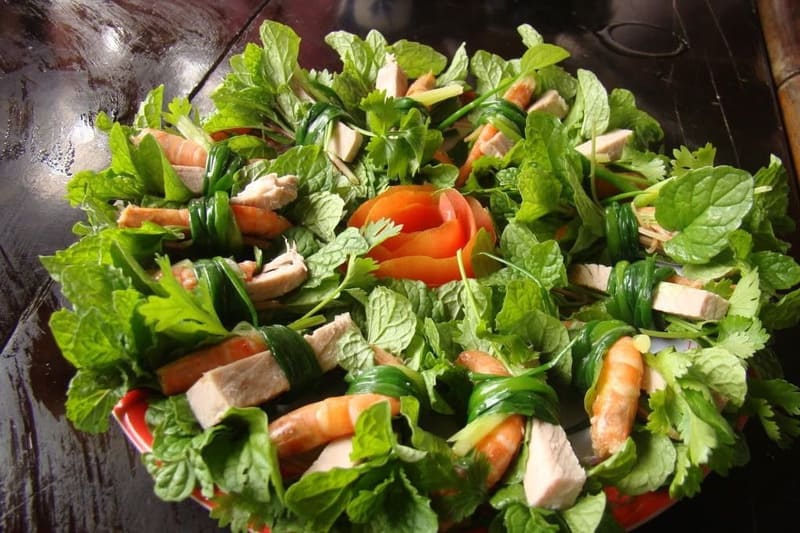
Tam huu, a fresh Tra Que local specialty (Source: Collected)
Tra Que Vegetable Village and Cam Thanh Coconut Village are two popular countryside experiences near Hoi An, but they offer different travel styles.
Tra Que Vegetable Village is best for travelers interested in farming, cooking, cycling, herbs, local food, and peaceful rural scenery. The experience is slower and more educational. It is ideal if you want to learn how vegetables are grown and how they connect to Hoi An cuisine.
Cam Thanh Coconut Village, also known as Bay Mau Coconut Forest, is best known for basket boat rides through water coconut palms. The experience is more active and entertainment-focused, especially when boat spinning, local performances, and fishing demonstrations are included.
Choose Tra Que if you want:
Choose Cam Thanh Coconut Village if you want:
If you have enough time, you can visit both. A good plan is to visit Tra Que in the morning for farming and cooking, then Cam Thanh in the afternoon for a basket boat experience. However, if you prefer a calmer and more authentic-feeling countryside visit, Tra Que is usually the better choice.
You have two main options when choosing where to stay near Tra Que Vegetable Village: staying inside or near the village, or staying in Hoi An Ancient Town.
Staying near Tra Que is ideal if you want a quiet atmosphere, easy access to the gardens, and a more relaxed countryside setting. Some homestays and boutique accommodations around Tra Que offer garden views, bicycles, local meals, and a peaceful environment. This area is good for travelers who prefer slow mornings, cycling, and staying away from the busiest tourist streets.
Staying in Hoi An Ancient Town or nearby central areas is more convenient if you want easy access to restaurants, lantern streets, tailor shops, night markets, and heritage sites. From the old town, Tra Que is still only a short bicycle or taxi ride away, so you do not need to stay in the village to visit it.
Another good option is staying near An Bang Beach, which is also close to Tra Que. This works well if you want to combine beach time, countryside cycling, and Hoi An sightseeing in one trip.
In general:
Tra Que Vegetable Village is easy to combine with several nearby attractions, especially if you travel by bicycle, motorbike, or private car.
For a longer day trip, you can also combine Hoi An with My Son Sanctuary, a UNESCO-listed Cham heritage site, although it requires more travel time and is not directly next to Tra Que.
To make the most of your visit to Tra Que Vegetable Village, it helps to plan your timing, clothing, and activities in advance. Here are some practical tips for a more comfortable and enjoyable experience:
Yes, Tra Que Vegetable Village is worth visiting if you want to see a quieter, more local side of Hoi An. It is especially suitable for travelers interested in food, farming, cycling, photography, and countryside culture.
It may not be the best choice if you only want major historical monuments or high-energy entertainment. But if you enjoy slow travel and authentic local experiences, Tra Que is one of the most rewarding places near Hoi An.
For a simple independent visit, 1-2 hours is enough to cycle around, take photos, and enjoy the scenery.
For a farming activity, herbal foot bath, and cooking class, plan around 3–4 hours. A half-day tour is usually the best format if you want the full Tra Que experience without rushing.
Yes, tourists can join farming activities in Tra Que Vegetable Village. Most activities are organized through local families, garden restaurants, homestays, or tour operators.
Typical tasks include preparing soil, planting vegetables, watering crops, and learning about organic fertilizer. These activities are beginner-friendly and suitable for most travelers.
There may be a small entrance or sightseeing fee depending on the current local policy and the type of experience you join. Some guided tours already include entrance fees, farming activities, cooking classes, meals, and transfers.
If you visit independently, it is best to carry some cash and check the latest fee at the entrance or with your accommodation before going.
Yes, Tra Que is suitable for families with kids. Children can enjoy cycling, seeing vegetable gardens, watering plants, joining simple farming activities, and learning how food is grown.
For a better family experience, visit in the morning or late afternoon when the weather is cooler. A guided farming and cooking tour can also make the visit easier and more engaging for children.
Yes, you can visit Tra Que without a tour. The village is close to Hoi An, easy to reach by bicycle or taxi, and simple to explore independently.
However, a tour is useful if you want a structured experience with farming activities, explanations from a local guide, a cooking class, lunch, or an herbal foot bath. Independent travel is better for flexibility, while a guided tour is better for deeper cultural understanding.
Tra Que Vegetable Village offers a quieter and more authentic side of Hoi An, where visitors can experience organic farming, local cuisine, countryside cycling, and traditional village life. If you want to explore beyond the lantern streets of the Ancient Town, Tra Que is one of the most rewarding half-day experiences near Hoi An, especially in the early morning or late afternoon.



 Vietnam Tours
 Cambodia Tours
 Laos Tours
 Thailand Tours
 Multi-Country Tours