Getting around Hanoi Old Quarter can feel overwhelming at first. The area is compact but busy, with narrow streets, constant traffic, and a mix of pedestrians, motorbikes, and cars moving in every direction.
The good news is that once you understand how transportation works here, it becomes surprisingly easy to navigate. From walking and ride-hailing apps to traditional cyclo rides, each option offers a different experience depending on your travel style, budget, and time.
This guide by Your Vietnam Travel breaks down the best ways to get around Hanoi Old Quarter, including when to use each option, typical costs, and practical tips to help you move around safely and efficiently.
Hanoi Old Quarter lies just north of Hoan Kiem Lake and is made up of a dense network of historic streets, small alleys, shops, food stalls, cafés, and heritage buildings. Because the area is compact, many of its main streets and attractions can be reached on foot without much planning. That is one reason the Old Quarter is often the easiest part of Hanoi to explore independently.
A simple way to picture the area:
In practical terms, many places inside the Old Quarter are only 10 to 20 minutes apart on foot. For anything beyond that, especially if you are heading toward the Temple of Literature, the Ho Chi Minh Mausoleum area, or West Lake, a short ride is usually more efficient.
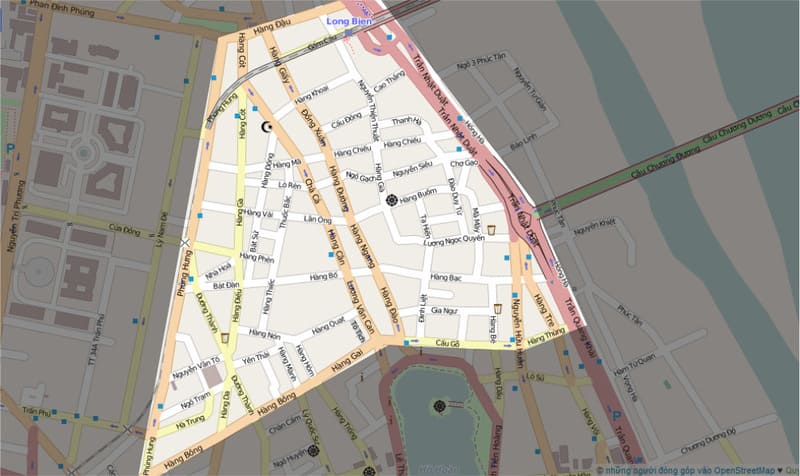
Map of Hanoi Old Quarter and its main areas (Source: Wikipedia)
Walking is the best option for most sightseeing inside Hanoi Old Quarter. It gives you the freedom to stop whenever you want for street food, coffee, temples, local shops, and photos. Hanoi is especially rewarding at street level, and the Old Quarter is one of the few parts of the city where slow exploration feels more enjoyable than trying to move quickly.
Best for: first-time visitors, food lovers, photographers, short-distance sightseeing.
Why it works well:
What to keep in mind:
For many travelers, the best combination is to walk around the historic core in the morning, then use app-based rides later in the day when the temperature rises or your route gets longer.

Walking is the easiest way to explore the Old Quarter (Source: Collected)
If you want convenience, this is usually the easiest option. Grab offers car and motorbike rides in Vietnam, Be provides beBike, beCar, and beTaxi, and Xanh SM runs electric car and motorbike services. These apps make it easier to book a ride, see the route, and avoid negotiating fares in the street.
Best for: hot weather, rainy days, longer distances, families, travelers with luggage.
Why it works well:
Most useful situations:
One practical detail: if your hotel is inside a very narrow lane, the driver may ask you to walk to a nearby main street for pickup. That is common in the Old Quarter.
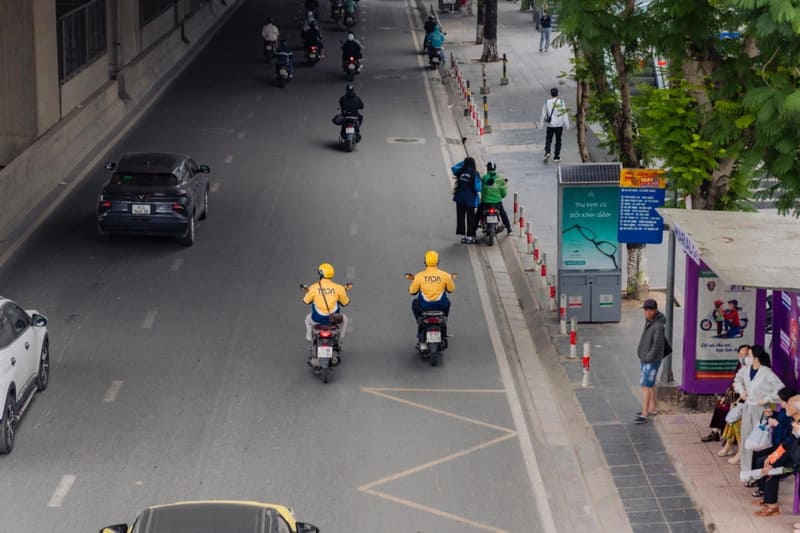
Grab and taxis make longer trips around Hanoi easier (Source: Collected)
A cyclo is not the fastest way to get around, but it is one of the most memorable. It works best as a short sightseeing experience rather than a serious transport option. A slow ride through the old streets gives you time to look around, take photos, and enjoy the atmosphere without worrying about traffic or navigation. Cyclo rides are still widely associated with classic Old Quarter sightseeing.
Best for: first-time visitors, couples, relaxed sightseeing, travelers who want a traditional experience.
What makes it appealing:
Important tips:
Cyclo is worth trying once, especially if you want a classic Hanoi moment, but it is not the best option if you are in a hurry.

A cyclo ride offers a classic Hanoi Old Quarter feel (Source: Collected)
Electric car tours are a gentler sightseeing option for visitors who want to see more of the area without walking too much. They are better for sightseeing loops than for quick point-to-point transport. This option suits seniors, families, and travelers who want a more relaxed pace.
Best for: older travelers, families, light sightseeing, first-day orientation.
Why people choose it:
Compared with a cyclo, it feels more practical and less traditional. Compared with a taxi, it is slower but better for sightseeing.

Electric cars offer a slower, easy way to sightsee (Source: Collected)
Public buses are the cheapest transport option in Hanoi, and the city is continuing to expand greener bus services as part of its wider transport plans. For tourists, buses are more useful for reaching districts outside the Old Quarter than for moving around inside it.
Best for: budget travelers, local-style travel, trips beyond the Old Quarter
Advantages:
Limitations:
If you mainly plan to stay inside the Old Quarter, walking is usually more practical. If you are going farther and want to save money, buses can still be useful.
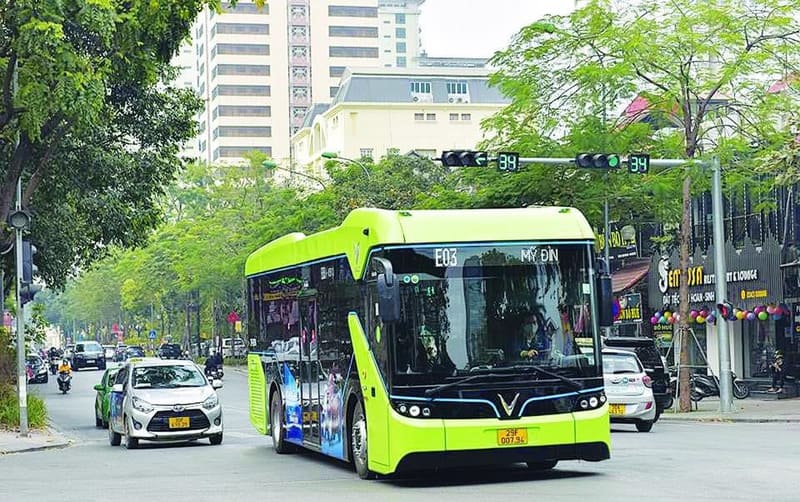
Public buses are a budget way to travel in Hanoi (Source: Collected)
For solo travelers, motorbike taxis are often the fastest way to move through Hanoi traffic. The easiest way to use them is through apps such as GrabBike, beBike, or Xanh SM Bike, all of which are current services on their official platforms.
Best for: solo travelers, short rides, avoiding traffic, quick transfers.
Why it works well:
Not ideal for:
If you are confident and do not mind traffic, this is one of the most efficient ways to get around Hanoi beyond walking.
Cycling is possible, but it is not the most practical option for most visitors inside the Old Quarter. The streets are narrow, busy, and often crowded with motorbikes and pedestrians. Unless you are already very comfortable riding in dense city traffic, walking will usually feel easier.
Best for: confident urban cyclists, early-morning rides, experienced travelers.
Why some people still like it:
Why many skip it:
For most tourists, cycling makes more sense outside the tightest parts of the Old Quarter than within it.

Cycling in the Old Quarter suits confident riders (Source: Collected)
If you are just arriving in the city, check this guide on getting from Noi Bai Airport to Old Quarter to plan your transfer smoothly before exploring.
Hanoi Old Quarter becomes much easier once you match the transport to the situation.
Yes. Walking is generally safe and is one of the best ways to experience the area. The main challenge is traffic awareness rather than personal safety. The Old Quarter is well suited to exploring on foot, but you still need to stay alert when crossing streets.
Yes, Grab is widely available in Hanoi Old Quarter, offering both car (GrabCar) and motorbike (GrabBike) options. It is one of the easiest ways to get around because you can see the price in advance and avoid language barriers. Alternatives like Be and Xanh SM are also available, sometimes with competitive pricing or electric vehicle options.
Taxi fares typically range from about 15,000 to 25,000 VND per kilometer, depending on the company and vehicle type, though traffic can affect the final price. For short trips within or near the Old Quarter, the total cost is usually quite affordable. To avoid confusion or overcharging, many travelers prefer using ride-hailing apps where the fare is shown upfront instead of relying on street taxis. If your main concern is the airport transfer, this separate guide to taxi from Noi Bai Airport to Hanoi Old Quarter covers prices and practical tips in more detail.
Yes, cyclos are worth trying at least once, especially if you want a more traditional Old Quarter experience. They are best for short, slow rides around the historic streets rather than practical transport. Expect to pay around 100,000-150,000 VND for a short ride, and always agree on the price, duration, and route in advance to avoid misunderstandings.
Yes, but public buses in Hanoi can be a bit challenging for first-time visitors due to limited English signage and route complexity. Tickets are very cheap (usually around 7,000-10,000 VND), but buses can be crowded during peak hours. They are more suitable for longer routes outside the Old Quarter rather than short-distance travel within it.
Cycling is possible but not recommended for most visitors, as the Old Quarter has narrow streets, heavy traffic, and unpredictable driving patterns. It may be more enjoyable early in the morning when the streets are quieter. For most travelers, walking or using ride-hailing apps is safer and more convenient.
Walking is the cheapest and most practical option if you are staying within the Old Quarter, as most attractions are close together. For longer distances, public buses are the most budget-friendly paid option, while motorbike taxis via apps like GrabBike offer a good balance between low cost and convenience.
The best way to get around Hanoi Old Quarter is usually a combination of walking and short app-based rides. Walking gives you the best feel for the neighborhood, while Grab, Be, and Xanh SM make longer trips easier. If you want something more traditional, a cyclo ride is still worth trying once.
For most visitors, the simplest plan is this: walk when the streets are close together, and switch to a car or motorbike ride when distance, heat, or traffic makes walking less enjoyable.






 Vietnam Tours
 Cambodia Tours
 Laos Tours
 Thailand Tours
 Multi-Country Tours