The Ho Chi Minh Mausoleum is one of Hanoi’s most important landmarks and a must-visit for travelers who want to understand Vietnam’s modern history. Located at Ba Dinh Square, this solemn site welcomes visitors to pay respects to President Ho Chi Minh and explore a wider complex of cultural attractions nearby. This guide from Your Vietnam Travel covers everything you need for a smooth visit, including location, opening hours, entrance rules, and the best things to do in the area.
Ho Chi Minh (born Nguyen Sinh Cung on May 19, 1890 - September 2, 1969) is Vietnam’s most iconic national hero and one of the most influential revolutionary leaders of the 20th century. Known internationally by several names, including Nguyen Tat Thanh and Nguyen Ai Quoc, he dedicated his entire life to Vietnam’s independence and the welfare of its people.
From the early 1900s, Ho Chi Minh became a powerful voice against colonial rule. He went on to found the Vietnamese Communist Party and led the nationalist movement for nearly three decades. After declaring Vietnam’s independence in 1945, he served as Prime Minister of North Vietnam (1945-1955) and later as President from 1945 until his passing in 1969. Under his leadership, Vietnam successfully resisted French colonialism, laying the foundations for a sovereign nation.
Beyond politics, Ho Chi Minh is remembered as a visionary statesman who championed social justice, equality, and national unity. His simple lifestyle, moral integrity, and unwavering commitment to self-determination continue to inspire generations of Vietnamese and admirers around the world.
Today, Ho Chi Minh remains a powerful symbol of liberation and independence. For many Vietnamese people, visiting his final resting place is a profound honor. It is a meaningful act of respect and a way to express deep gratitude to the leader who shaped modern Vietnam.
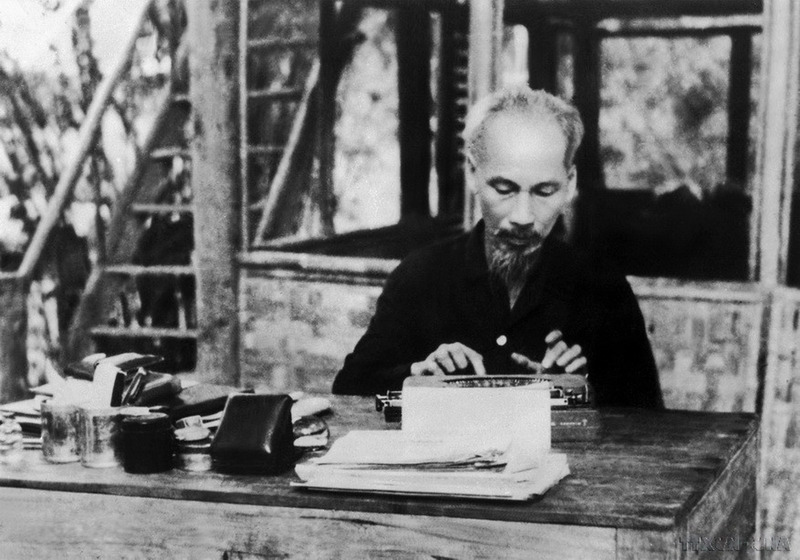
President Ho Chi Minh, Vietnam's greatest national hero (Source: Collected)
The Ho Chi Minh Mausoleum stands in the center of historic Ba Dinh Square, one of Hanoi’s most important ceremonial spaces. This is where President Ho Chi Minh declared Vietnam’s independence in 1945.
The mausoleum is easy to reach by taxi, ride-hailing apps, public bus, or private transfer. Many travelers also combine this stop with nearby attractions inside the Ho Chi Minh Complex as part of a half-day Hanoi city tour.
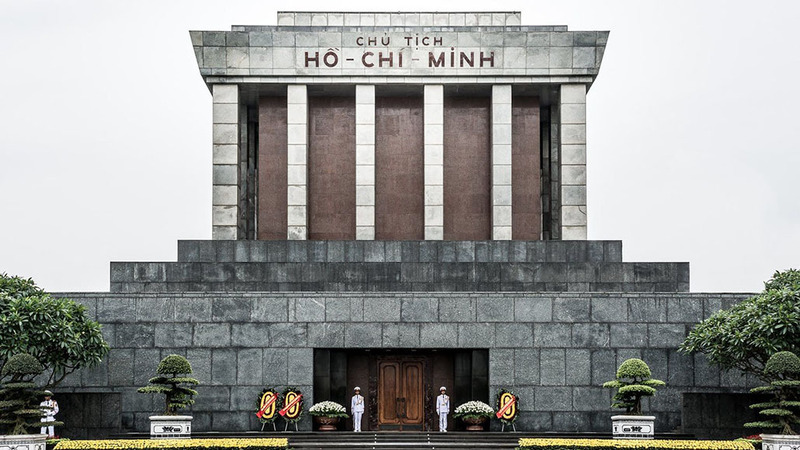
Ho Chi Minh Mausoleum (Source: Collected)
Visiting hours are limited and take place in the morning only. Schedules vary slightly by season, so planning ahead is essential.
Important notes:
Admission to the Ho Chi Minh Mausoleum is free of charge for all visitors, including both Vietnamese and international guests.
No advance tickets are required. Visitors simply queue and complete the security check on site before entering the mausoleum.
Please note that while entry to the mausoleum itself is free, some nearby museums within the Ba Dinh complex may require a separate admission fee (typically around VND 25,000 per person), subject to change without prior notice.
The Ho Chi Minh Mausoleum is centrally located in Ba Dinh District, making it easy to reach from most parts of Hanoi. Visitors can choose from several convenient transportation options depending on their budget and travel style.
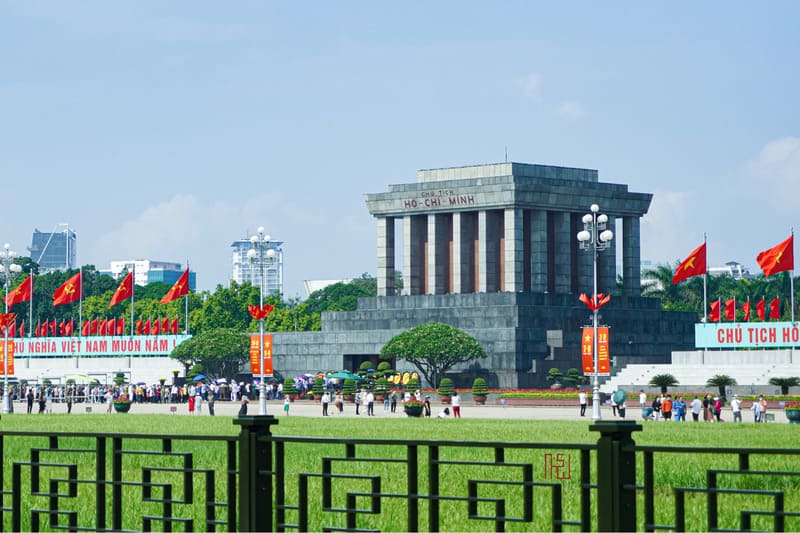
The Ho Chi Minh Mausoleum is easy to reach in central Hanoi (Source: Collected)
The Ho Chi Minh Mausoleum holds deep historical and emotional meaning for the Vietnamese people. After President Ho Chi Minh passed away in 1969, his will expressed a wish for cremation, with his ashes placed across the country’s three regions. At the time, the Party and the people made a collective decision to preserve his body instead, allowing future generations to visit, remember, and honor the leader who devoted his life to national independence.
In early 1970, Vietnam worked closely with the former Soviet Union to study preservation techniques and architectural design. The project received strong technical support from Soviet experts, while the overall concept was approved by the Politburo of the Central Committee. Construction officially began on September 2, 1973, a date of great national importance, and the mausoleum was inaugurated on May 19, 1975, marking Ho Chi Minh’s birthday.
Inspired by Lenin’s Mausoleum in Moscow, the design was adapted to reflect Vietnamese culture, traditions, and climate. Materials sourced from across Vietnam were used during construction, symbolizing unity and collective respect from all regions of the country. The building’s solid form and restrained style reflect the values Ho Chi Minh represented throughout his life.
Since its opening, the Ho Chi Minh Mausoleum has become a place of national reverence. Millions of Vietnamese citizens and international visitors come here each year to pay their respects. More than a historical monument, it stands as a lasting reminder of Ho Chi Minh’s vision for an independent, unified, and prosperous Vietnam.
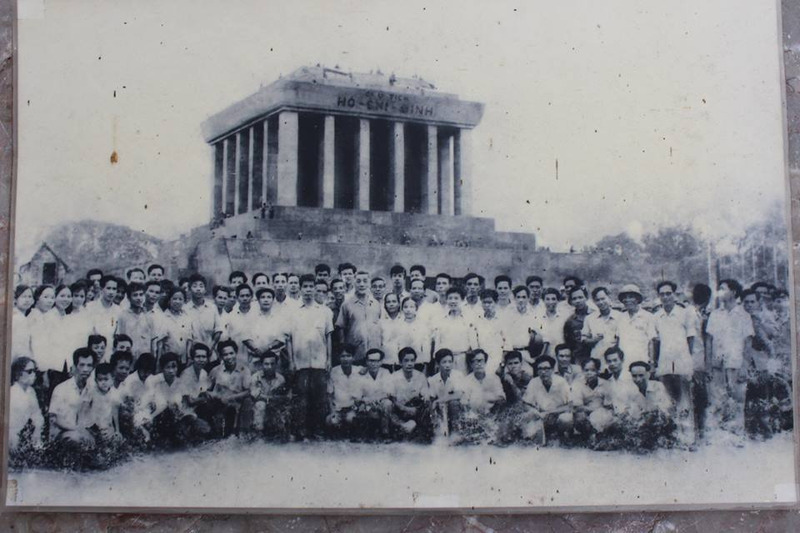
Early days of The Ho Chi Minh Mausoleum construction (Source: Collected)
The Ho Chi Minh Mausoleum is designed to convey strength, dignity, and national unity. The structure follows a solid square form with three distinct layers, rising to a height of 21.6 meters and stretching 41.2 meters wide. Engineers built it to withstand floods, bombings, and even earthquakes up to magnitude 7, reflecting the intention to preserve this landmark for generations.
The exterior is clad in cool gray granite and framed by rows of marble columns, creating a powerful and solemn presence. At the top, the inscription “CHỦ TỊCH HỒ-CHÍ-MINH” is carved in deep red stone, standing out clearly against the stone façade. More than 200 doors inside the mausoleum are crafted from rare woods collected from provinces across Vietnam, turning the building itself into a symbol of nationwide contribution.
Architecturally inspired by Lenin’s Mausoleum in Moscow, the design was adapted to suit Vietnamese culture and climate. Subtle local touches appear in the tiered roof and balanced proportions, while materials sourced from all regions of Vietnam represent unity and shared respect for President Ho Chi Minh.
Inside, the atmosphere becomes quiet and reverent. The main chamber is finished with polished marble in soft gray and warm red tones. Ho Chi Minh’s body rests in a glass case on a stone pedestal, watched over by ceremonial guards. The lighting is intentionally gentle, guiding visitors to focus on reflection rather than decoration.
Surrounding the mausoleum is a carefully landscaped garden with more than 250 plant species donated from across the country. These green spaces soften the monument’s solid lines and provide a peaceful setting for contemplation. Together, the architecture and landscape create a powerful tribute that speaks not only through stone, but through collective memory and national pride.
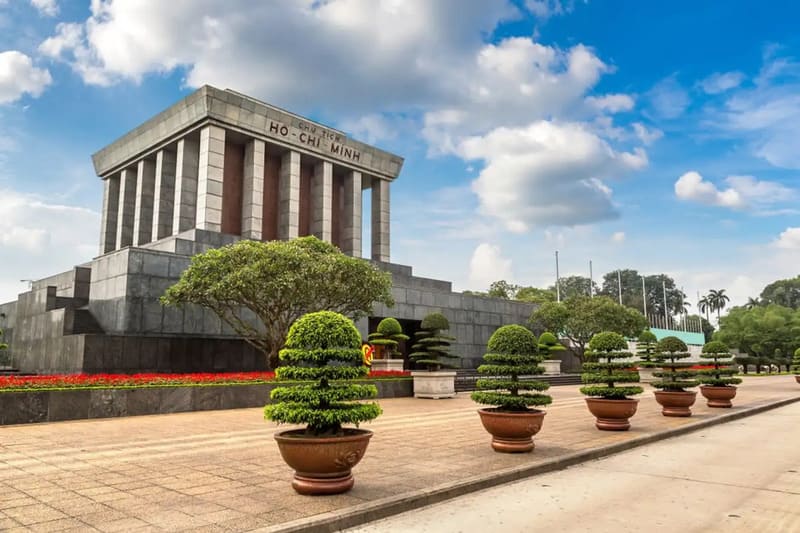
Ho Chi Minh Mausoleum exterior with marble columns and gardens (Source: Collected)
A visit to the Ho Chi Minh Mausoleum offers more than a single stop. The surrounding area forms a complete cultural complex, allowing visitors to explore history, architecture, and daily ceremonial traditions in one place.
Stepping inside the Ho Chi Minh Mausoleum is a deeply moving experience. Visitors enter a marble-lined chamber where President Ho Chi Minh rests in a glass case, dressed in his simple khaki outfit that reflects his modest way of life. Soft lighting and the presence of uniformed guards create a quiet, dignified atmosphere.
Guests proceed slowly in single-file lines, allowing a brief moment to pay respects in silence. The entire visit is carefully guided, and photography or conversation is not permitted inside. Although the interior tour lasts only a few minutes, it offers a powerful connection to Vietnam’s history and to the leader who shaped the nation.
Take time to observe the exterior of the Ho Chi Minh Mausoleum, where powerful lines and balanced proportions create a strong sense of dignity. The massive granite façade, marble columns, and tiered roof come together in a design that feels both monumental and restrained.
What makes the architecture especially meaningful is the use of materials sourced from across Vietnam, symbolizing national unity. From the carefully engraved name of President Ho Chi Minh at the top to the symmetrical layout facing Ba Dinh Square, every detail reflects respect, permanence, and collective pride. Standing here, visitors can clearly feel that the building was designed not to impress with luxury, but to express gratitude and timeless reverence.
The daily flag ceremonies at Ba Dinh Square are among the most emotional moments you can witness in Hanoi. Performed by an elite honor guard, each ceremony follows a precise military rhythm and reflects Vietnam’s deep sense of national pride.
In the early morning, guards march across the square in perfect formation as the national flag rises slowly to the sound of ceremonial music. In the evening, the flag is lowered with the same solemn discipline. Locals and visitors alike pause in respectful silence, creating a powerful shared atmosphere.
If your schedule allows, attending one of these ceremonies adds meaningful cultural depth to your visit and offers a memorable glimpse into Vietnam’s patriotic traditions.
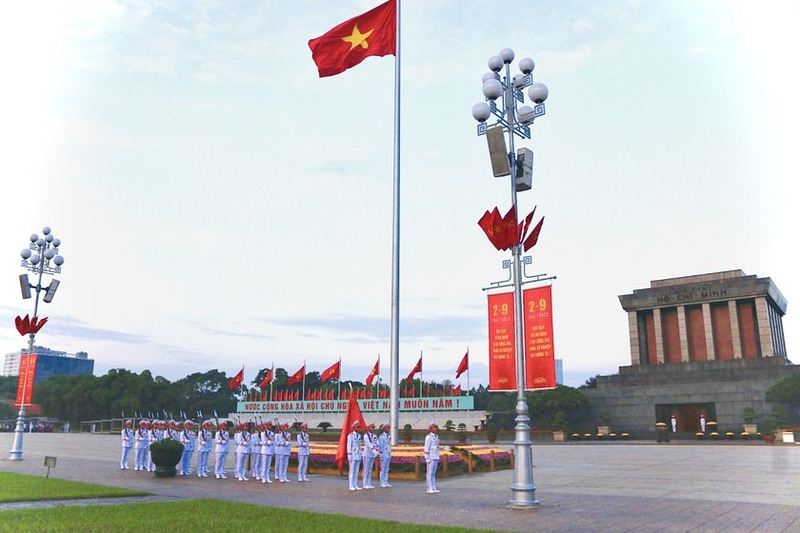
Flag-raising ceremony at Ba Dinh Square, Hanoi (Source: Collected)
One of the most impressive moments at the Ho Chi Minh Mausoleum is the changing of the guard ceremony. Performed by an elite honor unit, this ritual takes place every hour and showcases remarkable discipline, coordination, and respect.
The guards move in perfectly synchronized steps, maintaining calm expressions and upright posture throughout the ceremony. Every movement is carefully measured, from their pace to their turns, creating a quiet yet powerful display of professionalism. Watching this brief ritual offers visitors a deeper appreciation of the dignity preserved at the mausoleum and adds a ceremonial touch to your experience in Ba Dinh Square.
Ba Dinh Square is one of Hanoi’s most meaningful photo spots, set directly in front of the Ho Chi Minh Mausoleum. This historic square is where President Ho Chi Minh proclaimed Vietnam’s Declaration of Independence in 1945, making every frame here rich with cultural significance.
Today, the wide open space, neatly arranged green lawns, and tall flagpole create a striking backdrop for travel photos. Morning light is ideal for capturing the mausoleum’s grand façade, while late afternoon offers softer tones and fewer crowds. Although photography is not allowed inside the mausoleum, the square itself provides plenty of angles to document your visit and reflect on Vietnam’s journey toward independence.
Taking photos here goes beyond sightseeing. It’s a chance to connect visually with one of the country’s most important national landmarks and bring home memories rooted in history and pride.
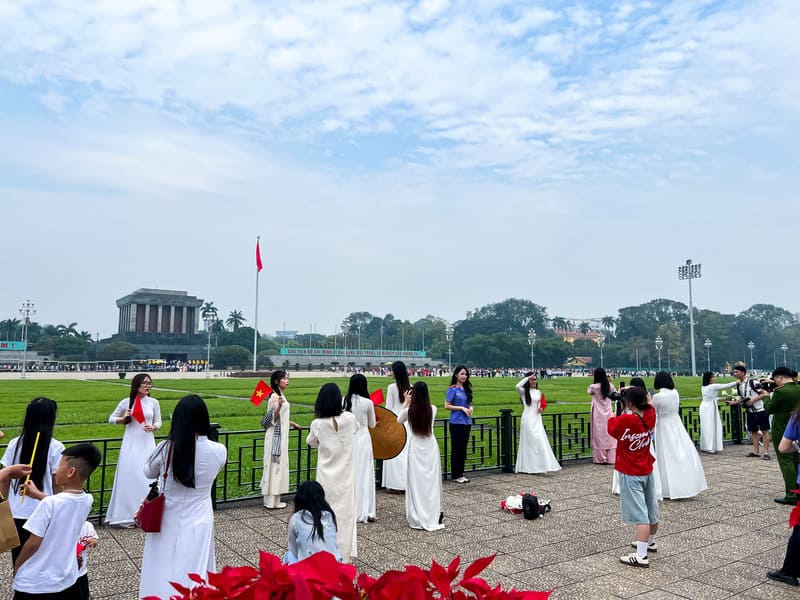
Take photos at Ba Dinh Square (Source: Collected)
Learn more: 30+ Best Things to Do and See in Hanoi, Vietnam
Beyond the main tomb, the Ho Chi Minh Mausoleum sits within a thoughtfully designed cultural complex where visitors can gain deeper insight into President Ho Chi Minh’s life and Vietnam’s modern history. All attractions are within easy walking distance, making this area ideal for a half-day cultural exploration.
The Presidential Palace is one of the most striking buildings within the Ho Chi Minh Mausoleum complex. Designed and supervised by a German architect, it was originally built for the Governor-General of French Indochina and took nearly six years to complete. With more than 30 rooms, it was considered the most luxurious structure in Hanoi at the time. After Vietnam’s independence in 1945, the building was renamed the Presidential Palace.
Although intended to serve as President Ho Chi Minh’s residence and workplace, he declined to live there. He believed it was inappropriate to occupy such a grand building while many citizens were still facing hardship. Instead, he chose to live simply in nearby House No. 54 and later in the stilt house. The palace was used mainly for receiving important delegations and welcoming visiting groups.
Today, the Presidential Palace remains an active government site, hosting official receptions and state-level meetings. Visitors can admire its elegant French colonial architecture from the outside and stroll through the surrounding gardens, which add a calm and refined atmosphere to the historic complex.
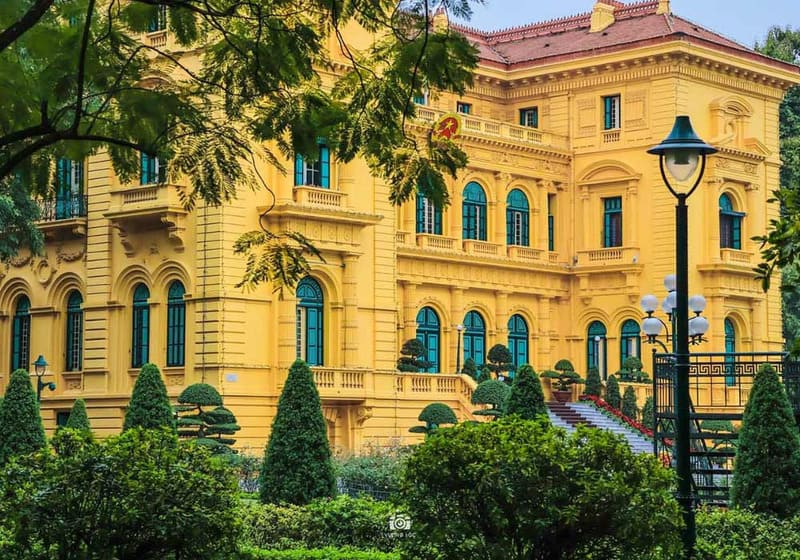
Presidential Palace (Source: Collected)
House No. 54 was President Ho Chi Minh’s first residence and workplace in Hanoi after independence, from 1954 to 1958. The modest house originally belonged to an electrician who worked for the former Governor’s Palace. Ho Chi Minh chose to live here as a reflection of his simple lifestyle and close connection to ordinary people.
The house consists of three small rooms. The living room also served as his working space, where shelves of books on politics, culture, and world affairs are still neatly arranged. Many items inside were gifts from friends and supporters around the world, which Ho Chi Minh kept carefully and refused to replace, valuing their meaning over comfort.
The kitchen reflects his concern for everyday life and education. A thermometer hangs on the wall, linked to a well-known practice in which he suggested primary school children be given a day off when temperatures dropped below 10°C. The bedroom is equally simple, furnished with only essential items and a small round table presented by Cuban leader Fidel Castro.
Even after moving to the nearby stilt house, Ho Chi Minh continued to return to House No. 54 for meals and daily routines. Today, the preserved space offers visitors a personal and authentic glimpse into the humble life of a leader who placed the nation above all else.
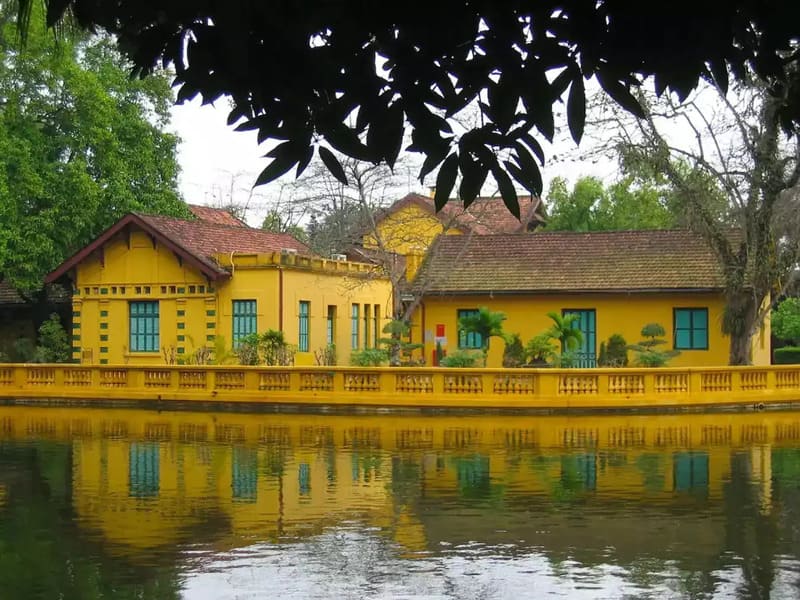
House No. 54 (Source: Collected)
The Ho Chi Minh's Stilt House provides a personal glimpse into President Ho Chi Minh’s daily life. After spending several years at House No. 54, he moved here and chose a modest wooden home inspired by traditional stilt houses from Vietnam’s northern highlands. The design reflects both his revolutionary past and his lifelong commitment to simplicity.
Built in 1958, the house features two levels. The ground floor was used for small meetings, while the upper floor includes a compact bedroom and study furnished with only essential items and a small bookshelf. The space feels practical and understated, mirroring Ho Chi Minh’s humble character.
A peaceful garden surrounds the house, planted with trees brought from different regions of Vietnam. Nearby, a small fish pond adds to the calm atmosphere where he often spent quiet moments. Walking through this serene setting helps visitors better understand a leader who chose a simple life, even while holding the nation’s highest office.
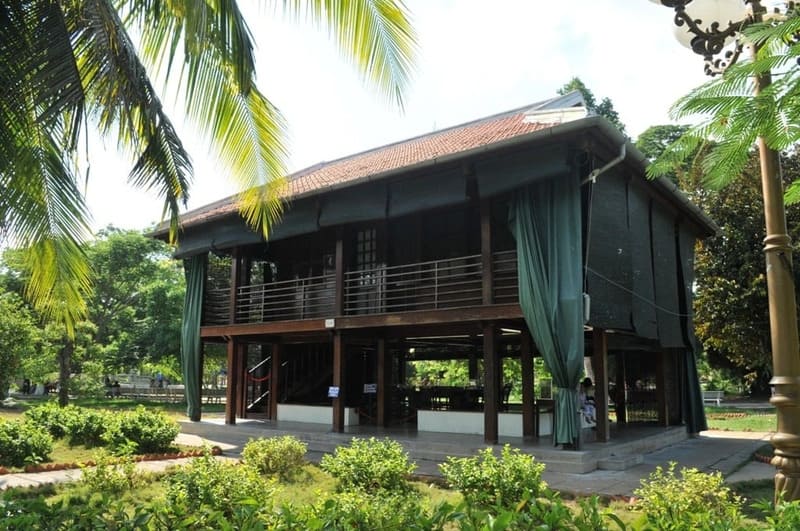
Ho Chi Minh’s Stilt House (Source: Collected)
The One Pillar Pagoda, also known as Chua Mot Cot, is one of Vietnam’s most iconic Buddhist landmarks. It was originally built in 1049 during the reign of King Ly Thai Tong and designed to resemble a lotus flower rising from a pond, symbolizing purity, compassion, and enlightenment.
According to legend, the pagoda was inspired by a dream in which the king was blessed by the Goddess of Mercy, who appeared seated on a lotus and granted him a son. To express his gratitude, the king ordered the construction of a pagoda supported by a single stone pillar in the middle of a lotus pond, creating a unique architectural form that has endured in Vietnam’s cultural memory.
The structure standing today is a reconstruction. The original pagoda was destroyed in 1954, and it was rebuilt in 1955 at the request of President Ho Chi Minh, following its original design on a smaller scale. Located within walking distance of the Ho Chi Minh Mausoleum, the One Pillar Pagoda remains a peaceful spiritual stop where visitors can admire its symbolism, enjoy the tranquil surroundings, and appreciate one of Hanoi’s most distinctive historical monuments.
Learn more about the history, symbolism, and visitor information in our One Pillar Pagoda Hanoi guide.
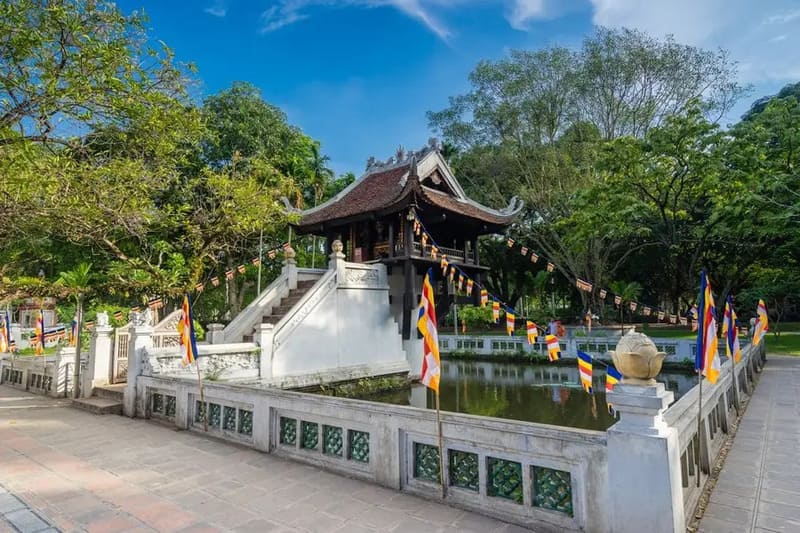
One Pillar Pagoda (Source: Collected)
The Ho Chi Minh Museum sits within the Ho Chi Minh Complex and offers a deeper understanding of President Ho Chi Minh’s life and revolutionary journey. Built to commemorate the 100th anniversary of his birth, the museum took nearly five years to complete and features a distinctive design shaped like a giant white flower rising 20 meters high.
The building has three floors. The ground level houses a large hall often used for national and international events. The main exhibition area displays more than 2,000 valuable documents, photographs, and artifacts that trace Ho Chi Minh’s life, from his early years to his role in Vietnam’s struggle for independence. Visitors will also find sections highlighting key global events and how they influenced Vietnam’s revolutionary path.
Through creative layouts, visual storytelling, and carefully curated collections, the museum presents not only historical facts but also the ideals that guided Ho Chi Minh’s leadership. It’s an excellent stop for travelers who want meaningful context before or after visiting the mausoleum itself.
To learn more about the exhibits, architecture, and visitor information, explore our complete guide to the Ho Chi Minh Museum in Hanoi.
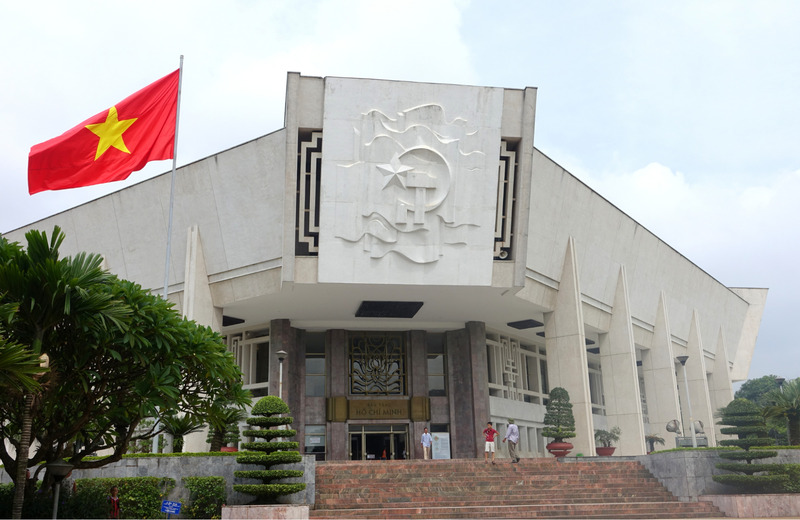
Ho Chi Minh Museum (Source: Wikipedia)
A visit to the Ho Chi Minh Mausoleum is a meaningful cultural experience. Following these practical tips will help you move smoothly through the site and show proper respect during your time here:
A visit to the Ho Chi Minh Mausoleum itself usually takes about 10-15 minutes inside, as visitors move in a continuous single-file line. However, you should allow 45-90 minutes in total for queuing, security checks, and walking through the grounds. If you plan to explore the wider Ho Chi Minh Complex, a half-day visit is ideal.
Visitors are required to dress neatly and modestly. Clothing should cover shoulders and knees. Shorts, short skirts, sleeveless tops, and flip-flops are not permitted. If your attire does not meet the dress code, entry may be refused.
The best time to visit is early morning between 7:00 AM and 8:00 AM on Tuesday to Thursday, when crowds are lighter and temperatures are cooler. Try to arrive before 8:00 AM for the smoothest experience. Avoid weekends and public holidays, as queues become much longer. Remember that the last entry is usually around 10:30 AM on weekdays and 11:00 AM on weekends.
Visitors must follow strict regulations to maintain the solemn atmosphere:
These rules are enforced to show respect to President Ho Chi Minh and other visitors.
No. Photography, filming, and phone use are strictly prohibited inside the mausoleum. All cameras and electronic devices must be stored at the security area before entry. Photography is allowed outside, including Ba Dinh Square and the surrounding gardens.
Yes, children are welcome to visit. Parents should ensure that children remain quiet, follow instructions, and understand the respectful nature of the site. Very young children may find the long queues challenging, so planning accordingly is advised.
Ho Chi Minh Mausoleum is a signature landmark of Hanoi, offering visitors valuable insight into Vietnam’s history, people, and national spirit. A visit here delivers a solemn and meaningful experience, leaving a lasting impression on any journey through the capital.
If you’re planning a trip to Vietnam, Hanoi, and the Ho Chi Minh Mausoleum, Your Vietnam Travel is ready to support you with tailor-made tours, flexible itineraries, and professional end-to-end services. Contact our team today for a free consultation and start crafting your journey your way.

 Vietnam Tours
 Cambodia Tours
 Laos Tours
 Thailand Tours
 Multi-Country Tours