The Temple of Literature is one of Hanoi’s most important historical landmarks. Built in 1070 to honor Confucius, the complex later became the site of Vietnam’s first national university, where generations of scholars were educated for the imperial examination system. Today, it is a popular cultural attraction known for its five courtyards, ancient stone steles engraved with scholars’ names, and elegant traditional architecture. The iconic Khue Van Pavilion within the complex is also featured on the back of Vietnam’s 100,000 VND banknote.
To help you plan your visit, this guide from Your Vietnam Travel covers everything you need to know before exploring the site, including its location, history, the best time to visit, and what to see inside the Temple of Literature.
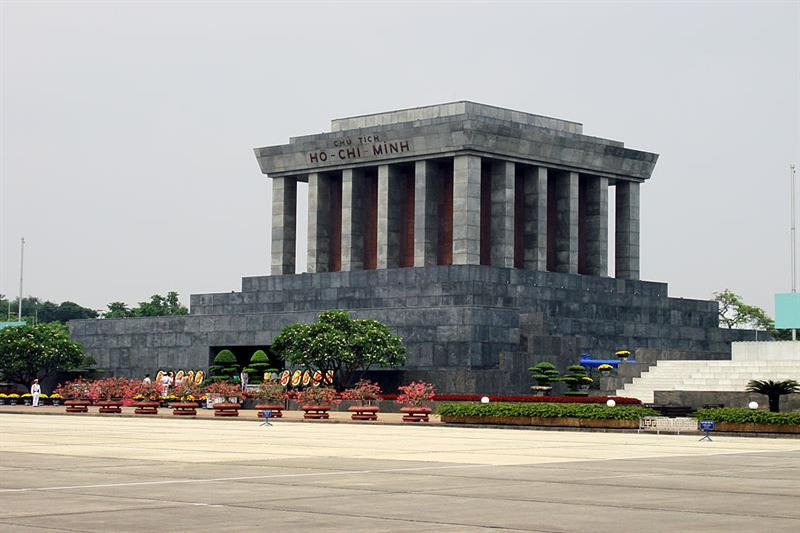
The Temple of Literature (Van Mieu - Quoc Tu Giam) is located at 58 Quoc Tu Giam Street, Dong Da District, Hanoi. The entrance is about a 10-minute drive from Hoan Kiem Lake, one of the city’s central landmarks. It is also close to several major attractions, including the Ho Chi Minh Mausoleum and the Imperial Citadel of Thang Long, making it easy to include in a Hanoi city break or a broader northern Vietnam itinerary.
Quoc Tu Giam (The Imperial Academy) was first established in 1070 under Emperor Ly Thanh Tong and later expanded in 1076 to become a center for educating mandarins and scholars. Over the centuries, the complex has remained a powerful symbol of Vietnam’s respect for learning, scholarship, and academic achievement, making it an essential stop on culture and history tours in Vietnam.
Key milestones:
Today, with its ancient steles, courtyards, pavilions, and preserved architecture, Van Mieu - Quoc Tu Giam stands as a living record of Vietnam’s long tradition of learning and deep respect for scholarship.
 |
|
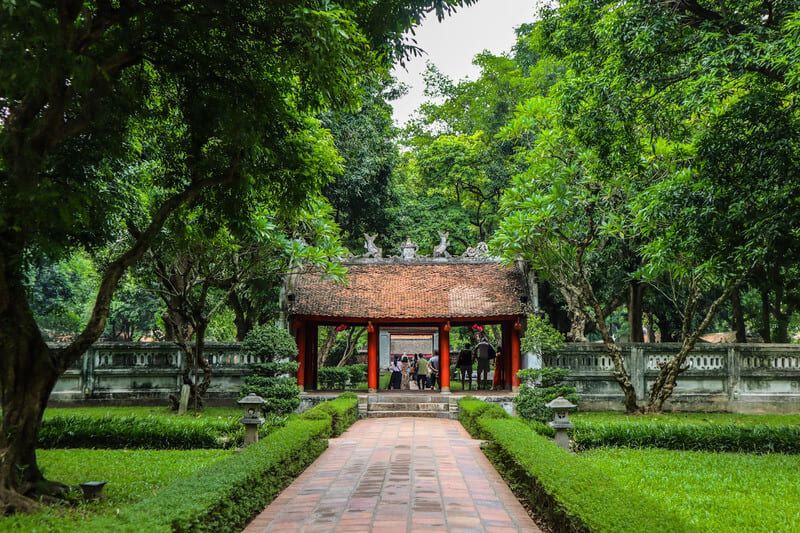
The Great Pathway from Dai Trung Gate, Temple of Literature (Source: Unsplash) |
Tips: It’s recommended to bring small cash when purchasing tickets, as prices or concessions may occasionally change during special events or festivals.
If you prefer to combine the Temple of Literature with other major landmarks in one smooth day, it can be included in a tailor-made Hanoi or northern Vietnam itinerary.
Highlights: Three-entrance gate and the long central pathway.
After passing through Dai Trung Mon, also known as the Great Middle Gate, visitors enter the first courtyard of the Temple of Literature. In front of the gate stretches a wide green lawn divided by three pathways.
Historically, the central pathway was reserved exclusively for the emperor and royal processions. The two side paths, known as Thanh Duc (Virtue) and Dai Tai (Talent), were used by mandarins, scholars, and visitors according to their rank and status.
Tips: Out of respect for tradition, visitors today usually walk along the side paths rather than the central one. This custom is commonly observed in many traditional temples across Vietnam.
 |
|
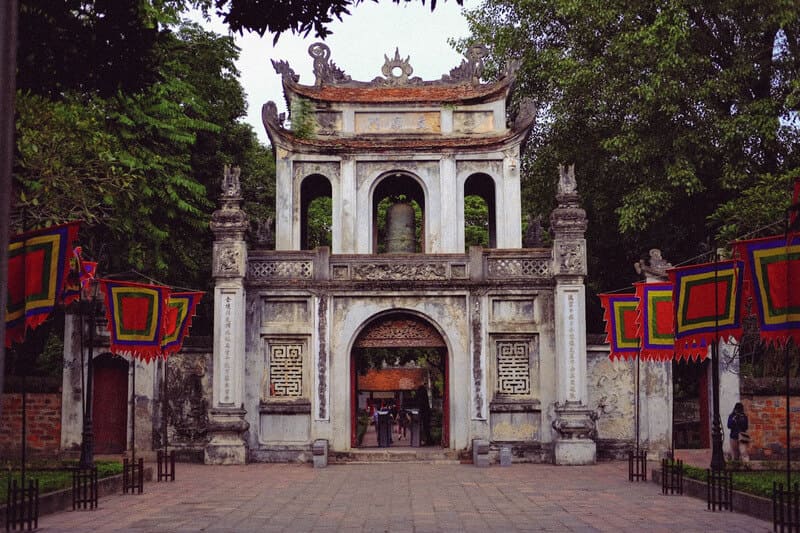
The great entrance in Van Mieu - Quoc Tu Giam (Source: Unsplash) |
Highlights: Khue Van Pavilion, timber brackets, and octagonal architecture.
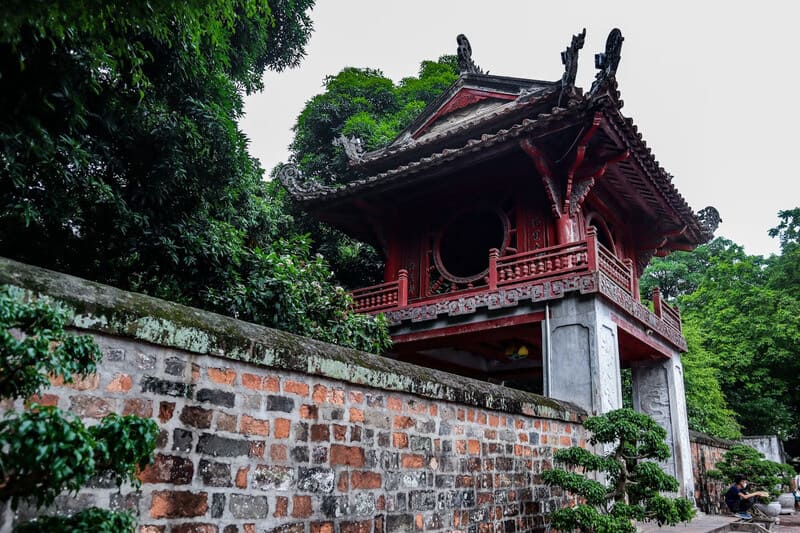
At the center of the second courtyard stands Khue Van Pavilion (Khue Van Cac), one of the most recognizable symbols of Hanoi. Built in the early 19th century during the Nguyen Dynasty, the pavilion features an elegant octagonal structure supported by wooden pillars and intricate timber brackets.
The name “Khue Van” refers to the bright star of literature, symbolizing knowledge and academic excellence. Today, the pavilion has become an iconic landmark of the city and is even depicted on Vietnam’s 100,000 VND banknote.
Don’t miss: Take a closer look at the pavilion’s detailed wooden structure and balanced octagonal design, which reflect the refined architectural style of traditional Vietnamese monuments.
 |
|
Khue Van Pavilion, the iconic symbol of the Temple of Literature (Source: Unsplash) |
Highlights: 82 stone steles recording doctoral graduates, each with unique calligraphy and turtle bases from different dynasties.
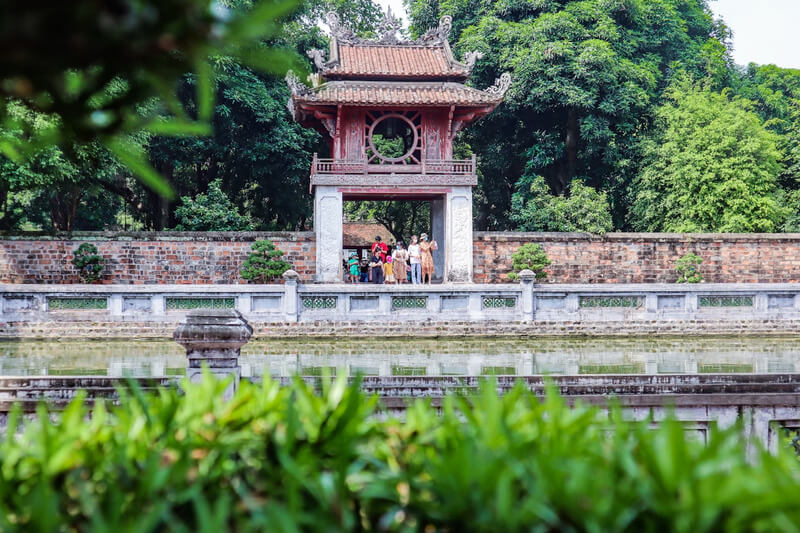
The third courtyard centers around Thien Quang Well, also known as the Well of Heavenly Clarity. Surrounding the well are 82 stone steles mounted on turtle statues, each engraved with the names of scholars who successfully passed the royal examinations between the 15th and 18th centuries.
These steles represent the highest academic achievements of their time and provide valuable historical records of Vietnam’s traditional education system. In 2010, the collection was recognized by UNESCO as part of the Memory of the World Programme for Asia and the Pacific.
For many years, students and visitors would touch the turtle heads for good luck in exams. However, to protect this important heritage site, touching the statues has been prohibited since 2018.
Tips: Please avoid touching or climbing on the turtle statues. Visitors are encouraged to observe respectfully and admire the historical significance of these monuments from a distance.
 |
|
Thien Quang Well in the third courtyard (Source: Unsplash) |
Highlights: Altars dedicated to Confucius and his principal disciples.
After passing through Dai Thanh Gate, visitors enter the fourth courtyard, where the main sanctuary of the Temple of Literature is located. At the center stands Dai Bai Duong (The Great House of Ceremonies), a sacred space dedicated to Confucius and his most respected disciples.
Inside, visitors will see traditional altars, ceremonial objects, and incense offerings used to honor Confucius and the scholars who shaped Vietnam’s Confucian education system. The atmosphere here is quiet and respectful, much like a traditional temple where people come to pray and pay tribute.
Don’t miss: The striking crimson wooden columns, hanging lanterns, and intricately carved beams that create the ceremonial setting of this historic sanctuary.
Highlights: Statue of Chu Van An and altars dedicated to three Vietnamese kings.
The final courtyard is the Thai Hoc area, which once formed part of Vietnam’s first national university, the Imperial Academy. Today, the site honors Chu Van An, one of the most respected teachers in Vietnamese history, whose statue stands prominently in the courtyard.
The area also features altars dedicated to the kings who promoted education and the imperial examination system, including Ly Thanh Tong and Ly Nhan Tong, founders and supporters of the early university.
Many Vietnamese visitors come here to pay respect to Chu Van An and these historical figures before important exams, reflecting the long-standing cultural value placed on learning and scholarship in Vietnam.
Tips: If you or your children are preparing for exams, many visitors light incense or offer a quiet prayer here for encouragement and good luck in their studies.
Van Lake is located near the main entrance and forms part of the broader Temple of Literature complex. In the past, it served as a gathering place for scholars and literary discussions, as well as a venue for seasonal cultural activities. Today, the peaceful lake adds a scenic element to the historic surroundings and welcomes visitors as they approach the temple.
The Ha Ma Stele stands near the front entrance of the complex. Historically, it marked the point where courtiers and even emperors had to dismount from their horses before entering the temple grounds. This gesture symbolized respect for the sacred space dedicated to learning and scholarship.
Four tall ceremonial pillars stand in front of the main gate, marking the symbolic boundary between the outside world and the academic space within the temple. Architecturally, they signal a transition from everyday life into a place devoted to study, reflection, and reverence for knowledge.
Van Mieu Gate, often referred to as the Great Gate, serves as the formal entrance to the Temple of Literature complex. The gate features traditional architectural details such as carved dragons and engraved Chinese characters. It includes three main doorways that lead visitors into the historic Van Mieu - Quoc Tu Giam heritage site.
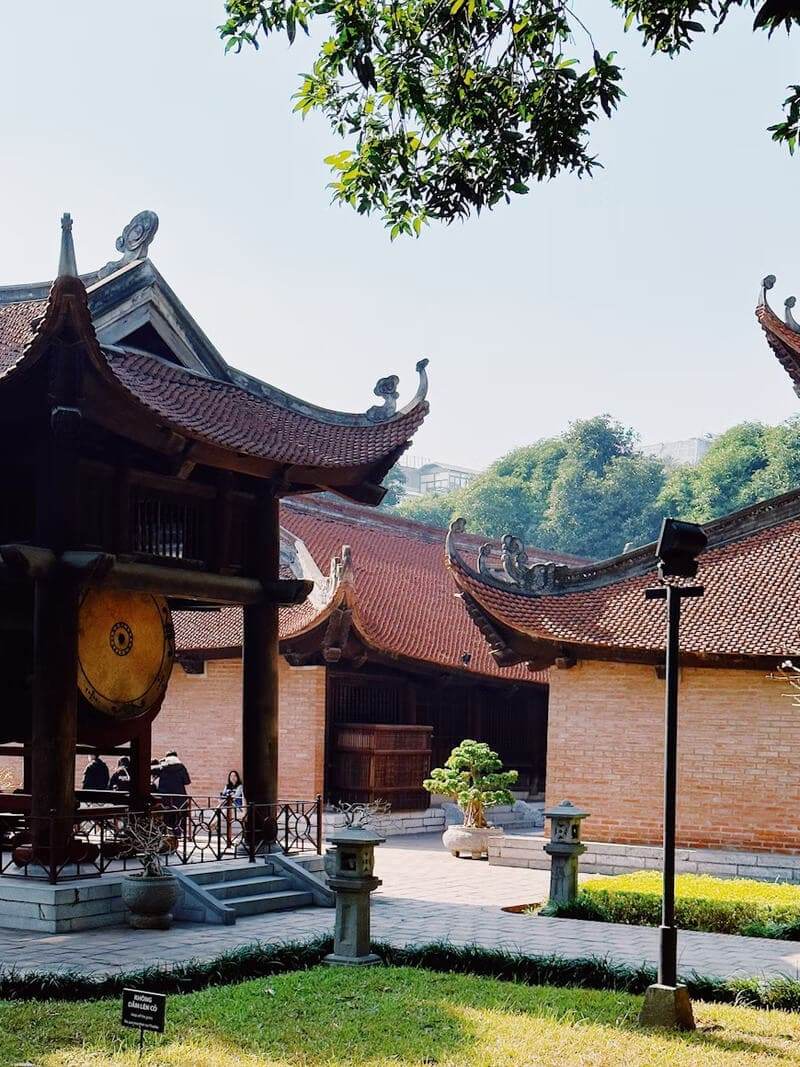
The bell and drum towers historically symbolized authority and ceremonial order in traditional Vietnamese architecture. Located in the fifth courtyard of the complex, the Van Bell and Drum Towers were used during important academic ceremonies and events in the imperial era, marking significant moments in the life of the Imperial Academy.
 |
|
Drum Tower in the Temple of Literature (Source: Unsplash) |
Situated on the western side of the complex, Giam Garden offers a peaceful retreat after exploring the courtyards of the Temple of Literature. The garden features walking paths, flowers, a tranquil lake, and an octagonal pavilion, providing a relaxing space for visitors to rest and enjoy the quiet atmosphere.
Khai Thanh Temple was built as an extension of the complex to honor Confucius’s parents, Thuc Luong Ngot and Nhan Thi, reflecting the Confucian value of filial piety. The structure was destroyed in 1947 during wartime but later rebuilt, and it remains an important part of the Van Mieu - Quoc Tu Giam heritage site today.
Since 2024, the Temple of Literature has introduced special night tours as part of Hanoi’s cultural preservation program. These evening experiences combine traditional performances with impressive 3D mapping light shows, allowing visitors to see the historic site from a completely different perspective after sunset.
Night tours are usually held on Wednesday, Saturday, and Sunday from 6:30 PM to 9:30 PM, although the schedule may change during major festivals or special events in Hanoi.
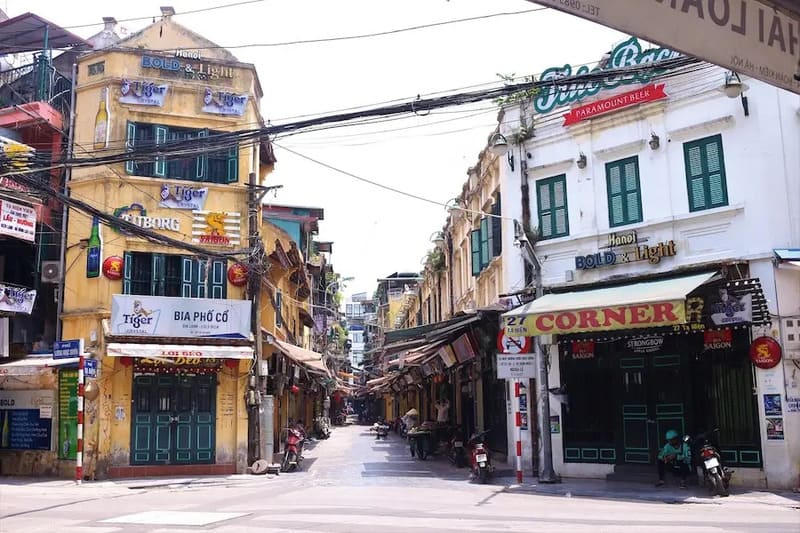
Travelers interested in exploring the capital after dark can also combine this experience with Hanoi food and culture tours, which often include visits to historic neighborhoods, street food tastings, and cultural landmarks across the Old Quarter.
There are different ways to get to The Temple of Literature if you stay in Hanoi, including:
Tip: You should search for this address on maps apps as there are different gates of the heritage site for entering and exiting: Number 58, Quoc Tu Giam Street, Dong Da, Hanoi.
 |
|
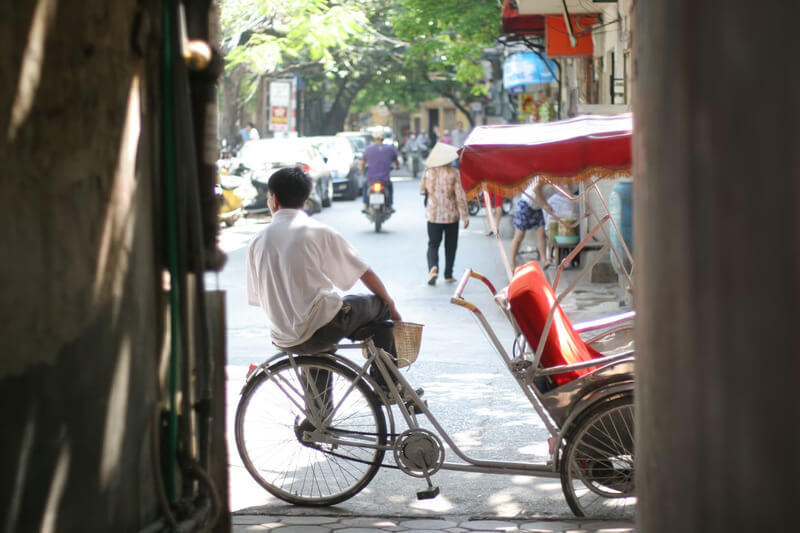
Cyclo in Hanoi, a traditional vehicle in Hanoi to travel around the attractions (Source: Unsplash) |
The Temple of Literature is most enjoyable to visit during Hanoi’s cooler and drier months. Pleasant weather allows visitors to walk comfortably through the courtyards, explore the pavilions, and admire the historic stone steles in a peaceful setting.
Visiting a historical site like Van Mieu - Quoc Tu Giam means that you need to care about the etiquette as much as its stories. Following the tips below will ensure your smooth and thoughtful exploration.
The Temple of Literature is located in the heart of Hanoi, making it easy to combine with several important historical and cultural attractions nearby. Here are some notable places to visit within a short distance.
Together, these sites make up some of the most rewarding stops on a classic Hanoi exploration, whether for a short stay or as part of a broader northern Vietnam journey.
There is no strict dress code, but visitors are expected to dress modestly when entering the Temple of Literature. Avoid wearing short skirts, sleeveless tops, or tank tops. Hats should also be removed when entering the main sanctuary areas as a sign of respect.
Most visitors spend about 60 to 90 minutes exploring the Temple of Literature. This is usually enough time to walk through the five courtyards, see Khue Van Pavilion, the stone steles, and the main sanctuary. Allow extra time if you plan to read the inscriptions, take photos, or join an audio or guided tour.
Yes. The Temple of Literature is generally easy to explore for visitors of all ages. Most pathways are flat and well-maintained, making it accessible for families with children and elderly travelers. During summer months, it is recommended to bring water, a hat, and sun protection.
Yes. Visitors can join Hanoi city tours or hire a local guide at the site to learn more about the history of Vietnam’s first national university, the imperial examination system, and traditional architecture. Many Hanoi tours include the Temple of Literature as a key cultural stop.
Small souvenir stalls can be found near the entrances and around some courtyards. Visitors can buy items such as postcards, calligraphy artworks, bookmarks, and traditional cultural souvenirs. It is recommended to bring small cash, as card payments may not always be available.
After purchasing a ticket, visitors typically follow the main pathway through the five courtyards of the Temple of Literature. The route begins at the Great Gate, continues through Khue Van Pavilion and Thien Quang Well with the 82 stone steles, then reaches the main sanctuary and the Thai Hoc area. Bilingual signs are available throughout the complex to help guide visitors.
The Temple of Literature remains one of Hanoi’s most significant cultural landmarks. With its five peaceful courtyards, iconic pavilions, and 82 stone steles honoring generations of scholars, the site reflects Vietnam’s long tradition of learning and respect for education. Walking through the courtyards and reading the engraved names on the steles offers visitors a deeper understanding of the country’s academic heritage.
If you are planning a trip to Hanoi, the Temple of Literature is an essential stop for understanding the city’s cultural and academic heritage. At Your Vietnam Travel, we can help you include it in a well-designed Hanoi itinerary, a broader northern Vietnam tour, or a tailor-made Vietnam cultural journey that combines history, local life, and scenic highlights.

 Vietnam Tours
 Cambodia Tours
 Laos Tours
 Thailand Tours
 Multi-Country Tours