Located in the very heart of the capital, the Hanoi Opera House is one of Vietnam’s most distinguished cultural landmarks. Built during the French colonial era, this elegant theater represents a harmonious blend of European architecture and Vietnamese cultural life. Beyond its striking façade, the Opera House plays an active role in Hanoi’s arts scene, hosting concerts, ballets, operas, and major cultural events throughout the year.
For travelers interested in history, architecture, or performing arts, this iconic venue offers a refined introduction to Hanoi’s artistic past and present.
In this guide from Your Vietnam Travel, you’ll explore the Hanoi Opera House’s history, architectural highlights, and practical visiting tips. You’ll also find the best things to do nearby, helping you plan a meaningful stop in the heart of Vietnam’s capital.
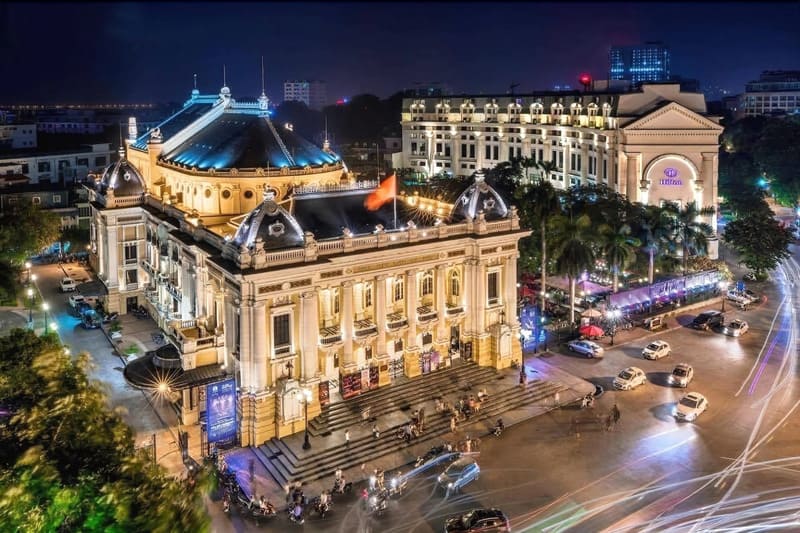
The Hanoi Opera House is located at No. 1 Trang Tien Street, Hoan Kiem District, one of the city’s most prestigious and vibrant areas. It sits at the intersection of Trang Tien, Ly Thai To, and Le Thanh Tong streets, surrounded by colonial-era buildings, luxury hotels, restaurants, and shopping streets.
The theater is only about 500 meters from Hoàn Kiếm Lake, making it easy to reach on foot. Amid modern city life and busy traffic, the Opera House stands out as a graceful architectural highlight and a focal point of the French Quarter.
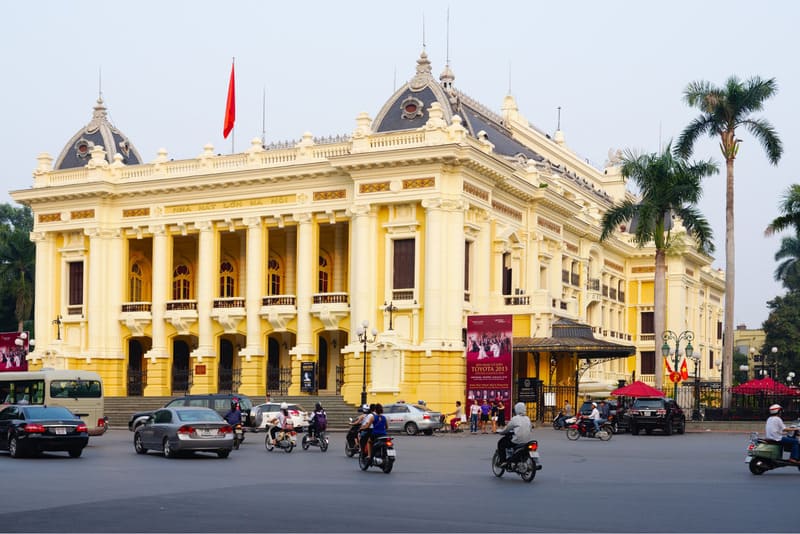
The Hanoi Opera House near Hoan Kiem Lake in the French Quarter (Source: Collected)
The Hanoi Opera House is generally open for guided tours from 10:30 AM to 12:00 PM, depending on the day and scheduled events. In some periods, tours are organized on specific days of the week, while evenings are reserved for performances, which usually start from 7:30 PM onward. As schedules may change due to special events or private functions, checking updated information in advance is recommended.
Ticket prices vary by activity:
For popular concerts or premium performances, booking tickets in advance is highly recommended to secure preferred seating and availability.
Thanks to its central location on Trang Tien Street, the Hanoi Opera House is easy to reach from most parts of the city. Depending on your travel style and starting point, you can choose from several convenient options:
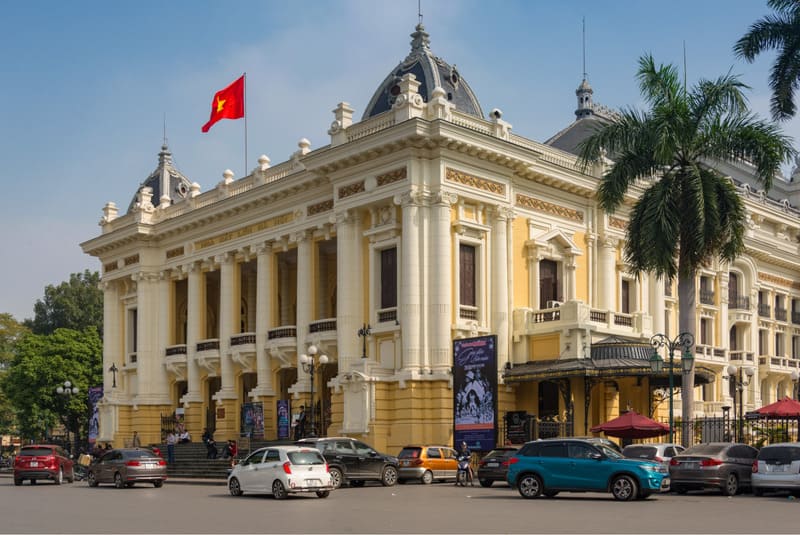
The Hanoi Opera House is easy to reach on Trang Tien Street (Source: Wikipedia)
The story of the Hanoi Opera House dates back to the early days of French colonial rule. Shortly after establishing control over Vietnam in 1883, the French administration envisioned creating a grand cultural venue in the heart of Hanoi. Construction officially began in 1901, led by architects Broyer and Harley, and the building was completed in 1911, inspired by Paris’s Palais Garnier.
In its early years, the Opera House primarily served as a cultural center for French officials and Vietnamese elites, hosting Western-style performances alongside emerging local productions. As Vietnam moved through major historical transitions, the building gradually took on a deeper national role.
During the 1940s, especially around the August Revolution, the Opera House became a gathering place for important public meetings and political events. Two milestones stand out in its history:
After decades of use, the building underwent a major restoration between 1995 and 1997, carefully preserving its original architectural character while upgrading facilities for modern performances.
Today, the Hanoi Opera House stands as both a historical witness and a premier cultural stage. It hosts symphony concerts, ballet, opera, and Vietnamese traditional arts, earning its reputation as a dream venue for local performers. More than a century after its construction, the Opera House continues to reflect Hanoi’s journey from colonial past to modern capital. Today, it stands as an enduring symbol of Vietnam’s cultural resilience and artistic revival.
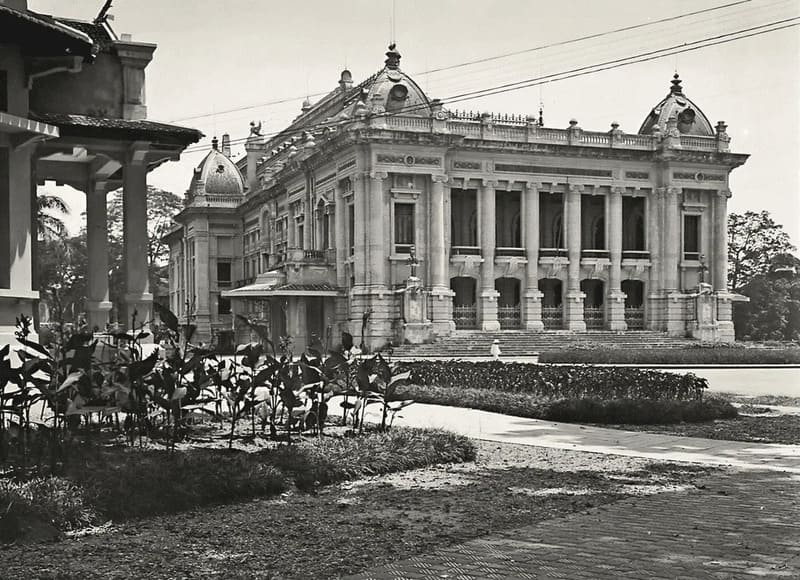
The Hanoi Opera House: Built 1901-1911, inspired by Paris Garnier (Source: Collected)
The Hanoi Opera House is widely regarded as one of the finest examples of French neoclassical architecture in Southeast Asia. Inspired by classical Greek principles and Paris’s famed opera houses, the building presents an elegant blend of neoclassical design enriched with Gothic, Baroque, Roman, and Art Nouveau influences.
Covering an area of approximately 2,600 square meters and rising to an average height of 34 meters, the Opera House faces Trang Tien Street - once the most prestigious boulevard in colonial Hanoi. Its harmonious proportions, ornate façade, and refined interior layout reflect the ambition to create a grand cultural landmark that would stand the test of time.
The first floor welcomes visitors with a sense of ceremonial grandeur. A distinctive T-shaped stone staircase leads upward, immediately drawing attention to the building’s symmetrical design. The marble-tiled flooring, decorated with classical motifs, enhances the feeling of luxury and elegance.
Inside, gilded chandeliers hang from the ceiling, complemented by antique-style copper wall lamps. The spacious lobby serves as a transition area between the exterior and the main performance spaces, offering a first impression of the Opera House’s refined European aesthetic.
The second floor is best known for the Mirror Room, named after the large mirrors placed between its doors. This space showcases classic French interior design, with ornate chandeliers, elegant furniture, and carefully restored decorative details.
Historically, the Mirror Room has hosted important state ceremonies, diplomatic receptions, chamber music concerts, and press events. One of its most remarkable features is the mosaic floor, restored using traditional techniques with Italian stone, adding both artistic and historical value to the space.
The third floor houses the main auditorium, measuring approximately 24 x 24 meters, with a grand stage and a total capacity of 598 seats arranged across three seating levels. The interior is richly decorated with Corinthian-style columns, a colorful domed ceiling, and seating inspired by 19th-century French theater design.
This level represents the heart of the Opera House, where architecture, acoustics, lighting, and color come together to create an immersive performance experience. From symphony concerts to ballet and opera, the auditorium offers excellent sound quality and clear sightlines from every seat.
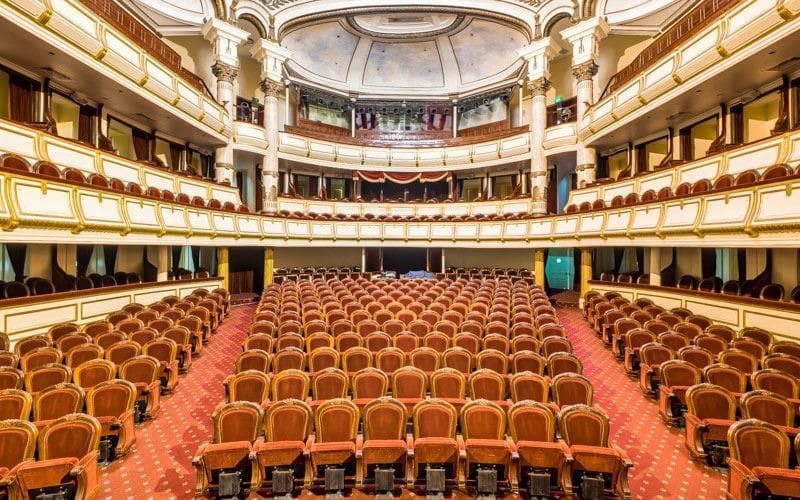
The Hanoi Opera House, a French neoclassical landmark in Hanoi (Source: Collected)
From cultural experiences to architectural appreciation and atmospheric city walks, the Hanoi Opera House offers more than just a performance venue. Here are the best things to do when visiting this historic landmark:
Attending a live show is the most immersive way to experience the Hanoi Opera House. The venue regularly hosts:
With nearly 600 seats and refined acoustics, the theater provides an intimate yet grand setting. Evening performances typically begin at 7:30 PM, and advance booking is recommended due to limited seating.
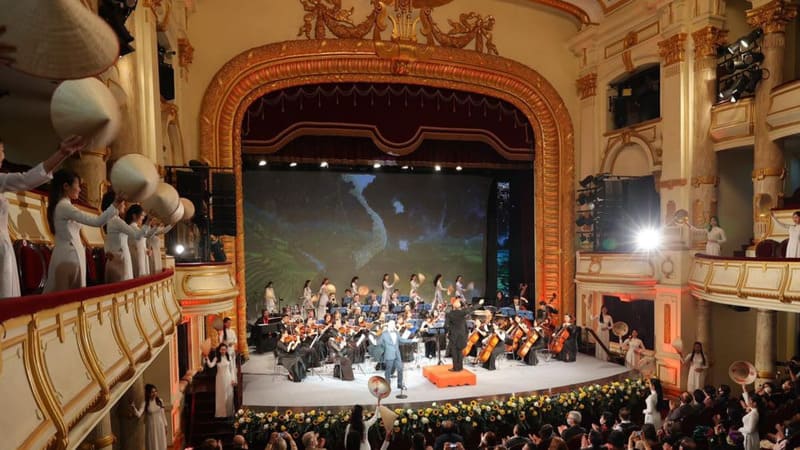
Enjoy live performances ai Hanoi Opera House (Source: Collected)
Even outside performance hours, the building itself is a masterpiece worth exploring. Architectural highlights include:
The blend of Gothic, Roman, and Art Nouveau influences makes this one of Southeast Asia’s most impressive colonial-era buildings.
At night, the Opera House is beautifully illuminated, casting a soft golden glow across the surrounding square. This area becomes a favorite spot for:
The square is spacious, safe, and offers a serene escape from the surrounding traffic, ideal for both amateur photographers and casual strollers.
After your visit, the nearby streets around the Opera House come alive with local food and drink options. Within walking distance, you’ll find:
Combine your Opera House visit with a taste of Hanoi’s lively food scene to round out your evening with flavor and local flair.
Food spots near The Hanoi Opera House for a perfect evening (Source: Collected)
Learn more: 30+ Best Things to Do and See in Hanoi, Vietnam
The Hanoi Opera House is surrounded by many of the city’s most important cultural, historical, and modern landmarks. All of the attractions below are within easy walking distance, making them ideal to combine into a half-day city exploration.
To make the most of your experience at this historic venue, keep the following practical tips in mind:
Yes, but access is limited. Visitors can enter during guided tours (when available) or with a valid performance ticket. Walk-in interior visits are not always offered, so joining a tour or attending a show is the most reliable way to explore inside.
Most visitors spend 30 - 45 minutes for exterior sightseeing or guided tours. If attending a performance, expect 1.5 - 2 hours depending on the program. Many travelers combine the visit with nearby attractions for a half-day city walk.
Yes, advance booking is strongly recommended for concerts and cultural shows, especially on weekends and during peak travel seasons. Guided tours may also have limited slots.
For exterior sightseeing and photos, early morning or evening is ideal, when the light is softer and the square feels more atmospheric.
For cultural experiences, evenings from 7:30 PM onward are best, as this is when most performances take place. Pair your visit with a walk around Hoàn Kiếm Lake for a complete central Hanoi experience.
Photography is usually allowed in public areas such as the lobby. During performances, photos and video recording are prohibited. Outside, the façade and square are popular spots for both daytime and night photography.
Casual attire is fine for exterior visits or guided tours. If attending a performance, smart-casual or semi-formal clothing is recommended to match the elegant setting. Comfortable shoes are helpful if you plan to walk around the area afterward.
The Opera House is more suitable for older children who can sit quietly and appreciate live performances. Shows may feel long or less engaging for kids under six, and audience etiquette requires minimal noise throughout the event.
Yes. The surrounding French Quarter and Trang Tien area offer plenty of cafés, ice cream shops, and restaurants - making it easy to enjoy a meal or coffee before or after your visit.
Many Hanoi half-day and full-day city tours include a stop at the Opera House (usually exterior viewing), often combined with Hoan Kiem Lake and the Old Quarter. Interior visits typically require separate tickets or performance bookings.
As one of the capital’s most distinguished cultural landmarks, Hanoi Opera House offers travelers a refined glimpse into Hanoi’s architectural elegance and vibrant performing arts scene. With its prime location near Hoàn Kiếm Lake and the Old Quarter, it fits effortlessly into both daytime heritage walks and memorable evening experiences.
From our experience designing tailor-made journeys, combining a live performance with a stroll through the French Quarter creates one of Hanoi’s most rewarding cultural evenings. If you’d like assistance arranging tickets or building a personalized Hanoi itinerary, our team at Your Vietnam Travel is always ready to help.


 Vietnam Tours
 Cambodia Tours
 Laos Tours
 Thailand Tours
 Multi-Country Tours