Hanoi offers a fascinating mix of history, culture, and everyday local life. Visitors can wander through the lively Old Quarter, walk around Hoan Kiem Lake and visit Ngoc Son Temple, or pay respects at the Ho Chi Minh Mausoleum. Cultural attractions such as the Vietnam Women’s Museum and the Vietnam Museum of Ethnology provide deeper insight into the country’s heritage.
Other highlights include the historic St. Joseph’s Cathedral, browsing the bustling Dong Xuan Market, or watching the sunrise or sunset from the iconic Long Bien Bridge. Many travelers also combine their Hanoi visit with a day trip to nearby Ninh Binh, known for its dramatic limestone landscapes.
To help you plan your trip, Your Vietnam Travel has curated an updated list of 30+ best things to do and see in Hanoi, Vietnam, covering both famous landmarks and lesser-known spots loved by locals.
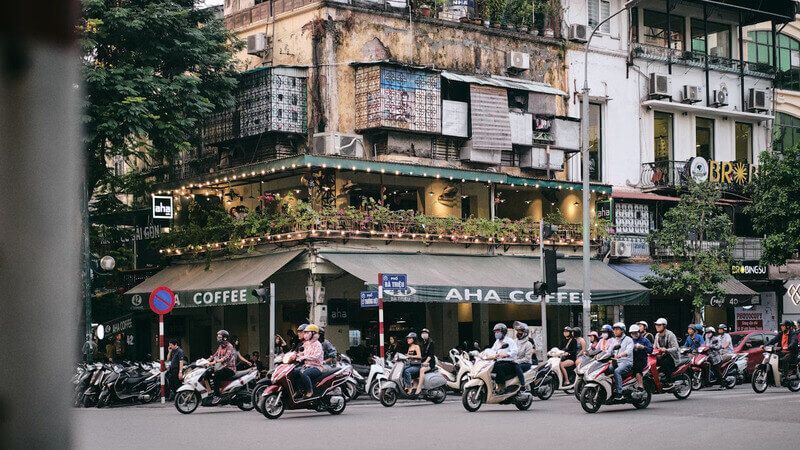
The Old Quarter is the historic and cultural heart of Hanoi, famous for its network of 36 traditional guild streets. Each street was historically associated with a specific trade, such as silver on Hang Bac, bamboo products on Hang Vai, and lanterns or festival decorations on Hang Ma. Today, these narrow streets remain lively with small shops, local eateries, and colorful storefronts.
Most visitors begin exploring near Hoan Kiem Lake before wandering north toward Dong Xuan Market. Along the way, you’ll pass busy wet markets, small temples, and local bia hoi corners where residents gather in the evenings. The area is full of everyday scenes that capture Hanoi’s character, from balcony plants and red altars to the endless flow of scooters.
The Old Quarter is also perfect for spontaneous discoveries. You can stop for quick street food snacks, step into hidden cafés tucked inside old houses, or simply enjoy the vibrant atmosphere of Hanoi’s busiest neighborhood.
For travelers who want deeper insight into the area’s history and traditions, guided walking tours and street food tours are also popular options, especially if you’d like to explore Hanoi beyond the usual self-guided route.
 |
|
A busy corner of Hanoi Old Quarter (Source: Unsplash) |
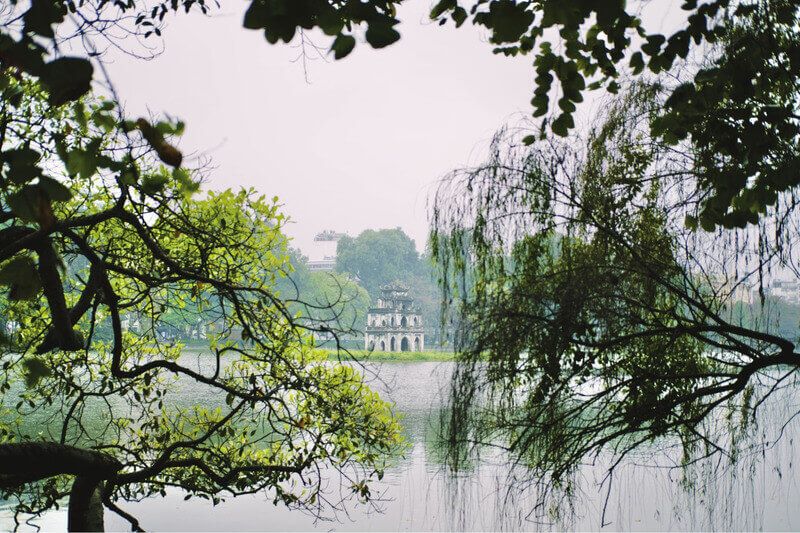
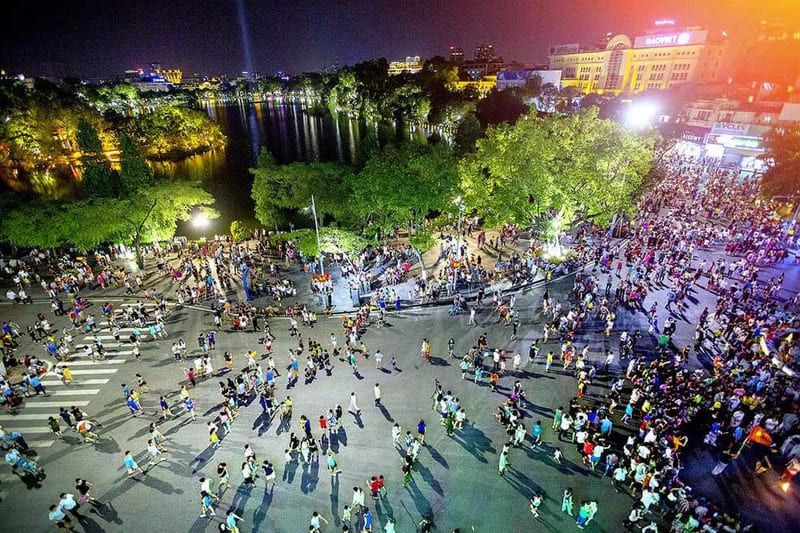
Hoan Kiem Lake is one of Hanoi’s most peaceful and scenic landmarks. In the early morning or at sunset, locals gather here to exercise, practice tai chi, and enjoy the fresh air. On weekends, the surrounding streets become pedestrian-only, creating a lively space for street performances and traditional games.
A highlight of the area is Ngoc Son Temple, reached by crossing the iconic red The Huc Bridge. The temple sits on a small island and offers beautiful views of the lake and surrounding city. With its open space, shady trees, and calm atmosphere, Hoan Kiem Lake is an ideal place for a relaxing walk before or after exploring the Old Quarter.
 |
|
Hoan Kiem Lake in Hanoi (Source: Unsplash) |
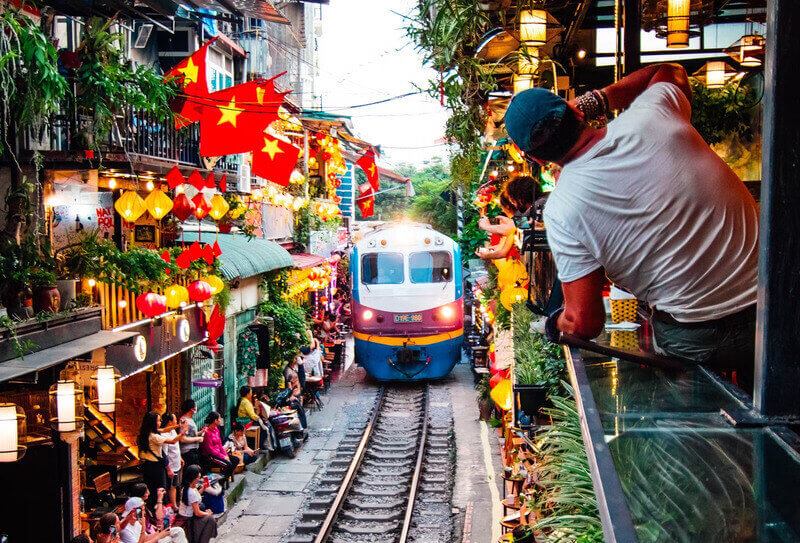
Hanoi Train Street is a narrow railway track that runs directly through a residential neighborhood, where trains pass just meters from homes and cafés. It has become a popular photo spot thanks to the unique scene of trains moving through such a tight urban space.
Access to the area is often controlled for safety reasons. Many entrances are barricaded, and visitors may need to enter through a trackside café, where staff guide guests to designated viewing spots during scheduled train times. Conditions can change frequently, so it’s best to check the situation before visiting and follow all instructions from local staff or authorities.
For photography, daytime visits are usually calmer and offer better lighting, while afternoons and evenings feel more atmospheric but can be crowded. Treat the experience as a short, supervised stop, and always stay clear of the tracks for safety.
Many visitors combine this stop with a broader local exploration that includes hidden streets, café culture, and less-touristy corners of Hanoi.
 |
|
Having Coffee at Hanoi Train Street - one of the best things to do in Hanoi (Source: Unsplash) |
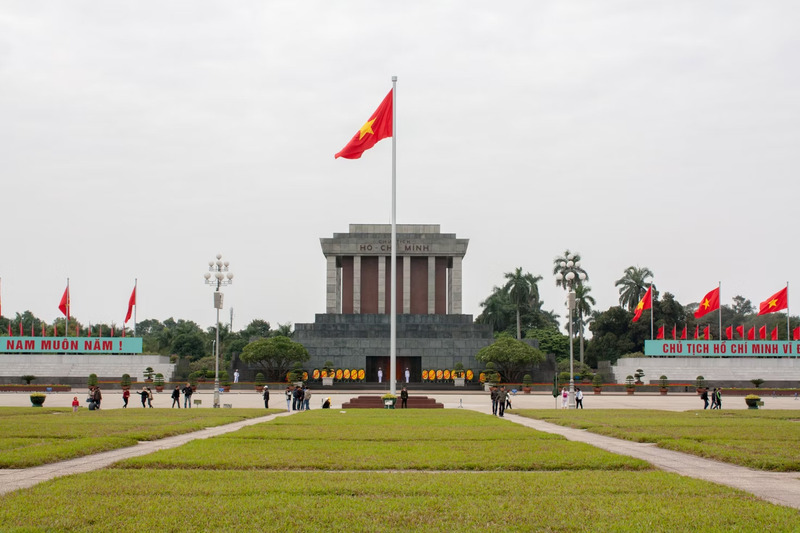
Located in Ba Dinh Square, the Ho Chi Minh Mausoleum is one of Hanoi’s most important historical sites. Visitors can pay their respects to President Ho Chi Minh before exploring nearby landmarks such as the Presidential Palace grounds, Ho Chi Minh’s stilt house, the Ho Chi Minh Museum, and the iconic One Pillar Pagoda.
The Mausoleum is open in the mornings from Tuesday to Thursday and on weekends, while it remains closed on Mondays and Fridays. Arriving early is recommended to avoid long queues and the midday heat. Visitors should dress modestly, and photography is not allowed inside the Mausoleum.
If you are in the area in the evening, you can also witness the daily flag-lowering ceremony at Ba Dinh Square around 9 p.m., a brief yet meaningful moment that reflects the site’s national significance.
 |
|
Ho Chi Minh Mausoleum in Hanoi (Source: Unsplash) |
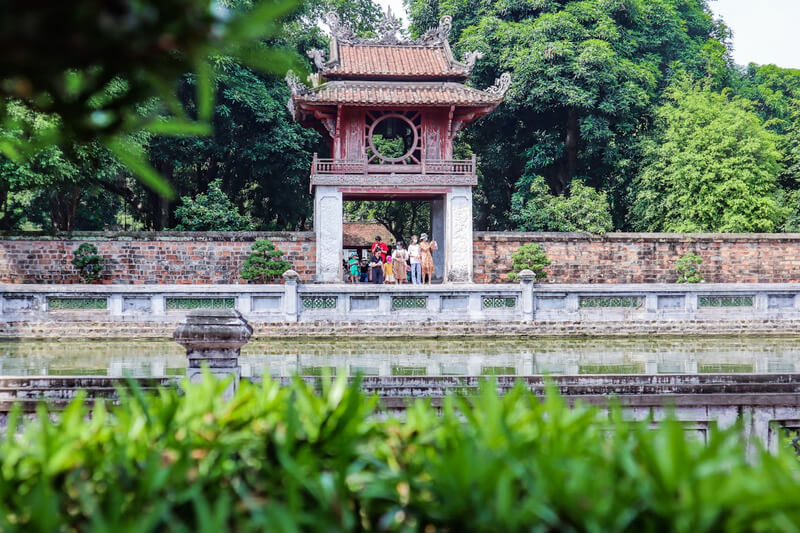
Founded in 1070, the Temple of Literature (Van Mieu - Quoc Tu Giam) is one of Hanoi’s most important cultural landmarks and the site of Vietnam’s first national university. The complex is arranged around five peaceful courtyards connected by traditional gates, gardens, and ponds.
Highlights include the iconic Khue Van Cac pavilion and the famous stone steles mounted on turtle statues, which record the names of doctoral scholars from 1442 to 1779. These monuments reflect Vietnam’s long tradition of education and respect for learning.
Visit early in the morning or later in the afternoon for softer light and fewer tour groups. Allow about 60 to 90 minutes to explore the courtyards, read the historical displays, and enjoy the calm atmosphere. The Temple of Literature offers a quiet cultural contrast to the busy streets of the Old Quarter.
 |
|
Khue Van Cac, an iconic symbol of the Temple of Literature in Hanoi (Source: Unsplash) |
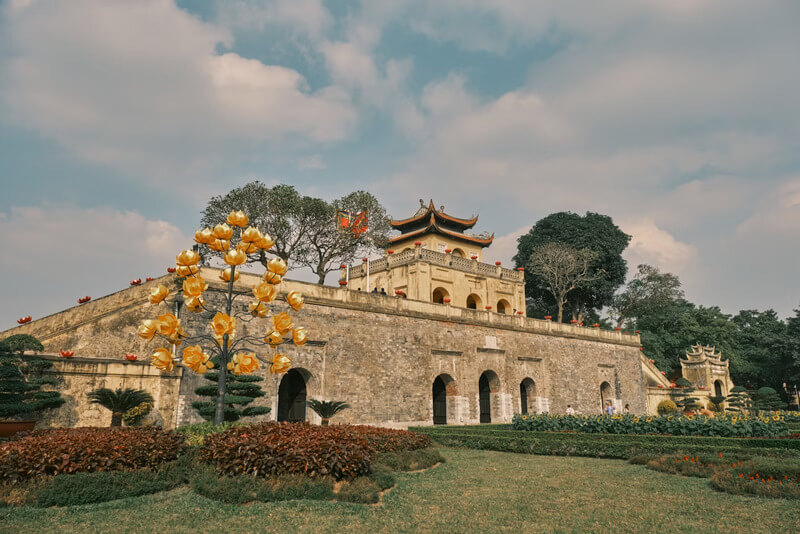
The Imperial Citadel of Thang Long is a UNESCO World Heritage Site that reflects more than a thousand years of Vietnamese history. Once the political center of several dynasties, the complex reveals how Hanoi evolved from an imperial capital to a modern city.
Begin at Doan Mon Gate and continue along the central axis toward the Kinh Thien Palace terrace, where carved stone dragon steps from the 15th century remain one of the most recognizable features. Nearby sites such as Hau Lau and the D67 House and bunker offer a striking contrast, with preserved maps, communication equipment, and reinforced structures from the Vietnam War era.
If time allows, visit the archaeological area at 18 Hoang Dieu across the street. Excavations here uncovered ancient wells, roof tiles, and palace foundations from different dynasties, helping confirm the site’s historical importance.
 |
|
The Imperial Citadel of Thang Long (Source: Unsplash) |
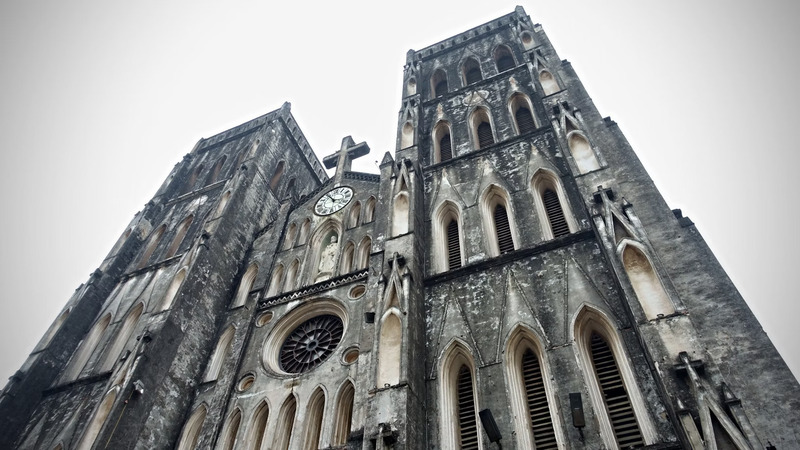
Completed in 1886, St. Joseph’s Cathedral is one of Hanoi’s most recognizable colonial landmarks. Located just west of Hoan Kiem Lake, the cathedral features twin bell towers and Gothic-style arches inspired by Notre-Dame de Paris.
The interior showcases stained-glass windows, religious statues, and an active parish community. On Sundays, Mass often draws large crowds, with worshippers gathering both inside the church and around the square.
The cathedral was built on the former site of Bao Thien Pagoda and reopened for worship in 1990 after several decades of closure following 1954. Visit in the late afternoon or early evening for beautiful views of the illuminated façade. Afterward, you can relax at one of the many cafés along nearby Nha Tho Street.
 |
|
St. Joseph’s Cathedral on Nha Tho Street, Hanoi (Source: Unsplash |
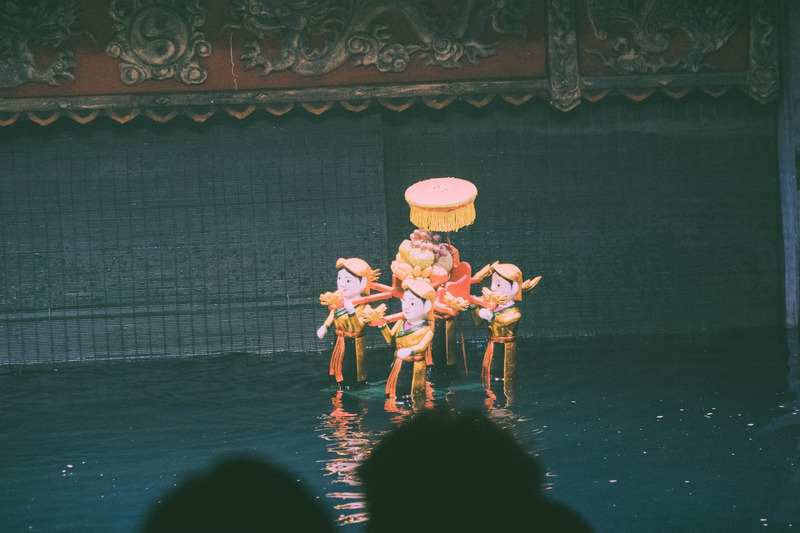
Water puppetry is a traditional art form from northern Vietnam that dates back more than 1,000 years. One of the best places to experience it in Hanoi is the Thang Long Water Puppet Theatre near Hoan Kiem Lake.
During the 50-minute performance, colorful wooden puppets move across a shallow water stage while live musicians accompany the scenes with drums, cymbals, and traditional instruments. The stories often depict rural life, folklore, and legends from Vietnamese culture.
The theatre runs several shows daily, making it easy to include in an evening itinerary around Hoan Kiem Lake. Weekend performances can sell out quickly, so booking tickets in advance is recommended.
 |
|
Traditional Water Puppet Show in Hanoi (Source: Unsplash) |
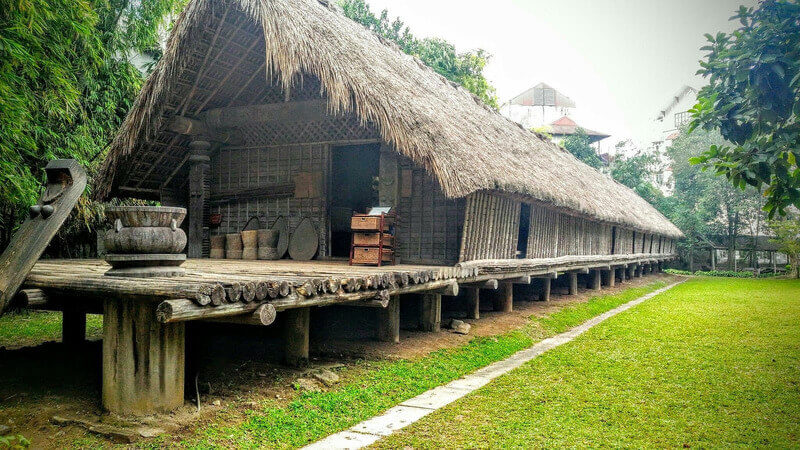
Located in the Cau Giay District, the Vietnam Museum of Ethnology offers a comprehensive introduction to the cultures of Vietnam’s 54 ethnic groups. The museum features well-organized indoor galleries displaying traditional clothing, tools, and cultural artifacts, with clear explanations that make it easy for visitors to understand the country’s diverse heritage.
Outside, a spacious garden showcases full-scale reconstructions of traditional homes, including longhouses, stilt houses, and unique tomb sculptures from different ethnic communities. These structures give visitors a closer look at traditional architecture and daily life in Vietnam’s highland regions.
Allow about 1.5 to 2 hours to explore both the indoor exhibits and outdoor displays at a relaxed pace. On weekends, the museum sometimes hosts cultural demonstrations and craft activities that offer an even deeper insight into Vietnam’s rich traditions.
 |
|
Stilt house in Vietnam Museum of Ethnology (Source: Tess V - Tripadvisor) |
The Vietnamese Women’s Museum offers a powerful look at the roles women have played in Vietnamese society, from family life and traditional crafts to trade and wartime service. The exhibits combine photography, artifacts, and personal stories that highlight everyday experiences and historical contributions.
Displays explore topics such as marriage customs, market life, and women’s involvement in national struggles. The museum is compact, well organized, and easy to explore, making it one of Hanoi’s most engaging cultural stops.
Located near Hoan Kiem Lake and the Old Quarter, it’s easy to include in a central sightseeing route. Plan about one hour for a quick visit, or closer to two hours if you want to read the exhibits in detail. The museum also hosts occasional temporary exhibitions and cultural talks.
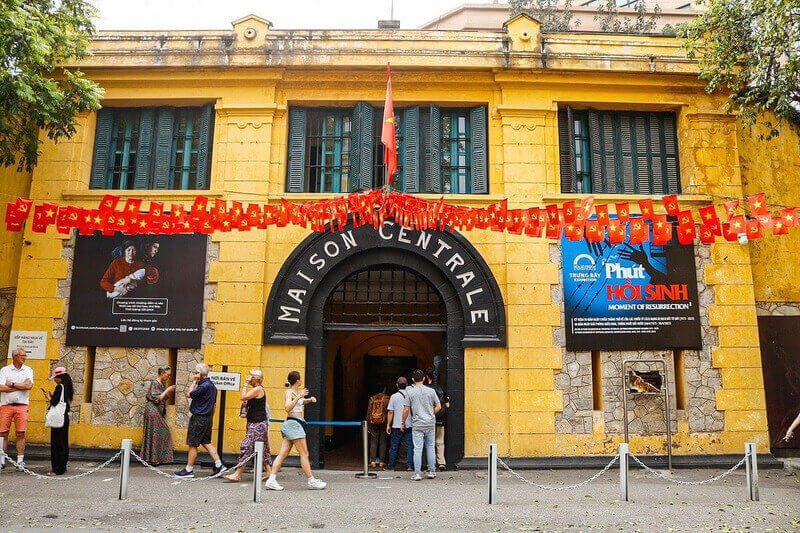
Hoa Lo Prison is one of Hanoi’s most significant historical museums, documenting two key periods in Vietnam’s history. The site was originally used by the French colonial administration to imprison Vietnamese revolutionaries, and later during the Vietnam War it held American prisoners of war.
Inside the museum, visitors can see reconstructed prison cells, original artifacts such as leg irons, and bilingual displays explaining the prison’s history. One of the most moving areas commemorates female prisoners who were held here during the colonial period.
The museum is open daily from 8:00 a.m. to 5:00 p.m., and entry tickets are reasonably priced. Allow at least one hour to explore the exhibits. Its central location makes it easy to combine with nearby attractions such as the Temple of Literature or the Old Quarter.
 |
|
Hoa Lo Prison, the museum of wartime during the French colonial time (Source: nom - Tripadvisor) |
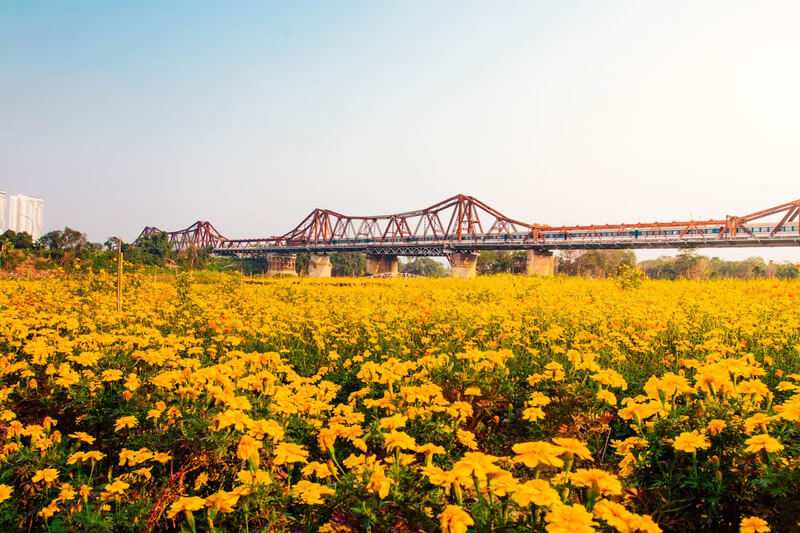
Long Bien Bridge is one of Hanoi’s most historic landmarks, built between 1899 and 1902 by the Eiffel company and originally known as the Paul Doumer Bridge. Stretching across the Red River, the bridge has witnessed more than a century of the city’s history.
Visitors can walk along the pedestrian path to enjoy wide views of the river, small farming islands, and the busy traffic moving below. The bridge is especially atmospheric at sunrise or sunset, when the rust-colored steel structure glows in the warm light.
Despite suffering damage during wartime, Long Bien Bridge has remained a symbol of Hanoi’s resilience. For a memorable experience, combine a walk across the bridge with sunset views from the nearby river dike and a visit to local markets in the surrounding neighborhoods.
 |
|
Thong Nhat Train going past Long Bien Bridge, Hanoi (Source: Unsplash) |
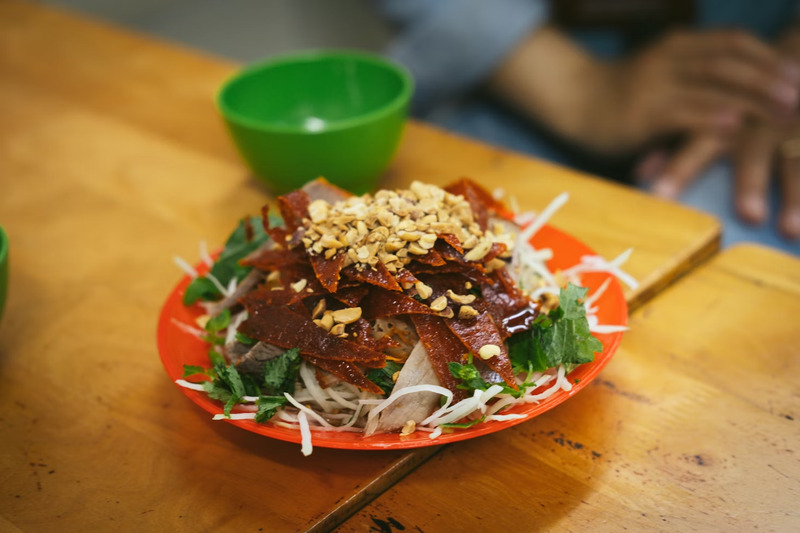
Hanoi is famous for its vibrant street food scene, where small stalls and local eateries serve some of Vietnam’s most iconic dishes. Start with classics such as bun cha (grilled pork with vermicelli and herbs), pho (beef or chicken noodle soup), and cha ca (turmeric-marinated fish cooked with dill). As you explore the streets, you’ll also find sticky rice snacks, roasted chestnuts, and sweet coconut desserts sold by vendors along busy lanes and night markets.
The best time to try street food is in the early evening, when stalls are freshly prepared and the atmosphere is lively. Bring small cash for quick purchases and take your time sampling different dishes, as portions can add up quickly.
For travelers who want a deeper introduction to local cuisine, joining a small-group street food tour can be a great option. These tours often visit hidden vendors and family-run stalls that are easy to miss when exploring on your own.
 |
|
Papaya salad with beef jerky, one of the popular street foods in Hanoi (Source: Unsplash) |
Coffee culture is an essential part of daily life in Hanoi. A classic Vietnamese coffee is brewed slowly using a phin filter, producing a strong, rich drink often served with condensed milk. Many travelers start with this traditional style before exploring the city’s cafés.
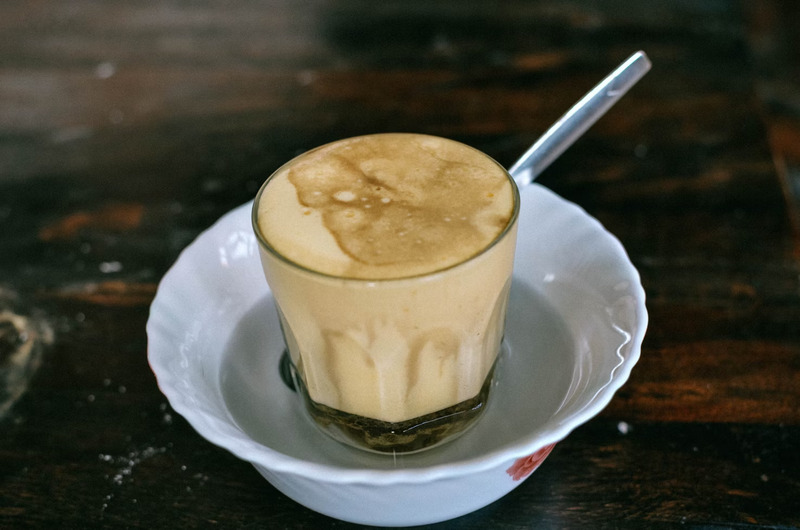
Another must-try specialty is egg coffee (cà phê trứng), a Hanoi invention dating back to 1946. Created by Nguyen Van Giang during a milk shortage, the drink combines hot coffee with a creamy layer made from whipped egg yolk and sugar, creating a smooth, dessert-like flavor.
Giang Café, founded by the drink’s creator, remains one of the most famous places to try the original version. Today, many cafés around Hanoi also serve iced variations. Enjoying a cup of coffee in a small café near Hoan Kiem Lake or the Old Quarter is a perfect way to pause between sightseeing.
Coffee stops like these are often included in curated food and culture experiences around the Old Quarter.
 |
|
Egg coffee, one of Hanoi locals’ favourite drinks (Source: Unsplash) |
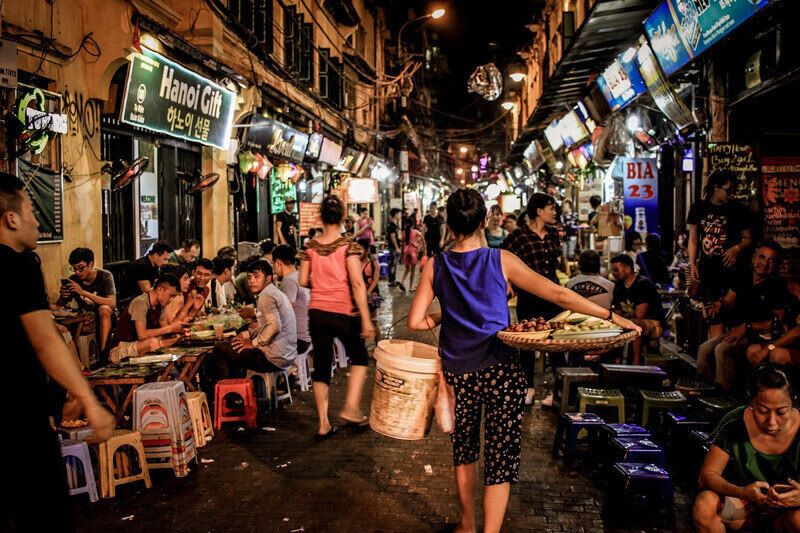
Ta Hien Street, located in the heart of the Old Quarter, is one of the liveliest places to experience Hanoi’s nightlife. Known as “Beer Street,” the area fills with rows of small bars and plastic stools where locals and travelers gather to enjoy bia hơi, Vietnam’s fresh draft beer, along with grilled snacks and street food.
The atmosphere becomes busiest from around 7 p.m. to midnight, when the narrow street is packed with music, conversation, and people moving between nearby bars. It’s a social and energetic place, perfect for experiencing Hanoi’s casual evening culture.
If you prefer a quieter experience, consider arriving earlier in the evening or sitting slightly away from the busiest corner spots. On crowded nights, keep your belongings secure and settle bills promptly, as tables often turn over quickly.
 |
|
Ta Hien, a Hanoi Old Quarter’s street, famous for beer and snacks (Source: Unsplash) |
For a different perspective on Hanoi, consider dining at a rooftop bar or upscale restaurant with views of Hoan Kiem Lake or West Lake. These venues offer wide city views, especially at sunset, and create a relaxed setting for dinner or evening drinks after a day of sightseeing.
Many well-reviewed rooftops serve cocktails, wine, and light dishes during happy hour, while higher-end restaurants provide a more refined dining experience. Options range from small terraces in the Old Quarter to modern lounges in high-rise buildings across the city.
Reservations are recommended on weekends, as popular rooftop spots can fill quickly. Evenings can also be breezy, especially near the lakes, so bringing a light layer is a good idea.
Joining a cooking class is a great way to learn more about Vietnamese cuisine while spending time with local chefs. Many classes begin with a visit to a local market, where participants learn about fresh herbs, spices, and ingredients commonly used in Vietnamese dishes.
After the market visit, the class moves to the kitchen for hands-on cooking. Typical recipes include fresh spring rolls, bun cha, or caramelized pork. Instructors guide participants through preparation techniques, seasoning with fish sauce, and traditional plating.
Most classes end with a shared meal where you enjoy the dishes you’ve prepared. Many programs also offer small group sizes and hotel pickup, making it an easy activity to fit into a busy sightseeing schedule.
Travelers with a strong interest in Vietnamese cuisine may also enjoy browsing our food and culinary tours in Vietnam for longer itinerary ideas.
Exploring Hanoi by scooter or cyclo offers a unique way to see the city from a local perspective. Scooter tours allow you to cover more ground in a short time, often passing through bridges, backstreets, lakeside roads, and small neighborhood cafés. These tours are ideal for travelers who want to experience Hanoi’s busy streets and discover hidden corners of the city.
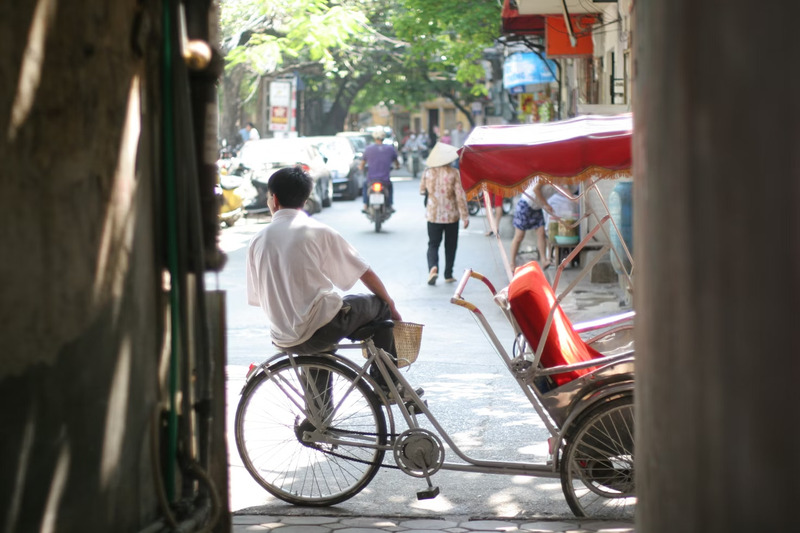
A cyclo ride, on the other hand, provides a slower and more relaxed experience. Seated in the front carriage, visitors can enjoy open views while passing landmarks such as Hoan Kiem Lake, the French Quarter, Dong Xuan Market, and nearby historic streets. It’s a comfortable option for first-time visitors who prefer sightseeing at a gentle pace.
For those unfamiliar with Hanoi’s traffic, guided evening scooter tours are a popular choice. Experienced drivers handle navigation and safety while you enjoy the city’s nighttime atmosphere and local food stops. Travelers who prefer a slower pace may also enjoy a half-day cycling experience through Hanoi’s quieter riverside areas and hidden villages.
 |
|
Cyclo rider on Hanoi street (Source: Unsplash) |
Shopping in Hanoi’s Old Quarter is a great way to discover traditional crafts and local souvenirs. Many streets are still associated with specific trades, and Hang Gai Street is especially well known for silk products. Here you’ll find silk scarves, clothing, and tailor shops, along with boutiques selling linen, lacquerware, and ceramics.
Much of the silk sold in this area comes from nearby Van Phuc Silk Village, one of Vietnam’s most famous silk-producing communities. When shopping, take time to compare quality, check the fabric weave and stitching, and ask questions about the material.
Polite bargaining is common in smaller shops, while fixed-price stores often offer higher-end items and a more relaxed shopping experience. Exploring a few nearby streets in the Old Quarter also reveals other specialties, making it easy to find unique gifts and souvenirs to bring home.
Located on a small island just off Thanh Nien Road, Tran Quoc Pagoda is widely regarded as the oldest Buddhist temple in Hanoi, with origins dating back to the 6th century. Surrounded by the calm waters of West Lake, the pagoda offers a peaceful atmosphere and scenic views.
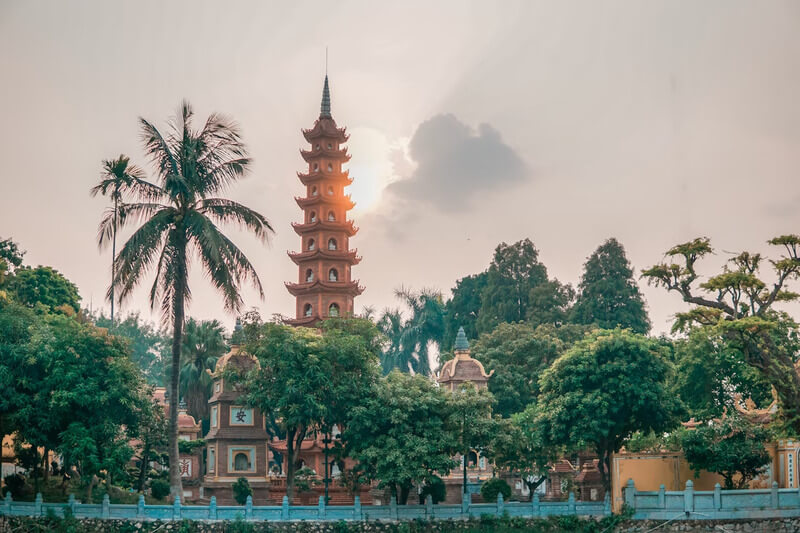
The complex features a tall red stupa, traditional temple buildings, and shaded gardens with frangipani trees. Many visitors come here not only for its historical and spiritual significance but also for the tranquil lakeside setting.
Entry is usually free, and the pagoda is generally open from around 8:00 a.m. to 4:00 p.m. Visitors should dress modestly, covering shoulders and knees. A visit to Tran Quoc Pagoda is especially enjoyable around sunset, when you can continue walking along West Lake and stop at nearby cafés to watch the light reflect across the water.
 |
|
Tran Quoc Pagoda with its impressive tower (Source: Unsplash) |
Located about 7-8 km across the Red River in Gia Lam District, Le Mat Village is known for its long tradition of snake farming and distinctive snake-based cuisine. Some local restaurants offer multi-course “snake banquets” that may include grilled snake, stir-fried dishes, spring rolls, porridge, and soup.
For visitors interested in this unusual culinary experience, it’s best to choose a reputable and well-reviewed restaurant or join a guided visit. Confirm what is included in the meal beforehand and ask about sourcing and preparation to ensure safety. The journey from central Hanoi typically takes 30-45 minutes by taxi or ride-hailing service. This experience is not for everyone, so feel free to skip dishes you are not comfortable trying.
The Perfume Pagoda is one of the most famous pilgrimage sites in northern Vietnam, located about 60-70 km south of Hanoi. A typical day trip begins with a drive of around two hours to Duc Wharf, followed by a scenic boat ride along the Yen Stream through limestone landscapes.
From the boat landing, visitors can take a cable car or hike up to Huong Tich Cave, the spiritual center of the complex. Along the way, stops often include Thien Tru Pagoda and several smaller temples and shrines.
Most tours depart Hanoi in the morning and last a full day. Expect steps, incense-filled temples, and scenic views along the river. The site is busiest during the spring festival season, so visiting outside peak months offers a quieter experience.
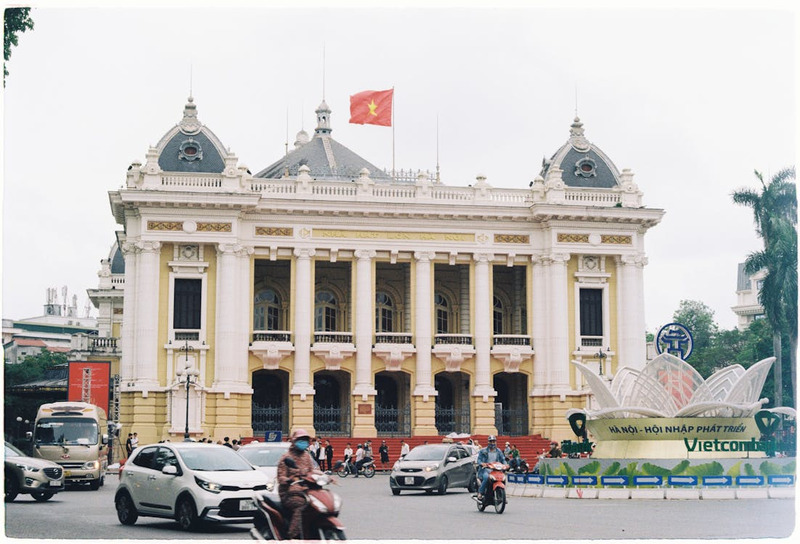
The Hanoi Opera House is one of the city’s most elegant colonial-era landmarks. Built by the French between 1901 and 1911, the neoclassical building stands prominently in August Revolution Square and reflects architectural influences from European opera houses.
Inside, the 598-seat auditorium hosts a variety of performances, including ballet, symphony concerts, and contemporary cultural shows. Checking the performance schedule in advance is recommended if you plan to attend an evening event.
Even if you do not see a show, the Opera House is worth visiting for its architecture and historical significance. The illuminated façade is especially photogenic at dusk, and the surrounding area offers plenty of restaurants and cafés for dinner before or after a performance.
 |
|
Hanoi Opera House, one of the famous buildings in Hanoi (Source: Unsplash) |
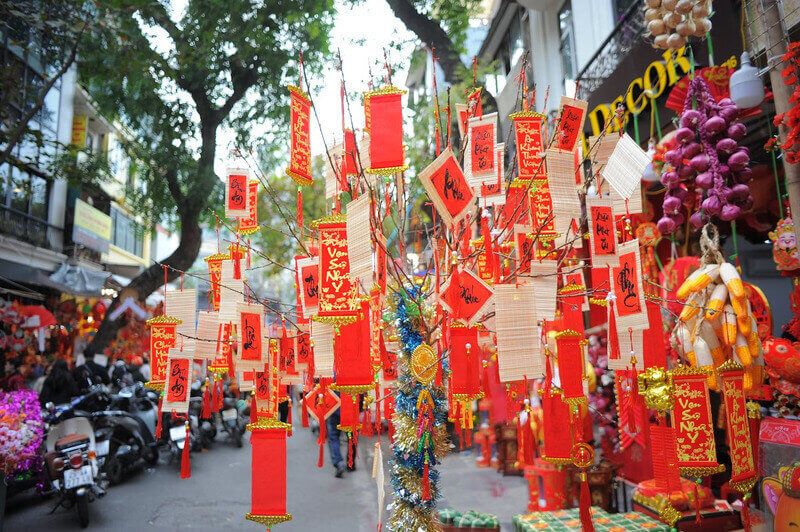
Tet, the Vietnamese Lunar New Year, is the most important holiday in the country. In the weeks leading up to the festival, Hanoi fills with colorful decorations, flower markets, and festive displays as families prepare for the new year.
During the main holiday days, the city becomes noticeably quieter as many locals travel to their hometowns and numerous shops, restaurants, and attractions close temporarily. However, the peaceful atmosphere can offer a unique side of Hanoi. Visitors can enjoy calm walks around Hoan Kiem Lake, explore festive flower markets, and see traditional decorations throughout the city.
If your travel plans focus on food tours, shopping, or busy nightlife, it may be better to visit before or after Tet, when most businesses operate normally and transport services are more consistent.
 |
|
Tet Festival shop decorations on Hang Ma Street, Hanoi (Source: Unsplash) |
The Mid-Autumn Festival, usually held in September or October, brings vibrant colors and festive energy to Hanoi. Streets in the Old Quarter, especially Hang Ma Street, fill with lantern displays, toy stalls, and beautifully packaged mooncakes.
During the evenings, the area becomes lively with families, children carrying lanterns, and shops decorated with glowing lights. Bakeries across the city also showcase seasonal mooncake collections, including traditional versions with salted egg yolk as well as modern flavors.
Some cultural centers and workshops organize activities such as lantern-making or mooncake tasting during the festival period. Visiting just after sunset is ideal, when lanterns begin to glow and the weather becomes cooler for walking around the Old Quarter.
Bún Chả Hương Liên is one of Hanoi’s most famous places to try bun cha, a traditional dish of grilled pork served with rice vermicelli, fresh herbs, and a sweet-savory dipping broth.
The restaurant gained international attention in May 2016, when former U.S. President Barack Obama and chef Anthony Bourdain shared a meal here during Bourdain’s travel show. Photos and memorabilia from that visit still decorate the walls, and many visitors order the well-known “Obama Combo.”
Located at 24 Le Van Huu Street in Hai Ba Trung District, the restaurant is simple and casual but highly popular with both locals and travelers. Expect queues during peak meal times, though tables usually turn over quickly.
 |
|
Enjoy the authentic taste of Hanoi’s Bún Chả at Hương Liên (Source: Unsplash) |
For a quieter contrast to the busy Old Quarter, take a walk through Hanoi’s French Quarter, known for its wide boulevards, colonial architecture, and elegant public buildings. The area is home to landmarks such as the Hanoi Opera House, Trang Tien Plaza, the National Museum of Vietnamese History, and the historic Sofitel Legend Metropole Hotel.
All of these sites are within easy walking distance of Hoan Kiem Lake, making the neighborhood ideal for a relaxed sightseeing loop. Photographers often enjoy the views along streets like Trang Tien and Dien Bien Phu, where colonial facades and tree-lined avenues create a distinctive atmosphere.
A simple walk from the lake toward the Opera House and nearby museums can easily fill one or two hours, especially if you pause at one of the many cafés along the way.
Around Hoan Kiem Lake, especially in the evenings and on weekends, visitors may be approached by local students who want to practice their English. These short conversations are usually friendly and informal, giving travelers a chance to share stories while helping students improve their speaking skills.
Most interactions last only a few minutes and often become a memorable cultural exchange. If you are open to chatting, a brief conversation can brighten someone’s day. If you prefer not to join, a polite response is usually well understood.
These spontaneous encounters are often mentioned by travelers as one of the small but meaningful experiences that reflect Hanoi’s welcoming atmosphere.
Hanoi’s café culture often hides behind narrow alleys, inner courtyards, and staircases above busy streets. Many of the city’s most charming cafés are tucked away in unexpected places, sometimes marked only by a small sign at the entrance.
Popular spots such as Loading T, Tranquil Books & Coffee, and Hidden Gem Café are known for their unique interiors, cozy atmosphere, and signature drinks like egg coffee. Part of the experience is discovering these hidden spaces, where a quiet balcony or retro-style room can overlook the lively streets below.
Stopping at one of these cafés is a great way to take a break during a day of exploring, especially when walking between the Old Quarter and Hoan Kiem Lake.
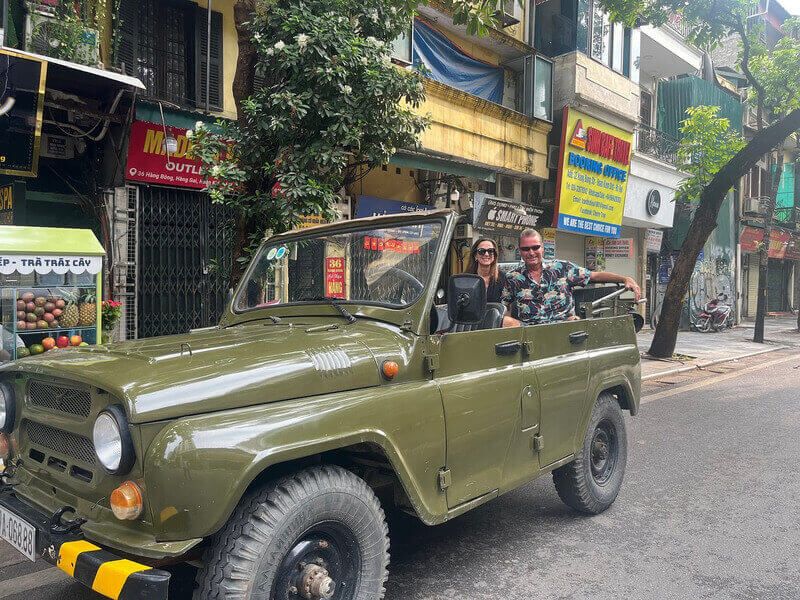
A vintage jeep tour in Hanoi offers a fun and unique way to explore the city, especially if you want to combine famous landmarks with backstreets, local markets, and food stops. Classic GAZ-69 or UAZ military-style jeeps take visitors through a mix of main landmarks and lesser-known neighborhoods, from historic bridges and narrow backstreets to lakeside viewpoints and local markets.
Most tours last a few hours and include several photo stops along the way. Many operators offer departures in the morning, afternoon, or evening, with some tours adding street food tastings or visits to nearby areas such as Le Mat (Snake Village).
For travelers who prefer not to navigate Hanoi’s busy traffic themselves, a guided jeep tour provides an open-air sightseeing experience with a local driver and guide sharing stories about the city.
 |
|
Visitors travelling with the Hanoi Jeep Tour (Source: Tripadvisor) |
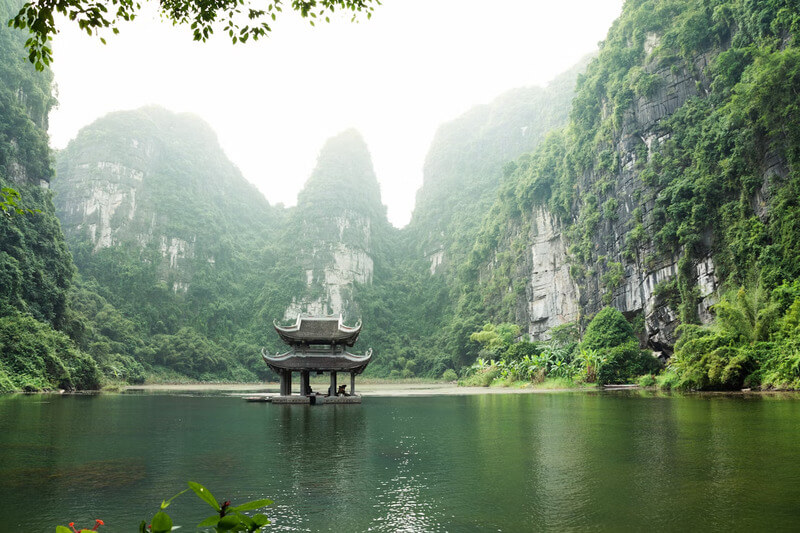
Located about two hours south of Hanoi, Ninh Binh is one of the most popular day trips from Hanoi, and it also fits beautifully into a longer North Vietnam itinerary. Known for its dramatic limestone karst landscapes, the region offers scenic boat rides, historic temples, and peaceful countryside views.
Visitors often take a sampan boat trip at Trang An or Tam Coc, where local rowers guide boats along winding rivers between towering cliffs and caves. Other highlights include the ancient temples of Hoa Lu, cycling routes through rural villages, and the Mua Cave viewpoint, which provides sweeping panoramic views over the surrounding valley.
Many tours depart Hanoi around 8 a.m. and return by early evening, typically including hotel pickup and stops at several attractions. Independent travelers can also reach Ninh Binh by train or limousine bus, then arrange local transport upon arrival.
If you have extra time, staying overnight allows you to experience the area in the early morning, when the misty landscapes and quieter atmosphere make the scenery even more memorable.
 |
|
A tranquil view in Trang An, Ninh Binh (Source: Unsplash) |
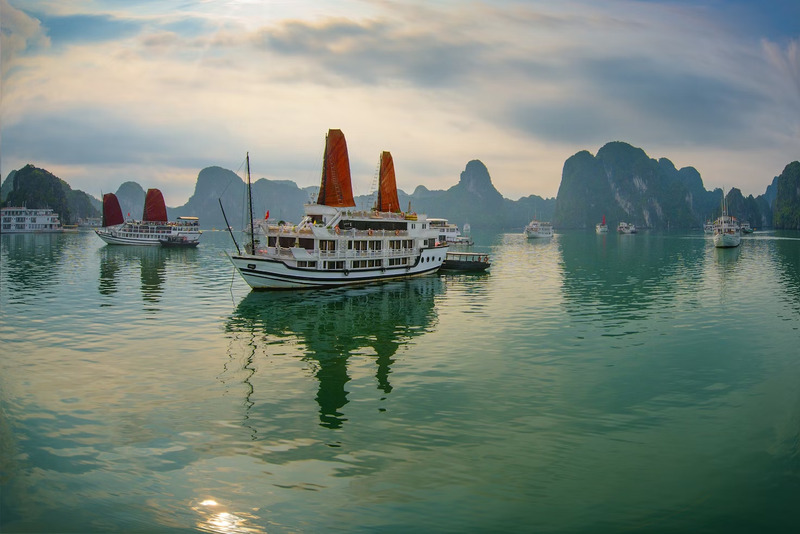
Halong Bay, a UNESCO World Heritage Site, is one of the most spectacular destinations in northern Vietnam. Known for its thousands of limestone islands rising from emerald waters, the bay is best experienced on an overnight cruise.
Many travelers choose a 2-day 1-night or 3-day 2-night cruise, which allows time to explore caves, kayak through limestone formations, and enjoy sunrise views from the deck. Some itineraries also include visits to floating villages or quiet beaches.
For a more peaceful experience, consider routes in Bai Tu Long Bay or Lan Ha Bay, which are known for having fewer boats while offering similar scenery. Day cruises from Hanoi are available but can feel rushed due to travel time.
Before booking, compare itineraries, cabin types, and transfer options from Hanoi. Both traditional wooden-style cruises and modern ships operate in the bay, each offering a different atmosphere for the journey.
 |
|
A wooden cruise with signature sails in Halong Bay (Source: Unsplash) |
Pre-booked private transfers or ride-hailing apps make the 40 to 60 minute trip from Noi Bai to the Old Quarter straightforward. If you’re entering Vietnam via Ho Chi Minh City, same-day domestic connections to Hanoi run frequently, leaving buffer time for immigration and baggage on the inbound leg. For budget options, look for airport shuttles or express buses to central stops, then walk or ride-hail to your hotel.
First-timers usually base around Hoan Kiem or Old Quarter for walkability - markets, shows, cafés, and night streets are on your doorstep. For quieter nights and larger rooms, consider the French Quarter (neo-classical boulevards, museums, higher-end dining) or West Lake (sunsets, lakeside cafés, expat eateries). If you’re planning late arrivals or early tours, choose somewhere with 24/7 reception and easy car access.
Many travelers favor October to April for cooler, drier weather. Winter (December to February) can feel gray and damp, and air quality may dip, pack layers. Around Tet (Lunar New Year), expect closures and price spikes on transport; plan before or after if your priority is food tours, shopping, and full museum hours.
Consider an eSIM for instant data on arrival; use ride-hailing for short hops and airport transfers. Pre-book popular shows (water puppets, opera) and weekend activities to avoid sell-outs. Carry small cash for markets, keep a front-facing bag in crowds, and confirm opening times on the day, hours can shift around holidays and heavy rain.
Start with the Old Quarter and Hoan Kiem Lake, then add the Temple of Literature and the Ho Chi Minh Complex (mausoleum, stilt house, One Pillar Pagoda). In the evening, see a water-puppet show. For a bonus stop, choose Train Street (only if access is permitted via a compliant café/tour) or walk a section of Long Bien Bridge at sunset.
2 full days cover the highlights. 3 to 4 days let you layer in museums (Ethnology, Women’s), the Opera House, a food tour or cooking class, and slower neighborhood wandering. With 3 to 4 days, many travelers also add Ninh Binh or Halong Bay as an easy extension from Hanoi.
Bun cha, pho, cha ca, egg coffee, and BBQ skewers at the night market, join a food tour if you’re short on time. If you are short on time, joining a Hanoi street food tour can be a practical way to sample several local specialties in one evening without missing the city’s best-known flavors.
Yes. Water puppetry is the most iconic cultural show in Hanoi, with daily performances at the Thang Long Water Puppet Theatre near Hoan Kiem Lake, making it easy to combine with an evening walk. For a more classical experience, the Hanoi Opera House regularly hosts ballet, symphony, and contemporary performances. It’s best to check schedules and book tickets in advance, especially on weekends.
Hanoi rewards both planners and wanderers - you can tick off the major landmarks, then leave room for lakeside people-watching, hidden cafés, and unexpected local encounters. If you have more time, nearby experiences such as a Ninh Binh day trip, a Halong Bay cruise, or a longer North Vietnam itinerary can make your journey even more memorable.
If you would like help turning these ideas into a smooth route, Your Vietnam Travel can help you plan a trip that matches your pace, interests, and travel style.

 Vietnam Tours
 Cambodia Tours
 Laos Tours
 Thailand Tours
 Multi-Country Tours