Located near the Japanese Covered Bridge in Hoi An Ancient Town, Phung Hung Old House is one of the best-preserved merchant houses from Hoi An’s trading-port era. Built more than 240 years ago, the house reflects a combination of Vietnamese, Chinese, and Japanese architectural influences, while also revealing how merchant families adapted to floods, trade, and daily life in the UNESCO-listed old town. In this guide, Your Vietnam Travel shares what to see inside, its historical background, ticket information, and practical tips for visitors.
Phung Hung Old House is located at 4 Nguyen Thi Minh Khai Street, in the historic core of Hoi An Ancient Town. Its location is one of the easiest to find because it sits very close to the Japanese Covered Bridge, one of the most iconic landmarks in Hoi An.
This area was once part of the old trading quarter where merchants, artisans, and foreign communities gathered for business. Today, it remains one of the busiest heritage zones in the Ancient Town, with old houses, assembly halls, museums, tailor shops, cafés, and souvenir stores clustered within walking distance.
For visitors, the location is very convenient. You can combine Phung Hung Old House with nearby landmarks such as the Japanese Covered Bridge, Cantonese Assembly Hall, Tan Ky Old House, and Hoi An Night Market in the same walking route. Since the Ancient Town is compact, the best way to reach the house is usually on foot or by bicycle.
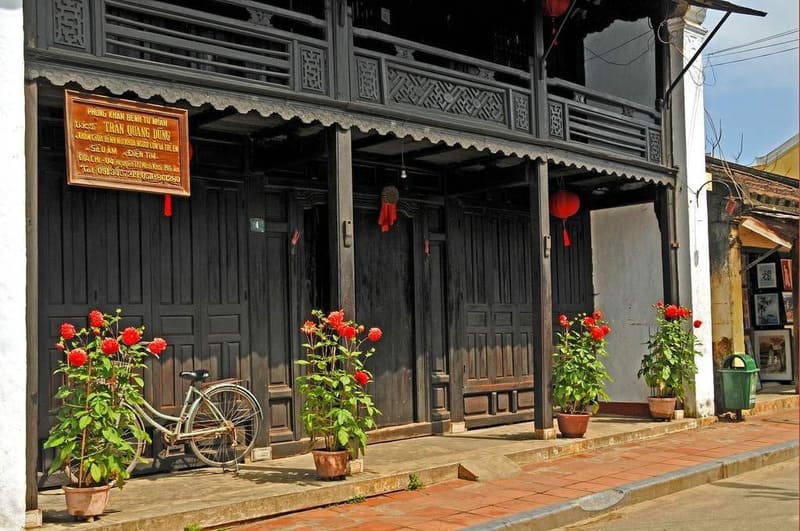
The old house sits near the Japanese Covered Bridge (Source: Collected)
Phung Hung Old House was built during the prosperous trading period of Hoi An, when the town was one of Southeast Asia’s important commercial ports. Hoi An welcomed merchant ships from many regions, including China, Japan, and Europe, creating a multicultural environment that shaped the town’s architecture, beliefs, and daily life.
The house is widely believed to have been built around 1780 by a Vietnamese merchant. The name “Phung Hung” carries the meaning of prosperity, growth, and flourishing business. This name reflected the owner’s hope for successful trade and long-term family fortune.
In the past, the house served several functions at once. It was:
The merchant family traded goods that were valuable during Hoi An’s commercial peak, including cinnamon, pepper, salt, silk, ceramics, porcelain, and glassware. These products were closely connected to the maritime trade networks that helped Hoi An become a wealthy port town.
Over time, the house has been preserved by later generations of the family. It is often associated with the eighth generation of descendants, making it not only a preserved monument but also a living example of family heritage in Hoi An.
In 1993, Phung Hung Old House was recognized as a National Historical and Cultural Monument, confirming its historical, architectural, and cultural value. Today, it remains one of the best-known ancient houses in Hoi An and a key stop for visitors who want to understand the town beyond its lantern streets and riverside scenery.
The architecture of Phung Hung Old House is one of the main reasons it is worth visiting. Like many heritage houses in Hoi An, it combines practical merchant-house design with cultural influences from Vietnam, China, and Japan. Every part of the building, from the roof and columns to the doors and altars, reflects how people in old Hoi An adapted their homes to trade, climate, floods, family life, and spiritual beliefs.
Phung Hung Old House follows the traditional tube-house layout, a common architectural form in Hoi An Ancient Town. This type of house usually has a narrow frontage and extends deep inside, making it suitable for both business and family living.
In the past, the front part of the house was used for trading, welcoming customers, and displaying goods. The inner sections were used for family activities, storage, and worship. This layout allowed merchant families to run their business directly from home while maintaining private living areas behind or above the trading space.
The house has two floors and several connected compartments. This structure helped separate public and private functions while still allowing air, light, and movement through the building. For a historic merchant town like Hoi An, this was a practical design that matched the rhythm of daily trade.
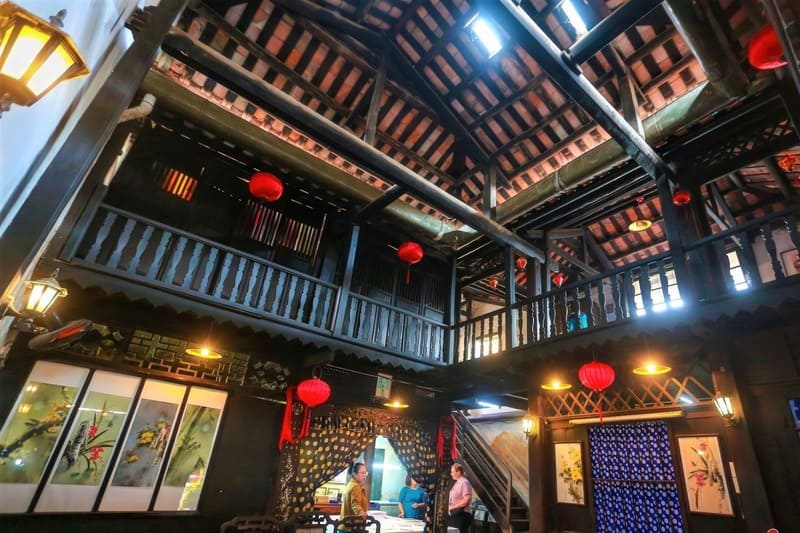
Inside the traditional merchant house layout (Source: Collected)
One of the most recognizable features of Phung Hung Old House is its yin-yang roof tiles. This traditional tile system is common in old houses and temples across Central Vietnam. The interlocking shape helps with drainage, ventilation, and temperature regulation, keeping the house cooler during hot months and more protected during rainy weather.
The wooden structure is another highlight. The house is supported by a strong system of wooden columns and beams, often described as being made from ironwood and other precious timber. Many columns rest on stone bases, which help reduce direct contact with the ground. This detail is important in Hoi An because the town is prone to humidity, termites, and seasonal flooding.
The use of timber also gives the house its warm, quiet atmosphere. Inside, visitors can see wooden floors, carved beams, furniture, railings, and decorative panels that reflect both craftsmanship and family status.
Above the entrance, visitors can notice a pair of traditional door eyes, known locally as mắt cửa. These are one of the most distinctive architectural details in Hoi An. They are believed to act as protective symbols, guarding the house from bad luck and negative energy.
Door eyes are found on many old houses in Hoi An, but each house may have different patterns, shapes, or symbolic meanings. At Phung Hung Old House, they add a spiritual layer to the architecture, showing how local residents combined daily life with folk beliefs and feng shui concepts.
Inside the house, decorative details also carry meaning. Carved motifs such as carp, flowers, and auspicious symbols reflect East Asian cultural beliefs. The carp motif, often linked with luck, success, and transformation, appears in Vietnamese, Chinese, and Japanese symbolism. In the context of a merchant family, these details expressed hopes for prosperity, achievement, and family continuity.
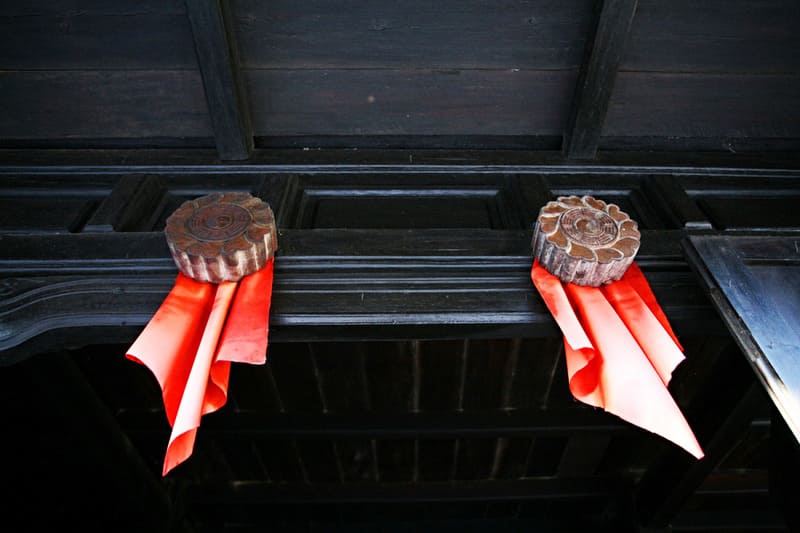
Traditional door eyes at Phung Hung Old House (Source: Collected)
Hoi An is located near the Thu Bon River and has experienced many floods throughout its history. Because of this, old houses in the Ancient Town often include practical features designed to reduce flood damage.
Phung Hung Old House is especially interesting because of its flood-adaptive design. The house includes openings or trapdoor-like features that allowed goods and furniture to be moved from the ground floor to the upper floor during floods. This was extremely useful for a merchant family that stored valuable products such as silk, ceramics, spices, and household items.
Some parts of the structure also show practical responses to Hoi An’s climate and environment:
These features make Phung Hung Old House more than a beautiful heritage building. It is also a smart example of how Hoi An residents adapted their homes to natural conditions over many generations.
The ground floor historically served as the family’s trading area and reception space for customers.
Today, visitors can still see antique wooden furniture, merchant-style layouts, and decorative elements associated with traditional commerce in Hoi An. The space feels open and functional rather than heavily ceremonial.
Several wooden columns display Chinese calligraphy and traditional couplets related to prosperity, morality, and family heritage.
The atmosphere inside gives visitors a clearer understanding of how merchant families once lived and worked within the same building.
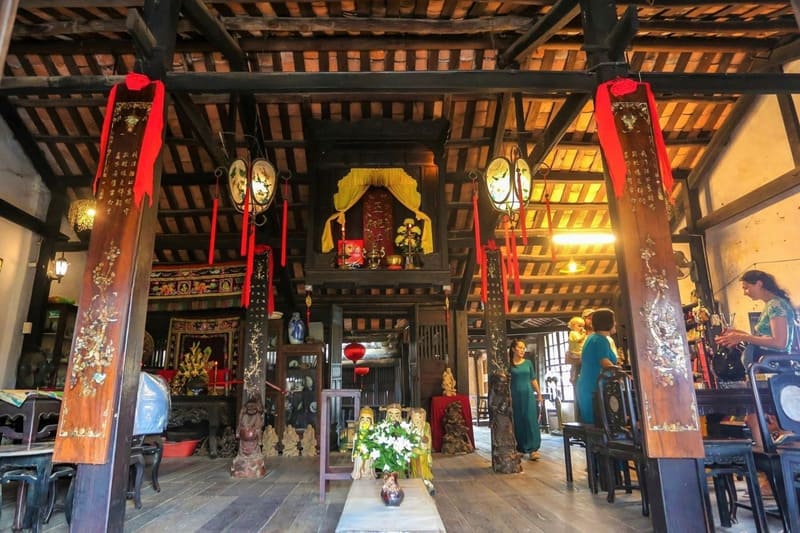
The old trading space on the first floor (Source: Collected)
One of the most practical architectural elements is the internal courtyard area located near the center of the house.
This section improves natural lighting and ventilation while helping reduce indoor heat and humidity. Some roof sections were modified over time to allow more sunlight into the interior spaces.
The courtyard also functioned as a transition area between the business section and the family living quarters.
Compared with modern buildings, the house demonstrates surprisingly advanced passive cooling techniques suited to Hoi An’s climate.
The second floor has a more spiritual and private atmosphere.
This level contains ancestral altars, worship areas, and traditional household spaces used by the family for generations. One important altar is dedicated to Thien Hau Thanh Mau, a sea goddess respected by many trading communities in Vietnam and China.
The wooden balcony on the upper floor is another highlight. From here, visitors can overlook the street and observe daily life in the old town.
The staircase leading upstairs is relatively steep and narrow, so visitors should walk carefully.
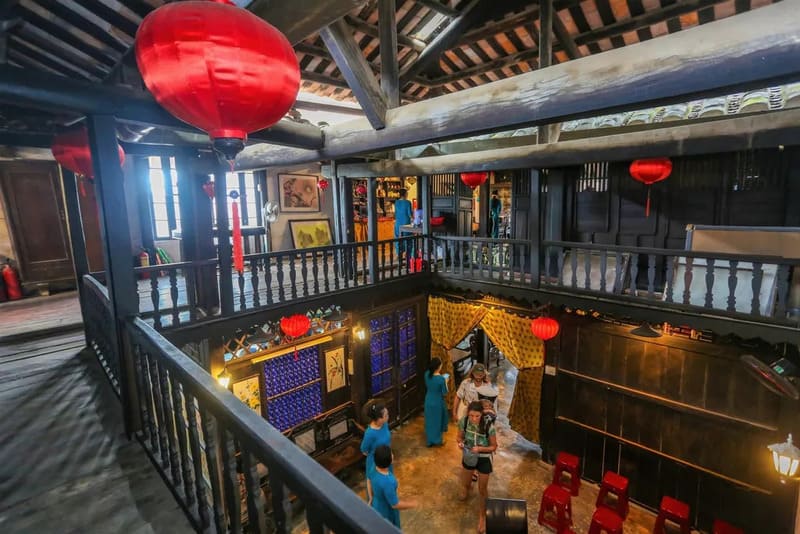
The upper floor preserves the family worship area (Source: Collected)
Inside the house, visitors can see various antiques and historical objects, including:
Some carvings were created by artisans from Kim Bong Carpentry Village, one of the most famous traditional woodworking villages near Hoi An.
These artifacts help preserve the atmosphere of an old merchant residence rather than a conventional museum.
In some periods, visitors may also observe traditional embroidery demonstrations inside the house.
Handmade embroidery and textile craftsmanship have long been associated with Hoi An’s merchant culture and handicraft traditions. These demonstrations provide additional insight into the town’s long-standing artisan heritage.
The house continues to reflect the commercial identity of historic Hoi An, where trading, craftsmanship, religion, and daily life were closely connected.
Yes, Phung Hung Old House is worth visiting, especially if you are interested in Hoi An’s history, traditional architecture, and merchant culture. It may not be a large attraction, but it offers a detailed and meaningful glimpse into the life of an old trading family.
Phung Hung Old House is particularly worthwhile for:
Compared with attractions such as the Japanese Covered Bridge or Hoi An Night Market, Phung Hung Old House is quieter and more intimate. It does not take long to visit, but the details are rewarding if you slow down and look carefully.
If you only have limited time in Hoi An, you can combine it with the Japanese Covered Bridge and nearby assembly halls. If you enjoy heritage houses, you may also want to visit Tan Ky Old House, Quan Thang Old House, or Duc An Old House to compare different architectural styles and family histories.
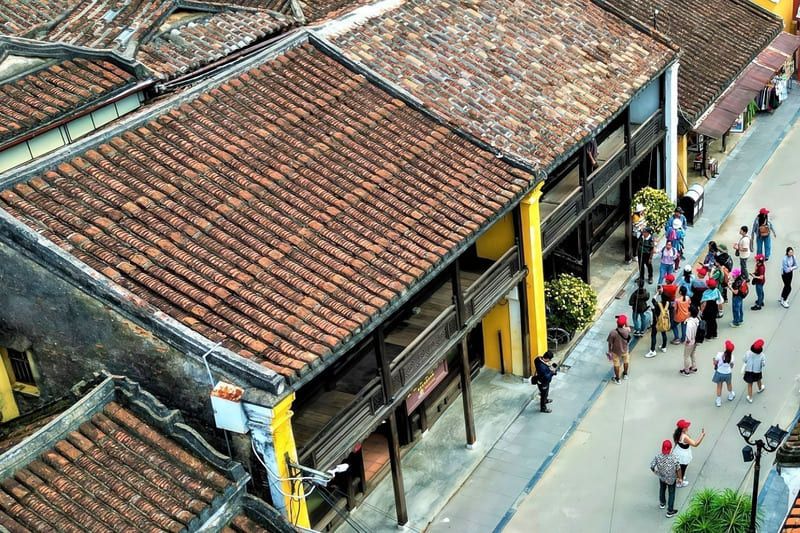
A quiet heritage stop in Hoi An Ancient Town (Source: Collected)
Phung Hung Old House is generally open daily from around 8:00 AM to 6:00 PM.
Visitors usually access the house using the Hoi An Ancient Town entrance ticket rather than purchasing a separate ticket directly at the house.
Ticket policies may change over time, but the Hoi An sightseeing ticket commonly includes access to selected heritage attractions such as:
The best time to visit is usually:
The rainy season in Hoi An generally lasts from around September to January, with occasional flooding in the old town. During heavy flood periods, access may be limited.
Phung Hung Old House is easy to reach because it is located in the center of Hoi An Ancient Town.
If you are already staying in or near the Ancient Town, walking is the best option. From the Japanese Covered Bridge, it takes only a very short walk to reach the house. You can also approach it from Tran Phu Street, Nguyen Thi Minh Khai Street, or the riverside area depending on your route.
If you are staying outside the old quarter, you can get there by:
Once you reach the Ancient Town area, it is best to continue on foot. The streets around Phung Hung Old House are compact and walkable, and many attractions are located within a few hundred meters.
To make the most of your visit, keep these practical tips in mind:
For photography, the best shots are usually near the entrance, wooden interior spaces, the upper balcony, and decorative details such as door eyes, carved beams, and old furniture. However, always respect the house rules and avoid disturbing other visitors.
Because of its central location, Phung Hung Old House can easily be combined with several important landmarks in Hoi An.
Phung Hung Old House is more than 240 years old. It is commonly dated to around 1780, during the period when Hoi An was a prosperous trading port. The house has been preserved through many generations and was recognized as a National Historical and Cultural Monument in 1993.
Most visitors spend around 30-45 minutes at Phung Hung Old House. If you only want a quick look, 20 minutes may be enough. However, if you enjoy architecture, photography, or historical details, allow more time to explore the first floor, second floor, altar area, wooden structure, carvings, and flood-adaptive features.
Phung Hung Old House is usually visited with the Hoi An Ancient Town entrance ticket, which allows access to selected heritage sites inside the old town. Ticket policies and included sites may change, so it is best to confirm at an official ticket booth when you arrive.
Photography is generally possible in many areas of Phung Hung Old House, but visitors should be respectful. Avoid taking photos in restricted areas, do not touch artifacts, and ask for permission before photographing altars, private spaces, or people inside the house.
For travelers exploring Hoi An Ancient Town, Phung Hung Old House is more than a historic building. Its preserved wooden structure, flood-adaptive features, and family worship spaces offer a clearer picture of how merchant families once lived and traded in old Hoi An. Despite the many attractions around the Ancient Town, this house remains one of the more worthwhile cultural stops for visitors interested in local history and architecture.


 Vietnam Tours
 Cambodia Tours
 Laos Tours
 Thailand Tours
 Multi-Country Tours