Notre Dame Cathedral is one of the most iconic architectural landmarks in Ho Chi Minh City. It is a must-visit stop when exploring the center of Saigon. Built over 140 years ago, the cathedral reflects strong French architectural influence. It also plays an important role in the city’s religious life and urban history.
This article by Your Vietnam Travel provides essential information about its location, opening hours, historical background, architectural features, and practical visiting tips. It helps you plan a complete and well-organized visit to Notre Dame Cathedral.
Notre Dame Cathedral Basilica of Saigon is one of the most iconic colonial-era landmarks in Ho Chi Minh City. Built in the late 19th century, the cathedral is a prominent symbol of Saigon’s French architectural heritage and an important center of Catholic worship in southern Vietnam. Its twin bell towers and distinctive red-brick façade make it a defining feature of the city skyline and a must-visit stop in District 1.
The cathedral is located at Paris Commune Square (Cong Xa Paris), Ben Nghe Ward, District 1, Ho Chi Minh City. The official address is No. 1 Cong Xa Paris Street, right in the historic and administrative heart of Saigon.
It stands directly opposite Saigon Central Post Office and within walking distance of major landmarks such as Reunification Palace, Ho Chi Minh City Opera House, and Ben Thanh Market. Its central position makes it easy to include in any District 1 walking itinerary.
Opening hours (subject to restoration updates):
Mass times:
Entrance fee: Free (parking outside the cathedral may incur a small fee).
The cathedral has been undergoing long-term restoration since 2017, so interior access may vary. Visitors are advised to check the latest updates before planning entry.
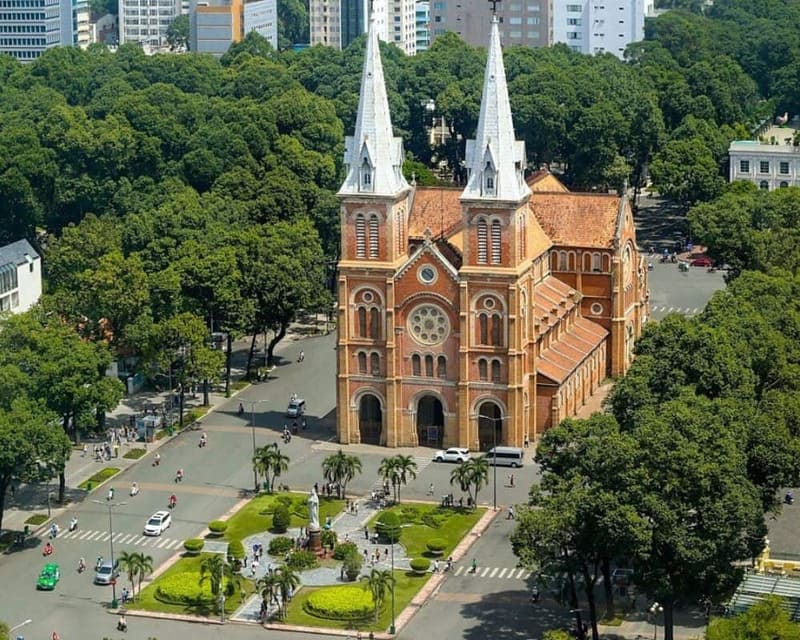
Notre Dame Cathedral in Saigon (Source: Collected)
The history of Notre Dame Cathedral Basilica of Saigon dates back to the late 19th century, during the French colonial period in Vietnam. After taking control of Saigon, the French administration planned to build a large church to serve the Catholic community and colonial officials.
The first church, constructed in 1863 near the Charner Canal (Kinh Lon), was made of wood and quickly deteriorated due to termites. To address this issue, a new cathedral was commissioned in 1877 under the supervision of French architect J. Bourard. All major construction materials, including bricks, tiles, and stained glass, were imported directly from France.
The cathedral was completed in 1880 after three years of construction, with funding provided by the French Cochinchina government. For this reason, it was initially known as the “State Cathedral.”
In 1895, two bell towers were added, raising the total height of the structure to approximately 60 meters. Six bronze bells were installed inside the towers, giving the cathedral its distinctive presence in the Saigon skyline.
The square in front of the church has also evolved over time. During the colonial era, a bronze statue of Bishop Pigneau de Behaine and Prince Canh stood on a red marble pedestal. The statue was removed in 1945. In 1959, Bishop Joseph Pham Van Thien commissioned a granite statue of Our Lady of Peace from Rome and placed it on the same pedestal. That year, the cathedral was officially renamed Notre Dame Cathedral.
In 1960, Pope John XXIII established the Roman Catholic dioceses in Vietnam and designated the cathedral as the Saigon Chief Cathedral. Two years later, in 1962, he granted it basilica status. Since then, it has carried its official title as the Notre Dame Cathedral Basilica of Saigon.
Over more than a century, the cathedral has witnessed significant historical changes in Saigon, from colonial times to modern Ho Chi Minh City. Today, it remains both a functioning religious center and a cultural landmark. A major restoration project, launched by the Ho Chi Minh City Archdiocese in 2017, is scheduled to continue through 2027 to preserve this important heritage site for future generations.
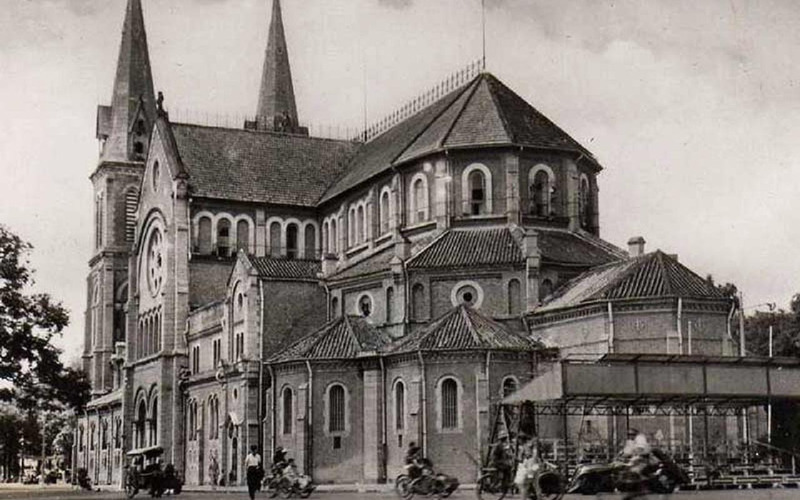
Saigon Notre Dame Cathedral dates back to the late 19th century (Source: Collected)
The architecture of Notre Dame Cathedral Basilica of Saigon reflects the Neo-Romanesque style, a 19th-century revival inspired by Romanesque churches of the 11th and 12th centuries. The design emphasizes rounded arches, solid symmetry, thick masonry walls, and balanced proportions. Compared to medieval Romanesque structures, the cathedral presents cleaner lines and more simplified decorative details.
One of its most distinctive features is the use of imported construction materials. During the late 19th century, cement, steel, screws, roof tiles, and other key components were shipped directly from France to ensure structural durability and architectural authenticity.
The exterior is built with red bricks produced in Marseille and Toulouse. These bricks were laid without plaster coating, yet they have preserved their vibrant color for over a century despite Saigon’s tropical climate. Moss and discoloration remain minimal, which highlights the high quality of the materials.
The cathedral originally featured 56 stained-glass windows manufactured by the Lorin workshop in Chartres, France. Although some panels were later replaced, the stained glass continues to contribute to the European character of the structure, filtering natural light into the interior and enhancing its solemn atmosphere.
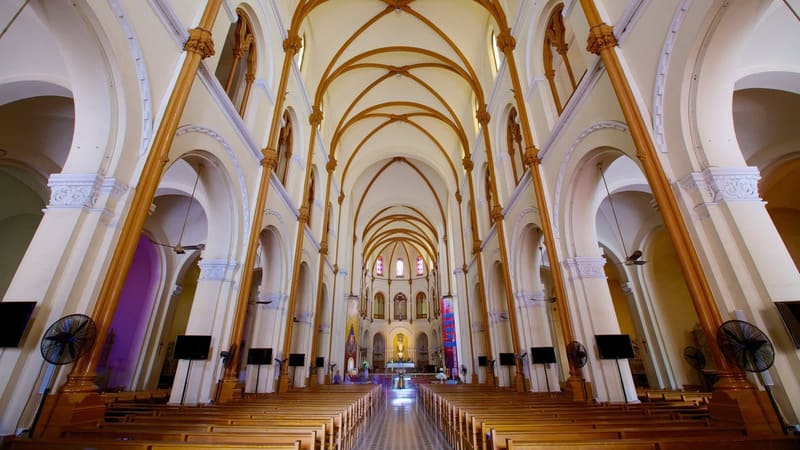
Materials and architectural style of Notre Dame Cathedral (Source: Collected)
The design of Notre Dame Cathedral Basilica of Saigon combines Neo-Romanesque structure with subtle Gothic elements, creating a solemn yet elegant appearance in the center of modern Ho Chi Minh City.
The cathedral measures approximately 93 meters in length and 35 meters in width, with a central dome rising about 21 meters high. Its foundation was engineered to support up to ten times the total weight of the building, demonstrating the advanced construction techniques applied during the late 19th century.
Inside, the nave is organized with two main rows of columns, symbolically representing the twelve apostles. The monolithic marble altar, carved with six angels, stands as a focal point of the sanctuary. Natural light filters through stained-glass windows, creating a soft and reverent atmosphere throughout the interior.
Unlike many churches in Vietnam, the cathedral has no surrounding fence. Its open design allows visitors to admire the red-brick facade and twin bell towers directly from the street, reinforcing its role as both a religious site and a prominent urban landmark.
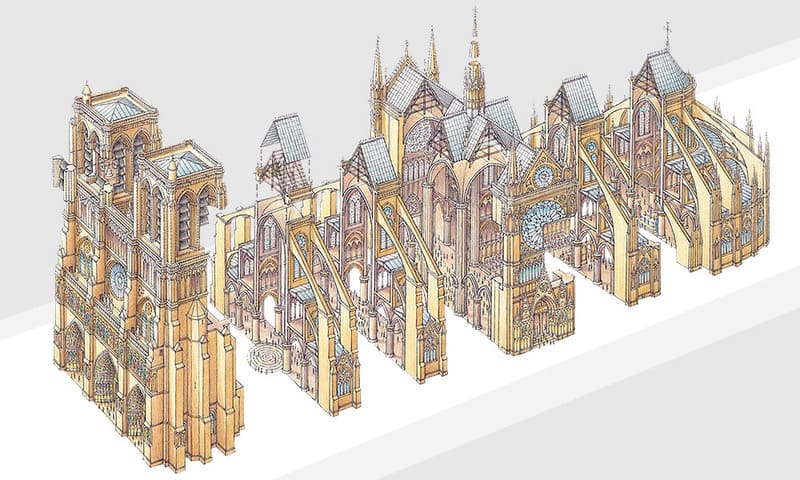
The impressive design of Notre Dame Cathedral (Source: Collected)
The twin bell towers are among the most recognizable features of Notre Dame Cathedral Basilica of Saigon. When the cathedral was first completed, the towers stood at 36.6 meters and had no roofs. In 1895, architect Gardes designed and added iron spires, raising the total height to approximately 60 meters, making them some of the tallest church towers in Vietnam at the time.
Each tower houses bronze bells cast in France and shipped to Saigon in 1879. In total, six bells hang across the two towers, with a combined weight of around 30 metric tons. The bells are electrically operated from inside the cathedral. On weekdays, they typically ring in the early morning and late afternoon. On Sundays and major religious celebrations, multiple bells are rung together. All six bells sound simultaneously only on special occasions such as Christmas Eve, and their resonance can be heard up to 10 kilometers away.
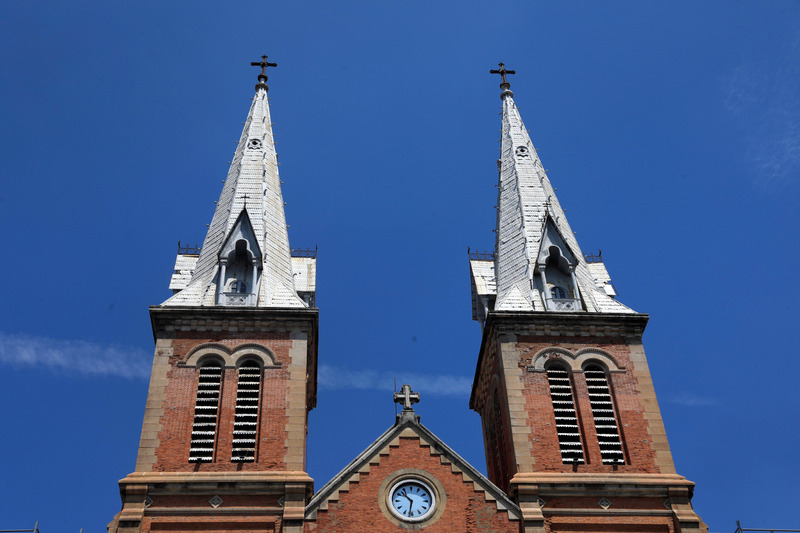
The iconic twin bell towers of Notre Dame Cathedral (Source: Collected)
Between the twin bell towers of Notre Dame Cathedral Basilica of Saigon hangs a large mechanical clock that has become a distinctive architectural detail of the facade.
Manufactured in Switzerland in 1887, the clock weighs approximately one ton and reflects the precision engineering of late 19th-century Europe. Despite its age, it continues to function reliably, making it one of the oldest working public clocks in Ho Chi Minh City.
The open space in front of Notre Dame Cathedral Basilica of Saigon is known as Paris Commune Square. Located in District 1 and bordered by Nguyen Du Street, the square serves as a central meeting point in downtown Saigon. It also marks the starting point of the historic Dong Khoi Street, one of the city’s most elegant boulevards.
At the center of the square stands the Our Lady of Peace statue, created in 1959 by Italian sculptor G. Ciocchetti. Carved from Italian granite, the 4.6-meter-tall statue weighs approximately eight tons and depicts the Virgin Mary holding a globe topped with a cross. Inside its base lies a silver box containing peace prayers collected from across Vietnam.
Today, Paris Commune Square is more than a religious space. It functions as a lively urban plaza where locals gather, visitors take photographs, and cultural events occasionally take place. In the late afternoon and evening, the square becomes one of the most atmospheric spots in central Ho Chi Minh City.
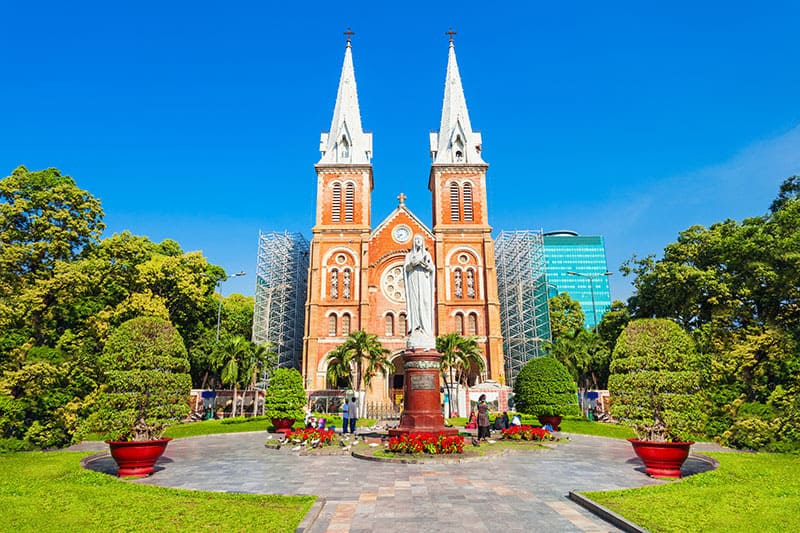
The square in front of Saigon Notre Dame Cathedral (Source: Collected)
Start with a full exterior walk-around. Observe the red-brick facade, Romanesque arches, and balanced proportions of the twin bell towers. Notice how the structure stands out against modern glass buildings nearby, creating a striking contrast between colonial heritage and contemporary Saigon.
Pay attention to architectural details such as the stained-glass windows, decorative reliefs, and symmetrical layout. Early morning light enhances the brick tones, while late afternoon offers dramatic shadows for photography.
In the center of Paris Commune Square stands the Our Lady of Peace statue. Carved from Italian granite in 1959, it represents the Virgin Mary holding a globe topped with a cross.
Many locals quietly pray here, especially in the early morning and evening. Visitors are welcome to approach respectfully and observe this important religious symbol.
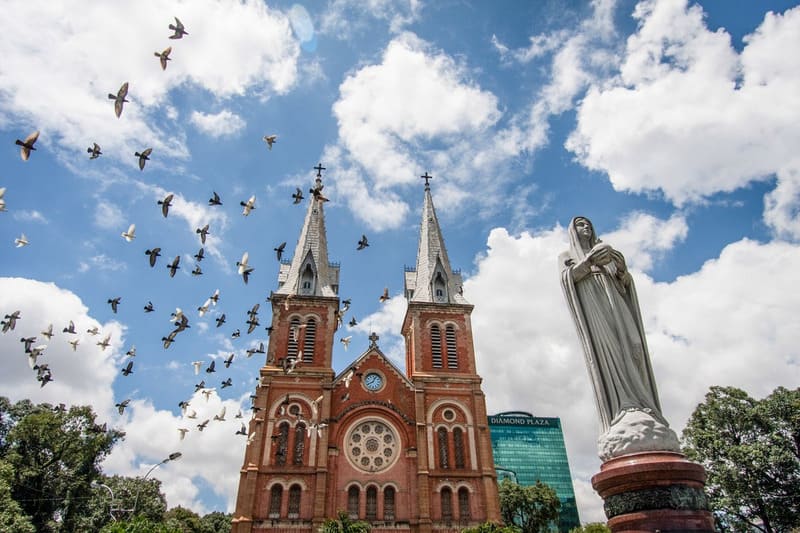
The statue of the Virgin Mary stands directly in front of Saigon Notre Dame Cathedral (Source: Collected)
Mass is held daily and remains an active part of the cathedral’s function. Sunday mornings are the busiest, with multiple services including an English Mass.
Attending a service offers insight into the Catholic community in southern Vietnam. Visitors should dress modestly and maintain silence during prayer. Even without religious affiliation, observing the ceremony provides a meaningful cultural experience.
Notre Dame Cathedral is one of the most photographed sites in Ho Chi Minh City.
For fewer crowds and softer lighting, plan your visit before 8:00 AM or after 4:30 PM.
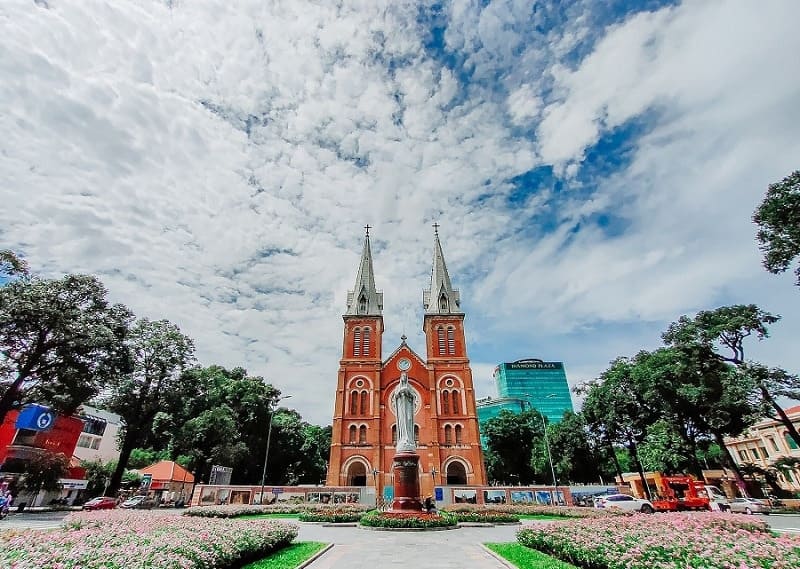
Capture stunning photos at Notre Dame Cathedral of Saigon (Source: Collected)
The square in front of the church functions as a lively urban gathering space. Students meet after class, families relax on benches, and visitors pause between sightseeing stops.
Street vendors often sell snacks and drinks nearby, creating a casual local atmosphere. The mix of religious sites and everyday city life gives the area a unique character.
Just behind the cathedral, Nguyen Van Binh Book Street offers a pedestrian-friendly escape from traffic.
The street features bookstores, cultural exhibitions, and coffee shops shaded by large trees. It is an excellent place to sit, enjoy Vietnamese coffee, and observe daily life in District 1.
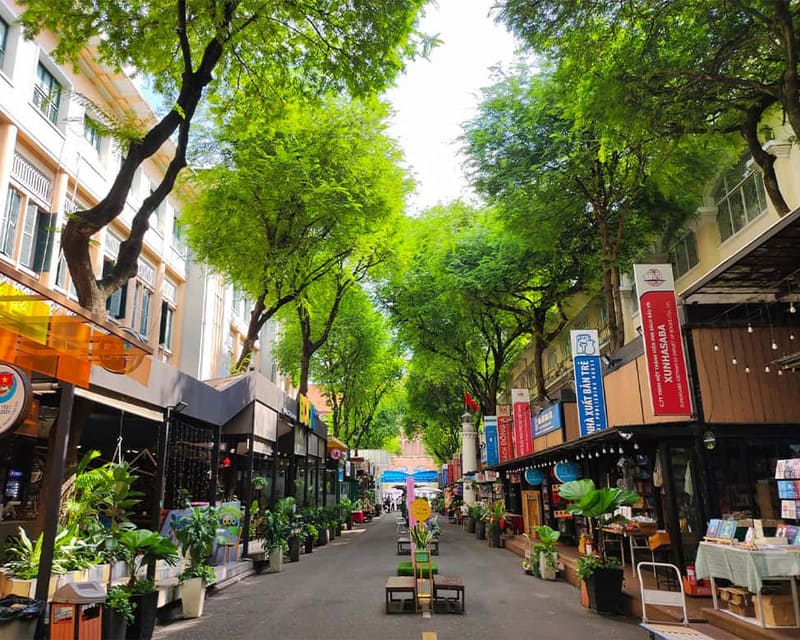
Nguyen Van Binh Book Street (Source: Collected)
Directly across the square stands Saigon Central Post Office, one of the finest examples of French colonial architecture in Vietnam.
Step inside to admire its vaulted ceiling, historic maps, and vintage phone booths. Combining the cathedral and post office provides a comprehensive view of Saigon’s late 19th-century urban planning.
Within a short walking radius, travelers can continue to:
A well-planned half-day itinerary can comfortably cover these highlights while allowing time for coffee breaks and photography.
Saigon Notre Dame Cathedral is located in the heart of District 1, making it easy to reach by multiple transportation options.
For a unique city overview, visitors can also take the double-decker sightseeing bus departing from Saigon Central Post Office, operating daily from 9:00 AM to 5:45 PM.
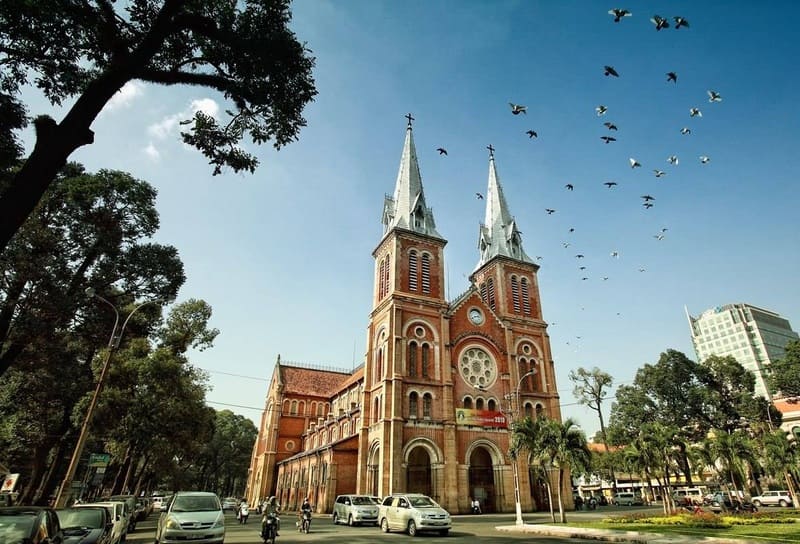
Saigon Notre Dame Cathedral is easy to access (Source: Collected)
Visiting Notre Dame Cathedral in Ho Chi Minh City is straightforward, but a few practical tips will help you make the most of your time.
The cathedral grounds and exterior are open daily. Interior access depends on restoration schedules and religious services. Check the latest updates before visiting.
Entry to the interior is permitted when restoration work allows and outside of mass times. During services, visitors may attend respectfully but should avoid sightseeing activities.
Photography is allowed in the square and exterior areas. Inside the cathedral, avoid flash and respect ongoing religious activities.
Most visitors spend 30-60 minutes exploring the cathedral and Paris Commune Square. Plan additional time if combining nearby attractions in District 1.
Modest attire is recommended. Cover shoulders and knees, especially when entering the church or attending mass.
Notre Dame Cathedral Basilica of Saigon remains a defining landmark in District 1. Its colonial architecture, central location, and cultural significance make it an essential stop in Ho Chi Minh City. Combine your visit with nearby historic sites for a well-rounded exploration of Saigon’s heritage core.
For a deeper insight into the city’s heritage and seamless itinerary planning, consider exploring Ho Chi Minh City with Your Vietnam Travel. Our tailor-made tours connect iconic landmarks with authentic local experiences across Vietnam and Southeast Asia, ensuring every journey is meaningful and well-organized.



 Vietnam Tours
 Cambodia Tours
 Laos Tours
 Thailand Tours
 Multi-Country Tours