Tan Dinh Market offers an authentic look at everyday life in Ho Chi Minh City. Built nearly a century ago, the market is known for its historic yellow facade, extensive fabric section, fresh produce and long-standing food stalls. It is a worthwhile alternative to more tourist-oriented markets, especially for travelers interested in local culture, Vietnamese textiles and traditional street food.
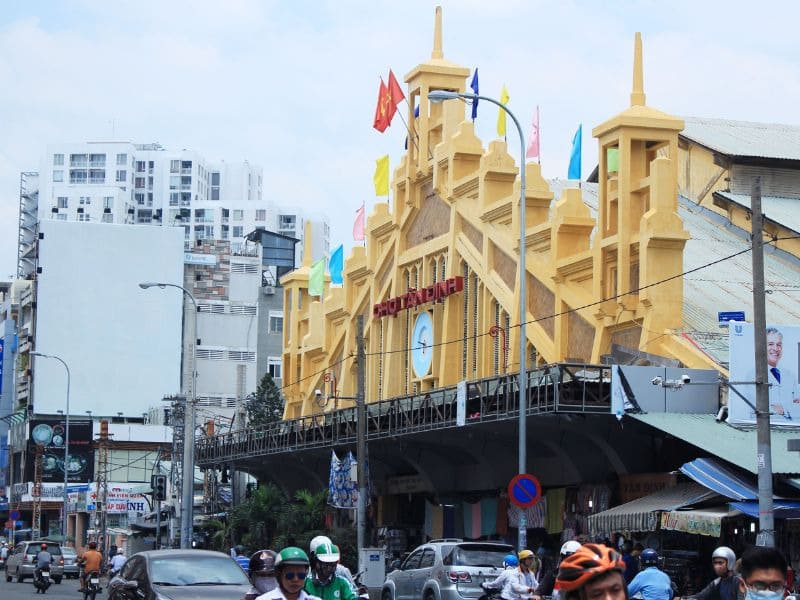
Tan Dinh Market is located at 48 Ma Lo Street, Tan Dinh Ward, Ho Chi Minh City. Its best-known entrance and yellow facade face Hai Ba Trung Street, directly across from the surrounding Tan Dinh Church area.
The market occupies a block bordered by four streets:
Although its official address is on Ma Lo Street, most visitors recognize the market from its main entrance on Hai Ba Trung Street. The food area is concentrated around the Nguyen Huu Cau side, while fabric shops can be found inside the market and along nearby Hai Ba Trung Street.
Tan Dinh Market is approximately 3 kilometers from Ben Thanh Market and close to several central attractions, including Tan Dinh Church, the Southern Women’s Museum, Turtle Lake and the War Remnants Museum.
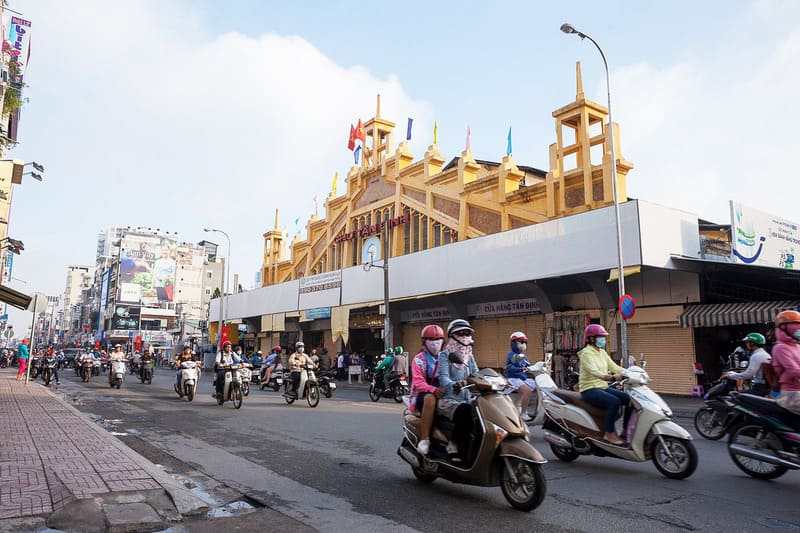
Tan Dinh Market sits along busy Hai Ba Trung Street (Source: Collected)
Tan Dinh Market is easy to reach from central Ho Chi Minh City by taxi, ride-hailing service, motorbike, bus or on foot.
Tan Dinh Market is among the oldest surviving traditional markets in Ho Chi Minh City. Its predecessor was Phu Hoa Market, an important trading place in northern Saigon during the late 19th century.
As the surrounding Tan Dinh area developed, the colonial administration allocated funds to rebuild the market. The present structure was completed and officially opened in 1926. It became an important commercial center serving residents from Tan Dinh and nearby neighborhoods. Vietnam’s national tourism authority identifies the market as a historical city monument built in 1926.
During the mid-20th century, Tan Dinh was one of Saigon’s prosperous urban neighborhoods. The market became known as a “rich market” because it sold fresh, high-quality products that were often more expensive than those found elsewhere. Cars were once parked beside the market, while horse-drawn carriages waited near the rear entrance.
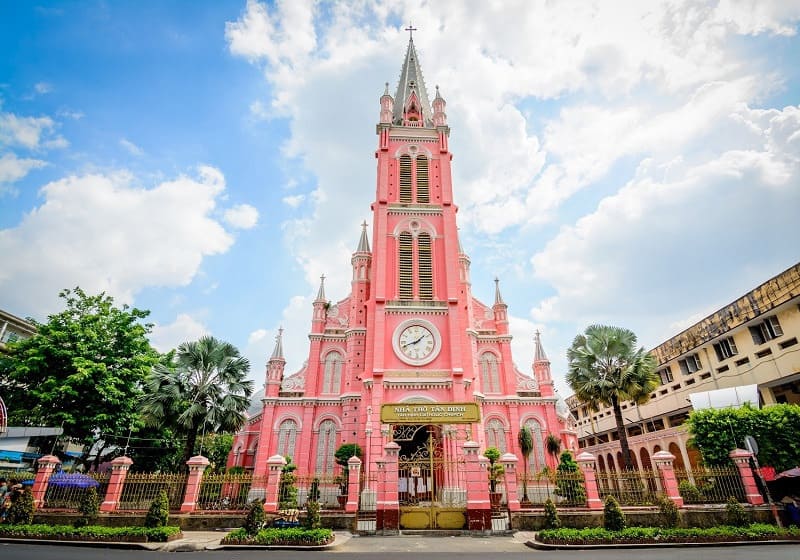
The surrounding area also contained cinemas, cafes, clothing stores and the prominent Tan Dinh Church. Together, these establishments helped make the neighborhood a lively commercial and social center.
Although supermarkets and shopping malls have changed how residents shop, Tan Dinh Market continues to serve the local community. Many stalls remain family-run businesses, preserving a style of trade that has existed for generations.
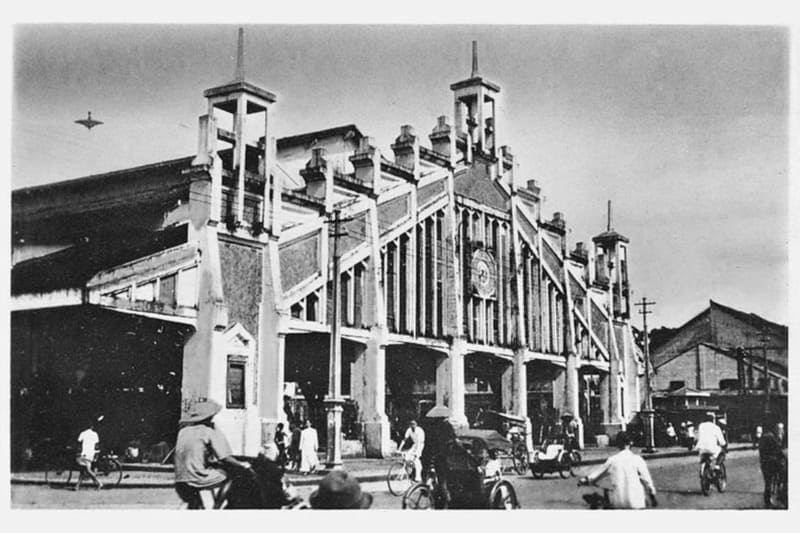
A historic market serving Saigon for generations (Source: Collected)
Tan Dinh Market is immediately recognizable by its faded yellow facade and architectural details associated with early 20th-century Saigon.
The main facade on Hai Ba Trung Street features three raised towers. The central tower is taller and contains a large circular clock above the market’s name, while two smaller towers stand on either side. Decorative pillars, flags, tiled roofs and arched details give the entrance a distinctive appearance.
Inside, the structure uses concrete columns, roof trusses and metal framing to create wide covered trading areas. The roof provides shade and ventilation, although the interior may still feel warm and crowded during busy periods.
The market has several entrances facing the surrounding streets. Its sections are organized broadly by product type:
The layout is functional rather than designed for tourists. Aisles may be narrow, signs are mainly in Vietnamese and delivery motorbikes sometimes pass close to trading areas. Visitors should move carefully and avoid blocking vendors or regular shoppers.
Tan Dinh Market provides a noticeably different experience from markets centered on tourism. Most vendors serve local residents, restaurant operators, tailors and small businesses rather than international visitors.
In the morning, the wet-market section is filled with vegetables, fruit, meat, fish, seafood and herbs. Vendors prepare products, weigh ingredients and negotiate with regular customers. This is the liveliest time to observe the market’s daily rhythm.
The covered fabric section feels different. Bolts of silk, cotton, lace and embroidered material are stacked from floor to ceiling, creating rows of color and pattern. Some sellers specialize in fabric for ao dai, while others supply materials for dresses, shirts, suits, curtains and interior decoration.
Visitors should also expect:
Tan Dinh Market is particularly suitable for travelers who enjoy street photography, textiles, food culture and everyday urban life. Those expecting an air-conditioned shopping center or a large selection of polished souvenirs may find the experience less comfortable.
Tan Dinh Market sells most items needed for daily household life, but its fabrics, clothing and local food products are the most relevant purchases for travelers.
Fabrics are the market’s best-known specialty. Tan Dinh has long supplied materials to local tailors, fashion designers, costume makers and families preparing clothing for weddings, festivals and formal events.
Common materials include:
Ao dai fabrics are available in plain colors and elaborate patterns featuring flowers, birds, landscapes, geometric motifs, dragons and phoenixes. Materials may be embroidered, printed, woven or decorated with beads.
Tell the seller what you plan to make, as the amount of fabric required depends on the garment, design, body measurements and fabric width. Vendors familiar with ao dai materials can usually recommend an appropriate length.
Before buying, check:
Fabric shops also extend along Hai Ba Trung Street, allowing visitors to compare a wider range of colors, patterns and prices.
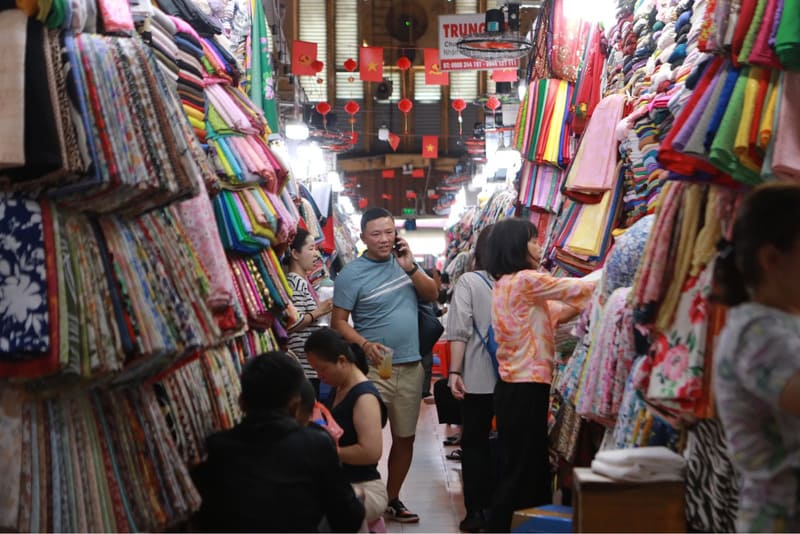
Visitors browse colorful fabrics inside Tan Dinh Market (Source: Collected)
The clothing section sells casual garments for men, women and children. Products commonly include:
Most products are designed for everyday use rather than luxury shopping. Sizes may differ from international standards, so trying on clothes or checking exact measurements is advisable.
Inspect seams, zippers, buttons and fabric quality before paying. Exchanges may be difficult once the buyer has left the stall.
Tan Dinh Market carries a broad selection of ingredients used in Vietnamese cooking. These items can be interesting purchases for travelers who cook or want to learn more about local cuisine.
Available products may include:
Check customs and agricultural import regulations before carrying dried seafood, meat products, seeds, fruit or plant-based ingredients into another country.
Pack liquids securely and confirm whether the seller can seal dried products for travel.
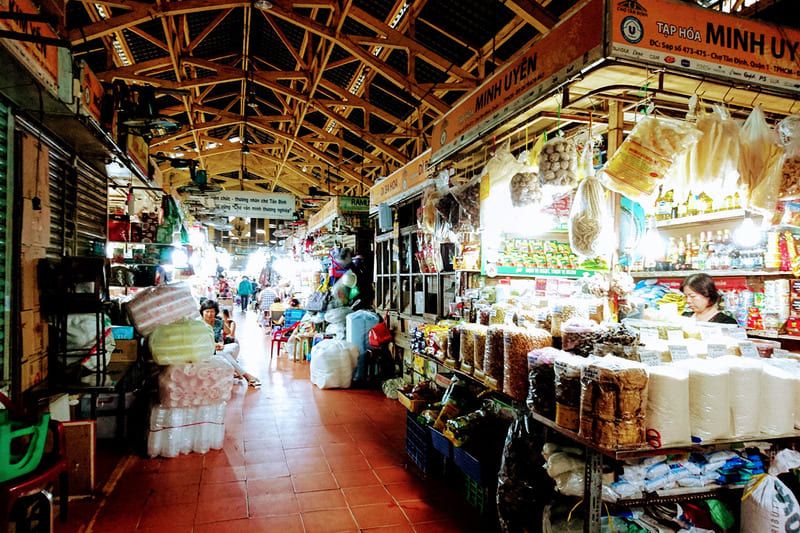
Shops selling dried foods and cooking essentials (Source: Collected)
The wet-market area contains tropical fruit, vegetables, herbs, meat, poultry and seafood. Common fruit may include:
Produce varies according to season. Ask the seller to choose ripe fruit when planning to eat it immediately, or firmer fruit when keeping it for several days.
Fresh flowers such as roses, lilies, daisies and sunflowers are also sold around the market. This section is most active in the morning and becomes especially colorful before major celebrations and public holidays.
Tan Dinh Market remains a practical shopping destination for local households. Stalls sell everyday items such as:
These products provide insight into Vietnamese domestic life, although many are too large or fragile to serve as convenient travel purchases.
Small bamboo utensils, serving items or clay products may be suitable gifts when packed carefully.
Jewelry shops are concentrated around Nguyen Huu Cau Street and the streets surrounding the market. Products range from costume accessories to gold and gemstone jewelry.
For valuable items, choose an established store, request clear information about weight and purity, and retain the receipt. The traditional market itself is not primarily a souvenir destination, so the selection of magnets, postcards and decorative gifts is more limited than at Ben Thanh Market.
More distinctive keepsakes include:
The food area around Nguyen Huu Cau Street has long attracted local diners. Stalls serve breakfast, lunch, snacks and desserts, with opening hours varying considerably between vendors.
Food stalls may change over time, so it is better to choose based on cleanliness, customer turnover and freshly prepared ingredients rather than relying entirely on one particular vendor.
Vietnamese crab soup, or súp cua, is a thick, savory soup commonly made with crab meat, shredded chicken, egg, mushrooms and vegetables. Some versions also contain shrimp, quail eggs or century eggs.
It is usually served in a small bowl and finished with pepper, coriander, chili or soy sauce. Its light texture makes it suitable for breakfast or an afternoon snack.
Choose a busy stall where the soup is kept hot and served continuously.
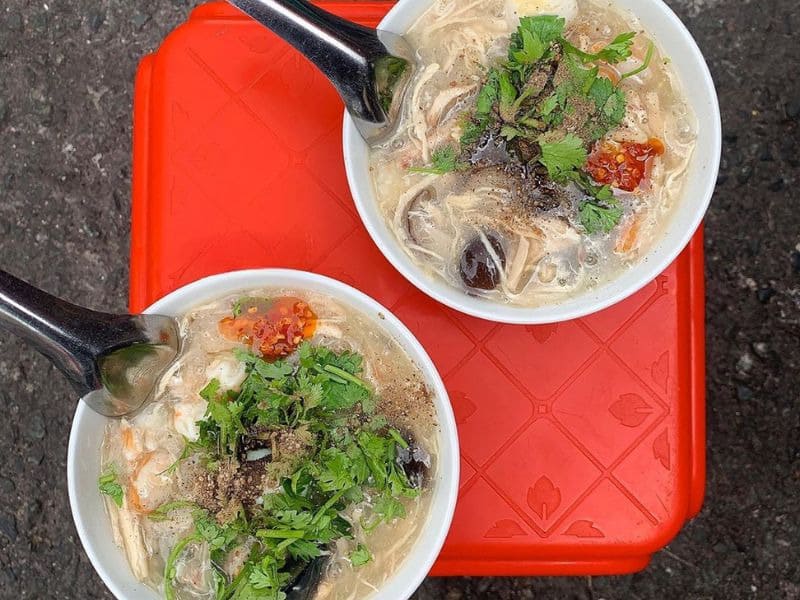
A warm bowl of crab soup at Tan Dinh Market (Source: Collected)
Banh mi stalls around the market prepare Vietnamese baguettes with combinations of:
Banh mi is a practical choice for visitors who want a quick and inexpensive meal. Ask for “không cay” if you do not want chili.
Some sellers also offer banh gio, a pyramid-shaped rice dumpling filled with seasoned minced pork and mushrooms.
Noodle stalls serve a broad range of soups and dry noodle dishes. Common options include:
Hu tieu is especially common in southern Vietnam. It may be served as a clear soup or as dry noodles accompanied by a separate bowl of broth. Toppings can include pork, shrimp, offal, quail eggs, wontons and herbs.
Before ordering, point to the menu or another customer’s dish if language is a barrier. Confirm the price when it is not clearly displayed.
Vietnamese sweet soup, known as chè, includes many desserts made with beans, fruit, jelly, sticky rice, coconut milk and crushed ice.
Varieties may contain:
Chè can be served hot or cold. Cold versions are refreshing during Ho Chi Minh City’s warm afternoons, while warm bean-based desserts provide a richer, more filling snack.
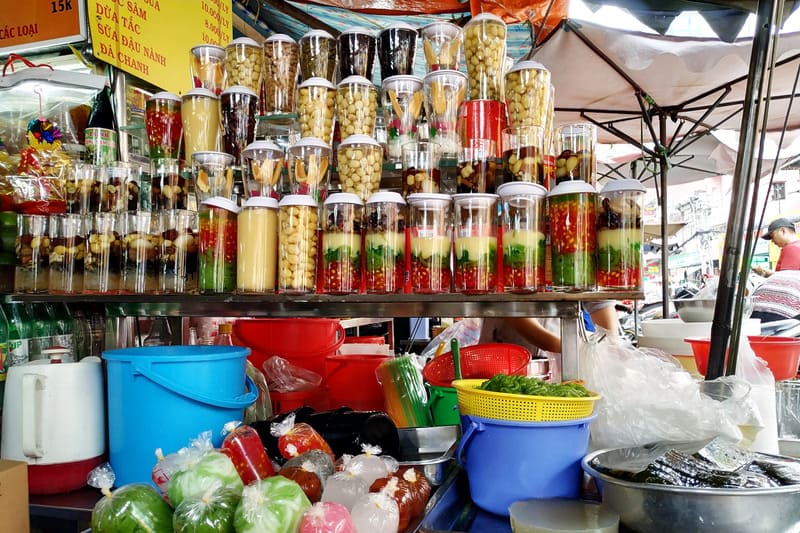
Colorful chè makes a refreshing market treat (Source: Collected)
Traditional rice-based cakes are sold at food and snack stalls throughout the market. Options may include:
These portions are often small, making it possible to sample several dishes during one visit.
The best time to visit Tan Dinh Market is 7:00 - 10:00 AM, when most stalls are open, fresh produce is fully stocked and the market is at its most vibrant.
A few simple tips can help you shop more comfortably and avoid common inconveniences.
Tan Dinh Market is surrounded by several attractions that are easy to combine into a half-day itinerary.
Yes. There is no entrance fee, and visitors can browse the market without making a purchase. Food, shopping, parking and transport are charged separately.
Tan Dinh Market generally opens daily, including weekends. However, some vendors may close on public holidays or during Lunar New Year. Visit in the morning when most stalls are operating.
The indoor market usually closes at around 6:00 PM, although some stalls finish earlier. Food vendors near Nguyen Huu Cau Street may remain open later. Arrive before 5:00 PM for shopping or before late morning to experience the market at its busiest.
Bargaining is common when buying fabrics, clothing, accessories and household goods. It is generally unnecessary for prepared food or low-priced items with displayed prices. Compare several stalls and negotiate politely before purchasing.
Tan Dinh Market is about 3 kilometers from Ben Thanh Market. Travel time is usually 10 - 20 minutes by car or motorbike, depending on traffic. Walking is possible, but the heat and busy roads may make the journey uncomfortable.
Most visitors spend one to two hours at the market. A quick visit takes about 45 - 60 minutes, while shopping for fabric or stopping for food may require 90 minutes or longer. Allow an additional 30 - 45 minutes when combining the visit with Tan Dinh Church.
Yes. The market is well known for silk, lace, brocade, embroidered textiles and other fabrics suitable for ao dai. Tell the seller what you plan to make, compare several shops and check the material carefully before buying.
Children can visit, but close supervision is necessary because some aisles are narrow, crowded or slippery. Motorbikes may also pass through the surrounding areas. Young children may find the wet-market section uncomfortable due to raw meat, seafood and strong smells. Families may prefer the fabric stalls, food area, main facade and nearby Tan Dinh Church.
Through the information above, we hope you now have everything you need to plan your visit to Tan Dinh Market. Spending one to two hours here gives you enough time to explore one of Ho Chi Minh City's oldest markets, sample authentic local dishes, and browse its renowned selection of ao dai fabrics and textiles.
2026-07-25



 Vietnam Tours
 Cambodia Tours
 Laos Tours
 Thailand Tours
 Multi-Country Tours