Tan Dinh Church, officially known as the Church of the Sacred Heart of Jesus, is one of the most recognizable landmarks in Ho Chi Minh City. Nicknamed the “Pink Church,” it immediately stands out with its vibrant facade and elegant colonial-era architecture. Built in the late 19th century, the church reflects a blend of Romanesque and Gothic influences, offering both historical depth and strong visual appeal.
Located in the heart of Saigon, Tan Dinh Church has evolved from a local place of worship into a cultural icon and one of the city’s most photographed sites. Its distinctive pink color, preserved through decades of change, continues to attract travelers, photographers, and architecture enthusiasts. A visit here adds both aesthetic and cultural value to any Ho Chi Minh City itinerary.
Tan Dinh Church is situated at 289 Hai Ba Trung Street, District 3, Ho Chi Minh City, just around 3 kilometers from Ben Thanh Market. Its central location makes it easily accessible from District 1 and other key areas of the city.
Surrounded by local markets, cafes, and residential streets, the church offers a more authentic Saigon atmosphere compared to the busier tourist zones. Its setting also makes it convenient to combine with nearby attractions for a well-rounded city experience.
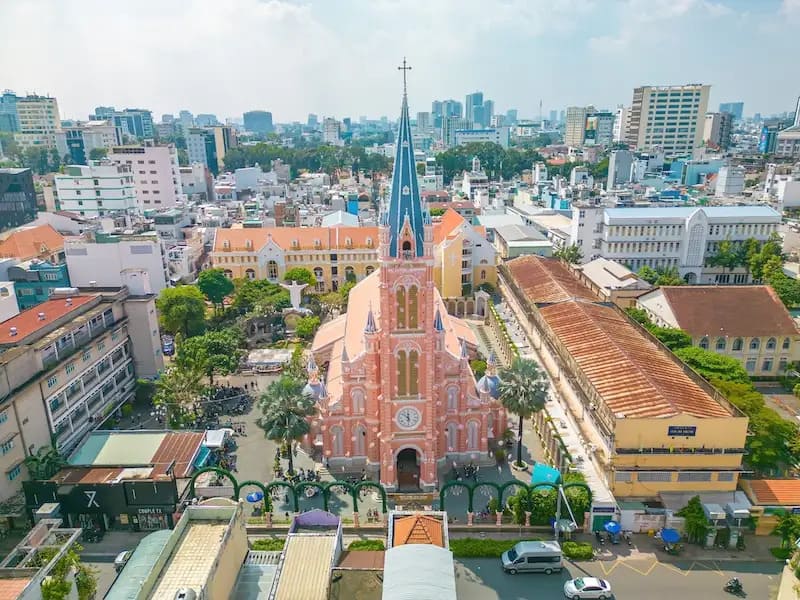
Tan Dinh Church in District 3, near central Saigon (Source: Collected)
One of the most distinctive features of Tan Dinh Church is its vivid pink exterior, which has turned it into one of the most photographed landmarks in Saigon. The church was repainted in 1957, when it received the iconic pink tone seen today. Since then, this unique color has become its visual signature.
The pink facade sets Tan Dinh Church apart from other religious buildings in Vietnam and gives it a softer, more romantic presence against the busy streets of District 3. Combined with its historic architecture, the color has helped the church gain recognition far beyond its religious role, making it a favorite stop for architecture lovers, photographers, and travelers exploring Ho Chi Minh City.
Tan Dinh Church is open daily and remains an active place of worship. Visiting hours are flexible, but access may vary depending on Mass times and religious activities.
Ticket price:
Visiting hours (approximate):
Important notes:
Mass schedule (varies by day):
During major holidays such as Christmas or Tet, the church becomes significantly more crowded and is often decorated with lights and flowers.
Tan Dinh Church is one of the oldest Catholic churches in Ho Chi Minh City, reflecting the city’s colonial past and long-standing religious heritage. Construction began in 1870 during the French colonial period and was completed in 1876, making it one of the earliest large-scale churches in Saigon.
The project was led by Father Donatien Éveillard, who played a central role in mobilizing resources and overseeing construction. From the beginning, the church was established to serve the spiritual needs of the local Catholic community, which was growing steadily at the time.
In its early years, Tan Dinh Church also became a center for community development. Religious institutions nearby supported social and educational activities, including the establishment of an orphanage and a boarding school. This helped strengthen its role beyond worship, positioning the church as an important part of local life.
Throughout the 20th century, the church underwent several renovations and structural improvements. Notable upgrades took place in the late 1920s, followed by reinforcement work in 1949. In 1957, the church was repainted in its now-iconic pink color, marking a significant visual transformation while preserving its original architectural character.
Despite rapid urban development in Ho Chi Minh City, Tan Dinh Church has retained its historical identity and continues to function as an active place of worship. Today, it stands as both a religious landmark and a cultural symbol, connecting the city’s past with its modern urban landscape.
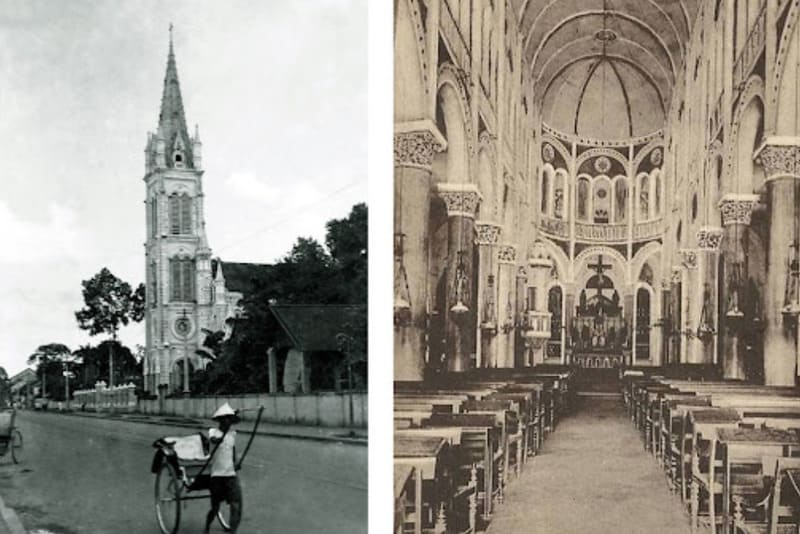
Tan Dinh Church connects past and present Saigon (Source: Collected)
Tan Dinh Church is one of the most distinctive architectural landmarks in Ho Chi Minh City. Its appeal goes far beyond the famous pink exterior. From the soaring bell tower to the ornate religious details inside, the church presents a refined blend of Gothic and Romanesque influences shaped by the French colonial era. Every element contributes to its status as both an active place of worship and one of Saigon’s most visually memorable heritage sites.
The most recognizable feature of Tan Dinh Church is its vivid pink facade, which has made it one of the most photographed landmarks in Ho Chi Minh City. Set along busy Hai Ba Trung Street, the church creates a striking contrast against the surrounding urban scenery and immediately draws attention from passersby.
This distinctive color gives the church a softer and more decorative character than many traditional Catholic churches. Combined with arched windows, layered detailing, and symmetrical proportions, the pink exterior gives Tan Dinh Church a unique identity that is hard to miss in Saigon’s cityscape.
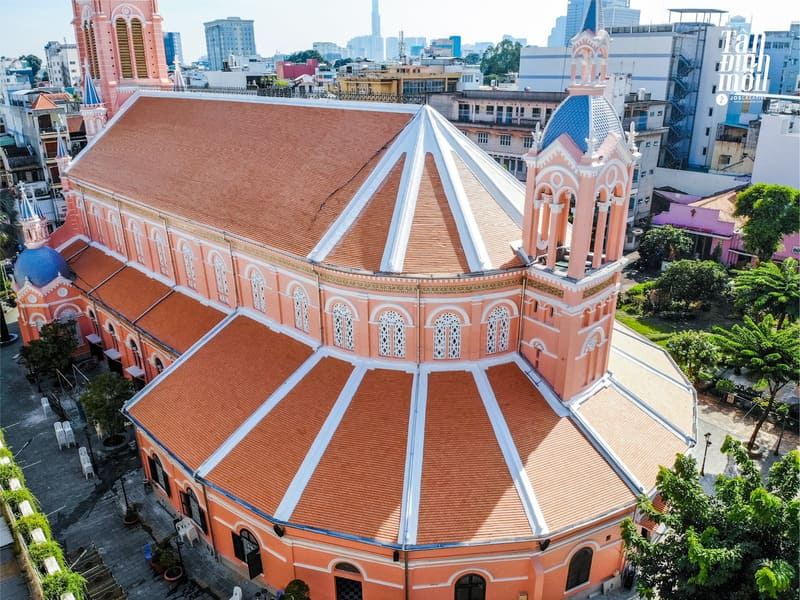
Tan Dinh Church stands out with its pink exterior (Source: Collected)
Tan Dinh Church is built with a prominent central tower flanked by two smaller side towers, creating a balanced and impressive facade. The main bell tower rises high above the surrounding streetscape and is topped with a cross, reinforcing the church’s religious significance while adding to its dramatic silhouette.
The exterior design features a rich combination of decorative elements, including arches, columns, moldings, and ornamental patterns. The side towers, with their windows, tiled roofs, and layered architectural details, add depth and elegance to the overall composition. Seen from a distance, the entire structure feels grand yet harmonious, reflecting the influence of European church architecture adapted to the local setting.
Inside, Tan Dinh Church offers a more solemn and traditional atmosphere. The interior is spacious and richly decorated, with long rows of columns leading toward the main altar. These structural lines create a strong sense of symmetry and guide the eye through the sacred space.
Religious statues, carved details, and stained-glass windows add visual richness throughout the church. Soft light filtering through the windows enhances the spiritual ambiance, while the classic arches and decorative elements evoke the feeling of an old European cathedral. The interior also preserves pink accents that visually connect with the church’s exterior, creating a cohesive and memorable design.
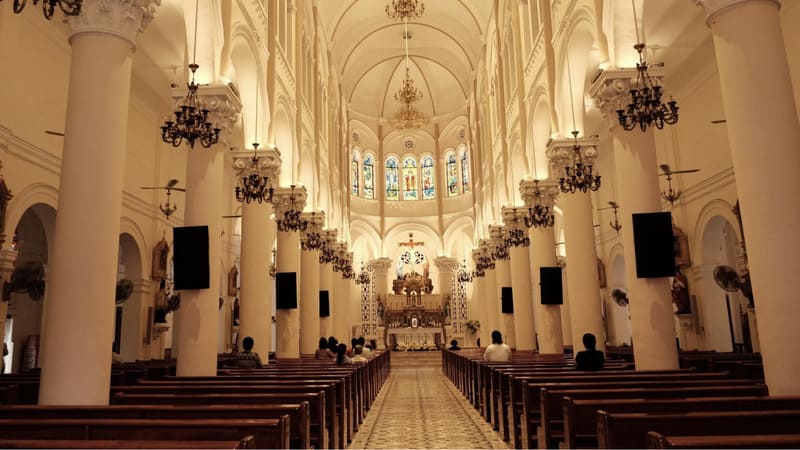
Inside Tan Dinh Church with elegant sacred design (Source: Collected)
What makes Tan Dinh Church stand out is the way it combines religious function, historic character, and strong visual appeal in a single landmark. Its pink color makes it instantly recognizable, while the towers, arches, artworks, and interior layout reflect the craftsmanship of a much earlier era.
For visitors interested in architecture, photography, or cultural heritage, Tan Dinh Church offers more than just a beautiful facade. It represents a distinctive part of Ho Chi Minh City’s history and remains one of the city’s most remarkable examples of colonial-era religious architecture.
Along with the famous Saigon Notre Dame Cathedral, Tan Dinh Church is one of the city’s most iconic religious landmarks.
The first thing that draws attention is the church’s unmistakable pink façade. Its bold color, combined with elegant arches, decorative details, and symmetrical towers, makes Tan Dinh Church one of the most visually distinctive buildings in the city.
From the street, visitors can take in the full scale of the architecture and notice how the pink tones shift beautifully under different lighting conditions. Early morning and late afternoon are especially rewarding for both sightseeing and photography.
If access is permitted, entering the church offers a very different experience from viewing it outside. The interior feels calm, solemn, and refined, with rows of columns, stained glass, religious statues, and an altar that reflects the church’s spiritual importance.
This part of the visit is best approached quietly and respectfully, especially during prayer times or religious services. For travelers interested in architecture, heritage, or local culture, the interior adds meaningful depth to the experience.
Tan Dinh Church is widely known as one of the most photographed attractions in Ho Chi Minh City. Its vibrant pink walls, elegant façade, and central location make it a favorite stop for travelers, photographers, and content creators.
The best photos are usually taken from across the street or from nearby angles that capture the full front of the church. For softer light and fewer crowds, visit in the morning or later in the afternoon. When taking photos, it is important to stay mindful of traffic and respectful of the church’s religious setting.
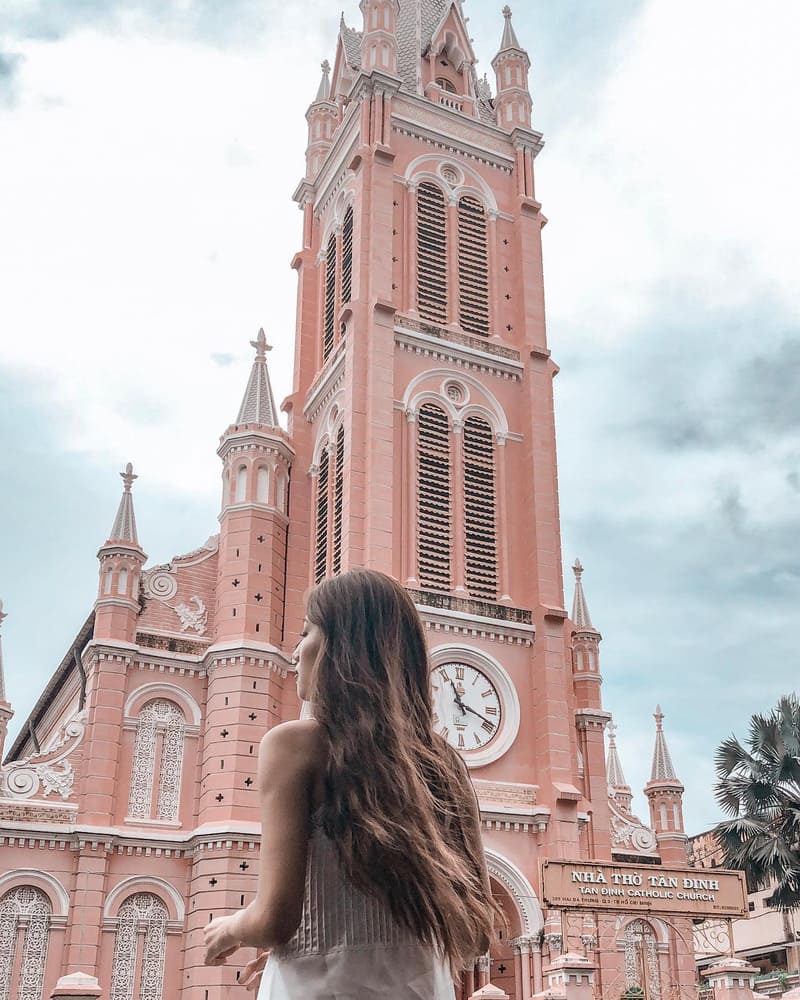
Tan Dinh Church, a must-visit photo location (Source: Collected)
Tan Dinh Church is centrally located in District 3, making it easy to reach from most parts of Ho Chi Minh City. Travel time from District 1 is typically 5 - 15 minutes, depending on traffic.
For a smoother experience, consider visiting early in the morning or outside peak traffic hours, as Ho Chi Minh City roads can get busy during rush periods.
A few practical tips can help you enjoy a smoother and more respectful visit to Tan Dinh Church.
Tan Dinh Church is located in a central area of Ho Chi Minh City, making it easy to combine with other cultural and historical highlights nearby.
These nearby attractions allow travelers to easily build a half-day or full-day itinerary around Tan Dinh Church while exploring different aspects of Ho Chi Minh City.
No. Entry to Tan Dinh Church is completely free. Visitors can explore the exterior and courtyard without any charge.
Access to the interior is sometimes limited and prioritized for worshippers. Visitors may enter outside Mass times, but availability can change depending on church activities.
Yes. Visitors are welcome to attend Mass. Services are conducted in Vietnamese, and respectful behavior is expected throughout.
Early morning or late afternoon is the best time for fewer crowds, better lighting, and more comfortable weather. Avoid Sundays and major holidays if you prefer a quieter experience.
Yes. Visitors should wear modest clothing that covers shoulders and knees, as the church is an active place of worship.
Most visitors spend around 30 to 60 minutes exploring the exterior, taking photos, and visiting nearby attractions.
Yes. With its unique pink façade, colonial architecture, and central location, Tan Dinh Church is one of the most distinctive and photogenic landmarks in Saigon.
Tan Dinh Church is one of the most unique landmarks in Ho Chi Minh City, known for its striking pink façade, colonial architecture, and historical significance. Its central location and visual appeal make it an easy and rewarding stop on any Saigon itinerary.
For a more complete travel experience, consider combining Tan Dinh Church with nearby attractions or exploring the city through a tailored itinerary. Your Vietnam Travel offers customized tours across Vietnam and Southeast Asia, helping you discover iconic sights alongside authentic local experiences.

 Vietnam Tours
 Cambodia Tours
 Laos Tours
 Thailand Tours
 Multi-Country Tours