Traffic in Vietnam is one of the first things visitors notice after arrival. Streets are active, fast-moving, and often crowded, especially in major cities like Hanoi and Ho Chi Minh City. For first-time travelers, understanding how the system works is essential for safety, comfort, and efficient travel planning.
This guide from Your Vietnam Travel will explain what traffic in Vietnam is really like, how locals move around, and practical ways to navigate it confidently.
Traffic in Vietnam is busy, fast-moving, and often surprising for first-time visitors. In major cities, streets are filled with a constant flow of motorbikes, cars, buses, taxis, delivery vehicles, and occasional bicycles, all sharing the road at the same time. At first glance, the movement can seem chaotic. In reality, it follows a local rhythm shaped by experience, awareness, and constant adjustment between road users.
One of the defining features of traffic in Vietnam is the dominance of motorbikes. They are the most common form of daily transport because they are affordable, practical, and easy to maneuver through narrow streets, small alleys, and crowded intersections. This is especially noticeable in large urban centers, where motorbikes often move in dense streams and play a central role in how people commute, shop, and travel short distances.
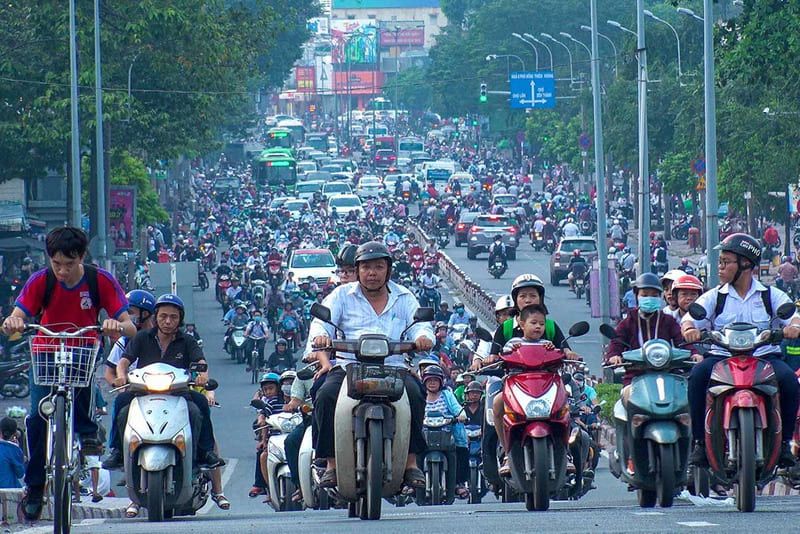
Motorbikes dominate traffic in Vietnam (Source: Collected)
Road conditions in Vietnam also vary depending on the location. Main roads, urban routes, and national highways are generally in better condition, while smaller local roads may be narrower, less even, or more difficult to navigate. In addition, travelers will quickly notice a road system shaped by frequent intersections, roundabouts, mixed traffic, and traffic lights with countdown timers, all of which create a driving environment that feels very different from many Western countries.
Another important point is that traffic in Vietnam is not limited to one type of transport. Alongside motorbikes, visitors will see taxis, private cars, ride-hailing vehicles, public buses, long-distance coaches, trucks, trains, and, in some cities, metro systems. In smaller towns and rural areas, bicycles, cyclos, and other local transport options are still part of daily life. This variety reflects how transportation in Vietnam adapts to different distances, budgets, and local conditions.
For tourists, traffic in Vietnam can feel intense at first, but it becomes easier to understand after a short time. Once you recognize the flow of movement and the role each vehicle plays, the system starts to feel less overwhelming. Traffic here is not simply about getting from one place to another. It is also part of the country’s everyday character, urban energy, and local way of life.
For more practical advice beyond transport, you can also explore our full guide to Vietnam travel tips for first-time visitors.
Vietnam offers a diverse and well-connected transport system that supports both daily commuting and long-distance travel.
Motorbikes are the primary mode of transport in Vietnam and shape how traffic operates across the country. They are widely used for commuting, short trips, and even transporting goods.
For travelers, motorbikes offer flexibility and speed, especially in crowded urban areas. Rental services are available in most cities, while ride-hailing motorbike options provide a safer alternative without requiring driving experience.
If you're considering exploring on two wheels, our guide to Vietnam motorbike travel covers everything from rentals to road safety.
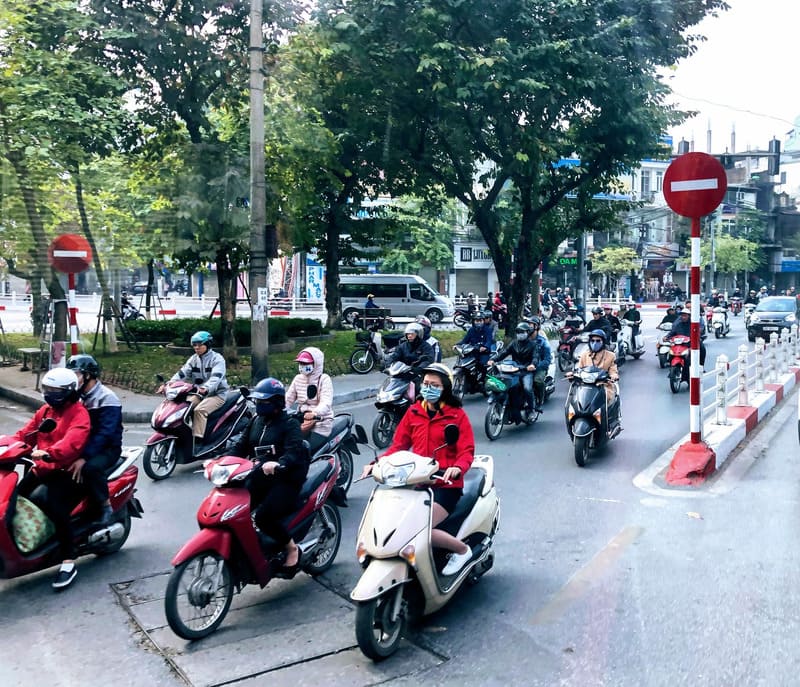
Motorbikes as main transport in Vietnam (Source: Collected)
Cars are commonly used for airport transfers, family travel, and private tours. While more comfortable, they are less efficient in heavy traffic compared to motorbikes.
Taxis are widely available in major cities, but ride-hailing platforms such as Grab and Xanh SM are often preferred due to transparent pricing and ease of booking. For visitors, hiring a private car with a driver is one of the most convenient and stress-free options.
Public buses are the most budget-friendly way to get around cities. Networks cover most urban areas and connect key attractions, though navigation may require some planning.
For longer distances, sleeper buses are a popular choice. These buses operate between major destinations such as Hanoi, Da Nang, Nha Trang, and Ho Chi Minh City, offering reclining seats and overnight travel to save time and accommodation costs.
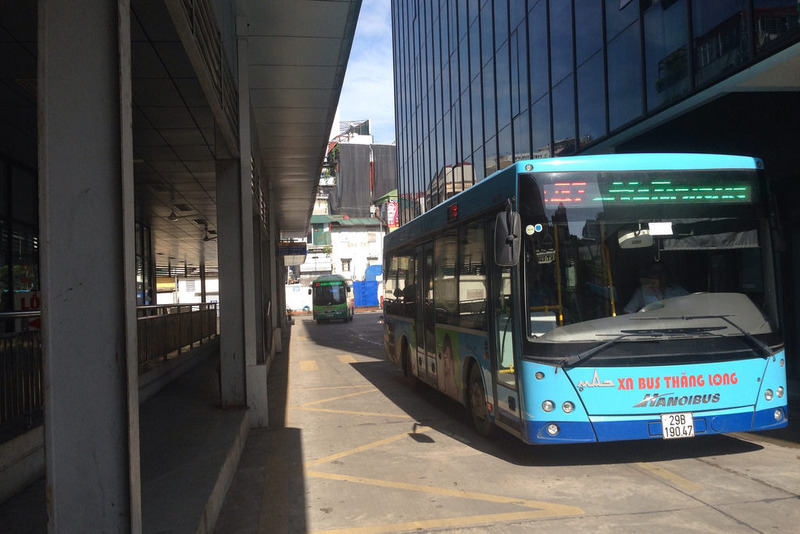
Public bus system in Vietnam cities (Source: Collected)
Metro systems are the newest addition to Vietnam’s transport infrastructure. In Hanoi, lines such as Cat Linh - Ha Dong are already in operation, while Ho Chi Minh City has launched its first metro line connecting Ben Thanh to Suoi Tien.
Metro travel is fast, affordable, and unaffected by road congestion, making it an increasingly attractive option for urban transport.
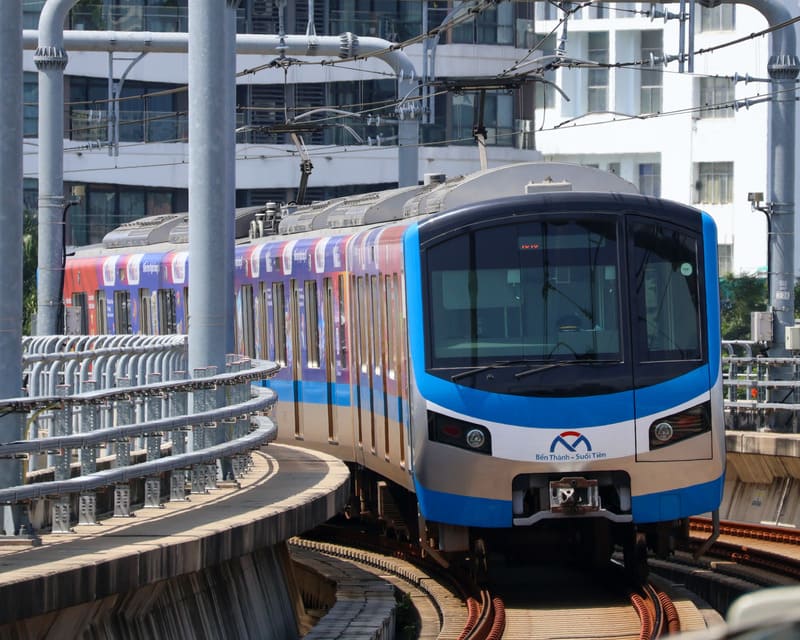
Metro system in Vietnam cities (Source: Collected)
Vietnam’s railway network connects major cities along the north-south axis. Although slower than flying, trains are reliable and offer a comfortable journey with scenic views.
Routes such as Hanoi to central Vietnam or further south provide an opportunity to experience the country’s landscapes while traveling at a relaxed pace. Ticket options range from standard seats to private sleeper cabins.
From north to south, our guide to Vietnam train travel will help you choose the best routes and travel options.
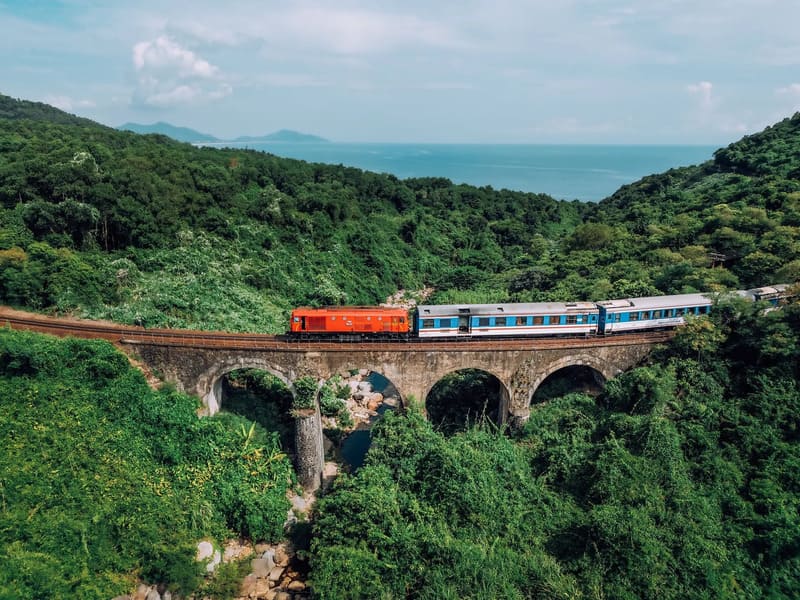
Vietnam train crossing mountain landscape (Source: Collected)
Bicycles remain popular in smaller towns and rural areas, where they are ideal for short distances and sightseeing. Destinations like Hoi An and Hue are especially suitable for cycling.
Traditional options such as cyclos offer a slower, more immersive way to explore city streets. In rural regions like Mai Chau, cycling provides a peaceful experience through local villages and natural landscapes.
Understanding common traffic challenges helps travelers move around more safely and plan their journeys efficiently. While Vietnam’s transport system is functional and accessible, several on-the-ground realities can affect your travel experience, especially in large urban centers.
Traffic congestion is one of the most noticeable challenges, particularly in cities such as Hanoi, Ho Chi Minh City, and Da Nang. Peak hours typically occur between 7:00-9:00 AM and 4:30-7:00 PM, when commuters travel to and from work or school.
During these periods, roads become densely packed with motorbikes, cars, and buses, significantly increasing travel time. Planning transfers outside rush hours can help avoid delays.
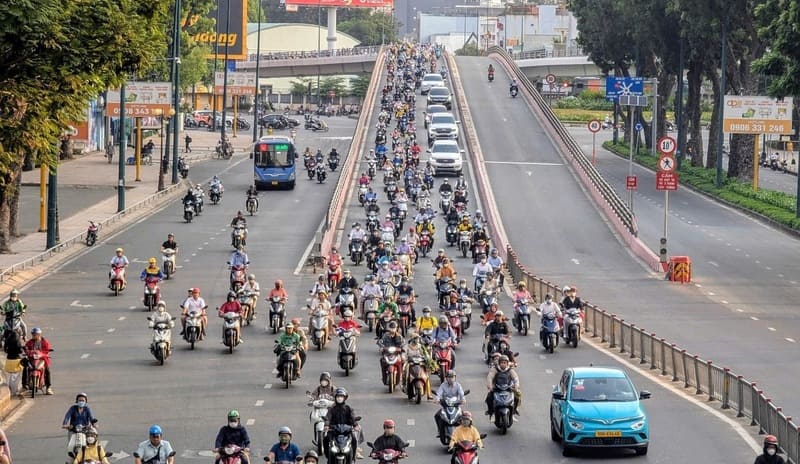
Rush hour traffic in Vietnam (Source: Collected)
Traffic behavior in Vietnam can feel inconsistent for first-time visitors. Lane discipline is flexible, and drivers often merge, turn, or stop without clear signaling.
It is also common to see motorbikes carrying multiple passengers or goods, using sidewalks, or navigating through tight gaps. While this may seem chaotic, local drivers are highly aware of their surroundings and adjust quickly to changing situations.
Urban traffic comes with constant noise, primarily from horns used as a form of communication rather than aggression. In addition, high vehicle density contributes to air pollution, particularly in central districts.
Sidewalks are often occupied by parked motorbikes, street vendors, or small businesses, which can make walking less straightforward than expected.
Crossing the street is a common concern for visitors. Continuous streams of motorbikes rarely stop completely, even at crossings without traffic lights.
The key is to walk slowly and steadily, allowing drivers to anticipate your movement and navigate around you. Sudden stops or hesitation can create confusion and increase risk.
If you're wondering Is It Safe to Travel to Vietnam, our complete safety guide covers traffic, common scams, health advice, and practical tips for a worry-free trip.
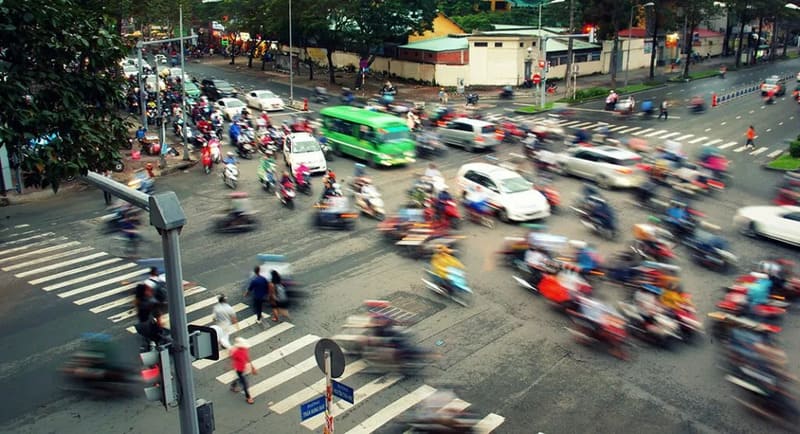
Crossing the street in major Vietnamese cities is a significant challenge (Source: Collected)
Traffic conditions vary between regions. In Hanoi, streets are often narrower with a more compact layout, especially in older districts. Traffic feels slower but more tightly packed.
In contrast, Ho Chi Minh City features wider roads and a faster overall flow, though congestion levels are typically higher. The scale of traffic can feel more intense, particularly in central business areas.
Traffic conditions also reflect broader regional differences, which you can explore in our comparison of North vs South Vietnam.
Traffic in Vietnam may appear informal, but it is governed by clear regulations. Understanding these rules is essential for staying safe and avoiding fines, especially if you plan to ride or drive during your trip.
Vietnam follows right-hand traffic, meaning vehicles drive on the right side of the road. Speed limits are clearly indicated on road signs and vary depending on the area.
In general, motorbikes are limited to around 40 km/h in urban areas and up to 60 km/h on highways or rural roads. Drivers are expected to maintain a safe distance based on speed and road conditions, particularly on larger roads.
Traffic lights, lane markings, and directional signs should always be followed, although real-life driving may feel more flexible than in many Western countries.
Wearing a helmet is mandatory for all motorbike riders and passengers in Vietnam. This rule is strictly enforced and essential for safety.
Seatbelts are required in cars, particularly for front-seat passengers. In newer vehicles, rear-seat passengers are also expected to wear seatbelts where available.
Vietnam enforces a strict zero-alcohol policy for drivers. Any detectable level of alcohol in your system can result in heavy fines, license suspension, or other legal consequences.
Additional safety rules include not using a mobile phone while driving and limiting motorbikes to a maximum of two passengers. These regulations are designed to reduce accidents and improve overall road safety.
Foreign visitors must hold a valid Vietnamese driving license or an appropriate international driving permit that is recognized locally. Driving without proper documentation is considered illegal and may lead to penalties.
For most travelers, renting a car with a driver or using ride-hailing services is a more practical and safer option than self-driving.
Traffic signs in Vietnam generally follow international standards, including clear symbols for speed limits, warnings, and directions. However, many signs include Vietnamese text, so recognizing basic symbols is helpful.
Countdown traffic lights are common in larger cities, allowing drivers and pedestrians to anticipate signal changes. Paying attention to these signs improves both safety and confidence when navigating unfamiliar roads.
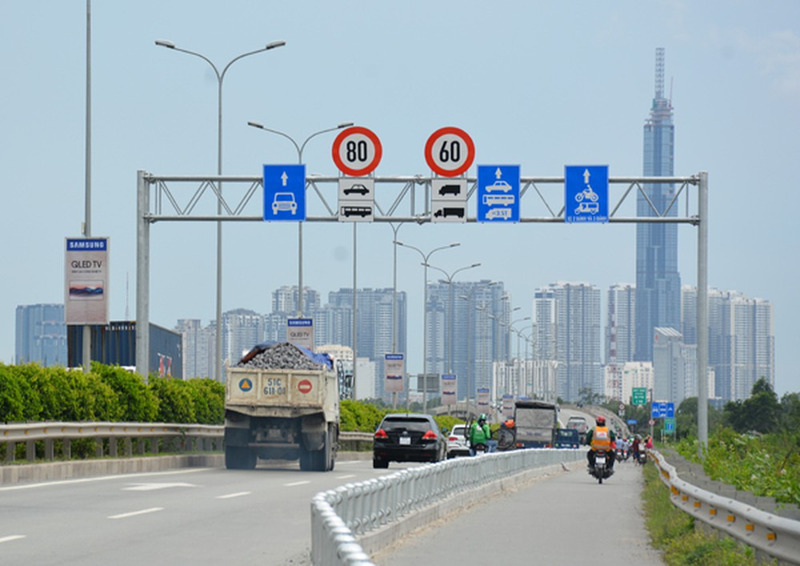
Traffic signs on a highway in Vietnam (Source: Collected)
Navigating traffic in Vietnam becomes much easier once you understand how it actually works on the ground. Instead of relying on strict rules, traffic here operates on awareness, predictability, and constant adjustment. The following practical tips help you move around safely and confidently from day one.
Traffic in Vietnam is generally safe for tourists who use the right transport options and stay aware of their surroundings. Most visitors rely on ride-hailing services, private drivers, or organized tours, which significantly reduces risk. Accidents are more likely to involve inexperienced riders, so avoiding self-driving is a practical safety decision.
Traffic peaks during morning and evening rush hours, typically from 7:00-9:00 AM and 4:30-7:00 PM. These periods see the highest volume of commuters, especially in major cities like Hanoi and Ho Chi Minh City. Traveling outside these time windows helps reduce delays.
Foreigners can drive legally in Vietnam only if they hold a valid Vietnamese driving license or an international driving permit that is officially recognized in the country. Without proper documentation, driving is illegal and may lead to fines or insurance issues.
The easiest option is to use motorbike ride-hailing services such as Grab or similar platforms. These services allow you to experience motorbike travel without handling traffic yourself. You can also arrange motorbike tours with local drivers through travel agencies.
Public buses are reliable and widely used by locals, especially in large cities. They are cost-effective but may be less convenient for tourists due to language barriers, complex routes, and limited onboard guidance. For long-distance travel, sleeper buses are a more comfortable alternative.
Crossing the street can feel challenging at first due to the continuous flow of motorbikes. However, it becomes manageable once you follow a simple approach: walk slowly, keep a steady pace, and allow vehicles to move around you. Predictable movement is more effective than hesitation.
Renting a motorbike is not recommended for most tourists unless they have prior experience in similar traffic conditions and hold the correct license. For convenience and safety, using ride-hailing services or hiring a private driver is a more suitable choice.
Traffic in Vietnam can look intimidating, but it becomes far easier to handle once you understand the flow, the main transport choices, and the local road culture. Motorbikes dominate daily life, major cities are busy, and road conditions demand caution, but travelers have plenty of practical ways to get around safely.
For most visitors, the best strategy is simple: avoid driving unless you are fully prepared and legally covered, use trusted transport options, and give yourself extra time in big cities. Do that, and navigating Vietnam becomes much less stressful and far more enjoyable.



 Vietnam Tours
 Cambodia Tours
 Laos Tours
 Thailand Tours
 Multi-Country Tours