Tien Sa Waterfall is one of the most scenic stops inside Cat Cat Village, a popular H’Mong village near Sapa Town. Also known as Cat Cat Waterfall, it combines a white mountain cascade, wooden bridges, water wheels, terraced valley views, and local cultural experiences in one easy half-day trip.
This guide covers where Tien Sa Waterfall is, how to get there, what to do, ticket information, the best time to visit, useful travel tips, and FAQs for planning your visit.
Tien Sa Waterfall is located inside Cat Cat Village, one of the closest ethnic villages to Sapa Town. The village sits at the lower end of the valley near the foot of the Hoang Lien Son mountain range, where streams, rice terraces, wooden houses, and mountain paths create one of the most familiar landscapes in Sapa.
From Sapa Stone Church or the town center, visitors travel southwest toward Cat Cat Village. The road descends from the town into the valley, offering wide views of the mountains and terraced fields along the way. After entering Cat Cat Village, the walking route leads through stone paths, local houses, souvenir stalls, craft workshops, and streamside scenery before reaching Tien Sa Waterfall.
The waterfall is often called Cat Cat Waterfall because it lies within the Cat Cat tourist area. For many visitors, Tien Sa Waterfall is not a separate attraction but the scenic highlight at the end of the village walking route.
Its convenient location makes it suitable for travelers who want to experience Sapa’s natural beauty without taking a long trek to remote villages. It is also easy to combine with other nearby attractions such as Sapa Stone Church, Fansipan cable car station, Muong Hoa Valley viewpoints, Lao Chai Village, and Ta Van Village.
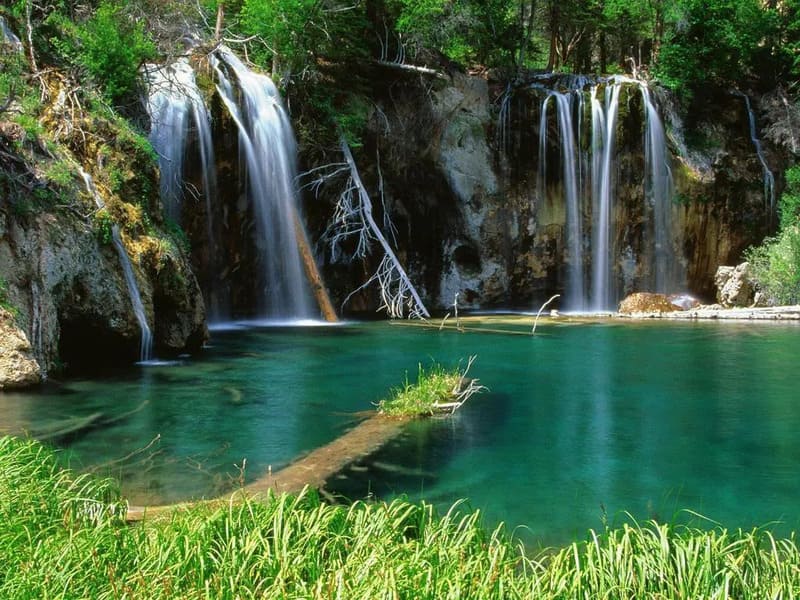
Tien Sa Waterfall inside Cat Cat Village (Source: Collected)
Tien Sa Waterfall is loved for its combination of mountain water, rocks, forest greenery, terraced valley views, and traditional village scenery. It is not the tallest or most dramatic waterfall in Sapa, but it is one of the most accessible and photogenic.
Tien Sa Waterfall flows down rocky layers inside Cat Cat Village, creating a white cascade surrounded by green trees, mossy stones, and wooden structures. The water is especially impressive after rain, when the stream becomes stronger and the sound of the cascade echoes through the valley.
The waterfall is part of the natural stream system running through Cat Cat Village. From a distance, visitors can often hear the sound of falling water before reaching the main viewing area. As the path gets closer, the scenery opens into a picturesque streamside space with bridges, rocks, water wheels, and mountain plants.
The beauty of Tien Sa Waterfall lies in its harmony with the village setting. The cascade is framed by H’Mong-style houses, wooden paths, bamboo details, and the cool atmosphere of the Sapa highlands. This makes it a popular stop for couples, families, photographers, and travelers who want an easy nature experience close to town.
The route to Tien Sa Waterfall passes through one of the most scenic areas near Sapa Town. Along the way, visitors can see terraced rice fields curving across the hillsides, small wooden houses scattered across the valley, and mountain slopes rising behind the village.
These rice terraces change throughout the year. During the water-pouring season, the fields reflect the sky like mirrors. In summer, the terraces turn green as rice plants grow. From September to early October, the fields become golden during harvest season, creating one of the best landscapes for photography.
Although Tien Sa Waterfall itself is the main attraction, the surrounding valley scenery is equally important to the experience. The walk down through Cat Cat Village gives visitors a close view of Sapa’s rural landscape without requiring a long or difficult trek.
Tien Sa Waterfall sits within the cool mountain environment of the Hoang Lien Son range. The air is often fresher than in the town center, especially in the morning. The sound of flowing water, the shade of trees, and the slower pace of village life create a peaceful atmosphere that appeals to travelers looking for a short escape from busy Sapa streets.
The area can become crowded during weekends and peak travel periods, but it still has quiet corners if you visit early. The most peaceful time is usually before large tour groups arrive. Early morning also brings softer light, cooler air, and better conditions for photography.
For visitors who do not have time for a full-day trek to Lao Chai, Ta Van, or Y Linh Ho, Tien Sa Waterfall offers a compact but rewarding glimpse of Sapa’s mountain scenery.
Tien Sa Waterfall changes noticeably between the rainy season and the dry season.
During the rainy season, usually from May to September, the water flow is stronger and the waterfall looks more powerful. The stream rises, water wheels turn more actively, and the surrounding vegetation becomes lush and green. This is a good time for visitors who want to see the waterfall at its liveliest. However, paths can be wet and slippery, so non-slip shoes are important.
During the dry season, especially from November to March, the water flow may be lighter, but the water can appear clearer. The walking paths are usually easier to manage, and photography around the stream is more comfortable. Winter days can be foggy and cold, giving the waterfall a misty highland mood, although visibility may be limited on heavily foggy days.
For the best balance of scenery and comfort, March to May and September to October are often the most rewarding periods. These months usually offer pleasant weather, attractive landscapes, and easier walking conditions.
The first thing to do at Tien Sa Waterfall is simply take time to enjoy the landscape. The white water, rocky stream, green plants, and wooden village structures create a classic Sapa scene.
Visitors can stand near the viewing areas to watch the water cascade down the rocks or walk around the streamside paths to see the waterfall from different angles. The scenery is especially beautiful when sunlight touches the water surface, creating a bright contrast against the darker rocks and green background.
The area is suitable for slow travel. Instead of rushing through the village, spend a few minutes listening to the sound of water, observing the stream, and enjoying the cool mountain air.
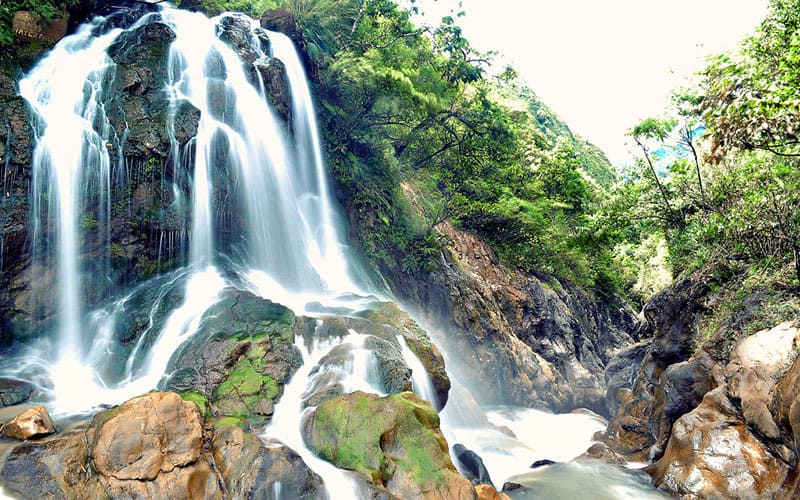
White cascades and mountain scenery at Tien Sa Waterfall (Source: Collected)
Tien Sa Waterfall is one of the most photogenic places in Cat Cat Village. The best photo angles are usually around the wooden bridges, stream banks, large rocks, and viewpoints facing the waterfall.
Early morning is ideal for softer light and fewer visitors. Late afternoon can also be beautiful when the light becomes warmer, but the village may still be busy depending on the season. Midday is brighter and easier for clear photos, though the light can be harsh on sunny days.
Good photo spots include:
If you plan to take portraits, light-colored clothing often contrasts well with the green and brown tones of the landscape. Many visitors also rent traditional H’Mong-style costumes for photos inside the village.
Si Bridge and A Lu suspension bridge are two popular check-in spots near the waterfall area. These bridges are part of the village route and add a rustic, photogenic touch to the streamside scenery.
Si Bridge is often recognized for its simple wooden and rope design. It offers a good view toward the stream and waterfall area, making it a favorite place for photos. The bridge can sway slightly when people walk across, so visitors should move carefully and avoid crowding.
A Lu Bridge connects parts of the village around the stream. It gives another angle of the water, rocks, and surrounding mountain landscape. From the bridge, visitors can see how closely the village lifestyle is connected with the stream and valley environment.
These bridges are not large attractions on their own, but they make the walk to Tien Sa Waterfall more interesting and help create the scenic character of Cat Cat Village.
The traditional water wheels are among the most memorable sights near Tien Sa Waterfall. Built along the stream, these wooden wheels reflect the farming lifestyle of mountain communities and are often associated with irrigation and daily village life.
For travelers, the water wheels are also excellent photo subjects. Their wooden structure, slow rotation, and position beside the stream create a peaceful countryside scene. During the rainy season, when the stream flow is stronger, the water wheels can look more active and lively.
Around the stream, visitors can also see small wooden bridges, stone paths, flower decorations, and resting spots. This area is one of the reasons Cat Cat Village remains a popular attraction for first-time visitors to Sapa.
Near the waterfall area, visitors can find the old Cat Cat hydroelectric station, a historical structure linked with the French colonial period in Sapa. It is often mentioned as one of the oldest hydroelectric works in the region and adds a historical layer to the natural landscape.
The structure stands close to the stream and waterfall, creating an interesting contrast between mountain nature and early industrial architecture. Its stone walls, old design details, and riverside location make it a unique stop for visitors who enjoy history, photography, and architecture.
This is one of the details that makes Tien Sa Waterfall different from a normal waterfall visit. The area is not only about scenery; it also reflects how Sapa developed as a mountain station and how water resources were used in the past.
Renting traditional-style H’Mong costumes is a popular activity in Cat Cat Village. Many shops along the village route offer colorful outfits, accessories, and photo services. Rental prices vary depending on the outfit, accessories, and duration, but visitors often see prices ranging from around 50,000 to 150,000 VND per set.
Costume rental is especially popular with couples, families, and groups of friends. The best photo settings include the stone paths, streamside viewpoints, water wheels, bridges, and waterfall area.
When renting costumes, check the price clearly before agreeing. Ask whether accessories, headscarves, or props are included. It is also respectful to remember that these designs are inspired by local ethnic clothing, so photos should be taken with cultural sensitivity.
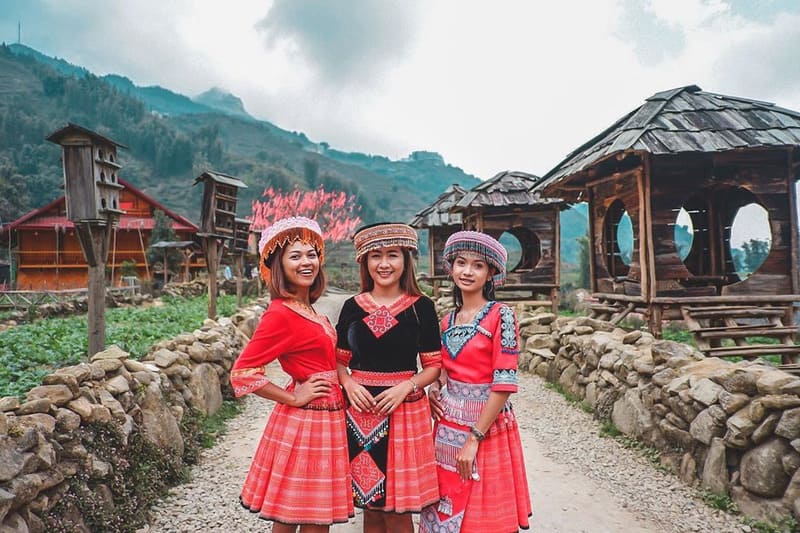
Traditional-style outfits add color to Cat Cat photos (Source: Collected)
Tien Sa Waterfall is a good place to slow down during a Sapa itinerary. After walking downhill through Cat Cat Village, many visitors stop near the stream to rest, take photos, or enjoy the cooler air.
There are resting areas and small shops around the village where visitors can buy drinks or snacks. The sound of the water, the surrounding greenery, and the mountain breeze create a pleasant break before walking back or continuing to other parts of the village.
The return route may require walking uphill or taking a motorbike/taxi from a nearby exit point, so resting before leaving is a good idea, especially for families with children or elderly travelers.
Tien Sa Waterfall is best experienced as part of a Cat Cat Village visit. Cat Cat is home to the Black H’Mong community and is known for its traditional houses, brocade weaving, silver carving, handicraft stalls, cultural performances, and mountain scenery.
While walking through the village, visitors can see local-style wooden houses, small gardens, craft workshops, and shops selling embroidered bags, scarves, clothing, and souvenirs. Some areas also host cultural performances with traditional music and dance.
Cat Cat Village today is a developed tourist area, so it is more commercial than remote ethnic villages such as Lao Chai or Ta Van. However, it remains one of the easiest places near Sapa Town to see H’Mong-inspired architecture, costumes, crafts, and local products within a short visit.
To experience the village better, walk slowly and avoid treating it only as a photo spot. Buy directly from local vendors when possible, ask before taking close-up photos of residents, and keep to marked paths to protect the village environment.
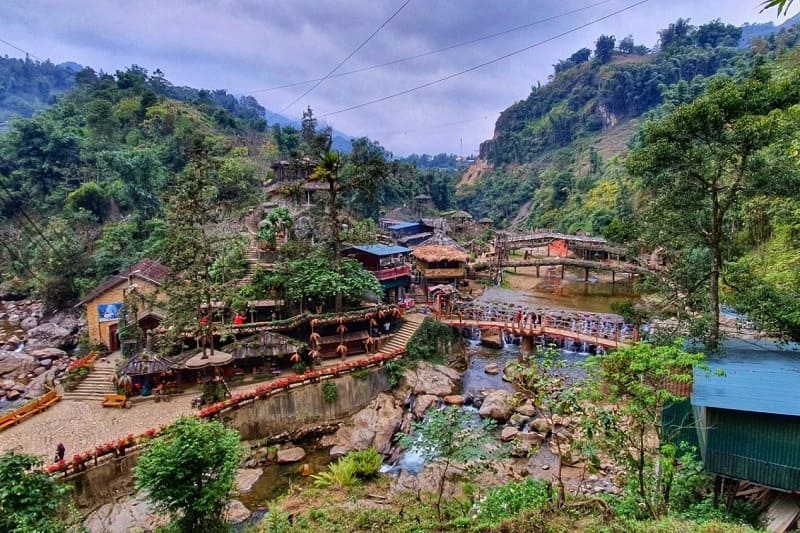
Cat Cat Village blends mountain views and H’Mong culture (Source: Collected)
After exploring Tien Sa Waterfall and Cat Cat Village, visitors can enjoy a variety of traditional Sapa dishes served at local restaurants, food stalls, and cafés along the route.
For a relaxing break, stop at a café overlooking the valley and enjoy a cup of hot tea, coffee, or herbal drink while taking in the mountain scenery.
Food prices are generally reasonable, but it is advisable to check menus and prices before ordering, especially in busy tourist areas.
If you want to explore more local specialties, check out our guide to Sapa food featuring the must-try dishes and traditional flavors of Vietnam’s Northwest region.
Tien Sa Waterfall is located within Cat Cat Village, so visitors only need to purchase a Cat Cat Village entrance ticket.
Tien Sa Waterfall is located inside Cat Cat Village, about 2.5 - 3 km from Sapa Town, making it easy to reach in several ways:
Tien Sa Waterfall can be visited year-round, but each season offers a different experience.
For a more detailed overview of seasonal weather, rice terrace scenery, and travel conditions, see our guide to the best time to visit Sapa.
A few simple preparations can help you enjoy Tien Sa Waterfall safely and make the most of your visit to Cat Cat Village.
Yes. Tien Sa Waterfall is located inside Cat Cat Village near Sapa Town. Visitors usually access the waterfall by buying the Cat Cat Village entrance ticket and following the walking route through the village.
Yes. You can walk from Sapa Town to Cat Cat Village and continue to Tien Sa Waterfall. The distance is around 2.5 - 3 km from the town center. The walk is mostly downhill on the way to the village and can take around 30 - 45 minutes depending on your pace.
Most visitors should spend 2 - 3 hours exploring Cat Cat Village and Tien Sa Waterfall. If you want to take photos, rent traditional costumes, watch cultural performances, eat local food, or explore slowly, plan a half-day visit.
Swimming is not generally recommended at Tien Sa Waterfall. The rocks can be slippery, the water flow may change after rain, and the area is mainly designed for sightseeing and photography. It is safer to enjoy the waterfall from marked viewpoints and streamside areas.
Yes, Tien Sa Waterfall can be suitable for children if they are comfortable walking and supervised carefully. Families should pay attention to stone steps, downhill paths, wet areas, and stream edges. For young children, walking slowly and taking breaks is recommended.
The walk is easy to moderate. The route is not a hard trek, but it includes downhill paths, stone steps, and some slippery areas near the waterfall. The return can feel more tiring because it may involve uphill walking.
Yes. Cat Cat Village has small food stalls, drink shops, local eateries, and souvenir shops along the walking route. Visitors can try grilled foods, sticky rice, local vegetables, coffee, tea, and snacks before or after visiting the waterfall.
Bring comfortable shoes, cash, drinking water, a light jacket, sunscreen, a raincoat during the rainy season, and a camera or smartphone. If you plan to take many photos, consider visiting early for better light and fewer crowds.
No. A guide is not required because Cat Cat Village is easy to reach and the walking route is generally clear. However, a local guide can make the visit more meaningful by explaining H’Mong culture, village traditions, handicrafts, and the history of the old hydroelectric station.
Tien Sa Waterfall is an easy and rewarding stop for travelers visiting Sapa. With its white cascade, streamside scenery, wooden bridges, water wheels, H’Mong cultural touches, and convenient location inside Cat Cat Village, it is best experienced as a relaxed half-day trip from Sapa Town.
2026-06-12




 Vietnam Tours
 Cambodia Tours
 Laos Tours
 Thailand Tours
 Multi-Country Tours