Cat Cat Village is a traditional Hmong village located just outside Sapa in northwestern Vietnam, known for its mountain scenery and preserved cultural heritage. Visitors can explore traditional houses, local handicrafts, and regional cuisine, along with natural highlights such as Tien Sa Waterfall and the iconic bamboo water wheels. While the village remains culturally rich, it has also become one of the most visited and developed attractions in Sapa.
In this guide, Your Vietnam Travel covers everything you need to plan your visit, including the village’s background, best time to go, things to do, photo spots, and where to eat for a smooth and well-paced experience.
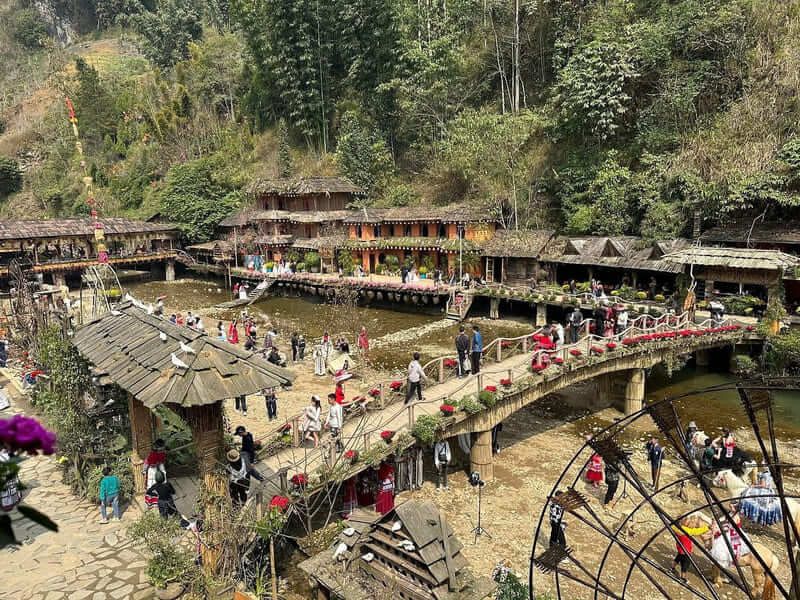
Located on the southwestern slope of Sapa, Cat Cat Village stretches along a steep valley filled with stone paths, wooden bridges, and streamside gardens. Traditional H’Mong houses are scattered along the hillside, set against the dramatic backdrop of Fansipan Mountain.
Today, Cat Cat is managed as a tourist village, making it easy to explore on a well-marked walking loop. Along the route, you’ll find handicraft stalls, scenic viewpoints, and the village’s signature waterfall. Most visitors spend half a day here.
For a more relaxed experience, visit early in the morning or late afternoon to avoid peak crowds and enjoy softer light over the rice terraces.
 |
|
Cat Cat Village (Source: Tripadvisor) |
Cat Cat Village is located in San Sa Ho Commune, around 2.5-3 km from Sapa town center. The village sits at the entrance of Muong Hoa Valley, where several small streams meet before flowing into Cat Cat (Tien Sa) Waterfall.
From the Stone Church area, the road descends gradually toward the village, opening up wide views of the valley and Fansipan along the way.
The name “Cat Cat” is believed to originate from the French colonial period, when the waterfall in the area was referred to as “CatScat.” After 1954, the name was simplified and standardized to “Cat Cat,” now commonly used for both the village and its walking route.
Today, the name is most closely associated with the waterfall and the lower section of the village loop, where small bridges and streamside paths create some of the most recognizable scenery.
From Sapa town, it takes about 10-15 minutes by taxi or motorbike to reach the entrance, or 30-40 minutes on foot via a downhill route. The walking loop inside the village ranges from approximately 1.7 to 4.2 km, depending on your chosen exit. Many visitors prefer to walk down and arrange a motorbike ride back up to avoid the steep return climb.
Please note that prices and opening times may change, so it’s best to check at the entrance on the day of your visit. Cash is recommended, and a simple map is usually provided at the ticket gate.
As one of the most popular attractions in Sapa, Cat Cat Village can feel crowded and somewhat commercialized, especially around midday and weekends.
However, you can still enjoy a quieter and more authentic atmosphere by:
With the right timing, Cat Cat still offers a scenic and accessible introduction to Sapa’s landscapes and H’Mong culture.
The best time to visit Cat Cat Village in Sapa is from March to May (spring) and September to November (autumn), when the weather is pleasant, rainfall is lower, and the scenery is at its most beautiful. Spring offers blooming flowers and fresh green terraces, while autumn brings golden rice fields and clearer mountain views.
|
Season |
Months |
What to Expect |
Best For |
|
Spring |
March - May |
Mild weather, blossoms, green terraces, “mirror” rice fields |
Photography, light walking |
|
Summer |
June - August |
Lush greenery, strong waterfalls, frequent rain |
Nature views, fewer early crowds |
|
Autumn |
September - November |
Golden rice terraces, clear skies, cool temperatures |
Best overall experience, photos |
|
Winter |
December - February |
Cool, misty, fewer tourists, quieter atmosphere |
Culture, peaceful visits |
If you're planning a longer trip, check out our full guide on the best time to visit Sapa, Vietnam for detailed monthly insights.
Located just 2 - 3 km from Sapa town center, Cat Cat Village is one of the easiest places to reach in the area. You can walk downhill or take a short ride, depending on your preference and time. Keep in mind that the return journey uphill can be quite steep, so it’s best to plan ahead.
Cat Cat Village is more than just a scenic walking route. Along the loop, you can easily combine short activities, cultural experiences, and photo stops into a relaxed half-day visit.
Below are the best things to do in Cat Cat Village, from nature and local crafts to food and overnight stays.
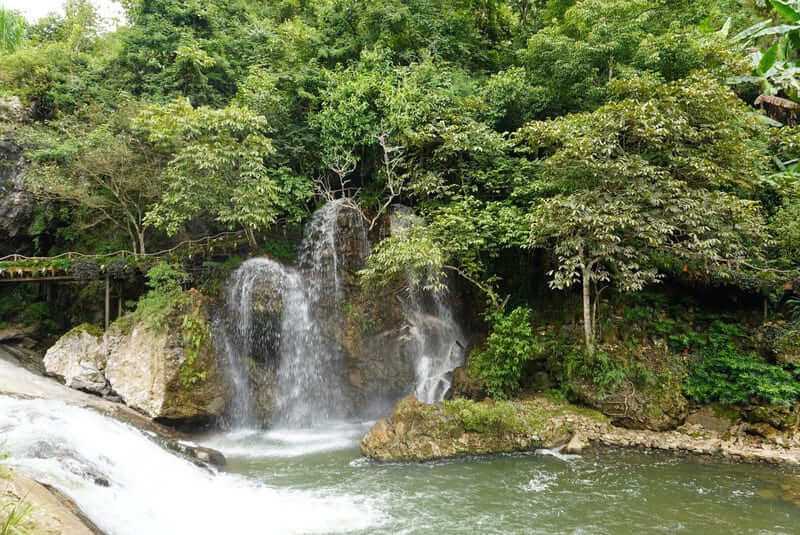
A short boat ride near Cat Cat (Tien Sa) Waterfall offers a different perspective of the village, with views of bridges, gardens, and bamboo water wheels from water level.
Boats usually operate along the calmer section of the stream near the lower gardens, just a few minutes from the main bridge.
Tips:
 |
|
View of water stream in Cat Cat Village from boat ride (Source: Tripadvisor) |
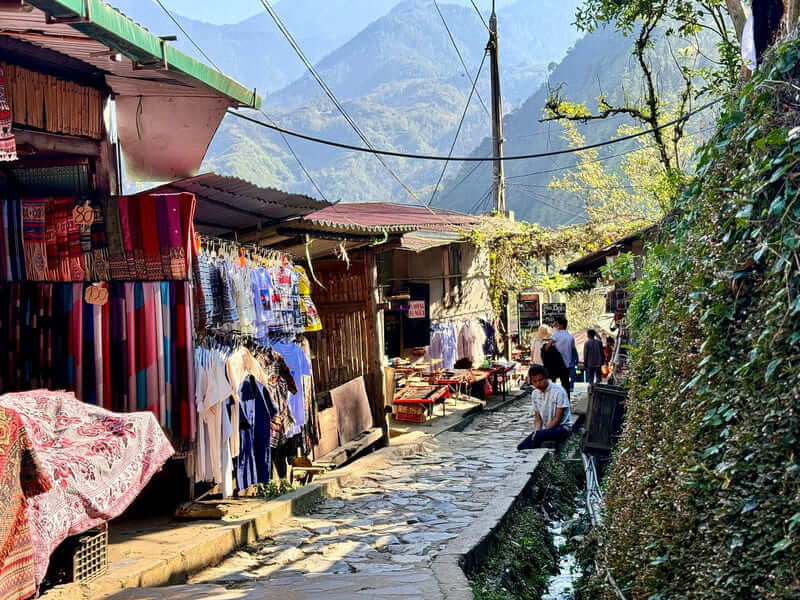
As you walk through the village, you’ll pass traditional H’Mong craft spaces, including weaving rooms, batik workshops, blacksmith corners, and wood-carving sheds.
These stops offer insight into how locals produce textiles, tools, and everyday items using traditional techniques.
Tips:
 |
|
Handcraft shops in Cat Cat Village (Source: Tripadvisor) |
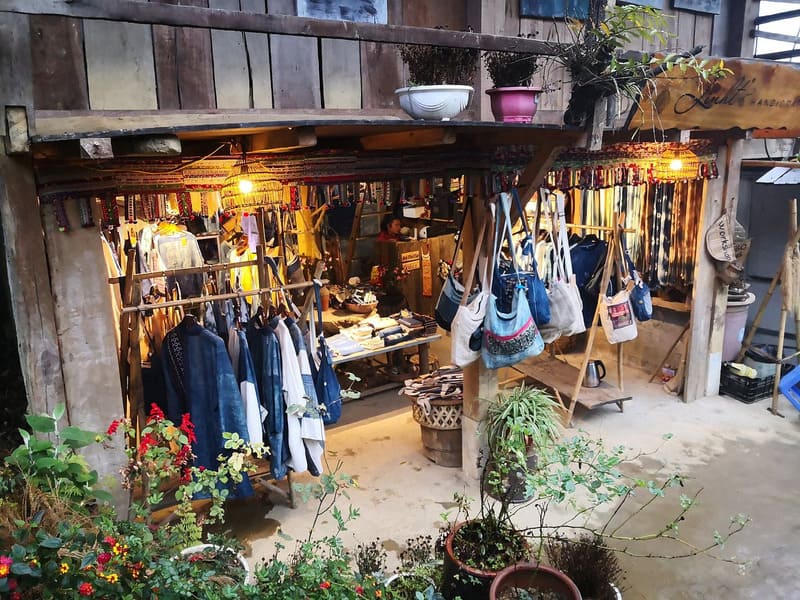
Batik is a traditional craft where hot wax is applied to fabric before dyeing, often using natural indigo. Many small workshops offer short hands-on sessions where you can create your own patterned piece.
These demo areas are usually located near the lower loop, close to cafés and rest spots.
Tips:
 |
|
An indigo craft artisan’s shop in Cat Cat Village (Source: Tripadvisor) |
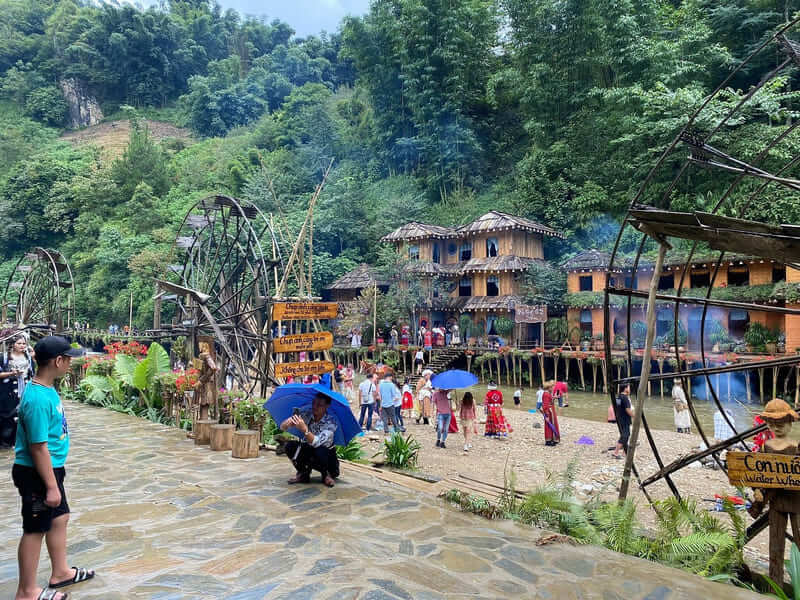
The main walking route takes you across wooden bridges, past bamboo water wheels, and through rice terraces with views toward Fansipan.
The path is well-marked and flexible, with optional exits if you want a shorter route.
Time needed: 1.5 to 3 hours
Tips:
 |
|
Tourists wandering around Cat Cat Village (Source: Tripadvisor) |
Some local homes open their front rooms to visitors, displaying tools, textiles, and living spaces that reflect daily life in the village.
These small “home museums” are mostly located near the central area, close to cafés and stalls.
Tips:
Travelers who want a deeper cultural connection often combine Cat Cat with longer hill-tribe walks and village stays around Sapa.
 |
|
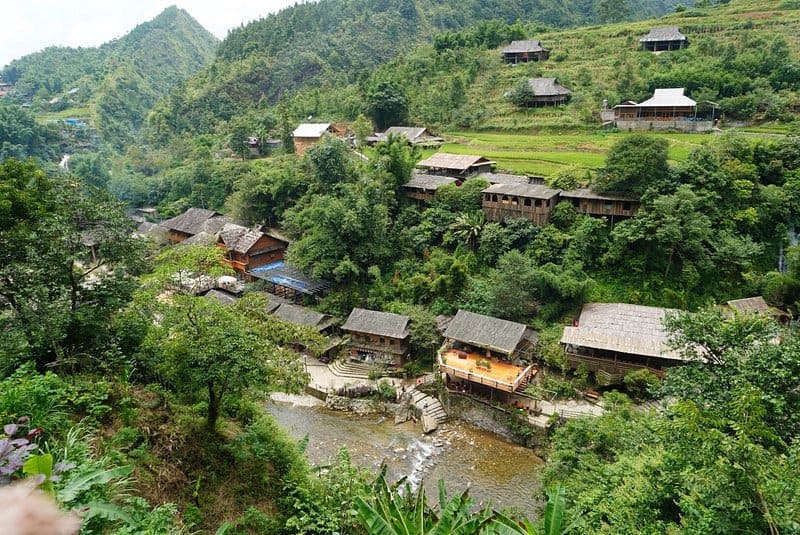
Traditional Hmong houses at Cat Cat Village (Source: Tripadvisor) |
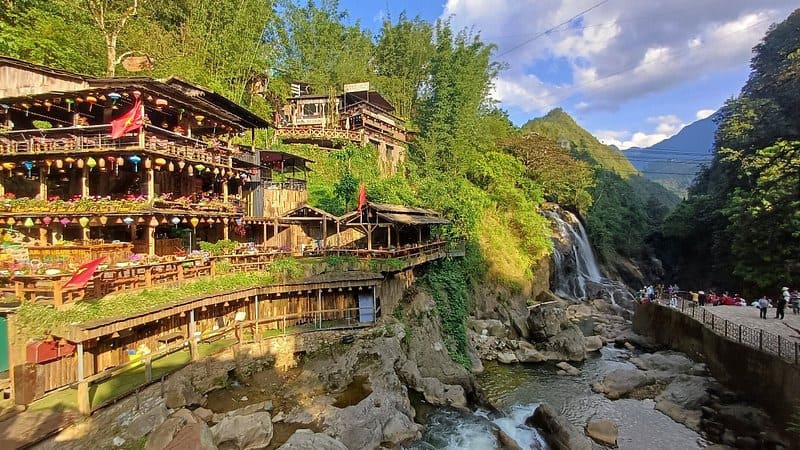
The waterfall is one of the main highlights of Cat Cat Village, set within a narrow gorge with easy-access viewpoints, bridges, and railings.
It’s located along the lower section of the walking loop and is clearly signposted.
Tips:
 |
|
Tien Sa Waterfall, one of the popular photo spots at Cat Cat Village (Source: Tripadvisor) |
The large bamboo water wheels are a signature feature of Cat Cat Village, traditionally used for irrigation. They are located along the stream path below the main bridge.
These make excellent photo foregrounds, especially with flowing water and rice terraces behind.
Tips:
On busy days, short traditional performances featuring music, dance, and ethnic instruments take place near the central stage area. Showtimes are usually posted at the entrance.
Tips:
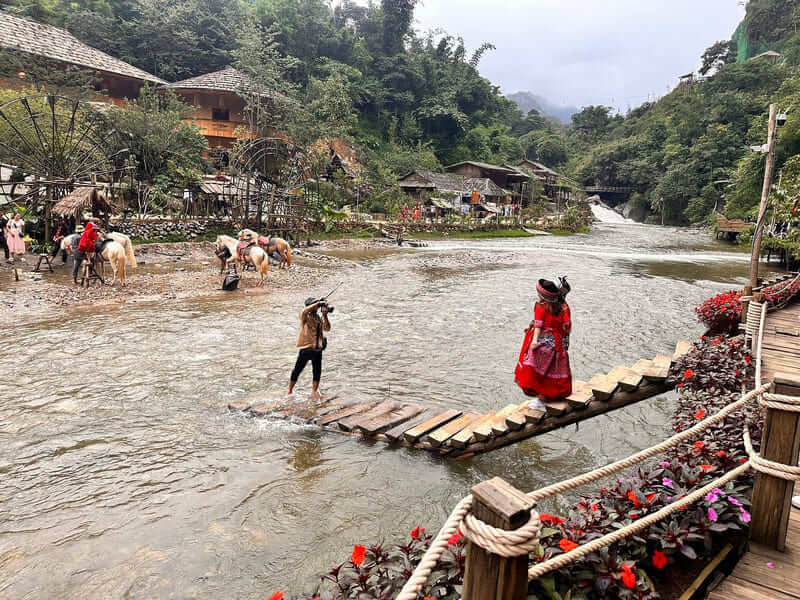
Near the entrance and main bridge, you’ll find rental shops offering colorful H’Mong and Dao-style outfits for photos.
Staff can help with fitting and suggest good photo spots around the village.
Tips:
 |
|
Tourists taking photos with ethnic clothes in Cat Cat Village (Source: Tripadvisor) |
Along the route, streamside stalls and cafés serve simple local dishes such as:
Most food spots are located near the lower loop and scenic viewpoints, making it easy to stop and rest as you explore.
Tips:
For a deeper look at local cuisine, check out our full guide to Sapa food and must-try dishes in Northwest Vietnam. If food is one of the main reasons you travel, you can also browse our culinary journeys across Vietnam for more local-market and regional dining experiences.
After day visitors leave, Cat Cat becomes much quieter and more atmospheric. Staying overnight allows you to enjoy early morning views and a slower pace.
Accommodation ranges from simple homestays to small bungalows with valley views.
Typical prices:
Tips:
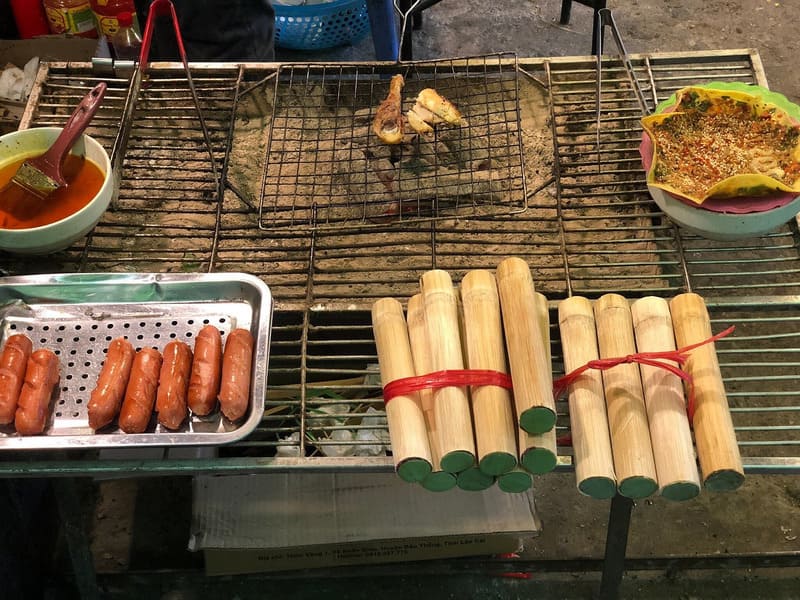
Food in Cat Cat Village is simple, local, and easy to enjoy along the walking loop. You’ll find small grills, tea stalls, and casual cafés where you can stop for a quick bite while exploring. From smoky bamboo rice to freshly grilled skewers and herbal teas by the stream, it’s more about authentic, relaxed tasting than formal dining.
Below are the must-try dishes and the most convenient spots to find them.
These are the typical highland specialties and street-style snacks you’ll come across as you walk through the village:
 |
|
Skewers and com lam at a food stall in Cat Cat Village (Source: Tripadvisor) |
You won’t need to leave the main walking route to find food. Most options are conveniently located along the loop:
Good to know: Prices are usually listed in VND, and most places operate on a cash-only basis. The USD equivalents above are for quick reference. If you plan to try local rice or fruit wines, drink moderately - especially if you need to travel back uphill afterward.
Cat Cat Village is an easy half-day visit, but the walking loop can be steep, crowded at midday, and most enjoyable during early morning or late afternoon. Use the tips below to plan your visit smoothly, respect local life, and make the most of your time.
Yes, but with some limitations. The walking route includes steep slopes, stone paths, and stairs, which may be challenging for elderly visitors or young children. Taking breaks and choosing shorter routes can make the visit more comfortable.
No, a guide is not required. Cat Cat Village has a well-marked walking loop that is easy to follow independently. However, joining a guided tour can provide deeper insights into H’Mong culture and local traditions.
Yes. Cat Cat Village is one of the easiest villages to visit in Sapa and does not require trekking experience. The paths are accessible for most travelers, although basic fitness is helpful due to slopes.
Cat Cat Village still reflects elements of H’Mong culture and traditional crafts, but it has been developed for tourism. Visitors can still experience local life, especially when exploring quieter areas beyond the main route.
Yes. There are several cafés, small restaurants, and rest areas along the walking route, especially near the stream and main viewpoints. These are convenient places to relax during your visit.
Yes, but conditions can be more difficult. During rainy days, paths may become slippery and muddy, especially near the waterfall and lower sections. Wearing proper shoes and bringing rain gear is recommended.
Yes. Cat Cat Village is often included as a half-day stop and can be combined with nearby villages such as Y Linh Ho or Lao Chai for a longer trekking experience.
Mobile signal is generally available, especially near the entrance and main paths. However, connection may be weaker in lower valley areas or near the waterfall.
Cat Cat Village delivers an easy first impression for Sapa with waterfalls, terraces, bamboo wheels, handicrafts, performances and stays wrapped into one route. Location, history, fees and the best time noted above help you pick your matching window and pace. Setting a half day or more at this destination and following the dining guides will make your trip complete and stress-free.
Ready to plan your Sapa trip? Explore our Sapa trekking tours, or choose a Northern Vietnam itinerary that combines Hanoi, Sapa, and Halong Bay for a smoother route. If you prefer something more personalized, contact the Your Vietnam Travel team for honest advice on pacing, weather, and the right travel style for your trip.




 Vietnam Tours
 Cambodia Tours
 Laos Tours
 Thailand Tours
 Multi-Country Tours