An Dong Market Saigon is one of the best places in Ho Chi Minh City to experience local shopping beyond the usual tourist spots. Located in District 5 near Chinatown (Cho Lon), the market is known for its fabrics, wholesale fashion, and everyday trading atmosphere.
Unlike more tourist-focused markets, An Dong offers a more practical and authentic look at how locals shop, especially for clothing, textiles, and accessories. In this guide, you will find what to buy, what to eat, how to get there, and tips to help you plan your visit.
An Dong Market is a long-standing commercial market in District 5, one of Ho Chi Minh City’s most culturally rich areas. The market is especially known for its strong connection to the city’s textile and fashion trade. Many local shop owners and small business buyers visit An Dong to source clothing, fabrics, shoes, handbags, and accessories in bulk.
For international visitors, An Dong Market offers a different kind of shopping experience compared with more famous tourist markets. It is not mainly designed for sightseeing photos or quick souvenir shopping. Instead, it gives you a closer look at how local commerce works in Saigon: traders comparing samples, fabric sellers serving tailors, vendors arranging stock, and shoppers searching through rows of clothes, textiles, and household items.
The market is set inside a multi-level building, with different sections selling different products. Some areas feel busy and packed with goods, while others are quieter than they may have been in the past. This mix of old Saigon atmosphere, wholesale trading, and everyday shopping is what gives An Dong Market its character.
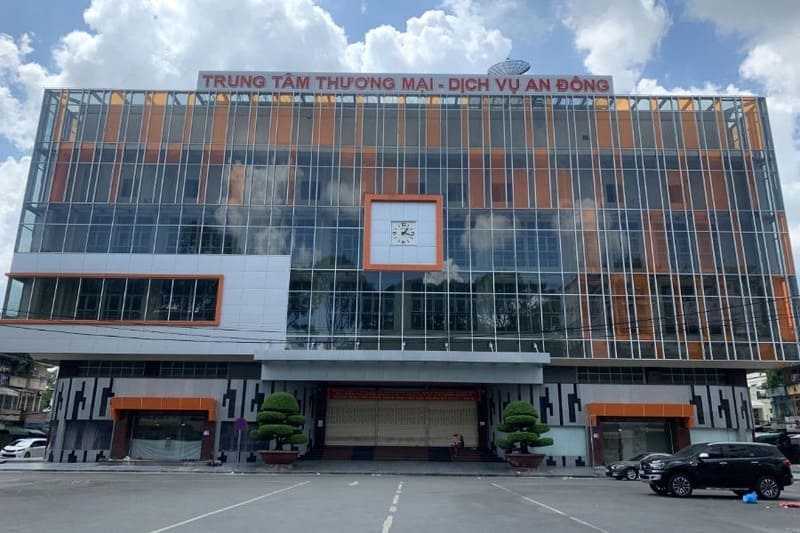
An Dong Market stands near Saigon’s Chinatown (Source: Collected)
Yes, An Dong Market is worth visiting if you want a local shopping experience in Ho Chi Minh City, especially if you are interested in fabrics, clothing, accessories, dried goods, or markets outside the usual tourist route.
That said, it is not the best choice for every traveler. If you only want an easy, tourist-friendly market with English-speaking vendors, clear souvenir displays, and a central location, Ben Thanh Market may feel more convenient. But if you want to explore a less touristy place, see where local traders shop, or look for fabrics and fashion items at more competitive prices, An Dong Market is a better fit.
An Dong Market is especially suitable for:
You may want to skip it if you dislike crowded indoor markets, prefer fixed prices, or only have a very short time in Ho Chi Minh City. The market is functional rather than polished, so the best way to enjoy it is to go with realistic expectations.
An Dong Market is located at 34-36 An Duong Vuong Street, District 5, Ho Chi Minh City. This area is close to Cho Lon, Saigon’s historic Chinatown, and is known for local markets, Chinese-Vietnamese temples, herbal medicine shops, gold shops, street food, and old commercial streets.
From District 1, the market is usually around 15-25 minutes away by car or motorbike, depending on traffic. It is not far in distance, but travel time can vary because Ho Chi Minh City traffic is often busy, especially during rush hours.
The location makes An Dong Market easy to combine with other attractions in District 5 and Cho Lon, such as:
If you are planning a half-day Chinatown itinerary, An Dong Market can be a good starting point or shopping stop before continuing deeper into Cho Lon.
Since the market is located near Cholon Chinatown, it is easy to combine your visit with temples, herbal medicine streets, and local Chinese-Vietnamese food.
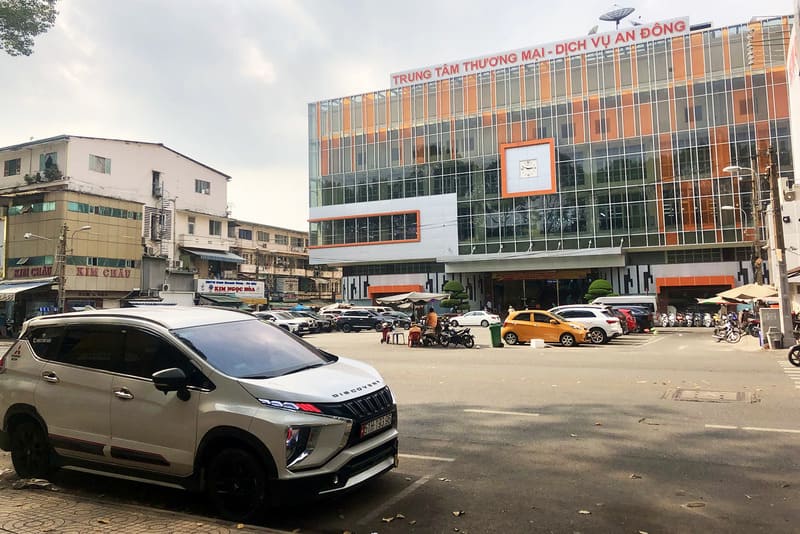
An Dong Market sits in the heart of District 5 (Source: Collected)
The easiest way for most travelers to get to An Dong Market is by Grab, taxi, or private car. Public buses are also available, but they are better suited to travelers who are comfortable navigating local transport.
An Dong Market has been part of Saigon’s commercial life since the 1950s. It developed in an area closely connected with the Chinese-Vietnamese community in Cho Lon, where trade, wholesale business, textile supply, and family-run shops have shaped the local economy for generations.
Over time, An Dong Market became especially well known as a fashion and fabric hub. Local tailors, clothing sellers, small retailers, and wholesalers came here to buy materials and ready-made items for resale. This helped the market build its reputation as one of the key places in Ho Chi Minh City for fabrics, garments, accessories, and wholesale fashion.
The market building has also changed over the years. Renovations gave it a more organized indoor structure, with multiple floors and product zones. Today, while some parts of the market feel quieter than before, An Dong still remains a meaningful stop for travelers who want to understand Saigon beyond the usual tourist landmarks.
An Dong Market can feel confusing on a first visit because it is spread across several levels, with dense rows of stalls and many similar-looking aisles. Understanding the general layout will help you shop more efficiently.
The basement is one of the most interesting areas for visitors because it combines practical shopping with local food. You may find dried foods, spices, preserved products, snacks, jewelry, small accessories, and food stalls.
This is a good place to look for:
The basement is also a useful place to take a food break after exploring the upper floors. It feels local and casual, so do not expect a polished food court. The charm is in the everyday atmosphere.
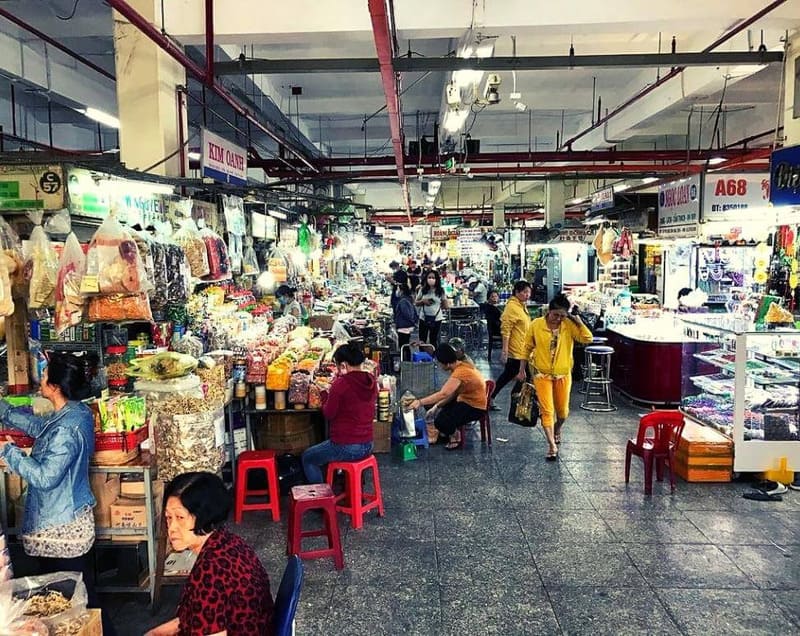
The basement is filled with food and dried goods (Source: Collected)
The ground floor is usually one of the busiest parts of An Dong Market. This is where many visitors first experience the market’s energy, with stalls selling fabrics, shoes, bags, cosmetics, clothing, and accessories.
You may find:
If you are interested in fabrics or tailoring materials, take time to browse carefully. Some stalls specialize in silk, lace, brocade, cotton, chiffon, and materials used for ao dai or formal clothing.
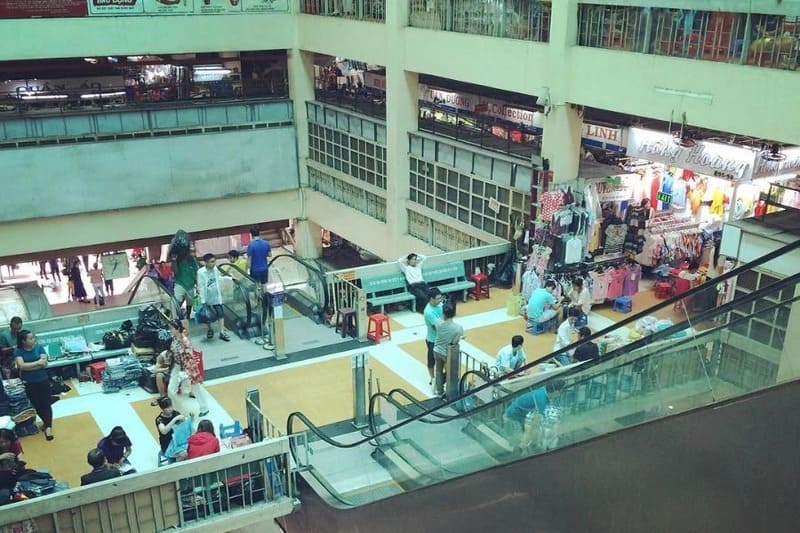
The ground floor is busy with fabrics and fashion (Source: Collected)
The first and second floors are generally strong for ready-to-wear fashion and textile-related shopping. These levels are useful if you are looking for clothes, children’s wear, casual outfits, dresses, shirts, traditional clothing, or embroidered items.
You may find:
These floors are especially relevant for travelers who want to understand why An Dong Market is known as a local fashion hub. Some stalls may focus on wholesale, but many are still willing to sell single items if you ask politely.
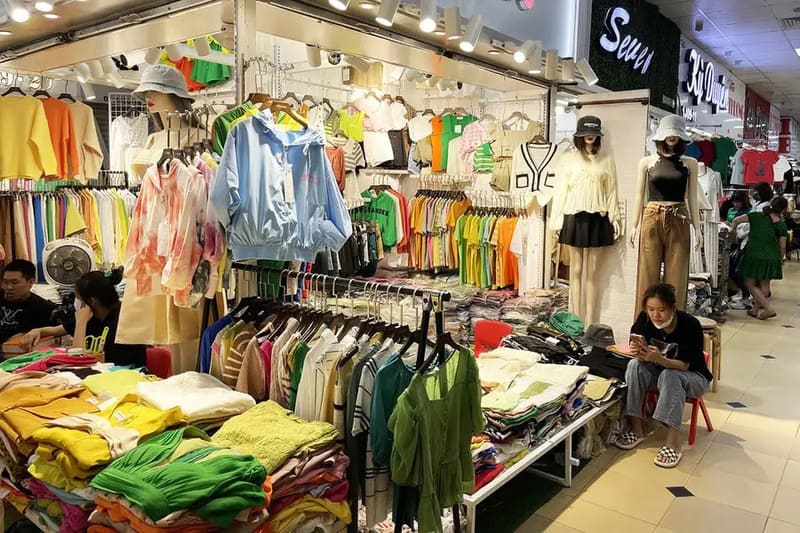
Upper levels are popular for clothes and textiles (Source: Collected)
The upper floors are usually quieter and may include storage areas, older stock, clearance items, handmade products, or less tourist-facing stalls. Depending on the time of your visit, some sections may be active while others feel slow.
If you enjoy digging for unexpected finds, the upper floors can be worth a quick look. You may come across:
This part of the market is not always exciting for casual visitors, but it can be rewarding for patient shoppers.
An Dong Market is best known for fashion-related goods, but it also offers dried foods, spices, handicrafts, accessories, and local specialties. The key is to know what the market does well, so you can focus your time instead of wandering aimlessly.
Fabrics are one of the biggest reasons to visit An Dong Market. The market has long served local tailors, designers, and shoppers looking for materials for ao dai, dresses, suits, shirts, and custom clothing.
Common fabric types include:
If you want to buy fabric, ask about the price per meter and check the minimum purchase quantity. Some shops may require one or two meters depending on the fabric type. Take time to feel the texture, check the shine, and compare similar materials at different stalls before buying.
An Dong Market can be a good stop if you are interested in having an ao dai made in Vietnam, although you may still need to visit a tailor separately depending on the stall and your schedule.
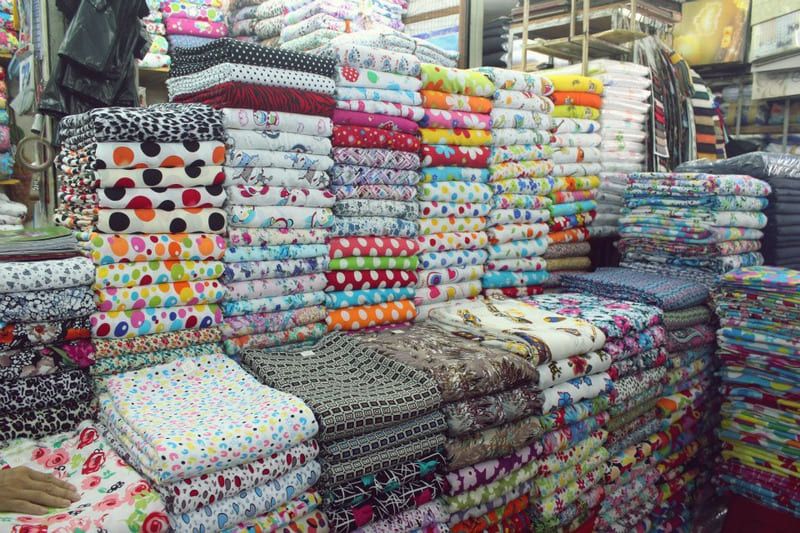
Fabric stalls are a highlight of An Dong Market (Source: Collected)
An Dong Market is also known for ready-to-wear fashion. You can find a wide range of clothes for women, men, and children, from casual wear to dresses, shirts, sleepwear, and local-style fashion.
The market is especially useful if you enjoy browsing and comparing items rather than shopping in fixed-price boutiques. Some goods are mass-produced, while others may be more unique or locally sourced. Quality can vary, so check stitching, fabric thickness, zippers, buttons, and seams before buying.
For wholesale buyers, this is one of the market’s strongest categories. For tourists, it can still be interesting, especially if you are open to searching through crowded racks to find good pieces.
Bags, shoes, sandals, belts, wallets, hats, and fashion accessories are common throughout the market. Some products are practical and affordable, while others are trend-driven and aimed at local shoppers.
Before buying shoes or bags, check:
For accessories, prices are often negotiable, especially if you buy more than one item. Still, bargain politely and avoid pushing too hard over small amounts.
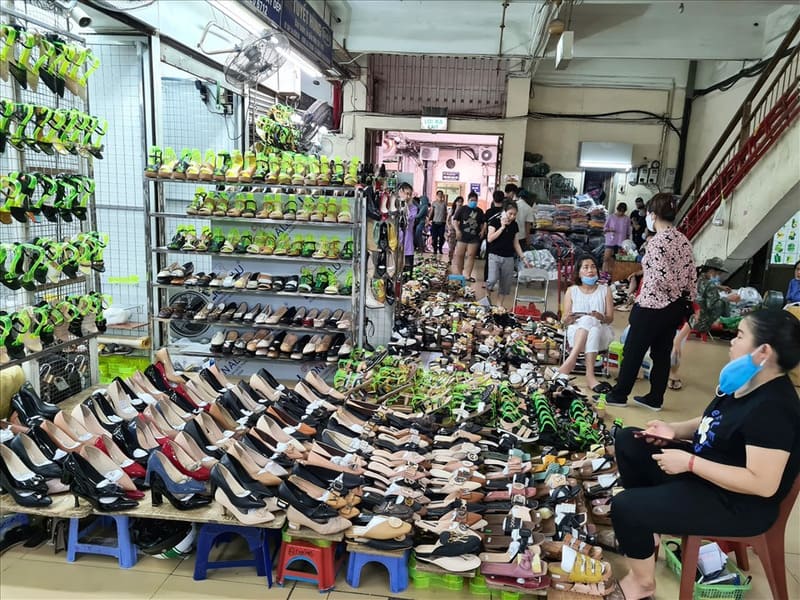
Bags, shoes, and accessories line many stalls (Source: Collected)
An Dong Market is not primarily a souvenir market, but you can still find handicrafts and small gifts if you explore beyond the main clothing sections.
Possible souvenir items include:
If your main goal is souvenir shopping, Ben Thanh Market may be easier. But if you prefer something less touristy and are willing to search, An Dong can offer more local-feeling finds.
The dried food and spice sections are worth visiting even if you do not plan to buy much. They give the market a strong local character, with colorful displays and fragrant ingredients used in Vietnamese cooking.
Popular items may include:
If you are flying internationally, check customs rules before buying dried seafood, meat products, seeds, or herbal items. Packaged snacks and spices are usually safer choices for travelers.
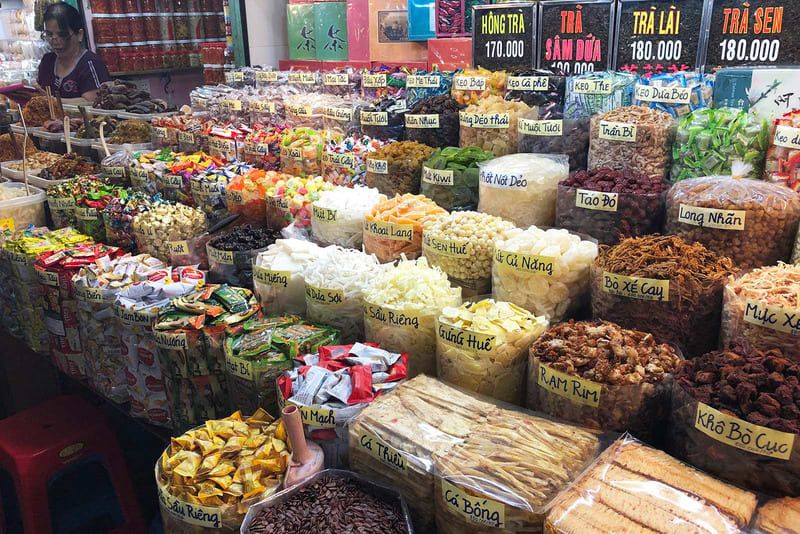
Dried foods and spices add local flavor to the market (Source: Collected)
An Dong Market is often described as a wholesale fashion market, but tourists can still shop there. The key is understanding how the market works.
Many stalls supply clothing, fabrics, shoes, accessories, and other goods to small retailers and shop owners. These buyers often purchase in bulk, so they may receive better prices than someone buying just one or two items. This is why An Dong Market can feel more business-oriented than tourist markets.
However, retail shopping is still possible. Many vendors will sell single pieces, especially clothing, accessories, fabrics, shoes, bags, and souvenirs. You simply need to ask politely.
A few useful points:
For tourists, the best approach is to treat An Dong Market as a local shopping experience rather than a guaranteed bargain destination. You can find good prices, but the real value is the chance to explore Saigon’s wholesale fashion culture.
An Dong Market is not only about shopping. Inside and around the market, you can find simple, affordable Vietnamese food that serves vendors, workers, local shoppers, and visitors.
Inside the market, especially around the basement or food sections, you may find:
The food here is casual and market-style. You sit at simple tables, order quickly, eat among local shoppers, and pay in cash. It is not a fine-dining experience, but it can be one of the most memorable parts of the visit.
Outside the market, the surrounding streets in District 5 offer even more choices. You can find Vietnamese-Chinese dishes, noodle shops, rice plates, dim sum, dumplings, sweet soups, coffee stalls, and local drinks. Since An Dong Market is near Cho Lon, the food scene around the area reflects both Vietnamese and Chinese influences.
Useful food tips:
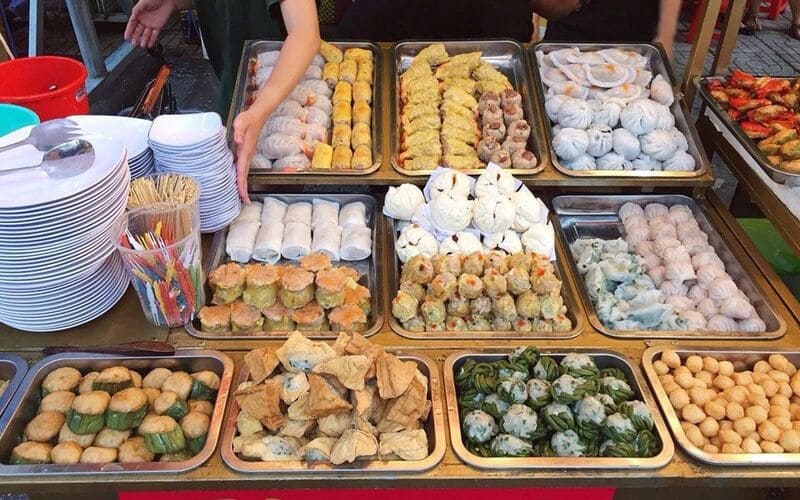
Simple local dishes make the market worth a food stop (Source: Collected)
The best time to visit An Dong Market is in the morning or early afternoon, roughly between 9:00 AM and 2:00 PM.
Morning is a good time because many stalls are open, vendors are active, and the market has more energy. This is also a better time to browse fabrics and clothing before some sellers slow down or start packing later in the day.
Early afternoon can also work if you prefer a slightly calmer visit. However, avoid going too late because some stalls may close earlier than the official market hours, especially if business is slow.
Recommended timing:
Weekdays are generally easier for browsing, while weekends may feel busier with local shoppers.
Since An Dong Market is best explored on foot, checking the best time to visit Ho Chi Minh City can help you avoid extreme heat and heavy rain.
Shopping at An Dong Market is more enjoyable when you know how to navigate the local market style. Here are practical tips for first-time visitors.
An Dong Market is famous for fabrics, tailoring materials, wholesale fashion, ready-to-wear clothing, shoes, bags, accessories, dried foods, spices, and local food. It is especially known as one of Ho Chi Minh City’s key markets for fashion and textile-related shopping.
An Dong Market is usually open daily from around 7:00 AM to 6:00 PM. Some vendors may open earlier or close later, while others may pack up before the official closing time. For the best experience, visit in the morning or early afternoon.
It depends on what you are looking for. Ben Thanh Market is better for first-time tourists who want a central, easy-to-access market with souvenirs and food. An Dong Market is better for travelers who want a more local shopping experience, especially for fabrics, fashion, accessories, and wholesale-style browsing.
Yes, tourists can shop at An Dong Market. Although many stalls serve wholesale buyers and local shoppers, visitors can still buy single items such as clothes, fabrics, bags, shoes, accessories, snacks, and souvenirs.
Yes, bargaining is common at many stalls, especially for clothes, fabrics, accessories, and bulk purchases. Bargain politely and compare prices before buying. Food stalls and very low-priced items usually have less room for negotiation.
Some vendors may speak basic English, but many do not. You can still shop with simple words, gestures, a calculator, or a translation app. If you want a smoother experience, especially for fabrics or wholesale purchases, going with a Vietnamese-speaking guide can help.
An Dong Market is generally safe to visit, but you should take normal precautions in crowded places. Keep your bag zipped, watch your phone and wallet, and avoid carrying too much cash in one place.
Most visitors should spend around 1.5 to 3 hours at An Dong Market. If you only want a quick look, one hour may be enough. If you want to shop, eat, compare prices, and explore different floors, allow at least half a day.
Yes, there is food inside An Dong Market, especially in the basement and food sections. You can find simple Vietnamese dishes, noodles, rice plates, snacks, sweet soups, juices, and herbal drinks. There are also many food options on the streets around the market.
An Dong Market Saigon is a solid choice if you want a more local and less touristy shopping experience in Ho Chi Minh City. It may not be as polished as central markets, but it stands out for its fabrics, fashion, and everyday trading culture.
If you are interested in textiles, local markets, or exploring District 5 and Chinatown, it is worth adding to your itinerary. Plan your visit in the morning, keep expectations realistic, and take time to explore both the market and the surrounding area.





 Vietnam Tours
 Cambodia Tours
 Laos Tours
 Thailand Tours
 Multi-Country Tours