Chợ Lớn, commonly known as Cholon Chinatown Saigon, is one of the most culturally distinctive areas in Ho Chi Minh City. Located mainly in District 5 and District 6, it reflects centuries of Chinese-Vietnamese heritage through temples, markets, traditional medicine streets, and a deeply rooted food culture.
Compared with the modern atmosphere of District 1, Cholon offers a more local and layered experience. Here, daily life unfolds among incense-filled temples, wholesale trading streets, narrow alleys, and long-standing eateries. This guide covers what Cholon is, the best things to do, what to eat, how to get there, and practical tips to help you plan your visit efficiently.
Cholon, often written as Cho Lon or Chợ Lớn in Vietnamese, is commonly known as Saigon’s Chinatown. The name means “Big Market,” which reflects the area’s long history as a major commercial hub.
Unlike a single market or one small street, Cholon refers to a large neighborhood with a strong Chinese-Vietnamese identity. It is home to traditional temples, guild halls, wholesale markets, herbal medicine streets, local food shops, and old residential alleys. The area has been shaped by the Hoa people, Vietnam’s ethnic Chinese community, who have lived, traded, and built community life here for generations.
Today, Cholon is one of the best places in Ho Chi Minh City to experience:
Cholon is not polished in the way some tourist districts are. Its charm comes from daily life: vendors unloading goods, incense smoke rising from temple courtyards, motorbikes moving through narrow streets, and old shop signs standing beside modern storefronts.
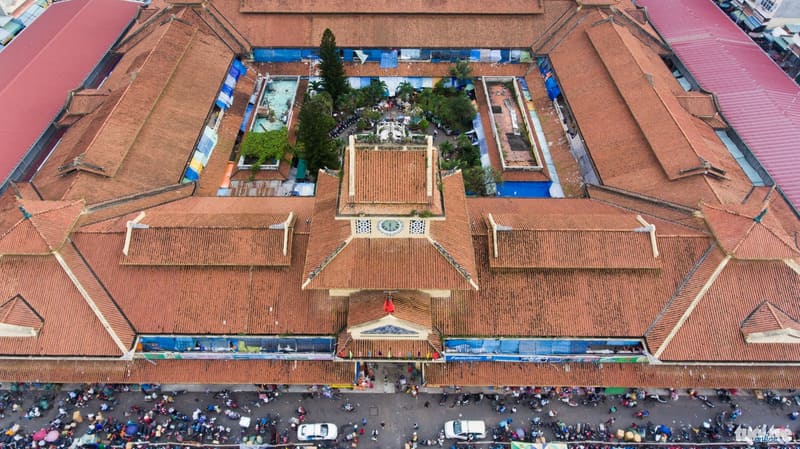
Cholon Chinatown Saigon (Source: Collected)
Cholon Chinatown is located mainly in District 5, with parts extending into District 6 and nearby areas of District 11. From District 1, the journey usually takes around 15-30 minutes by car or taxi, depending on traffic and your starting point.
The most important streets and areas for visitors include:
Best ways to get to Cholon:
Besides Binh Tay Market, An Dong Market is another well-known place for wholesale shopping and local trade in District 5.
Cholon has been associated with the Chinese-Vietnamese community since the late 18th century. Many Chinese migrants settled in the area, especially after periods of conflict and movement in southern Vietnam. Over time, they developed a strong commercial and cultural community, building markets, temples, assembly halls, shops, and residential quarters.
Historically, Cholon was not just a neighborhood. It once developed as a separate urban area beside Saigon, with its own identity and economy. Trade played a central role in its growth, and the area became known for wholesale commerce, food production, traditional medicine, textiles, and imported goods.
During the French colonial period, Saigon and Cholon gradually became closely connected. In the early 20th century, the two areas were officially merged into a larger urban structure. Although the administrative name changed over time, the identity of Cholon as Saigon’s Chinatown remained strong.
Today, Cholon is no longer an isolated Chinese quarter, but its cultural heritage is still visible in many forms: Cantonese and Teochew temples, guild halls, Chinese-style roof decorations, bilingual shop signs, traditional medicine stores, and long-standing food traditions.
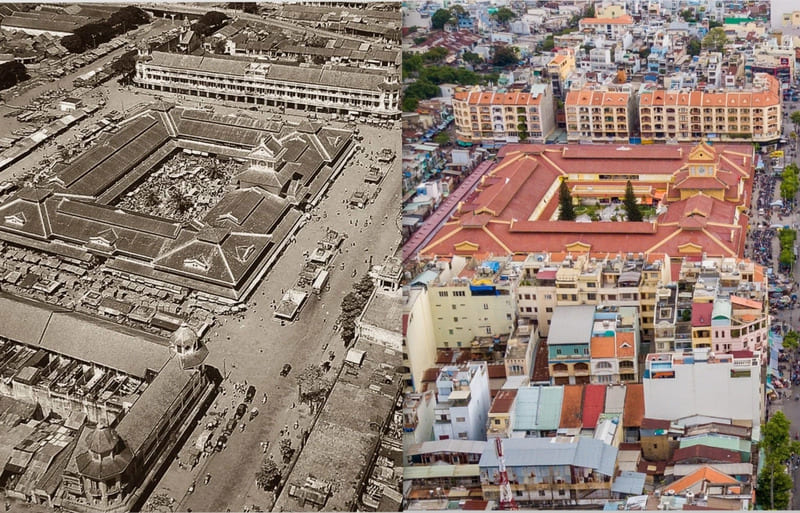
Cholon Market reflects the area’s trading history (Source: Collected)
Chợ Lớn offers a deeper, more local perspective of Ho Chi Minh City beyond the modern center. It is one of the few areas where history, commerce, religion, and daily life are still closely connected.
Here are the main reasons to visit:
Binh Tay Market is one of the most important landmarks in Cholon. Located in District 6, it is often seen as the commercial heart of Saigon’s Chinatown.
Unlike Ben Thanh Market, which is more tourist-focused, Binh Tay Market is mainly a wholesale market serving local traders. Inside and around the market, you can find dried seafood, spices, mushrooms, nuts, textiles, household goods, clothing, packaging materials, and many other products.
The market is also known for its distinctive architecture, with Chinese-inspired design elements, tiled roofs, airy corridors, and a central courtyard. Even if you do not plan to shop, Binh Tay is worth visiting to observe the trading culture that has defined Cholon for generations.
Travel tip: Visit in the morning when the market is most active. Bring cash and keep your belongings secure, as the area can be crowded.
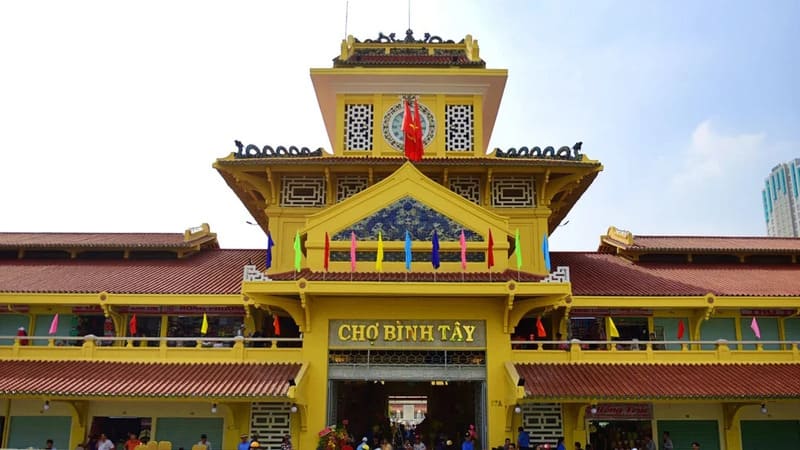
Binh Tay Market is the commercial heart of Cholon (Source: Collected)
Thien Hau Temple, also known as Ba Thien Hau Pagoda, is one of the most famous temples in Cholon. Located on Nguyen Trai Street in District 5, it is dedicated to Thien Hau, the Goddess of the Sea, who is believed to protect sailors and travelers.
The temple was built by Cantonese immigrants and remains an important spiritual site for the local Chinese-Vietnamese community. Inside, you will see incense coils hanging from the ceiling, ceramic reliefs on the roof, carved wooden details, and altars filled with offerings.
The atmosphere here is one of the highlights. Smoke rises slowly from incense, worshippers move quietly through the courtyard, and the old architecture creates a peaceful contrast with the busy street outside.
Travel tip: Dress modestly, speak softly, and ask before taking close-up photos of worshippers or altar areas.
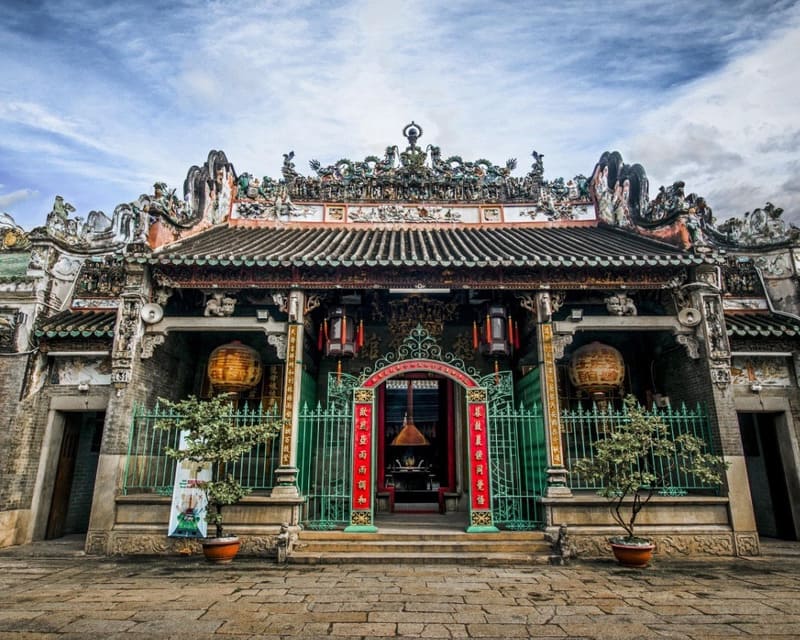
Thien Hau Temple (Source: Collected)
Nghia An Assembly Hall, also called Nghia An Hoi Quan, is another important cultural and religious site in Cholon. It is associated with the Teochew community and is dedicated to Guan Yu, a historical figure symbolizing loyalty, courage, and righteousness.
The assembly hall is known for its detailed wood carvings, gilded decorations, ceramic ornaments, and traditional Chinese architectural style. Compared with Thien Hau Temple, Nghia An Assembly Hall can feel slightly quieter, making it a good place to appreciate the craftsmanship more closely.
For travelers interested in architecture and local religion, this is one of the most rewarding stops in Cholon.
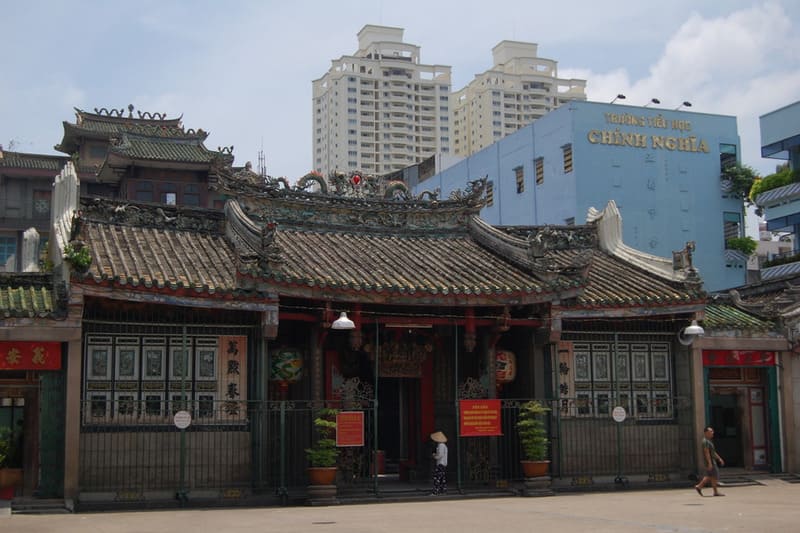
Nghia An Assembly Hall (Source: Collected)
Quan Am Pagoda, also known as On Lang Pagoda, is a colorful and atmospheric temple dedicated to Quan Am, the Bodhisattva of Compassion. It is located on a smaller street in District 5 and offers a more intimate experience than some of the larger temples.
The pagoda features bright decorations, ceramic roof figures, carved details, and a peaceful courtyard. Although it is less famous than Thien Hau Temple, it is highly worth visiting if you want to explore the spiritual diversity of Cholon.
This is a good stop for travelers who enjoy quieter temples and want to see more than the most obvious attractions.
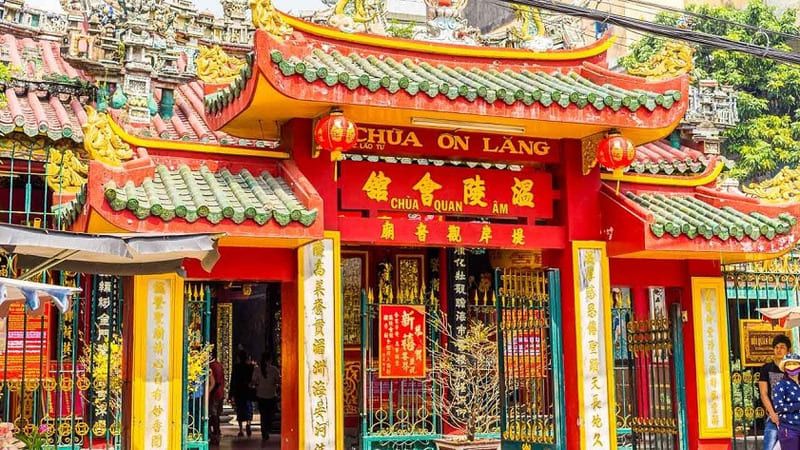
On Lang Pagoda (Source: Collected)
Hao Si Phuong Alley is one of the most photogenic and nostalgic corners of Cholon. Located off Tran Hung Dao Street, this old residential alley is known for its rows of colorful houses, balconies, narrow walkways, and everyday local life.
Unlike temples or markets, Hao Si Phuong is not a formal attraction. It is a living neighborhood, so visitors should be respectful. Walk slowly, avoid making noise, and do not take intrusive photos of residents.
The charm of Hao Si Phuong lies in its old Saigon character. You may see laundry hanging from balconies, residents chatting in doorways, small household shrines, and architectural details that reflect the layered history of the area.
Travel tip: This is a residential area, not a photo studio. Keep your visit short, quiet, and considerate.
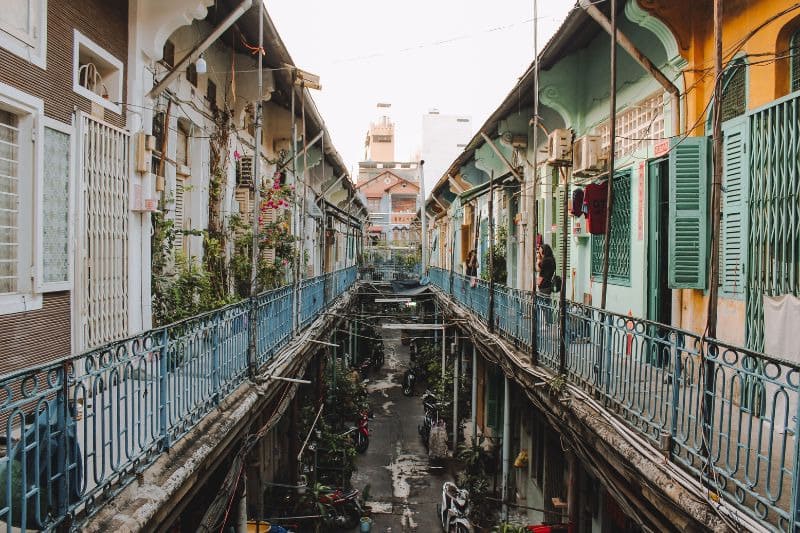
Old Saigon charm inside Hao Si Phuong Alley (Source: Collected)
Hai Thuong Lan Ong Street is one of the most distinctive streets in Cholon. It is known for traditional herbal medicine shops, dried herbs, roots, spices, and old pharmacies that reflect the area’s Chinese-Vietnamese healing traditions.
Walking along the street, you may notice the strong aroma of medicinal herbs and see shops filled with drawers, jars, dried ingredients, and traditional remedies. The street is especially lively before major festivals and around Lunar New Year, when shops also sell decorations, red ornaments, and festive items.
This is a great place to experience Cholon through smell, texture, and street-level observation rather than just sightseeing.
Luong Nhu Hoc Street is best known as Saigon’s lantern street. It becomes especially colorful before the Mid-Autumn Festival, when shops display handmade lanterns in many shapes, sizes, and colors.
Outside the festival season, the street is quieter, but it still offers an interesting glimpse into traditional craft and seasonal commerce. If you visit Ho Chi Minh City around Mid-Autumn Festival, this is one of the most festive places to see in Cholon.
Travel tip: The street can get crowded during festival evenings. Visit earlier in the day if you want to take photos more comfortably.
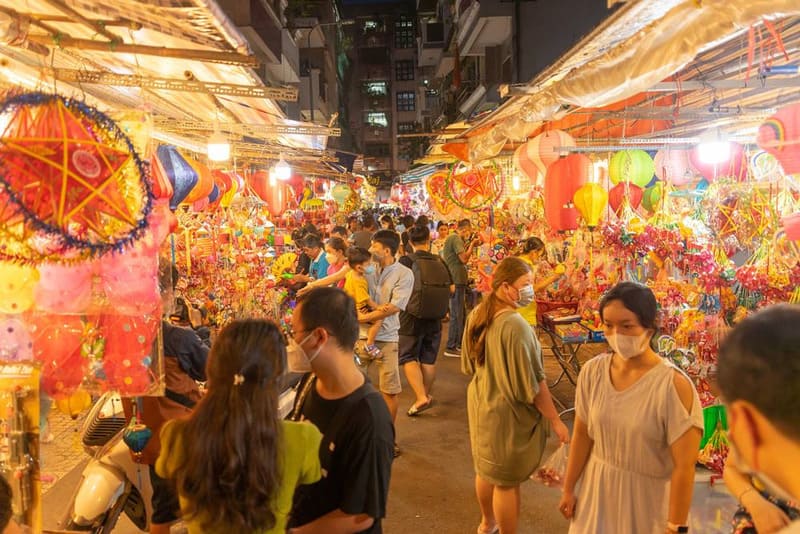
Colorful lanterns on Luong Nhu Hoc Street (Source: Collected)
Cha Tam Church, officially known as Saint Francis Xavier Church, is a unique religious landmark in Cholon. It serves the Chinese Catholic community and combines Western church architecture with Chinese cultural elements.
The church is different from the temples and assembly halls nearby, which makes it an interesting addition to a Cholon itinerary. Its presence reflects the cultural and religious diversity of the neighborhood.
While the interior may not always be open to visitors, the exterior and surrounding area are still worth a short stop if you are exploring District 5.
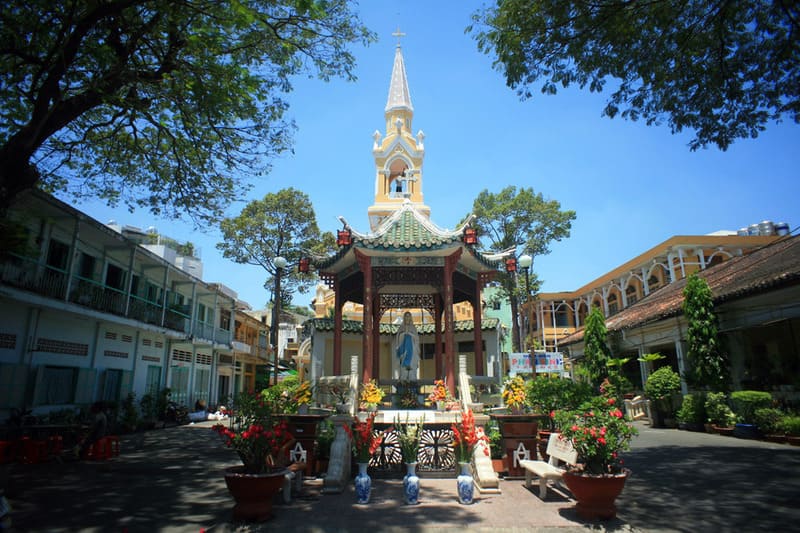
Cha Tam Church shows Cholon’s cultural diversity (Source: Collected)
Beyond the main landmarks, Cholon is best experienced by walking through its local streets and back alleys. Around District 5 and District 6, you will find small shops selling textiles, dried goods, kitchenware, temple supplies, Chinese herbs, festive decorations, and everyday household items.
These streets may not look like formal tourist attractions, but they reveal the real rhythm of Saigon’s Chinatown. Merchants arrange goods outside their shops, street vendors prepare snacks, families run long-standing businesses, and older residents gather for tea or a game of chess.
Take your time between major stops such as Thien Hau Temple, Hai Thuong Lan Ong Street, and Binh Tay Market. Cholon feels most alive in these in-between moments, where daily life, trade, and community culture unfold naturally.
Food is one of the best reasons to visit Cholon. The area is known for Chinese-Vietnamese flavors, with influences from Cantonese, Teochew, Fujian, and local southern Vietnamese cuisine.
Here are some dishes and food experiences to look for:
Food tip: Cholon is best explored with an open mind. Some of the most interesting places may look simple from the outside but serve excellent local food.
Cholon is a commercial district, so shopping is part of the experience. While it is not mainly designed for tourists, that is exactly what makes it interesting.
Popular things to buy in Cholon include:
Shopping tip: Bring cash, compare prices politely, and remember that some shops are wholesale-focused, so they may not be as tourist-oriented as markets in District 1.
Cholon is best explored at a slow pace, but with a clear route, you can cover the main highlights in half a day. Below are two practical itineraries depending on your time and travel style.
This route is ideal for first-time visitors who want a clear and efficient introduction to Saigon’s Chinatown.
Suggested route: Thien Hau Temple → Nghia An Assembly Hall → Hai Thuong Lan Ong Street → Binh Tay Market
Tip: Use a ride-hailing app between stops if the weather is hot or you want to save time.
This route is better if you want a deeper experience combining temples, markets, local life, and food.
Planning tip: Cholon is not a place to rush. Even with a structured itinerary, allow time to pause, explore side streets, and follow small discoveries between main stops.
The best time to visit Cholon Chinatown is usually in the morning or late afternoon.
These periods offer colorful decorations and cultural atmosphere, but they can also be crowded. If you visit during a festival, plan extra time and be patient.
For a more comfortable walking experience around temples and markets, it also helps to understand the best time to visit Ho Chi Minh City and seasonal weather patterns.
You can visit Cholon on your own, especially if you are comfortable using ride-hailing apps and walking through busy local neighborhoods. Main attractions such as Binh Tay Market, Thien Hau Temple, Nghia An Assembly Hall, and Hai Thuong Lan Ong Street are fairly easy to reach.
However, a guide can make the experience much more meaningful. Many places in Cholon have stories that are not obvious at first glance. Without context, you may see a temple, market, or herbal street, but not fully understand its role in the Chinese-Vietnamese community.
Visit on your own if:
Visit with a guide if:
For many travelers, the best option is a guided half-day visit that combines temples, markets, backstreets, and food. This helps you see Cholon not only as a destination, but as a living cultural neighborhood within Ho Chi Minh City.
Cholon is famous for its Chinese-Vietnamese culture, historic temples, wholesale markets, traditional medicine shops, street food, and old residential alleys. Binh Tay Market and Thien Hau Temple are among its best-known landmarks.
The best places to visit in Cholon include Binh Tay Market, Thien Hau Temple, Nghia An Assembly Hall, Quan Am Pagoda, Hao Si Phuong Alley, Hai Thuong Lan Ong Street, Luong Nhu Hoc Lantern Street, and Cha Tam Church.
The most notable temples in Cholon include Thien Hau Temple, Nghia An Assembly Hall, Quan Am Pagoda, Ong Bon Pagoda, and other Chinese guild halls connected to the Hoa community.
You should try dim sum, hu tieu sate, mi vit tiem, roasted duck noodles, pha lau, Chinese-style sweet soups, and herbal desserts. Cholon is one of the best areas in Ho Chi Minh City for Chinese-Vietnamese food.
Cholon is generally safe for tourists, especially during the day. However, it is a busy local area, so you should keep your belongings secure, be careful when crossing streets, and stay aware in crowded markets.
A half-day visit is enough for the main highlights, including one or two temples, Binh Tay Market, Hai Thuong Lan Ong Street, and a local meal. If you enjoy food, photography, and cultural exploration, you can easily spend a full day in the area.
Yes, you can explore Cholon without a guide. Main sites are accessible by taxi, ride-hailing apps, and walking. However, a guide is helpful if you want deeper cultural context, temple explanations, and local food recommendations.
Cholon Chinatown Saigon is well worth visiting if you want to see a more cultural and local side of Ho Chi Minh City. From Binh Tay Market and Thien Hau Temple to herbal medicine streets, hidden alleys, and Chinese-Vietnamese food, the area offers a rich experience beyond the usual downtown attractions.
You can explore Cholon on your own in half a day, but a local guide can help you better understand its history, temples, food culture, and community life. For travelers interested in heritage, local markets, and authentic Saigon neighborhoods, Cholon is a meaningful stop to add to your itinerary.




 Vietnam Tours
 Cambodia Tours
 Laos Tours
 Thailand Tours
 Multi-Country Tours