Traveling between Da Nang and Hue becomes far more memorable when you take the scenic route across Hai Van Pass. Known for its winding mountain roads, coastal panoramas, sea clouds, and historic viewpoints, Hai Van Pass has become one of the most iconic road trips in Vietnam.
In this guide, Your Vietnam Travel shares everything you need to know before visiting Hai Van Pass, including the best transport options, top stops, safety tips, food experiences, and practical travel advice for exploring this famous Central Vietnam route.
| Information | Details |
|---|---|
| Name | Hai Van Pass |
| Vietnamese name | Đèo Hải Vân |
| Meaning | “Ocean Cloud Pass” or “Sea Cloud Pass” |
| Location | Between Da Nang City and Thua Thien Hue Province, Central Vietnam |
| Road | National Highway 1A |
| Length | Around 20–21 kilometers |
| Elevation | Nearly 500 meters above sea level |
| Connects | Da Nang, Lang Co, Hue, and Hoi An travel routes |
| Famous for | Coastal views, mountain curves, Hai Van Quan, motorbike rides, Top Gear mention |
| Best time to visit | February to August, especially on clear dry-season days |
| Best for | Scenic drives, photography, motorbike trips, private transfers, train journeys, Central Vietnam itineraries |
| Recommended time | 2–4 hours for the pass with stops, longer if combined with Lang Co, Lap An Lagoon, Hue, or Hoi An |
Hai Van Pass is located in Central Vietnam, on the border between Da Nang City and Thua Thien Hue Province. It lies on National Highway 1A, the main north-south road that connects many major destinations in Vietnam.
The pass cuts through the final section of the Truong Son Range, where the mountains descend toward the East Sea. This special geography gives Hai Van Pass its signature scenery: green mountain slopes on one side, open sea views on the other, and clouds often gathering around the summit.
The name “Hai Van” means “sea clouds,” referring to the mist and clouds that often rise from the ocean and cover the mountain peaks.
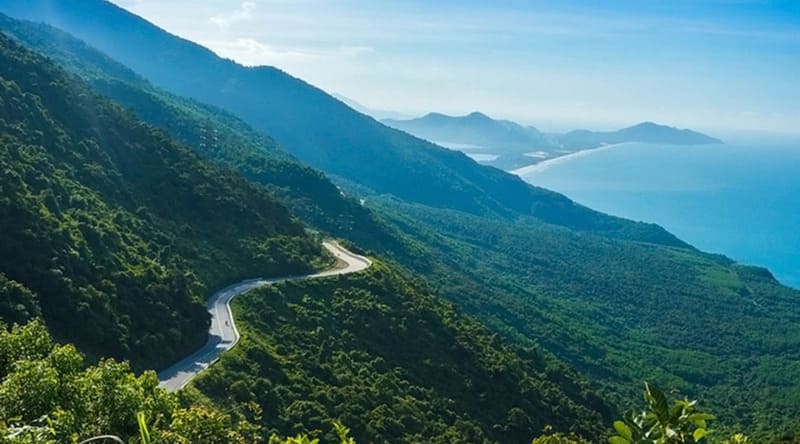
Mountains meet the sea at Hai Van Pass (Source: Collected)
Hai Van Pass is easy to include in a Central Vietnam itinerary because it sits between three popular destinations: Da Nang, Hoi An, and Hue.
| Starting Point | Approximate Distance to Hai Van Pass | Typical Travel Time |
|---|---|---|
| Da Nang city center | 20-25 km | 30-45 minutes to the foot of the pass |
| Hoi An Ancient Town | 45-55 km | 1.5-2 hours to the pass, depending on stops |
| Hue city center | 75-85 km | 1.5-2.5 hours to the pass |
| Lang Co Bay | 10-15 km | 20-30 minutes |
If you travel from Hoi An to Hue, Hai Van Pass is usually part of a full scenic transfer route. If you stay in Da Nang, it can be done as a half-day trip or a relaxed day trip with nearby stops such as Nam O Beach, Lang Co Bay, and Lap An Lagoon.
The classic Hai Van Pass route follows National Highway 1A over the mountain, instead of passing through the Hai Van Tunnel. The tunnel is faster and more convenient for buses and trucks, but it skips the scenic mountain road.
A typical scenic route from south to north is:
Da Nang / Hoi An → Nam O Beach → Hai Van Pass viewpoints → Hai Van Quan → Lang Co Bay → Lap An Lagoon → Hue
Travelers going from Hue to Da Nang or Hoi An can follow the same route in reverse:
Hue → Lap An Lagoon → Lang Co Bay → Hai Van Quan → Hai Van Pass viewpoints → Da Nang / Hoi An
Both directions are beautiful. The Da Nang-to-Hue direction gives a more gradual build-up from city coastline to mountain pass and then down toward Lang Co Bay. The Hue-to-Da Nang direction is excellent if you want the coastal and city views to open up dramatically as you descend toward Da Nang Bay.
Hai Van Pass has long been more than a scenic road. Its location made it a natural boundary, military checkpoint, and strategic route through different periods of Vietnamese history.
Historically, the pass marked a frontier between Dai Viet in the north and the Champa Kingdom in the south. In the early 14th century, the region became more closely connected to Vietnamese history through the marriage alliance between Princess Huyen Tran of the Tran Dynasty and King Che Man of Champa. Over time, the area became an important passage between northern and central Vietnam.
At the summit of the pass stands Hai Van Quan, the old fortified gate. The gate was built during the Nguyen Dynasty under Emperor Minh Mang in 1826. Its position at the top of the pass gave it military and administrative importance, controlling movement between the two sides of the mountain.
During the French colonial period and later during wartime, Hai Van Pass continued to hold strategic value. French bunkers and later military structures were built around the summit area. Today, travelers can still see old bunkers, walls, and wartime relics near Hai Van Quan.
For modern visitors, this mix of nature and history is part of what makes the journey special. Hai Van Pass is not just a beautiful road; it is a route where geography, culture, and military history meet.
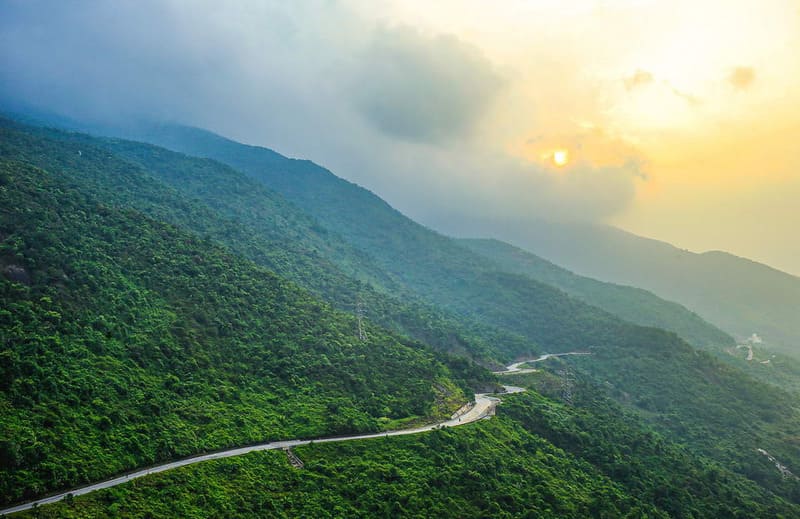
Hai Van Quan marks the historic summit of the pass (Source: Collected)
There are several ways to experience Hai Van Pass. The best option depends on your comfort level, travel style, budget, and whether you want freedom, safety, or convenience.
Riding a motorbike is the most iconic way to experience Hai Van Pass. It gives you full freedom to stop at viewpoints, feel the cool mountain air, and enjoy the curves of the road at your own pace.
This option is best for:
A motorbike ride over Hai Van Pass can be unforgettable, but it should not be treated casually. The road has sharp bends, blind corners, steep sections, occasional fog, and other vehicles. If you are not confident riding in Vietnam, it is better to choose an Easy Rider, private car, or jeep tour.
Before renting a motorbike, check:
For a one-way trip between Hoi An and Hue, many motorbike rental companies can transfer your luggage to the destination city. This makes the ride much safer and more comfortable.
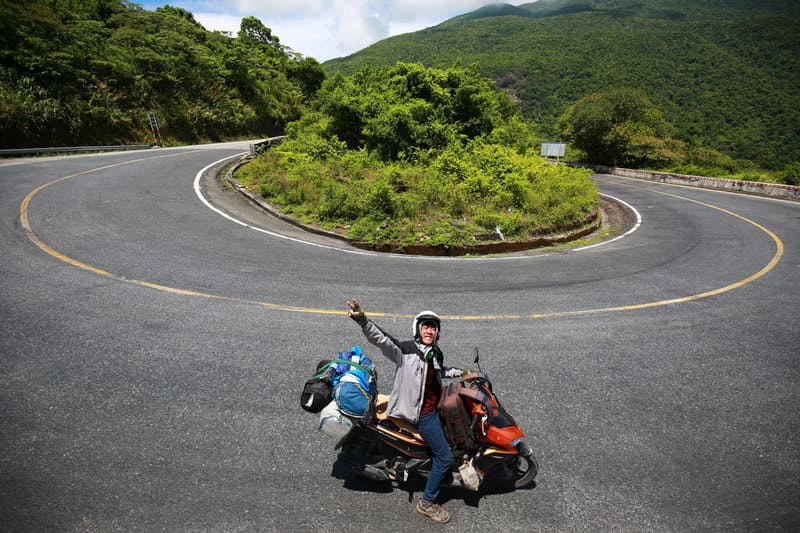
Motorbiking is a classic way to cross Hai Van Pass (Source: Collected)
A private car is the most comfortable way to visit Hai Van Pass. It is suitable for families, couples, older travelers, groups, and anyone who wants a scenic journey without riding a motorbike.
This option is best for:
A private car transfer can include several stops along the way, such as Hai Van Quan, Lang Co Bay, Lap An Lagoon, Marble Mountains, or local seafood restaurants. Compared with a normal highway transfer through the tunnel, a scenic transfer over Hai Van Pass takes longer but gives a much better travel experience.
A jeep tour offers a more adventurous feel than a private car. It is popular with travelers who want open-air views and a fun road-trip atmosphere, but without riding a motorbike themselves.
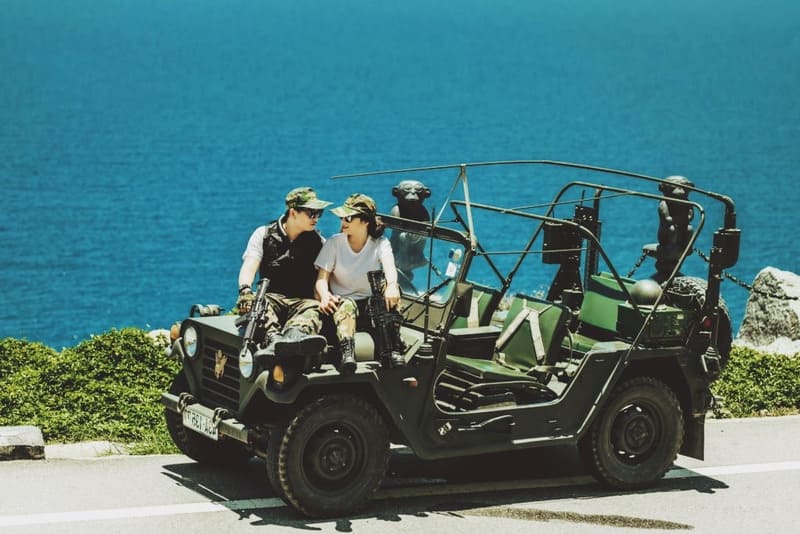
A private car makes the pass easier and more comfortable (Source: Collected)
Taking the train between Da Nang and Hue is another beautiful way to see the Hai Van area. The railway does not follow the exact same mountain road as the pass, but it runs along the coast and offers impressive views of cliffs, beaches, fishing villages, and the sea.
This option is best for:
The train journey between Da Nang and Hue usually takes around 2.5 to 3 hours. For the best sea views, choose a daytime train. If traveling from Hue to Da Nang, the best views are generally on the left side of the train. If traveling from Da Nang to Hue, the best views are usually on the right side.
The limitation is that you cannot stop at Hai Van Quan, viewpoints, or cafes along the pass. If photography stops and historic sites are important to you, a car, jeep, motorbike, or Easy Rider tour is better.

The Da Nang - Hue train offers beautiful coastal views (Source: Collected)
Hai Van Pass is not extremely dangerous if you travel carefully, choose the right vehicle, and avoid bad weather. However, it is still a mountain road, so travelers should respect the conditions.
The main risks include:
For motorbike riders, the most important rule is to ride slowly and stay on the correct side of the road. Do not overtake on bends, avoid sudden braking downhill, and keep both hands on the handlebars at all times. If the weather becomes foggy or rainy, reduce speed and use lights.
Beginners should not ride Hai Van Pass alone unless they already feel confident driving a motorbike in Vietnam. A private car, jeep, or Easy Rider is safer and still gives a rewarding experience.
For families and older travelers, Hai Van Pass is safe and comfortable by private car with an experienced driver.
The best time to visit Hai Van Pass is during the dry season, especially from February to August. During these months, the weather is usually clearer, the road is drier, and the coastal views are better.
The most pleasant months are often:
The rainy season in Central Vietnam usually falls from around September to December. During this period, Hai Van Pass can be foggy, wet, and slippery. Heavy rain may reduce visibility and make motorbike riding less safe.
Best time of day:
Avoid riding in heavy rain, thick fog, or after dark. The views are limited, and safety risks increase.
Nam O Beach is a quiet coastal area northwest of Da Nang and a good first stop before heading up Hai Van Pass from the Da Nang side. It is known for fishing activities, rocky shoreline views, and a more local atmosphere than the busy beaches near central Da Nang.
The beach is especially interesting in the early morning when fishermen return with their catch. From certain points, you can also see the coastline stretching toward the mountains, giving a preview of the scenery ahead.
Nam O is also famous for Nam O fish salad, a local specialty made with fresh fish, herbs, rice paper, and dipping sauce. If you want to combine coastal scenery with local food, this is a worthwhile stop.
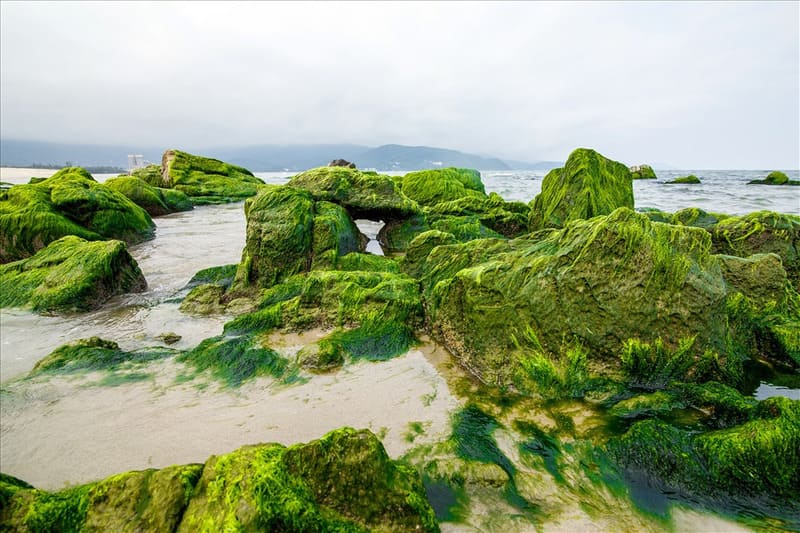
Nam O Beach is a peaceful stop before the mountain road (Source: Collected)
Black Rock Beach, known locally as Bai Da Den, is a more hidden coastal spot near the Hai Van area. It is named after the dark rocks scattered along the shore. The setting feels more rugged and less developed, making it attractive for travelers who enjoy quiet nature and photography.
This stop is best for adventurous travelers. Access may involve smaller roads, local directions, or walking depending on the route and conditions. It is not as straightforward as the main pass viewpoints, so it is better to visit with a local guide or driver if you are unfamiliar with the area.
Bring water, wear good shoes, and avoid visiting after heavy rain when rocks and paths can be slippery.
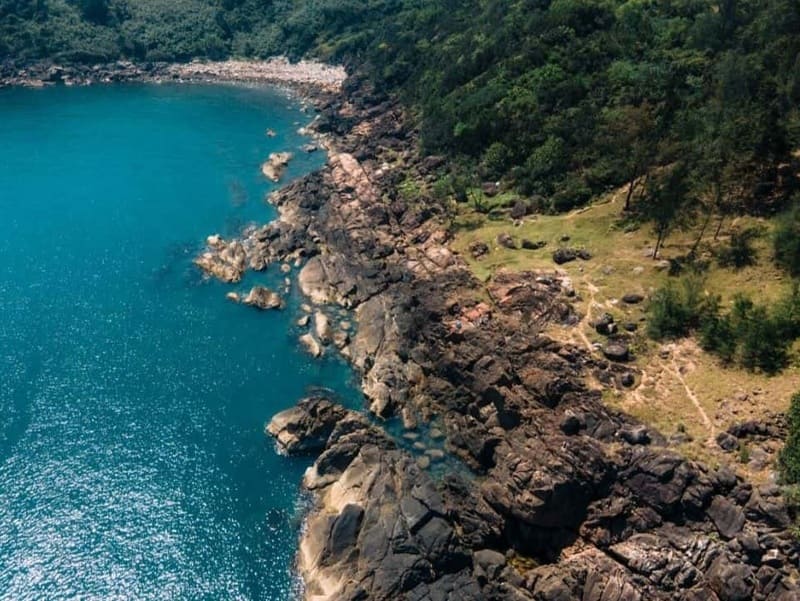
Black Rock Beach is a quiet coastal escape near the pass (Source: Collected)
As you begin climbing from the Da Nang side, the first viewpoints open toward Da Nang Bay, Son Tra Peninsula, and the coastline below. These are some of the most rewarding early stops on Hai Van Pass because the city quickly disappears behind you and the landscape becomes more dramatic.
These viewpoints are ideal for:
When stopping, park safely away from curves. Do not stop suddenly in the middle of the road, especially on narrow sections.
The winding curves are part of what makes Hai Van Pass so famous. From certain points, you can see the road bending along the mountain, with green slopes above and the blue sea below. This is the classic Hai Van Pass view that many travelers come for.
The best photos usually come from safe roadside pull-offs or higher viewpoints, not from standing in the road. Be careful when taking pictures near bends because vehicles may appear suddenly.
Early morning and late afternoon provide the best light. On cloudy days, the scenery can still be dramatic, especially when mist moves across the mountains.
Hai Van Quan is the historic gate at the summit of Hai Van Pass and the most important cultural stop on the route. Built during the Nguyen Dynasty, it once served as a fortified checkpoint between the northern and southern sides of the mountain.
From Hai Van Quan, visitors can enjoy views in both directions:
The area around the gate also has old stone structures and military remains, making it a good stop for both history and photography. Because it sits at the highest point of the pass, the weather can be cooler and windier than in Da Nang or Lang Co.
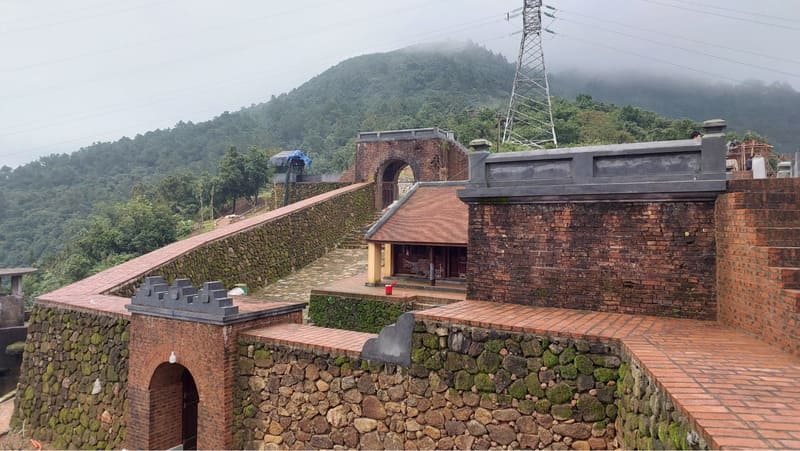
Hai Van Quan offers history and views from the summit (Source: Collected)
Near the summit, you can see abandoned bunkers and military structures from the French colonial and wartime periods. These relics show the strategic importance of Hai Van Pass in the past.
The bunkers are weathered, rough, and sometimes covered with moss or vegetation. They create a strong contrast with the natural beauty around them: old concrete walls, mountain mist, and open sea views.
Visitors should be careful when walking around these structures because some surfaces may be uneven or slippery. Avoid climbing unstable areas for photos.
Behind or near the summit area, travelers may notice an old radar station and related military structures on higher ground. This area is less commonly visited than Hai Van Quan and usually requires more effort to reach.
It can offer wide views on clear days, but the access path may be rough or unclear. This stop is better for adventurous travelers, photographers, or those traveling with a local guide who knows the route.
If you visit, wear suitable shoes, avoid going after rain, and do not block the road when parking.
Descending from Hai Van Pass toward Hue, Lang Co Bay is one of the most beautiful coastal views in Central Vietnam. The bay is known for its long sandy beach, calm blue water, fishing boats, and mountain backdrop.
Lang Co is a great place to:
The view of Lang Co from the pass is especially impressive because you can see the curve of the bay from above. On clear days, this is one of the most memorable panoramas of the entire route.
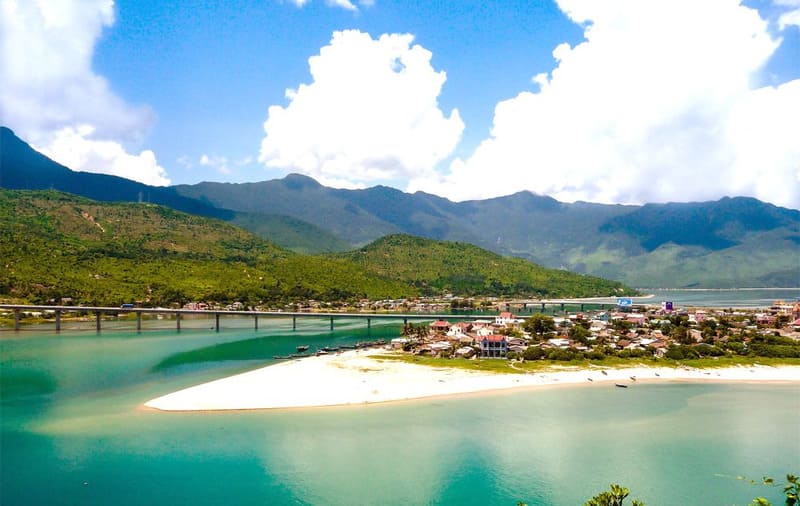
Lang Co Bay opens up beautifully below Hai Van Pass (Source: Collected)
Lap An Lagoon is located near Lang Co and is a peaceful stop after crossing Hai Van Pass. The lagoon is surrounded by mountains and is known for calm water, oyster farms, and reflections during good weather.
It is especially beautiful in the late afternoon when the light softens over the water. Many travelers stop here for photos, coffee, or a seafood meal before continuing to Hue.
Lap An Lagoon is also a good stop for travelers who prefer quiet scenery rather than busy tourist sites.
The main reason to visit Hai Van Pass is the drive itself. The route combines mountain curves, sea views, changing weather, and historic stops in a compact journey. Unlike a normal highway transfer, Hai Van Pass turns the journey between destinations into a travel experience.
Whether you travel by motorbike, car, jeep, or Easy Rider, allow enough time for stops. Rushing through the pass reduces the value of the experience.
Hai Van Pass is one of the best photography routes in Central Vietnam. You can capture:
For the best photos, travel on a clear morning or late afternoon. Bring a light jacket because the summit can be windy.
Hai Van Quan is the cultural heart of the pass. It adds historical depth to the journey and helps visitors understand why this route mattered for centuries.
The nearby bunkers and military structures also show how the pass was used for defense and observation. For travelers interested in history, Hai Van Pass is more than a scenic viewpoint; it is a place where geography shaped military and cultural movement.
Several small cafes and drink stalls can be found near the summit area. They usually serve Vietnamese coffee, coconuts, soft drinks, and simple snacks.
A coffee stop at the summit is a simple but enjoyable part of the Hai Van Pass experience. It gives you time to slow down, enjoy the wind, look over the mountains, and take in the view before continuing your journey.
Nam O fish salad is one of the most famous local dishes near the Da Nang side of Hai Van Pass. It is usually made with fresh fish, herbs, rice paper, and a rich dipping sauce.
This dish is best for travelers who enjoy local seafood and want to try something specific to the area. Since it uses fresh fish, choose a clean and trusted local restaurant.
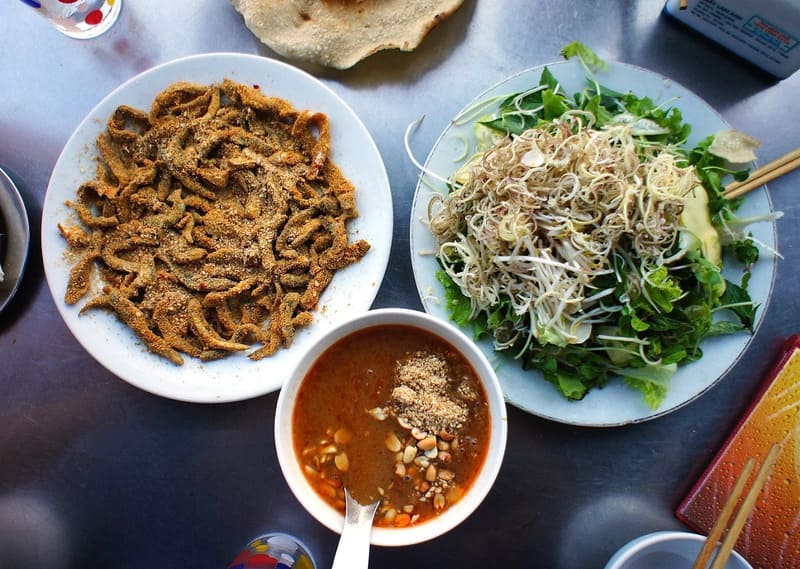
Nam O fish salad is a local specialty near the pass (Source: Collected)
Lang Co is one of the best places to eat near Hai Van Pass. The area is known for fresh seafood, including shrimp, squid, clams, oysters, crab, and fish.
Many restaurants around Lang Co and Lap An Lagoon offer seafood with views of the water. This is a good lunch stop if you are traveling between Da Nang and Hue.
Popular choices include:
If you continue toward Hue, you can try local Hue-style rice dishes such as banh uot, banh beo, banh loc, and banh nam. These dishes are light, flavorful, and often served with fish sauce, herbs, pork, or shrimp.
They are a good option if you want a more local meal after the coastal and mountain sections of the trip.

Hue-style cakes make a tasty stop after the drive (Source: Collected)
At the summit area near Hai Van Quan, small cafes and stalls usually sell coffee, coconuts, bottled water, and snacks. Prices may be higher than in the city, but the view is part of the experience.
A coconut or Vietnamese iced coffee at the summit is a good short break, especially if you are riding a motorbike.
Most travelers do not need to stay directly on Hai Van Pass. Instead, they usually stay in Da Nang, Hoi An, Hue, or Lang Co, depending on their itinerary.
Da Nang is the best base if you want easy access to Hai Van Pass as a half-day trip. It also offers beaches, restaurants, cafes, nightlife, and nearby attractions such as Son Tra Peninsula and Marble Mountains.
Best for:
Hoi An is a good base if you want to travel from Hoi An to Hue via Hai Van Pass. The journey is longer than starting from Da Nang, but it works well as a scenic transfer day.
Best for:
Hue is ideal if you want to visit Hai Van Pass while exploring imperial history, royal tombs, the Perfume River, and the Imperial Citadel. From Hue, you can travel south across the pass toward Da Nang or Hoi An.
Best for:
Lang Co is the closest beach base near the northern side of Hai Van Pass. It is quieter than Da Nang and Hoi An, with beautiful coastal scenery and easy access to Lap An Lagoon.
Best for:
To make your Hai Van Pass trip smoother, keep these practical tips in mind:
Yes. Hai Van Pass is worth visiting if you enjoy scenic drives, mountain views, coastal landscapes, photography, and historic sites. It is one of the best ways to travel between Da Nang and Hue because it turns a normal transfer into a memorable journey.
The pass itself is about 21 km long and can be crossed in around 30-45 minutes without stops. However, most travelers should allow 2-3 hours from Da Nang with viewpoints and coffee stops. If traveling between Hoi An and Hue via Hai Van Pass, allow around 4-6 hours depending on stops.
Beginners should be careful. Hai Van Pass has sharp curves, slopes, fog, and occasional traffic. If you have never ridden a motorbike in Vietnam, it is better to choose an Easy Rider, jeep tour, or private car. Confident riders with proper licenses and experience can enjoy the route safely by riding slowly and avoiding bad weather.
Yes. Hai Van Pass can easily be done in one day. From Da Nang, it can be a half-day or full-day trip. From Hoi An to Hue, it works well as a scenic transfer day with stops at Marble Mountains, Hai Van Quan, Lang Co Bay, and Lap An Lagoon.
The best way depends on your travel style. A motorbike gives the most freedom and adventure. A private car is the most comfortable and safest option. An Easy Rider is best if you want the motorbike experience without driving. The train is scenic and budget-friendly but does not allow stops on the pass.
For adventure and flexibility, motorbike is the best. For comfort and safety, private car is better. For a relaxed coastal view at a lower cost, the train is a good choice. If this is your first time in Vietnam and you are not confident riding a motorbike, choose a car or Easy Rider.
Yes, Hai Van Pass is suitable for families if traveled by private car or jeep with an experienced driver. Families should avoid self-riding motorbikes unless all riders are experienced and properly licensed.
Yes, it can be safe to travel across Hai Van Pass alone if you are well prepared, travel during the day, check the weather, and use a reliable transport option. Solo motorbike riders should be experienced and avoid riding in rain, fog, or darkness.
Yes. To legally ride a motorbike in Vietnam, you need the correct license and insurance coverage. Many travel insurance policies may not cover motorbike accidents if you do not hold a valid license for the vehicle type. Always check the legal and insurance requirements before renting a motorbike.
Hai Van Pass deserves a place in any Central Vietnam itinerary for travelers who enjoy coastal scenery, mountain roads, history, and photography. For the best experience, go during clear daytime weather, travel slowly, and allow enough time for safe viewpoints, coffee stops, and local food along the way.





 Vietnam Tours
 Cambodia Tours
 Laos Tours
 Thailand Tours
 Multi-Country Tours