Mid-Autumn Festival in Vietnam, or Tet Trung Thu, is one of the country’s most charming and family-centered celebrations. Held on the 15th day of the 8th lunar month, the festival transforms streets, homes, and old quarters with colorful lanterns, mooncakes, lion dances, and children’s performances.
For many Vietnamese, Tet Trung Thu is more than a festive evening under the full moon. It is a time for family reunion, childhood memories, seasonal traditions, and cultural pride. For travelers, it offers a wonderful chance to experience Vietnam in a more intimate and joyful way, especially in places like Hoi An, Hanoi, Ho Chi Minh City, and Tuyen Quang.
This guide explains the meaning of the Mid-Autumn Festival in Vietnam, its legends and customs, the best things to see and do, and where to experience the most memorable celebrations.
The Mid-Autumn Festival in Vietnam is a traditional celebration that takes place on the brightest full moon night of the year according to the lunar calendar. Locally known as Tet Trung Thu, it is often called the Children’s Festival because children are at the heart of many activities, from lantern parades to performances and festive games.
At the same time, Tet Trung Thu also carries deeper meanings. It reflects the importance of family togetherness, gratitude after the harvest season, and respect for ancestors. This mix of joy and tradition is what makes the festival so special in Vietnam. It is lively and colorful in public spaces, yet warm and meaningful inside family homes.
Compared with other festivals in the region, the Vietnamese version has a softer and more community-oriented atmosphere. It is not only about admiring the moon. It is also about sharing food, making children happy, and preserving customs that have been passed down for generations.
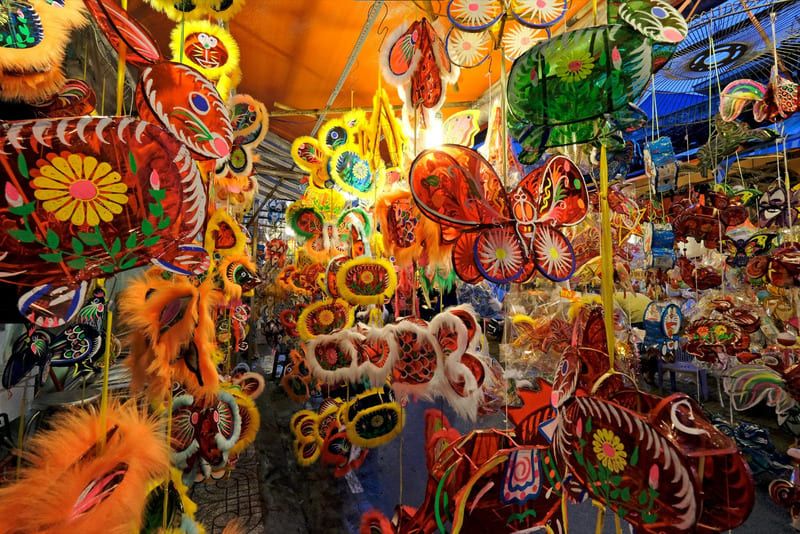
Mid-Autumn Festival in Vietnam celebrates children and full moon (Source: Collected)
The Mid-Autumn Festival is celebrated on the 15th day of the 8th lunar month, so the exact date changes every year on the Gregorian calendar. It usually falls in September or early October.
In reality, the festive atmosphere begins well before the main night. Around one to two weeks in advance, cities and towns start filling with mooncake stalls, lantern displays, toy markets, and lion dance rehearsals. This means travelers do not have to be in Vietnam on the exact festival date to enjoy the season. Visiting a few days before Tet Trung Thu can still offer a rich cultural experience, often with lighter crowds and better conditions for exploring.
For those who want the full atmosphere, the evening of the full moon is the highlight. That is when lantern parades, family gatherings, and lion dance performances are at their liveliest.
Like other moon festivals in East Asia, the Mid-Autumn Festival in Vietnam is linked to ancient stories and agricultural traditions. In Vietnam, one of the best-known legends is the story of Chu Cuoi, a man who was carried to the moon with a magical banyan tree. Vietnamese children are often told that if they look closely at the full moon, they can see Cuoi sitting under the tree.
Alongside this legend, Tet Trung Thu also has roots in rural life. The festival takes place around harvest season, when farming families traditionally finish an important period of work. After busy months in the fields, the full moon became a natural occasion to rest, give thanks, and spend time together.
Over time, this seasonal celebration developed into a festival especially loved by children. That is why Tet Trung Thu in Vietnam combines two beautiful ideas at once: gratitude for abundance and joy for the younger generation.
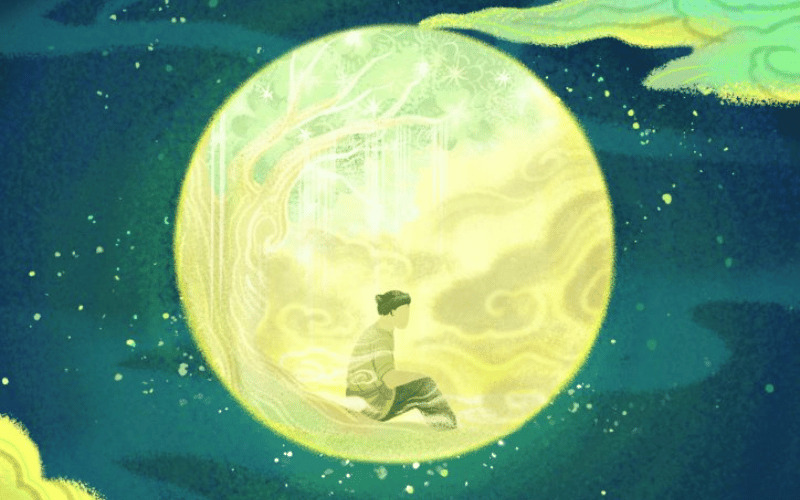
Illustration of Chu Cuoi on the moon (Source: Collected)
For many Vietnamese families, Tet Trung Thu begins at home. Families prepare fruit, tea, mooncakes, and other offerings for the family altar. This part of the celebration reflects respect for ancestors and gratitude for blessings in life.
After the offerings, family members often gather together to enjoy tea, share mooncakes, admire the moon, and spend time with children. Compared with larger public festivals, this side of Tet Trung Thu feels quiet and personal. It is one reason why the festival remains so emotionally meaningful to many locals.
Children play the central role in Vietnam’s Mid-Autumn Festival. In many neighborhoods, schools, and cultural centers, children join lantern walks, singing performances, games, and small community celebrations.
This is why Tet Trung Thu is often described as the most magical night of childhood. Streets become brighter, drums echo from a distance, and children carry lanterns shaped like stars, fish, rabbits, or cartoon characters. The atmosphere is festive, playful, and full of anticipation.
Another important custom is the exchange of mooncakes. Families, friends, and business partners often give mooncake boxes as seasonal gifts. In Vietnam, these cakes are not just festive snacks. They represent reunion, good wishes, and shared tradition.
In the weeks leading up to the festival, mooncake stalls appear in shopping streets, hotels, department stores, and residential areas. For visitors, this is one of the clearest signs that the season has arrived.
Lanterns are the most iconic image of Tet Trung Thu. Traditional lanterns are often star-shaped and made from bamboo frames covered with colored paper or red cellophane. Today, many modern versions are made with plastic, fabric, or LED lights, but the handmade lantern still holds special meaning.
In many places, children carry lanterns through the streets in small processions. Before the festival, some families and schools also make lanterns together as a creative and meaningful activity. For travelers, this is one of the most photogenic and memorable parts of the season.
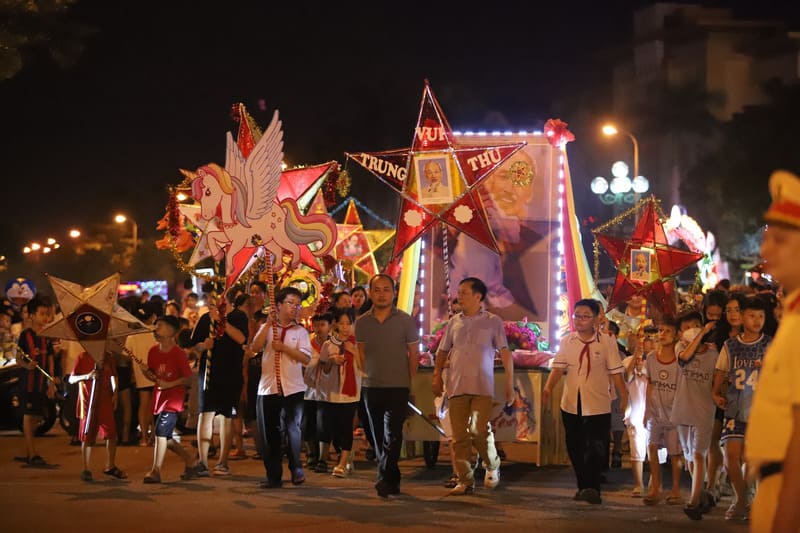
Lanterns are iconic at Tet Trung Thu, with handmade traditions (Source: Collected)
No Mid-Autumn Festival in Vietnam feels complete without lion dances. Known locally as mua lan, these performances bring energy, sound, and excitement to the streets. Accompanied by drums and cymbals, lion dance groups perform in front of homes, businesses, markets, and public squares.
Some performances are playful and community-based, while others are highly skilled, with acrobatics and dramatic movements. The lion dance is believed to bring good luck and drive away negative energy, which gives it both festive and symbolic importance.
For visitors, lion dances are often the most dynamic and immersive part of the celebration. The sound of the drums alone can instantly change the mood of a street.
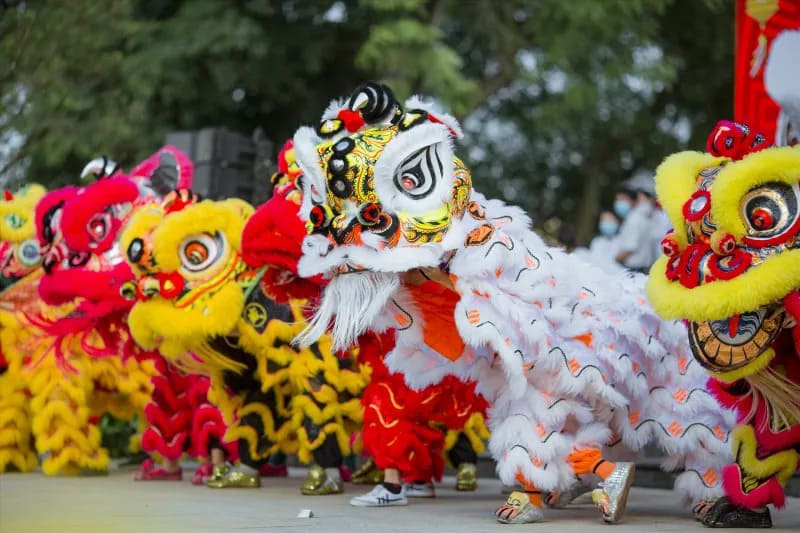
Lion dances bring energy, luck, and excitement to Mid-Autumn Festival (Source: Collected)
Trying mooncakes is one of the easiest ways to connect with the festival. In Vietnam, the two classic varieties are:
Traditional fillings may include lotus seed paste, mung bean, salted egg yolk, mixed nuts, candied winter melon, or savory ingredients. Modern versions can include chocolate, green tea, coconut, coffee, and other creative flavors.
For first-time travelers, mooncakes can be richer and denser than expected, so tasting a few slices with tea is often better than buying a large box immediately.
In addition to food and lanterns, Tet Trung Thu often includes traditional songs, storytelling, and folk games. Community spaces and heritage areas may organize small performances for children or cultural activities that reflect local customs.
These details may seem simple, but they add a strong sense of place to the festival. The Mid-Autumn Festival in Vietnam is not only something to watch. It is something to feel through sound, movement, memory, and community interaction.
One of the most enjoyable parts of the festival is simply walking through decorated streets in the evening. In destinations with historic architecture or riverfront views, the experience becomes even more atmospheric.
The best Mid-Autumn moments are not always the loudest ones. Sometimes they come from a quieter scene: a child proudly holding a handmade lantern, a family sitting together outside their home, or a softly lit old street under the full moon.
Hoi An is one of the best places in Vietnam to experience the Mid-Autumn Festival. The ancient town is already famous for its lantern-lit evenings, and Tet Trung Thu makes the setting even more magical. With yellow heritage houses, narrow lanes, riverside views, and pedestrian-friendly streets, Hoi An feels made for this celebration.
During the festival, visitors can enjoy lantern displays, lion dances, folk games, and a romantic atmosphere that blends tradition with visual beauty. Hoi An is especially ideal for couples, photographers, and first-time visitors who want the most scenic version of the festival.
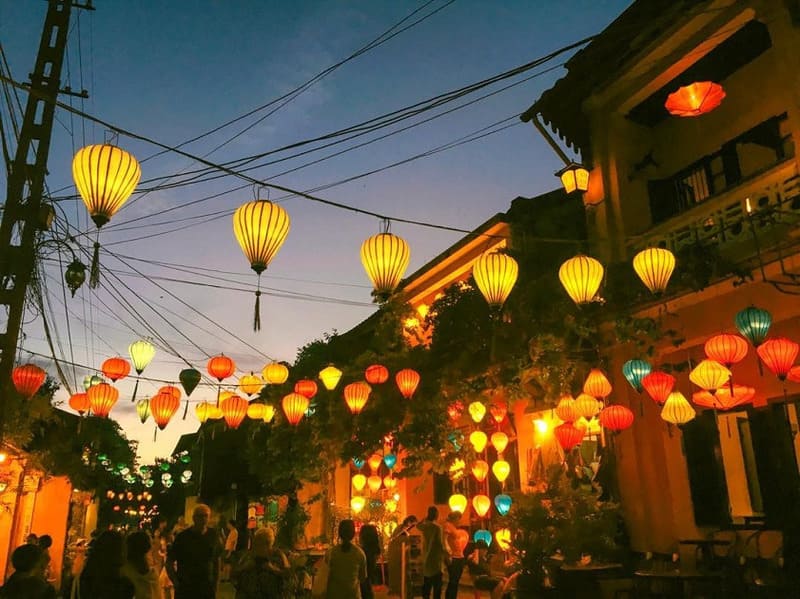
Hoi An offers Vietnam’s most scenic Mid-Autumn Festival experience (Source: Collected)
Hanoi offers a more traditional urban atmosphere for Tet Trung Thu, especially around the Hanoi Old Quarter, where narrow streets, old merchant houses, toy shops, and lantern stalls create a lively seasonal scene. In the days before the festival, streets such as Hang Ma, Luong Van Can, and areas near Dong Xuan Market fill with lanterns, masks, toys, decorations, and local shoppers.
The Old Quarter is a great place to experience the build-up to the festival rather than just the main night. It feels lively, authentic, and deeply rooted in local city life. Travelers who enjoy street culture, food, and heritage neighborhoods will find Hanoi especially rewarding during this period.
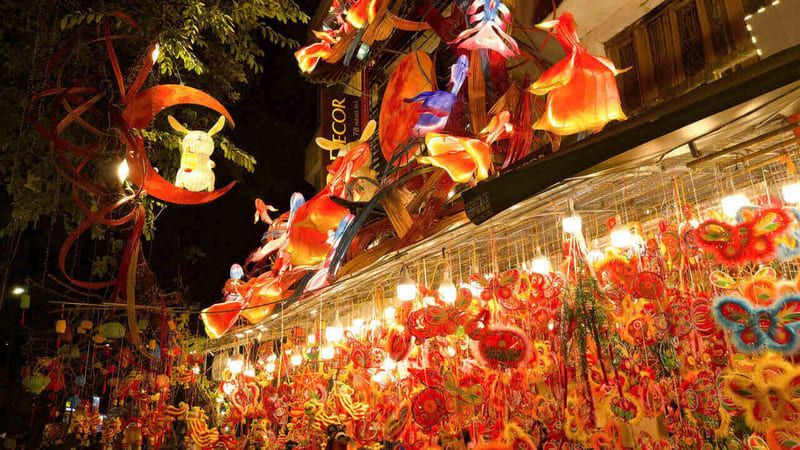
Hanoi Old Quarter glows with lanterns and festive Mid-Autumn buzz (Source: Collected)
In Ho Chi Minh City, the best-known Mid-Autumn atmosphere can be found in Cho Lon, especially around Luong Nhu Hoc Street and nearby areas. This district is famous for its lantern shops, festive decorations, and Chinese-Vietnamese cultural influence.
The vibe here is vibrant, colorful, and energetic. It is one of the best places for festive street photography and evening walks before the main festival night. Travelers who enjoy urban intensity and bright visual culture will likely love this part of the city during Tet Trung Thu.
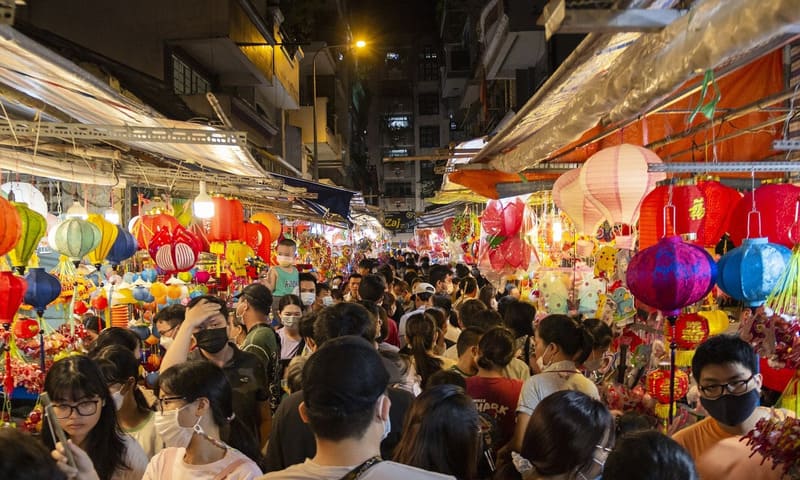
Cho Lon offers vibrant lantern streets for Mid-Autumn in HCMC (Source: Collected)
Tuyen Quang has become famous for its large lantern displays and lively Mid-Autumn celebrations. Unlike the more classic city experiences in Hanoi or Ho Chi Minh City, Tuyen Quang is known for oversized lantern models and parade-style festivities that create a strong local spectacle.
This is a great option for travelers who want to explore a less typical festival destination in Vietnam and see a different scale of celebration.
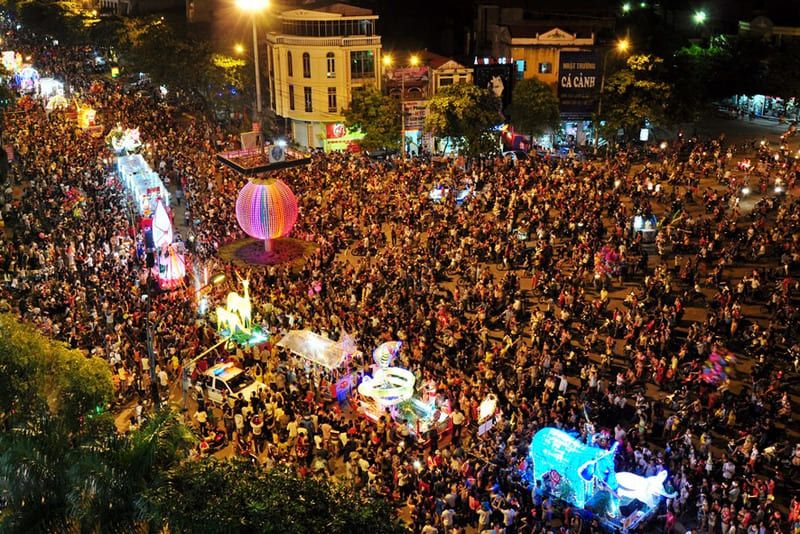
Tuyen Quang Mid-Autumn Festival with giant lantern parades (Source: Collected)
The best time depends on what kind of experience you want.
If your goal is to enjoy the atmosphere, browse lantern streets, and take photos more comfortably, visiting two to five days before the full moon is often ideal. The streets are already festive, mooncake stalls are active, and lion dance groups may be rehearsing, but the crowd is usually easier to manage.
If you want the fullest and most exciting experience, go on the main festival night. This is when lantern parades, family activities, and lion dance performances are at their peak.
Within the day, late afternoon to early evening is usually the best time to head out. You can see the streets gradually come alive, enjoy the changing light, and stay on for the lanterns and performances after dark.
To make the most of your Mid-Autumn Festival experience in Vietnam, a few practical tips can help you navigate the crowds, enjoy the atmosphere, and connect more deeply with local traditions.
Yes, especially for travelers interested in culture, photography, family traditions, and seasonal festivals. Tet Trung Thu is one of the most accessible traditional celebrations in Vietnam because it is easy to enjoy even without deep background knowledge.
The festival is visually attractive, emotionally warm, and widely celebrated, which makes it ideal for first-time visitors. It also feels more intimate than some other major holidays, giving travelers a chance to see both public festivity and private family tradition at the same time.
Yes. It is one of the most widely loved traditional festivals in Vietnam and is celebrated in cities, towns, and villages across the country.
Common traditions include family gatherings, mooncake sharing, ancestor offerings, lantern parades, children’s performances, and lion dances.
Mooncakes are traditional cakes eaten during Tet Trung Thu. They are important because they symbolize reunion, sharing, and festive good wishes.
Tourists can enjoy lantern streets, lion dances, mooncake tasting, evening walks, cultural performances, and festival photography in major destinations.
Lion dances can be seen in many parts of Vietnam during Tet Trung Thu, especially in Hoi An, Hanoi Old Quarter, and Cho Lon in Ho Chi Minh City.
No. It is an important traditional celebration, but it is not a nationwide public holiday.
Hoi An is often the best overall choice for international travelers thanks to its lantern atmosphere, heritage setting, and walkable old town.
The Mid-Autumn Festival in Vietnam offers a unique blend of culture, family traditions, and vibrant street celebrations that are easy for travelers to enjoy. From lantern-lit streets to lively lion dances and seasonal treats, the festival brings Vietnam’s local life to the forefront in a warm and memorable way. If you visit at the right time, it can easily become one of the most meaningful highlights of your journey.
If you want to build your Vietnam trip around festivals, heritage towns, food, and local culture, explore our Vietnam tours for tailor-made itineraries that match your travel style.

 Vietnam Tours
 Cambodia Tours
 Laos Tours
 Thailand Tours
 Multi-Country Tours