Y Linh Ho Village is a quiet stop in Sapa’s Muong Hoa Valley, known for layered rice terraces, mountain paths, and the daily life of the Black Hmong community. Located about 7 kilometers from Sapa Town, the village is a rewarding choice for travelers who want a more peaceful trekking experience beyond the busier tourist areas.
In this guide, Your Vietnam Travel shares the essential things to know before visiting Y Linh Ho Village, including its location, best things to do, ideal travel time, how to get there, and practical tips for exploring this hidden corner of Sapa.
Y Linh Ho Village is located about 7 kilometers southwest of Sapa Town, in the direction of Muong Hoa Valley and Lao Chai Village. The village lies on the mountain slopes below the Hoang Lien Son range, surrounded by rice terraces, corn fields, small streams, and scattered local houses.
Y Linh Ho is often visited as the first part of a longer trekking route through Muong Hoa Valley. Many travelers start from Sapa Town, pass through hillside paths or local roads, continue to Y Linh Ho, then trek onward to Lao Chai and Ta Van. This route gives visitors a wider view of Sapa’s countryside, from high mountain viewpoints to valley villages and rice paddies.
Compared with Cat Cat Village, Y Linh Ho feels less commercial. Compared with Ta Van, it is usually quieter and more rustic. The village is a good choice for travelers who want to experience the landscape of Sapa without staying only in the most crowded tourist areas.
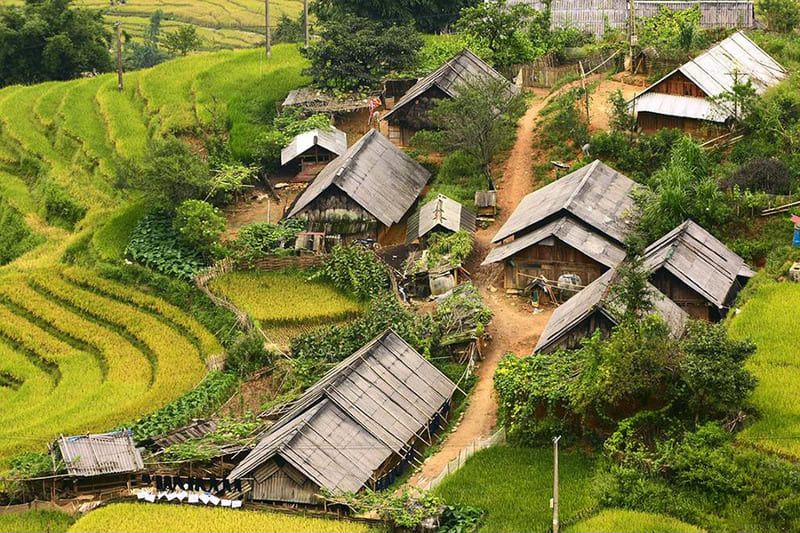
A peaceful village in Sapa’s Muong Hoa Valley (Source: Collected)
The name Y Linh Ho is commonly linked to a local story about a man named Ly Linh Ho, who is said to have played an important role in the early formation of the village. According to this local explanation, the area was once associated with Dao people before Hmong families settled and developed the village further. Although the population changed over time, the name Y Linh Ho remained.
Today, Y Linh Ho is mainly known as a Black Hmong village within the wider cultural landscape of Muong Hoa Valley. Local life is closely connected with farming, especially rice cultivation on terraced fields. Families also grow corn, raise livestock, make handicrafts, and maintain traditional customs through clothing, house architecture, food, and community activities.
The village’s identity comes from its quiet setting and everyday rhythm. Instead of large tourist facilities, visitors usually see narrow paths, wooden houses, small gardens, buffaloes grazing near fields, women carrying baskets, and children walking along village lanes. This simple atmosphere is one of the main reasons Y Linh Ho attracts travelers who want a more authentic side of Sapa.
Trekking is the most popular way to experience Y Linh Ho Village. The classic route usually connects Sapa Town, Y Linh Ho, Lao Chai, and Ta Van, allowing travelers to see different parts of Muong Hoa Valley in one journey.
A typical trek may start from Sapa, descend toward the valley, pass through Y Linh Ho’s terraced fields and local paths, then continue to Lao Chai Village and Ta Van Village. Depending on the route, pace, weather, and stops, the trek can take from half a day to a full day.
The route is not technically difficult, but it can be tiring because of slopes, uneven ground, stone paths, and muddy sections after rain. A local guide is strongly recommended if you want to understand the route, avoid getting lost, and learn more about Hmong culture along the way.
For active travelers, this trek is one of the best ways to see Sapa beyond the town center. The scenery changes constantly, from mountain views and open valleys to small houses, rice terraces, streams, and village paths.
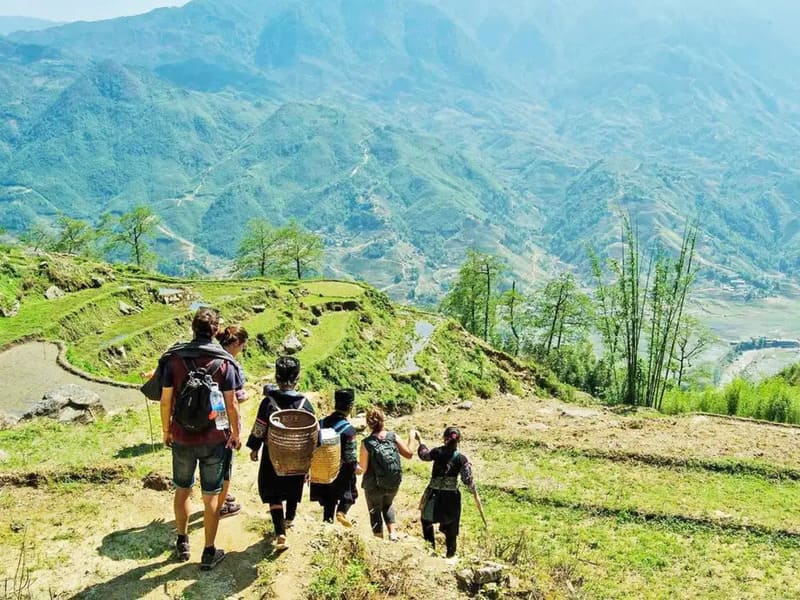
Trekking through Y Linh Ho’s mountain paths (Source: Collected)
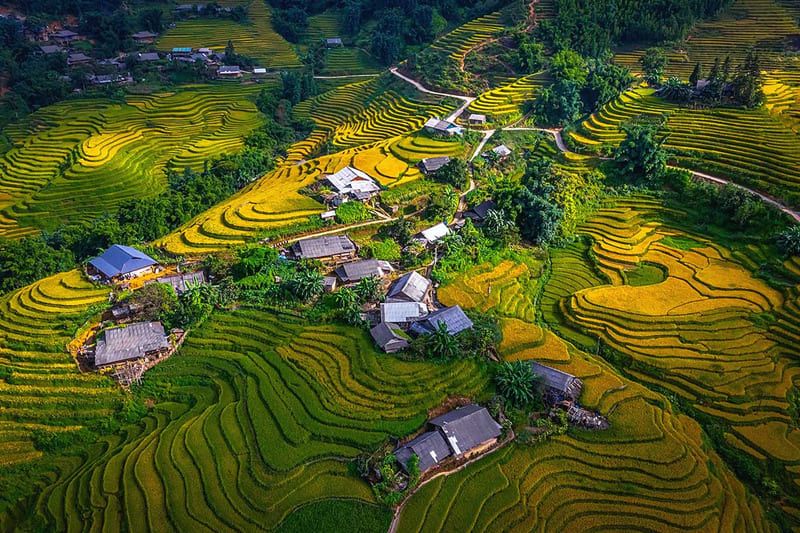
The rice terraces are the main highlight of Y Linh Ho Village. Built along the mountain slopes, these fields create soft, layered curves that follow the natural shape of the hills. They are both a farming landscape and one of the most beautiful photo subjects in Sapa.
During the water-pouring season, usually around May to June, the fields reflect the sky and clouds like mirrors. During the green rice season, from around June to August, the valley becomes lush and fresh. In September and early October, the rice turns golden before harvest, making it one of the most photogenic times to visit.
Walking along the hillside paths gives visitors a close view of how local people farm in steep mountain terrain. You may see farmers working in the fields, buffaloes used for farming, irrigation channels carrying water, and small footpaths connecting houses to the fields.
Because many paths are narrow and can become slippery, visitors should walk carefully and avoid stepping into planted areas. The rice terraces are private farmland and part of local livelihoods, so respectful behavior is important.
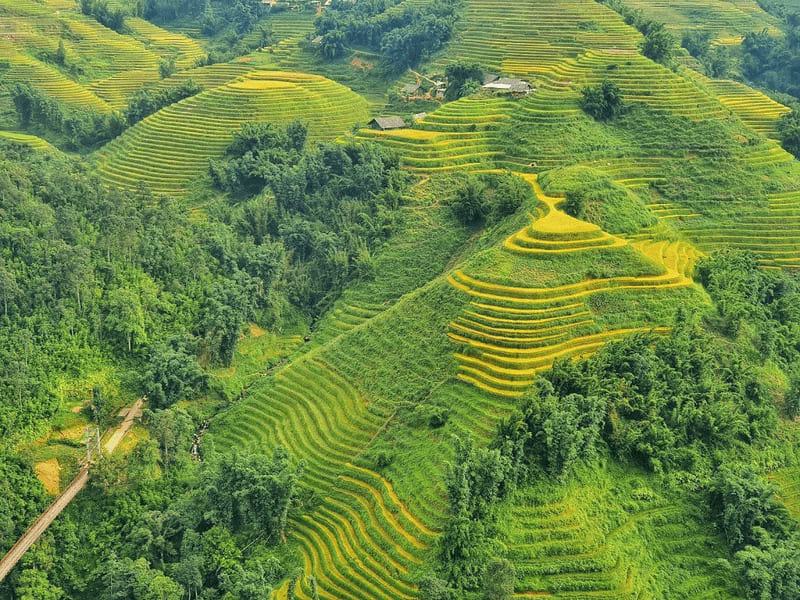
Rice terraces shape the hillsides of Y Linh Ho (Source: Collected)
A visit to Y Linh Ho is also an opportunity to observe the daily life of local Black Hmong families. Traditional houses are often simple, practical, and built close to the fields. Many homes use wood, bamboo, or other local materials, with spaces for cooking, family activities, farming tools, and storage.
Life in the village is closely connected to the seasons. During farming periods, local people spend much of the day in the fields. Around the houses, visitors may see livestock, drying corn, vegetable gardens, firewood, or handmade textiles.
If invited into a local home, enter politely and follow your guide’s advice. Avoid touching household items, altars, farming tools, or personal belongings without permission. Photography should also be respectful, especially when taking pictures of children, elderly people, or private family spaces.
This kind of experience is not about staged performances. The value of visiting Y Linh Ho comes from slowing down and seeing how people live in the mountains, how they work with the land, and how traditional practices remain part of daily life.
Brocade weaving and handmade textiles are important parts of Hmong culture in Sapa. In and around Y Linh Ho, visitors may see local women weaving, embroidering, dyeing fabric, or selling handmade items such as scarves, bags, small purses, and decorative pieces.
Traditional Hmong textiles often feature strong colors, geometric patterns, and hand-stitched details. Indigo dyeing is also closely associated with Hmong clothing in northern Vietnam. The process can involve dyeing fabric with natural indigo, drying it, and decorating it with embroidery or batik-style patterns.
Buying directly from local makers can be a meaningful way to support the community, but bargaining should be polite. Prices vary depending on the size, material, and level of handwork. Small souvenirs may be affordable, while larger handmade pieces usually cost more because they require significant time and skill.
Travelers should also understand that not every item sold in tourist areas is handmade locally. If authenticity matters, ask your guide or the seller about how the product was made.
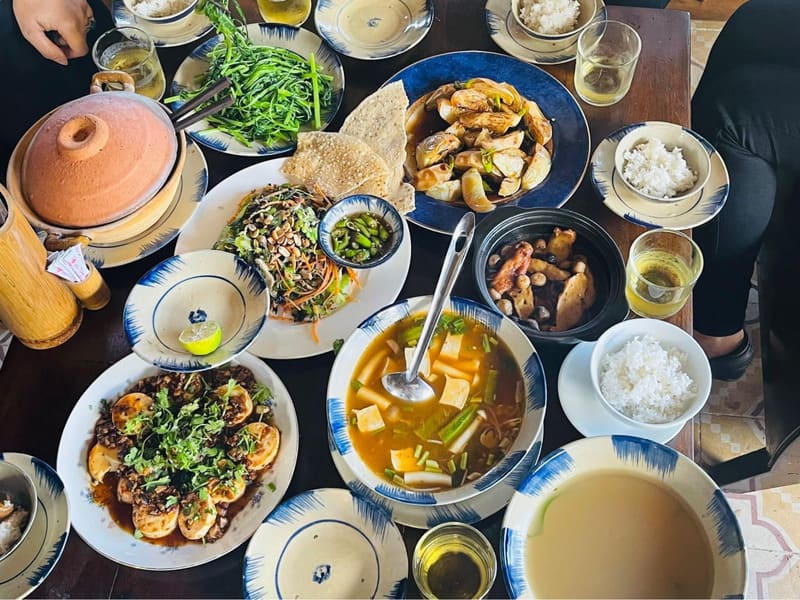
Food in Y Linh Ho and the surrounding villages reflects the mountain environment of Sapa. Meals are usually simple, warm, and based on local ingredients such as rice, corn, vegetables, pork, chicken, fish, and forest herbs.
Popular dishes and specialties you may find in the wider Sapa area include grilled stream fish, black chicken, five-color sticky rice, grilled pork, bamboo-tube rice, corn cakes, mountain vegetables, and thang co, a traditional Hmong dish often associated with highland markets and local gatherings.
For many visitors, the best food experience is not a restaurant meal but a simple lunch at a local home or homestay during a trek. Meals may include rice, stir-fried vegetables, eggs, pork, soup, and seasonal ingredients. The food is usually not fancy, but it gives a better sense of local hospitality and daily life.
If you have dietary restrictions, inform your guide in advance. Vegetarian options may be available, but choices can be limited in small villages.
Want to discover more regional flavors? Explore our guide to Sapa food for the must-try dishes and traditional specialties of Vietnam’s Northwest.
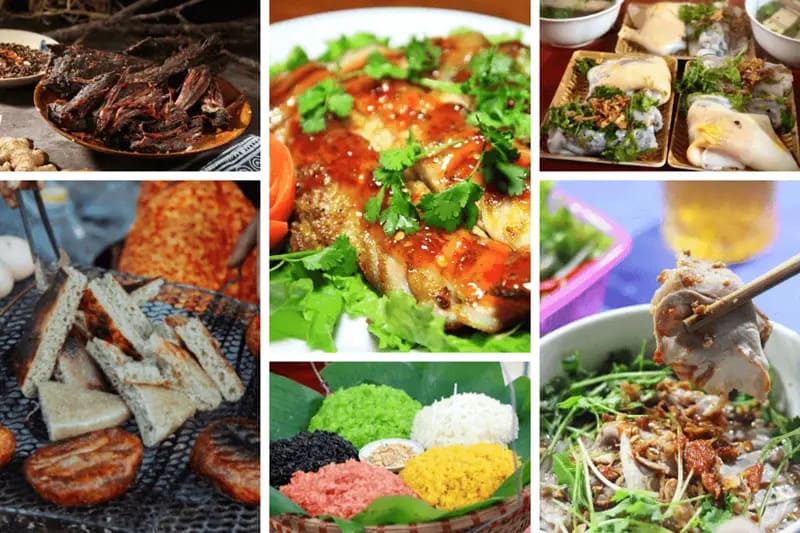
Traditional Hmong dishes and mountain specialties (Source: Collected)
Y Linh Ho Village offers many scenic photo spots, especially for travelers interested in rice terraces, mountain views, and rural life. One well-known stop on some trekking routes is Lao Chai San 2 Bridge, which connects parts of the valley and gives travelers a good view of the surrounding landscape.
The best photos are often taken from higher hillside paths, where you can see layers of terraced fields, village houses, Muong Hoa Valley, and mountain ridges in the background. Early morning is ideal for soft light and mist, while late afternoon gives warmer colors and stronger contrast on the terraces.
Good photo spots in and around Y Linh Ho include:
When taking photos of people, always ask first. For children, it is better to avoid close-up photos unless parents or guardians clearly agree. Do not offer money or candy in exchange for photos, as this can encourage unhealthy tourism behavior.
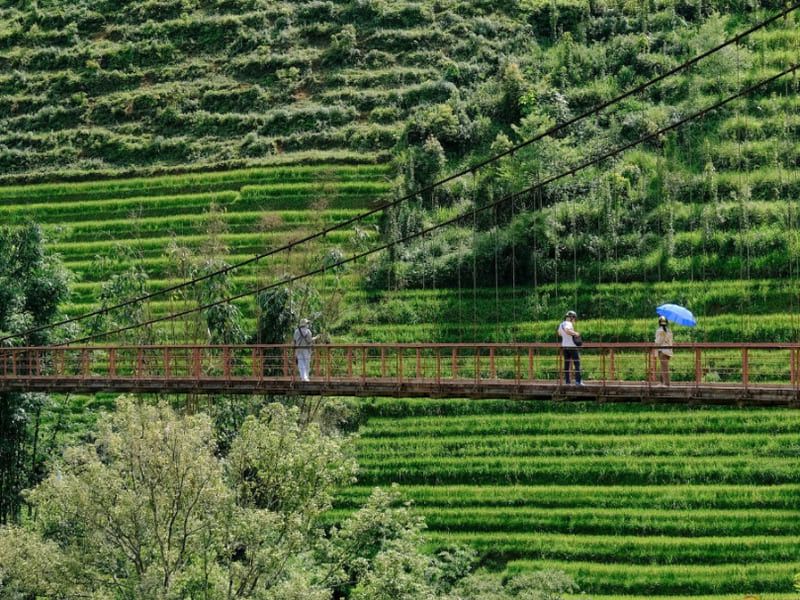
Lao Chai San 2 Bridge among Sapa’s rice terraces (Source: Collected)
The best time to visit Y Linh Ho Village depends on the scenery you want to experience, from reflective terraces to golden rice fields.
For most travelers, the best months are May to June for water-filled terraces and September to early October for golden rice fields.
Weather and scenery in Sapa change dramatically throughout the year, so it is worth reading our best time to visit Sapa guide before planning your trip.
Y Linh Ho Village is located near Sapa Town and can be reached by trekking, motorbike, taxi, private car, or guided tour. Each option suits a different travel style.
A few simple preparations can help you enjoy a safer and more comfortable trekking experience in Y Linh Ho Village.
Y Linh Ho Village is about 7 kilometers southwest of Sapa Town. It takes around 20 - 45 minutes by motorbike or car, depending on road conditions. If trekking, the journey can take 1.5 hours or longer, especially when continuing to Lao Chai and Ta Van.
Yes, you can visit Y Linh Ho Village without a guide by motorbike or taxi. However, a local guide is recommended for trekking because some trails are steep, muddy, or hard to follow. A guide also helps you learn more about Hmong culture and local life.
Wear trekking shoes with good grip, long pants, and comfortable clothing. Bring a rain jacket in the rainy season and warm layers in winter. A hat, sunscreen, and insect repellent are also useful because the route includes open fields and muddy paths.
Y Linh Ho Village is usually quieter than tourist-heavy places like Cat Cat Village. It does receive trekkers on the Y Linh Ho - Lao Chai - Ta Van route, especially during the golden rice season, but the village still feels more peaceful and less commercial.
For travelers looking beyond the crowded side of Sapa, Y Linh Ho Village offers a slower and more scenic experience. The village combines rice terraces, mountain landscapes, Hmong culture, and trekking routes in one peaceful setting. Whether you visit for a few hours or include it in a full-day Muong Hoa Valley trek, Y Linh Ho is a worthwhile stop for discovering the natural beauty and local life of northern Vietnam.


 Vietnam Tours
 Cambodia Tours
 Laos Tours
 Thailand Tours
 Multi-Country Tours