Sapa Night Market is the easiest place to feel the highland vibe after dark, with warm street-food smells, colourful textiles, and a steady buzz of locals and travellers in the Sapa town centre. Beyond shopping, it is where you can spot everyday hill-tribe culture through handmade crafts, simple performances, and weekend crowd energy that makes Sapa feel more alive at night.
This guide from Your Vietnam Travel covers what makes this market special, where to go and when, what to eat and buy, plus practical tips so you can enjoy the night market comfortably and safely.
Sapa Night Market feels less like a “shopping stop” and more like a quick window into Sapa’s ethnic minority culture after dark. On weekend evenings, the market comes alive with stalls run by local sellers, so you can browse, taste, and people-watch in one place instead of travelling out to multiple villages.
What makes it stand out is the mix of handmade highland products and mountain-style street food. You will see compact, easy-to-carry items such as H’Mong-style embroidered pieces (bags, clothing, hats, and colorful textiles), plus Red Dao-inspired herbal products that many travelers buy as practical gifts.
Food is the other main reason for travellers to come to this night market. The stalls typically focus on warm, bold flavors suited to Sapa’s cool nights, think thang co, grilled pork, salmon hotpot, smoked/dried buffalo meat, black chicken, com lam (bamboo-cooked rice), and grilled stream fish, with local drinks like corn wine and tao meo wine often mentioned as part of the experience.
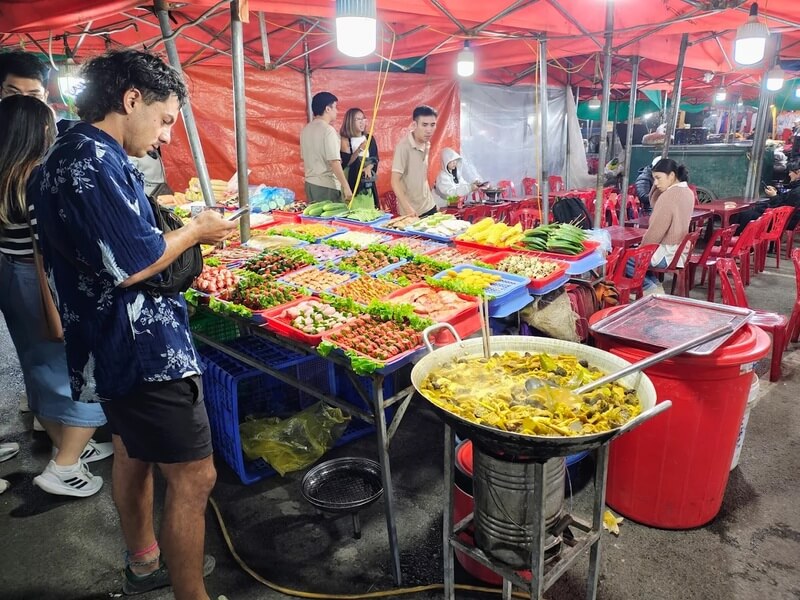
Guests amazed with food stall at Sapa Night Market (Source: Collected)
Sapa Night Market is easiest to visit if you are staying in town. It sits on N1 Street in Sapa Town, close to the center and commonly described as near Sapa Lake and the Sapa bus station or local tourism information area, so you can usually reach it in a short ride from most hotels in town.
Sapa Night Market is central, so the trip is usually short. If you stay near the Sapa Stone Church or Sapa Lake area, you can often walk there in about 10 to 15 minutes. Walking is most practical when your hotel is within roughly 2 km so you can save money and get to enjoy Sapa’s evening atmosphere.
If you want more flexibility, renting a motorbike is common in Sapa. Many hotels and homestays can help arrange rentals for around 100,000 - 150,000 VND/day (US$3.85 - 5.77/day). Only choose this option if you have a valid license and feel comfortable on Sapa’s winding roads, especially when it is foggy or after rain.
For a quick local ride, you may see electric cars near pickup points such as the Stone Church area. Fares are often listed from 6,000 VND/ride (US$0.23/ride), depending on the route and availability. Another budget option is a motorbike taxi (xe om), commonly 5,000 - 10,000 VND (US$0.19 - 0.38) for short trips from central Sapa, depending on distance and how busy it is.
If you are travelling in a group or want the easiest door-to-door transfer, take a taxi. Some local operators quote starting rates around 12,000 VND/km (US$0.46/km), with the final fare depending on distance, traffic, and time of day.
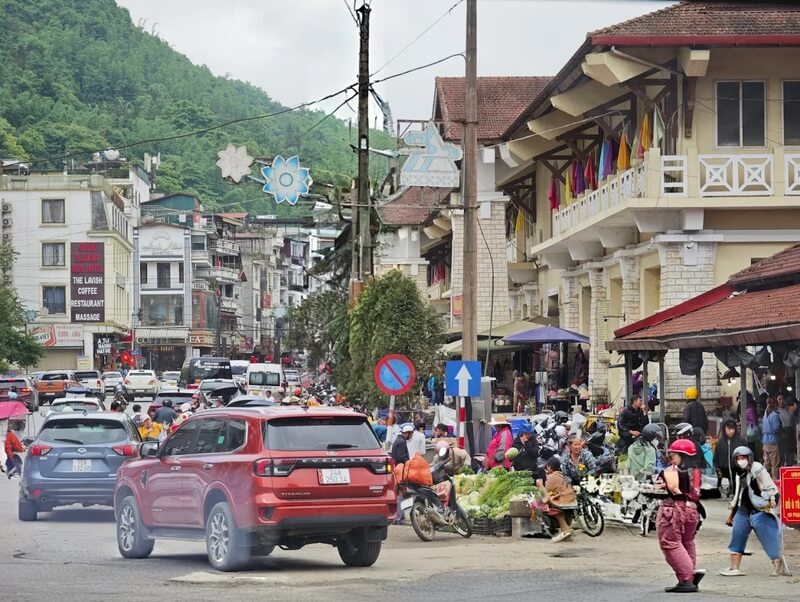
Travellers getting to Sapa Night Market by motorbikes and cars (Source: Collected)
Sapa Night Market only runs on weekends (Friday to Sunday), so the “best time” is mostly about choosing the right hour in the evening and matching it to the vibe you want. Early on, the market feels more like a local shopping zone; later, it becomes livelier with food, lights, and a steady flow of visitors.
For a wider look at seasonal weather, festivals, and travel conditions, read our guide to the best time to visit Sapa before finalising your trip dates.
Street food is one of the highlights of Sapa Night Market, especially during cold evenings when hot grilled dishes become even more enjoyable. As you walk through the market, the smell of charcoal grills and local spices fills the air.
Popular snacks and dishes include:
For more local highland specialties, try:
If you prefer lighter snacks while exploring the market, roasted chestnuts, grilled corn, sweet soup, and hot soy milk are easy to find. Most small snacks cost around 20,000 - 50,000 VND, while larger dishes such as salmon hotpot are more expensive depending on the restaurant and serving size.
The best way to enjoy the food area is to order small portions from different stalls and try a variety of local flavors as you walk around.
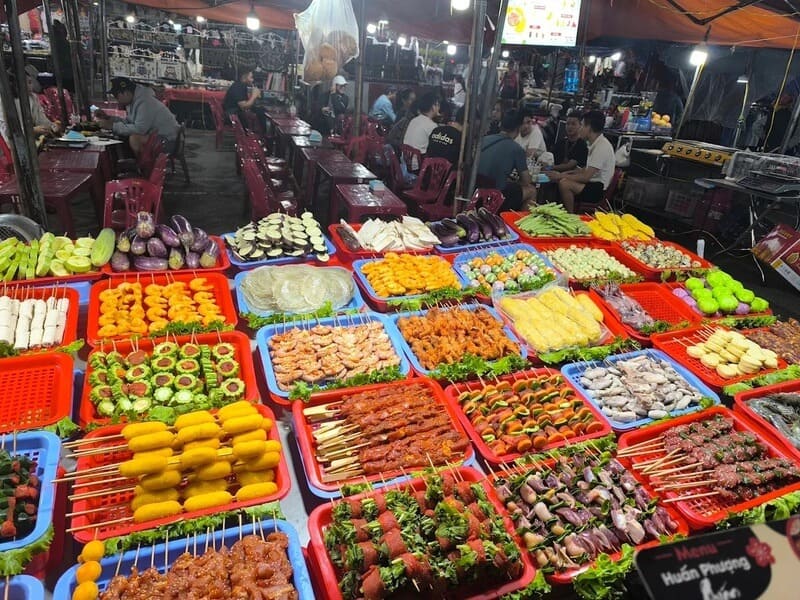
Grilled meat stall at Sapa Night Market (Source: Collected)
Sapa Night Market is one of the easiest places in town to buy ethnic handicrafts and small souvenirs. Many stalls are run by local H’Mong and Red Dao vendors wearing traditional clothing, adding to the cultural atmosphere of the market.
Popular handmade items include:
Most small handmade items cost around 50,000 - 300,000 VND, depending on size, material, and craftsmanship.
For simple souvenirs, you can also find:
Some stalls also sell edible local products such as smoked buffalo meat, sausages, rice wine, and mountain spices that are easy to bring home as gifts.
Before buying, compare a few stalls and check the quality carefully because products can vary in stitching, fabric, and finishing details.
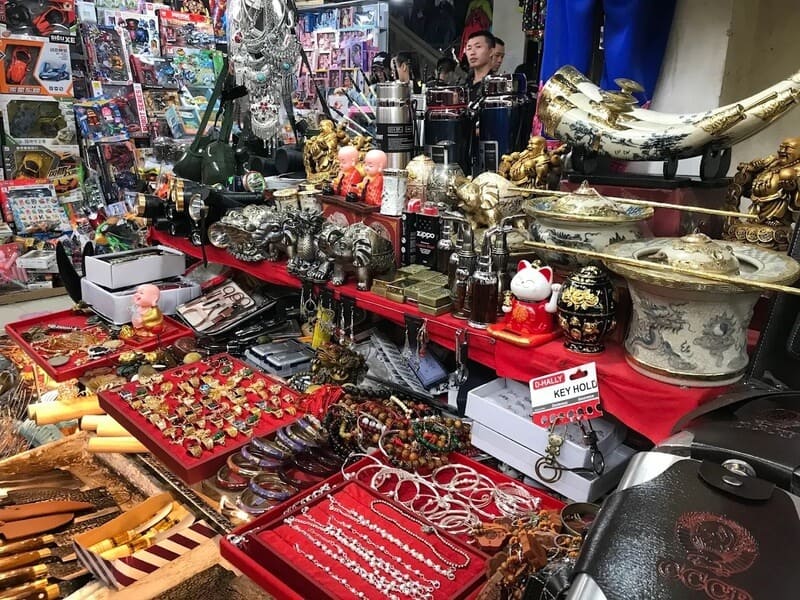
Silver jewelry shop at Sapa Night Market (Source: Internet)
Sapa Night Market is also a gathering place for local ethnic communities, especially during weekends. In the evening, visitors may see traditional music, dancing, and small cultural activities that reflect the heritage of the H’Mong and Red Dao people.
Common cultural experiences include:
Unlike staged tourist shows, many activities at the market happen naturally as locals meet, socialize, and enjoy the evening together. This gives the market a more authentic and relaxed atmosphere.
Visitors may also notice people wearing colorful ethnic outfits decorated with silver accessories, embroidered fabrics, and traditional patterns, making the market especially photogenic at night.
If you visit Sapa on a Saturday night, you may experience the atmosphere of the famous Sapa Love Market. Despite its name, this is not a shopping market but a long-standing cultural gathering connected to local ethnic traditions.
Traditionally, young people from H’Mong, Red Dao, and other ethnic communities gathered on Saturday evenings to meet, sing, dance, and socialize after a week of work in the highlands. Over time, the Love Market became one of Sapa’s best-known cultural experiences.
During the evening, visitors may see:
The atmosphere becomes especially lively on weekends, with both locals and tourists gathering around the market area.
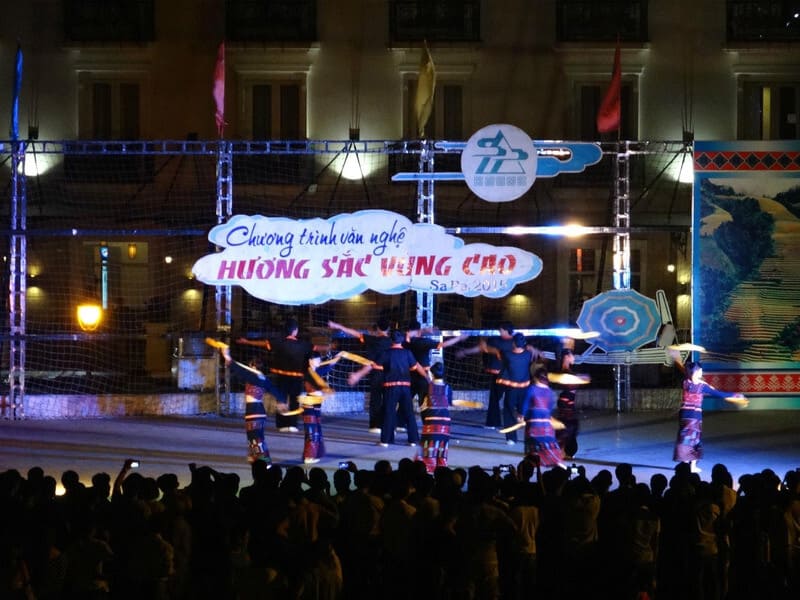
A local dance performance at Sapa Love Market (Source: Tripadvisor)
After exploring the market, many visitors stop at nearby cafes or bars to enjoy the cool evening atmosphere of Sapa.
Small cafes around the market often serve:
Some cafes have balconies or window seats overlooking the street, making them good places to relax and watch the market activity from above.
If you prefer a livelier atmosphere, several bars and pubs near the market stay open later in the evening. Sapa nightlife is generally more relaxed than large Vietnamese cities, but weekends can still feel energetic and social.
Sapa Night Market is one of the most photogenic places in town at night. The colorful lights, brocade stalls, smoke from food vendors, and cool mountain atmosphere create excellent photo opportunities.
Popular photo spots include:
For the best lighting conditions, visit between 6:30 PM and 8:00 PM, when the market is lively but not yet too crowded.
If you want close-up portraits of local vendors or people in traditional outfits, ask politely before taking photos. Buying a small item before requesting a portrait is considered respectful and helps support local sellers.
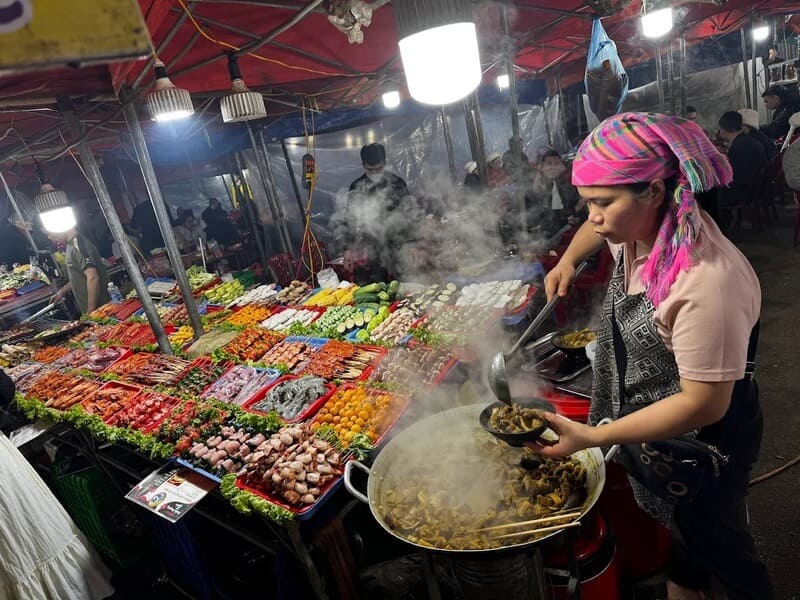
Sapa Night Market in the lens of a traveller (Source: Internet)
Sapa Night Market is a good place to try local food and shop for edible highland specialties in one stop. The market has dozens of souvenir booths run by local households, along with many H’Mong and Red Dao vendors from nearby villages, so visitors can find both ready-to-eat dishes and take-home products in the same area.
The market is best known for grilled and roasted foods. If you only try one thing, start with a hot plate of charcoal-grilled meat, fish, beef, or vegetables. These dishes are usually served with chili sauce, lemon-salt, or local dipping spices. In Sapa’s cool night air, simple grilled food often tastes especially satisfying.
Popular ready-to-eat specialties include:
For edible souvenirs, look for dried or vacuum-packed local products that are easier to carry home. Common options include:
A practical way to enjoy the market is to treat it like a short food trail. Try one or two grilled dishes first, then walk around the souvenir lanes to compare packaged specialties before buying. If you plan to bring food home, choose sealed or vacuum-packed products and ask the seller about storage time, especially for meat-based items.
Because Sapa Night Market is located in the town center, it is easy to combine with several nearby attractions, viewpoints, and walking streets during the evening.
If you are building a complete northern Vietnam itinerary, Sapa works well with Hanoi, Ninh Binh, and Halong Bay. Our 7-Day Hanoi Halong Bay Sapa Tour is a convenient option for travellers who want mountain scenery, cultural encounters, and iconic northern Vietnam highlights in one trip.
A few small preparations will help you enjoy the market more comfortably, navigate the crowds safely, and shop in a respectful way while you explore Sapa after dark.
Yes, it is generally safe if you stay in the busy main areas and watch your belongings. Avoid dark alleys, keep valuables secure, and be mindful of motorbikes moving through crowded sections.
No. There is no entry fee. You can walk in for free.
Yes. Bargaining is common, especially for souvenirs and handicrafts. Negotiate politely (many travelers start below the first quoted price and meet in the middle).
You should bring cash for payments. Many stalls are cash-only, so do not rely on credit cards. If you plan to shop or eat, withdraw or exchange Vietnamese dong before you go.
Wear comfortable casual clothes and bring a light jacket (and a raincoat if the forecast looks uncertain). Sapa evenings can feel cold and the weather can change quickly.
Yes, but plan for crowds and uneven walking pace. Keep children close, take breaks, and consider going earlier in the evening to avoid the densest crowds.
Yes. Photos and videos are fine, but ask permission before photographing local people up close.
Sapa Night Market is a simple, lively way to experience Sapa after dark, combining local street food, handmade textiles, and an easy-to-walk town-centre atmosphere. It is most active on weekend evenings, and Saturday nights can include the well-known Sapa Love Market vibe near the Stone Church area, which adds a cultural layer beyond shopping.
If you want your Sapa night out to feel effortless, let Your Vietnam Travel map a smart evening route so you can enjoy the market’s energy without the guesswork. For a fuller northern Vietnam journey, our One Week Northern Vietnam Tour can combine Sapa’s highland culture with Hanoi, Halong Bay, and other signature experiences at a comfortable pace.

 Vietnam Tours
 Cambodia Tours
 Laos Tours
 Thailand Tours
 Multi-Country Tours