The Sapa Love Market is a Saturday night cultural gathering in Sapa, Vietnam, inspired by the traditional courtship customs of ethnic minority communities such as the H’Mong and Red Dao. In the past, it was a place where young men and women met to sing, talk, and get to know one another. Today, it has become one of Sapa’s best-known cultural attractions, where visitors can enjoy local performances, traditional music, handicrafts, and the lively atmosphere of the town center.
In this guide, Your Vietnam Travel shares what to expect at the Sapa Love Market, when and where to visit, plus useful tips and FAQs to help you plan your evening smoothly.
The Sapa Love Market is a Saturday night cultural event held in Sapa Town Square, near the Stone Church. For visitors today, it offers a glimpse into traditional ethnic courtship customs through music, dance, folk performances, and traditional dress. Rather than a fully authentic recreation of the past, it is best understood as a cultural showcase that reflects elements of local heritage in a format that is accessible to modern travellers.
Historically, young H’Mong and Red Dao men and women gathered in the evenings, away from their villages, to sing call-and-response love songs, play bamboo instruments such as the khen, and take part in social rituals linked to courtship. While the modern event is more structured and tourism-oriented, it still draws inspiration from these long-standing traditions.
What to expect:
Today, the Sapa Love Market is less of a true “market” in the historic sense and more of a cultural evening for both locals and visitors. It is worth visiting for the atmosphere, the performances, and a closer introduction to local traditions. Respectful interaction and support for locally made products can also make the experience more meaningful.
 |
|
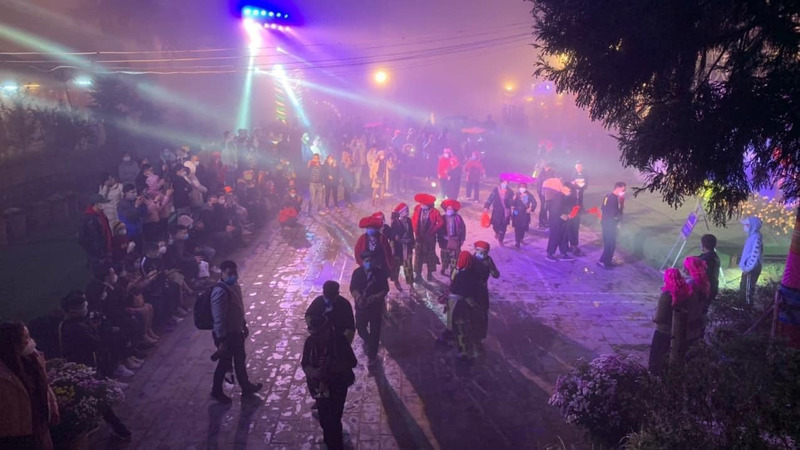
Ethnic minority communities gathering during the Love Market (Source: Collected) |
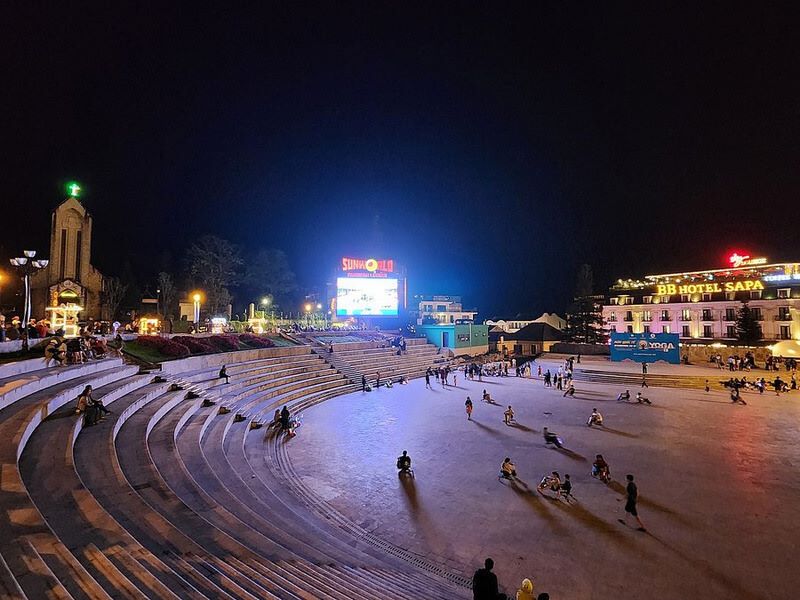
The Sapa Love Market takes place in Sapa Town Square, directly in front of the Stone Church, making it easy to reach on foot from most hotels in the town center. On busy weekends, holidays, or during local festivals, some related cultural programs may also be held at nearby venues such as cultural parks or public performance spaces. If you are using a map, the easiest reference point is “Sapa Stone Church.”
Most sources note Saturday evenings in the main square, typically 6 - 10 p.m. for the open-air performances and stalls. Curated stage shows sometimes run around 9:30 - 11:00 p.m. at nearby parks, especially on busy weekends or festivals.
Tip: Arrive 15 - 30 minutes early for a good vantage, and expect slight time shifts in rainy weather or winter when evenings end sooner.
Traditionally, this wasn’t a goods market at all. It was just a social meeting place where H’Mong and Red Dao youths gathered after dusk to sing, play bamboo flutes, and exchange courtship signals.
As Sapa welcomed more visitors, this custom was adapted into a scheduled showcase so travellers could see songs, dances, and traditional attire in one spot. Today’s format blends these heritage elements with organised staging and sound systems, making the performances easier to watch and enjoy.
 |
|
Sapa Love Market, located near the Stone Church of Sapa (Source: Tripadvisor) |
Once you arrive at the Sapa Love Market, the experience unfolds naturally as the evening progresses. From early exploration and photos to performances, food, and local interactions, here are the best ways to enjoy the market in a smooth and meaningful way.
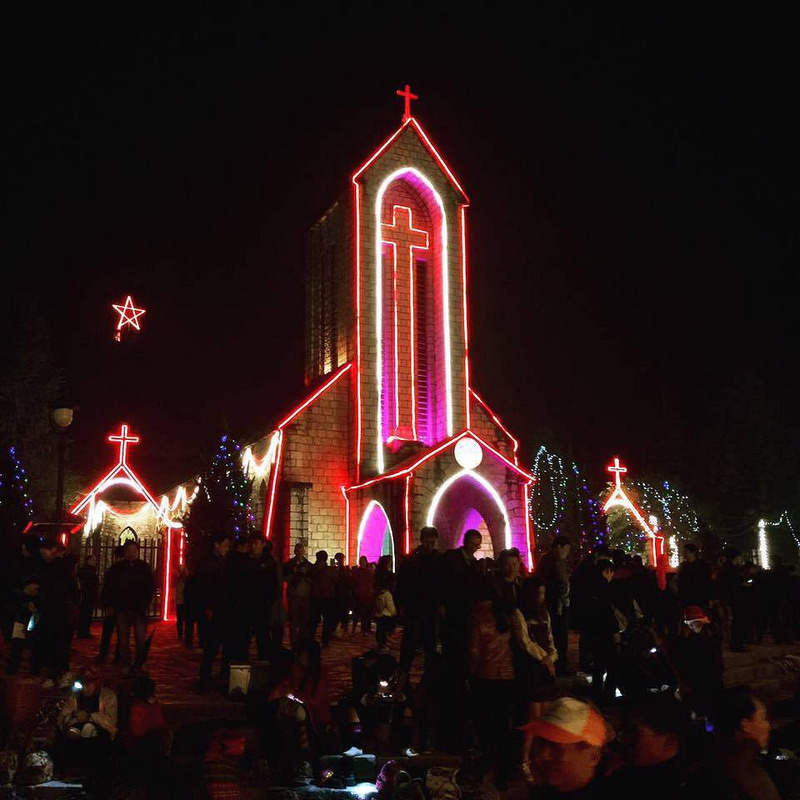
As night falls, Sapa’s Stone Church becomes the visual and cultural center of the Love Market. The square in front of the church gradually fills with locals, performers, and visitors, creating a lively yet relaxed atmosphere.
Take some time to walk around, observe the setting, and find a comfortable spot. This is also a great moment for photos, as the soft evening light and the historic stone façade create a striking contrast with the movement, colors, and sounds of the market.
For more photography spots and viewpoints, you can explore Sapa’s rice terraces and Muong Hoa Valley, both offering some of the most iconic landscapes in the region.
 |
|
Guests visiting the Stone Church during the Sapa Love Market (Source: Tripadvisor) |
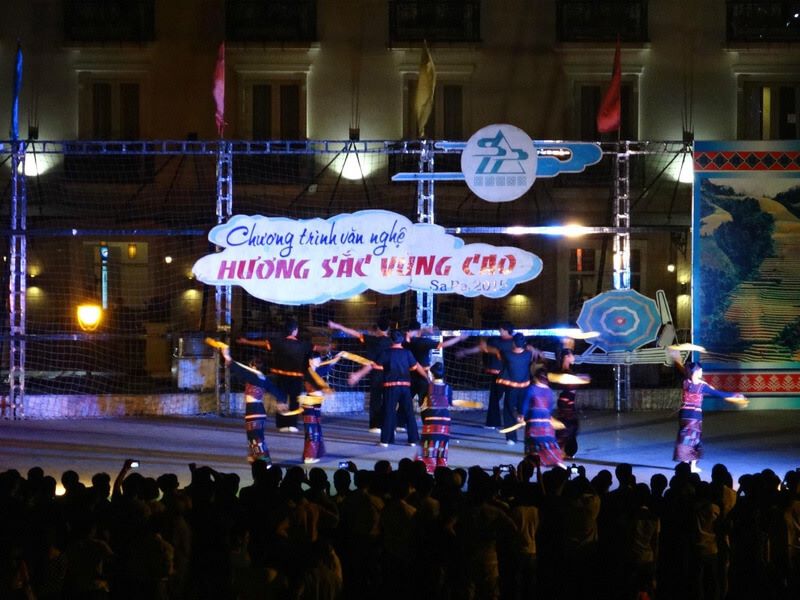
As the crowd builds, the main cultural performances begin in the square. These typically include folk dances, call-and-response love songs, and traditional music, most notably the H’Mong khen (bamboo mouth organ).
The performances are short, rotating, and easy to follow, offering a glimpse into historic courtship traditions in a format adapted for visitors. While the schedule is not always fixed, the liveliest period is usually between 6:00 and 7:30 p.m.
Tip: Arrive before peak time if you want more space and better photo angles.
 |
|
A local dance performance at the Sapa Love Market (Source: Tripadvisor) |
Beyond the performances, one of the most interesting aspects of the Love Market is simply observing how local communities gather and interact. You’ll often see H’Mong and Red Dao people in traditional clothing, chatting, walking, and enjoying the evening together.
If you’d like to take photos, always ask for permission, especially for close-up portraits. A simple smile or gesture goes a long way. For deeper insight, consider visiting with a community-based guide, who can explain cultural context and help you engage respectfully.
Food is an essential part of the experience. Around the square and nearby streets, you’ll find a variety of local snacks and simple mountain dishes.
Popular options include grilled skewers, hot soups, sticky rice, and for more adventurous travellers, thắng cố (a traditional horse-based dish). Small cups of corn wine or apple wine are also commonly available.
It’s best to choose busy stalls, as they tend to have fresher food. Take your time, walk around, and enjoy a warm drink while watching the performances.
If you're interested in local cuisine, you can also explore a wider range of Sapa food specialties and must-try dishes across the town.
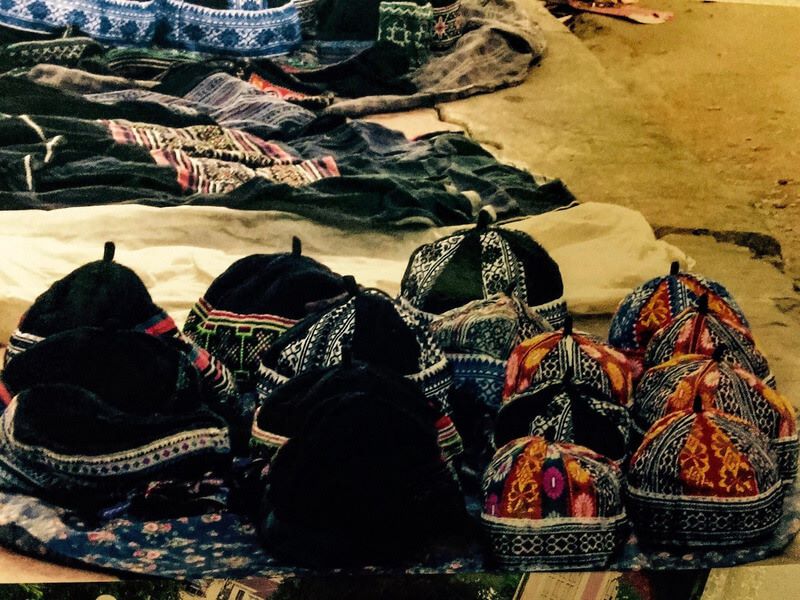
As you explore the area, you’ll notice stalls selling handmade items such as brocade textiles, simple silver jewelry, and small souvenirs produced by local families.
Buying directly from these vendors helps support local livelihoods and keeps tourism benefits within the community. If you’re interested in textiles, take a closer look at stitching quality and ask about natural dyes, especially for batik or indigo products.
 |
|
A handmade clothing shop at Sapa Love Market (Source: Tripadvisor) |
To make the most of your evening at the Sapa Love Market, it helps to plan a few essentials in advance - when to visit, how to get there, what to combine nearby, and a few practical tips for a smooth and respectful experience.
The Sapa Love Market takes place every Saturday evening throughout the year, with the liveliest atmosphere typically from early evening until around 9:00 - 10:00 p.m.
For the most comfortable experience, spring (March to May) and autumn (September to November) offer clearer skies, mild temperatures, and better conditions for photography and walking around the square.
During summer, brief evening showers are common. A light rain jacket and some flexibility in your schedule will help you stay comfortable, and nearby cafés provide a convenient place to wait out short downpours.
The Love Market is held in Sapa Town Square, in front of the Stone Church, making it easily accessible from most hotels in the town center.
Arriving before sunset is recommended if you want to explore the area, find a good viewing spot, or settle into a nearby café as the square gradually comes to life.
If you have limited mobility, ask your driver to drop you near the church side of the square, where the walking surface is generally flatter and easier to navigate.
To enrich your Sapa itinerary, the Love Market can be easily combined with nearby attractions:
A few simple habits can make your visit more enjoyable while ensuring a respectful interaction with local culture:
Yes, especially if you are in Sapa over the weekend. While it is no longer a traditional “love market” in its original form, it still offers a lively cultural atmosphere, short performances, and a chance to observe local traditions in an accessible setting. It works best as a light evening activity rather than a standalone highlight.
Most visitors spend around 1 to 2 hours at the Love Market. This is usually enough time to watch performances, walk around the square, try some local food, and browse handicrafts before the atmosphere starts to wind down.
Yes. The event takes place in an open public square and does not require much walking, making it suitable for families and older travellers. However, it can get crowded during peak hours, so arriving early helps ensure a more comfortable experience.
Sapa evenings can be cool, even in warmer months, so a light jacket is recommended year-round. Comfortable walking shoes are also important, as the square and surrounding streets can be uneven, especially after rain.
Yes, especially between 7:00 and 9:00 p.m., when both locals and tourists gather in the square. If you prefer a more relaxed atmosphere and better photo opportunities, it’s best to arrive earlier in the evening.
Yes. The Love Market is often combined with daytime trekking in nearby villages such as Lao Chai or Ta Van, as well as visits to Fansipan and other cultural sites. Many travelers include it in a weekend plan or a 2-3 day Sapa itinerary.
A guide is not required, as the market is easy to find and explore on your own. However, a local or community-based guide can provide cultural context, help you understand the performances, and support more meaningful interaction with local communities.
Light bargaining is generally acceptable, especially for handicrafts, but it should be done respectfully. Prices are often already modest, so many travellers choose to pay fairly to support local artisans.
If you are in Sapa over the weekend, the Love Market is a lively way to experience the town after dark. It is more about culture and atmosphere than shopping. Arrive early for a better experience, and consider pairing it with a village trek the next day.
Planning your trip? Your Vietnam Travel can help you build a Sapa trekking itinerary, a wider Northern Vietnam journey, or a fully tailor-made Vietnam tour that combines the Love Market with village walks, local culture, and scenic mountain experiences.



 Vietnam Tours
 Cambodia Tours
 Laos Tours
 Thailand Tours
 Multi-Country Tours