Cantonese Assembly Hall reflects the strong influence of the Cantonese Chinese community during the golden age of Hoi An Ancient Town as an international trading port. Located on Tran Phu Street near the Japanese Covered Bridge, the hall attracts visitors with its elaborate Chinese architecture, dragon fountain, sacred worship space, and detailed murals connected with Chinese history and folklore.
This guide covers everything you need to know before visiting Cantonese Assembly Hall, including its history, architecture, highlights, festivals, entrance information, nearby attractions, and practical travel tips.
| Information | Details |
|---|---|
| Official name | Assembly Hall of the Cantonese Chinese Congregation |
| Common names | Cantonese Assembly Hall, Quang Trieu Assembly Hall, Guangzhou Assembly Hall, Ong Pagoda |
| Vietnamese name | Hội quán Quảng Đông / Hội quán Quảng Triệu |
| Address | 176 Tran Phu Street, Hoi An Ancient Town |
| Main worship | Guan Yu, also known as Quan Cong |
| Original worship | Mazu / Thien Hau, the Goddess of the Sea, and Confucius |
| Built | Commonly recorded as 1885 |
| Historical role | Assembly hall, temple, and community center for Cantonese Chinese merchants |
| Architectural style | Traditional Chinese architecture with Cantonese and Southern Chinese influences |
| Suggested visit duration | Around 30–60 minutes |
| Best time to visit | Morning or late afternoon |
| Ticket | Usually included in the Hoi An Ancient Town sightseeing ticket |
| Best for | Culture lovers, history travelers, architecture enthusiasts, photographers |
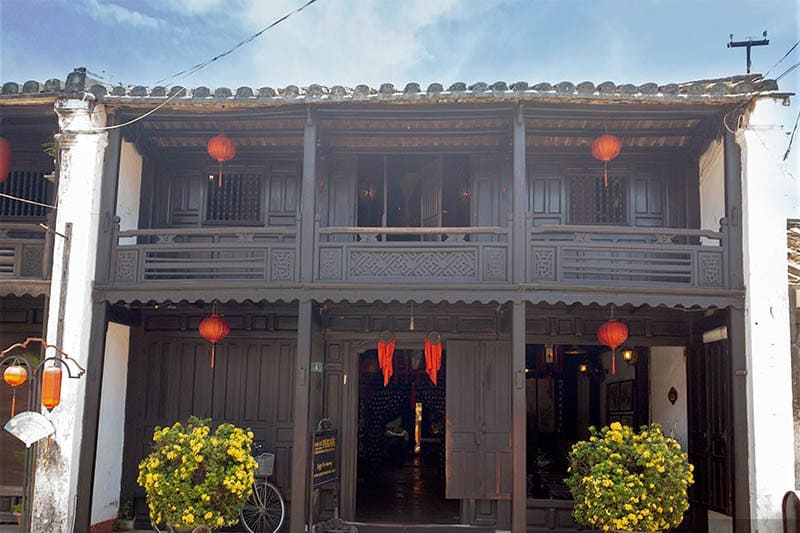
Cantonese Assembly Hall is located at 176 Tran Phu Street, one of the most historic streets in Hoi An Ancient Town. This area is often considered the heart of the old trading quarter, where many temples, old houses, museums, and Chinese assembly halls are concentrated within walking distance.
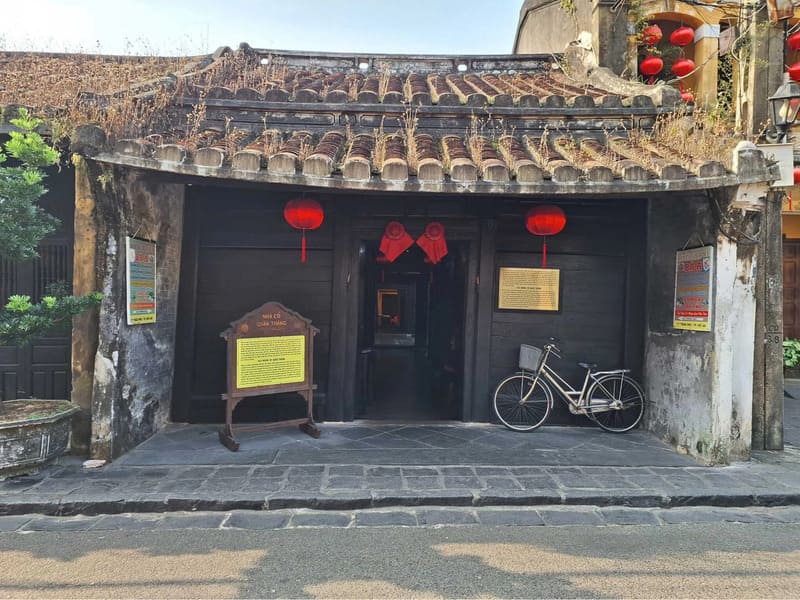
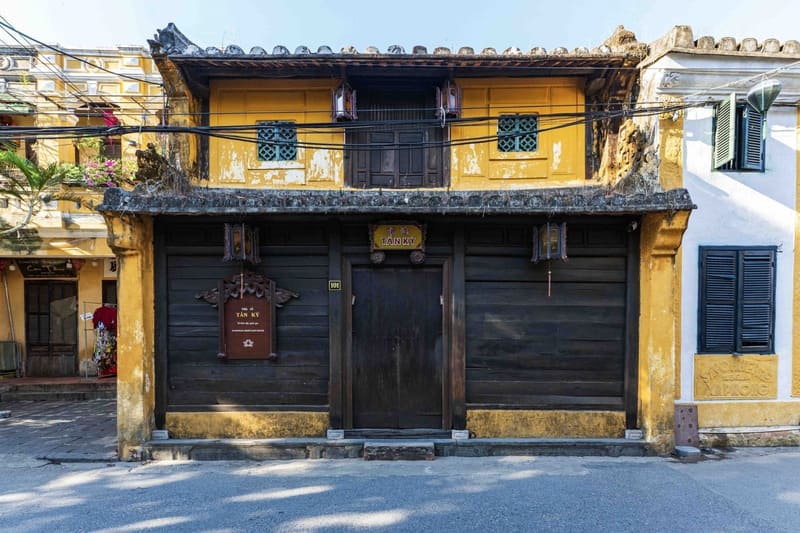
The hall is especially easy to find because it sits close to some of Hoi An’s most famous landmarks, including the Japanese Covered Bridge, Tan Ky Old House, and the riverside area near the Thu Bon River. If you are exploring Hoi An Old Town on foot, Cantonese Assembly Hall is one of the most convenient stops to add to your walking route.
From Da Nang, the journey to Hoi An usually takes around 45-60 minutes by car, depending on traffic and your departure point. Once you arrive in Hoi An Ancient Town, walking is the best way to visit the assembly hall because many central streets have pedestrian-only hours.
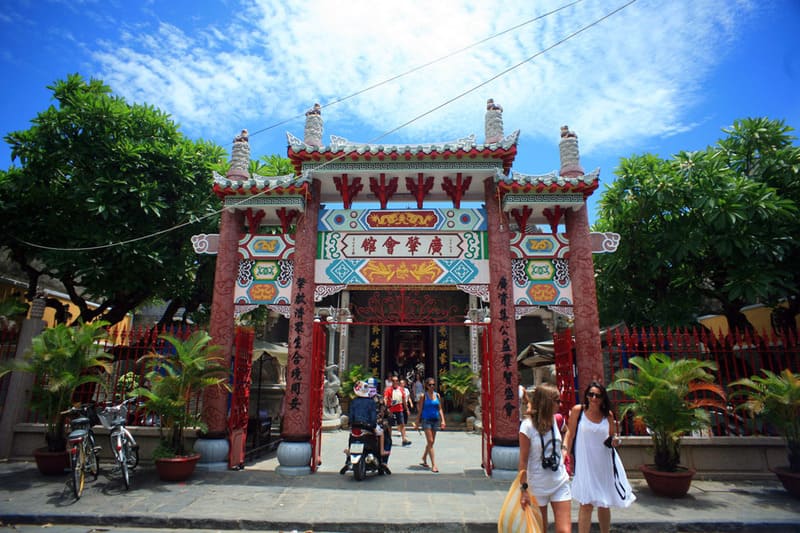
Cantonese Assembly Hall on Tran Phu Street (Source: Collected)
Cantonese Assembly Hall was built by the Cantonese Chinese community in Hoi An and is widely recorded as dating back to 1885. During the 15th to 19th centuries, Hoi An was one of the most important trading ports in Vietnam, attracting merchants from China, Japan, and other parts of Asia. Among these communities, Chinese merchants played a major role in the commercial and cultural life of the town.
As Chinese communities settled in Hoi An, they built assembly halls to serve several purposes. These places were not only temples for worship, but also meeting halls where merchants from the same region could gather, support each other, resolve community matters, and maintain cultural traditions far from their homeland.
Cantonese Assembly Hall was associated with migrants from the Guangdong and Guangzhou region in southern China. This explains why the hall is also known as Quang Dong Assembly Hall or Quang Trieu Assembly Hall in Vietnamese. The word “Cantonese” refers broadly to people, language, and culture connected with the Cantonese-speaking region of southern China.
Originally, the hall was dedicated to Mazu, also known in Vietnam as Thien Hau, the Goddess of the Sea. This was common among Chinese merchant communities because many traders depended on sea routes and prayed for safe journeys. Confucius was also worshipped here in earlier periods.
From the early 20th century, the main worship focus shifted to Guan Yu, known in Vietnamese as Quan Cong. Guan Yu was a historical general from China’s Three Kingdoms period and later became a widely worshipped figure in Chinese folk belief. He is associated with loyalty, righteousness, courage, integrity, and protection. For merchant communities, Guan Yu also represented trustworthiness and moral conduct in business.
Today, Cantonese Assembly Hall remains one of the most visited Chinese assembly halls in Hoi An. It is both a cultural attraction and a reminder of the multicultural trading history that shaped Hoi An Ancient Town.
Cantonese Assembly Hall stands out for its traditional Chinese architectural layout, ornate decoration, and symbolic details. Like many Chinese assembly halls in Hoi An, the complex combines worship spaces, courtyards, side houses, and gardens into a connected layout.
The hall was built mainly with wood, stone, brick, and ceramic details. Many parts of the building reflect Southern Chinese architectural taste, while some decorative and carving elements also show the craftsmanship of local Vietnamese artisans. This cultural blend is one of the reasons why assembly halls in Hoi An feel different from Chinese temples in other destinations.
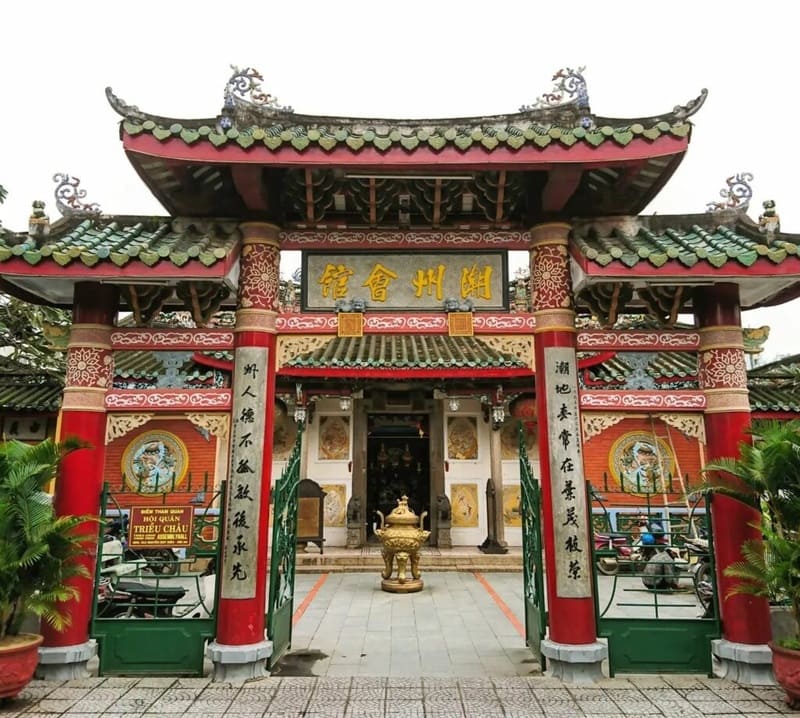
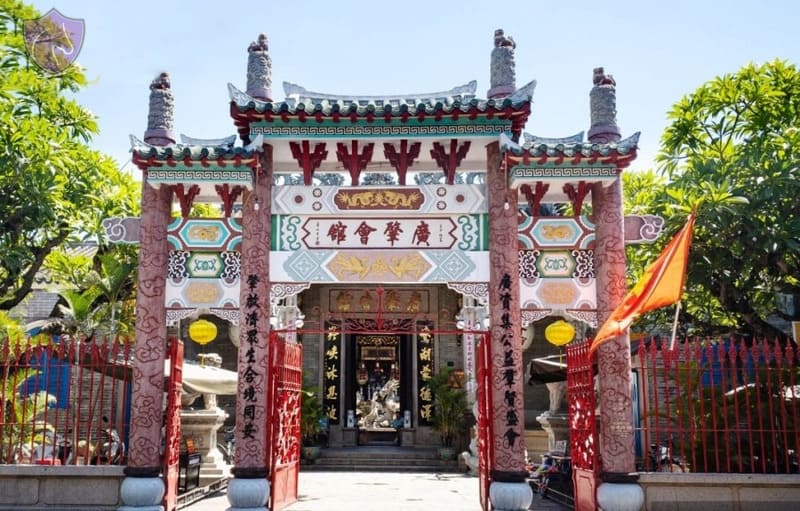
The first highlight visitors see is the Tam Quan gate, or three-entrance gate, facing Tran Phu Street. This gate marks the transition from the busy old town street into the sacred and communal space inside.
The gate is decorated with Chinese-style motifs such as dragons, phoenixes, flowers, and mythical animals. In East Asian symbolism, these figures are not simply decorative. Dragons often represent power, prosperity, and good fortune, while phoenixes are associated with elegance, harmony, and renewal.
The three-door layout is also common in temple and assembly hall architecture. It creates a ceremonial entrance and gives the building a formal, dignified appearance. For visitors, this is also one of the best places to observe the external architectural details before entering the main compound.
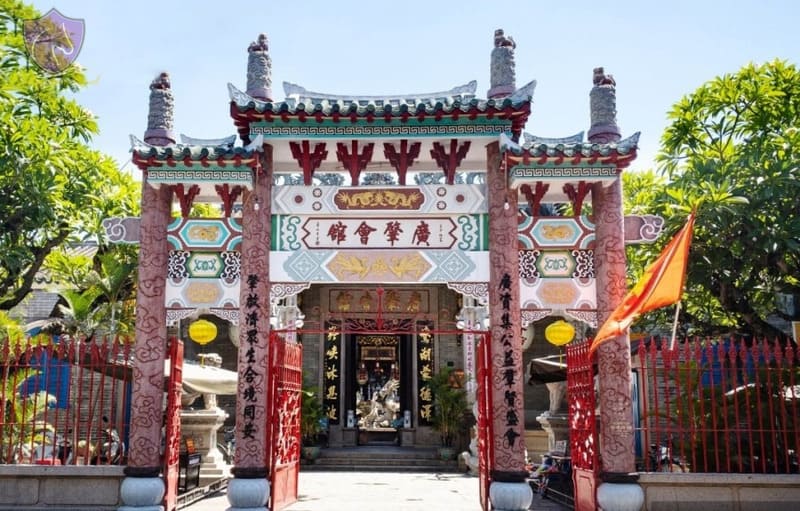
The ornate entrance gate of Cantonese Assembly Hall (Source: Collected)
After passing through the entrance, visitors arrive at the courtyard, one of the most photogenic areas of Cantonese Assembly Hall. The central feature here is the dragon fountain, often associated with the legend of the carp transforming into a dragon.
This image is a familiar symbol in Vietnamese and Chinese culture. It represents ambition, perseverance, transformation, and success after overcoming hardship. For a merchant community, this symbolism was especially meaningful because it reflected hope for prosperity and upward progress.
The courtyard also allows visitors to appreciate the spatial design of the complex. Instead of entering directly into the main worship hall, visitors move through an open area that creates light, air, and a sense of gradual transition. This layout makes the assembly hall feel both ceremonial and peaceful.
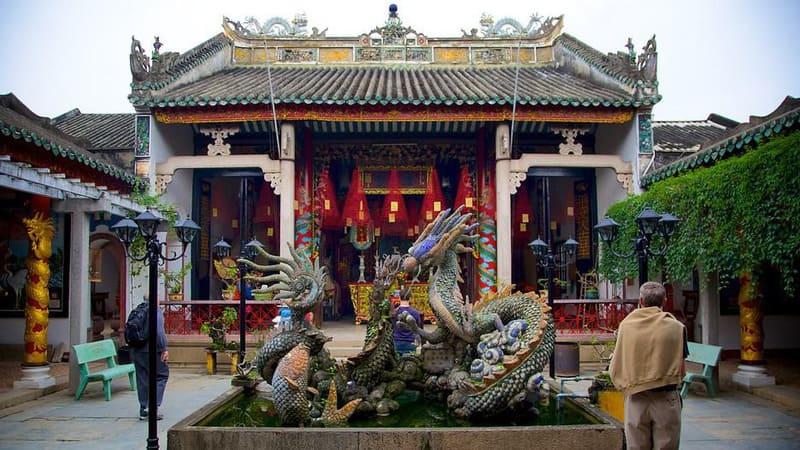
Dragon fountain inside Cantonese Assembly Hall (Source: Collected)
The main hall is the spiritual center of Cantonese Assembly Hall. This is where Guan Yu / Quan Cong is worshipped as the principal figure. He is often recognized by his red face, long beard, and dignified appearance, symbolizing loyalty, bravery, and moral strength.
Inside the main hall, visitors may also see altars dedicated to other important figures such as the God of Wealth, the God of Earth, or community ancestors, depending on the arrangement of the worship space. These altars reflect the practical and spiritual concerns of the Cantonese community: protection, prosperity, business success, family continuity, and communal identity.
The atmosphere inside the main hall is more solemn than the courtyard. Incense coils, altar decorations, lacquered boards, wooden beams, and red-and-gold details all contribute to the sacred character of the space. Visitors should move quietly and avoid disturbing people who come to pray.
One of the most interesting parts of Cantonese Assembly Hall is its collection of murals, antiques, and decorative details. These elements help visitors understand not only the building’s architecture but also the values and stories important to the Cantonese community.
Many murals are connected with Chinese legends and stories, especially scenes related to Romance of the Three Kingdoms, one of the most influential historical novels in Chinese culture. Because Guan Yu is one of the central figures in these stories, the murals reinforce the hall’s main worship theme.
The hall also preserves valuable objects such as lacquered boards, incense burners, porcelain items, old paintings, and decorative carvings. Some works reflect daily life, community activities, and traditional beliefs of Chinese merchants in Hoi An.
Look closely at the wooden beams, door panels, roof edges, and painted walls. Many of the details are easy to miss if you only take a quick photo in the courtyard. The real value of the hall is often found in these smaller elements.
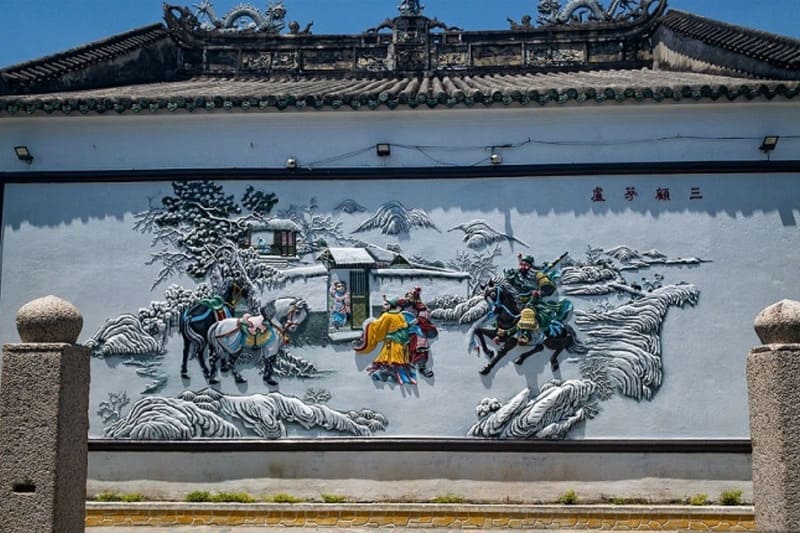
Decorative murals and details inside the hall (Source: Collected)
Behind the main hall is a quieter backyard garden area. This part of the complex is often less crowded than the entrance and courtyard, making it a good place to slow down after visiting the main worship space.
The garden features decorative details that reflect Chinese cultural symbolism, including trees, ornamental walls, dragon statues, and sculptural elements inspired by southern Chinese traditions. These features add more visual depth to the assembly hall and help connect its architecture with the heritage of the Cantonese community in Hoi An.
The backyard also gives the site a more layered layout. Rather than being a single worship room, Cantonese Assembly Hall feels like a complete cultural compound with entrance gates, courtyards, side buildings, worship areas, and garden spaces. This makes it one of the more rewarding heritage buildings to explore in Hoi An Ancient Town.
Cantonese Assembly Hall is not a large attraction, but it offers several meaningful things to see if you take time to look beyond the surface. Most visitors spend around 30-60 minutes here, depending on how deeply they want to explore the architecture and history.
The first reason to visit Cantonese Assembly Hall is its architecture. The three-entrance gate, tiled roofs, decorated pillars, carved wooden details, red lanterns, murals, and symmetrical layout all reflect traditional Chinese design.
Unlike some attractions that are mainly admired from the outside, this assembly hall is best experienced by walking through each layer of the complex. Start at the gate, continue into the courtyard, observe the dragon fountain, enter the main hall respectfully, then follow the side paths to the rear garden.
This sequence helps you understand how the building was designed as both a community hall and a sacred space.
The murals and artifacts inside Cantonese Assembly Hall add depth to the visit. They tell stories about Chinese legends, community identity, worship practices, and the life of overseas Chinese merchants in Hoi An.
Instead of viewing these decorations as simple ornaments, try to read them as cultural symbols. The dragon fountain suggests transformation and success. Guan Yu represents loyalty and protection. The murals connected with the Three Kingdoms reflect ideals such as bravery, brotherhood, strategy, and righteousness.
These details make the hall more meaningful for visitors who want to understand Hoi An beyond lantern streets and riverside cafés.
Cantonese Assembly Hall is still a place of worship, so visitors should approach it with respect. You may see incense, offerings, prayer activities, or local visitors paying respects to Guan Yu and other deities.
The spiritual atmosphere is especially clear in the main hall, where the lighting, incense fragrance, altar arrangement, and red-and-gold colors create a solemn feeling. Even if you are not religious, this is a good opportunity to observe how Chinese cultural traditions continue to exist within Hoi An’s heritage landscape.
Avoid loud conversations, do not touch altar objects, and give space to people who are praying.
Cantonese Assembly Hall is one of the most photogenic heritage sites in Hoi An, especially around the courtyard, dragon fountain, entrance gate, and rear garden. The combination of red lanterns, Chinese-style roofs, carved details, and ceramic dragon decorations makes it attractive for photography.
However, visitors should be careful when taking photos inside worship areas. Some areas may restrict photography, especially near altars or sacred objects. Even where photography is allowed, avoid using flash, blocking worshippers, or treating the temple space like a studio.
For better photos, visit in the morning or late afternoon when the light is softer and the site is less crowded.
Cantonese Assembly Hall is easy to combine with other attractions in Hoi An Ancient Town. Its location near the Japanese Covered Bridge makes it a natural stop on a walking route through the old quarter.
A simple route could include:
This route gives visitors a good overview of Hoi An’s trading history, Chinese community heritage, old merchant houses, and sacred architecture.
Cantonese Assembly Hall is also connected with important cultural events of the Chinese community in Hoi An. These festivals are meaningful because they show that the hall is not only a tourist attraction, but also a living cultural site.
One important event is the Lantern Festival, often associated with the 15th day of the first lunar month. During this period, people pray for peace, health, prosperity, and good fortune in the new year. The atmosphere in Hoi An becomes especially lively, with lanterns, rituals, and community activities.
Another important occasion is the festival related to Guan Yu / Quan Cong, commonly observed on the 24th day of the sixth lunar month. This event honors Guan Yu as a symbol of loyalty, integrity, and protection. It may include offerings, rituals, and gatherings by local people and visitors.
If you are in Hoi An during these lunar calendar dates, visiting Cantonese Assembly Hall can be more culturally rewarding. However, festival periods may also be more crowded, so plan your timing carefully if you prefer a quieter visit.
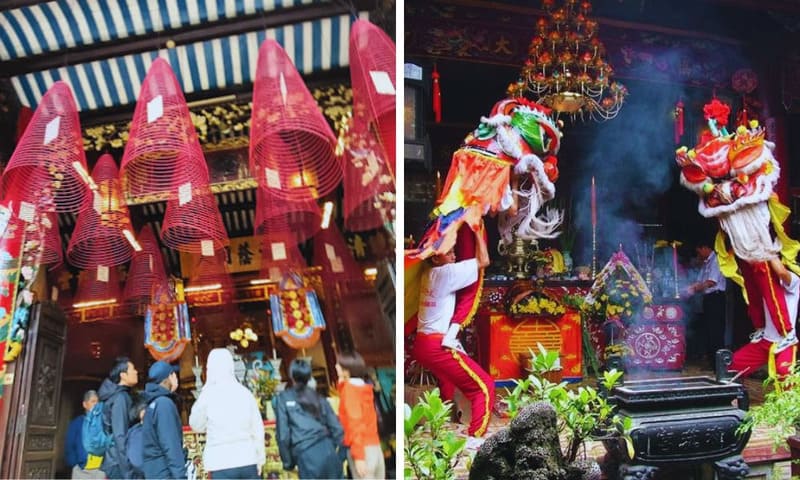
Festival atmosphere at Cantonese Assembly Hall (Source: Collected)
To make your visit smoother and more respectful, keep these practical tips in mind:
Cantonese Assembly Hall is located in one of the best areas for sightseeing in Hoi An Ancient Town. After your visit, you can easily walk to several important attractions nearby.
Cantonese Assembly Hall was built by the Cantonese Chinese community in Hoi An, commonly recorded in 1885. These merchants came from the Guangdong and Guangzhou region of southern China and used the hall as a place for worship, community meetings, and cultural activities.
Entrance is usually included in the Hoi An Ancient Town sightseeing ticket. International visitors normally need this ticket to enter selected heritage attractions in the old town. The commonly cited price is around 120,000 VND per adult, but ticket policies may change, so it is best to check at the local ticket booth before visiting.
You should dress respectfully because Cantonese Assembly Hall is a temple and worship site. Lightweight clothes are fine, but avoid outfits that are too revealing. Ideally, wear clothing that covers your shoulders and knees, especially when entering the main worship hall.
The best time to visit Cantonese Assembly Hall is in the morning or late afternoon. These times usually offer softer light for photography and a more comfortable walking experience. If you want to avoid crowds, try not to visit at the same time as large tour groups.
Most visitors spend around 30-60 minutes at Cantonese Assembly Hall. If you only want to take photos and see the main courtyard, 20-30 minutes may be enough. If you want to explore the architecture, murals, antiques, worship space, and backyard garden, allow closer to one hour.
Yes. Cantonese Assembly Hall is close to many major attractions in Hoi An Ancient Town, including the Japanese Covered Bridge, Tan Ky Old House, Fujian Assembly Hall, Quan Cong Temple, Hoi An Folklore Museum, and the riverside area. It is easy to include the hall in a half-day walking itinerary.
You can usually take photos in open areas such as the courtyard, entrance gate, and garden. However, photography may be restricted in certain worship spaces, especially near altars or sacred objects. Always check signs, avoid flash, and be respectful of people who are praying.
Cantonese Assembly Hall is one of the most rewarding heritage sites to visit in Hoi An Ancient Town. With its Chinese architecture, dragon fountain, Guan Yu worship space, murals, antiques, and peaceful garden, it offers a deeper look into the role of the Cantonese Chinese community in Hoi An’s trading history.
If you are planning a walking route through the old town, this assembly hall is easy to combine with the Japanese Covered Bridge, Tan Ky Old House, Fujian Assembly Hall, and the riverside area. It is a small stop, but one that adds valuable cultural depth to your Hoi An visit.
Learn more:

 Vietnam Tours
 Cambodia Tours
 Laos Tours
 Thailand Tours
 Multi-Country Tours