Ban Ho Village Sapa is a peaceful mountain village for travelers who want to see a quieter, more authentic side of Sapa. Located about 30 kilometers southwest of Sapa Town, the village is known for terraced rice fields, clear streams, waterfalls, traditional Tay stilt houses, local homestays, and trekking routes through the Muong Hoa Valley. Compared with more popular places such as Cat Cat Village or Ta Van Village, Ban Ho feels less crowded and more connected to local daily life.
This guide covers where Ban Ho Village is, the best things to do, what to eat, how to get there, the best time to visit, and useful travel tips for planning your trip.
Ban Ho Village is located in Ban Ho Commune, about 30 kilometers southwest of Sapa Town in Lao Cai Province, northern Vietnam. The village lies at the lower part of the Muong Hoa Valley, near the foot of the Hoang Lien Son mountain range. Its central area is often associated with Ban Den Hamlet, where Muong Hoa Stream and La Ve Stream meet.
Ban Ho is home mainly to the Tay ethnic group, while nearby areas are also associated with Red Dao, Giay, and H’Mong communities. This cultural mix gives the village a strong local identity, reflected in traditional stilt houses, brocade weaving, local food, community activities, and homestay experiences.
The village is farther from Sapa Town than Cat Cat, Lao Chai, or Ta Van, so it receives fewer casual visitors. This distance is one of the reasons Ban Ho still keeps a quiet atmosphere, making it suitable for travelers who enjoy nature, trekking, cultural immersion, and overnight stays in local homes.
Ban Ho is often visited as part of a longer trekking route through Lao Chai, Ta Van, Giang Ta Chai, and nearby valleys. It can also be visited as a day trip by car, motorbike, jeep, or taxi from Sapa.
Trekking is one of the best ways to experience Ban Ho Village. The village sits among valleys, streams, terraced fields, and forested hills, making it ideal for slow walking and nature-based exploration.
A popular trekking direction connects Sapa with Lao Chai, Ta Van, Giang Ta Chai, and Ban Ho. This route gives travelers a broader view of the Muong Hoa Valley, passing ethnic villages, rice terraces, bamboo groves, suspension bridges, and small streams. Depending on the route and fitness level, trekking to Ban Ho can be arranged as a full-day hike or a 2-day/3-day trekking journey with an overnight homestay.
The terrain around Ban Ho includes paved sections, dirt paths, slopes, village lanes, and streamside trails. During the rainy season, paths can become slippery, so proper walking shoes are important. A local guide is recommended if you plan to trek through remote areas, forest trails, or multiple villages, especially because mobile signal can be weak in some sections.
For travelers who want an authentic Sapa trekking experience without the heavy tourist flow of Cat Cat Village, Ban Ho is a strong choice.
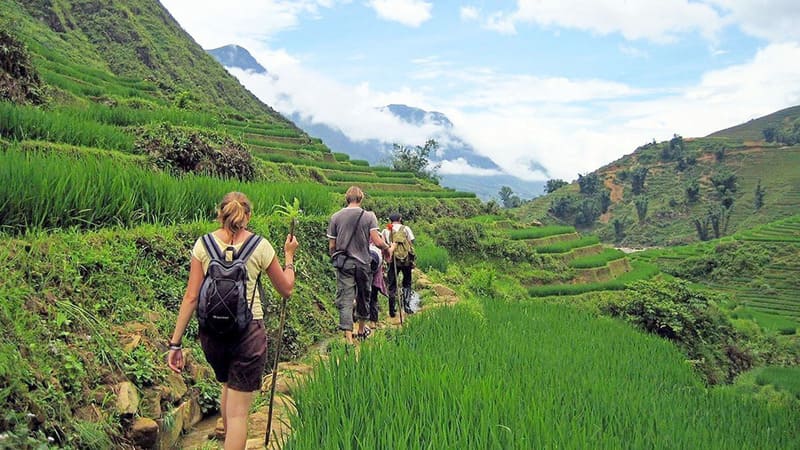
Trekking trails lead through valleys and village paths (Source: Collected)
Ban Ho Village offers beautiful views of terraced rice fields, especially around Ban Den Hamlet and the surrounding slopes. The fields change appearance throughout the year, giving visitors different scenery depending on the season.
From May to June, the water-pouring season turns the terraces into reflective layers of water. The fields mirror the sky, clouds, and mountain shapes, creating some of the most photogenic landscapes in Sapa. From July to August, the terraces become green as young rice grows across the valley. September and October are the most popular months for photography because the rice fields turn golden before harvest.
Good photo spots can be found along the road into Ban Ho, near local homestays, beside Muong Hoa Stream, and on higher slopes overlooking the valley. Early morning and late afternoon are usually the best times for soft light. Sunrise brings mist and a calm village atmosphere, while late afternoon adds warmer colors to the terraces and stilt houses.
The scenery in Ban Ho is not as polished or commercial as some tourist villages. Its appeal comes from everyday rural life: farmers working in the fields, buffaloes walking along village paths, wooden houses beside streams, and smoke rising from local kitchens.
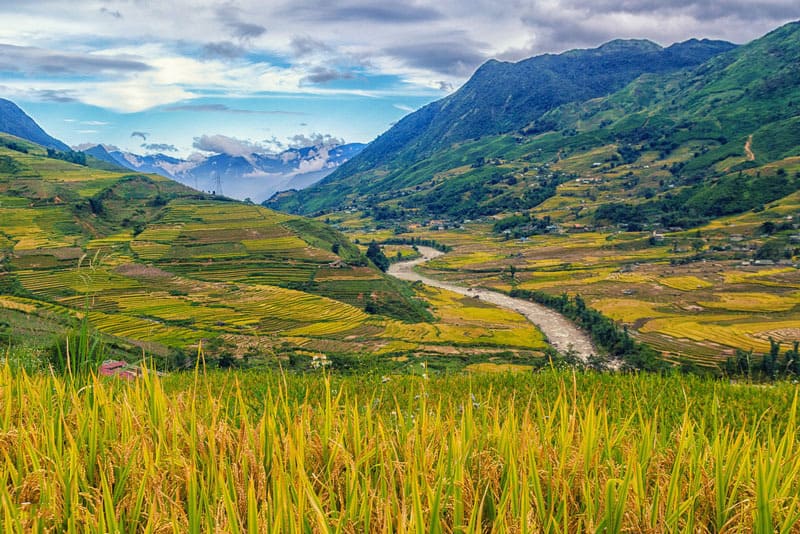
Rice terraces shape the peaceful scenery of Ban Ho (Source: Collected)
Muong Hoa Stream is one of the most important natural features of Ban Ho Village. The stream flows through the Muong Hoa Valley and is closely connected to the daily life of local communities. In Ban Ho, it helps shape the village landscape, providing water for farming, daily activities, and riverside relaxation.
The area around Muong Hoa Stream is peaceful and scenic. Visitors can walk along streamside paths, take photos of the water running between fields and houses, or rest near the banks after a trek. The stream also contributes to the fertile landscape that supports rice cultivation in the valley.
For the Tay people in Ban Ho, Muong Hoa Stream is part of everyday village life rather than only a tourist attraction. This makes the experience feel more natural. You may see locals washing vegetables, working near the water, leading buffaloes, or preparing for daily farming tasks.
During dry and clear weather, the stream is especially pleasant for walking and photography. During heavy rain, water levels can rise and paths near the stream may become slippery, so visitors should avoid risky sections and follow local advice.
La Ve Stream is another key natural attraction in Ban Ho Village. Flowing down from the higher forested mountains, the stream forms clear water sections and small cascades before joining the village landscape. One of the most well-known spots connected with La Ve Stream is Jumping Fish Waterfall, also called Ca Nhay Waterfall.
The name “Jumping Fish Waterfall” comes from the image of fish gathering and leaping in the clear water. Local stories and travel descriptions often connect this place with the lively movement of stream fish beneath the waterfall. The area is loved for its fresh water, natural setting, and quiet atmosphere.
Visitors can walk to the waterfall area, enjoy the sound of running water, take photos, or relax beside the stream. In some local experiences, travelers may have a chance to enjoy grilled stream fish, a simple but memorable dish associated with Ban Ho’s rivers and streams.
The waterfall and stream area are best visited during dry or moderately wet weather. After heavy rain, the water flow can become stronger and rocks may be slippery. Avoid climbing wet rocks, and do not swim in deep or fast-flowing areas unless locals confirm that it is safe.
Seo Trung Ho Waterfall is one of the more adventurous natural attractions around Ban Ho. Located deeper in the surrounding mountainous area, it is often described as a wild waterfall with water falling from a high rocky section into the forest landscape. The waterfall is less commercial than central Sapa attractions, making it suitable for travelers who enjoy nature and off-the-beaten-path experiences.
Reaching Seo Trung Ho Waterfall usually requires trekking or traveling with someone familiar with the local route. The path may include village trails, forest sections, slopes, and uneven ground. This is not the easiest activity for visitors with limited mobility or those traveling with very young children.
The reward is a quiet natural setting, fresh mountain air, and a stronger sense of exploration. The waterfall is especially impressive in the rainy season and after periods of rainfall, though this is also when the trail can become more difficult. In the dry season, the route may be easier, but the water flow can be lighter.
A local guide is highly recommended for this trek. Guides can help with route finding, safety, timing, and cultural etiquette when passing through ethnic communities.
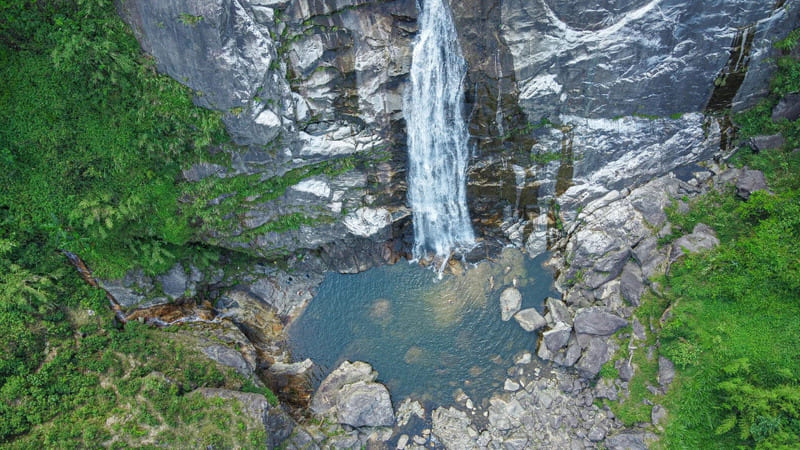
Seo Trung Ho Waterfall rewards adventurous trekkers (Source: Collected)
Ban Ho Village lies near the Hoang Lien Son mountain range, one of the most famous mountain areas in northern Vietnam. The surrounding forest landscapes add depth to the Ban Ho experience, especially for travelers interested in biodiversity, mountain views, and trekking beyond village paths.
The Hoang Lien Son area is known for its dramatic terrain, rich vegetation, wildflowers, bamboo groves, and cool mountain climate. Around Ban Ho, the forest scenery blends with rice terraces, streams, and ethnic villages, creating a landscape that feels both cultivated and wild.
Exploring the forest landscapes around Ban Ho is usually done through trekking, guided walks, or motorbike rides along scenic routes. Visitors may pass forest edges, small waterfalls, hillside paths, and viewpoints overlooking the valley.
Because some areas are remote, visitors should prepare carefully. Bring water, wear proper shoes, check weather conditions, and avoid entering unfamiliar forest trails without a local guide. This is especially important during rain, fog, or late afternoon when visibility becomes poor.
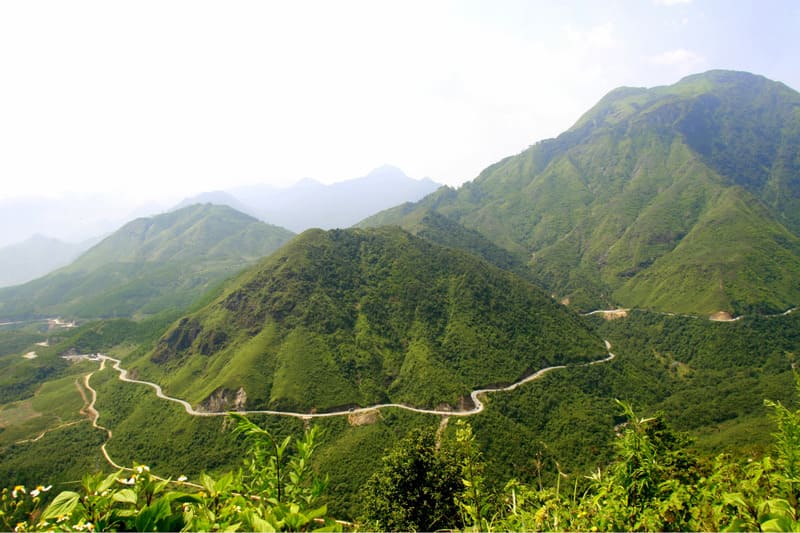
Forest views surround the mountain trails near Ban Ho (Source: Collected)
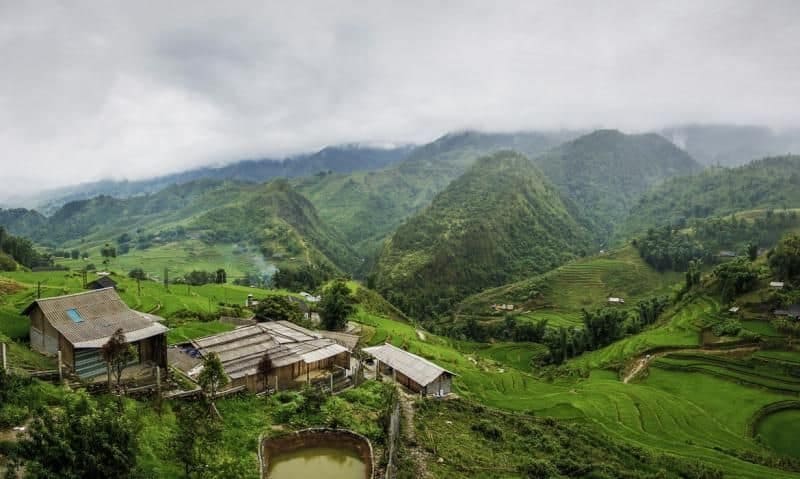
One of the most distinctive cultural features of Ban Ho Village is the traditional Tay stilt house. The Tay people have lived in the area for generations, and their houses reflect both practical needs and cultural identity.
A typical Tay stilt house is built above the ground using wooden pillars. This design helps protect the living area from moisture, insects, and animals, while also creating space beneath the house for storage, farming tools, or livestock. The upper floor is used for family life, cooking, sleeping, and receiving guests.
Visiting or staying in a Tay stilt house gives travelers a closer look at local daily life. You may see a traditional kitchen, woven mats, wooden furniture, farming tools, and household items used in everyday activities. Meals are often served in a warm family-style setting, creating a simple but memorable cultural experience.
When visiting local homes, behave respectfully. Ask before taking photos, remove shoes when requested, avoid touching sacred objects or family altars, and follow your host’s guidance. A homestay experience in Ban Ho is not about luxury; it is about cultural connection, local hospitality, and slower travel.
Brocade weaving and handmade crafts are part of the cultural identity of ethnic communities around Ban Ho. Local women, especially from Tay and nearby ethnic groups, create textiles using traditional skills passed down through generations.
Visitors may see woven fabrics, bags, scarves, clothing details, and decorative items with colorful patterns. These products often reflect local symbols, daily life, nature, and ethnic aesthetics. Buying directly from local artisans or trusted community sellers can support household income and help preserve traditional crafts.
In some homestays or community tourism activities, travelers can observe weaving demonstrations or learn about the process of making brocade. This may include preparing threads, choosing colors, setting patterns, and using simple weaving tools.
When shopping for crafts, choose quality over quantity. Handmade products may cost more than factory-made souvenirs, but they carry more cultural value. Bargaining should be polite and moderate. Avoid pushing prices too low, especially when buying from local families.
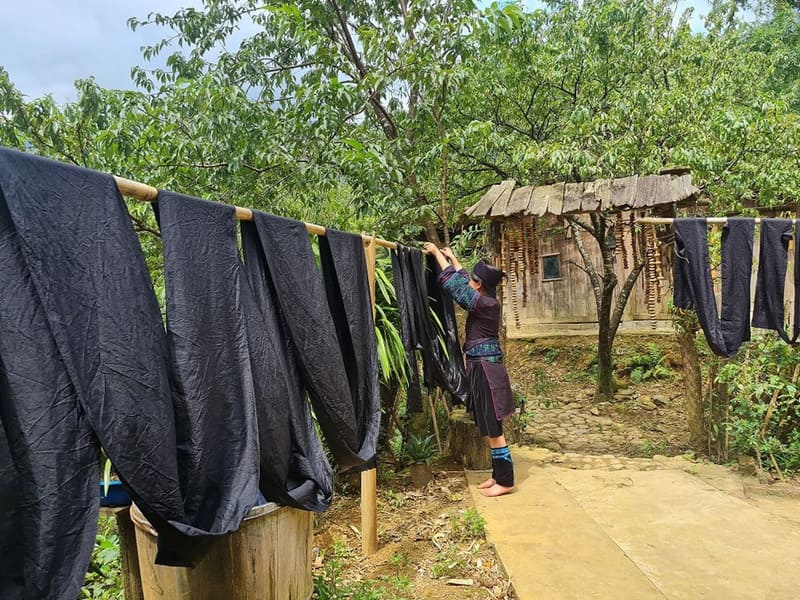
Handmade brocade reflects local ethnic traditions (Source: Collected)
A Red Dao herbal bath is a relaxing experience often associated with the wider Sapa region, including areas around Ban Ho and nearby Dao communities. It is especially popular after trekking, cycling, or long travel days.
The bath water is usually prepared with forest herbs, leaves, bark, and roots collected according to traditional knowledge. These ingredients are boiled and mixed with warm water in a wooden tub. The herbal scent is strong and natural, creating a calming atmosphere.
Many travelers try a herbal bath to relieve tired muscles, warm the body, and relax after outdoor activities. A typical session lasts around 15 - 30 minutes, depending on personal comfort and provider guidance. Prices vary by homestay or local service, but a common range is about 150,000 - 200,000 VND per session.
Visitors with sensitive skin, open wounds, pregnancy concerns, heart conditions, or other health issues should ask the provider before using the bath. Drink water afterward and avoid staying too long in very hot water.
Ban Ho has a warmer climate than higher parts of Sapa, with many descriptions placing average temperatures around 18 - 25°C. This makes stream bathing and relaxing near natural pools more comfortable than in colder mountain areas.
The streams around Ban Ho, especially Muong Hoa Stream and La Ve Stream, create peaceful places to rest during or after a walk. In suitable weather, some shallow and calm sections may be used for wading or swimming. The experience is simple: cool water, mountain air, trees along the bank, and a quiet village setting.
However, safety should come first. Do not swim after heavy rain, when the water is fast, muddy, or deep. Avoid slippery rocks, strong currents, and isolated areas. Ask locals or your guide which sections are safe, especially if you are visiting with children.
Stream relaxation is best from April to October, when the weather is warmer. In winter, the water can be too cold for most visitors.
Cycling or riding a motorbike around Ban Ho is a good option for travelers who want flexibility. The roads around the village pass rice terraces, streams, local houses, and mountain views. Compared with trekking, cycling and motorbiking allow you to cover more distance in less time.
Motorbike rental in Sapa often costs around 80,000 - 150,000 VND per day, depending on the motorbike type and rental provider. Some homestays may also help arrange bikes, motorbikes, or local drivers. A motorbike gives access to scenic routes around Ban Ho, nearby hamlets, and sections of the Muong Hoa Valley.
Cycling is slower and more peaceful, but the terrain can be challenging because of slopes and uneven road sections. It is better suited to active travelers.
Before riding, check brakes, tires, lights, fuel, and helmet quality. Roads can be steep, winding, and slippery after rain. If you are not confident riding in mountain conditions, choose a local driver, taxi, private car, or guided tour instead.
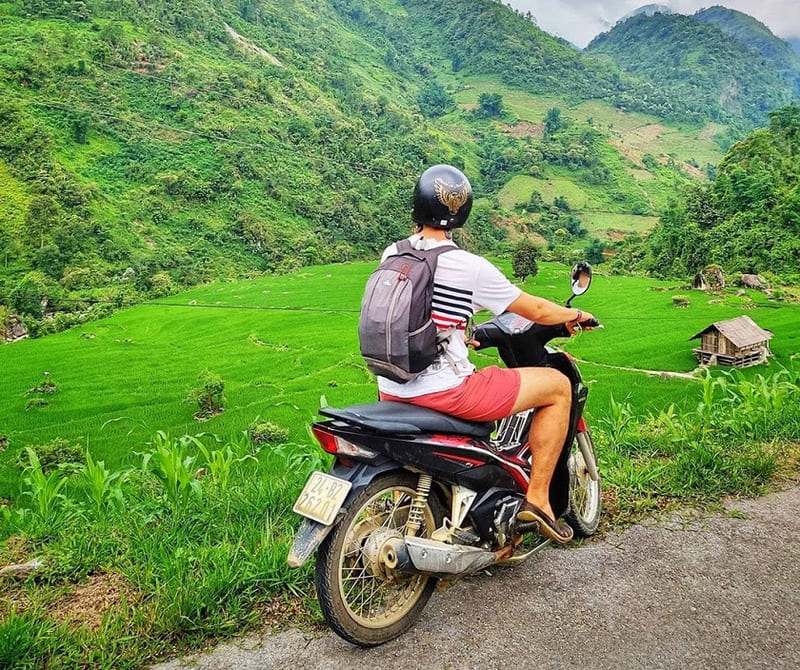
Village roads reveal rice fields, streams, and hills (Source: Collected)
Ban Ho’s cultural life becomes more active during community activities, local gatherings, and weekend cultural exchanges. Some homestays or community tourism groups can arrange traditional music, folk dances, local meals, or evening exchanges for visitors.
These activities often highlight Tay culture through songs, dances, costumes, games, and food. In some settings, visitors can listen to Then singing or other local folk performances. The experience is usually simple and intimate rather than staged on a large commercial scale.
Local markets and small village trading activities may offer vegetables, medicinal herbs, brocade products, woven items, and daily goods from nearby communities. The market atmosphere gives visitors a chance to observe local life beyond sightseeing.
If you want to join a cultural exchange, ask your homestay in advance. Not every night has a performance, and activities may depend on group size, season, or community arrangements.
Food in Ban Ho Village is rustic, local, and closely connected to mountain life. Meals are often served at homestays, local houses, or small village eateries. The ingredients usually come from nearby fields, streams, forests, and family farms.
Want to discover more local specialties? Check out our guide to Sapa food for the must-try dishes and traditional flavors of Vietnam’s Northwest region.
Ban Ho Village is located about 30 km from Sapa Town, with a travel time of around 45 - 60 minutes depending on weather and road conditions.
There are several ways to reach Ban Ho:
Travel tip: If traveling independently, download offline maps, carry cash, and check weather conditions before departure, as mobile signals and road conditions can be unreliable in remote areas.
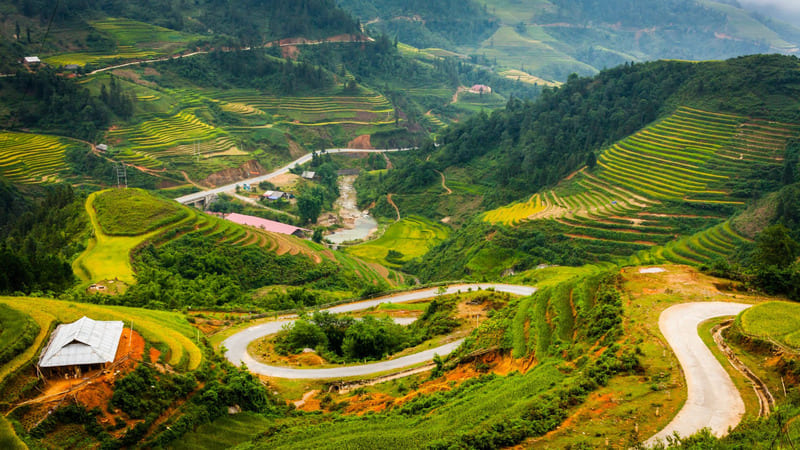
The road to Ban Ho passes scenic mountain valleys (Source: Collected)
Ban Ho Village can be visited year-round, but the most pleasant weather and scenic landscapes are typically found from March to May and September to October.
Travel tip: Start your trip early from Sapa for the best weather and visibility. If staying overnight, pack a light jacket or warm layers, as temperatures can drop quickly in the evening.
For a more detailed overview of weather patterns, rice terrace seasons, and travel conditions, see our guide to the best time to visit Sapa.
A little preparation will help you enjoy Ban Ho Village more comfortably while respecting local culture and staying safe during outdoor activities.
Yes. Ban Ho offers several homestays, mainly traditional Tay stilt houses and family-run accommodations. Staying overnight allows visitors to experience local life, enjoy home-cooked meals, join cultural activities, and explore the village at a slower pace.
One day is enough to visit the main attractions. However, a 2-day, 1-night stay is recommended if you want to enjoy trekking, cultural experiences, local cuisine, and a homestay experience.
No. Ban Ho is generally quieter than Cat Cat Village, Lao Chai, and Ta Van because it is farther from Sapa Town. It is a good choice for travelers looking for a more peaceful and authentic atmosphere.
Ban Ho Village is about 30 km southwest of Sapa Town. The journey takes around 45 - 60 minutes by car, taxi, motorbike, or jeep, depending on road and weather conditions.
Yes. Independent travelers can easily reach Ban Ho by motorbike, taxi, or private car. A local guide is only recommended for longer trekking routes, waterfall hikes, or visits to remote villages.
September and October are the best months to visit, when the terraced rice fields turn golden during harvest season. March to May is also a great time for pleasant weather, green landscapes, and trekking.
Ban Ho Village Sapa is worth visiting for travelers who want peaceful scenery, authentic Tay culture, trekking routes, waterfalls, streams, and homestay experiences away from the busiest tourist areas. With rice terraces, Muong Hoa Stream, La Ve Stream, Jumping Fish Waterfall, Seo Trung Ho Waterfall, local food, and traditional stilt houses, Ban Ho offers a slower and more meaningful way to explore Sapa’s mountain life.


 Vietnam Tours
 Cambodia Tours
 Laos Tours
 Thailand Tours
 Multi-Country Tours