Caves in Vietnam offer far more than underground sightseeing. Travellers can camp inside vast caverns, cruise through flooded limestone tunnels, swim in subterranean rivers or follow easy boardwalks past dramatic rock formations. Here are 15 must-visit caves to help you choose the right experience for your trip.
| Cave | Location | Best for | Access | Difficulty | Time needed |
| Son Doong Cave | Phong Nha - Ke Bang | Ultimate cave expedition | Licensed expedition only | Very challenging | 4 days |
| Phong Nha Cave | Quang Binh | Families and first-time visitors | Boat and short walk | Easy | 2 - 3 hours |
| Paradise Cave | Quang Binh | Stalactites and photography | Walk or electric buggy | Easy to moderate | 2 - 3 hours |
| Hang En Cave | Quang Binh | Overnight cave camping | Guided trek | Moderate | 2 days |
| Dark Cave | Quang Binh | Ziplining, mud baths and swimming | Guided activity package | Moderate | Half day |
| Tu Lan Cave System | Quang Binh | Jungle trekking and swimming | Guided expedition | Moderate to challenging | 1 - 4 days |
| Hang Va Cave | Quang Binh | Rare cave formations | Guided expedition | Moderate | 2 days |
| Tam Coc Caves | Ninh Binh | River scenery and rice fields | Sampan boat | Easy | 2 hours |
| Trang An Grottoes | Ninh Binh | Caves, temples and karst scenery | Sampan boat | Easy | 2.5 - 3.5 hours |
| Sung Sot Cave | Ha Long Bay | Large chambers and cruise itineraries | Cruise and stairs | Easy to moderate | 45 - 60 minutes |
| Dau Go Cave | Ha Long Bay | Geology and historical legends | Cruise and stairs | Moderate | 30 - 45 minutes |
| Luon Cave | Ha Long Bay | Kayaking and lagoon scenery | Kayak or bamboo boat | Easy | 30 - 45 minutes |
| Mua Cave | Ninh Binh | Panoramic viewpoints | Walk and steep staircase | Moderate | 1.5 - 2 hours |
| Ba Be National Park Caves | Bac Kan | Nature, kayaking and quieter travel | Boat, trek or road | Easy to moderate | 1 - 2 days |
| Galaxy Cave | Ninh Binh | A quieter underground boat trip | Boat and short walk | Easy | 1.5 - 2 hours |
Fees, tour schedules and access conditions can change according to weather, conservation regulations and service packages. Confirm current details before travelling, particularly for expedition caves and Ha Long Bay cruise routes.
Vietnam lies within major limestone belts that have been shaped by tectonic movement, tropical rainfall and water erosion over millions of years. Rainwater gradually entered fractures in the limestone, dissolved the rock and created underground rivers, chambers, sinkholes and interconnected cave passages.
The country’s cave landscapes are especially concentrated in several regions.
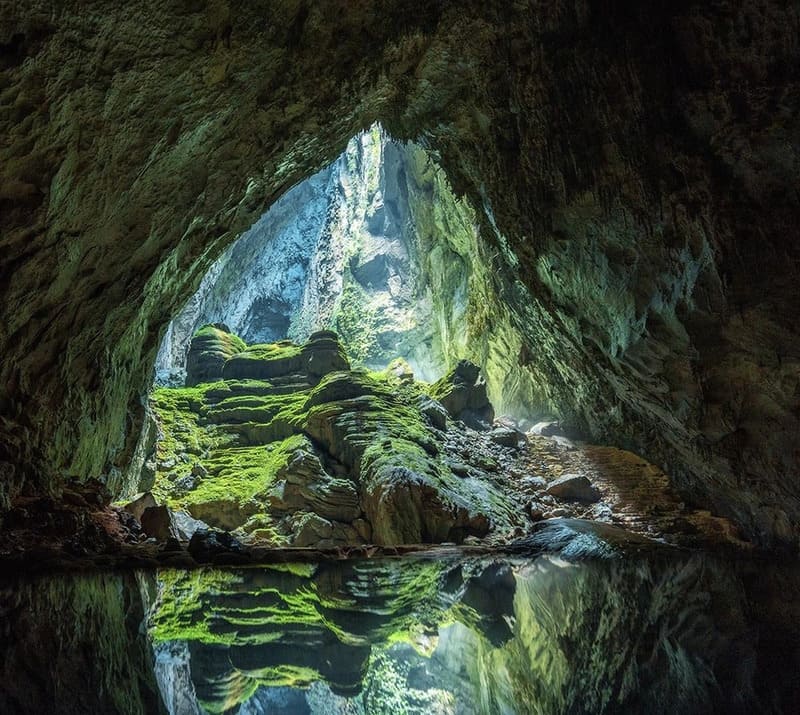
Son Doong Cave (Source: Collected)
Son Doong is the most famous cave in Vietnam and the country’s most demanding underground adventure. Located in the core zone of Phong Nha - Ke Bang National Park, it is considered the world’s largest cave by volume and contains passages large enough to accommodate high-rise buildings.
The cave was found by local resident Ho Khanh in 1990 and scientifically explored by a British-Vietnamese expedition team in 2009. It extends for nearly nine kilometres and contains enormous stalagmites, an active underground river, two roof collapses known as dolines and sections of rainforest growing beneath natural light. Warm and cool air interacting in the humid interior can also create mist and clouds.
Visiting Son Doong is a structured expedition rather than a conventional sightseeing trip. Participants trek through jungle, cross rivers, descend steep terrain, camp underground and climb the Great Wall of Vietnam using safety equipment. A strong level of fitness, medical screening and careful preparation are required.
The official four-day expedition operates from January to August. Places are limited, participants must be 18 - 70 years old, and the published price is USD 3,000 per person. Bookings may fill far in advance.
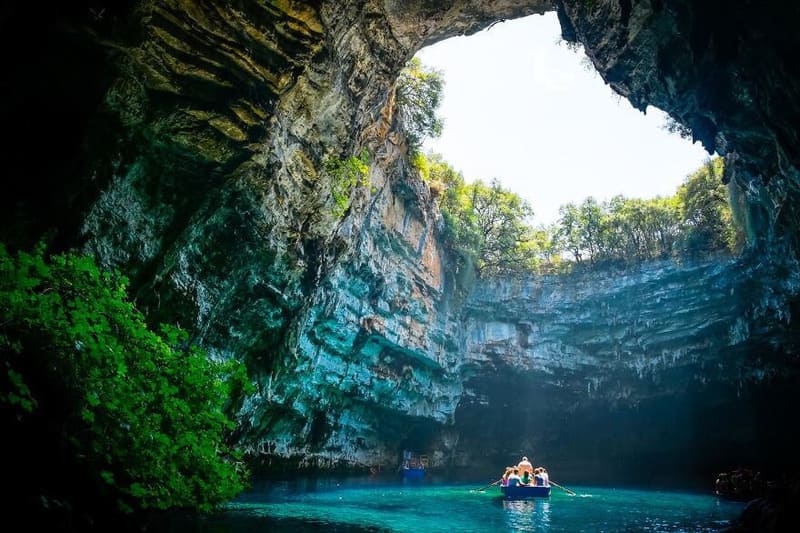
Phong Nha Cave (Source: Collected)
Phong Nha Cave is one of the easiest ways to experience the underground landscape of Phong Nha - Ke Bang National Park. The journey begins at the tourism centre in Phong Nha town, where visitors board a wooden boat and travel along the Son River toward the cave entrance.
Once inside, the boat moves through a wide underground river beneath high limestone ceilings. Visitors normally disembark farther inside and walk through illuminated sections containing stalactites, stalagmites and formations named after familiar shapes.
The combination of river travel and gentle walking makes Phong Nha Cave suitable for families, older travellers and visitors with limited time. Unlike the region’s expedition caves, it does not require specialised fitness or overnight camping.
A standard visit takes approximately 2.5 hours. The cave is generally open daily, although seasonal opening hours and access may change when river conditions become unsafe.
Phong Nha Cave can be combined with Tien Son Cave, which lies above the main river cave and offers a contrasting dry-cave experience. Visitors planning this combination should allow additional time for the climb.
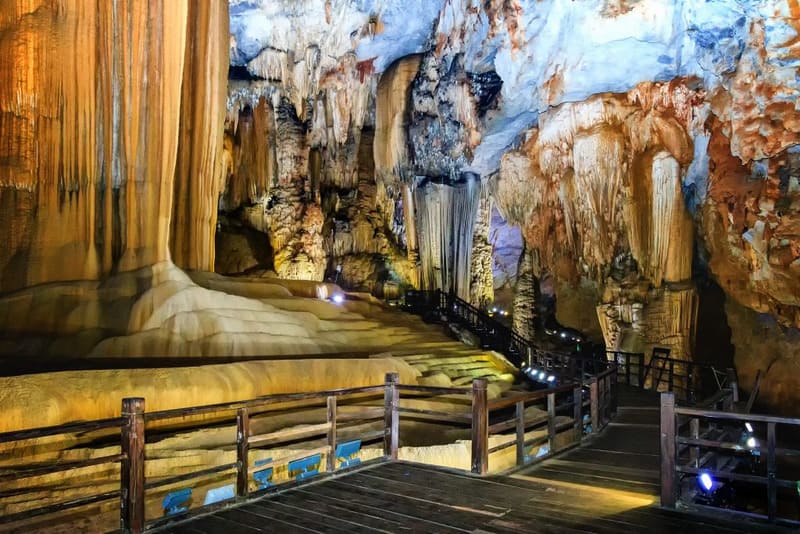
Paradise Cave (Source: Collected)
Paradise Cave, known locally as Dong Thien Duong, is one of Vietnam’s most impressive accessible dry caves. It lies within Phong Nha - Ke Bang National Park and extends for more than 31 kilometres, although most visitors explore the first kilometre on a raised wooden walkway.
A steep approach leads to the cave entrance, but an electric buggy can shorten the journey from the main ticket area. After descending into the cave, visitors enter a series of broad chambers filled with stone curtains, columns, rimstone pools and layered stalactites.
The interior feels noticeably cooler than the forest outside, making a light jacket useful for travellers who are sensitive to temperature changes. The boardwalk provides relatively convenient access, but the initial climb and staircase can still be tiring for visitors with limited mobility.
The standard route is suitable for casual travellers and photographers. Longer guided routes venture several kilometres beyond the illuminated public section and involve river crossings, uneven ground and specialised safety procedures.
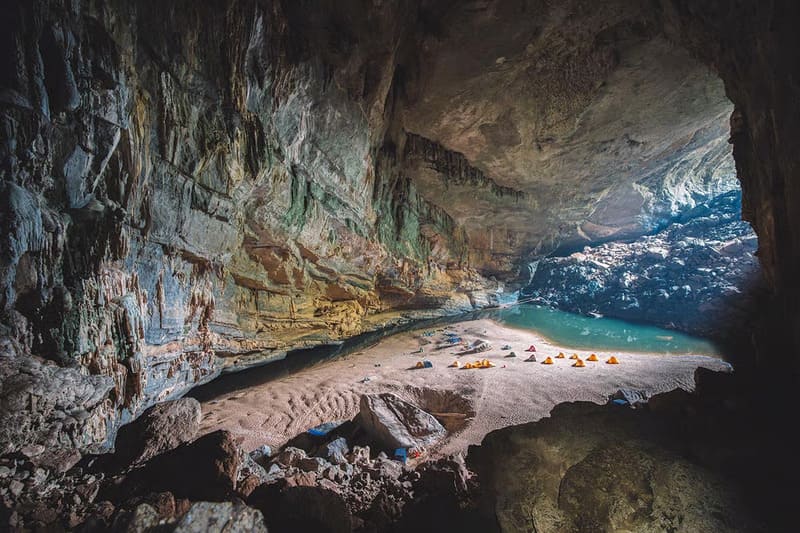
Hang En Cave (Source: Collected)
Hang En is one of the largest caves within Phong Nha - Ke Bang National Park and offers one of Vietnam’s most memorable underground camping experiences. Its vast entrance, sandy floor, natural pools and illuminated cavern create a dramatic setting without requiring the extreme difficulty of Son Doong.
The journey involves trekking through forest, crossing streams and passing Doong Village, home to members of the Bru-Van Kieu community. Participants then enter the cave and camp beside a natural pool beneath its enormous ceiling.
Sunlight entering through the cave openings creates particularly striking conditions at certain times of year. Thousands of swifts and other cave-dwelling animals also contribute to the cave’s natural character.
Hang En cannot be visited independently. The two-day guided adventure is rated moderate and includes trekking, river crossings, camping equipment, meals and safety support. The published price is approximately VND 8.8 million per person.

Dark Cave (Source: Collected)
Dark Cave combines cave exploration with outdoor activities along the Chay River. It is less focused on elaborate illuminated formations and more suitable for travellers who want a wet, muddy and energetic experience.
A typical visit begins with a zipline or alternative transfer across the river, followed by kayaking or swimming toward the cave entrance. Visitors wear helmets and headlamps because the interior has no permanent lighting. The route leads through dark passages to a natural mud pool before returning to the river for swimming and water activities.
Expect to get completely wet and muddy. Swimwear or quick-drying clothes are more practical than standard sightseeing clothing. Lockers and basic safety equipment are generally included in activity packages, but travellers should confirm what footwear, towels and personal items they need to bring.
Dark Cave is unsuitable for visitors who dislike enclosed darkness, mud or swimming. Activity restrictions may also apply according to height, weight, age or water conditions.

Tu Lan Cave (Source: Collected)
The Tu Lan Cave System lies in the limestone mountains of Tan Hoa, outside the main visitor zone of Phong Nha. It consists of interconnected dry and wet caves shaped by underground rivers, geological movement and continuing erosion.
Tu Lan is defined by variety. Depending on the selected route, travellers may trek through valleys, cross rocky slopes, swim through river caves, climb over limestone formations and camp near waterfalls or natural pools. Some tours are designed for beginners, while longer expeditions require stronger fitness and previous trekking experience.
The system is especially attractive to travellers who want a wilder environment than the developed boardwalks of Phong Nha and Paradise Cave. It also provides several tour lengths, making it more flexible than Son Doong.
Guided experiences range from one-day routes to multi-day expeditions. Current packages differ significantly in distance, swimming requirements and adventure level, so travellers should compare the exact itinerary rather than choosing by price alone.

Hang Va Cave (Source: Collected)
Hang Va is distinguished by hundreds of unusual cone-shaped formations rising from shallow pools. Their exact formation remains a subject of geological interest, giving the cave a visual character unlike the larger chambers elsewhere in Phong Nha - Ke Bang.
The expedition normally includes nearby Nuoc Nut Cave, a river cave containing dry passages, clear pools and sections that require wading or swimming. Travellers trek through forest, cross rocky terrain, use safety equipment and camp in the national park.
Hang Va offers a more technical experience than ordinary sightseeing caves but is shorter and more accessible than Son Doong. Participants still need good balance, stamina and confidence in wet underground environments.
The guided expedition is commonly offered as a two-day moderate-level tour. Current published packages are around VND 9.2 million per person, including required equipment and expedition support.

Tam Coc Caves (Source: Collected)
Tam Coc means “three caves” and refers to Hang Ca, Hang Hai and Hang Ba, three natural tunnels formed by the Ngo Dong River passing through limestone mountains.
Visitors board small sampan boats at Tam Coc Wharf and travel between rice fields, karst cliffs and low cave ceilings. Local rowers are known for using their feet to control the oars, although techniques vary between individuals.
The experience is highly seasonal. Rice fields are especially photogenic when green or approaching harvest, while the scenery becomes quieter outside peak periods. Midday can be hot because much of the route is exposed, so an early departure is preferable during summer.
The boat journey normally takes around two to 2.5 hours. It is easy to combine with Bich Dong Pagoda, Thung Nham Bird Park or Mua Cave on the same day.

Trang An Cave (Source: Collected)
Trang An is a vast flooded karst landscape containing narrow cave passages, enclosed valleys, forested limestone towers, temples and archaeological sites. It forms part of the UNESCO-listed Trang An Landscape Complex, Vietnam’s mixed cultural and natural World Heritage property.
Visitors select a boat route at the departure area. Each route passes through a different combination of caves, waterways and spiritual sites. Some cave ceilings are low enough that passengers need to lower their heads, while other sections open into wide valleys surrounded by vertical cliffs.
The experience is broader than cave sightseeing alone. Visitors may stop at temples, walk short paths and learn about the area’s historical role as a protected natural landscape near the ancient capital of Hoa Lu. UNESCO describes Trang An as a network of karst peaks, internal basins and narrow cave passages connected by quietly flowing water.
Boat trips usually last between 2.5 and 3.5 hours. Bring sun protection because open-water sections have limited shade.
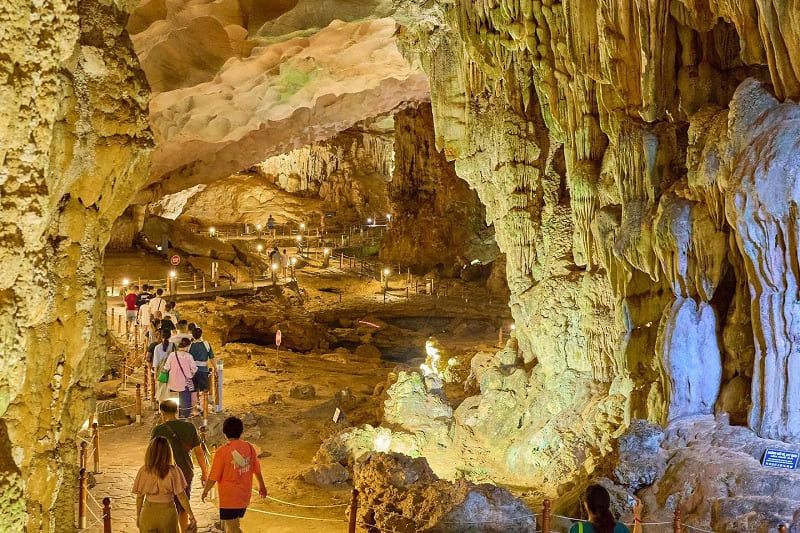
Sung Sot Cave (Source: Collected)
Sung Sot Cave, or Surprise Cave, is one of the most visited caves in Ha Long Bay. Located on Bo Hon Island, it is reached by cruise boat followed by a staircase leading approximately 20 metres above sea level.
The cave contains two main sections. The first feels relatively enclosed, while the second opens into a much larger chamber with a high ceiling, broad walking route and illuminated limestone formations. A viewpoint near the exit provides a panoramic view across the surrounding islands.
Sung Sot is the largest cave currently included among Ha Long Bay’s established visitor caves. It forms part of sightseeing Route 2, often combined with Ti Top Island and Luon Cave.
The route is well developed but involves stairs, uneven surfaces and crowds during peak cruise hours. It is best for travellers who want a dramatic walk-in cave without joining a specialised expedition.
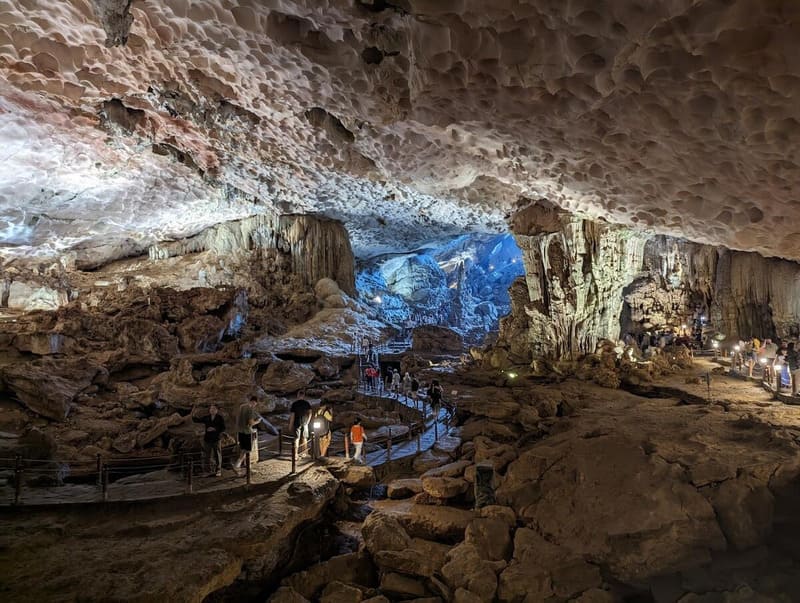
Dau Go Cave (Source: Collected)
Dau Go Cave lies on Dau Go Island near Thien Cung Cave. It is known for broad chambers, dense stalactites, natural openings and legends connected with Vietnam’s military history.
According to local tradition, wooden stakes were stored in the area during preparations for battles against Mongol forces in the 13th century. The historical interpretation is part of the cave’s appeal, although most visitors come primarily for its limestone architecture.
Compared with Sung Sot, Dau Go often feels more rugged and less open. Visitors climb steps from the landing point and follow a designated route through several chambers. Moisture can make the stone surface slippery.
Dau Go is commonly included on Ha Long Bay Route 1 together with Thien Cung Cave and nearby karst landmarks. The bay entrance fee is charged by sightseeing route rather than as a simple stand-alone cave ticket.
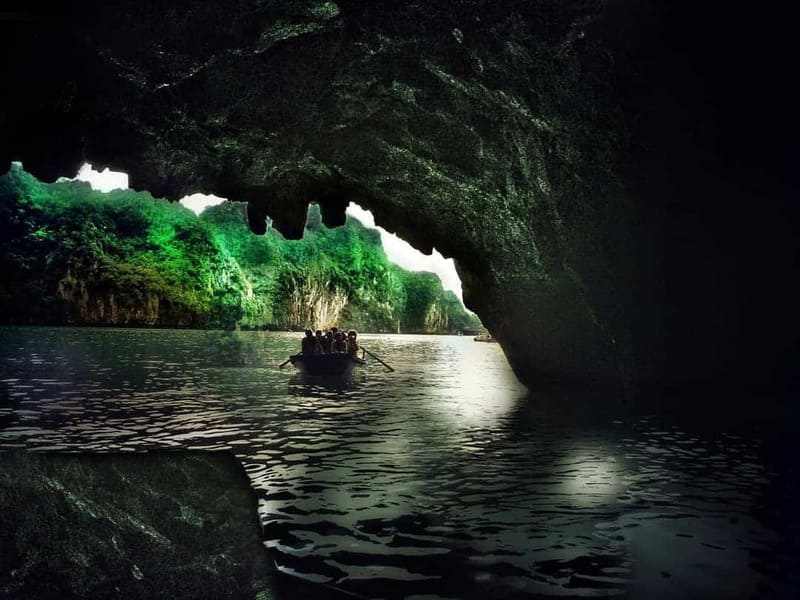
Luon Cave (Source: Collected)
Luon Cave is a low marine tunnel leading into a calm lagoon enclosed by limestone cliffs. Large cruise vessels cannot pass through it, so visitors transfer to a kayak or bamboo boat.
The attraction lies in the transition from the open bay through a narrow rock arch into a sheltered body of water. Depending on the season and visitor traffic, travellers may see monkeys on the cliffs as well as plants adapted to Ha Long Bay’s limestone environment.
Luon Cave is more accurately described as a water passage and lagoon experience than a conventional chamber filled with stalactites. It is therefore best suited to travellers who prefer kayaking, wildlife watching and open-air scenery.
The cave is included in Ha Long Bay sightseeing Route 2, often alongside Sung Sot Cave and Ti Top Island. Kayak or bamboo-boat services may be charged separately from the cruise and bay admission.
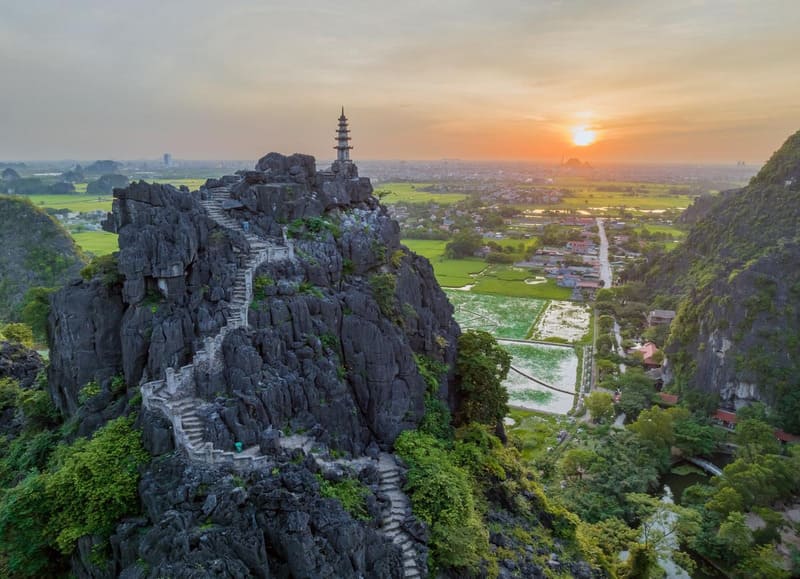
Mua Cave (Source: Collected)
Mua Cave is located at the foot of Ngoa Long Mountain near Tam Coc. Despite its name, the small cave is not the main reason travellers visit. The site is best known for its steep stone staircase leading to panoramic viewpoints above the Ninh Binh countryside.
The climb includes nearly 500 steps and divides toward two summits. One route leads toward a pagoda and viewing platform, while the other reaches a ridge decorated with a stone dragon. From above, visitors can see the Ngo Dong River, rice fields and limestone peaks surrounding Tam Coc.
The exposed staircase becomes hot during the middle of the day and slippery after rain. Start early, carry water and wear shoes with reliable grip. Visitors with knee problems or limited balance may prefer to explore the lotus ponds and lower complex rather than complete the climb.
Mua Cave works well as a scenic complement to Tam Coc or Trang An rather than as a stand-alone underground cave experience.
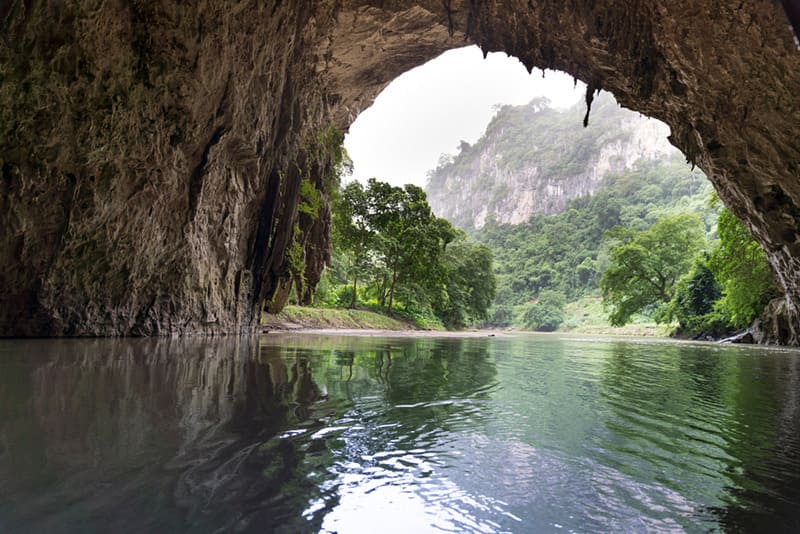
Ba Be National Park Cave (Source: Collected)
Ba Be National Park in northern Vietnam combines freshwater lakes, forested limestone mountains, rivers, waterfalls and several caves. The most visited include Puong Cave and Hua Ma Cave, while Lo Mo and Na Phoong provide additional options in the wider area.
Puong Cave is crossed by the Nang River and is normally explored as part of a boat trip on Ba Be Lake. The wide river passage contains limestone formations and colonies of bats. Hua Ma is a dry cave reached by road and a climb from the surrounding valley. Its chambers contain tall stalagmites, stone columns and broad vaulted spaces.
Ba Be is much quieter than Ha Long Bay or Ninh Binh. Travellers should spend at least one night in the area because travel from Hanoi is long and weather can affect boat schedules.
The national park also supports kayaking, village visits, cycling and trips to Dau Dang Waterfall, making it a strong option for travellers interested in nature rather than cave sightseeing alone.
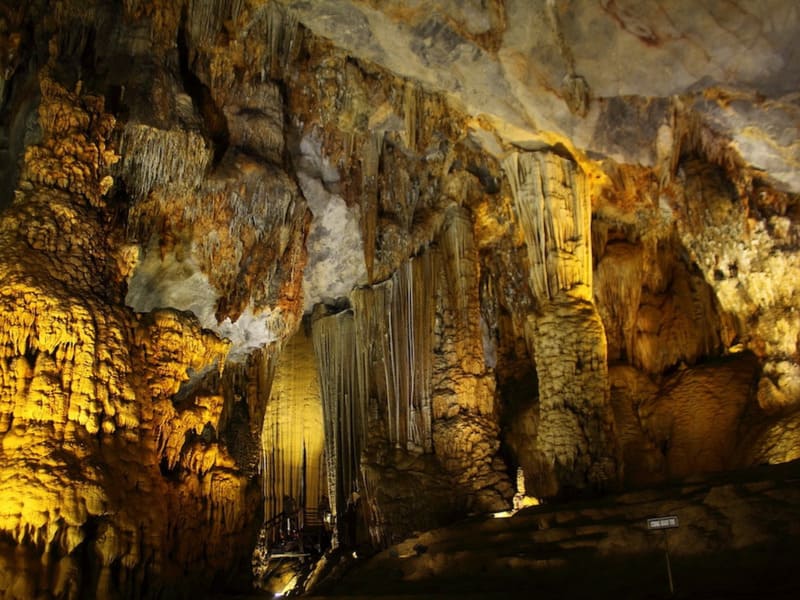
Galaxy Cave (Source: Collected)
Galaxy Cave, known in Vietnamese as Dong Thien Ha, is located in the Trang An limestone area of Ninh Binh. It provides a smaller and less crowded alternative to the main boat routes at Tam Coc and Trang An.
Visitors usually travel by boat through rural waterways before walking a short trail to the cave entrance. The cave is around 700 metres long and includes both dry and water-filled sections. Inside, reflected light gives the stalactites and stalagmites a glittering appearance associated with its “Galaxy” name. Archaeological traces linked to early human habitation have also been identified in the area.
Part of the cave is explored on foot, while another section may involve a small boat, depending on the operating route and water level. The compact passageways create a more intimate experience than the vast chambers of Phong Nha.
Galaxy Cave is suitable for travellers staying longer in Ninh Binh who have already visited the better-known attractions or want a quieter half-day excursion.
Your ideal cave depends on your fitness level, budget, available time and travel style.
Vietnamese cave attractions fall into three broad groups.
Central Vietnam’s cave systems are strongly affected by rainfall. Underground rivers can rise rapidly, and expedition schedules may close during the wettest months. Confirm the operating season and weather forecast before travelling to Quang Binh.
Ha Long Bay cruises may be delayed or cancelled during storms, strong winds or poor visibility. In Ninh Binh, boat trips may continue during light rain but become less comfortable during extreme heat or prolonged wet weather.
Spend at least two full days in Phong Nha if you want to see both Phong Nha Cave and Paradise Cave. Add another day for Dark Cave, and reserve the exact duration required for any expedition.
Ninh Binh needs at least one full day, although two days allow a more comfortable combination of Trang An, Tam Coc, Mua Cave and nearby temples.
Ha Long Bay caves are normally included in predetermined cruise itineraries. Select the route before booking rather than assuming every cruise visits the same cave.
A cave entrance fee may not cover the complete experience. Additional costs can include:
For remote caves, the tour package is the actual cost of access even when there is no separate entrance ticket.
Do not touch, break or remove stalactites, stalagmites, cave pearls or fossils. Mineral formations can take thousands of years to develop, and skin oils may interfere with their natural growth.
Stay on designated routes, carry out personal waste and avoid disturbing bats or other wildlife. Flash photography, drones and large equipment may be restricted in protected areas.
Son Doong is Vietnam’s most famous cave and the world’s largest natural cave by volume. Its enormous chambers, underground rainforest and river make it one of the country’s most remarkable adventure destinations.
Son Doong is the largest known cave in Vietnam and the world by volume, with passages stretching nearly 9 km and chambers exceeding 200 m in height.
February to August is generally best for the major caves in Phong Nha. Spring and autumn offer pleasant weather for Ninh Binh and Ha Long Bay, while expedition caves operate only during approved seasons.
For a complete overview of Vietnam’s seasonal weather and regional travel conditions, explore our best time to visit Vietnam guide.
Yes. Tourist caves are safe when visitors follow official routes and instructions. Remote expedition caves should only be explored with licensed guides and proper equipment.
Yes. Beginners can join guided trips such as Hang En or selected Tu Lan routes. Easier options like Phong Nha Cave, Paradise Cave, Tam Coc and Trang An require little or no trekking experience.
A guide is required for expedition caves such as Son Doong, Hang En, Hang Va and Tu Lan. Public caves like Paradise Cave can be visited independently, while Phong Nha, Tam Coc, Trang An and Ha Long Bay caves are accessed by authorised boat services.
Paradise Cave is known for its limestone formations, Son Doong and Hang En for dramatic cave interiors, Tam Coc for rice-field scenery, Trang An for landscapes, and Mua Cave for panoramic views.
Wear quick-drying clothing, sturdy shoes with good grip and light layers. Technical gear is usually provided on guided expeditions.
Phong Nha Cave, Paradise Cave, Tam Coc, Trang An and Luon Cave are among the best family-friendly options, depending on children's age and mobility.
The caves in Ninh Binh, including Tam Coc, Trang An, Mua Cave and Galaxy Cave, are the closest major cave destinations, about two hours from Hanoi.
No. Son Doong can only be visited through an authorised expedition. Independent access is not permitted.
Phong Nha Cave, Tam Coc, Trang An, Galaxy Cave and Puong Cave are explored by boat, while Luon Cave in Ha Long Bay is accessed by kayak or bamboo boat.
Hopefully, this guide has helped you identify the caves in Vietnam that best match your schedule, fitness level and preferred type of adventure. From relaxed boat trips to multi-day expeditions, each destination offers a different way to experience the country’s remarkable karst landscapes.
Your Vietnam Travel can help you build a personalised itinerary combining Vietnam’s most impressive caves with nearby cities, national parks and cultural attractions. Contact our local travel experts to start planning your journey.
Learn more:


 Vietnam Tours
 Cambodia Tours
 Laos Tours
 Thailand Tours
 Multi-Country Tours