For more than a thousand years, the Imperial Citadel of Thang Long has stood at the heart of Vietnam’s political and cultural history. Once the royal seat of several Vietnamese dynasties, this vast complex preserves layers of history that reflect the development of Hanoi from an ancient capital to a modern city.
Through centuries of dynastic rule, colonial change, and wartime transformation, the citadel remained a strategic and symbolic center of power. Archaeological discoveries reveal continuous occupation and royal activity spanning more than a millennium.
Recognized as a UNESCO World Heritage Site in 2010, the Imperial Citadel of Thang Long is now one of Hanoi’s most significant historical landmarks. Visitors can explore ancient gateways, royal foundations, military structures, and archaeological sites that illustrate the evolution of Vietnamese civilization.
This guide from Your Vietnam Travel introduces everything you need to know before visiting the citadel, including its location, historical background, and the key highlights to explore inside the complex.
The Imperial Citadel of Thang Long is located in Ba Dinh District, the political center of Hanoi. The main entrance to the heritage site can be found at:
Just across the road lies another important archaeological site at:
This area contains remarkable excavation discoveries that reveal multiple layers of royal construction from different historical periods.
Plan time to visit both the main citadel complex and the archaeological site at 18 Hoang Dieu. Together, they provide a more complete understanding of the historical development of Thang Long.
 |
|
The Imperial Citadel of Thang Long (Source: Unsplash) |
The Imperial Citadel of Thang Long is open to visitors during the following hours:
These hours apply to the main citadel complex. It is recommended to arrive earlier in the day to allow enough time to explore the historical structures, archaeological areas, and exhibitions within the site.
Tickets can be purchased directly at the entrance gate. Visitors who plan to explore both the main citadel area and the archaeological site at 18 Hoang Dieu Street should allocate additional time for a more complete historical experience.
The history of the Imperial Citadel stretches back long before Hanoi became the capital of Vietnam. Archaeological evidence indicates that the area was already an important administrative and military center during the 7th to 9th centuries, when Chinese authorities built a fortress here. In 866, the Tang dynasty general Gao Pian rebuilt the stronghold as Dai La Citadel, which later became the foundation for the future capital.
A major turning point came in 1010, when Emperor Ly Thai To moved the Vietnamese capital from Hoa Lu to Dai La. He renamed the city Thang Long, meaning “Ascending Dragon,” and established a new imperial capital. Construction of the royal citadel began shortly afterward and the complex quickly became the political center of the Vietnamese kingdom.
The citadel continued to serve as the seat of power during the Ly, Tran, and early Le dynasties, when new palaces, gates, and administrative structures were built. Following the end of the Ming occupation in the 15th century, the Le dynasty reconstructed many royal buildings and developed the central palace area.
One of the most important structures from this period was Kinh Thien Palace, begun in 1428 under Emperor Le Thai To and completed during the reign of Le Thanh Tong. Although the palace itself was later destroyed, its stone foundation and the famous dragon-carved stairways from the 15th century remain preserved today.
In 1802, the Nguyen dynasty moved the capital of Vietnam to Hue. Soon after, the citadel in Hanoi was redesigned in a Vauban-style military architecture, reflecting European defensive concepts of the time. The most visible surviving structure from this period is the Hanoi Flag Tower, constructed between 1805 and 1812.
During the French colonial period in the late 19th century, large parts of the original imperial palaces were demolished as the area was transformed for military use. Kinh Thien Palace itself was destroyed in 1886. However, several important structures survived, including Doan Mon Gate, Hau Lau (Rear Palace), Bac Mon (North Gate), and the Flag Tower, which still form the central historical axis of the site today.
The citadel continued to play a strategic role during the 20th century, particularly during the Vietnam War. In 1967, the D67 House and underground bunker were constructed behind the Dragon House to protect military command meetings during the aerial bombing campaigns in northern Vietnam.
A major archaeological breakthrough occurred between 2002 and 2004, when large-scale excavations at 18 Hoang Dieu Street uncovered extensive remains from multiple dynasties. These discoveries revealed continuous royal occupation from the 7th century through the Nguyen dynasty, providing extraordinary evidence of a long-lasting political and cultural center.
Because of its exceptional historical significance and the continuity of its cultural layers, the Central Sector of the Imperial Citadel of Thang Long was officially recognized as a UNESCO World Heritage Site in 2010.
Today, the heritage area includes the 18 Hoang Dieu archaeological zone and the central axis of the citadel complex, featuring landmarks such as Hanoi Flag Tower, Doan Mon Gate, the Kinh Thien Palace foundation, Hau Lau, and Bac Mon (North Gate). These sites together offer visitors a remarkable journey through more than a thousand years of Vietnamese history.
The architecture of the Imperial Citadel of Thang Long reflects more than a thousand years of political power, urban planning, and cultural transformation in Vietnam. Unlike many royal complexes where entire palaces remain intact, Thang Long preserves a layered architectural landscape. Gates, palace foundations, ceremonial stairways, military towers, and archaeological remains together reveal how the citadel evolved through different dynasties and historical periods.
As visitors walk through the site today, they move across an open historical timeline. Imperial structures from the Ly and Le dynasties stand alongside Nguyen-era military architecture, French colonial modifications, and even Cold War command bunkers. These surviving elements collectively illustrate the continuous development of the citadel as both a royal residence and a strategic center of power.
Doan Mon served as the ceremonial entrance to the Forbidden City within the imperial complex. Positioned along the central north-south axis, the gate aligns with other key structures such as the Flag Tower and the Kinh Thien Palace terrace.
Built from brick and stone, the gate features a pavilion above five arched entrances: one central passage reserved for the emperor and four side portals used by mandarins and court officials. This arrangement reflected the strict hierarchy of the imperial court.
Today, Doan Mon remains one of the most recognizable structures within the citadel and often serves as the starting point for guided tours, including the popular Thang Long Imperial Citadel night tour in Hanoi.
 |
|
Doan Mon Gate in the Imperial Citadel of Thang Long (Source: Pexels) |
Located at the heart of the citadel, the Kinh Thien Palace terrace marks the site of the main throne hall of the imperial court. The palace itself was constructed during the early Le dynasty and functioned as the setting for major state ceremonies, royal receptions, and diplomatic events.
Although the palace building was destroyed during French colonial reconstruction in the late nineteenth century, its stone foundation and monumental dragon-carved stairways remain preserved. The dragon sculptures, dating from the fifteenth century, are among the finest surviving examples of early Le dynasty stone carving and symbolize imperial authority.
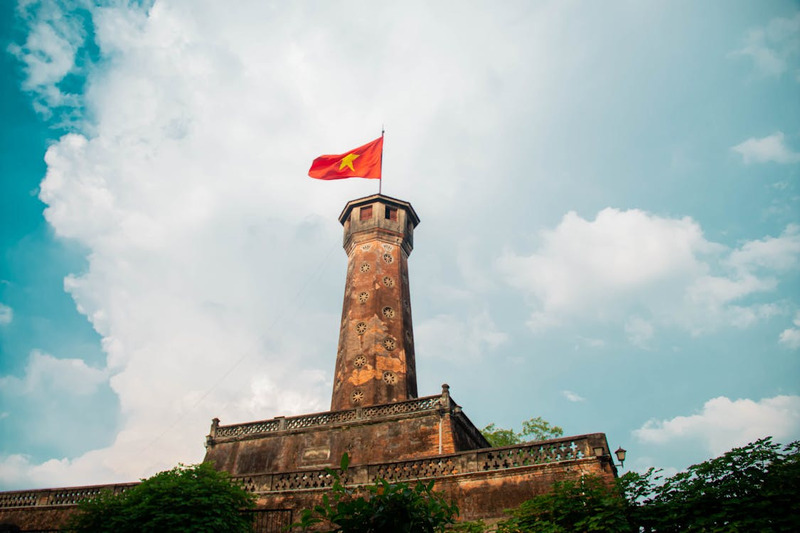
The Hanoi Flag Tower (Cot Co Ha Noi) is one of the most recognizable landmarks in the city. Built between 1805 and 1812 during the Nguyen dynasty, the tower formed part of a larger Vauban-style reconstruction of the Hanoi citadel.
Rising approximately 33 meters high, the tower stands on a three-tiered base with an octagonal upper section. Originally constructed as a military watchtower, it provided strategic observation across the surrounding area. Unlike many other structures within the citadel, the French colonial administration preserved the tower and later used it as a military post, which explains why it remains intact today.
 |
|
Hanoi Flag Tower near the Imperial Citadel of Thang Long (Source: Pexels) |
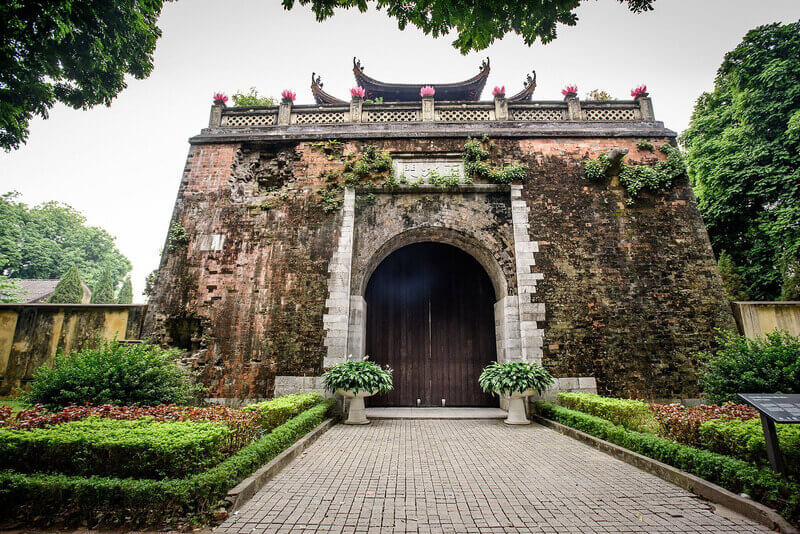
Bac Mon, or the North Gate, is one of the few surviving gates of the original citadel. Together with Doan Mon, it represents the defensive system that once protected the royal city.
The gate also carries historical significance from the nineteenth century, particularly during periods of conflict involving French colonial forces. Today, shrines inside the gate honor two Vietnamese officials, Nguyen Tri Phuong and Hoang Dieu, who defended Hanoi during these turbulent times.
 |
|
Bac Mon (North Gate) in the Imperial Citadel of Thang Long (Source: Tripadvisor) |
Hau Lau, often referred to as the Princess Palace or Rear Palace, stands behind the central ceremonial axis of the citadel. Historically, this building is believed to have served as living quarters for royal women or members of the imperial family.
The structure includes a basement and three upper levels. It suffered severe damage during the late nineteenth century and was later rebuilt under French colonial administration. Today, Hau Lau provides insight into the layout of the royal residential area located behind the main palace complex.
One of the most unexpected structures within the citadel is the D67 House and underground bunker, built in 1967 during the Vietnam War. Located behind the Dragon House area, this reinforced command center was constructed to host high-level military meetings and coordinate strategic operations during periods of aerial bombing.
The building and its underground tunnels remain largely intact. Inside, visitors can see preserved meeting rooms, communication equipment, and wartime maps that illustrate the citadel’s continued strategic importance during the twentieth century.
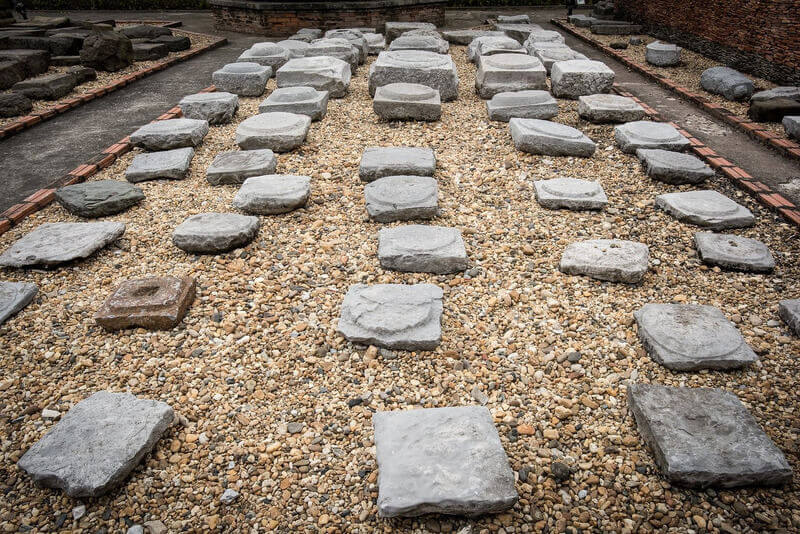
Across the street from the main citadel complex lies the 18 Hoang Dieu archaeological area, one of the most significant archaeological discoveries in Vietnam. Excavations conducted between 2002 and 2004 uncovered thousands of artifacts and architectural remains spanning more than a millennium.
The site covers approximately 45,000 square meters and reveals foundations of palaces, ancient wells, ceramic tiles, pillars, and decorative elements dating from the Tang dynasty through the Ly, Tran, Le, and Nguyen dynasties. These discoveries confirmed the continuous royal occupation of the area for over 1,300 years and played a key role in the citadel’s recognition as a UNESCO World Heritage Site.
 |
|
Archaeological Site at 18 Hoang Dieu (Source: Tripadvisor) |
The architectural structure of the Imperial Citadel of Thang Long can be understood through two main areas. The first is the central ceremonial axis, which includes Doan Mon Gate, the Kinh Thien Palace terrace, Hau Lau, Bac Mon Gate, and the Hanoi Flag Tower. This axis reflects the spatial organization of the imperial court.
The second area is the 18 Hoang Dieu archaeological zone, where excavation layers reveal the architectural evolution of the citadel across successive dynasties.
Together, these areas transform the citadel into a living historical landscape. Instead of a single preserved palace complex, visitors encounter a layered architectural record that tells the story of Vietnam’s political center over more than a thousand years.
A visit to the Imperial Citadel of Thang Long is not limited to exploring historical structures and archaeological remains. The site also offers a variety of interactive activities that help visitors experience Hanoi’s imperial heritage in a more engaging way. From cultural photography experiences to immersive night tours, these activities allow travelers to connect more deeply with the history of Vietnam’s ancient capital.
One of the most popular activities inside the citadel is wearing Việt phục, traditional Vietnamese historical clothing, for photography. These costumes recreate the elegant styles once worn in imperial courts and noble households.
Visitors can rent different styles of traditional garments within the complex, including:
Rental prices typically range from 80,000 VND to 250,000 VND (approximately US$3 - US$9.50), depending on the outfit and accessories selected. Costume rental services are usually located near the Kinh Thien Palace area or the East Gate.
Wearing traditional attire while walking through the historic gates and palace grounds creates a unique cultural photography experience and helps visitors imagine the atmosphere of the imperial court.
One of the most distinctive experiences at the citadel is the night tour program, which reveals the historical site through storytelling, lighting effects, and guided exploration.
The signature program, “Decoding the Imperial Citadel of Thang Long,” typically takes place on Friday and Saturday evenings at around 7:00 PM and lasts approximately 90 minutes.
During the tour, visitors can experience:
Because group sizes are limited, it is recommended to book the tour in advance. Schedules may vary depending on the season or special events.
The Decoding the Imperial Citadel experience is designed as an immersive historical journey. Carefully arranged lighting, storytelling, and interactive games help bring the citadel’s long history to life.
Some tours also include a symbolic activity at the King’s Well, where visitors draw water as a gesture of good fortune before continuing the final puzzle challenge. Participants who successfully complete the decoding activity may receive small souvenirs at the end of the tour, followed by tea or light refreshments.
This night tour provides a unique perspective on the citadel and is one of the most memorable cultural activities available in Hanoi.
Located across from the main citadel complex, the 18 Hoang Dieu archaeological site offers one of the most fascinating windows into Hanoi’s ancient history.
Covering an area of around 45,000 square meters, this site contains remains of wells, palace foundations, roof tiles, pillars, and decorative artifacts from multiple dynasties. Archaeological layers reveal continuous development from the 7th century through the Ly, Tran, Le, and Nguyen periods.
Visitors can walk along shaded pathways overlooking excavation areas while observing how different historical layers of the imperial city were constructed over time.
Throughout the year, the Imperial Citadel hosts rotating exhibitions that showcase royal artifacts, historical documents, and cultural themes related to the history of Thang Long.
Some exhibitions feature modern presentation techniques such as 3D mapping, digital displays, and multimedia storytelling to help visitors better understand the life of the imperial court and the development of Hanoi over the centuries.
Because these exhibitions change regularly, checking the latest schedules at the site can help visitors discover unique displays during their visit.
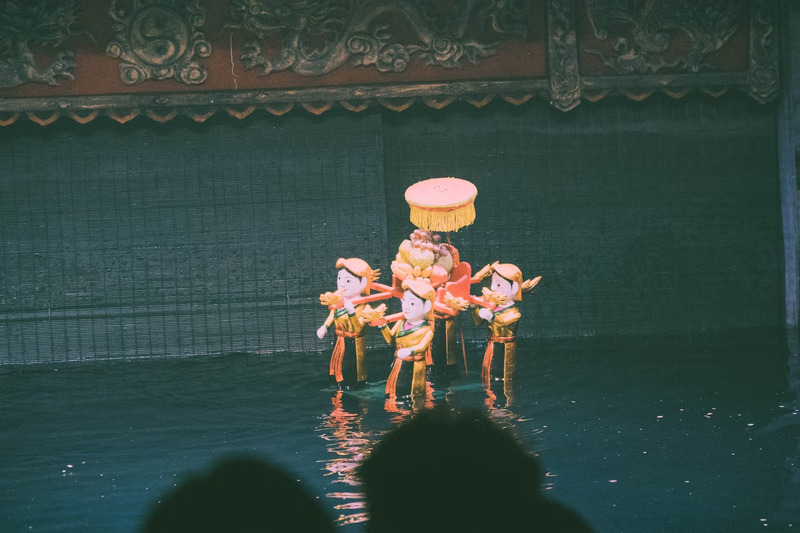
On special occasions such as Tet (Lunar New Year) or national holidays, the citadel sometimes hosts water puppet performances, a traditional northern Vietnamese art form that dates back centuries.
Although these shows are not held daily at the citadel, they provide a lively cultural experience when available. Visitors who wish to watch regular performances can also visit the Thang Long Water Puppet Theatre near Hoan Kiem Lake, one of the most famous venues for this traditional art in Hanoi.
Travel note: Programs, performances, and activity schedules at the Imperial Citadel of Thang Long may vary throughout the year. Visitors are advised to confirm the latest information at the site or through official channels when planning their visit.
 |
|
Traditional Water Puppet Show in Thang Long Citadel (Source: Unsplash) |
The Imperial Citadel of Thang Long is centrally located in Hanoi and easy to reach from most parts of the city.
Night tour tip: For the “Decoding the Imperial Citadel of Thang Long” night tour (usually Friday-Saturday, 7:00-8:30 PM), arrive at Doan Mon Gate early or book in advance.
Note: Bus routes and schedules may change, so it is best to confirm locally before traveling.
The Imperial Citadel of Thang Long can be visited throughout the year, but the most pleasant seasons are spring (February to April) and autumn (September to November). During these months, Hanoi typically enjoys milder temperatures, lower humidity, and clearer skies, making it ideal for walking through the large outdoor complex and exploring the archaeological areas.
For photography and sightseeing, early morning offers soft natural light and fewer crowds, while late afternoon provides cooler temperatures and a more atmospheric setting as the sun begins to set over the historic structures.
For more seasonal travel tips, explore Hanoi’s best time to visit with insights from Your Vietnam Travel.
Exploring the Imperial Citadel of Thang Long with a guided experience can help visitors better understand the site’s historical layers and architectural significance. From immersive night programs to informative daytime tours, these options offer deeper insight into one of Hanoi’s most important heritage landmarks.
The “Decoding the Imperial Citadel of Thang Long” is the most distinctive experience at the site. This after-dark program combines storytelling, lighting effects, historical artifacts, and interactive activities that reveal the citadel’s past in an engaging way.
The tour usually runs on Friday and Saturday evenings at around 7:00 PM and lasts about 90 minutes. Visitors explore key areas such as Doan Mon Gate, the Kinh Thien Palace terrace, and the 18 Hoang Dieu archaeological site, while participating in interactive “decoding” challenges along the route.
Because the program has limited capacity, booking in advance is recommended.
For travelers interested in deeper historical context, a daytime guided tour provides a structured way to explore the citadel. Professional guides explain the architectural features, dynastic history, and archaeological discoveries that shaped the site over centuries.
Typical itineraries include highlights such as Doan Mon Gate, the Kinh Thien Palace foundation, D67 House and bunker, Bac Mon (North Gate), and the 18 Hoang Dieu excavation area.
If you would like to experience the Thang Long Imperial Citadel Night Tour with smoother planning and local support, contact Your Vietnam Travel for assistance with booking, guided arrangements, and tailor-made Hanoi itineraries that combine the citadel with other cultural highlights of the city.
Here are a few key tips to help you enjoy a smooth and complete visit to the Thang Long Imperial Citadel:
Within a 5 to 15 minute radius of the Imperial Citadel of Thang Long, you will find Hanoi’s most iconic sites - easy to combine in a half-day loop before or after your citadel visit. Below are the closest, with what to see and why they’re special.
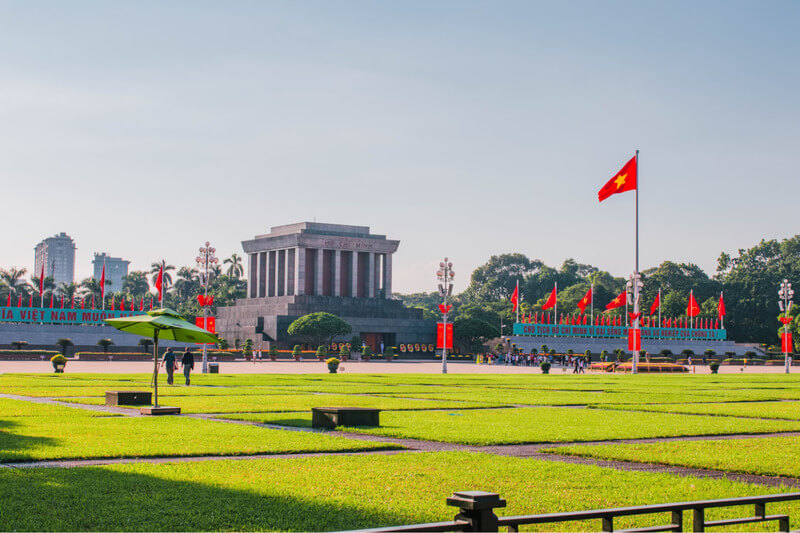
Set on Ba Dinh Square, the Ho Chi Minh Mausoleum anchors a ceremonial complex that also includes the Presidential grounds and museums. It’s a natural pairing with the Citadel - just a few blocks away - so you can witness Vietnam’s modern statehood narrative after exploring its royal heart. Come early for solemn flag-raising, then wander landscaped avenues toward nearby memorials and museums.
Travel Tips: Pair this stop with the One Pillar Pagoda next door for a compact history circuit that blends 20th-century symbolism with ancient spirituality.
Note: Dress modestly and follow queue etiquette; photography is restricted inside the mausoleum.
 |
|
Ho Chi Minh Mausoleum and Ba Dinh Square (Source: Unsplash) |
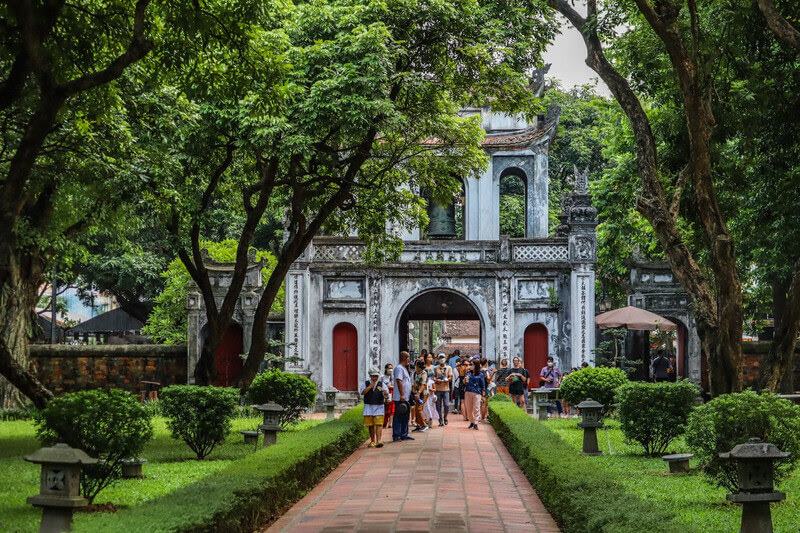
Vietnam’s first national university (Van Mieu - Quoc Tu Giam) is a graceful ensemble of courtyards, gates, and the famous doctoral steles. After the Citadel’s palatial axis, this is where you feel the scholarly spine of old Hanoi - Confucian rites, exam culture, and the ideals that shaped mandarins for centuries. Stroll the five courtyards, look for Khue Van Cac (which appears on the 100,000 VND note), and spend time reading the stone steles that record laureates from the 15th to 18th centuries.
Note: Plan 60 to 90 minutes; opening hours are generally from 8 a.m to 5 p.m, with tickets at the main gate on Quoc Tu Giam Street.
 |
|
The Temple of Literature in Hanoi (Source: Unsplash) |
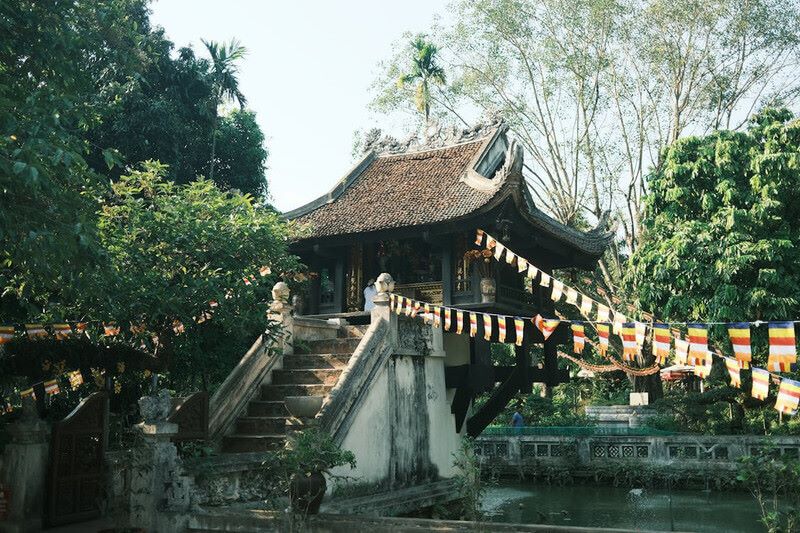
A short walk from the Mausoleum, the One Pillar Pagoda rises from a lotus pond on a single stone pillar, an elegant visualization of purity and renewal. Legend links it to an emperor’s dream of a bodhisattva on a lotus, echoed in the pagoda’s delicate, square wooden shrine. Combine this stop with the Mausoleum Complex and the Citadel for a compact route through Hanoi’s political, spiritual, and imperial layers.
Note: The pagoda grounds are small, so visits are brief; use the extra time to explore surrounding memorials or loop back to Doan Mon Gate for the Citadel’s central axis.
 |
|
One Pillar Pagoda (Chua Mot Cot) in Hanoi (Source: Unsplash) |
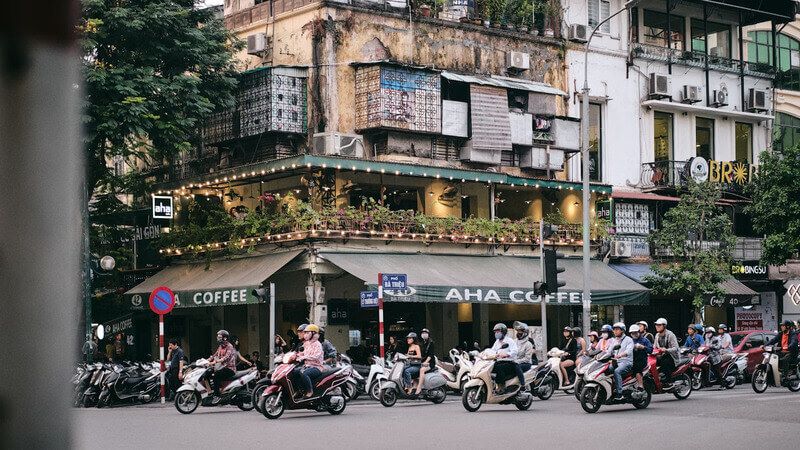
About two kilometers from the Citadel, Hanoi’s Old Quarter gathers historic guild streets, street-food stalls, cafés, and traditional shophouses into a lively maze of narrow lanes. It is a great place to visit before or after exploring the citadel, where you can enjoy local coffee, browse handicrafts, or sample some of Hanoi’s famous street food.
If you want a deeper local experience, the Old Quarter is also an ideal setting for activities such as a Hanoi food tour or a vintage jeep city tour, both of which reveal hidden alleys, local eateries, and the daily life of the capital.
Note: If you are short on time, focus on the streets surrounding Hoan Kiem Lake, where many shops, restaurants, and food stalls are concentrated within a compact walking area.
 |
|
Busy streets in Hanoi Old Quarter (Source: Unsplash) |
Hanoi’s largest lake offers wide-open water, historic pagodas, and scenic walking routes, creating a relaxing contrast to the brick walls and historic structures of the Imperial Citadel. Visitors can stroll along part of the 17-km shoreline, stop at lakeside cafés, or visit Tran Quoc Pagoda on Thanh Nien Road, one of the oldest temples in Hanoi. The pagoda usually opens 7:30 AM – 11:00 AM and 1:30 PM – 5:00 PM, with free entry.
Late afternoon is one of the best times to visit, when the sunset reflects on the lake and the breeze from the water cools the surrounding streets.
Tip: Cycling around West Lake is a popular activity. A Citadel – West Lake loop makes an enjoyable route before heading to dinner in the Tay Ho area, where many lakeside restaurants and cafés are located.
Travelers interested in seeing a more local side of the city can also combine the citadel visit with a half-day Hanoi bike tour through riverside neighborhoods and nearby villages.
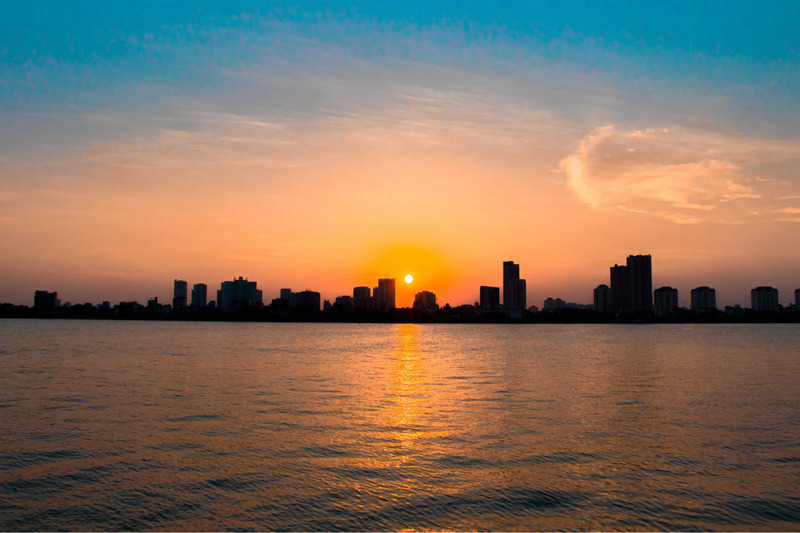 |
|
Sunset view of West Lake, Hanoi (Source: Unsplash) |
The Imperial Citadel of Thang Long is famous as a UNESCO World Heritage Site in Hanoi that preserves more than 1,000 years of Vietnamese history. The complex contains royal gates, palace foundations, archaeological remains, and wartime bunkers that illustrate the political and cultural evolution of Vietnam’s ancient capital.
The Imperial Citadel of Thang Long is located at 19C Hoang Dieu Street, Ba Dinh District, Hanoi, near major landmarks such as the Ho Chi Minh Mausoleum and Hanoi Flag Tower. The 18 Hoang Dieu archaeological site, which forms part of the UNESCO heritage complex, sits directly across the street.
The entrance fee is 100,000 VND for adults and 50,000 VND for students with valid ID. Children under 16 years old can enter free of charge. Tickets are available at the main entrance gate on Hoang Dieu Street.
Most visitors spend 1.5 to 3 hours exploring the Imperial Citadel of Thang Long. This allows enough time to see major highlights such as Doan Mon Gate, the Kinh Thien Palace terrace, the D67 bunker, and the Hanoi Flag Tower, as well as the archaeological site at 18 Hoang Dieu Street.
The citadel is open Tuesday to Sunday from 8:00 AM to 5:00 PM and is closed on Mondays. Visitors are encouraged to arrive in the morning or late afternoon to avoid Hanoi’s midday heat.
The best time to visit is during spring (February to April) and autumn (September to November) when Hanoi has mild temperatures and comfortable weather for walking around the outdoor complex. Early morning or late afternoon also provides better lighting for photography.
Yes. The Imperial Citadel of Thang Long is one of the most important historical sites in Hanoi. Its ancient gates, archaeological remains, and wartime command bunker provide a unique opportunity to explore more than a millennium of Vietnamese political and cultural history in a single location.
The Imperial Citadel of Thang Long offers a fascinating journey through more than a thousand years of Vietnamese history. With its ancient gates, palace foundations, archaeological discoveries, and wartime structures, the citadel reveals the many historical layers that shaped Hanoi as Vietnam’s capital.
If you are planning to explore Hanoi’s cultural heritage, Your Vietnam Travel can help design a tailor-made itinerary that includes the citadel alongside a Hanoi hidden gems tour, a Thang Long Imperial Citadel night tour, or a longer Northern Vietnam journey connecting Hanoi with other iconic destinations.


 Vietnam Tours
 Cambodia Tours
 Laos Tours
 Thailand Tours
 Multi-Country Tours