Marble Mountains (Ngũ Hành Sơn) stand as one of the most spiritually and naturally significant destinations in Da Nang. With its mystical marble peaks, majestic caves, and ancient pagodas, this sacred site draws millions of visitors each year who come to worship, explore, and admire the breathtaking scenery in the heart of Central Vietnam.
In this guide from Your Vietnam Travel, you’ll find updated entrance fees, the best time to visit, how to get there, and insider tips to avoid crowds, based on real travel experience in Da Nang.
The Marble Mountains are a cluster of five limestone and marble hills located just outside Da Nang, Vietnam. Locally known as Ngu Hanh Son, this site holds strong spiritual, cultural, and historical significance. Each mountain represents one of the five elements in Eastern philosophy: Metal (Kim), Wood (Moc), Water (Thuy), Fire (Hoa), and Earth (Tho). Together, they symbolize harmony between nature, humanity, and the universe.
For centuries, the Marble Mountains have been an important pilgrimage site for Mahayana Buddhists and the ancient Cham civilization. Visitors explore the area via stone staircases that connect natural caves, cave temples, and centuries-old pagodas. Many of these religious structures are hidden within rock formations, surrounded by frangipani trees, vines, and shaded pathways that create a calm and contemplative atmosphere.
In addition to their spiritual importance, the Marble Mountains are known for scenic viewpoints overlooking Da Nang’s coastline and surrounding countryside. This combination of religious heritage and natural scenery makes the site appealing to a wide range of visitors, from history enthusiasts to photographers. Among the five peaks, Thuy Son (Water Mountain) is the largest and most accessible, and it contains most of the major attractions, including Linh Ung Pagoda and Huyen Khong Cave.
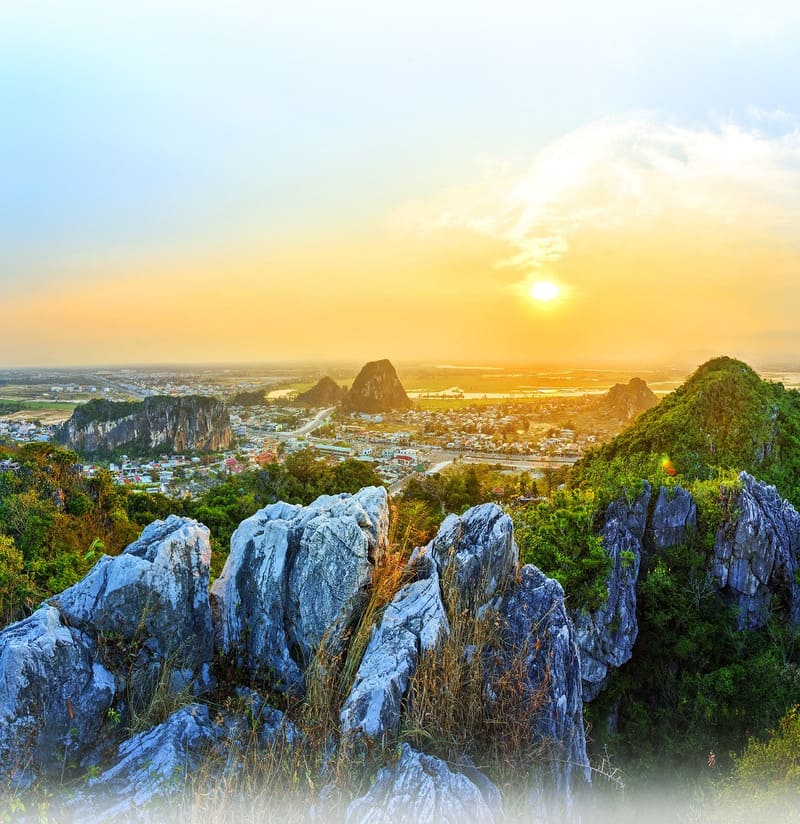
Marble Mountains in Da Nang (Source: Collected)
The Marble Mountains are located about 7 kilometers (approximately 4.3 miles) southeast of Da Nang’s city center, along the coastal route that connects Da Nang with Hoi An. The official address is 81 Huyen Tran Cong Chua Street, Hoa Hai Ward, Ngu Hanh Son District, Da Nang, Vietnam.
Positioned between the East Sea and the inland plains, the site is easy to reach by car, motorbike, bicycle, or taxi. Its location along one of Central Vietnam’s most popular travel corridors makes it a convenient stop for visitors exploring both Da Nang and Hoi An.
At the base of the mountains are traditional stone-carving villages that have operated for centuries, producing marble sculptures and religious artifacts. This long-standing craft tradition, combined with the region’s natural marble deposits, is what led French colonists to name the area the “Marble Mountains.” Although urban development has expanded around the site, the mountains themselves remain largely preserved, offering a peaceful setting with strong spiritual character.
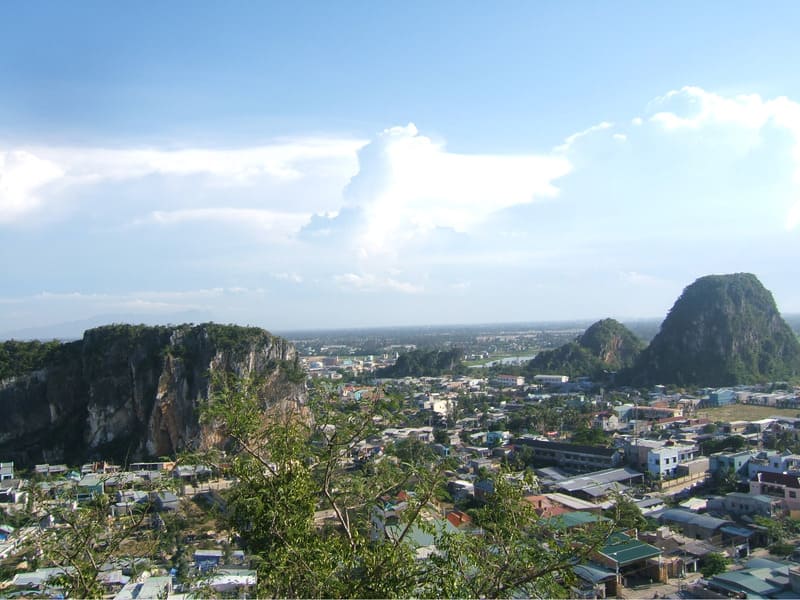
Marble Mountains are located 7 km southeast of Da Nang, near the Hoi An route (Source: Wikipedia)
The Marble Mountains are closely connected to Vietnam’s history, spirituality, and traditional folklore. Beyond their natural formations, these mountains hold a collection of legends and royal stories that have shaped their sacred identity over centuries. These narratives continue to influence how locals and visitors understand the cultural importance of Ngu Hanh Son today.
Ngu Hanh Son consists of five limestone and marble hills, each symbolizing one of the five elements in Eastern philosophy: Water (Thuy), Wood (Moc), Metal (Kim), Earth (Tho), and Fire (Hoa). Scattered throughout the mountains are caves that contain temples, shrines, and religious statues linked to both Buddhism and Hinduism. This concentration of spiritual sites has made the area an important religious center for generations.
Historical records indicate that as early as the 9th century, the Cham people considered the Marble Mountains a sacred pilgrimage destination. After the decline of the Cham Kingdom, the area came under Vietnamese rule and was officially named Ngu Hanh Son during the reign of King Minh Mang. During the French colonial period, the site became known internationally as the “Marble Mountains” due to its geological composition.
In the 20th century, several caves within the mountains were used as shelters and resistance bases during the Vietnam - American War. Although marble quarrying once took place here to support local craftsmanship, all mining activities have since been banned. This decision has helped preserve the natural and spiritual landscape for future generations.
One of the most well-known legends associated with Ngu Hanh Son tells the story of an elderly man living near the coast who encountered a mystical dragon and a golden turtle. After the dragon laid a magical egg, the man was entrusted with its protection. Over time, the egg grew larger and began to rise from the earth, glowing with vibrant colors.
When a fire destroyed the old man’s home, a cave formed inside the egg to shelter him. The egg later cracked open, revealing a fairy maiden believed to be the daughter of the Dragon King. According to legend, she survived within the cave, nourished by milk flowing from stone and fruits brought by forest animals. Eventually, the shell hardened and transformed into a mountain, forming the landscape seen today. The final fate of the fairy maiden remains unknown, adding a sense of mystery to the site.
Ngu Hanh Son is also associated with several stories from Vietnam’s royal history. One legend recounts how Emperor Gia Long sought refuge in the mountains while fleeing the Tay Son forces. In gratitude for the protection he received, he vowed to restore Tam Thai Pagoda. Although he was unable to fulfill this promise himself, he entrusted the task to future rulers.
King Minh Mang later carried out this commitment. During his visits to the Marble Mountains, he ordered the restoration of key pagodas and the construction of stone pathways linking important religious sites. These efforts strengthened the spiritual role of the mountains while improving access for worshippers and pilgrims.
Another well-known story involves Princess Ngoc Hoa, who is said to have left royal life to become a Buddhist nun at Tam Thai Pagoda. She practiced meditation in Huyen Khong Cave, which later became associated with spiritual liberation and inner enlightenment.
Together, these legends and historical accounts elevate the Marble Mountains beyond a purely scenic destination. They reflect a layered heritage of belief, royal influence, and cultural memory, reinforcing Ngu Hanh Son’s role as one of Central Vietnam’s most spiritually significant landmarks.
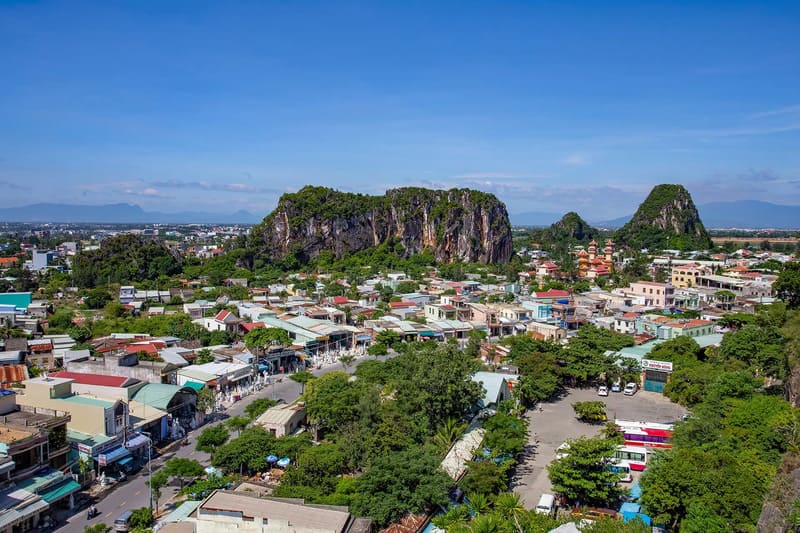
Legends and history define the Marble Mountains’ sacred legacy (Source: Collected)
Visiting the Marble Mountains in Da Nang is affordable and well-organized, with clearly separated entrance fees and optional services. Ticket prices are fixed and apply equally to both local and international visitors.
The overall experience at the Marble Mountains depends greatly on the time of day and the season. Choosing the right timing can help you avoid crowds, reduce heat exposure, and explore the site more comfortably.
Arriving at 7:00 AM, when the site opens, is strongly recommended. Early mornings offer cooler temperatures, quieter surroundings, and better natural light for photography. This is also the best time to explore caves and pagodas without large tour groups.
From mid-morning onward, the site becomes noticeably busier. Temperatures rise, and narrow pathways inside caves can feel crowded. Late afternoon visits are less ideal, as heat often lingers and marble steps may become slippery due to humidity and heavy foot traffic.
Central Vietnam experiences distinct seasonal changes, each affecting visiting conditions differently:
Travel tips:
Learn more: When is the Best Time to Visit Da Nang
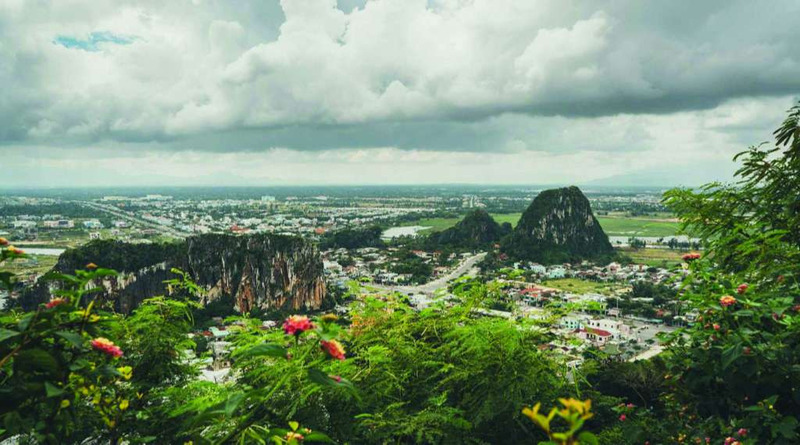
The best time of year to visit Marble Mountains is from February to April (Source: Collected)
The Marble Mountains (Ngu Hanh Son) are located just 8 kilometers southeast of Da Nang’s city center, making them an easy half-day trip for most travelers. Getting there is straightforward, with several transportation options to match different travel styles and budgets.
Taking the bus is the most economical way to reach the Marble Mountains. Buses number 1, 2, 11, and 16 all serve the route between central Da Nang and Ngu Hanh Son.
Staff at the central bus station are familiar with this popular tourist route and can easily point you to the correct bus. While it's budget-friendly, expect limited comfort and some variability in arrival times.
For a faster and more comfortable option, taxis and ride-hailing services like Grab or Xanh SM are widely available in Da Nang.
You can book a ride through mobile apps and see the price upfront, or hail a taxi directly from your hotel. This option is ideal for those traveling with limited time or who prefer door-to-door service.
Travelers seeking a personalized experience often choose to hire a private car with a driver, especially convenient for families or small groups.
This option provides flexibility to stop for photos or other attractions along the way. Many hotels can arrange a car based on your group size, and some drivers may speak English and offer local insights during the ride.
Exploring by motorbike offers freedom and a scenic route along Da Nang’s coastal roads. It’s a popular choice for adventurous travelers.
Motorbike rentals are widely available in the city and often through hotels. Make sure to check for a valid driving license and always wear a helmet. Don’t forget to fuel up before heading out, as rentals typically come with an empty tank.
If you're traveling between Hue and Hoi An, ask your driver to include a stop at the Marble Mountains. This scenic break is often part of custom itineraries and adds cultural depth to the journey. Many tour providers also offer half-day trips from both Da Nang and Hoi An, often including guide services and entrance fees.
Exploring the Marble Mountains is a cultural and spiritual journey through centuries of Vietnamese heritage. Each peak, cave, and pagoda holds a story waiting to be discovered. Below are the top attractions that make this destination one of Da Nang’s most memorable sites.
Thuy Son is the centerpiece of the Marble Mountains and the most developed for tourism. This large marble hill is home to numerous religious and historical landmarks, making it the primary stop for most visitors. Its pathways lead to ancient pagodas, hidden grottoes, and panoramic viewpoints that overlook Non Nuoc Beach and the surrounding landscape.
A network of stone stairways and paths invites exploration of various Buddhist sanctuaries and cave temples. Despite being the most frequented mountain, Thuy Son still retains a tranquil charm, especially in the early morning. From sacred altars to natural rock formations, this mountain encapsulates the essence of the Marble Mountains’ spiritual appeal.
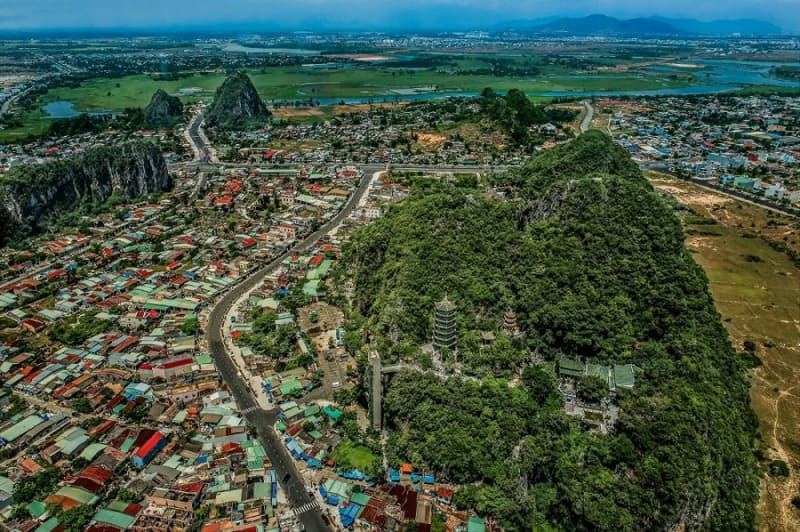
Thuy Son Mountain (Source: Collected)
The elevator at Thuy Son offers an accessible and time-saving option to reach the mid-level plateau of the mountain. It’s particularly useful for visitors with limited mobility, families with children, or anyone looking to bypass the steep staircases without sacrificing the experience.
Once at the top, visitors can easily access Linh Ung Pagoda, Vong Giang Dai, and multiple caves without the physical strain of climbing. The lift blends convenience with design sensitivity, allowing guests to enjoy the beauty of the mountains with greater comfort.
Thuong Thai Peak, the highest point of Thuy Son, offers a commanding view of the coastline, city, and countryside. The path to the top involves a short but steep climb through narrow stone stairs, surrounded by tropical greenery and weathered rocks.
At the summit, visitors are rewarded with one of the most breathtaking 360-degree views in Da Nang. It’s a perfect spot for photography or quiet contemplation. The fresh breeze and expansive horizon make it a highlight for those seeking a deeper connection to nature.
Huyen Khong Cave is a vast cavern bathed in natural light from a circular opening in its ceiling. This illumination creates a mystical atmosphere, highlighting the altars, statues, and incense smoke swirling through the air. It's one of the most photographed and spiritually significant sites on Thuy Son.
Inside the cave, you'll find shrines dedicated to Buddha and various guardian spirits. The peaceful ambiance makes it a favorite for both spiritual visitors and casual tourists. The natural acoustics and lighting offer a unique, serene experience that resonates deeply with many travelers.
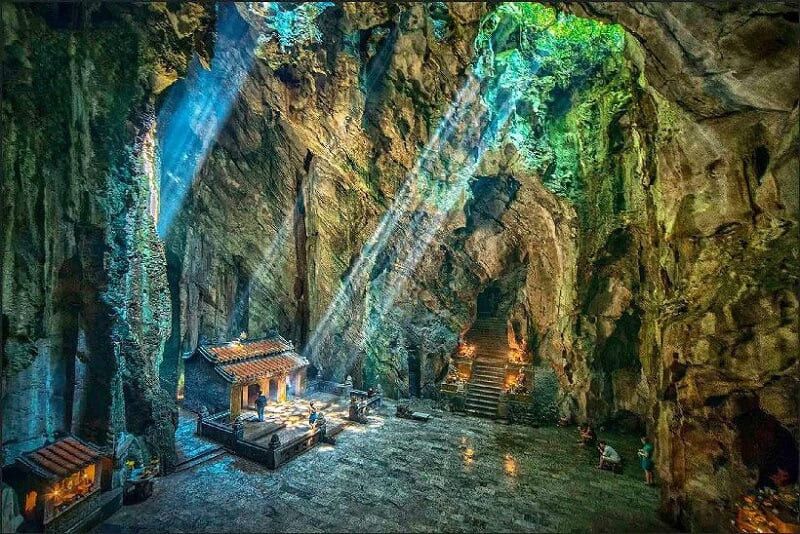
Huyen Khong Cave (Source: Collected)
Am Phu Cave presents a stark contrast to Huyen Khong, offering a darker, more dramatic journey. This cave takes visitors on a symbolic path through Buddhist interpretations of the afterlife, including vivid representations of Hell and karmic consequences.
Deep tunnels, eerie sculptures, and dim lighting evoke a sense of mystery and introspection. Although somewhat unsettling, the cave delivers a powerful cultural narrative about morality and redemption, making it one of the most thought-provoking parts of the Marble Mountains.
Perched gracefully on Thuy Son, Linh Ung Pagoda is a spiritual refuge surrounded by old trees and marble sculptures. The pagoda is known for its intricate architecture, featuring curved roofs, dragon motifs, and ornate altars.
Inside, monks and devotees gather for prayer and meditation, offering visitors a chance to witness authentic spiritual practice. The peaceful surroundings and ocean breeze make it a rejuvenating stop amid the rocky landscape.
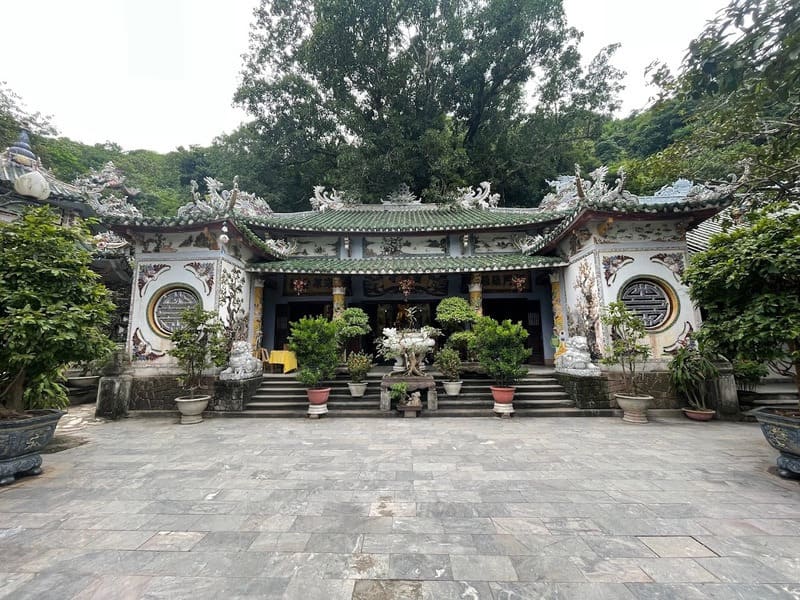
Linh Ung Pagoda in Marble Mountains (Source: Collected)
Built in the 17th century, Tam Thai Pagoda is a cultural landmark with deep historical roots. Its triple gate and symmetrical layout reflect traditional Vietnamese design. Over the centuries, it has undergone several restorations but retains its original charm and sacred role.
Surrounded by pine trees and calm courtyards, the pagoda offers a quiet space for reflection. The tranquil environment, paired with historical significance, makes it a must-see for those interested in Vietnam’s spiritual heritage.
Tang Chon Cave is a lesser-known treasure tucked into Thuy Son’s southern slopes. Though not as large as Huyen Khong, it houses several altars and small statues, making it an intimate place for quiet worship and discovery.
The cave walls are adorned with natural formations and subtle carvings, and the cool interior provides a refreshing break from the sun. Its understated beauty and calm atmosphere make it a rewarding stop for visitors seeking a deeper connection to the site's spiritual roots.
Kim Son lies to the southeast of the Marble Mountains complex and is celebrated for the Quan The Am Pagoda and the cave shrine dedicated to the Bodhisattva of Compassion. The mountain becomes particularly lively during the annual Quan The Am Festival, which attracts thousands of pilgrims.
The cave here features beautiful stalactites and a serene spiritual ambiance. As one of the less-touristed hills, Kim Son offers a quieter and more meditative experience, perfect for visitors looking to escape the crowds and connect with nature and spirituality.
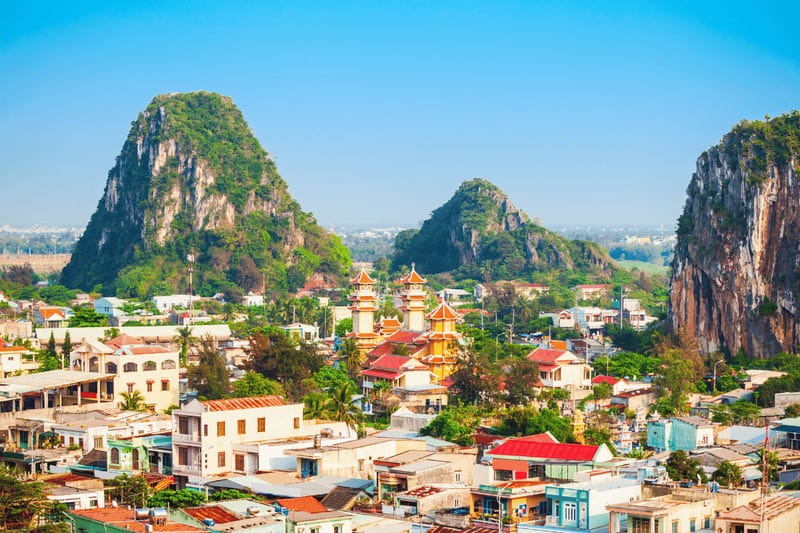
Kim Son Mountain (Source: Collected)
Moc Son is the simplest of the five mountains, known primarily for a single natural white marble formation said to resemble a woman sitting with her child. It’s also home to a few small shrines and caves, offering an escape from the busier parts of the complex.
Though modest in attractions, Moc Son provides a peaceful walking route and a more rugged, untouched feel. The mountain's understated charm lies in its natural simplicity, making it ideal for those who appreciate quiet exploration.
Hoa Son is split into two parts, Yin and Yang Hoa Son. The area is home to a small temple and a few caves, including one that houses Buddhist altars. The mountains are surrounded by thick vegetation and mossy stone paths, which create a secluded, almost mystical atmosphere.
Due to its relatively undeveloped trail system, Hoa Son is favored by adventurous visitors seeking a more authentic and off-the-beaten-path experience. It also offers a glimpse into the raw beauty of the Marble Mountains before tourism infrastructure expanded.
Vong Giang Dai is a scenic viewpoint located on Thuy Son’s summit. From this open-air pavilion, visitors can admire sweeping views of the Co Co River, the coastal plains, and the surrounding mountains.
The view is particularly stunning at sunrise or sunset, when golden light bathes the landscape. It's an ideal spot to rest, take photos, or simply enjoy the harmony between nature and spiritual architecture that defines the Marble Mountains.
At the base of the Marble Mountains lies Non Nuoc Stone Carving Village, a community with a centuries-old tradition of sculpting marble into works of art. Visitors can watch artisans handcraft intricate statues, religious icons, and decorative pieces using techniques passed down through generations.
This village is not only a cultural experience but also a great place to purchase unique souvenirs. Every piece tells a story of craftsmanship and cultural pride, making it a perfect conclusion to a visit to the Marble Mountains.
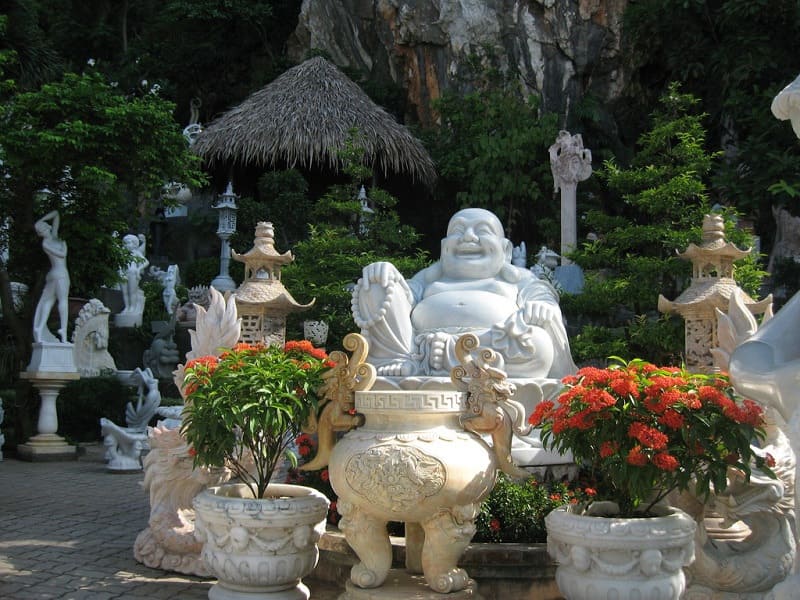
Non Nuoc Stone Carving Village (Source: Collected)
Planning ahead will help you enjoy the Marble Mountains more comfortably and efficiently. The following tips are based on practical travel experience and common challenges visitors face at the site.
Comfort and respect are key. Since many areas within the Marble Mountains are sacred, modest clothing is expected. Wear lightweight, breathable clothes that cover your shoulders and knees. A wide-brimmed hat, sunglasses, and sunscreen are recommended for sun protection. Footwear should have good grip, as the marble steps and cave interiors can be slippery even in dry conditions.
Yes, the Marble Mountains are accessible for visitors of all ages. For elderly travelers or families with young children, the elevator on Thuy Son offers an easy way to reach the main attractions without climbing stairs. However, some areas still require walking and navigating uneven paths, so caution and assistance may be needed. Bringing water and taking breaks along the way will ensure a comfortable visit.
Absolutely. Photography is allowed and highly encouraged throughout the Marble Mountains. From panoramic viewpoints to spiritual cave sanctuaries and ancient pagodas, the site offers a wide variety of stunning subjects. Be respectful when photographing areas of worship or when monks and locals are praying. Using a flash in caves may disturb others, so opt for natural lighting when possible.
Crowds vary by time of day and season. Mornings (especially right after opening at 7:00 AM) are typically quieter, offering a more peaceful experience. By late morning and early afternoon, the site can become busier, especially during weekends, holidays, and peak travel seasons such as Tet (Lunar New Year). Visiting on a weekday and arriving early will help you avoid most of the crowds.
A full visit typically takes 2 to 3 hours. This allows enough time to explore the main highlights on Thuy Son, including Huyen Khong Cave, Linh Ung Pagoda, and Thuong Thai Peak, as well as a stop at the Non Nuoc Stone Carving Village. Those with limited time can opt for a 1-hour express tour focusing on top sites accessible by elevator. For a deeper spiritual or photographic journey, allow up to 4 hours.
The Marble Mountains in Da Nang combine natural beauty, spiritual depth, and cultural heritage. You’ll find ancient pagodas, hidden caves, scenic viewpoints, and traditional stone-carving villages. It’s a peaceful yet enriching destination for those seeking history, reflection, or simply a scenic escape.
For a personalized itinerary and to include the Marble Mountains in your Central Vietnam journey, reach out to Your Vietnam Travel. Our local experts can help you plan a meaningful and seamless experience tailored to your interests. Contact us today to start crafting your perfect Vietnam adventure!


 Vietnam Tours
 Cambodia Tours
 Laos Tours
 Thailand Tours
 Multi-Country Tours