Saigon Central Post Office is one of the most iconic landmarks in Ho Chi Minh City and a popular stop for visitors exploring the historic center of District 1. Built in the late 19th century during the French colonial period, the building stands out for its elegant architecture while continuing to operate as an active post office today.
In this guide, Your Vietnam Travel introduces everything you need to know before visiting Saigon Central Post Office, including its location, opening hours, historical background, key architectural highlights, and useful tips to help you make the most of your visit.
Saigon Central Post Office is located in the heart of District 1, Ho Chi Minh City, one of the city’s most historic and vibrant areas. The building stands directly opposite the Notre-Dame Cathedral Basilica of Saigon, making it a well-known landmark for visitors exploring downtown.
This area forms part of Saigon’s historic colonial quarter, where many iconic French-era buildings were constructed in the late 19th century. Several major attractions are within easy walking distance, including Independence Palace, Ho Chi Minh City Opera House, and Nguyen Hue Walking Street.
The central location and free entry make Saigon Central Post Office a convenient stop during a walking tour of District 1 and one of the most accessible landmarks in Ho Chi Minh City.
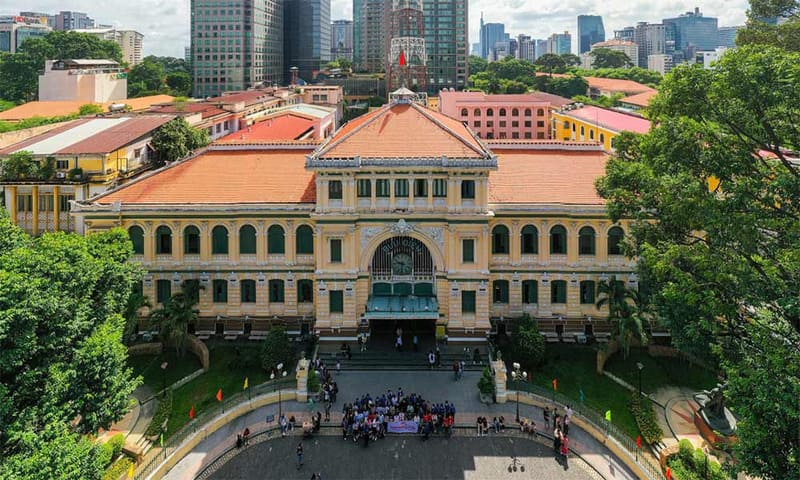
Saigon Central Post Office sits in District 1 opposite Notre-Dame (Source: Collected)
Saigon Central Post Office traces its roots to the French colonial era, when Saigon was developed as an administrative and commercial center of French Indochina. In the 1860s, the French began building a formal communication network in the city, starting with early telegraph and postal facilities that later evolved into a larger centralized post office.
The landmark building visitors see today was constructed between 1886 and 1891. It was designed following the style of European public architecture of the time, combining practicality with elegant design to accommodate the growing demand for mail and telegraph services. The project is often associated with Gustave Eiffel or engineers connected to his company, although historical sources differ on the exact attribution. The building clearly reflects late nineteenth century European industrial design, particularly in its steel framework and spacious hall.
Over the decades, the post office remained a major communication center through several important historical periods, including the late colonial years, wartime, and the period following reunification. Since 1975, the building has continued operating as a working post office while also becoming one of Ho Chi Minh City’s most visited historical landmarks. Preservation and restoration efforts have helped maintain its original architectural character.
Quick timeline:
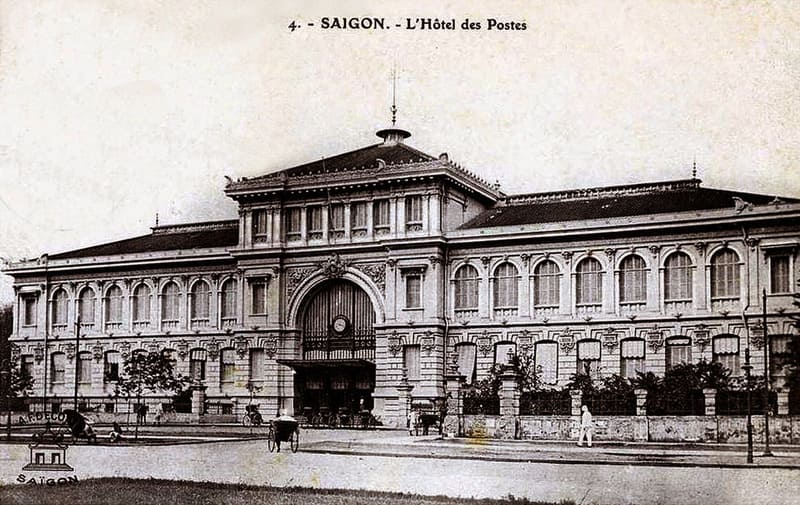
Built 1886 - 1891, Saigon Post Office reflects French design (Source: Collected)
Saigon Central Post Office is admired for its distinctive blend of French colonial architecture and subtle Asian design influences. The building feels both monumental and welcoming, with a façade designed to impress and an interior hall that still functions as a real post office today.
The exterior reflects classic French colonial style, recognizable by its warm yellow façade, arched doors and windows, and decorative details across the front elevation.
Look out for these key features:
The best way to appreciate the façade is to step back toward the square facing the building, where the full symmetry and proportions are easy to see.
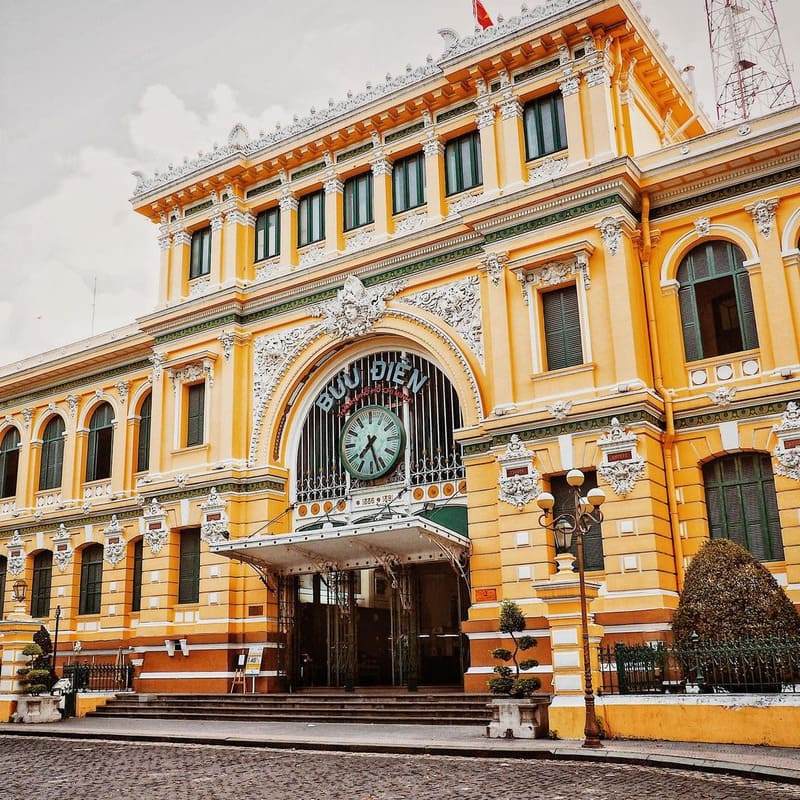
French colonial façade with clock, arches, and historic details (Source: Collected)
Inside, the post office opens into a spacious central hall with a vaulted, arched ceiling that stretches the length of the building. The structure is supported by rows of pillars along both sides, giving the interior the atmosphere of a European public hall from the late 1800s.
Don’t miss these interior highlights:
The combination of scale, light, and historic elements makes the interior one of the most photogenic spaces in downtown Ho Chi Minh City, especially when it is quieter in the morning.
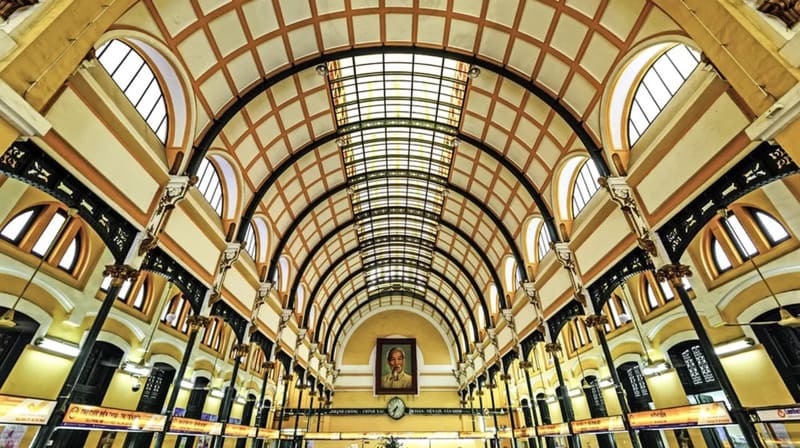
Historic interior with maps, portraits, and classic counters (Source: Collected)
A visit to Saigon Central Post Office offers more than a quick photo stop. The historic building allows travelers to admire colonial architecture, experience a working post office, and enjoy a unique glimpse into Saigon’s past. Here are several activities to enjoy during your visit.
One of the main reasons travelers visit Saigon Central Post Office is to appreciate its well-preserved colonial design. The building showcases elegant French architectural elements combined with local influences.
Outside, notice the yellow façade, arched windows, and decorative reliefs that define many colonial-era buildings in Ho Chi Minh City. The large clock above the entrance and engraved names of famous scientists connected to telegraph technology add to the building’s historical character.
Inside, the spacious hall features a vaulted ceiling supported by rows of pillars, creating a grand perspective from the entrance to the far end of the building. Historic details such as the large maps and vintage counters make the space feel like a step back in time.
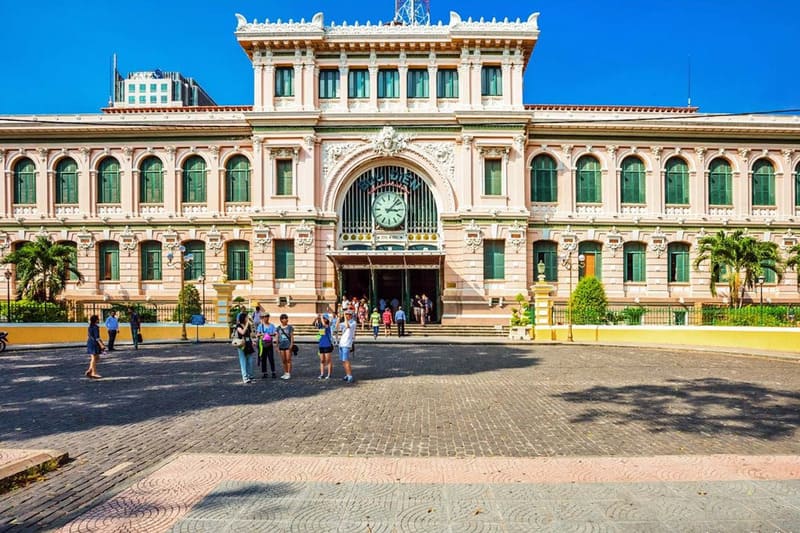
Admire the historic colonial architecture of the post office (Source: Collected)
Saigon Central Post Office remains a fully functioning postal service center, allowing visitors to send letters and postcards to destinations around the world.
Buying a postcard and mailing it directly from this historic building is a memorable travel experience. It also provides a nostalgic alternative to modern digital communication.
Postal counters inside the hall assist with international mailing, and stamps can be purchased on site.
Several small shops inside the post office sell souvenirs, postcards, and stamps that reflect Vietnamese culture and famous landmarks.
Popular items include:
These stalls offer convenient options for visitors looking for meaningful keepsakes from their trip.
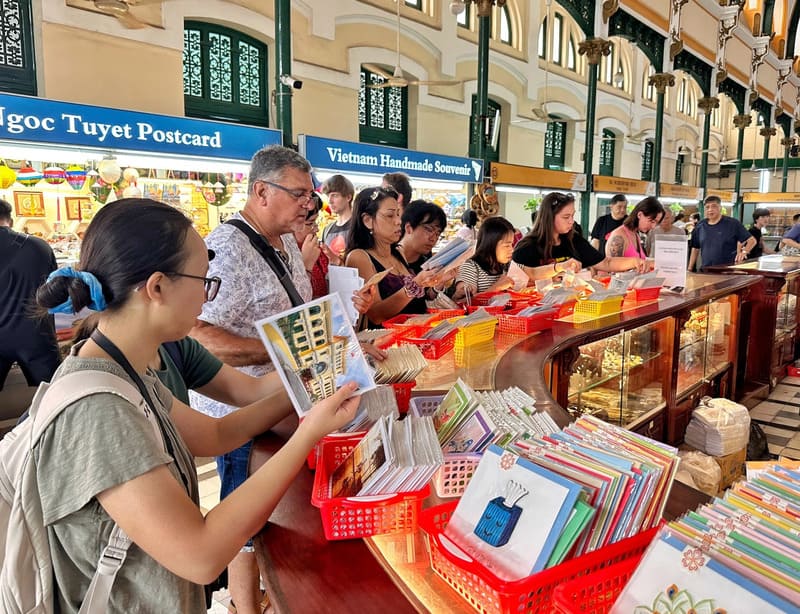
Find postcards, stamps, and souvenirs inside the post office (Source: Collected)
The interior of Saigon Central Post Office provides one of the most photogenic settings in downtown Ho Chi Minh City. The long perspective of the hall, combined with natural light and historic design elements, creates a beautiful backdrop for photography.
Visitors often photograph:
Morning hours usually provide the best lighting and fewer crowds for photos.
Learn more: 25 Best Things to Do in Ho Chi Minh City (Saigon)
Saigon Central Post Office sits in District 1, the central area of Ho Chi Minh City, making it easy to reach from most parts of the city. Several transportation options are available for visitors, depending on budget, convenience, and travel style.
Taxis and ride-hailing services such as Grab are the most convenient way to reach Saigon Central Post Office. Simply enter “Saigon Central Post Office” or the address 2 Cong Xa Paris Street in the app, and drivers will drop you off directly in front of the building.
Estimated travel cost:
This option is particularly practical for travelers arriving from the airport or districts outside the city center.
Motorbikes are the most common way to travel in Ho Chi Minh City. Visitors can rent a motorbike or scooter from rental shops across the city for flexible exploration.
Estimated cost:
Traffic in Ho Chi Minh City can be busy, so helmets are essential and cautious driving is recommended.
Walking is a convenient option for travelers already exploring District 1. Many famous landmarks are located within a short distance of the post office.
Approximate walking times:
A walking route also allows visitors to admire colonial architecture and experience the lively atmosphere of downtown Saigon.
Public buses provide the most affordable transportation option. Several routes stop near Cong Xa Paris Street, only a short walk from the post office.
Common bus routes include:
The nearest stop is located near Notre-Dame Cathedral, approximately one minute on foot from the post office.
For travelers unfamiliar with the bus system, using Google Maps or the BusMap mobile app can help identify the correct route and stop.
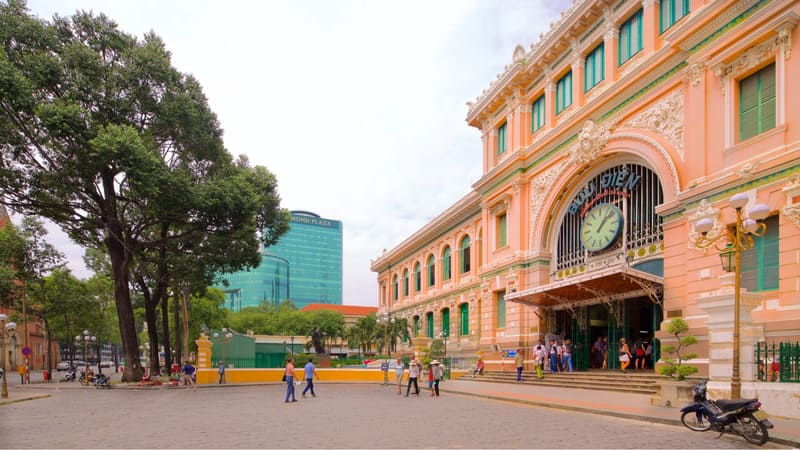
Saigon Central Post Office is easy to visit (Source: Collected)
Saigon Central Post Office is easy to visit, but a few simple tips can help you enjoy the experience more comfortably and make the most of your time at this historic landmark.
Saigon Central Post Office sits in the most walkable part of District 1, surrounded by landmarks that showcase Ho Chi Minh City’s colonial architecture, modern city life, and key historical sites. These attractions are easy to combine into one half-day itinerary on foot.
Just across the street from the post office, Notre-Dame Cathedral is one of the city’s most iconic French-era buildings. Its red-brick façade, twin bell towers, and classic neo-Romanesque design make it a popular stop for architecture lovers and photographers.
Tip: The surrounding square is a great spot for wide-angle photos that capture both the cathedral area and the historic streetscape nearby.
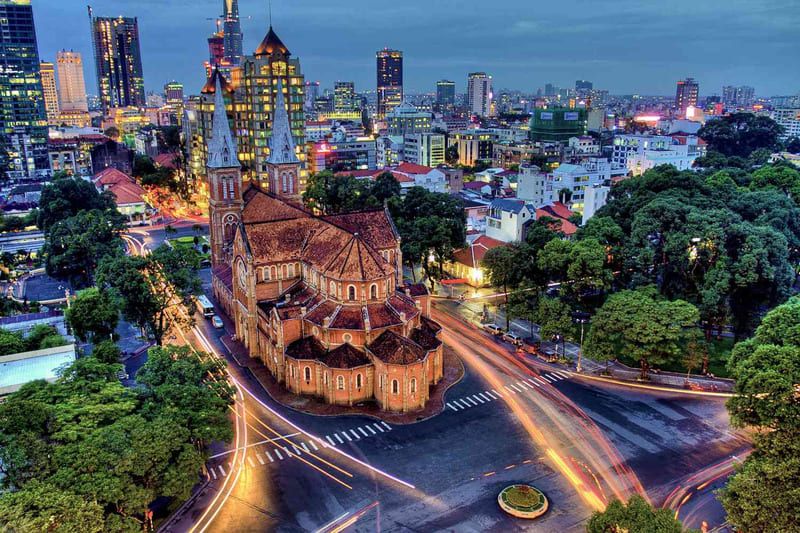
Notre-Dame Cathedral Basilica of Saigon (Source: Collected)
A short walk away, Independence Palace is one of Vietnam’s most important historical landmarks. It played a major role in the country’s modern history and is well known for its preserved rooms, halls, and underground areas that help visitors understand the events of the 20th century.
Plan at least 60 to 90 minutes if you want to explore the interiors at a relaxed pace.
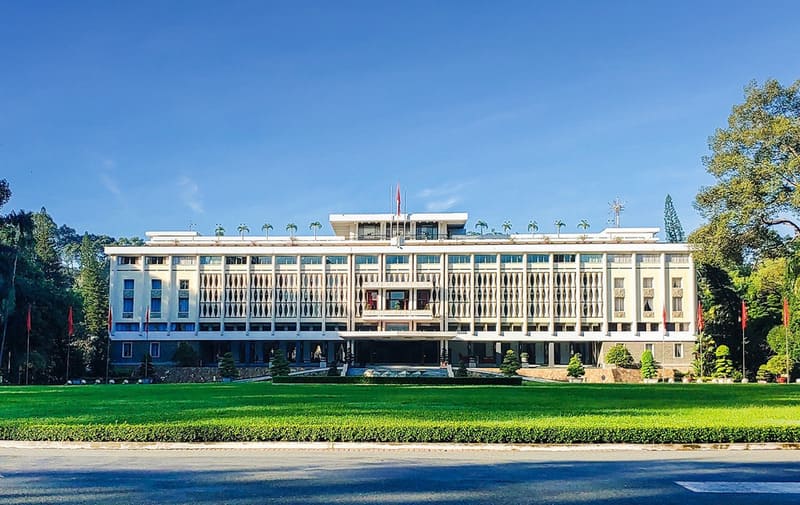
Independence Palace (Source: Collected)
For local energy, food, and shopping, Ben Thanh Market is one of the most famous markets in the city. You can browse souvenirs, textiles, and small gifts, then stop for Vietnamese street food and local snacks inside the market area.
Tip: Prices are often negotiable for souvenirs, so it helps to compare a few stalls before buying.
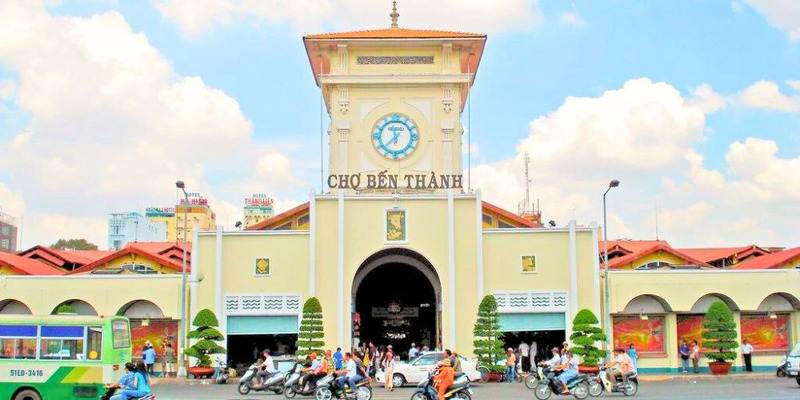
Ben Thanh Market (Source: Collected)
The Ho Chi Minh City Opera House is a beautiful example of French colonial architecture and a highlight of downtown’s elegant boulevard area. Even without attending a show, the building is worth seeing for its ornate façade and European-inspired design.
Visiting note: The interior is usually accessible primarily during performances, but the exterior is a popular photo stop at any time.
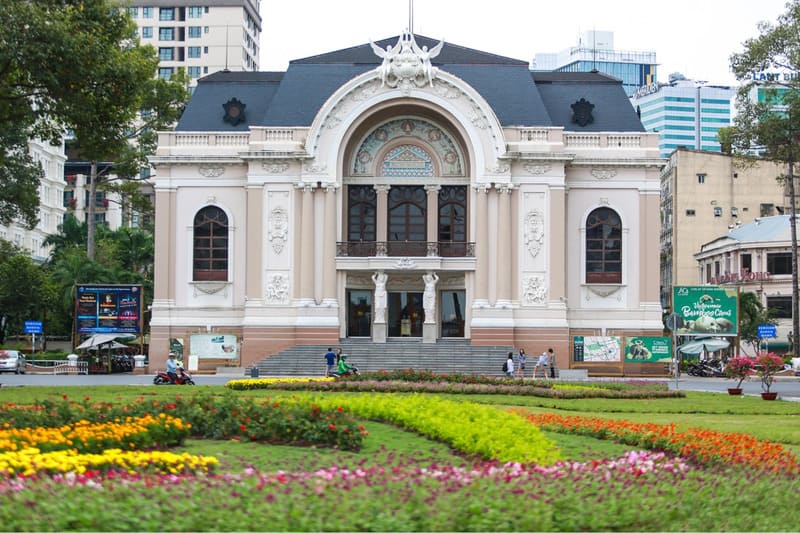
Ho Chi Minh City Opera House (Source: Collected)
To experience the modern side of the city, head to Nguyen Hue Walking Street, a wide pedestrian boulevard lined with cafés, shops, and landmark buildings. It is especially lively in the evening, when locals gather for street performances, photos, and casual strolls.
Tip: Visit after sunset for the best atmosphere, then continue to nearby riverfront areas for city views.
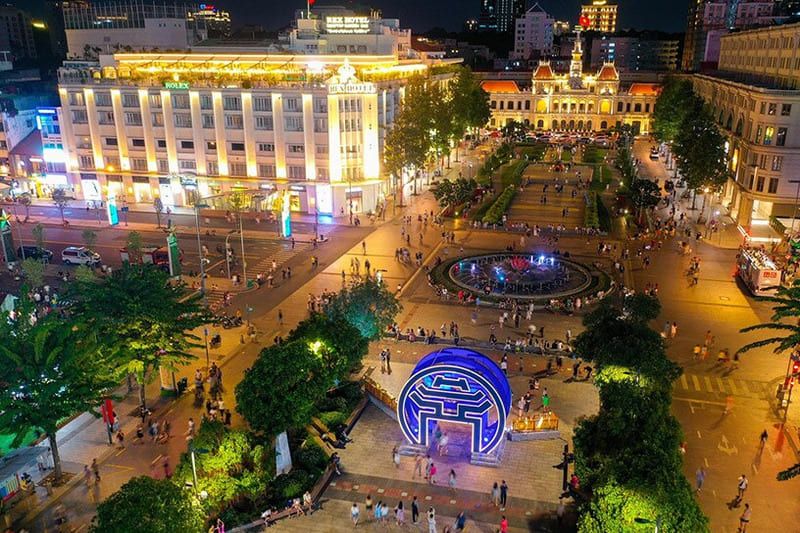
Nguyen Hue Walking Street (Source: Collected)
Most visitors spend 20 to 30 minutes exploring the building. This allows enough time to admire the architecture, take photos, browse souvenir stalls, and send postcards. Travelers interested in architecture or photography may stay slightly longer, especially when combining the visit with nearby attractions such as Notre-Dame Cathedral or Book Street.
Yes, photography is allowed inside the building. The spacious hall, arched ceiling, and historic maps make it one of the most photogenic interiors in District 1. Visitors should remain respectful since the building still operates as a working post office. Avoid blocking service counters or disrupting staff while taking photos.
Yes. Saigon Central Post Office continues to operate as an active postal service center. Visitors can purchase postcards and stamps inside the building and send mail internationally through the service counters. Sending a postcard from this historic landmark is a memorable travel experience in Ho Chi Minh City.
Early morning is generally the best time to visit. The building is quieter, lighting is better for photos, and tour groups usually arrive later in the day. Late afternoon can also be pleasant, especially if you plan to continue exploring nearby attractions in District 1 afterward.
Public restrooms are limited inside the building and may not always be available for visitors. Many travelers use nearby cafés, restaurants, or shopping centers in District 1, which typically provide restroom facilities.
Saigon Central Post Office is one of Ho Chi Minh City’s most iconic landmarks, known for its elegant colonial architecture and central location in District 1. It can be easily combined with nearby attractions such as Notre-Dame Cathedral, Independence Palace, Nguyen Hue Walking Street, and Ben Thanh Market.
To explore the culture, history, and hidden corners of Ho Chi Minh City more deeply, Your Vietnam Travel offers tailor-made journeys designed to help travelers experience the best of the city and beyond. Contact our team to start planning your personalized travel experience.



 Vietnam Tours
 Cambodia Tours
 Laos Tours
 Thailand Tours
 Multi-Country Tours