Southern Vietnam is one of the most rewarding regions to explore in Vietnam, especially for first-time visitors who want to combine vibrant city life, river culture, tropical beaches, local food, and war history in one journey.
Centered around Ho Chi Minh City and the Mekong Delta, this region offers a wide range of travel experiences, from historical landmarks and floating markets to island escapes in Phu Quoc and Con Dao. It is also a practical starting point for many Vietnam itineraries thanks to strong flight connections, diverse hotels, and easy access to nearby day trips.
This Southern Vietnam guide will help you understand the best places to visit, top things to do, must-try foods, best time to travel, suggested itineraries, and essential tips for planning a smooth trip.
Southern Vietnam is located in the lower part of the country, bordered by Cambodia to the northwest, the Gulf of Thailand to the west, and the East Sea to the east and southeast. Ho Chi Minh City is the main gateway to the region and the most common starting point for international travelers.
Geographically, Southern Vietnam is usually divided into two main areas: Southeast Vietnam and the Mekong Delta. Together, they offer a wide range of travel experiences, from urban sightseeing and historical day trips to river cruises, floating markets, tropical islands, forests, and coastal escapes.
For most visitors, a practical Southern Vietnam route starts in Ho Chi Minh City, continues to the Mekong Delta, and then adds a beach extension such as Phu Quoc, Con Dao, Vung Tau, or Ho Tram depending on the trip length and travel style.
If you are still comparing travel styles, landscapes, and experiences between different regions, this guide to North vs South Vietnam can help you decide which part of the country fits your trip best.
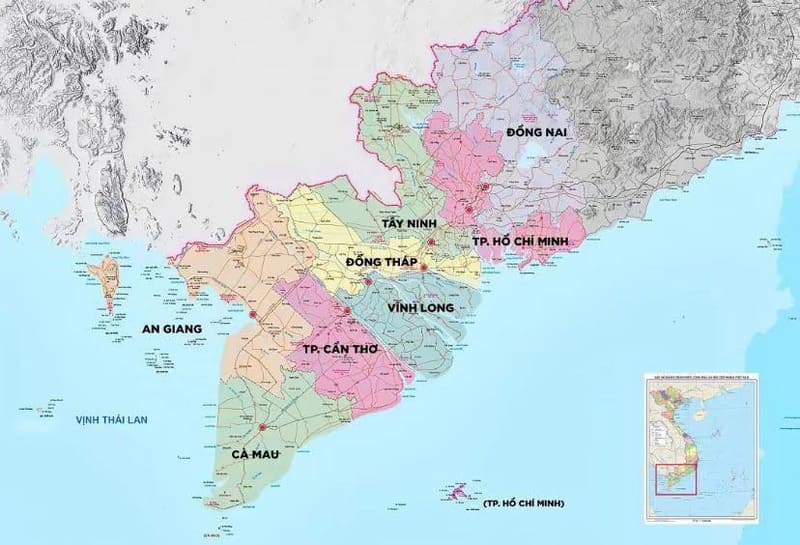
Map overview of Southern Vietnam (Source: Collected)
Southeast Vietnam includes Ho Chi Minh City and nearby provinces such as Tay Ninh, Dong Nai, Binh Duong, Binh Phuoc, and Ba Ria-Vung Tau. This is the most urbanized and economically active part of Southern Vietnam.
For travelers, the Southeast is best for city sightseeing, historical attractions, short beach breaks, spiritual sites, and nature escapes. Ho Chi Minh City is the key base, with popular day trips to the Cu Chi Tunnels, Cao Dai Holy See in Tay Ninh, Ba Den Mountain, Vung Tau, Ho Tram, and Cat Tien National Park.
This area is ideal if you want convenient transport, good hotels, nightlife, restaurants, museums, and easy access to nearby attractions without spending too much time on the road.
The Mekong Delta is the river-rich region southwest of Ho Chi Minh City. It includes destinations such as Can Tho, Ben Tre, Tien Giang, Vinh Long, An Giang, Dong Thap, Soc Trang, Bac Lieu, Ca Mau, and Kien Giang.
Known as Vietnam’s “rice bowl,” the Mekong Delta is famous for floating markets, small canals, fruit orchards, traditional villages, Khmer temples, wetland forests, and a slower rhythm of life. It is one of the best places in Vietnam to experience local river culture.
Many travelers visit the Mekong Delta as a day trip from Ho Chi Minh City, but staying overnight in Can Tho or another riverside destination gives you a much better experience, especially if you want to visit Cai Rang Floating Market early in the morning.
Ho Chi Minh City, still often called Saigon by locals, is the best starting point for a Southern Vietnam itinerary. It is energetic, modern, historical, and full of contrasts. You will find French colonial buildings, war museums, busy local markets, rooftop bars, street food stalls, shopping malls, and narrow alleys filled with daily life.
Key places to visit include the War Remnants Museum, Reunification Palace, Saigon Central Post Office, Notre Dame Cathedral, Ben Thanh Market, Nguyen Hue Walking Street, and Cholon, the city’s Chinatown. For a wider city view, you can visit Bitexco Financial Tower or Landmark 81.
Ho Chi Minh City is also a strong food destination. From com tam and banh mi to hu tieu and late-night street food, it is one of the easiest places to taste Southern Vietnamese cuisine.
For first-time visitors, 2 to 3 nights in Ho Chi Minh City is a good starting point.
If you plan to spend several days in the city, this guide to the best things to do in Ho Chi Minh City covers museums, markets, nightlife, local food, and cultural attractions in more detail.
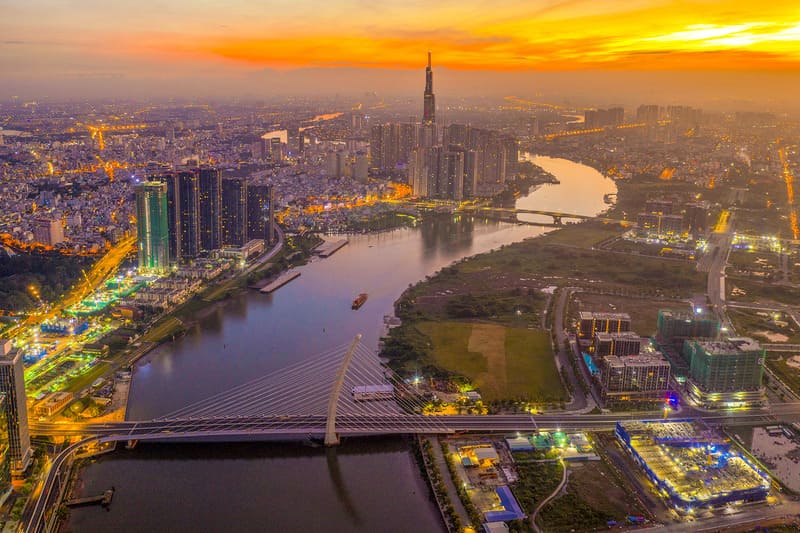
Ho Chi Minh City is the gateway to Southern Vietnam (Source: Collected)
The Cu Chi Tunnels are one of the most important historical sites near Ho Chi Minh City. This underground tunnel network was used during the Vietnam War and gives visitors a closer look at the resilience, survival strategies, and wartime conditions of local people and soldiers.
A typical visit includes walking through preserved tunnel sections, seeing hidden entrances, learning about underground living areas, and understanding how the tunnel system supported communication, storage, medical care, and defense.
There are two main tunnel sites: Ben Dinh and Ben Duoc. Ben Dinh is more commonly visited and easier for standard tours, while Ben Duoc is often considered more authentic and less crowded.
Cu Chi can be visited as a half-day trip from Ho Chi Minh City or combined with Tay Ninh and the Cao Dai Holy See for a full-day excursion.
Travelers interested in wartime history should consider visiting the Cu Chi Tunnels, one of the most important historical attractions near Ho Chi Minh City.
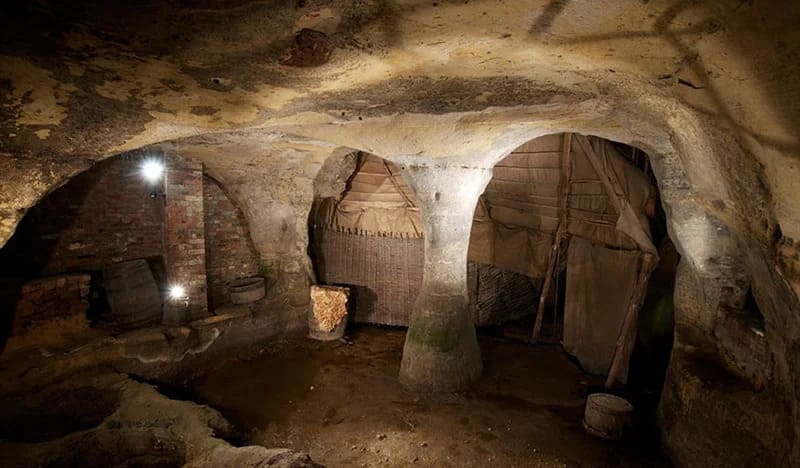
Cu Chi Tunnels offer a powerful wartime history stop (Source: Collected)
The Mekong Delta is one of the most distinctive regions in Vietnam. Instead of high-rise skylines and fast city traffic, you will find waterways, rice fields, fruit gardens, small villages, floating markets, and local life shaped by the river.
The best way to experience the Mekong Delta is by boat. Depending on your route, you can cruise through narrow canals, visit coconut workshops, stop at fruit orchards, see traditional houses, and enjoy local meals made with freshwater fish, herbs, vegetables, and tropical fruits.
If you have limited time, a day trip from Ho Chi Minh City to Ben Tre or My Tho can give you a short introduction. If you want a deeper experience, plan 2 to 3 days and include Can Tho, Cai Rang Floating Market, An Giang, or Dong Thap.
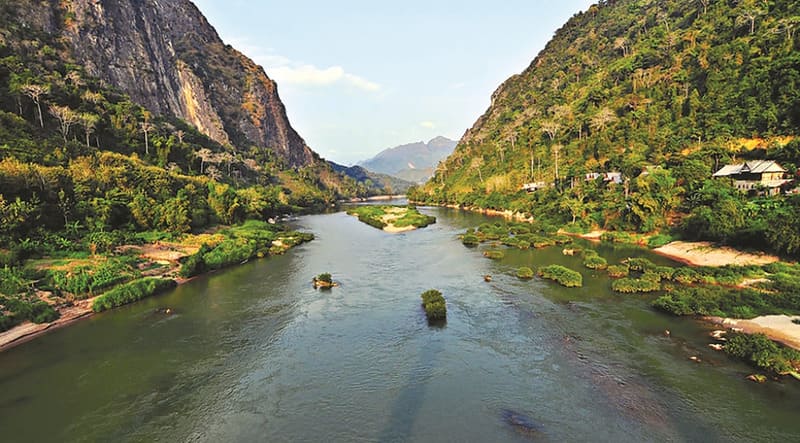
Mekong Delta (Source: Collected)
Can Tho is the main city of the Mekong Delta and one of the best places to stay overnight in the region. It is most famous for Cai Rang Floating Market, where boats gather early in the morning to sell fruits, vegetables, noodles, coffee, and other goods directly on the river.
Besides the floating market, Can Tho also offers Ninh Kieu Wharf, local night markets, riverside restaurants, Binh Thuy Ancient House, small canals, and nearby fruit gardens. A morning boat tour is the highlight, but an evening walk along the waterfront is also pleasant.
Can Tho works well for travelers who want a more complete Mekong Delta experience rather than a rushed day trip. One night is enough for the floating market, but two nights allow a more relaxed pace.
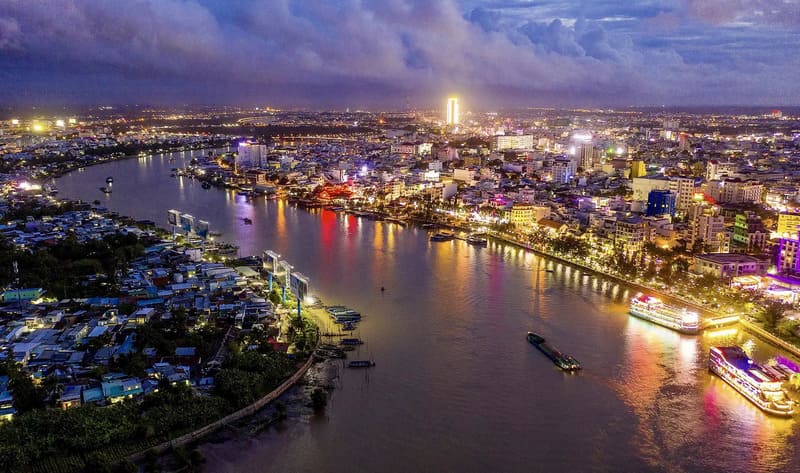
Can Tho is the best base for Cai Rang Floating Market (Source: Collected)
Ben Tre is often called the Coconut Capital of Vietnam and is one of the most accessible Mekong Delta destinations from Ho Chi Minh City. It is a good choice for travelers who want peaceful canals, local workshops, orchards, and a softer introduction to delta life.
A typical Ben Tre experience includes a boat ride through coconut-lined waterways, a rowing sampan through narrow canals, visits to coconut candy workshops, local homes, fruit gardens, and sometimes cycling through villages.
Ben Tre is less urban than Can Tho and easier to combine with a day trip or short overnight trip. It is especially suitable for families, couples, and travelers who prefer gentle cultural experiences.
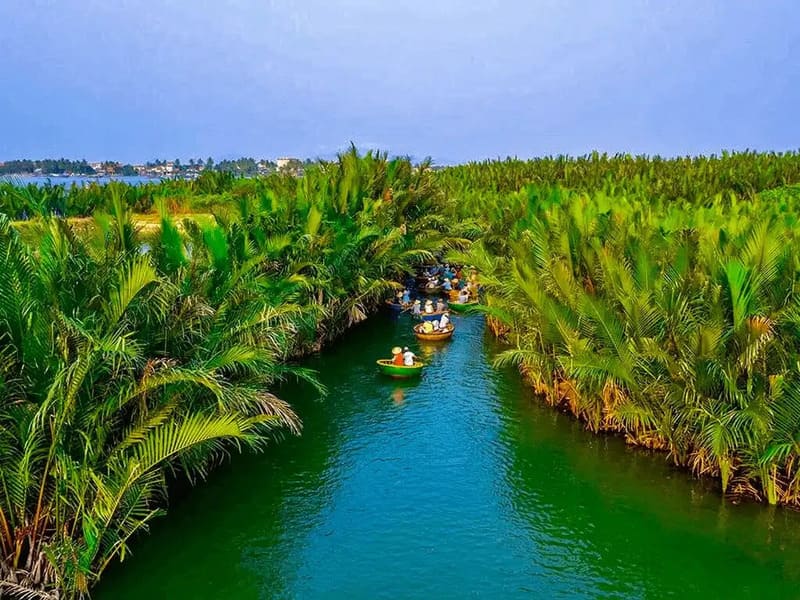
Ben Tre is known for peaceful coconut-lined canals (Source: Collected)
Phu Quoc is Vietnam’s largest island and one of the most popular beach destinations in Southern Vietnam. Located in the Gulf of Thailand, it is known for sandy beaches, warm waters, seafood, resorts, island-hopping tours, and relaxed coastal atmosphere.
Popular places include Long Beach, Sao Beach, Ong Lang Beach, An Thoi Islands, Phu Quoc National Park, Ham Ninh Fishing Village, Phu Quoc Night Market, and the southern cable car area. Travelers can swim, snorkel, visit pepper farms and fish sauce producers, or simply relax at a beach resort.
Phu Quoc is a good choice after Ho Chi Minh City and the Mekong Delta if you want a beach extension. Plan at least 3 nights if you want time to relax rather than just check off attractions.
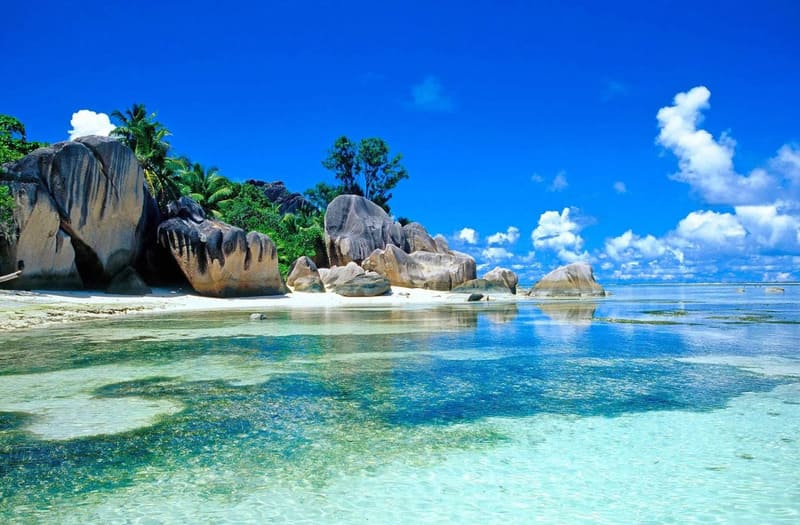
Phu Quoc is Southern Vietnam’s top beach escape (Source: Collected)
Con Dao is quieter, more remote, and more nature-focused than Phu Quoc. The islands are known for pristine beaches, coral reefs, forested hills, marine life, and powerful historical sites.
Con Dao Prison and the Tiger Cages are important places to learn about Vietnam’s colonial and wartime history. On the natural side, visitors can explore Con Dao National Park, go snorkeling or diving, relax on beaches such as Dam Trau, and learn about sea turtle conservation during the right season.
Con Dao is ideal for travelers who want a peaceful island escape with history and nature. It is less commercial than Phu Quoc and better suited to those who prefer quiet scenery over large-scale entertainment.
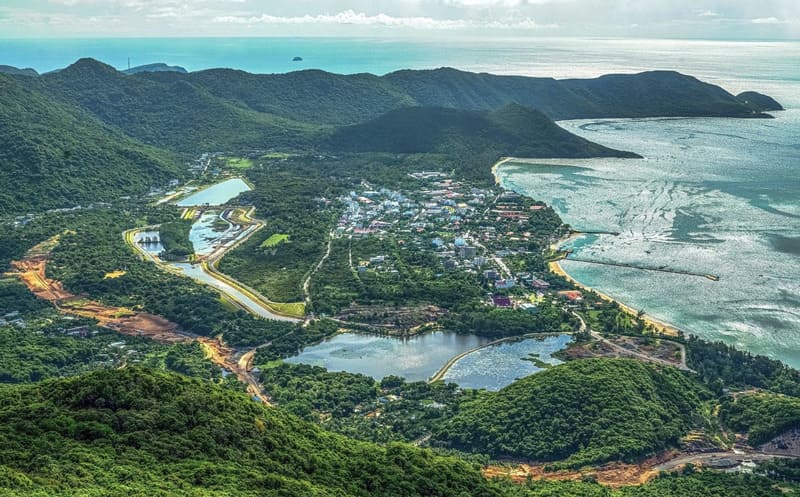
Con Dao is ideal for quiet beaches and nature (Source: Collected)
Vung Tau and Ho Tram are the easiest beach escapes from Ho Chi Minh City. Vung Tau is a lively coastal city popular with locals on weekends, while Ho Tram is quieter and better known for resorts, beaches, golf, and relaxation.
In Vung Tau, highlights include Back Beach, Front Beach, the Christ the King statue, Vung Tau Lighthouse, seafood restaurants, and banh khot. Ho Tram is better for travelers who want a more resort-style beach stay, with nearby options such as Binh Chau Hot Springs and Binh Chau-Phuoc Buu Nature Reserve.
These destinations are best for short breaks from Ho Chi Minh City. They are convenient, but they do not offer the same island atmosphere as Phu Quoc or Con Dao.
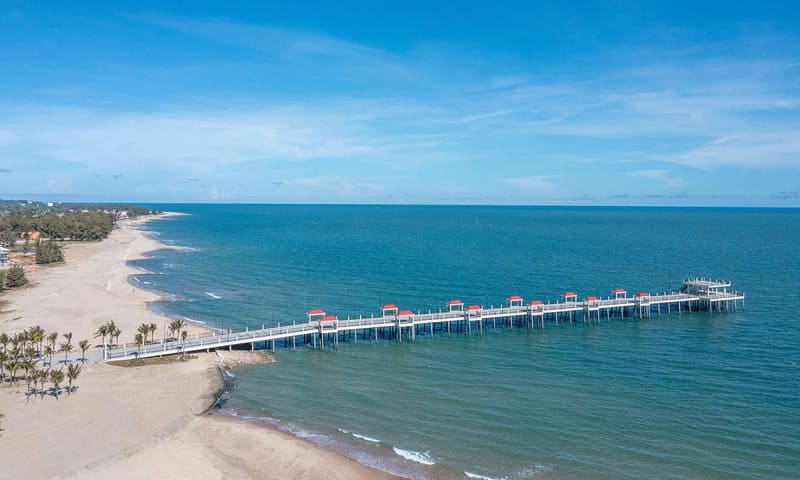
Vung Tau and Ho Tram are easy beach breaks from Saigon (Source: Collected)
Tay Ninh is a rewarding day trip from Ho Chi Minh City, especially if you are interested in religion, mountain views, and local culture. The province is best known for Cao Dai Holy See and Ba Den Mountain.
Cao Dai Holy See is the spiritual center of Caodaism, a religion founded in Southern Vietnam that blends elements from several belief systems. Visitors can observe the colorful architecture and, if timed well, a prayer ceremony.
Ba Den Mountain, also called Black Virgin Mountain, is the highest peak in Southern Vietnam. Travelers can hike or take a cable car to enjoy panoramic views, visit temples, and explore the mountain complex.
Tay Ninh can be combined with the Cu Chi Tunnels for a full-day trip from Ho Chi Minh City.
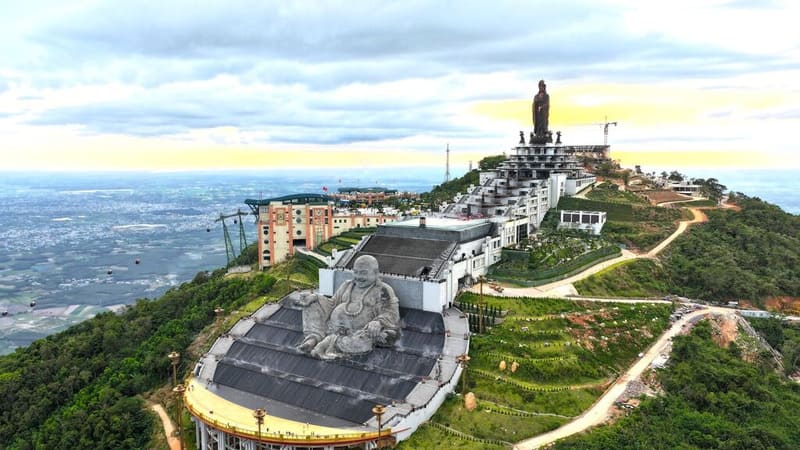
Tay Ninh combines mountain views and local culture (Source: Collected)
Cat Tien National Park is one of the best nature escapes in Southern Vietnam. Located around a few hours from Ho Chi Minh City, it protects tropical forest, wetlands, wildlife habitats, and diverse birdlife.
Activities include jungle trekking, cycling, night safari tours, birdwatching, boat trips, and visits to Bau Sau, also known as Crocodile Lake. The park is a good option for travelers who want to step away from cities and beaches and experience Vietnam’s biodiversity.
Cat Tien is best visited as a 2-day or 3-day trip. It is more suitable for active travelers, families with older children, photographers, and nature lovers.
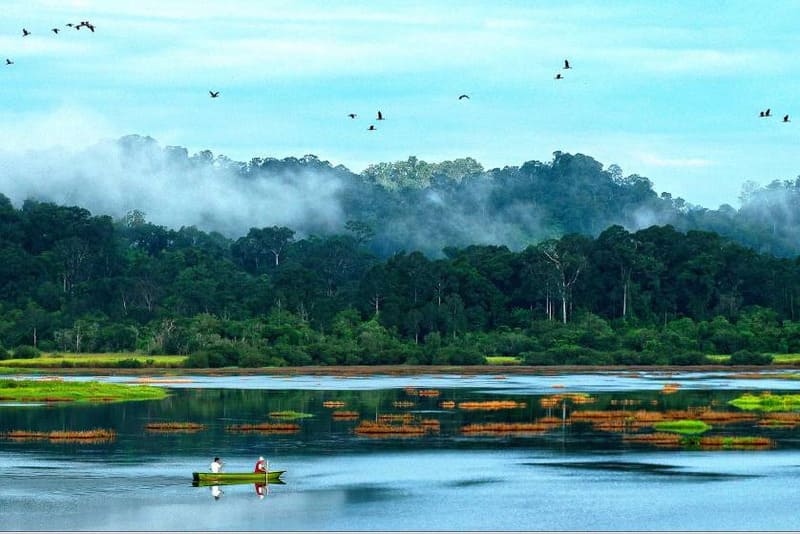
Cat Tien is a green escape for nature lovers (Source: Collected)
An Giang is one of the most culturally interesting areas in the Mekong Delta. Chau Doc, near the Cambodian border, is the main travel base and is known for its floating villages, local markets, Cham communities, and religious sites.
Top highlights include Sam Mountain, Ba Chua Xu Temple, Tra Su Cajuput Forest, and boat trips to floating fish farms and Cham villages. Tra Su is especially beautiful during the wet season and early flood season, when the cajuput forest becomes lush and photogenic.
An Giang is a good choice for travelers who want to go deeper into the Mekong Delta, especially if they are continuing onward to Cambodia or looking for a less standard route.
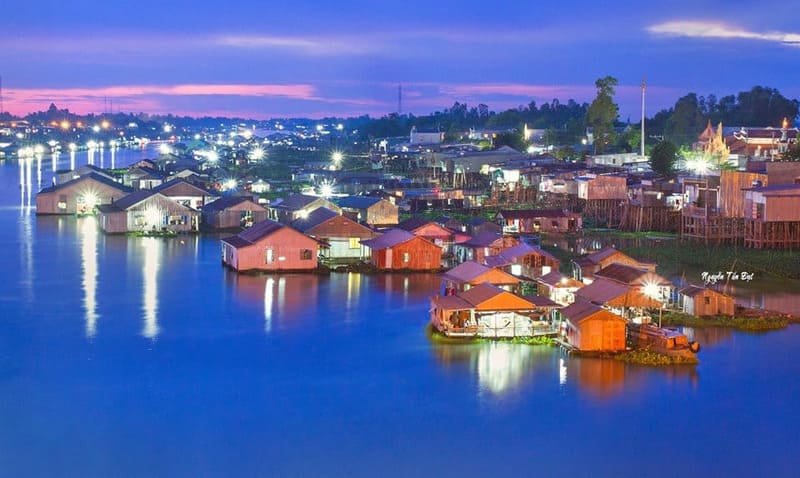
Chau Doc reveals a deeper side of the Mekong Delta (Source: Collected)
Dong Thap offers a calmer, less touristy side of the Mekong Delta. Sa Dec is known for its flower village, old houses, riverside atmosphere, and literary connection to the French novel The Lover.
Beyond Sa Dec, Dong Thap is also home to Tram Chim National Park, one of the most important wetland areas in the delta and a good destination for birdwatching. The province is especially attractive for travelers interested in photography, slow travel, flowers, wetlands, and local life.
Dong Thap is not always included in first-time itineraries, but it is a strong addition for visitors who have more time or want to avoid overly familiar routes.
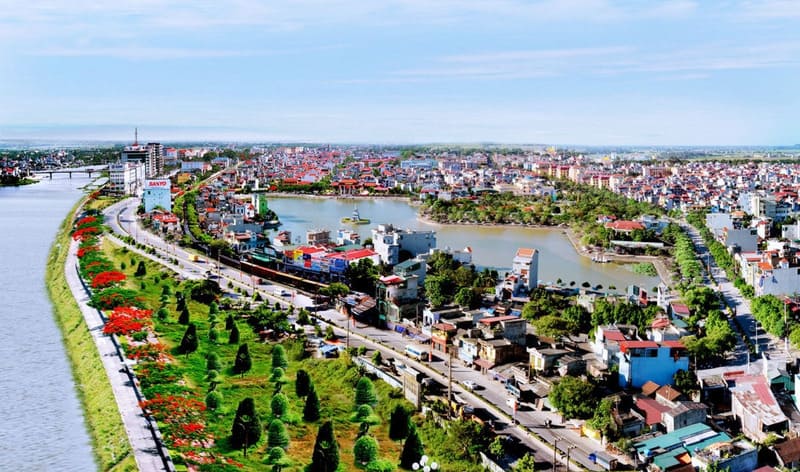
Sa Dec offers flowers, old houses and riverside charm (Source: Collected)
Soc Trang and Bac Lieu show another cultural side of Southern Vietnam, with strong Khmer, Chinese, and Vietnamese influences. Soc Trang is known for Khmer temples, traditional festivals, and local food, while Bac Lieu is known for its old houses, coastal landscapes, wind farm, and distinctive regional identity.
In Soc Trang, popular sites include Bat Pagoda, Clay Pagoda, and Khmer-style temples. Bac Lieu offers attractions such as Bac Lieu Wind Farm, the House of Bac Lieu Prince, and coastal scenery.
These destinations are best for travelers who want to explore the deeper Mekong Delta beyond Can Tho and Ben Tre.
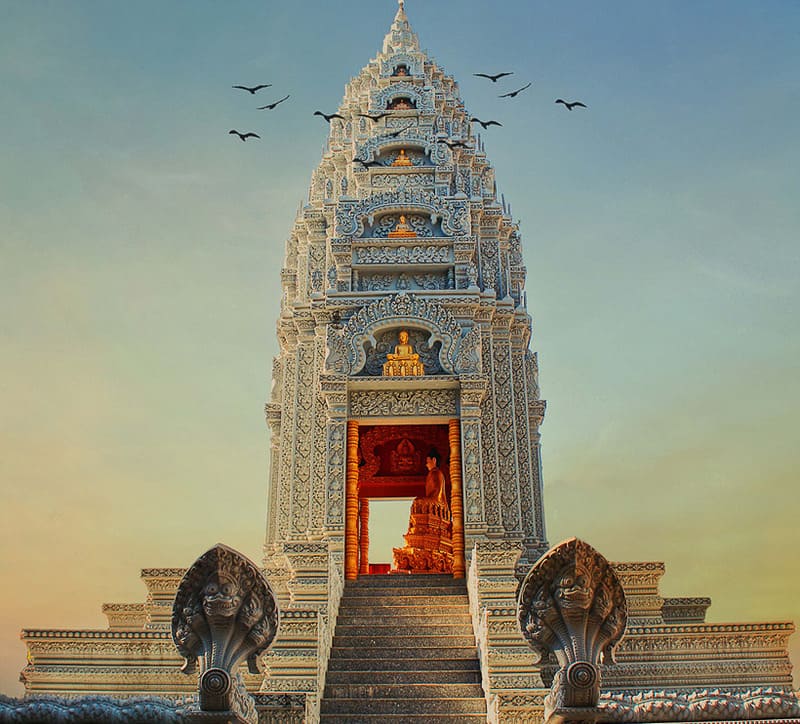
Soc Trang and Bac Lieu show the delta’s cultural mix (Source: Collected)
Ho Chi Minh City is one of the best places in Vietnam to understand the country’s modern history. Start with the War Remnants Museum and Reunification Palace, then continue to the Saigon Central Post Office, Notre Dame Cathedral, and old colonial streets around District 1.
For a more local perspective, visit Cholon, where Chinese temples, traditional medicine shops, markets, and old shophouses reflect the city’s multicultural past.
A Mekong Delta cruise or boat trip is one of the most memorable experiences in Southern Vietnam. Depending on the route, you can pass coconut canals, fruit orchards, floating houses, rice fields, and riverside villages.
Ben Tre is excellent for small canals and coconut workshops, while Can Tho is better for floating markets and a livelier river scene. For a deeper trip, consider combining Can Tho with An Giang, Chau Doc, or Dong Thap.
Cai Rang Floating Market is best visited early, usually around sunrise. This is when the river is most active and the market atmosphere feels more authentic.
Staying overnight in Can Tho is strongly recommended because it allows you to start early without a long transfer from Ho Chi Minh City. A local boat guide can help explain how the market works, what the boats are selling, and how river trade has changed over time.
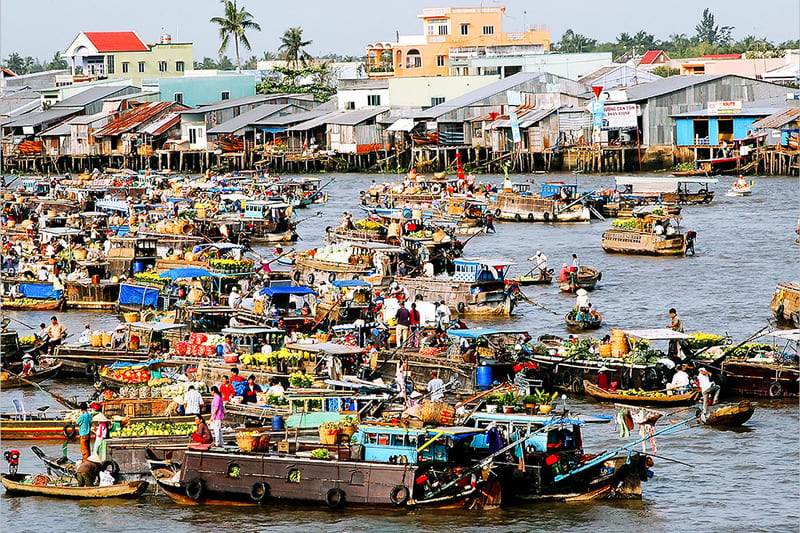
Cai Rang Floating Market is best seen at sunrise (Source: Collected)
Southern Vietnam has several beach options, each with a different travel style.
Phu Quoc is best for resort stays, island-hopping, seafood, and easy beach holidays. Con Dao is better for quiet beaches, nature, diving, and history. Vung Tau and Ho Tram are more convenient for short trips from Ho Chi Minh City.
If your trip is focused on relaxation, add at least 3 nights at the beach after your city and Mekong Delta itinerary.
Food is one of the highlights of Southern Vietnam. Compared with northern and central Vietnamese cuisine, southern food is often slightly sweeter, more herb-rich, and influenced by river, coastal, Khmer, Chinese, and tropical ingredients.
Ho Chi Minh City is the easiest place to try a wide variety of dishes, while the Mekong Delta is excellent for freshwater fish, tropical fruits, coconut-based dishes, and local family-style meals.
Southern Vietnam is not only about cities and beaches. The region has a rich cultural mix, from Chinese temples in Cholon to Khmer pagodas in Soc Trang and Tra Vinh, Cao Dai religious architecture in Tay Ninh, and riverside village life in the Mekong Delta.
At night, Ho Chi Minh City offers rooftop bars, walking streets, live music, night markets, and street food areas. For a more relaxed evening, Can Tho’s Ninh Kieu Wharf and Phu Quoc Night Market are good options.
Southern Vietnam is known for its rich, slightly sweet flavors, fresh herbs, and a strong mix of river and coastal ingredients. Here are some of the must-try dishes and food experiences in the region:
If you want to explore more regional flavors, this guide to Vietnamese street food covers many must-try dishes across the country.
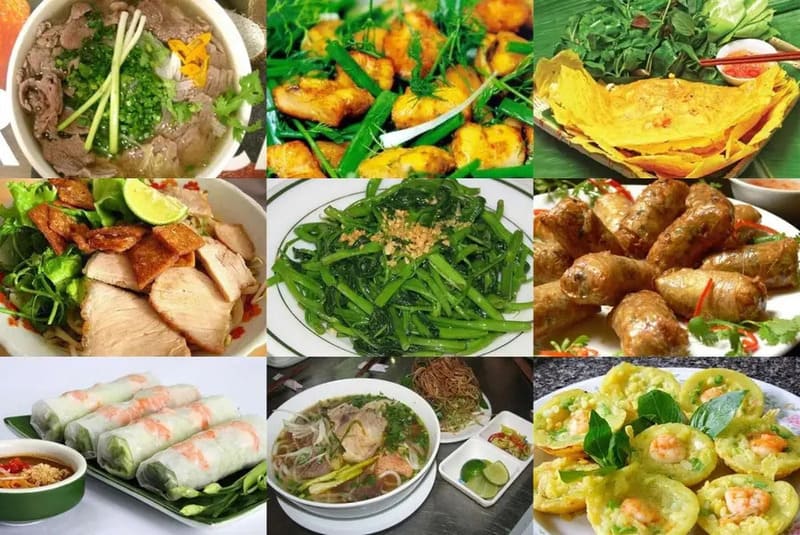
Southern Vietnamese food is fresh, vibrant and full of flavor (Source: Collected)
A 3-day trip is short, but enough for a first look at Ho Chi Minh City and one nearby experience.
Suggested route: Ho Chi Minh City + Cu Chi or Mekong Delta
This itinerary is best for travelers with limited time or those adding Southern Vietnam before continuing to central or northern Vietnam.
Five days is a better length for combining Ho Chi Minh City and the Mekong Delta.
Suggested route: Ho Chi Minh City + Cu Chi + Ben Tre + Can Tho
This itinerary is ideal for first-time visitors who want city highlights and a real Mekong Delta experience.
With 7 days, you can add a beach destination after Ho Chi Minh City and the Mekong Delta.
Suggested route: Ho Chi Minh City + Mekong Delta + Phu Quoc or Con Dao
This route is best for travelers who want a balanced trip with history, culture, river life, and beach time.
Ten days allows a richer journey with more local depth and less rushing.
Suggested route: Ho Chi Minh City + Tay Ninh + Mekong Delta + beach extension
This itinerary is best for slow travelers, families, couples, honeymooners, and visitors who want a more complete Southern Vietnam trip.
Ho Chi Minh City is the main air hub for Southern Vietnam. Tan Son Nhat International Airport connects the city with many domestic and international destinations.
Flying is the easiest option for Phu Quoc and Con Dao, especially if you want to save time. Can Tho also has an airport, though routes are more limited than Ho Chi Minh City.
For longer trips, flying helps reduce travel time and makes it easier to combine Southern Vietnam with central or northern Vietnam.
A private car or transfer is the most comfortable way to travel between Ho Chi Minh City and nearby destinations such as Ben Tre, Can Tho, Vung Tau, Ho Tram, Tay Ninh, and Cat Tien National Park.
This option is especially useful for families, couples, older travelers, and tailor-made trips because it allows more flexibility with stops, luggage, timing, and hotel pickup.
Buses and minivans are widely available and budget-friendly. They work well for popular routes such as Ho Chi Minh City to Can Tho, Ho Chi Minh City to Vung Tau, and Ho Chi Minh City to some Mekong Delta provinces.
However, buses can be less flexible if you have large luggage, travel with children, or want to stop at smaller attractions along the way.
Boats are part of the travel experience in the Mekong Delta. Short boat trips, sampan rides, and river cruises are the best way to explore canals, floating markets, orchards, and villages.
For coastal travel, speed ferries can connect Ho Chi Minh City with Vung Tau. Phu Quoc can also be reached by ferry from Ha Tien or Rach Gia, although flying is usually easier for international visitors.
For a smooth route, consider these combinations:
For most first-time travelers, the easiest route is Ho Chi Minh City, then the Mekong Delta, then a beach destination.
The best time to visit Southern Vietnam is generally from December to April, during the dry season. This period usually brings sunnier weather, lower rainfall, and better conditions for sightseeing, boat trips, and beaches.
Southern Vietnam has a tropical climate with two main seasons:
For beaches, Phu Quoc is usually best from December to March. Con Dao can be attractive at different times of year depending on sea conditions and activities, so it is worth checking the weather before booking flights and boats.
If your itinerary includes both city sightseeing and island relaxation, the dry season is the safest choice.
Before planning your route, it is helpful to understand the best time to visit Vietnam, especially if your itinerary includes beaches, the Mekong Delta, and island destinations like Phu Quoc or Con Dao.
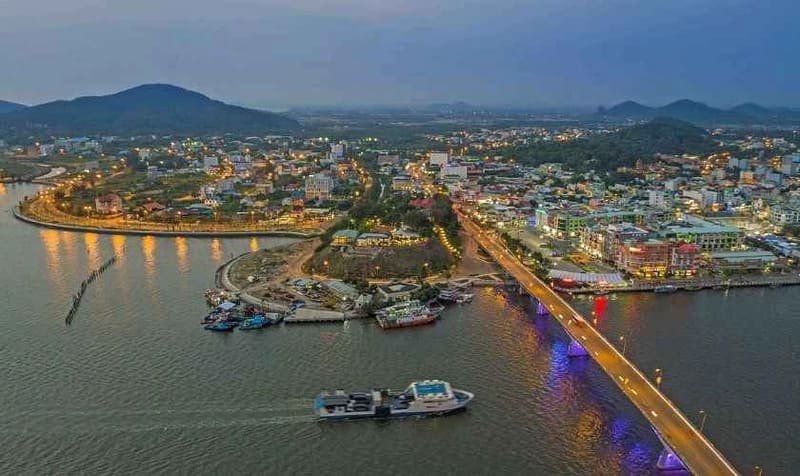
Dry season brings the easiest travel weather in the south (Source: Collected)
Southern Vietnam is known for Ho Chi Minh City, the Mekong Delta, floating markets, river life, tropical fruits, street food, war history, Phu Quoc Island, Con Dao, Vung Tau, and a warm tropical climate.
It is one of the best regions in Vietnam for combining city culture, local food, historical sites, river experiences, and beach relaxation.
Yes. Southern Vietnam is worth visiting, especially if you want a diverse trip with urban energy, history, local culture, river landscapes, and beaches. Ho Chi Minh City and the Mekong Delta are two of Vietnam’s most distinctive travel experiences, while Phu Quoc and Con Dao add strong beach and island options.
You need at least 3 days for Ho Chi Minh City and one nearby trip. A better length is 5 to 7 days if you want to include the Mekong Delta. For a more complete journey with beaches or deeper Mekong Delta exploration, plan 10 days.
For most first-time visitors, the best Southern Vietnam itinerary is Ho Chi Minh City, Cu Chi Tunnels, Mekong Delta, Can Tho, and then Phu Quoc or Con Dao for a beach extension.
A practical 7-day route is: Ho Chi Minh City for 2 nights, Cu Chi or Tay Ninh for 1 day, Mekong Delta and Can Tho for 2 days, then Phu Quoc or Con Dao for 2 to 3 days.
The best time to visit Southern Vietnam is from December to April, when the weather is generally drier and better for sightseeing, boat trips, and beaches. For Phu Quoc, December to March is usually the best period for a beach holiday.
Southern Vietnam has a rainy season from around May to November. Rain is common during this period, but it often falls in short, heavy showers rather than lasting all day. The wettest months can affect outdoor plans, island trips, and low-lying areas, so flexible planning is helpful.
Yes. It is easy to travel from Ho Chi Minh City to the Mekong Delta by private car, bus, minivan, or organized tour. Ben Tre and My Tho are convenient for day trips, while Can Tho is better for an overnight trip and early morning visit to Cai Rang Floating Market.
Choose Phu Quoc if you want more resorts, restaurants, flights, entertainment, and easy beach facilities. Choose Con Dao if you prefer quiet beaches, nature, history, diving, and a less commercial island atmosphere.
For families and first-time beach travelers, Phu Quoc is usually easier. For nature lovers and travelers seeking calm, Con Dao can be more rewarding.
Street food in Southern Vietnam can be safe and enjoyable if you choose busy stalls with high turnover, freshly cooked food, and clean-looking preparation areas. Ho Chi Minh City is one of the best places to try street food, but travelers should start with well-known dishes and avoid raw or poorly stored food if they have a sensitive stomach.
Southern Vietnam is a great choice for travelers who want a trip with variety: vibrant city life in Ho Chi Minh City, peaceful river experiences in the Mekong Delta, tropical beaches in Phu Quoc or Con Dao, and rich local culture across the region. With the right route, you can combine history, food, nature, and relaxation in one smooth journey.
If you are planning a tailor-made trip to Southern Vietnam, Your Vietnam Travel can help design a personalized itinerary based on your travel style, schedule, and interests. From private city tours and Mekong Delta experiences to beach extensions and multi-day Vietnam journeys, our local team will help you create a seamless and memorable holiday.

 Vietnam Tours
 Cambodia Tours
 Laos Tours
 Thailand Tours
 Multi-Country Tours