Hoi An during the rainy season still has a charm of its own. Although occasional showers may interrupt some outdoor activities, the Ancient Town continues to offer many enjoyable experiences, such as exploring historic houses, visiting museums, joining cooking classes, making traditional lanterns, or relaxing in cozy cafés. In this guide, Your Vietnam Travel shares the best things to do in Hoi An on a rainy day, along with practical tips to help you enjoy a smooth and memorable trip.
Hoi An has a tropical monsoon climate, with a distinct rainy season that typically runs from September to January. Rainfall gradually increases from early autumn and reaches its peak between October and November, when heavy showers and occasional flooding may occur in low-lying areas near the river.
During September, rain often arrives in short bursts. Showers can be intense but usually pass quickly, allowing travelers to continue exploring the Ancient Town between rainy intervals.
October and November mark the peak of the rainy season. These months receive the highest rainfall of the year, sometimes leading to temporary flooding along streets close to the Hoai River. Despite this, rain rarely lasts continuously throughout the day, and many indoor attractions remain open.
By December and January, rainfall begins to decrease. The weather becomes cooler and calmer, with temperatures generally ranging between 20°C and 25°C, creating a comfortable environment for sightseeing.
Although frequent rain is expected during these months, the season also brings a unique atmosphere to Hoi An. The Ancient Town becomes quieter, lanterns glow against misty skies, and the slower pace reveals a more tranquil side of this historic trading port.
If you are planning your Central Vietnam itinerary by season, you may also want to read our guide on the best time to visit Hoi An.
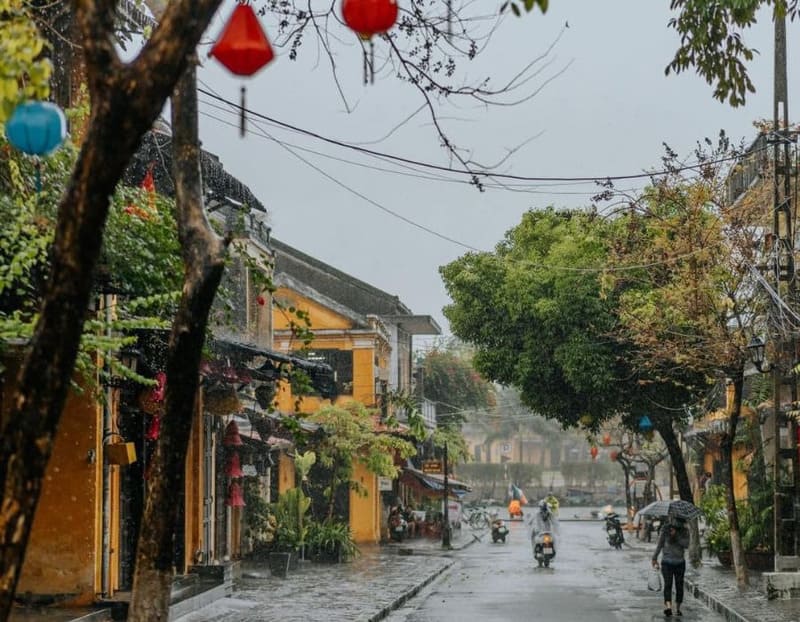
Hoi An rainy season from September to January (Source: Collected)
Rain is part of Hoi An’s natural rhythm, especially between September and January. While showers may interrupt outdoor plans, the town continues to offer a rich cultural experience. Historic houses, artisan workshops, cooking classes, cafés, and museums provide plenty of meaningful activities indoors.
For many travelers, the rainy season reveals a quieter and more atmospheric side of Hoi An. Lanterns glow against misty skies, the streets become less crowded, and the pace of the Ancient Town slows down. Visitors who plan flexible itineraries often discover that the town’s charm remains strong even when the weather turns grey.
Understanding both the advantages and the potential challenges helps travelers decide if the rainy season fits their travel style.
Hoi An remains a rewarding destination even during the rainy season. Travelers who enjoy quiet scenery, cultural experiences, and a relaxed pace often find this time of year surprisingly pleasant. With flexible plans and a focus on indoor activities, rain rarely prevents visitors from enjoying the town’s heritage, cuisine, and welcoming atmosphere.
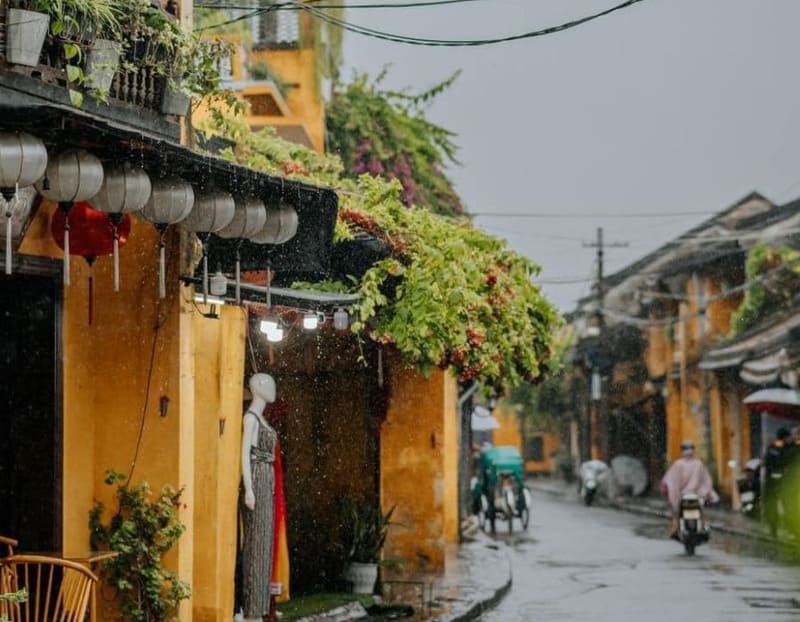
Visiting Hoi An during the rainy season is still worthwhile (Source: Collected)
Rainy weather in Hoi An encourages a slower and more immersive travel style. Instead of rushing between outdoor attractions, visitors can explore the town’s cultural heritage, creative workshops, and cozy spaces. From historic houses and museums to cooking classes and artisan studios, many of Hoi An’s most memorable experiences are perfectly suited to a rainy day.
Light rain adds a distinctive atmosphere to Hoi An Ancient Town, a UNESCO World Heritage Site known for its preserved architecture and lantern-lined streets. With fewer crowds during rainy periods, visitors can explore the narrow alleys and heritage buildings at a relaxed pace.
Several historic merchant houses provide insight into the town’s trading past, including:
These houses date back more than two centuries and display a blend of Vietnamese, Chinese, and Japanese architectural influences. Wooden beams, carved altars, antique furniture, and peaceful inner courtyards reveal how merchant families once lived and conducted business in this former trading port.
Rain also enhances the atmosphere, with wet streets reflecting lantern light and historic yellow walls appearing deeper in color.
You can learn more about the history and structure of the area in our Hoi An Ancient Town guide.
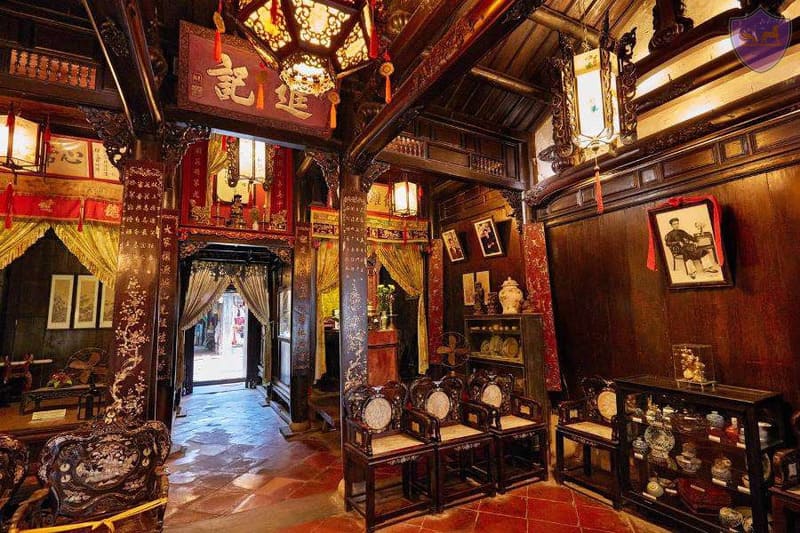
Explore Hoi An Ancient Town and historic houses in the rain (Source: Collected)
Hoi An’s museums offer a deeper understanding of the region’s history and cultural traditions. They are compact, informative, and ideal for rainy afternoons.
Notable places include:
Art lovers can also explore small galleries scattered around the Ancient Town, where contemporary Vietnamese artists display paintings, photography, and cultural artwork.
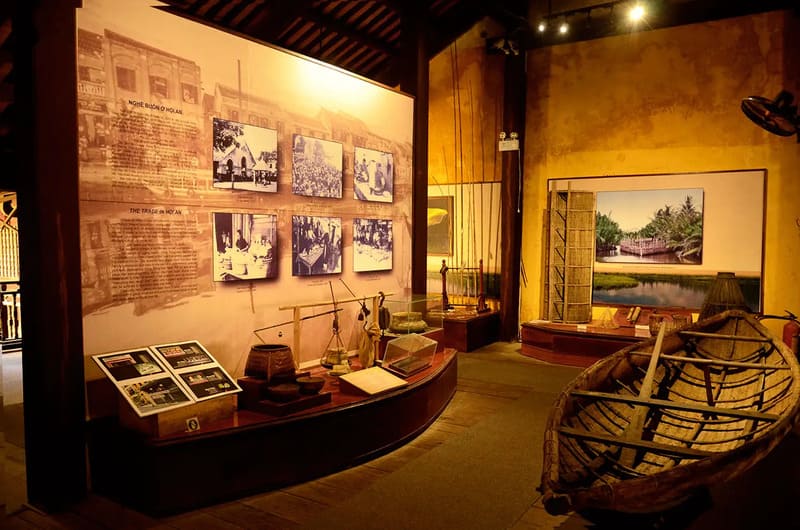
Visit museums and cultural galleries in Hoi An (Source: Collected)
A cooking class is one of the most popular rainy-day activities in Hoi An. These classes introduce travelers to the flavors and techniques of Vietnamese cuisine while providing a fun, hands-on experience.
Many classes begin with a visit to a local market, where chefs explain traditional ingredients such as herbs, spices, and fish sauce. Participants then prepare several regional dishes, often including:
Cooking classes usually end with a shared meal where participants enjoy the dishes they have prepared.
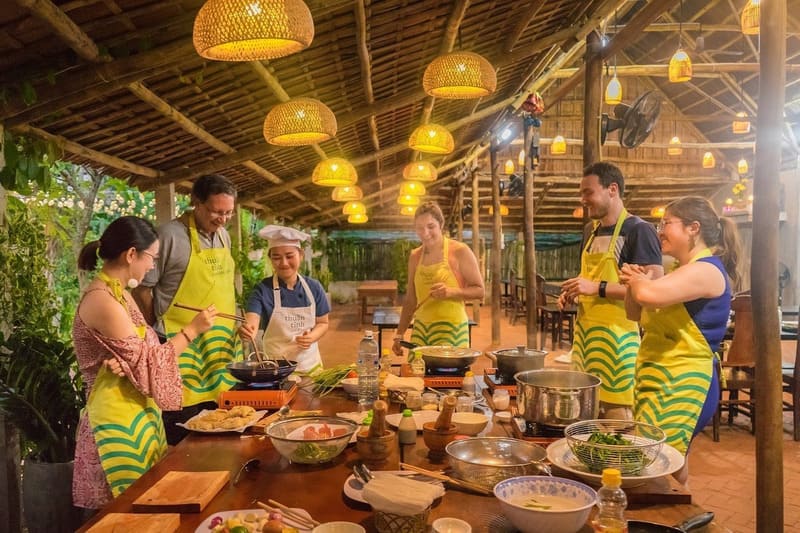
Attend a cooking class in Hoi An on a rainy day (Source: Collected)
Create a traditional lantern with local artisans
Hoi An is famous for its colorful silk lanterns that illuminate the streets every evening. Several local workshops allow visitors to learn the traditional craft of lantern making.
During the workshop, participants will:
The activity typically takes one to two hours, and visitors can bring their handmade lantern home as a meaningful souvenir.
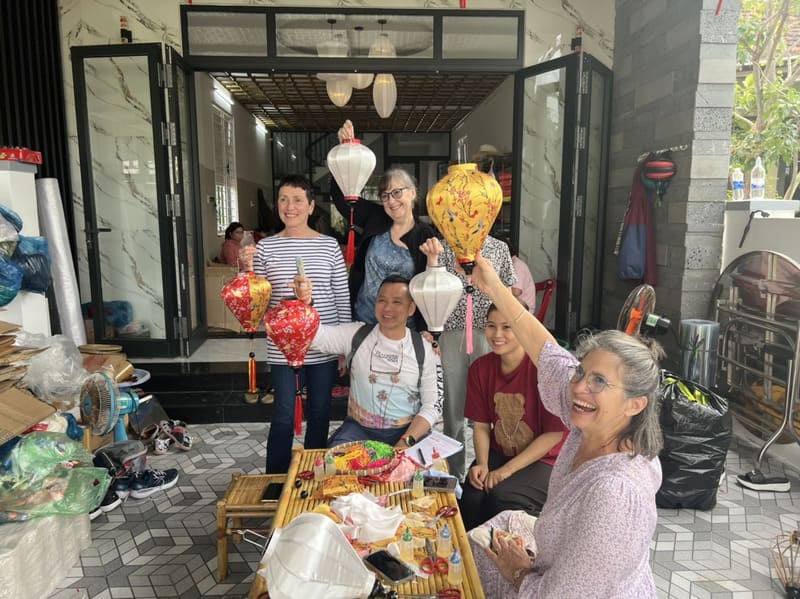
Create traditional lanterns with artisans in Hoi An (Source: Collected)
Rainy afternoons are perfect for exploring Hoi An’s charming cafés. Many are located inside centuries-old houses, with wooden balconies overlooking quiet streets.
Visitors can relax with a cup of Vietnamese coffee or tea while watching the rain fall outside. Popular drinks to try include:
These cafés provide a peaceful break between sightseeing activities. If you want more recommendations, check out our list of the best cafes in Hoi An for a relaxing break.
A rainy day also creates the perfect opportunity for wellness and relaxation. Hoi An has many boutique spas offering treatments inspired by Vietnamese herbal traditions.
Common spa services include:
Many spas are located in restored heritage buildings or garden settings, creating a tranquil atmosphere that complements the rainy weather outside.
Hoi An is internationally known for its custom tailoring industry. Hundreds of tailor shops in the Ancient Town can create personalized clothing within 24 to 48 hours.
Travelers can choose from a wide range of fabrics and designs to create items such as:
Rainy weather works well for tailoring visits because fittings usually require multiple appointments. If you are interested in custom clothing, see our guide to tailoring in Hoi An for the best shops and tips.

Order custom-made clothing in Hoi An (Source: Collected)
Hoi An has a long tradition of craftsmanship, and rainy weather is a great time to explore local artisan workshops.
Visitors can participate in activities such as:
These creative experiences provide deeper insight into the cultural heritage of central Vietnam while supporting local artisans.
Evenings in Hoi An remain vibrant regardless of the weather. Cultural performances offer an entertaining way to learn about Vietnamese traditions.
One of the most impressive experiences is the Hoi An Memories Show, a large-scale performance that recreates the history of the ancient trading port through music, dance, and elaborate stage design. Covered seating allows visitors to enjoy the show even during rain.
Smaller venues in the town also host traditional music, folk dance, and storytelling performances that showcase Vietnam’s artistic heritage.
These shows provide a memorable cultural highlight at the end of a rainy day in Hoi An.
Rainy weather in Hoi An usually comes in short showers, and many cultural activities remain enjoyable. However, heavy rain, storms, or seasonal flooding can affect certain outdoor experiences. Some activities may become uncomfortable, less enjoyable, or temporarily suspended for safety reasons.
Before planning excursions during the rainy season, travelers should always check the daily weather forecast and consult local tour providers. The following activities are best postponed when rainfall becomes intense.
The Cham Islands (Cu Lao Cham) are a popular destination for snorkeling, diving, and island exploration located about 15 km off the coast of Hoi An. However, sea conditions during the rainy season can be unpredictable.
From October onward, strong winds and rough seas often lead to boat cancellations, and many tours temporarily stop operating for safety reasons. Visibility for snorkeling also becomes poor due to rough water.
Travelers planning to visit the Cham Islands should schedule the trip during clearer weather or the dry season for the best experience.
For future trips, you can explore our Cham Island travel guide when conditions are more favorable.
The basket boat ride in Cam Thanh coconut village is one of the most unique outdoor activities near Hoi An. Visitors ride traditional round bamboo boats through narrow waterways surrounded by nipa palm forests.
During heavy rain or storms, water levels in the river can rise quickly. Some areas of the coconut forest may become flooded, and boat operations may pause for safety reasons.
Even when tours continue, strong rain and wind can make the experience less comfortable. For the best enjoyment, this activity is better planned on dry days.
Lantern boat rides on the Hoai River are one of the most iconic evening experiences in Hoi An. Visitors float gently along the river while releasing colorful paper lanterns onto the water.
Light rain usually does not stop the activity, as small boats often provide plastic covers for passengers. However, during periods of heavy rain or flooding, boat rides may be suspended to ensure safety.
Floodwater can also affect access to certain riverfront areas of the Ancient Town. Waiting for calmer weather will provide a more enjoyable and picturesque experience.
For full details, check our guide to the Hoi An lantern boat ride, including timing and prices.
Excursions to Ba Na Hills and the Golden Bridge, located in the mountains near Da Nang, depend heavily on weather conditions. During rainy days, the mountain area often experiences thick fog, strong winds, and limited visibility.
These conditions can reduce the quality of the experience, as visitors may not be able to see the famous Golden Bridge or surrounding mountain scenery clearly. Photography opportunities are also limited.
Similarly, other long outdoor excursions such as countryside cycling tours or beach trips may become less enjoyable during prolonged rain.
Traveling to Hoi An during the rainy season can still be comfortable and enjoyable with the right preparation. Light rain is common, and most attractions remain accessible, but occasional heavy showers and humidity require some practical planning. The following tips help travelers stay comfortable, safe, and flexible while exploring the Ancient Town.
Yes, minor flooding can occur in parts of the Ancient Town, especially during October and November, the wettest months of the year. Streets near the Hoai River may experience temporary flooding after heavy rain. However, local authorities manage the situation efficiently, and water levels usually recede within a short time.
Yes. The rainy season offers a quieter and more atmospheric experience. With fewer tourists, travelers can explore historic houses, museums, cafés, and cultural workshops at a relaxed pace. Lantern reflections on wet streets also create a unique and photogenic setting in the Ancient Town.
Yes. Light rain rarely stops visitors from exploring the Ancient Town. Many attractions, cafés, and shops are located close together, making it easy to walk with an umbrella or raincoat. Covered walkways and historic houses also provide shelter during short showers.
Travelers should pack lightweight quick-dry clothing, a rain jacket or poncho, waterproof sandals, and a compact umbrella. A waterproof bag for electronics and important documents is also recommended.
Most transportation operates normally, including taxis, private cars, and Grab services. However, boat tours, island trips, or some outdoor excursions may be temporarily suspended during heavy rain or rough sea conditions.
Rainy weather is perfect for enjoying Hoi An’s comforting local dishes such as Cao Lau noodles, Mi Quang, and hot Vietnamese pho. Warm drinks like Vietnamese coffee or herbal tea are also popular during cooler rainy days.
Some of the most enjoyable rainy-day experiences include joining a Vietnamese cooking class, visiting museums, making lanterns with local artisans, exploring cafés, relaxing at a spa, or getting tailor-made clothes in the Ancient Town.
A rainy day in Hoi An does not necessarily have to interrupt your travel plans. In fact, it can be a great opportunity to explore the deeper layers of the Ancient Town’s culture, cuisine, and local lifestyle. With a variety of indoor experiences and the peaceful atmosphere that comes with the rainy season, Hoi An remains a memorable destination at any time of the year.
If you are looking for a travel itinerary designed with flexibility for seasonal weather, Your Vietnam Travel can help you plan a well-balanced journey to explore Hoi An and other highlights of Central Vietnam.




 Vietnam Tours
 Cambodia Tours
 Laos Tours
 Thailand Tours
 Multi-Country Tours