The best way to explore Sapa’s rice terraces, mountain valleys and ethnic villages is on foot. Beginners can choose accessible routes near Cat Cat, Lao Chai and Ta Van, while experienced hikers can continue toward Ban Ho or climb Fansipan. Below is everything you need to compare routes, calculate costs and prepare for changing trail conditions.
Sapa is worth visiting for trekking because its landscapes, villages and trail options are concentrated within a relatively accessible mountain region. From the town centre, travellers can reach rice terraces, waterfalls, bamboo forests and rural settlements within a few hours on foot.
The most popular trekking area is Muong Hoa Valley, which runs southeast from Sapa through Y Linh Ho, Lao Chai and Ta Van. The valley is characterised by layered rice terraces, mountain streams and footpaths connecting H’Mong and Giay villages.
Short routes around Cat Cat, Sin Chai and Lao Chai suit beginners or travellers with limited time. Longer routes toward Giang Ta Chai, Su Pan, Ban Ho and Ta Phin provide quieter scenery and more sustained walking. Experienced hikers can attempt Fansipan, Vietnam’s highest mountain at 3,143 metres.
Sapa also changes considerably by season. Water-filled terraces reflect the sky around late spring, green rice covers the hills during summer and the fields turn yellow before the autumn harvest. In winter, mist, low cloud and occasional frost create a completely different atmosphere.
However, Sapa trekking is not always an easy countryside walk. Steep gradients, mud, irregular stone steps, stream crossings and rapidly changing weather can make even moderate routes tiring. Choosing the right route for your fitness and the current trail conditions is therefore essential.
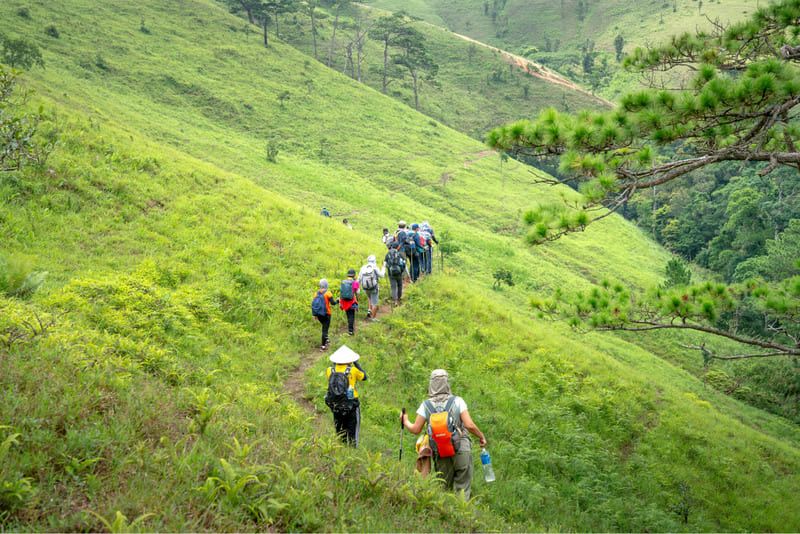
Rice terraces and mountain trails make Sapa worth exploring (Source: Collected)
The routes below cover Sapa’s main trekking areas. Distances and walking times are approximate because itineraries vary according to the starting point, trail conditions, detours and transport arrangements.
| Trekking Route | Approximate Distance | Time Needed | Difficulty | Best Suited To |
| Cat Cat Village | 4-7 km | 2-4 hours | Easy | Beginners and families |
| Y Linh Ho - Lao Chai - Ta Van | 10-15 km | 5-7 hours | Moderate | First-time trekkers |
| Lao Chai - Ta Van | 7-10 km | 3-5 hours | Easy to moderate | Rice-terrace views |
| Ta Van - Giang Ta Chai | 8-12 km | 4-6 hours | Moderate | Forests and waterfalls |
| Ta Phin Village | 10-15 km | Half or full day | Moderate | Red Dao culture |
| Sin Chai | 6-10 km | 3-5 hours | Easy to moderate | Quieter village scenery |
| Hau Thao - Su Pan - Ban Ho | 15-25 km | 1-2 days | Moderate to challenging | Longer rural trekking |
| Fansipan | 11-20 km | 1-2 days | Challenging | Experienced hikers |
Cat Cat is the most accessible trekking option near Sapa, located about 3 kilometres southwest of the town centre. The main 2-kilometre circuit follows paved paths and stone steps past traditional houses, craft workshops, water wheels and Tien Sa Waterfall.
A round trip from central Sapa usually takes two to four hours. The downhill section is easy, but the return climb can be tiring. Local transfers are often available near the village exit.
This route suits beginners, families and travellers seeking a short cultural walk rather than a remote trek. Visit early to avoid crowds, especially on weekends and holidays.
An entrance ticket is required. The published adult price is VND 150,000, but it is advisable to confirm the rate before visiting.
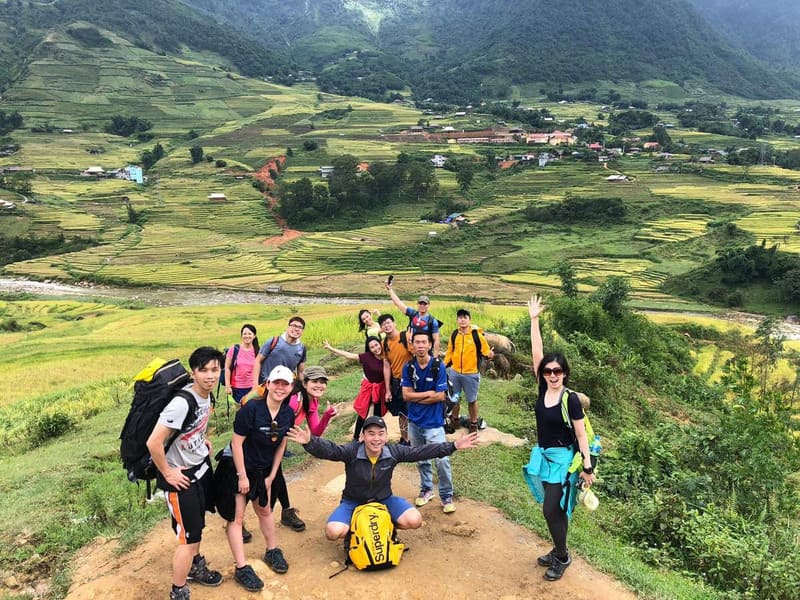
Trekkers overlooking the rice terraces near Cat Cat (Source: Collected)
This 10 - 15-kilometre route is one of Sapa’s best full-day treks, taking around five to seven hours. It descends into Muong Hoa Valley and passes through Black H’Mong and Giay villages.
The trail begins with steep dirt paths around Y Linh Ho, opens onto rice terraces near Lao Chai and finishes in Ta Van, where cafés, homestays and return transport are available.
The route is suitable for travellers with average fitness. After rain, clay paths become slippery and exposed terrace sections require extra care. Shoes with good grip and trekking poles are recommended.
Because smaller trails are poorly marked and may change after storms or farming work, hiring a local guide can make navigation easier.
Lao Chai - Ta Van is a shorter way to explore Muong Hoa Valley without trekking directly from Sapa town. Most routes begin after a vehicle transfer to a trailhead above Lao Chai.
The walk covers approximately 7 - 10 kilometres and takes three to five hours. It passes rice terraces, village roads, suspension bridges and several gentle climbs before ending in Ta Van.
The scenery changes with the seasons, from reflective flooded fields to green summer terraces and golden rice before the September harvest.
This route is suitable for beginners with reasonable mobility. Wet weather can make the dirt sections more challenging, while Ta Van offers convenient access to taxis and pre-arranged transfers.
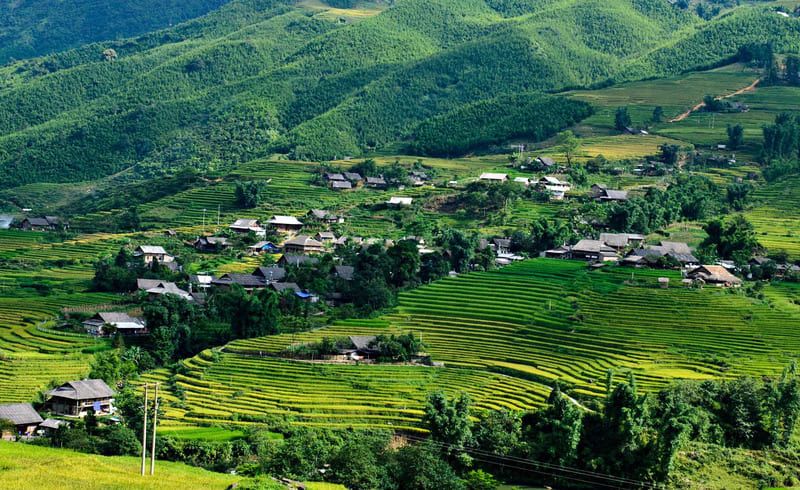
Terraced fields along the Lao Chai-Ta Van trek (Source: Collected)
This route extends southeast from Ta Van through farmland, bamboo forest, streams and waterfall areas associated with Red Dao communities.
The 8 - 12-kilometre trek normally takes four to six hours. Its mixed terrain makes it more varied than the central Muong Hoa trails, but steep paths, stream crossings and slippery stones can be difficult after rain.
It is best suited to active travellers who want quieter scenery beyond the main rice-terrace corridor. The route can also be extended toward Su Pan or included in a two-day itinerary with an overnight stay in Ta Van.
Ta Phin lies north of Sapa and is known for Red Dao culture, herbal bath traditions, terraced fields and Ta Phin Cave.
A common itinerary starts near Ma Tra and continues for 10 - 15 kilometres toward Ta Phin. Depending on the trail and transport arrangements, the journey may take half a day or a full day.
The terrain combines village roads, farmland and gradual climbs. It suits travellers interested in local life and quieter countryside rather than Sapa’s busiest trekking routes.
A guide is useful outside the main village because side trails are not consistently marked. Longer journeys toward Phin Ho, Suoi Thau and Ta Giang Phinh require several days, good fitness and local support.
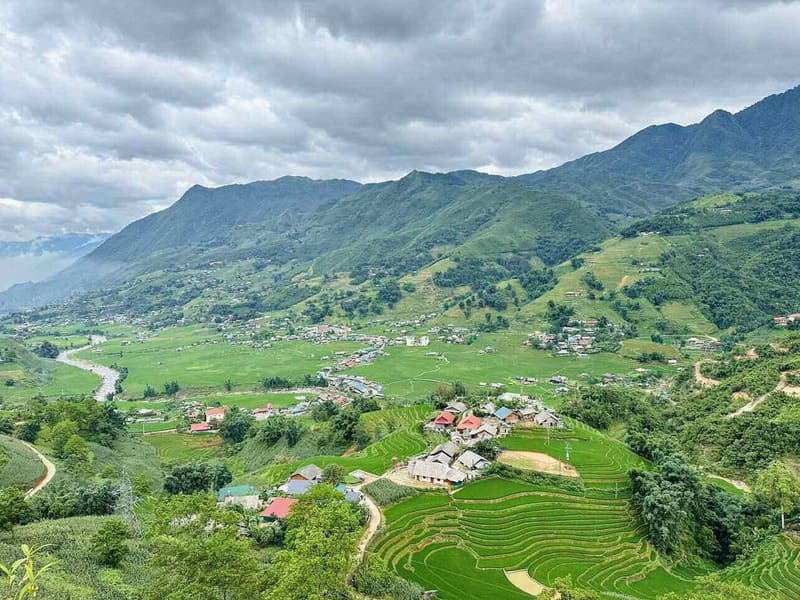
Quiet countryside surrounding Ta Phin Village (Source: Collected)
Sin Chai sits west of Cat Cat at the foot of the Hoang Lien Son range. It receives fewer visitors and can be explored independently or combined with Cat Cat.
The Sapa - Cat Cat - Sin Chai route covers around 7 kilometres and is generally easy. It begins with a descent into Cat Cat before continuing through farmland and mountain scenery.
Travellers seeking a quieter walk can arrange transport closer to Sin Chai and explore the surrounding hills from there. Beginners can manage the main route, although poorly marked side trails make offline maps or a guide helpful.
This longer route moves beyond central Muong Hoa Valley into quieter agricultural and forested areas. It usually covers 15 - 25 kilometres over one or two days.
Treks may begin near Hau Thao or Ta Van, pass through Su Pan and descend toward Ban Ho. Hau Thao offers elevated valley views, Su Pan has fewer visitors, and Ban Ho provides streams, warmer weather and homestay accommodation.
Long descents, uneven tracks and limited services make advance planning essential. Carry enough water and arrange transport or an overnight stay before departure.
A local guide is strongly recommended because trail junctions can be unclear and mobile coverage may be unreliable.
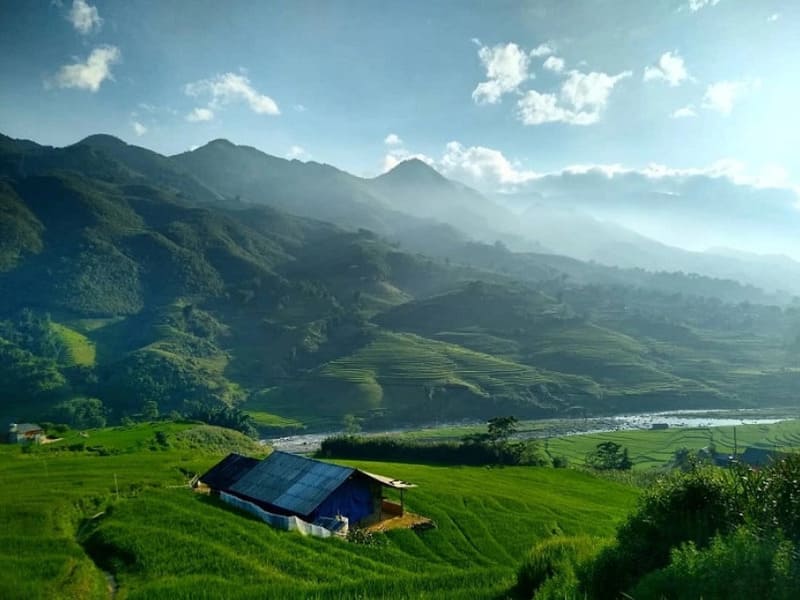
Mountain scenery on the Hau Thao-Ban Ho trek (Source: Collected)
At 3,143 metres, Fansipan is Vietnam’s highest mountain and Sapa’s most challenging trek.
The main route starts near Tram Ton Pass. Most trekkers complete it over two days, spending the night near the 2,800-metre level before reaching the summit the following morning.
The climbing section is approximately 11.2 kilometres, although the total distance depends on whether the descent is completed on foot or by cable car. Expect sustained elevation gain, forest paths, tree roots, rocky steps, ladders and exposed mountain terrain.
Summit conditions can be cold, wet and windy even when Sapa town is mild. A one-day ascent is suitable only for fit, experienced hikers, while the two-day option allows a more manageable pace.
Trekkers should travel with an authorised guide or organised team to manage permits, transport, meals and overnight arrangements. Beginners are better advised to gain experience on valley routes first. Travellers focused mainly on reaching the summit should consider using the cable car.
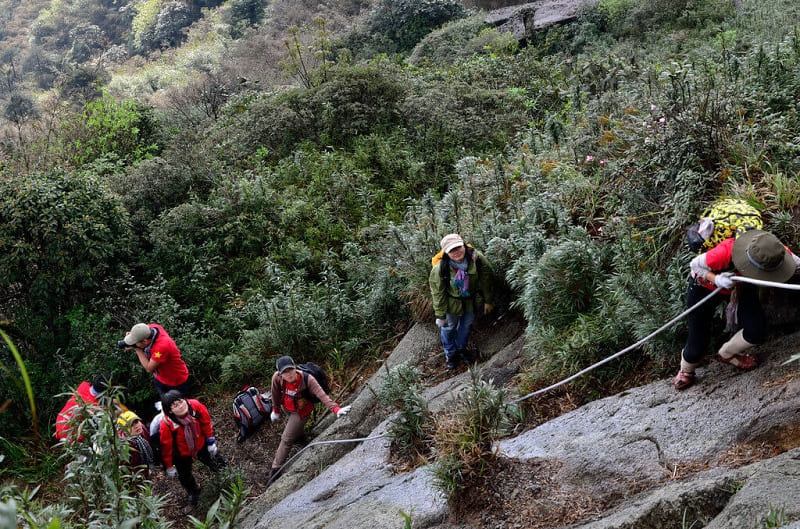
Trekkers climbing the Fansipan mountain trail (Source: Collected)
The right route depends on your fitness level, available time and the type of scenery you want to experience.
If you're visiting Sapa for the first time, Y Linh Ho - Lao Chai - Ta Van is the best overall choice, offering spectacular rice terraces, ethnic villages and a moderate level of difficulty.
The best time for trekking in Sapa is March to May and September to November, when the weather is cooler, trails are more comfortable and the scenery is at its best.
For a complete overview of seasonal weather and travel conditions, explore our best time to visit Sapa guide.
Both options work, depending on the route and your trekking experience.
Choose a guided trek if you:
A local guide helps with navigation, weather conditions, village communication and cultural insights. Before booking, check the itinerary, difficulty, inclusions, and whether the tour is private or shared.
Go independently if you:
Even on marked routes, download maps in advance and stay on public trails, as weather, landslides or private farmland can affect access.
For short, well-developed trails, independent trekking is usually sufficient. Longer or more remote routes are safer and more rewarding with a local guide.
The cost of trekking in Sapa depends on the route, group size, guide, transport, meals and accommodation standard.
| Trekking Option | Typical Estimated Cost |
| Independent village walk | Free to VND 300,000/person |
| Guided half-day trek | VND 400,000 - 800,000/person |
| Guided full-day trek | VND 600,000 - 1,200,000/person |
| Two-day, one-night group trek | VND 1,500,000 - 3,000,000/person |
| Private multi-day trek | From VND 2,500,000/person |
| Fansipan guided trek | VND 2,000,000 - 4,500,000/person |
Shared tours are generally more affordable than private trips, while prices often increase during weekends, public holidays and the rice harvest season.
If you trek independently, budget for additional expenses such as village entrance tickets, transport, meals, homestays, local guides, trekking gear, luggage transfer and travel insurance.
Before booking, confirm what is included in the tour price, especially transport, meals, entrance fees, accommodation, drinking water and return transfers. This helps you compare tours accurately and avoid unexpected costs.
Pack according to the season and route rather than the weather visible from Sapa town. Conditions can change rapidly between the valley and higher mountain areas.
Essential items include:
For an overnight homestay, add a change of clothes, toiletries, earplugs and a compact towel. Bedding is generally provided, so a sleeping bag is unnecessary unless specifically advised by the tour operator.
For Fansipan, use a technical packing list supplied by the guide. Gloves, warm layers, headlamp and additional waterproof protection may be necessary.
Yes. Popular routes such as Cat Cat, Sin Chai, Lao Chai and Ta Van can be explored independently if you have basic navigation skills. A guide is recommended for remote trails, overnight treks, the rainy season and Fansipan.
One day is enough for Muong Hoa Valley. Two days suit an overnight village stay, while three days let you explore quieter areas such as Ban Ho, Su Pan or Ta Phin. Most travellers spend 2 - 3 nights in Sapa.
Cat Cat Village is the easiest option, with paved paths, steps and a well-developed visitor route. Lao Chai - Ta Van is another beginner-friendly trek with transport to and from the trail.
Y Linh Ho - Lao Chai - Ta Van offers the most varied rice-terrace scenery, combining panoramic viewpoints with trails through the fields. Lao Chai - Ta Van is the best shorter alternative.
Public roads and many rural paths are free, but attractions such as Cat Cat Village charge entrance fees. Guided tours also include additional costs for transport, meals or accommodation.
Not consistently. Developed attractions are easy to follow, but many valley trails have few or no signs. Download offline maps and confirm directions locally before setting out.
Yes, if they are physically fit, well prepared and join a guided two-day trek. Beginners with limited hiking experience should start with shorter Sapa routes or use the cable car.
Not always. Trail shoes with good grip are sufficient for most valley treks in dry weather, while waterproof hiking boots are recommended during the rainy season, winter and Fansipan climbs.
Yes, but conditions are more challenging. Choose shorter routes, avoid trails after heavy rain and check local weather and trail conditions before departing.
Yes. Wear warm, waterproof clothing and expect fog, wet trails and occasional frost. Lower valley routes are usually safer than high mountain treks during poor weather.
Hopefully, this guide will help you choose the right Sapa trekking route based on your fitness, schedule and preferred scenery. Check the weather, prepare suitable footwear and consider hiring a local guide for remote trails to enjoy a safer and more rewarding journey.




 Vietnam Tours
 Cambodia Tours
 Laos Tours
 Thailand Tours
 Multi-Country Tours