Vietnam is known for its energetic cities, dramatic landscapes and distinctive cuisine, but the country holds many surprises beyond its famous attractions. From a cave large enough to contain an underground forest to floating markets, six-tone language and a deep-rooted karaoke culture, these fun facts about Vietnam reveal what makes the country so fascinating to explore.
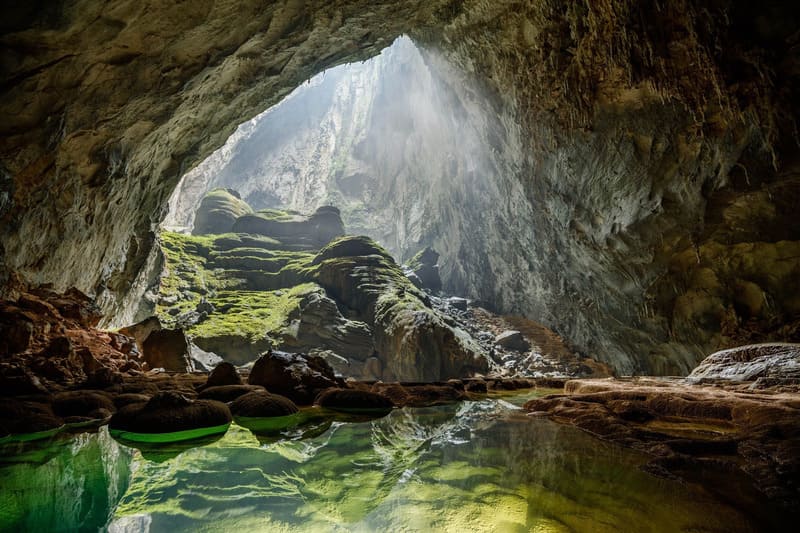
Hidden beneath the dense jungle of Phong Nha - Ke Bang National Park in Quang Binh Province, Son Doong is widely recognized as the world’s largest known natural cave by volume.
The cave stretches for nearly 9 kilometers and contains chambers more than 200 meters high in places. Its estimated volume is approximately 38.5 million cubic meters, making it far larger than an ordinary cave system.
Son Doong is especially remarkable because it contains its own underground environment. Sections of the ceiling collapsed thousands of years ago, allowing sunlight and rain to enter. This created enormous sinkholes known as dolines, where trees, ferns and other vegetation now form an underground jungle.
The cave also has a river, clouds, mist, rare geological formations and some of the tallest known stalagmites in the world. Conditions inside can differ significantly from the weather above ground, which is why Son Doong is often described as having its own microclimate.
A local resident named Ho Khanh first encountered the cave entrance in 1990. A British-Vietnamese expedition conducted a full survey in 2009 and confirmed its extraordinary scale.
Access remains strictly controlled to protect the fragile ecosystem. Visitors must join a licensed multi-day expedition involving jungle trekking, river crossings, camping and technical cave exploration. Only a limited number of travelers are permitted to enter each year.
To discover more spectacular underground landscapes, explore our guide to the most impressive caves in Vietnam.
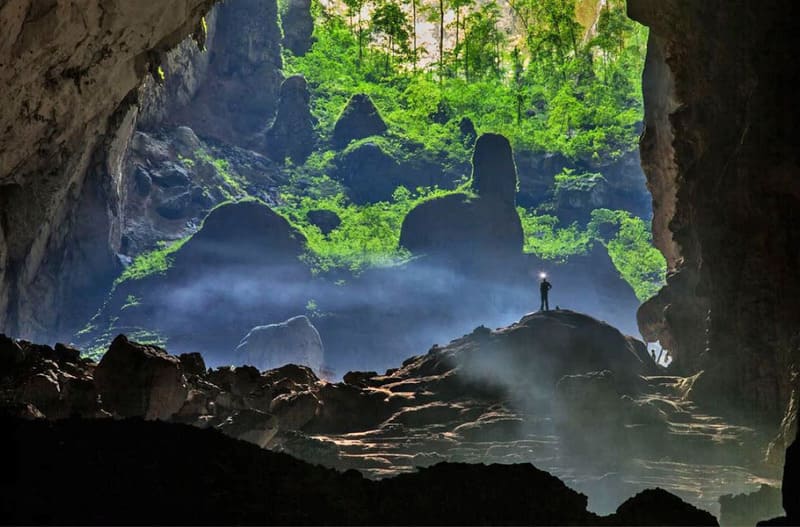
Son Doong is the world's largest natural cave (Source: Collected)
Vietnam is commonly called the “S-shaped country” because of its long, curved geographical form. The mainland extends approximately 1,650 kilometers from the northern border with China to the southern tip near the Gulf of Thailand.
The country’s coastline is even longer, extending for around 3,260 kilometers along the East Sea, excluding offshore islands. Its width varies dramatically, reaching several hundred kilometers in the north and south but narrowing to roughly 50 kilometers in parts of Central Vietnam.
This unusual geography produces considerable differences in climate and landscape.
Northern Vietnam has four relatively distinct seasons, including cool or cold winters in mountainous areas. Central Vietnam features a narrow coastal plain bordered by the Truong Son Mountains and experiences its rainy season later than many other parts of the country. Southern Vietnam has a tropical climate dominated by dry and rainy seasons.
The elongated shape also explains why weather can be completely different in Hanoi, Da Nang and Ho Chi Minh City on the same day. Travelers planning a long journey through Vietnam should therefore check the climate of each region rather than treating the country as a single weather zone.
Vietnam’s coastline supports hundreds of beaches, fishing communities, coastal cities and island destinations. Ha Long Bay, Cat Ba, Da Nang, Nha Trang, Mui Ne, Con Dao and Phu Quoc illustrate the diversity found along this long maritime corridor.
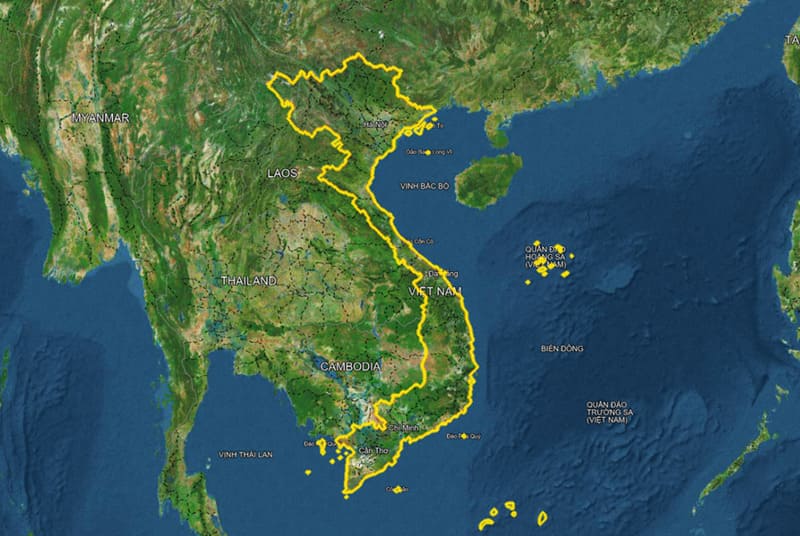
The S-shaped map that defines Vietnam's geography (Source: Collected)
Motorbikes dominate the streets of Vietnam, particularly in major cities such as Hanoi and Ho Chi Minh City. They are used for commuting, shopping, food delivery, transporting children and moving goods through narrow streets where larger vehicles would be less practical.
Their popularity reflects several practical advantages. Motorbikes are generally more affordable than cars, consume less fuel, require less parking space and can move more easily through densely developed urban neighborhoods.
For many visitors, the surprising part is not simply the number of motorbikes but the variety of items carried on them. It is common to see flowers, fruit baskets, household appliances, construction materials or carefully secured stacks of packages transported on two wheels.
Motorbikes have also shaped Vietnam’s commercial culture. Mobile vendors can move between neighborhoods, while delivery platforms depend heavily on large networks of riders. Many local businesses are designed around customers arriving and parking directly outside on a motorbike.
Traffic may initially appear chaotic, but it operates through a mixture of formal regulations and informal communication. Riders anticipate one another’s movements, use horns to signal their presence and generally move around obstacles rather than stopping abruptly.
If you are visiting Vietnam for the first time, our traffic in Vietnam guide offers essential tips for navigating busy streets safely.
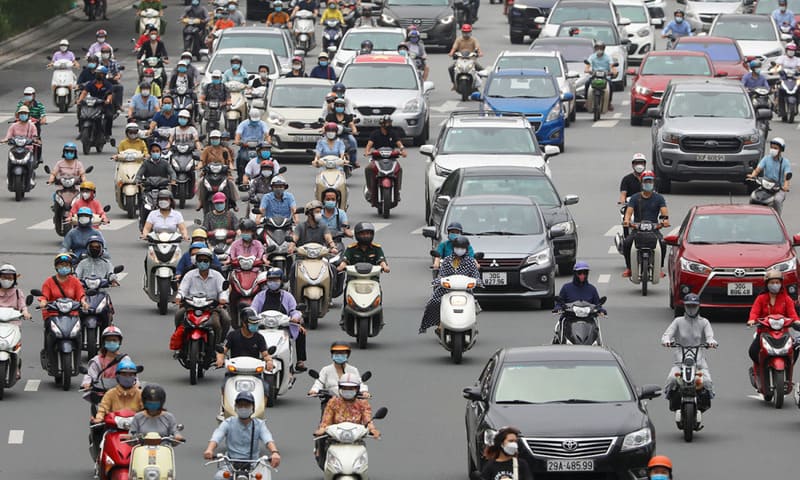
Motorbikes are part of everyday life in Vietnam (Source: Collected)
Vietnam is one of the most influential countries in the global coffee industry and is generally ranked behind Brazil among the world’s largest coffee producers and exporters.
Most Vietnamese coffee is Robusta, a variety known for its bold flavor, higher caffeine content and lower acidity compared with Arabica. The Central Highlands provide the heart of the industry, particularly Dak Lak, Lam Dong, Gia Lai, Dak Nong and Kon Tum.
Buon Ma Thuot is often referred to as the coffee capital of Vietnam. The surrounding basalt-rich soil and highland climate create favorable conditions for large coffee plantations.
Coffee was introduced during the French colonial period, but Vietnam developed into a major producer during the late 20th century. Today, its beans supply manufacturers, roasters and instant coffee markets around the world. International coffee data continue to identify Vietnam as one of the most important drivers of global Robusta exports.
Vietnamese coffee culture is equally distinctive. Traditional coffee is often brewed through a small metal filter called a phin, allowing the drink to drip slowly into a cup.
Popular variations include:
Hanoi is closely linked with egg coffee, while Buon Ma Thuot offers opportunities to learn about cultivation and production. Ho Chi Minh City, Da Nang and other urban centers have also developed vibrant café scenes ranging from pavement stalls to specialty roasters.
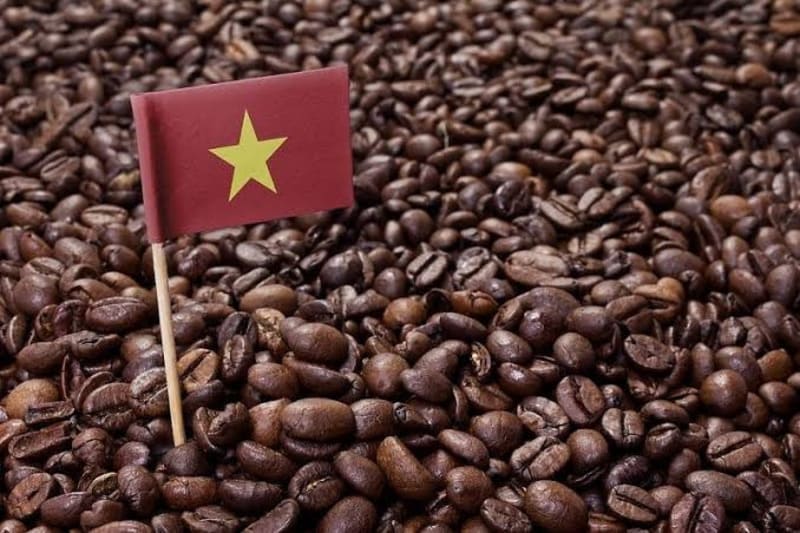
Vietnamese coffee is loved around the world (Source: Collected)
Nguyen is by far the most common Vietnamese family name. Estimates vary, but it is often associated with roughly one-third or more of the country’s population.
Its prevalence resulted from several periods of Vietnamese history rather than one single event. Families sometimes adopted the surname of a ruling dynasty for political protection, loyalty or administrative reasons. Others changed their names after dynastic transitions to avoid persecution.
The Nguyen Dynasty, which ruled from 1802 until 1945, was Vietnam’s final imperial dynasty. Its long period of rule reinforced the surname’s prominence, although Nguyen had already been used by influential families and earlier dynasties.
Vietnamese names are usually written in the following order:
For example, in the name Nguyen Minh Anh, Nguyen is the family name, Minh is the middle name and Anh is the given name.
People are generally addressed by their given names rather than their surnames because so many individuals share names such as Nguyen, Tran, Le and Pham. Titles and kinship terms may also be used to show respect and indicate social relationships.
Vietnam officially recognizes 54 ethnic groups, each contributing its own languages, clothing, customs, architecture, spiritual practices and culinary traditions.
The Kinh, also called the Viet, form the majority of the population and are concentrated in deltas, coastal plains and urban areas. The other 53 groups are often collectively described as ethnic minorities, although they differ greatly from one another.
Northern mountain regions are home to communities such as the Hmong, Dao, Tay, Nung and Ha Nhi. The Central Highlands are associated with groups including the Ede, Jarai, Bahnar and M’nong. Cham communities have a strong presence in parts of Central and Southern Vietnam, while Khmer communities are concentrated mainly in the Mekong Delta.
This diversity becomes visible through regional markets, festivals, textiles, traditional houses and agricultural practices. In Ha Giang and Lao Cai, visitors may encounter brightly embroidered Hmong clothing. In the Central Highlands, communal houses and gong traditions remain important parts of local identity.
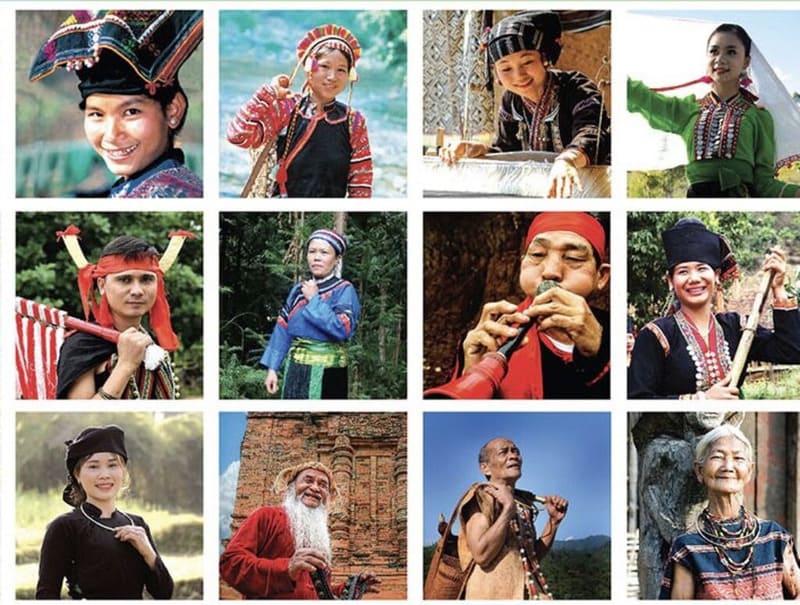
Traditional clothing reflects Vietnam's diversity (Source: Collected)
Several Vietnamese words have entered major English dictionaries, reflecting the international recognition of the country’s food and culture.
Among the best-known examples are pho and banh mi. Both names are now commonly used in English without translation.
Pho is a noodle soup built around broth, flat rice noodles, herbs and usually beef or chicken. Northern-style pho is often characterized by a clearer, more restrained broth, while southern versions commonly include a wider selection of herbs, bean sprouts and condiments.
Banh mi can refer to bread in Vietnamese, but internationally the term usually describes a Vietnamese baguette sandwich. Common fillings include pate, pork, cold cuts, grilled meat, pickled carrot and daikon, cucumber, coriander and chili.
The global spread of these words shows how Vietnamese dishes have become recognizable culinary concepts rather than unfamiliar regional specialties. Ao dai, the name of Vietnam’s traditional long dress, has also entered English dictionaries.
Pronunciation can still challenge visitors because Vietnamese is tonal. “Pho” is not pronounced like “foe,” while banh mi contains sounds that do not map perfectly onto English. Local speakers are usually appreciative when travelers make an effort to pronounce the words correctly.
Rice is one of the foundations of Vietnamese agriculture, cuisine and social life. It is eaten as a staple, transformed into noodles and flour, fermented into drinks and used in dishes connected with festivals and family rituals.
A typical shared meal may include steamed rice accompanied by vegetables, soup, meat, fish or tofu. Rather than treating rice as a side dish, Vietnamese meals often position it as the central element around which other dishes are arranged.
Rice also appears in many familiar foods:
Banh chung has particular cultural significance during Tet, the Vietnamese Lunar New Year. The square cake is wrapped in green leaves and traditionally symbolizes the earth. Families may spend hours preparing and cooking it together.
Vietnam’s two major deltas support extensive rice cultivation. The Red River Delta has been central to northern wet-rice civilization, while the Mekong Delta is one of the country’s most productive agricultural regions.
Terraced rice fields in Mu Cang Chai, Sapa, Hoang Su Phi and other northern highland areas also demonstrate how communities adapted cultivation to steep mountain terrain. Their appearance changes from reflective planting-season fields to vivid green terraces and golden harvest landscapes.
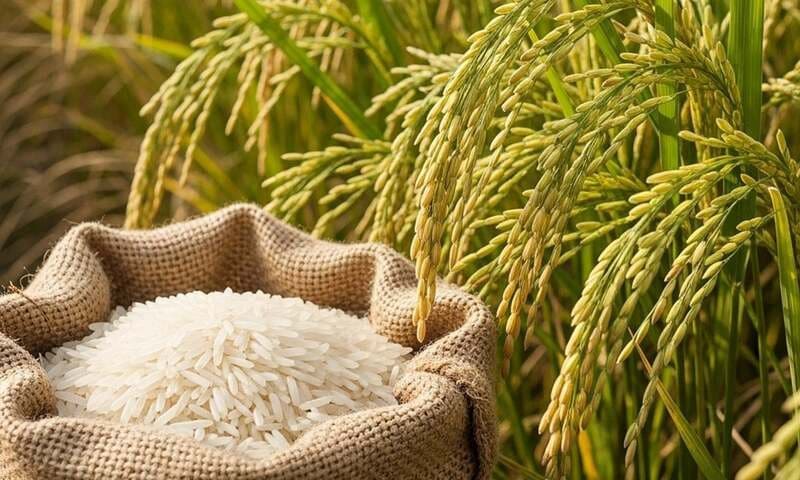
Rice has long been part of everyday life in Vietnam (Source: Collected)
Vietnam plays a major role in the international cashew industry and has long ranked among the world’s leading exporters of processed cashew kernels.
The southern provinces of Binh Phuoc, Dong Nai and Tay Ninh are closely associated with cashew cultivation and processing. Binh Phuoc is particularly well known for its large growing area and established production network.
An important distinction is that Vietnam’s processing and export capacity exceeds its domestic raw cashew supply. Manufacturers may import raw nuts from Africa and other producing regions, process them in Vietnam and export the finished kernels to global markets.
This explains why rankings can differ depending on whether statistics measure raw cashew production, processing volume, kernel exports or total export value.
Cashews also appear in Vietnamese cuisine, although they are more commonly eaten roasted as a snack than used as a universal cooking ingredient.
Before roads became widespread, boats were the main way to transport people, produce and household goods across the Mekong Delta. This river-based trade led to the development of floating markets, where farmers and merchants exchanged goods directly between boats.
Cai Rang Floating Market near Can Tho is the best-known example. Traders often hang product samples on tall poles called cay beo, helping buyers see what each boat sells. The market is busiest around sunrise, when wholesale boats, food vendors and local traffic fill the river.
Improved roads, supermarkets and modern logistics have reduced the commercial role of many floating markets. Some, including Cai Be, are now much quieter. Even so, the remaining markets still reveal how closely local communities are connected to the waterways. Visitors can support them by choosing small-group tours, hiring local guides and buying directly from river vendors.
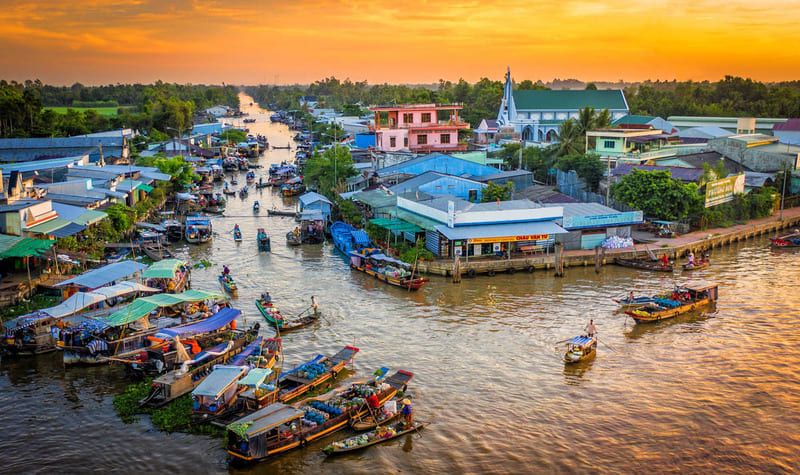
Morning trade at a Mekong Delta floating market (Source: Collected)
Vietnam’s number of UNESCO World Heritage properties increased from eight to nine in July 2025, when the Yen Tu - Vinh Nghiem - Con Son, Kiep Bac Complex of Monuments and Landscapes was inscribed on the World Heritage List.
The country’s nine UNESCO World Heritage sites are:
These World Heritage properties are separate from Vietnam’s intangible cultural heritage, documentary heritage and UNESCO Global Geoparks. Traditions such as Vietnamese court music, Quan Ho folk singing and the gong culture of the Central Highlands are recognized under different UNESCO programs.
Fansipan rises to 3,143 meters above sea level, making it the highest mountain in Vietnam and across the Indochinese Peninsula, which includes Vietnam, Laos and Cambodia.
The mountain belongs to the Hoang Lien Son range in Lao Cai Province, near Sapa. Its elevation and regional prominence have earned it the nickname “Roof of Indochina.”
Before the cable car opened, reaching the summit usually required a demanding trek lasting one to three days. Climbers crossed steep forest trails, rocky sections and rapidly changing mountain conditions.
Today, the Fansipan cable car makes the summit area accessible to a much wider range of visitors. The journey travels above valleys and terraced fields before reaching a high-altitude complex of pathways, viewpoints and Buddhist structures.
To learn more about reaching the summit, and travel tips, explore our Fansipan Mountain Sapa guide.
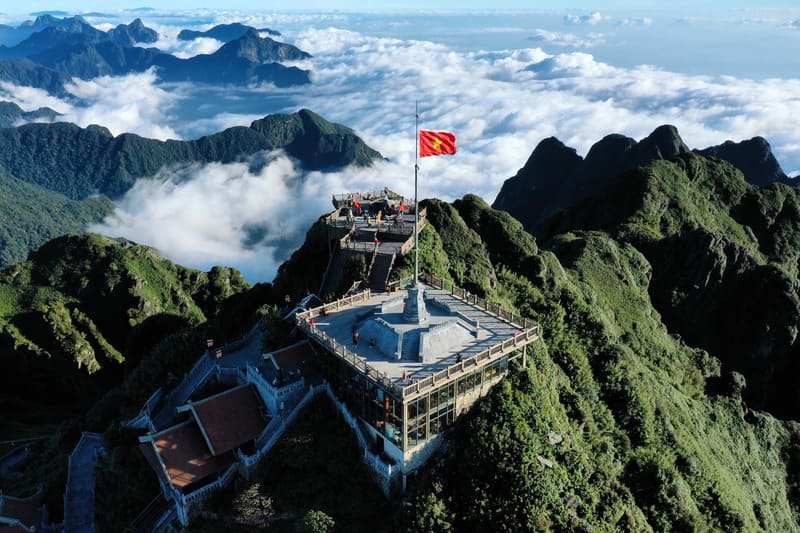
Fansipan, the Roof of Indochina (Source: Collected)
Vietnam is usually associated with tropical heat, but its climate varies considerably by latitude and elevation.
During strong winter cold spells, temperatures in the highest northern mountains can fall close to or below freezing. Snow, sleet, frost or ice may then occur in locations such as Fansipan, Sapa, Y Ty, Mau Son and parts of Ha Giang or Cao Bang.
True snowfall remains uncommon and difficult to predict. Many images described as snow actually show frost or frozen rain covering roads, roofs and vegetation.
The coldest conditions generally occur between December and February, although there is no guarantee of snow in any particular year. A cold wave may last only a few days and can create transport disruption on mountain roads.
The lotus is widely recognized as Vietnam’s national flower and one of the country’s most important cultural symbols.
Its roots grow in mud while its leaves and flowers rise above the water. This natural characteristic has made the lotus a symbol of purity, resilience, dignity and the ability to overcome difficult circumstances.
Lotus imagery appears in Buddhist art, temple decoration, architecture, poetry and traditional design. The flower is closely associated with spiritual awakening because it emerges clean and beautiful from a muddy environment.
Nearly every part of the plant can be used. Lotus stems may be prepared in salads, seeds are eaten fresh or cooked into desserts, roots are used in savory dishes and leaves can wrap rice or other foods.
Lotus tea is one of the most refined products connected with the flower. Traditional West Lake lotus tea in Hanoi may be scented by placing tea inside fresh blossoms or by repeatedly mixing tea leaves with lotus stamens. The process is highly labor-intensive.
Lotus season generally falls in summer, although timing varies by region and weather. Hanoi’s West Lake area, Dong Thap in the Mekong Delta and several temple complexes are known for lotus ponds.
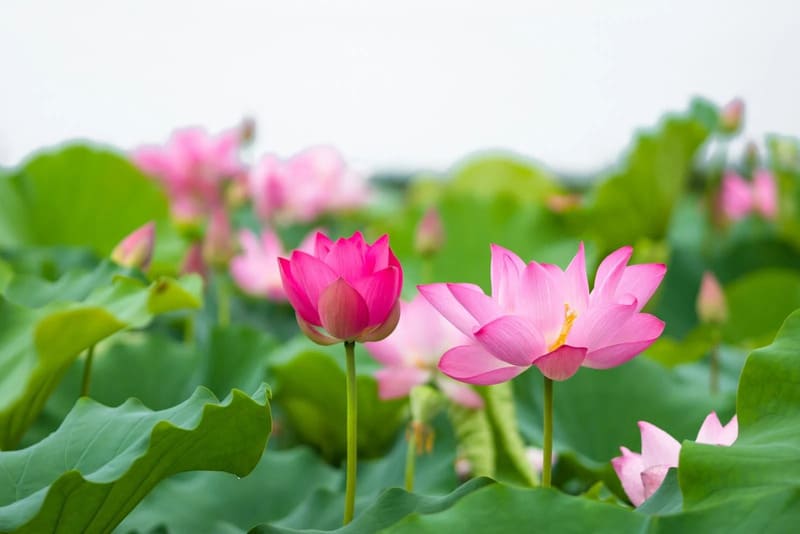
Lotus blossoms reflect Vietnam's cultural heritage (Source: Collected)
Karaoke is deeply embedded in Vietnamese social life. It appears at birthday parties, weddings, family gatherings, restaurants, company celebrations and dedicated karaoke venues.
The emphasis is often on participation rather than polished performance. Friends and relatives take turns singing sentimental ballads, pop songs, folk-inspired music and international hits.
Portable speakers and wireless microphones have made karaoke possible almost anywhere. In urban neighborhoods and rural villages, spontaneous singing sessions may take place in homes, gardens or on pavements.
This enthusiasm reflects the communal nature of many Vietnamese celebrations. Singing provides an accessible way for different generations to participate, while familiar songs create a shared emotional experience.
Vietnam has achieved a high adult literacy rate despite having a much lower income per person than many highly industrialized countries.
The country’s adult literacy rate is commonly reported in the mid-to-high 90% range, while literacy among younger people is even higher. Exact figures depend on the year, age group and measurement method used.
Education carries strong social importance in Vietnamese families. Academic achievement is often associated with future stability, professional opportunity and family pride.
This emphasis is influenced partly by Confucian traditions that place value on learning and scholarly accomplishment. It is also supported by decades of expanding access to primary and secondary education.
Schools are visible throughout both urban and rural Vietnam, and many students attend additional classes outside regular hours. Families may invest substantially in language instruction, exam preparation and extracurricular education.
Vietnamese students have also performed strongly in several international assessments relative to the country’s income level. However, educational opportunities are not identical across the country. Remote mountain communities, disadvantaged households and some ethnic minority populations continue to face barriers involving distance, language and resources.
Vietnamese people may ask about your age, marital status, children, job or nationality soon after meeting you. These questions are usually meant to build rapport and determine the appropriate form of address.
Vietnamese pronouns often reflect age and social relationships, using terms similar to older brother, younger sister, aunt or uncle. Knowing someone’s age helps speakers communicate politely.
Questions about family are also common, especially among older generations. Travelers can give a brief answer or politely change the subject when they prefer not to share personal details.
Water puppetry, or mua roi nuoc, originated around 1,000 years ago in the Red River Delta, where flooded rice fields and village ponds served as natural stages.
Performers stand behind a screen and control wooden puppets using underwater rods. Accompanied by drums, gongs, flutes and traditional singing, the shows recreate legends, farming scenes and village life through characters such as fishermen, dragons, buffaloes and the comic narrator Teu.
This art form is closely associated with Vietnamese culture. Visitors can watch regular performances at Thang Long Water Puppet Theatre in Hanoi, as well as selected venues in Ho Chi Minh City and northern villages.
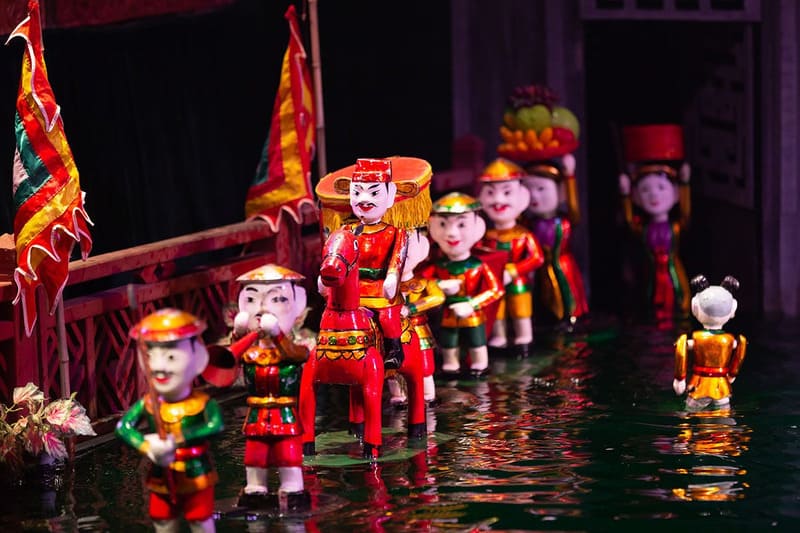
Colorful puppets bring Vietnamese legends to life (Source: Collected)
Vietnamese street food stands out for its fresh ingredients, affordable prices and strong regional identity. Vendors often specialize in one dish, allowing them to refine the recipe and cooking technique over many years.
Hanoi is known for pho, bun cha and banh cuon, while Hue offers bun bo Hue, banh beo and banh khoai. Ho Chi Minh City is popular for com tam and hu tieu, whereas Hoi An is associated with cao lau, mi Quang and white rose dumplings. In the Mekong Delta, meals commonly feature freshwater fish, coconut and tropical fruit.
For a safer experience, choose busy stalls, prioritize freshly cooked food and drink bottled or properly treated water. Guided food tours are helpful for learning about local ingredients, although following popular neighborhood stalls can be equally rewarding.
For more culinary inspiration, check out our guide to street food in Vietnam, featuring regional specialties from north to south.
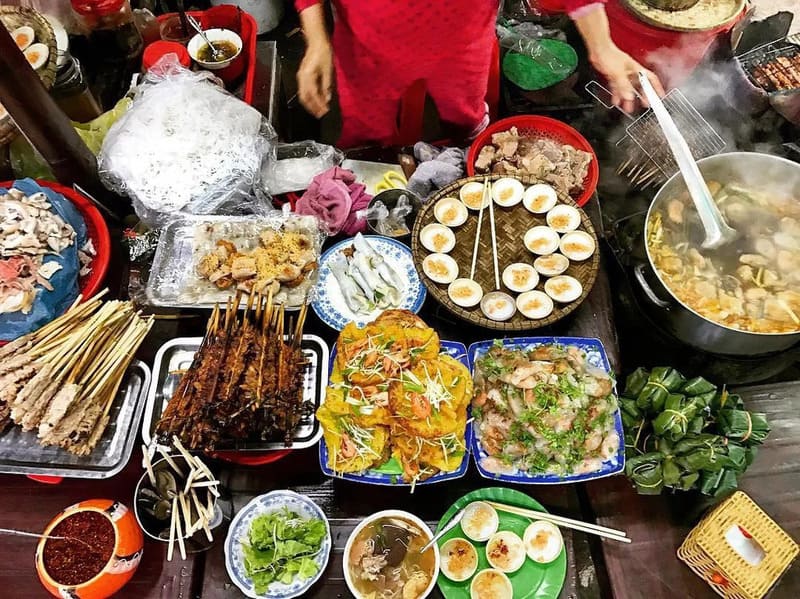
Vietnam's street food is rich in flavor and variety (Source: Collected)
Vietnam is generally safe for international travelers, including solo visitors. Serious crime involving tourists is uncommon, although pickpocketing, phone snatching, overcharging and common travel scams may occur in busy areas.
Traffic is often the greater concern. Travelers should use reputable transport services, wear a certified helmet when riding a motorbike and avoid driving without suitable experience, insurance and legal documents.
Keep valuables away from the roadside, secure passports and excess cash, avoid isolated areas late at night and check weather conditions before trekking, cruising or visiting remote regions. With basic precautions, Vietnam is accessible and manageable for both first-time tourists and independent travelers.
Hopefully, these fun facts have given you a deeper appreciation of Vietnam and inspired you to explore the country for yourself. If you're planning a trip, Your Vietnam Travel can help you create a personalized itinerary that lets you experience Vietnam's culture, cuisine and natural wonders with confidence.

 Vietnam Tours
 Cambodia Tours
 Laos Tours
 Thailand Tours
 Multi-Country Tours